
TAA-Designated Rack PDUs for Federal Server Rooms
Basic, metered, monitored and switched rack PDUs whose manufacturers designate the part TAA-compliant in its own title — read alongside how the origin rule actually reaches a federal order.
TAA-designated rack PDUs in stock at Uniqcli
How to choose →A curated selection with live pricing — in-stock lines first, then back-ordered lines with a typical lead time. Every line is sourced through US distribution and screened for NDAA §889 status before checkout, with TAA verified on request.
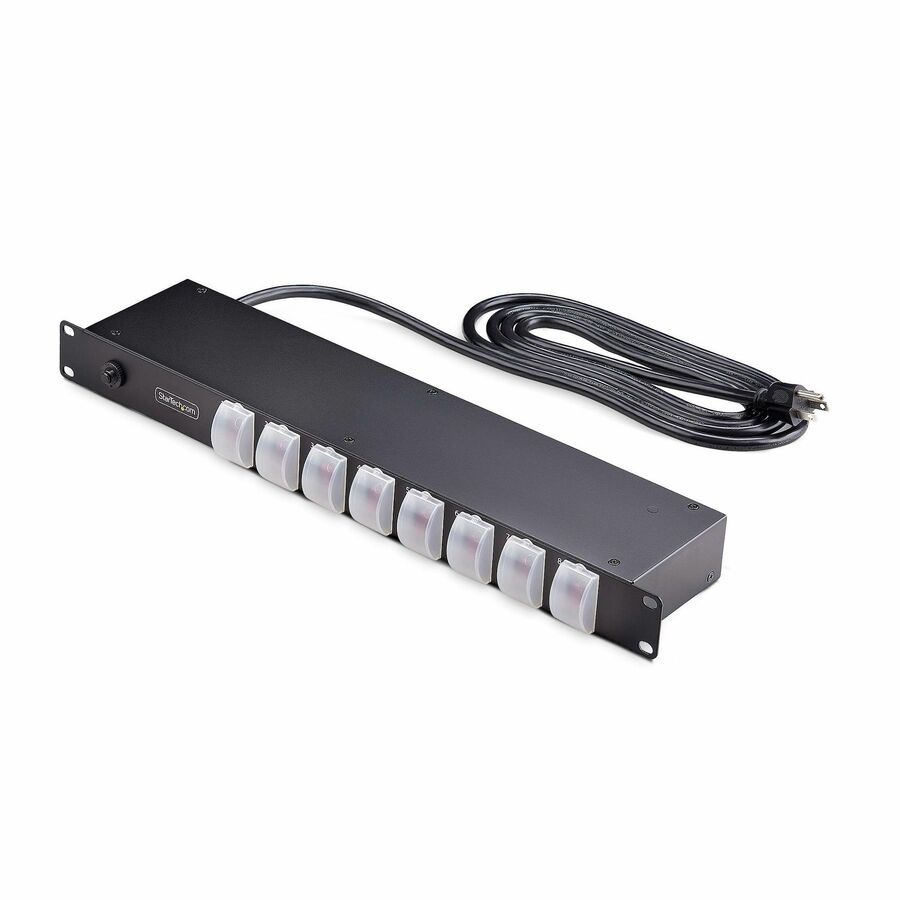
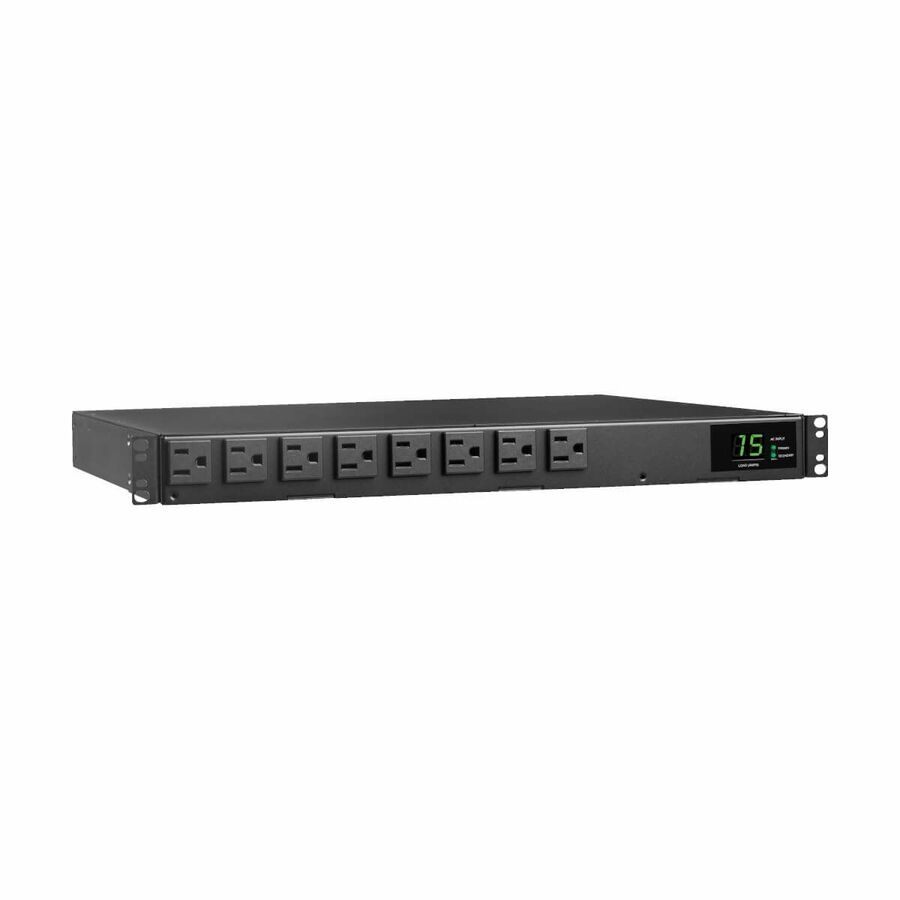
- StarTech.comStarTech 8-Outlet Horizontal Rack Mount PDU, 1U Power Strip, On/Off Switches, 15A Circuit Breaker, 8ft/2.4m Cord, NEMA 5-15P/R, TAA - 1U Rack Mount 8-Outlet Power Distribution Unit (PDU) with 8ft/2.4m NEMA 5-15P power cord - Each outlets features an individual on/off piano switch with independent LED - 15A self-tripping/resettable circuit breaker - ANSI/EIA RS-310-D - UL Listed8NS8-RACK-MOUNT-PDU
$96.34
$88.63*
381 in stock - StarTech.comStarTech 12-Outlet Rackmount PDU, 1U Server Power Strip, Wide-Spaced Right-Angle Ports, Mounted Power Distribution Unit for 19in Racks - 1U rackmount PDU unit for 19in racks w/ 12x NEMA 5-15R right-angle electrical outlets - 125V 15A supply; 8ft power cord - 2in outlet spacing fits bulky plugs in server/AV setups - Power distribution unit w/ safety cover switch - TAA power strip1215B8H-RACK-PDU-RA
$98.39
$90.52*
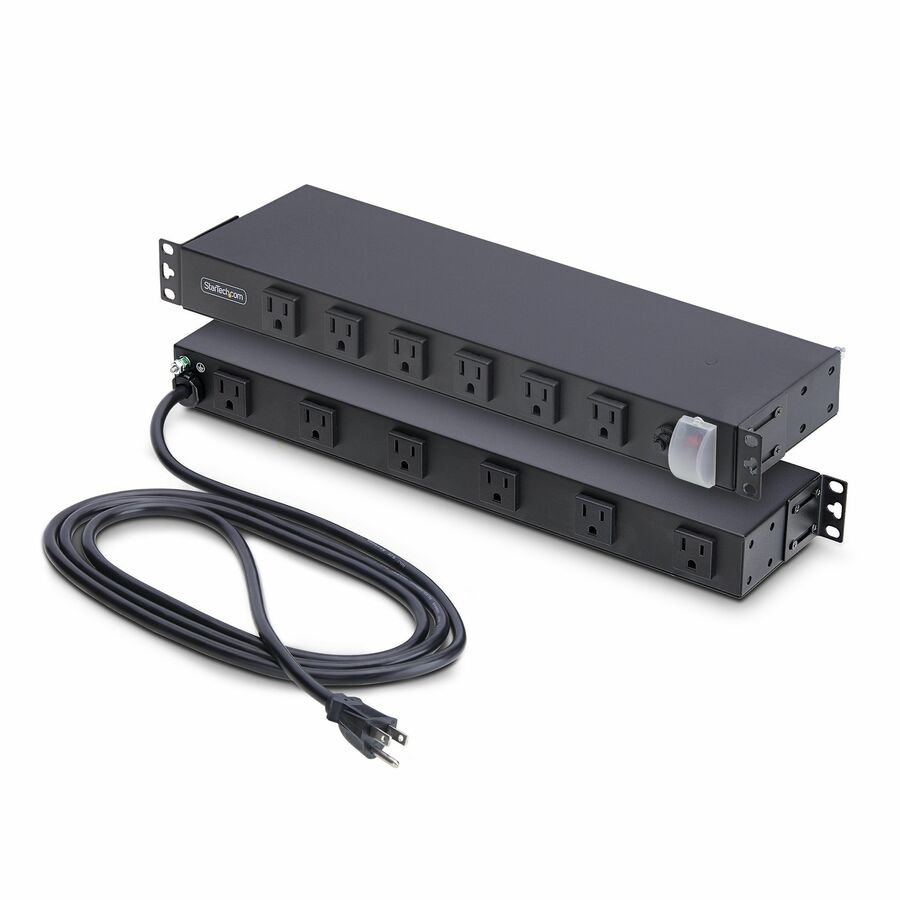
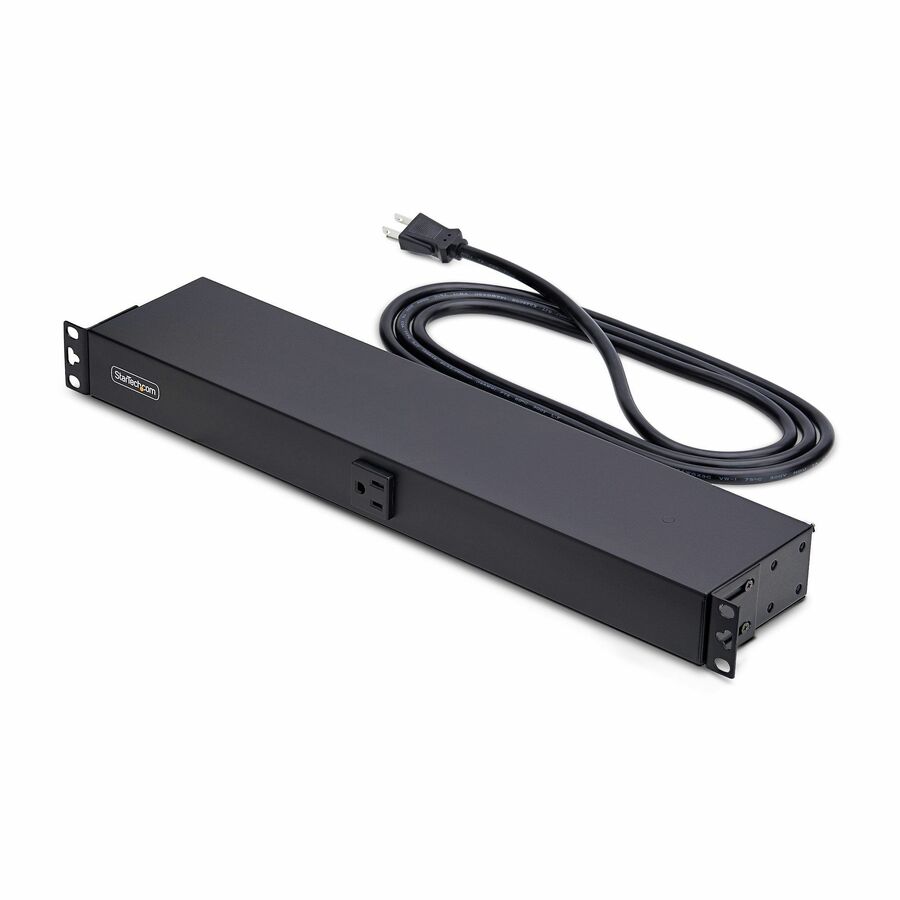
925 in stock - StarTech.comStarTech 13-Outlet Rackmount PDU, 1U Server Power Strip, 1x Front and 12x Rear Ports, Mounted Power Distribution Unit for 19in Racks - 1U rackmount PDU unit for 19in racks w/ 13x NEMA 5-15 electrical outlets - 1x Front and 12x rear - 125V 15A max; 8ft power cord - 4-way mounting brackets for various server/AV setups - Power distribution/supply unit is TAA-compliant1315B8H-RACK-PDU
$117.99
$108.55*
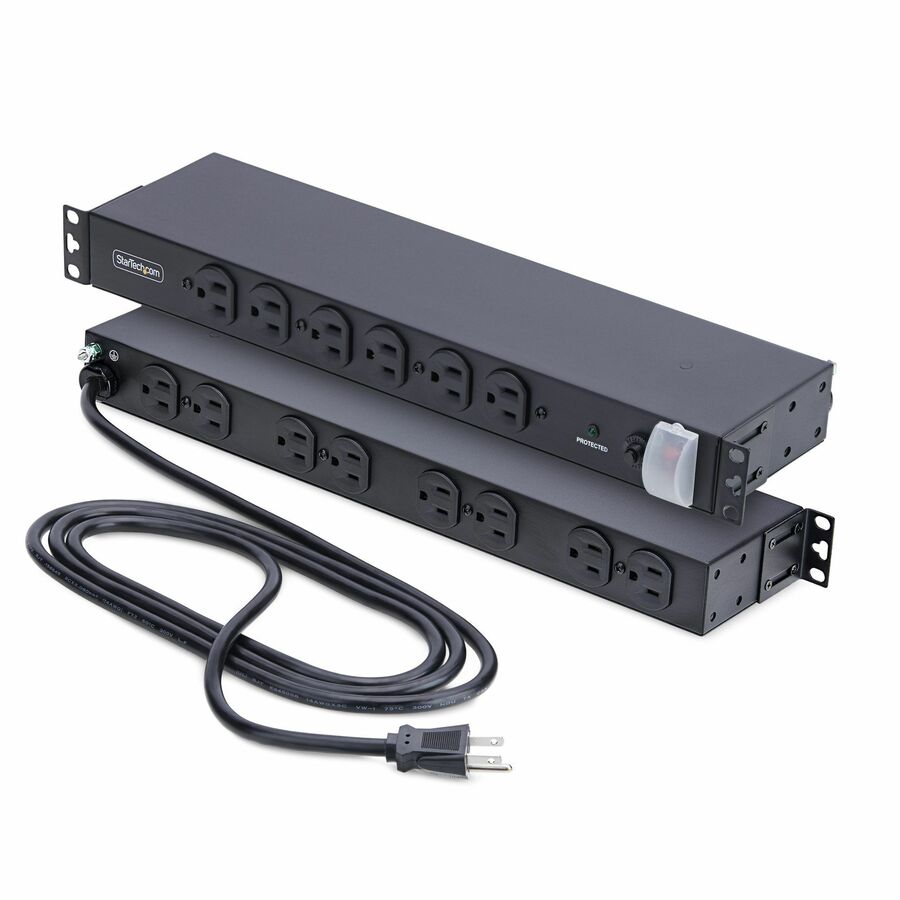
954 in stock - StarTech.comStarTech 14-Outlet Rackmount PDU, 1U Server Power Strip, 6x Front and 8x Rear Ports, Mounted Power Distribution Unit for 19in Racks - 1U rackmount PDU unit for 19in racks w/ 12x NEMA 5-15R right-angle electrical outlets - 125V 15A supply; 8ft power cord - 2in outlet spacing fits bulky plugs in server/AV setups - Power distribution unit w/ safety cover switch - TAA power strip1415B8H-RACK-PDU-SP
$121.96
$112.20*
664 in stock - StarTech.comStarTech 8-Outlet Horizontal Rack Mount PDU, 1U Server Power Distribution Strip w/Surge Protector, 125V/15A, 8ft/2.4m Power Cord, TAA - 1U rack mount metered PDU w/8x NEMA 5-15R outlets; 125V max; 8ft power cord - Backlit LCD for real-time electrical monitoring (V/A/W/PF) - Self-tripped MOV surge protector; Resettable 15A breaker - Rackmount power distribution strip for server; TAA8NM8-RACK-MOUNT-PDU
$130.16
$119.75*
1,037 in stock - StarTech.comStarTech 12-Outlet Horizontal Rack Mount Metered PDU, 1U Server Power Strip w/Surge Protector, 125V/15A, 8ft (2.4m) Power Cord, TAA - 1U rack mount metered PDU w/12x NEMA 5-15R outlets; 125V max; 8ft power cord - Backlit LCD for real-time electrical monitoring (V/A/W/PF) - Self-tripped MOV surge protector; Resettable 15A breaker - Rackmount power distribution strip for server; TAA12NM8-RACK-MOUNT-PDU
$148.61
$136.72*
413 in stock - StarTech.comStarTech 16-Outlet Horizontal Rack Mount Metered PDU, 1U Server Power Strip w/Surge Protector, 125V/15A, 8ft (2.4m) Power Cord, TAA - 1U rack mount metered PDU w/16x NEMA 5-15R outlets; 125V max; 8ft power cord - Backlit LCD for real-time electrical monitoring (V/A/W/PF) - Self-tripped MOV surge protector; Resettable 15A breaker - Rackmount power distribution strip for server; TAA16NM8-RACK-MOUNT-PDU
$166.04
$152.76*
452 in stock - StarTech.comStarTech 20-Outlet Rackmount PDU, 1U Server Power Strip, 8x Front and 12x Rear Ports, Mounted Power Distribution Unit for 19in Racks - 1U rackmount PDU unit for 19in racks w/ 20x electrical outlets - 16x IEC C13 / 4x IEC C19 outlets - 240V 15A supply; 8ft power cord - 15A breakers safeguard each C19 outlet and every group of C13 ports - SPCC steel power distribution unit/strip; TAA2030B8H-RACK-PDU-IC
$271.61
$249.88*
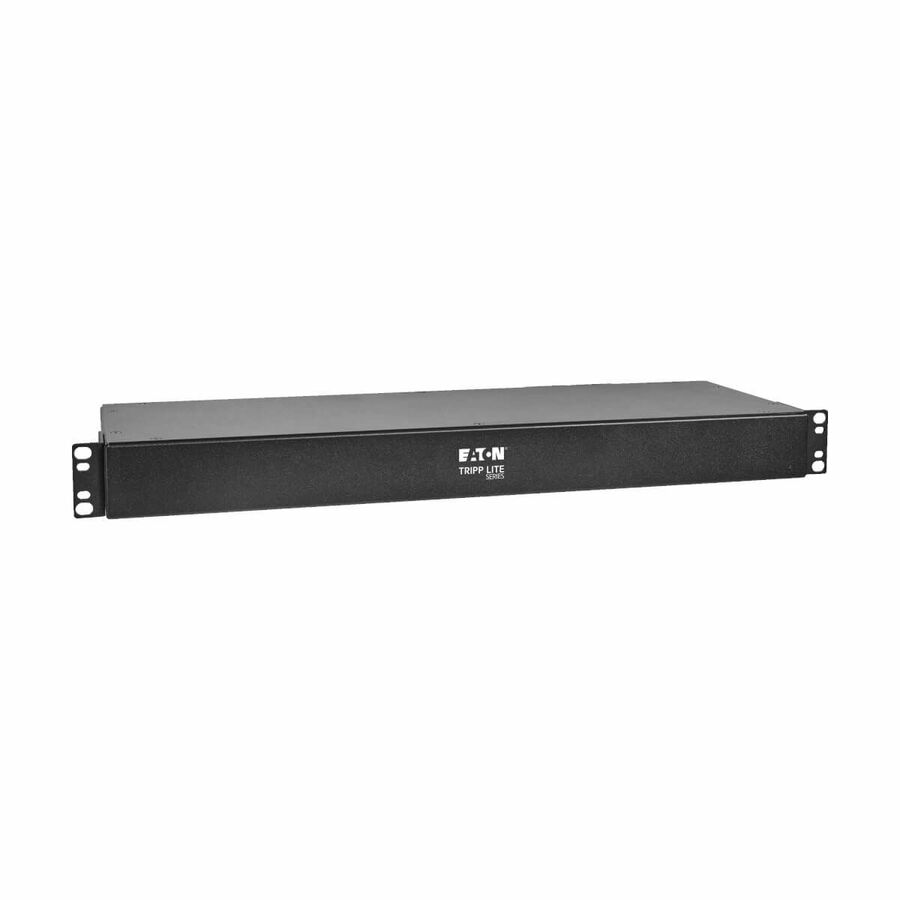
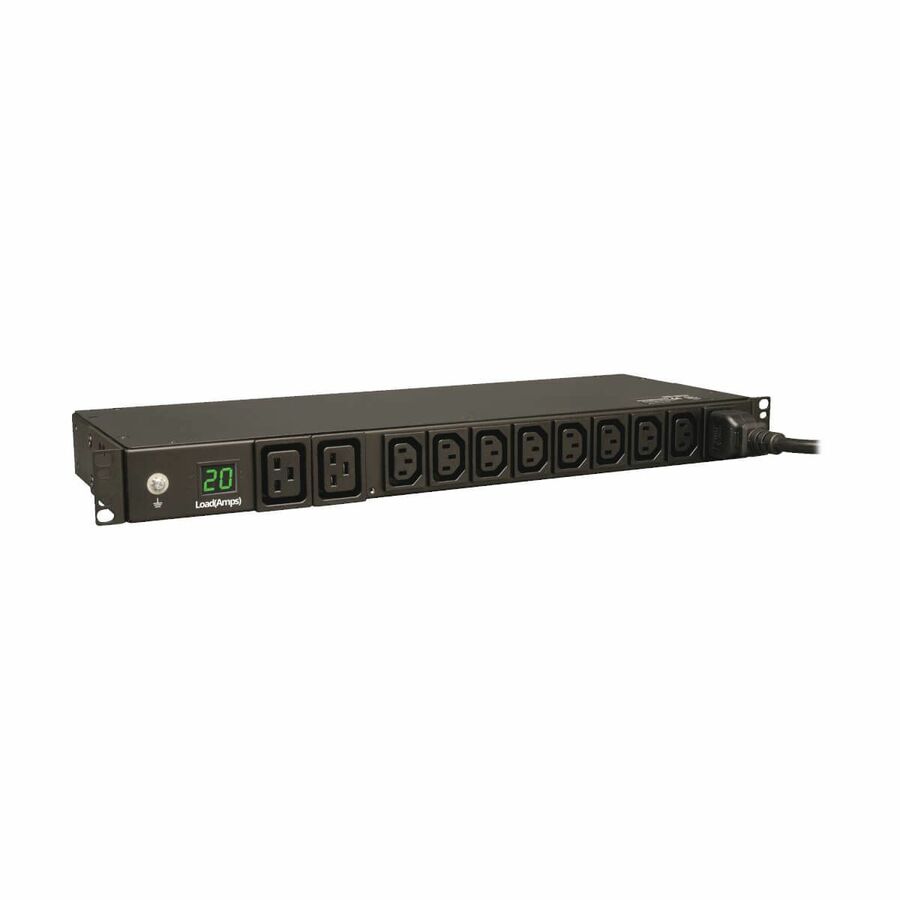
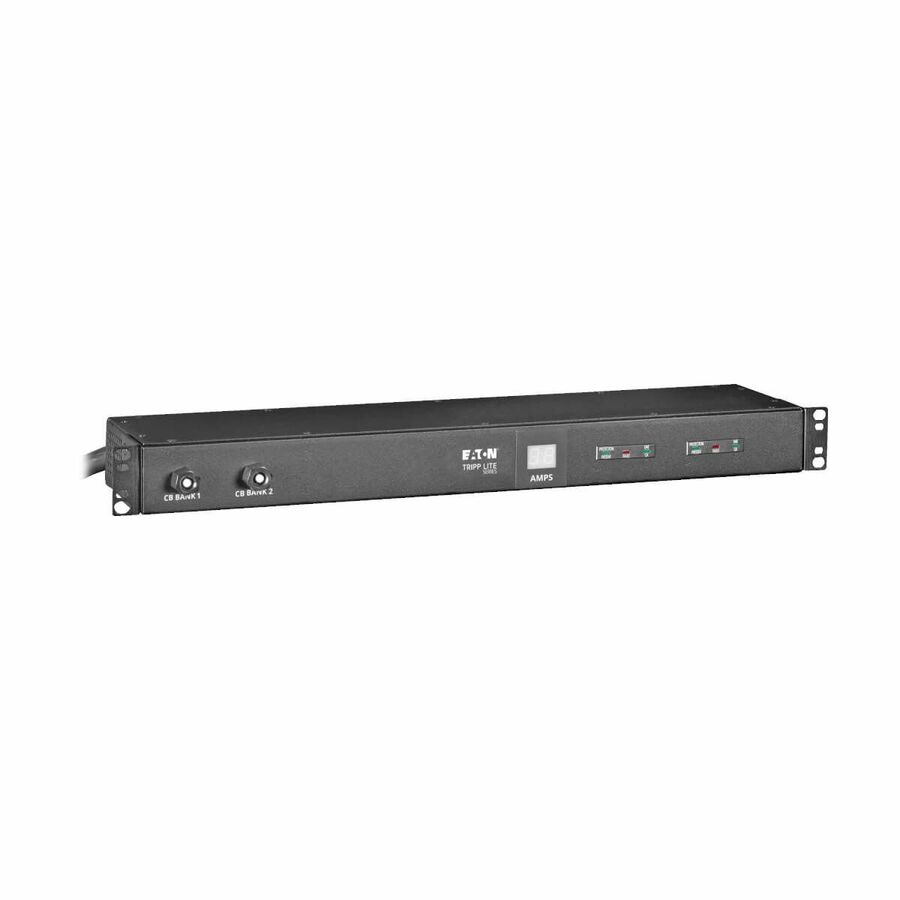
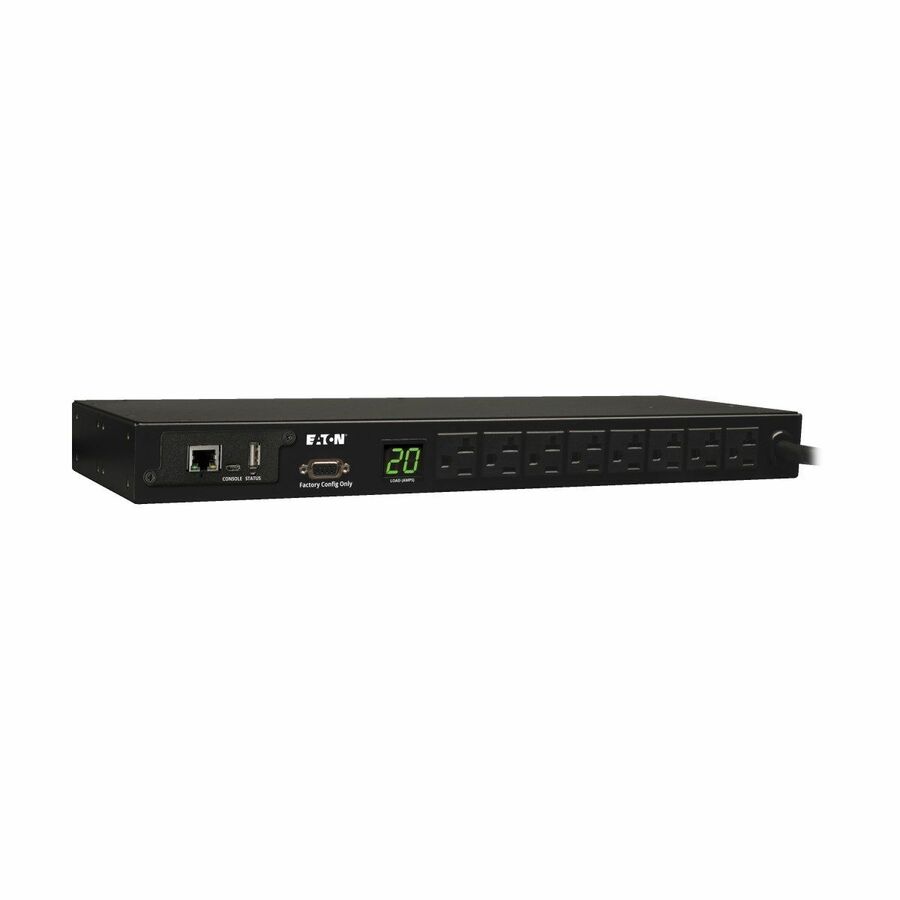
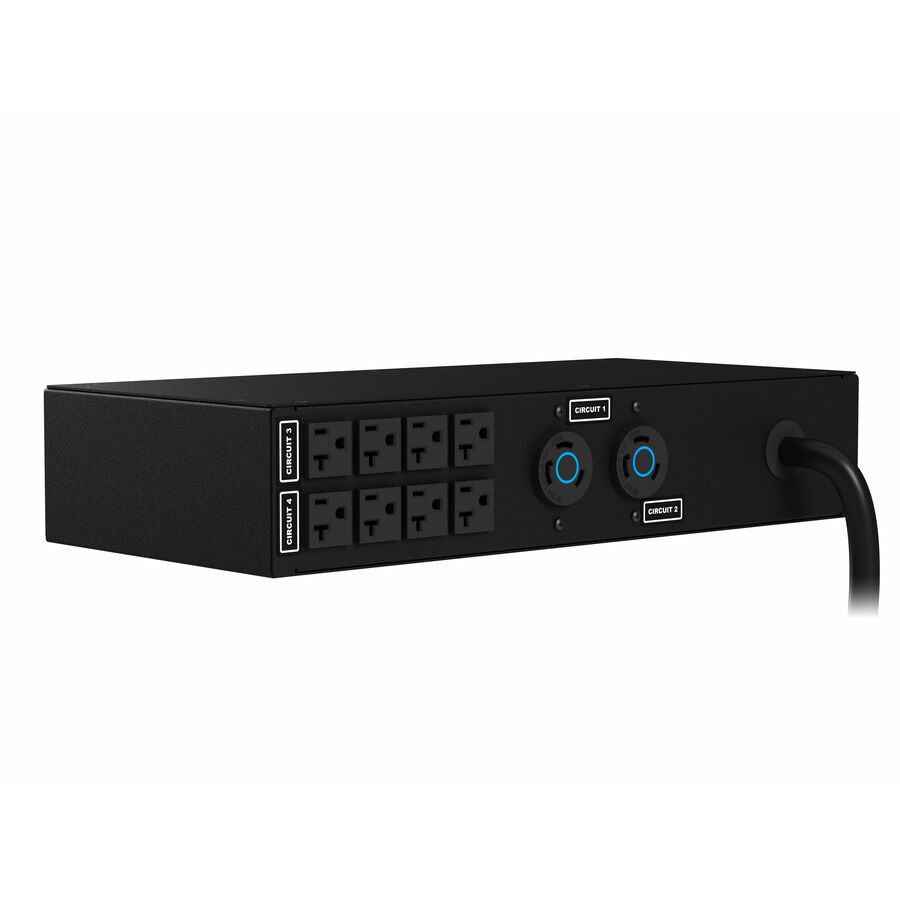
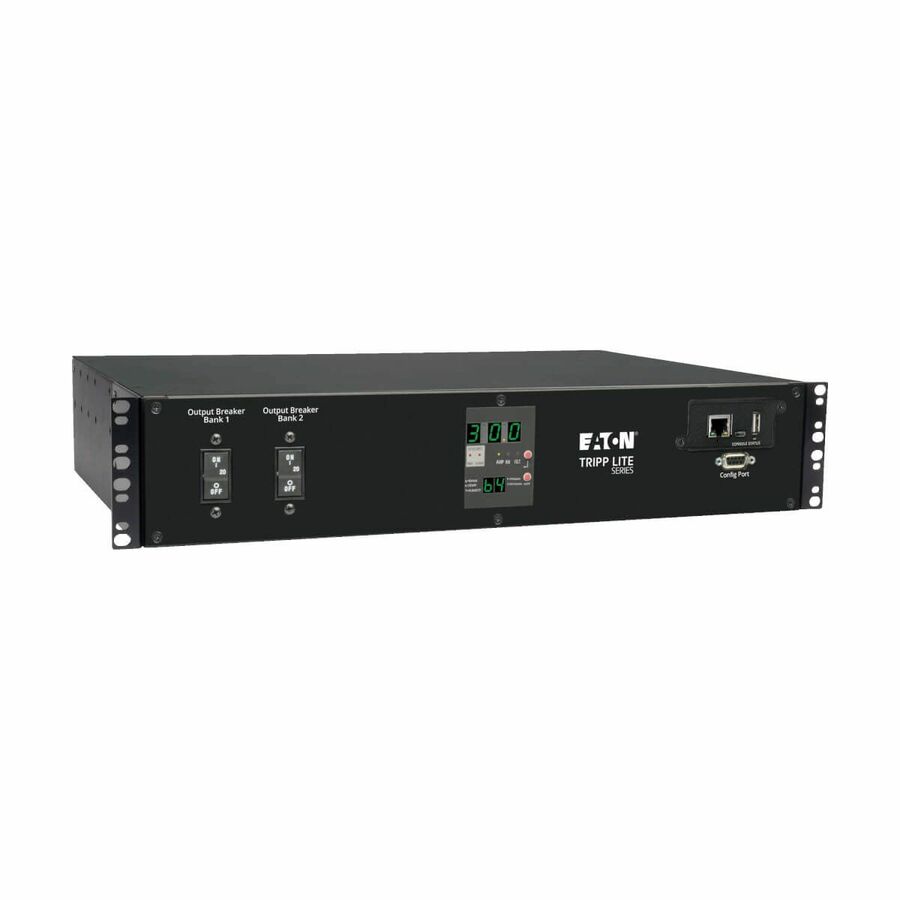
428 in stock - EatonTripp Lite by Eaton PDU 3.7kW 208/230V Single-Phase Local Metered PDU - 8 C13 & 2 C19 Outlets L6-20P Input 6 ft. Cord 1U TAA - Metered - NEMA L6-20P - 8 x IEC 60320 C13, 2 x IEC 60320 C19 - 230 V AC - 1U - Horizontal/Vertical - Wall-mountable, Rack-mountable - TAA CompliantPDUMH20HVL66
$334.00
$307.28*
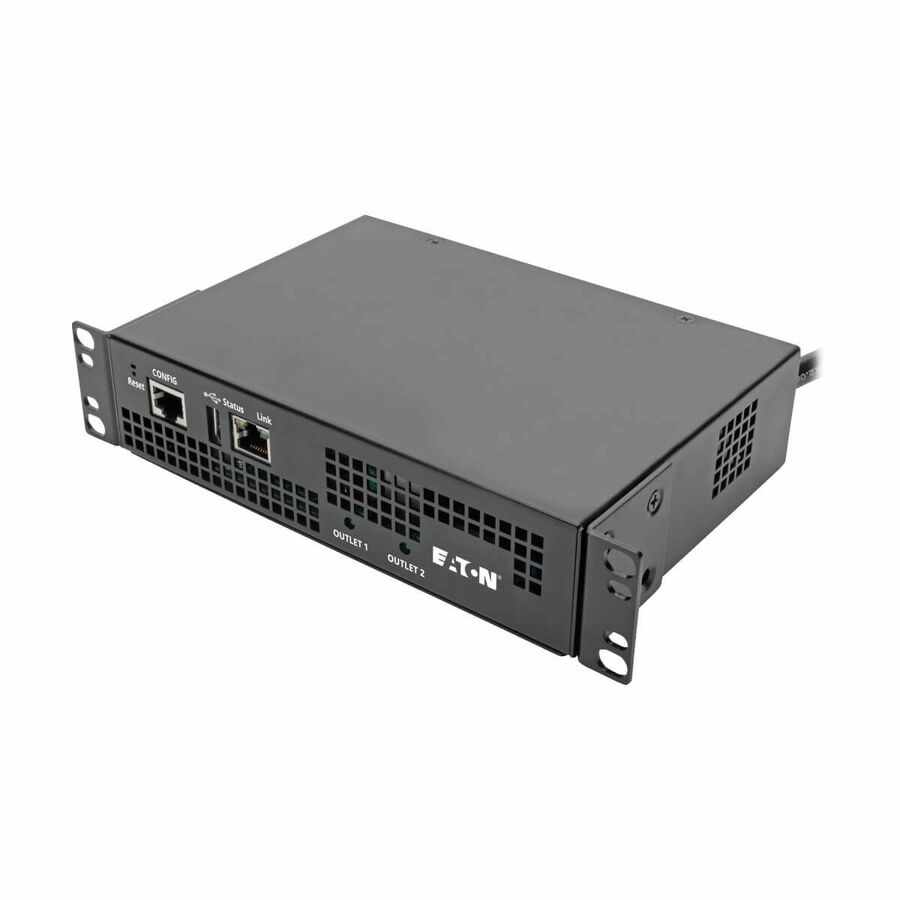
72 in stock - EatonTripp Lite by Eaton PDU 1.4kW 120V Single-Phase Switched Mini PDU - LX Platform Interface NEMA 5-15P 6 ft. (1.83 m) Cord 0U TAA - Switched - NEMA 5-15P - 2 x NEMA 5-15R - 120 V AC - 0U - Vertical - Under-counter Mount - Rack-mountable, Wall-mountable - TAA CompliantPDU15NETLX
$416.00
$382.72*
218 in stock - EatonTripp Lite by Eaton PDU 2.9kW Single-Phase Basic PDU with ISOBAR Surge Protection 120V 3840 Joules 12 NEMA 5-15/20R Outlets L5-30P Input 15 ft. Cord 1U Rack-Mount TAA - Basic - NEMA L5-30P - 12 x NEMA 5-15/20R - 120 V AC - 0U/1U - Horizontal/Vertical - Rack-mountable, Wall-mountable - TAA CompliantPDUH30-ISO
$545.00
$501.40*
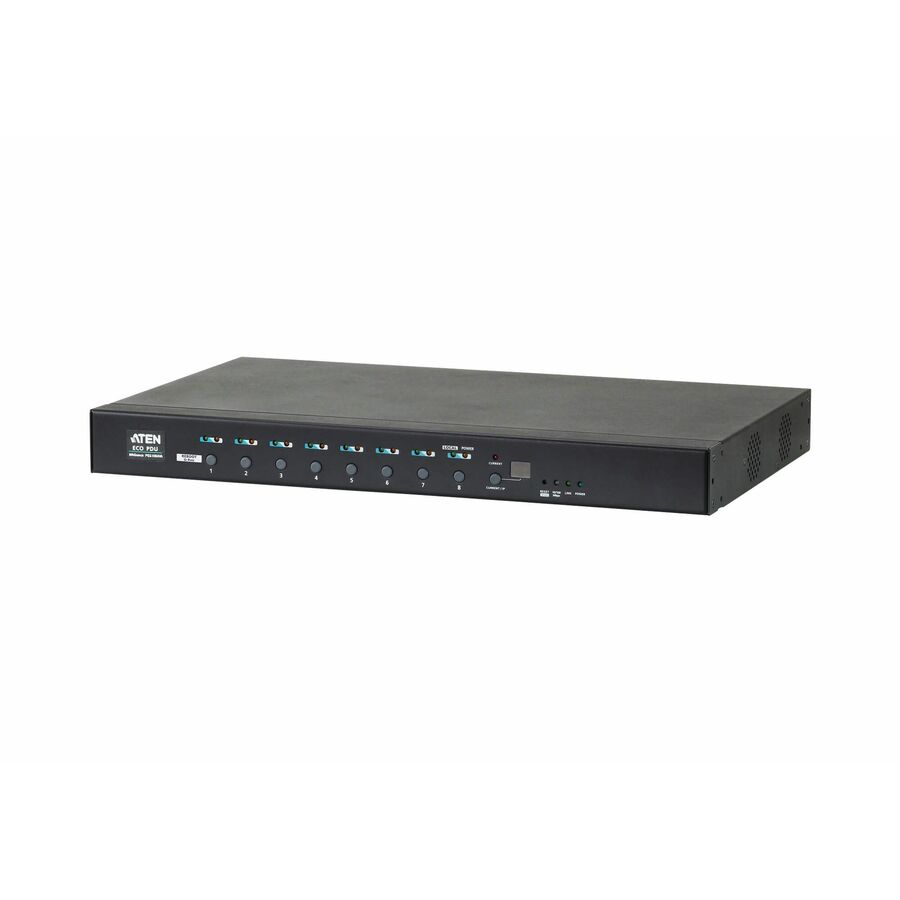
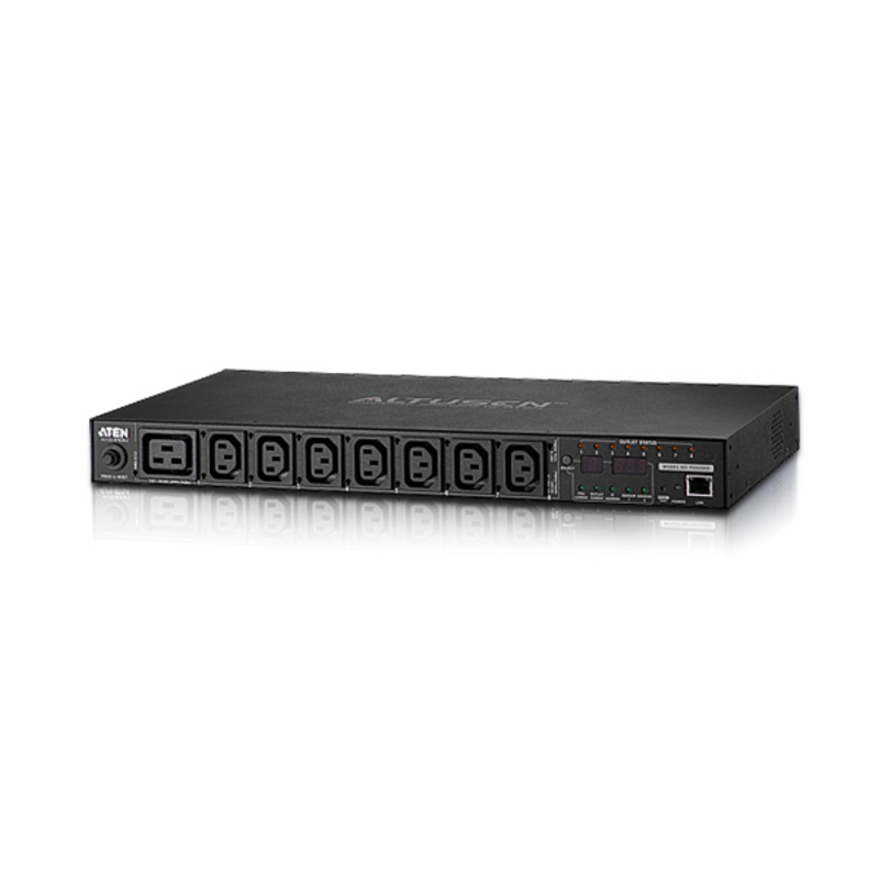
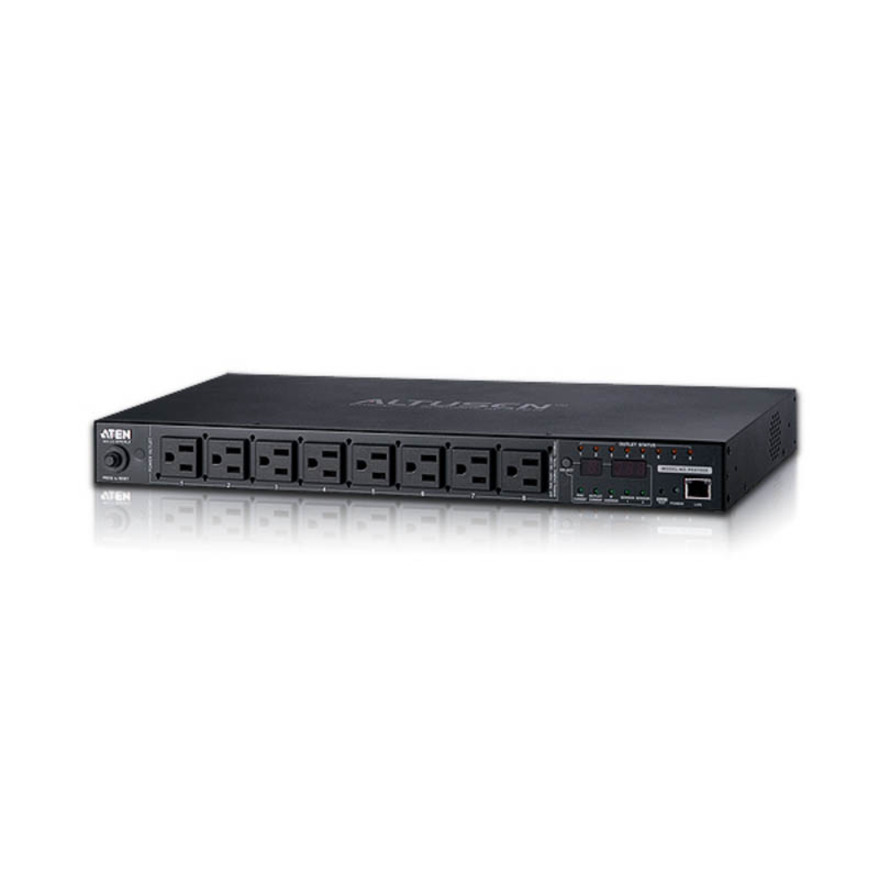
16 in stock - ATEN TechnologyATEN eco PDU PE6108G 8-Outlets PDU-TAA Compliant - Network (RJ-45) - 1U - Rack-mountablePE6108G
$677.00
$563.56
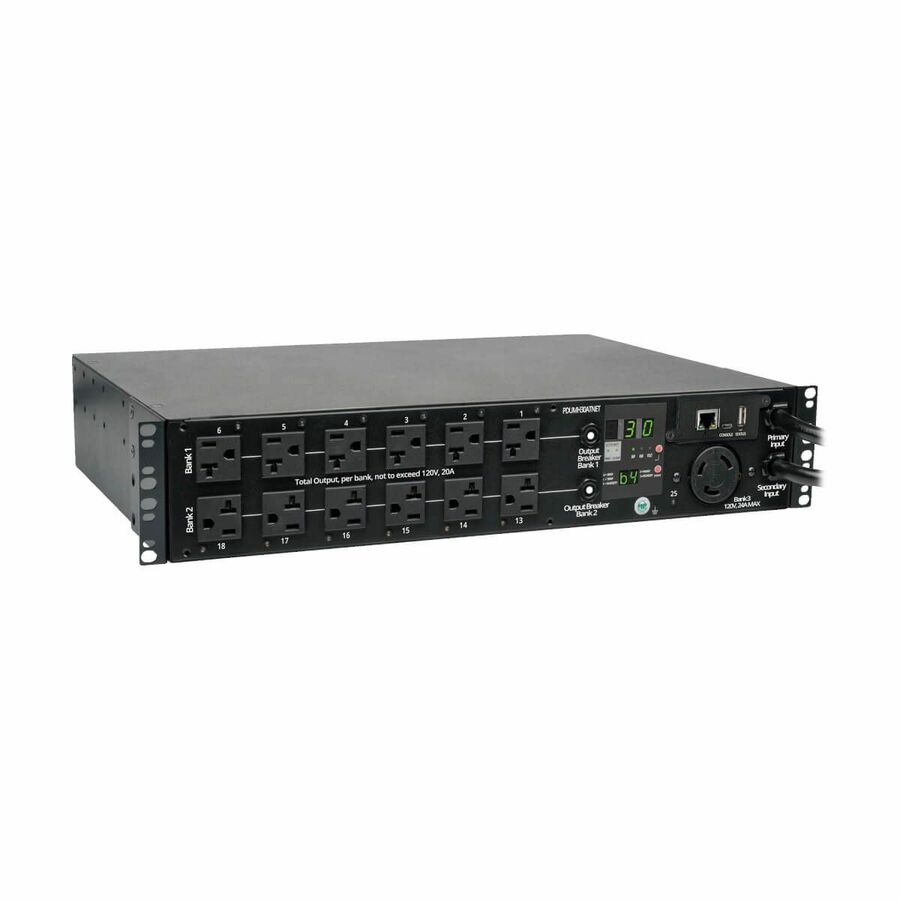
1 in stock - EatonTripp Lite by Eaton PDU 1.44kW 120V Single-Phase ATS/Local Metered PDU - 8 NEMA 5-15R Outlets Dual 5-15P Inputs 12 ft. Cords 1U TAA - Metered Auto Transfer Switch - NEMA 5-15P - 8 x NEMA 5-15R - 120 V AC - 1U - Horizontal - Rack-mountable, Wall-mountable - TAA CompliantPDUMH15ATS
$644.00
$592.48*
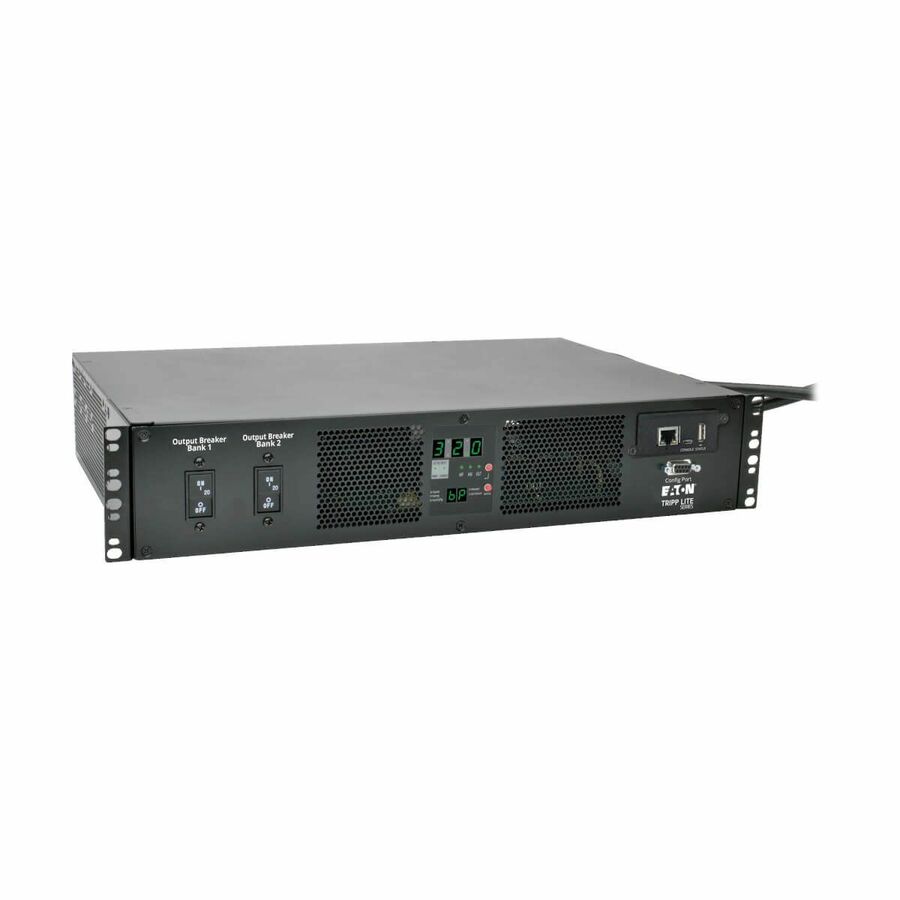
71 in stock - EatonTripp Lite by Eaton PDU 3.8kW 200-240V Single-Phase ATS/Local Metered PDU - 8 C13 and 2 C19 Outlets Dual C20 Inlets 12 ft. Cords 1U TAA - Metered Auto Transfer Switch - IEC 60320 C20 - 8 x IEC 60320 C13, 2 x IEC 60320 C19 - 230 V AC - 1U - Horizontal - Rack-mountable - TAA CompliantPDUMH20HVATS
$721.00
$663.32*
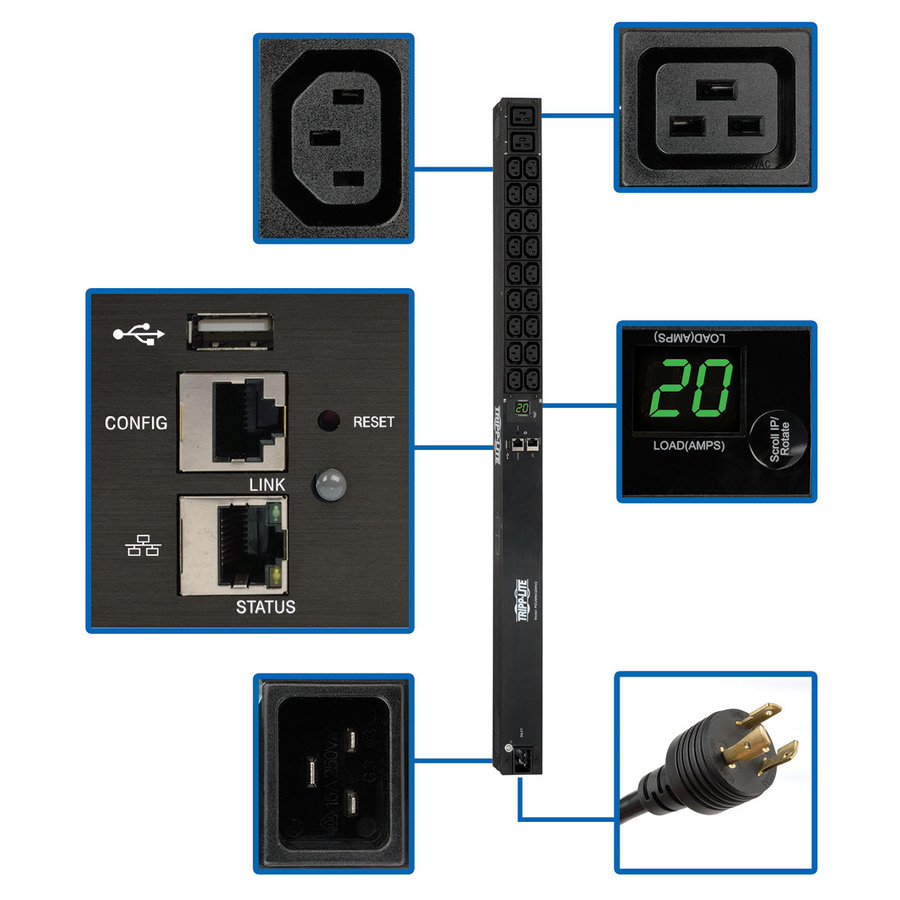
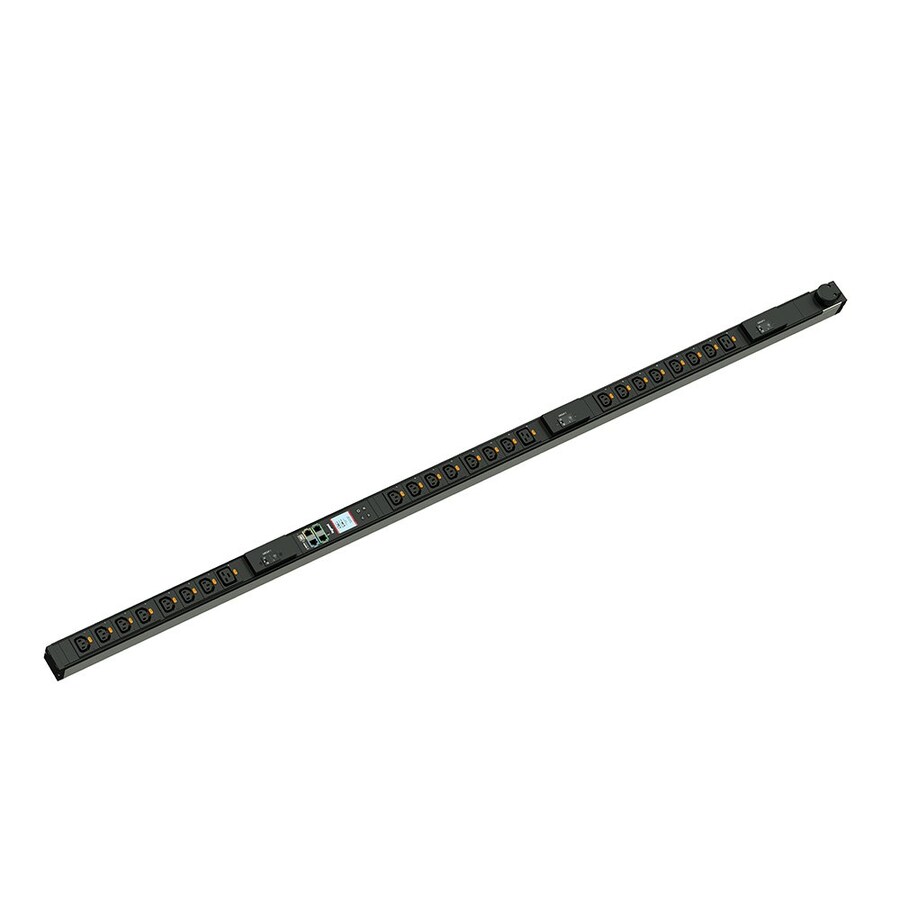
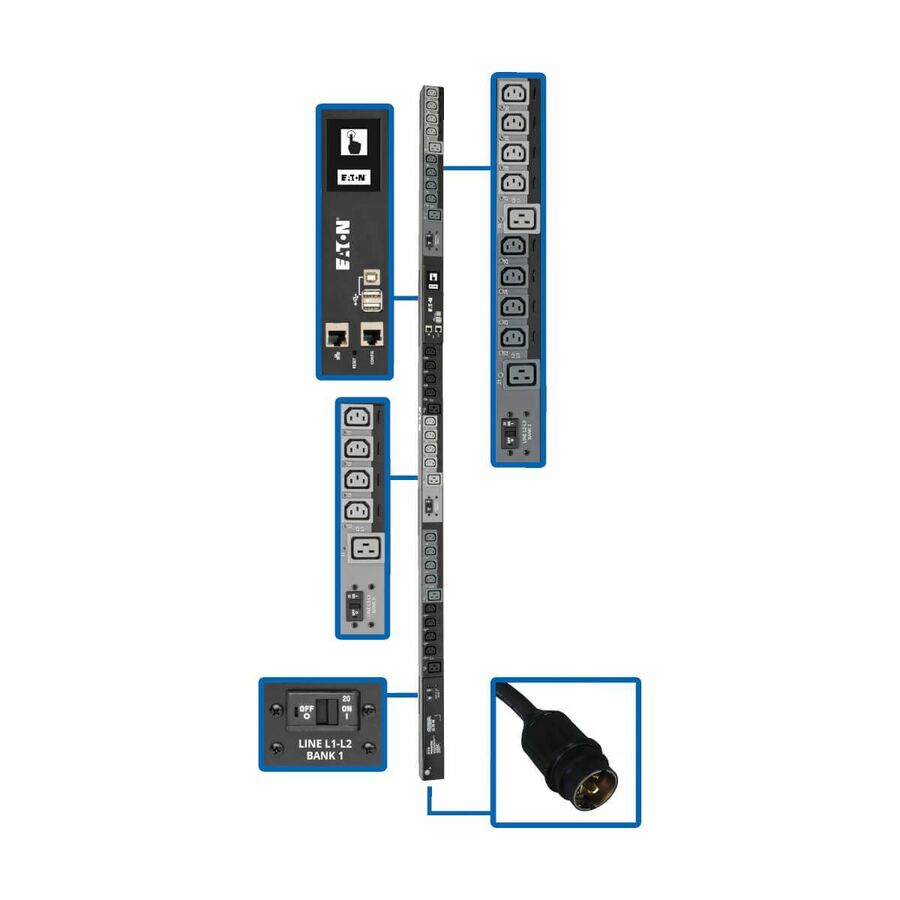
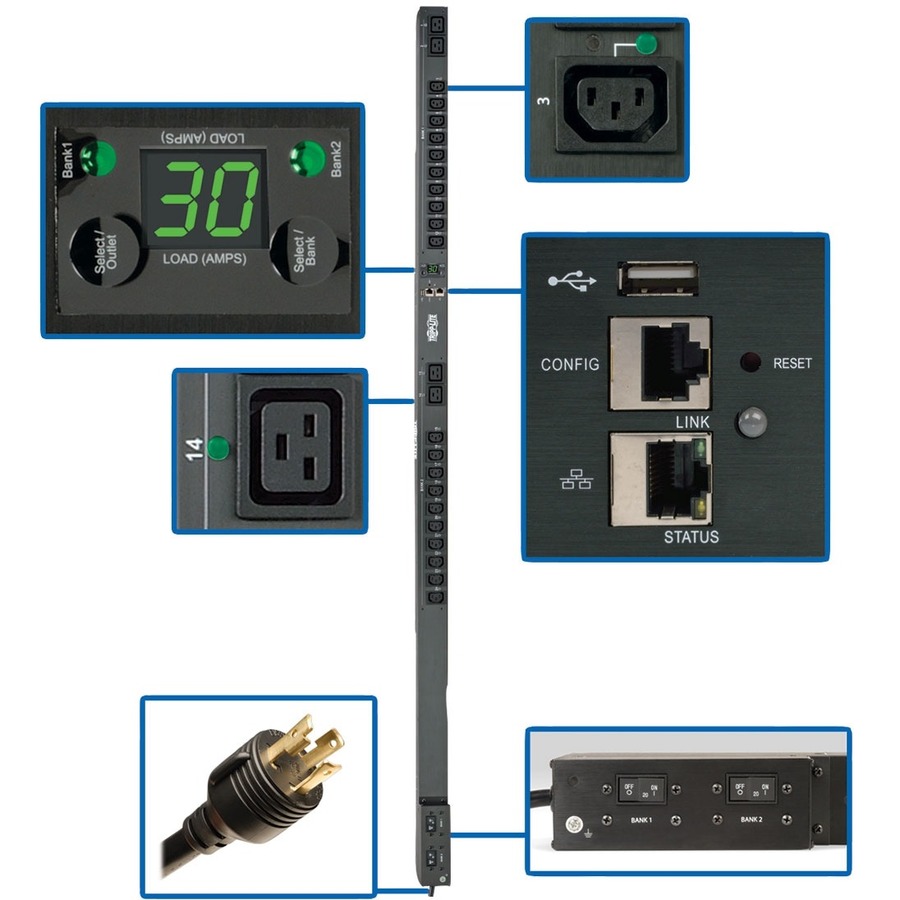
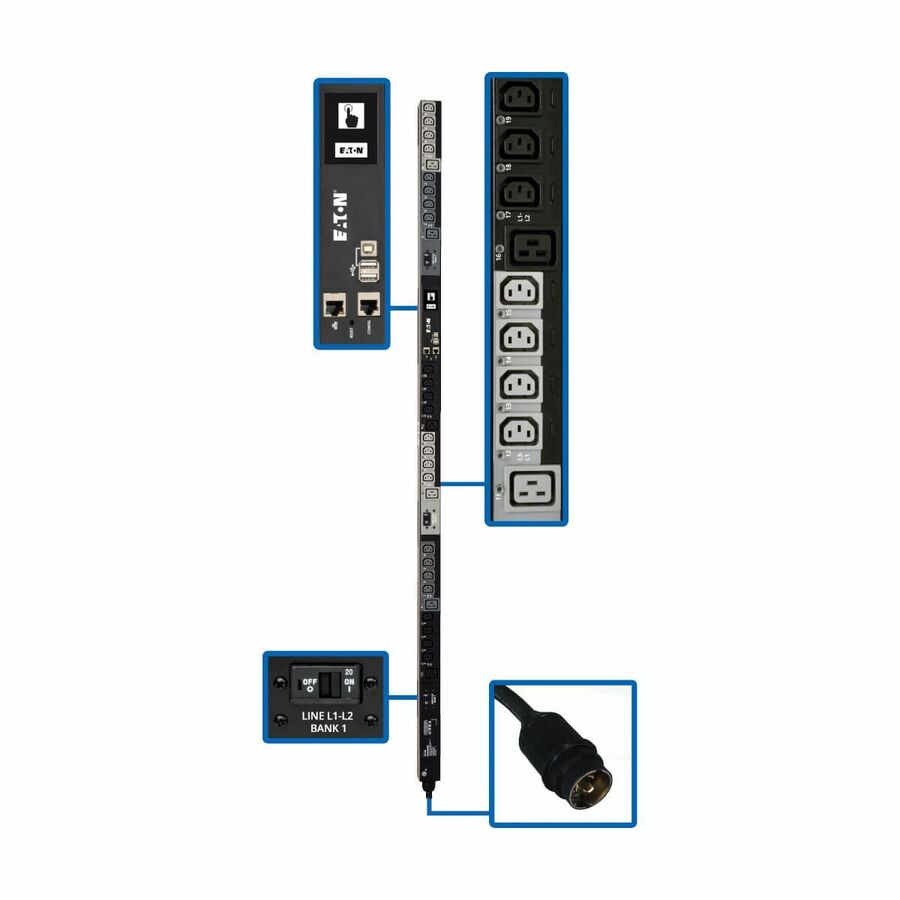
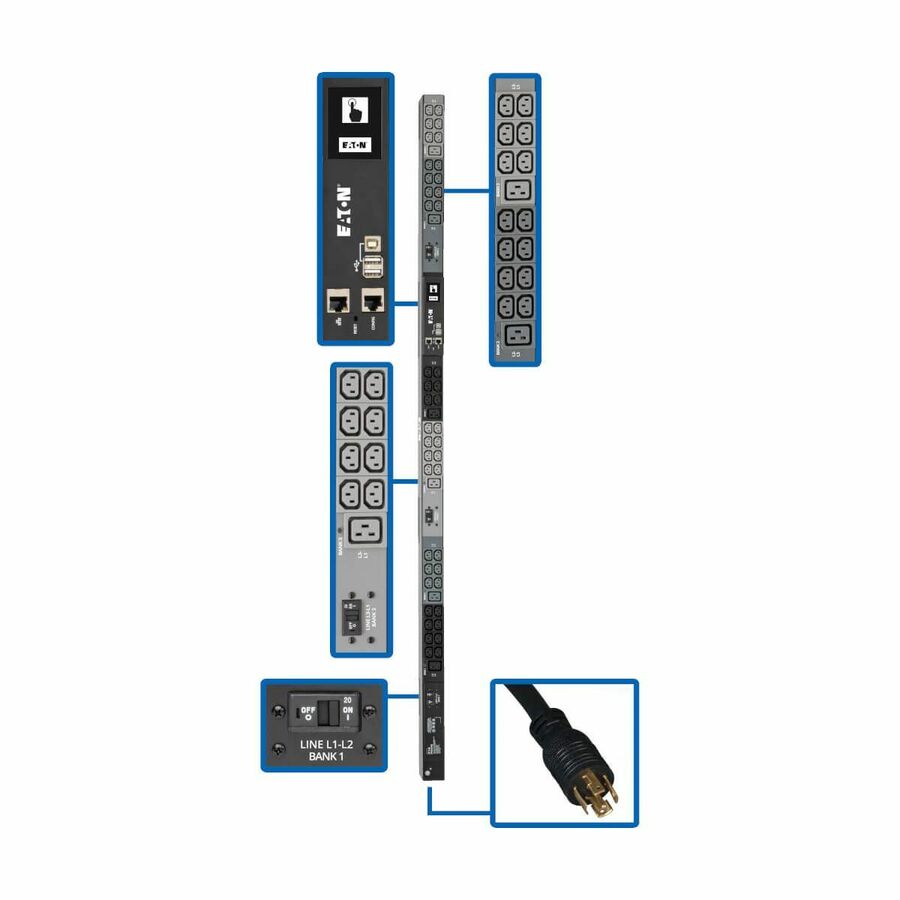
68 in stock - EatonTripp Lite by Eaton PDU 3.7kW Single-Phase 208/230V Monitored PDU - LX Platform 18 C13 2 C19 Outlets C20 / L6-20P Inputs 0U 900mm Height TAA - Monitored - NEMA L6-20P, IEC 60320 C20 - 2 x IEC 60320 C19, 18 x IEC 60320 C13 - 230 V AC - 0U - Vertical - Rack Mount - Rack-mountable - TAA CompliantPDUMNV20HV2LX
$767.00
$705.64*
61 in stock

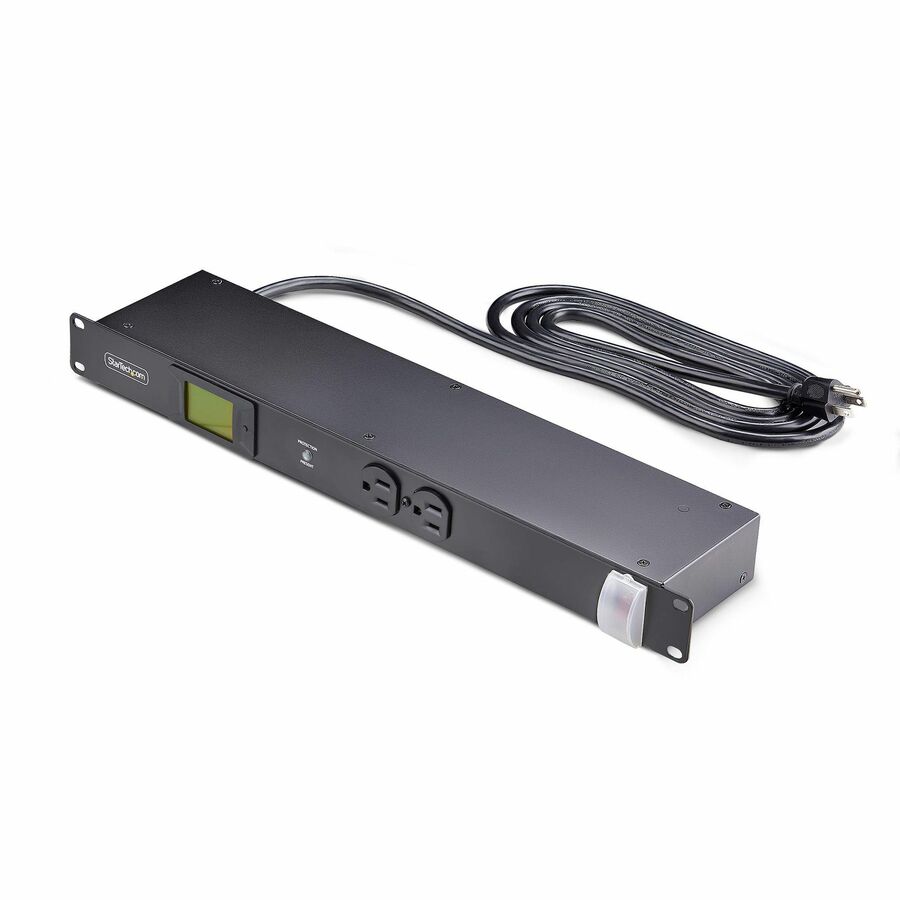
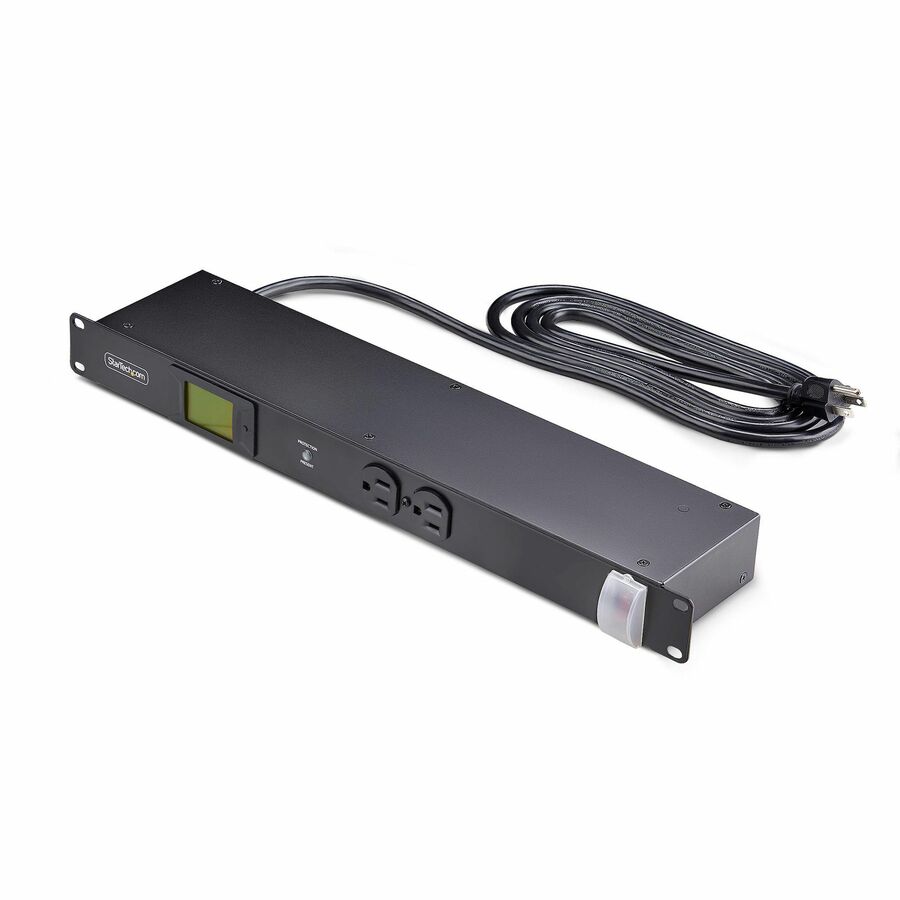
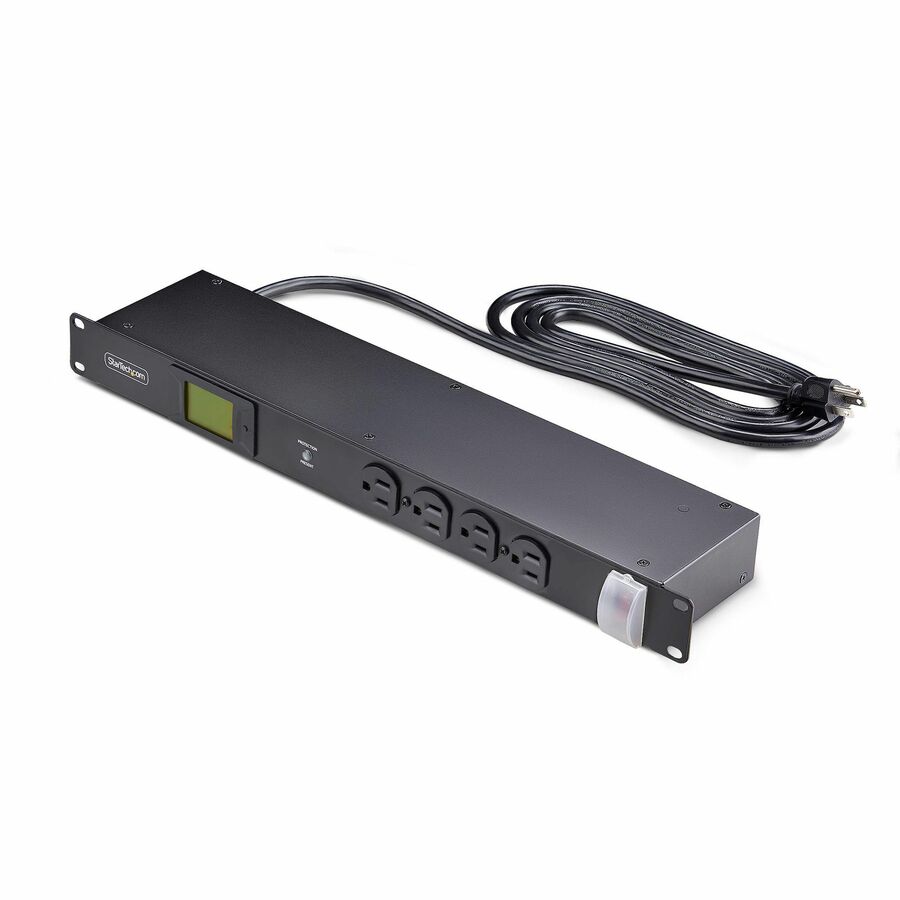
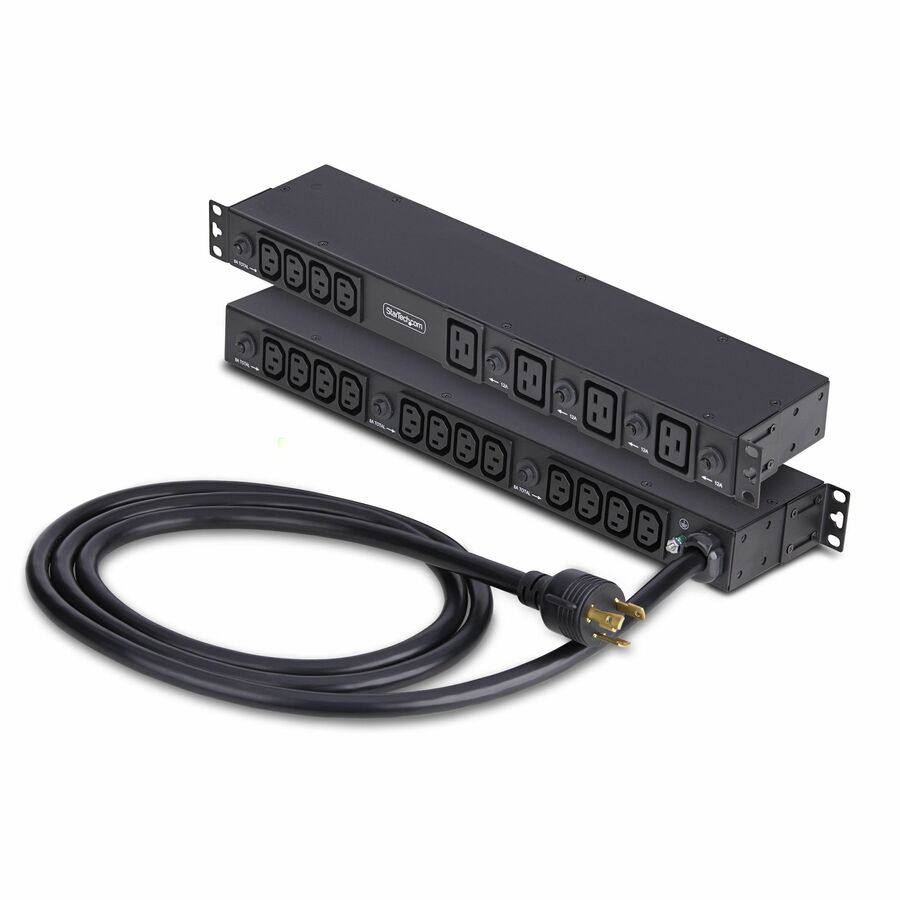


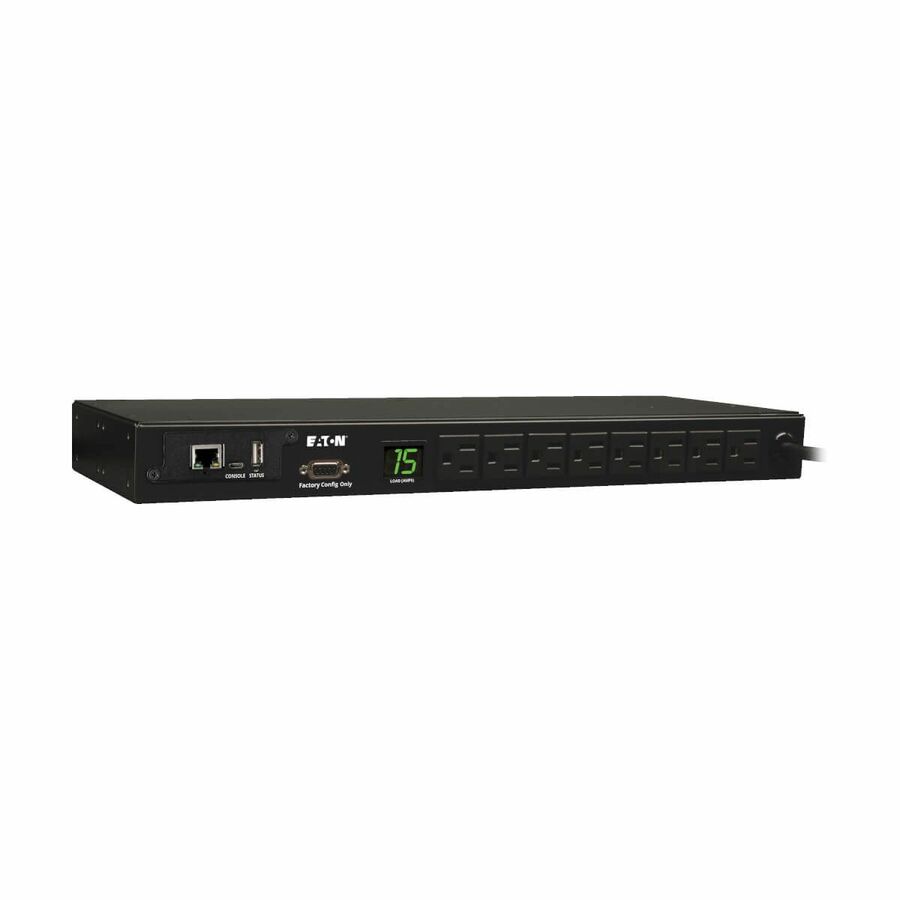
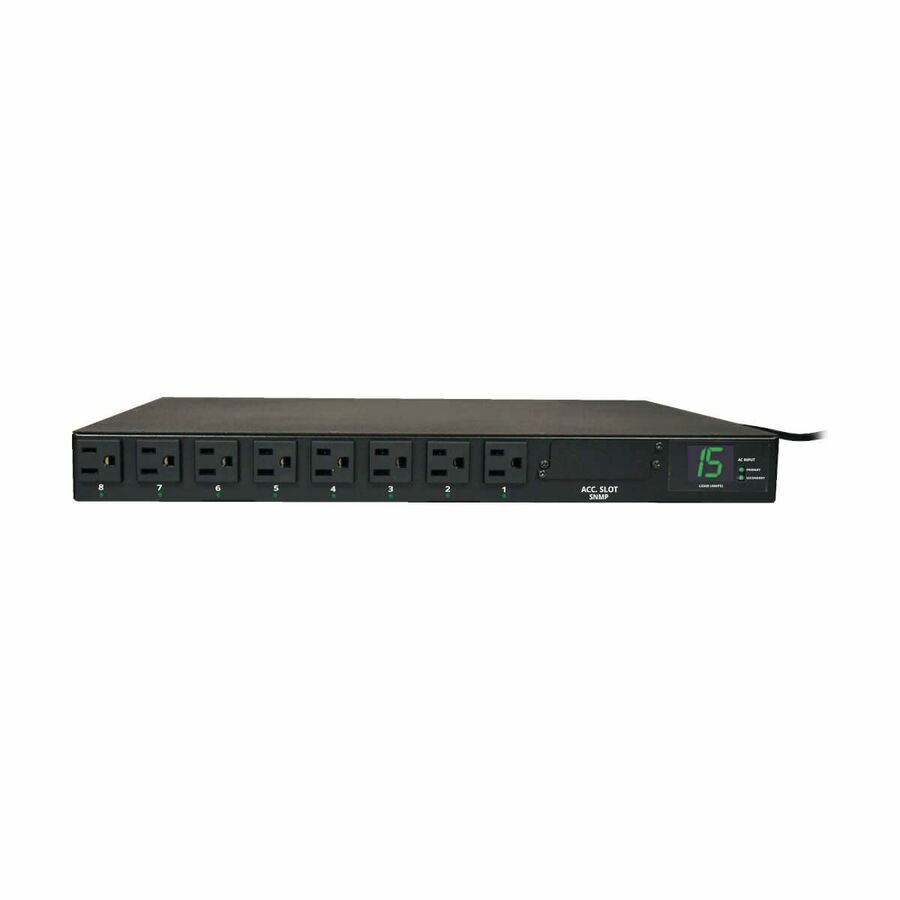
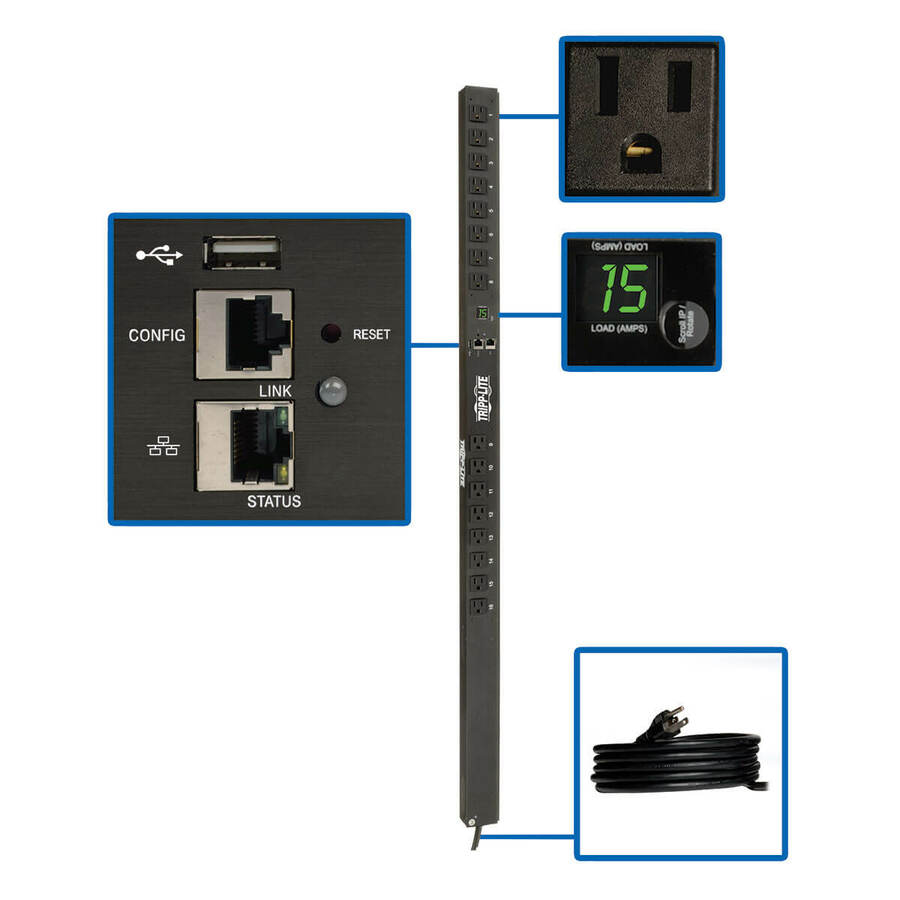
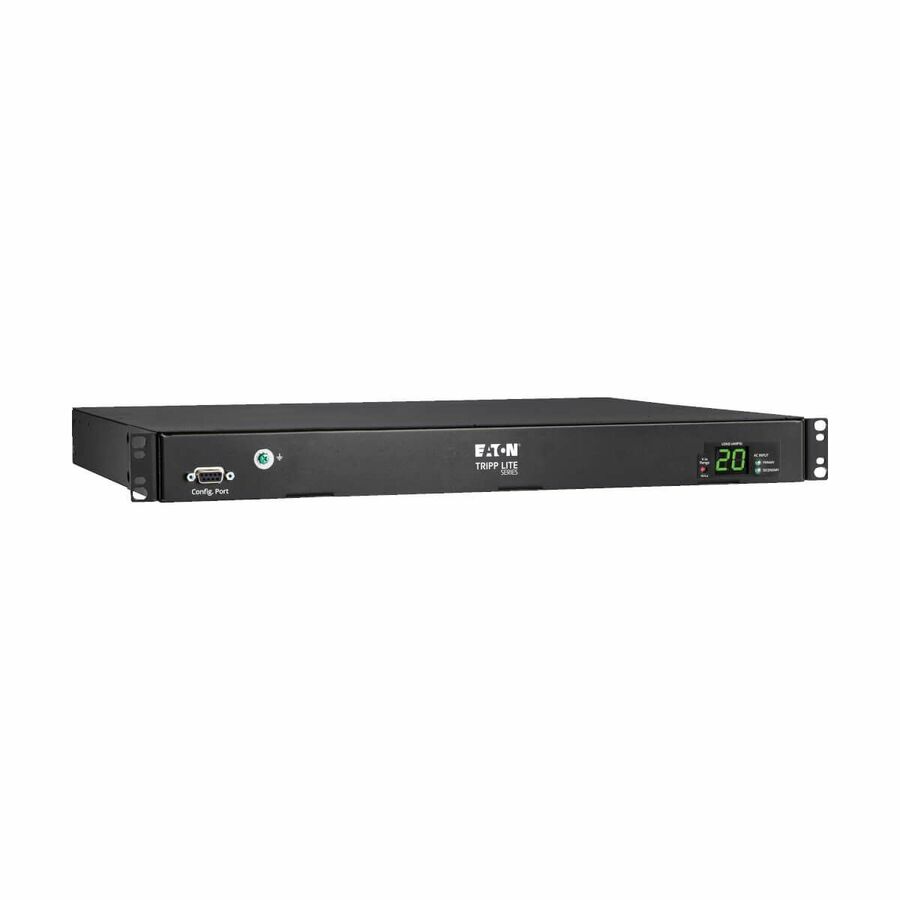
Thirteen outlets, 1U
StarTech.com
StarTech 13-Outlet Rackmount PDU, 1U Server Power Strip, 1x Front…
1315B8H-RACK-PDU
The plain answer where a cabinet is visited anyway: thirteen NEMA 5-15 outlets in a 1U horizontal body for 19-inch racks, one facing front and twelve at the rear, with an eight-foot cord and four-way mounting brackets.
Its title names no tier — outlets, rating and cord only — and carries the TAA designation on the part.
$108.55*In stockMetered 1U, C13 and C19
Eaton
Tripp Lite by Eaton PDU 3.7kW Single-Phase Local Metered PDU 208/230V…
PDUMH20HV
A 3.7 kW single-phase local metered unit at 208/230 V with eight C13 and two C19 outlets, a C20 inlet with an L6-20P adapter and a twelve-foot cord, so the circuit's headroom is a number on a display rather than a discovery.
$338.56*In stockDual-inlet ATS, 1U
Eaton
Tripp Lite by Eaton PDU 3.8kW 200-240V Single-Phase ATS/Local Metered…
PDUMH20HVATS
The same eight C13 and two C19 outlet layout in a 1U body, but fed from two C20 inlets through an automatic transfer switch with local metering — the shape a rack takes when the equipment in it is single-corded and the feeds are not.
Titled TAA Compliant by the manufacturer; on a dual-feed build, verify the designation on both units in the pair.
$663.32*In stockNetwork metered, 1U
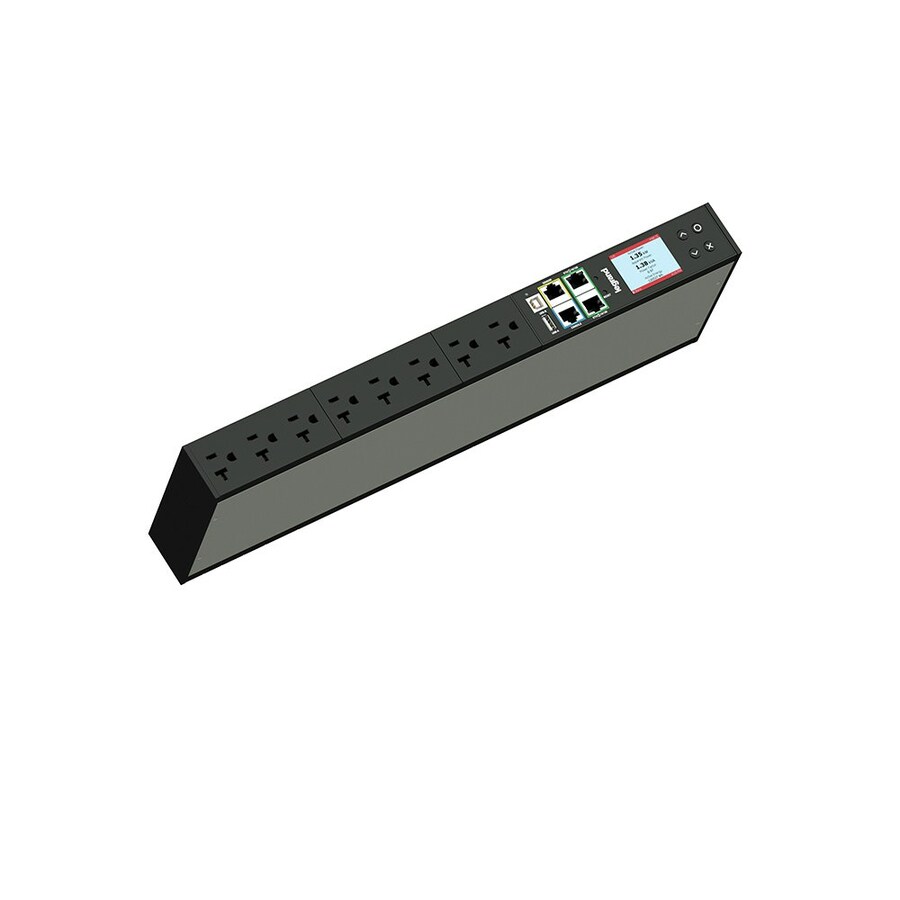
Legrand
Legrand Horizontal Rackmount Network Metered 8 Outlet Power…
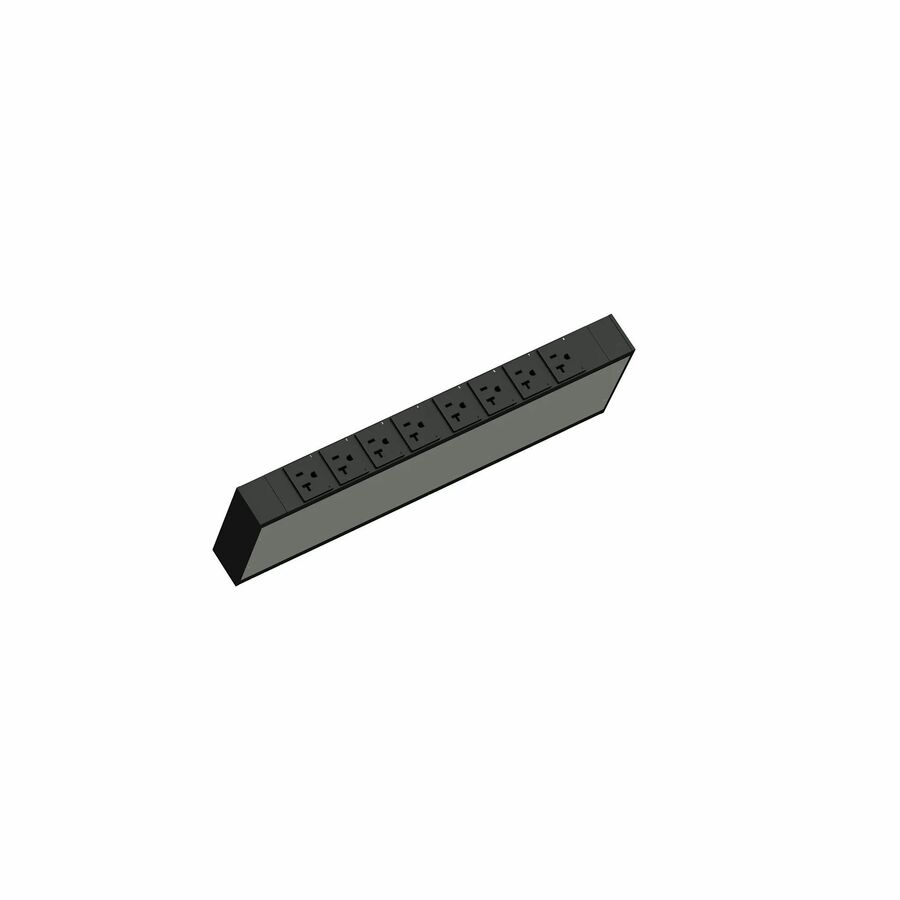
LP-41210
A horizontal rackmount metered unit with eight NEMA 5-20R outlets on an L5-20P inlet and an RJ-45 network interface, for a closet where the load reading has to leave the room without the unit taking a second rack unit's worth of features.
$1,026.03In stock0U switched, 24 outlets
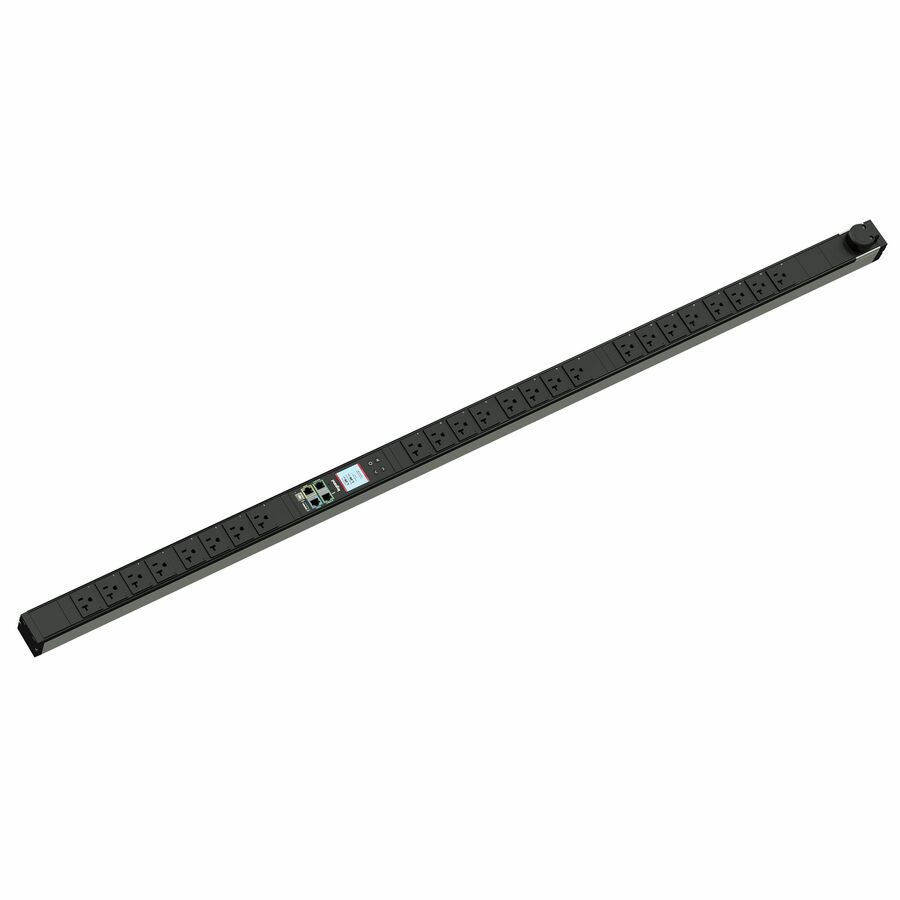
Legrand
Legrand ZeroU PDU
LP-61200
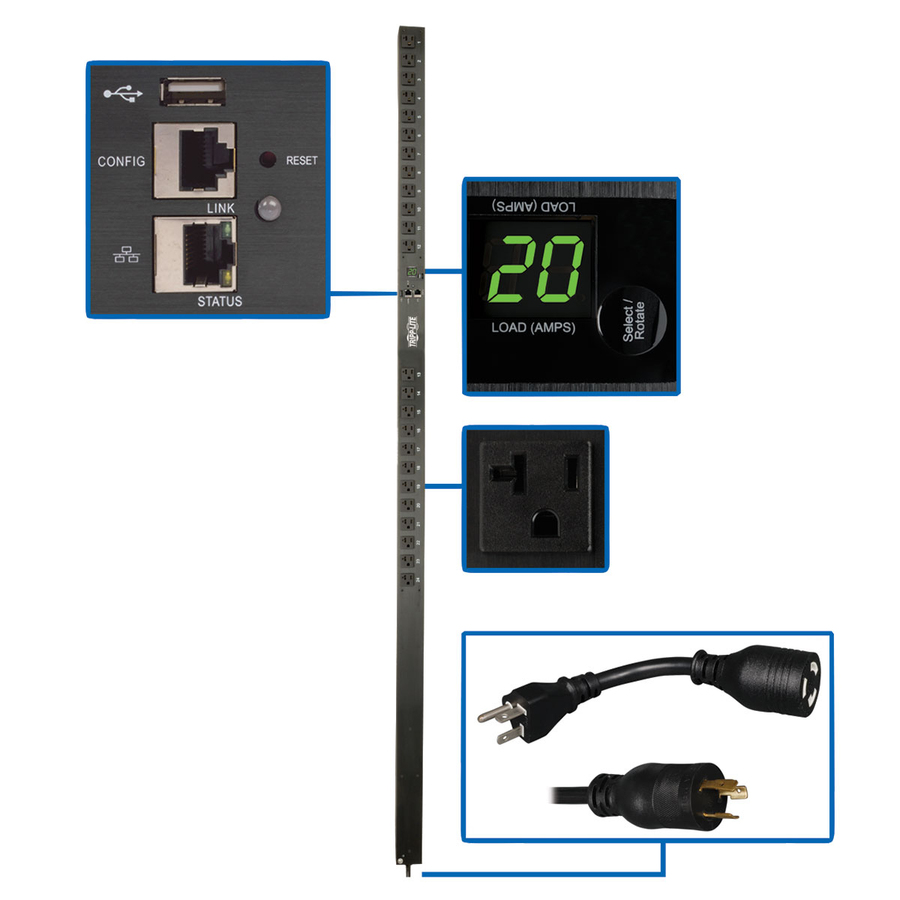
A ZeroU vertical body with twenty-four NEMA 5-20R outlets under per-outlet switching on a 20 A L5-20P inlet, mounted down the side of the cabinet so the outlet count costs no rack units.
$1,696.43In stock0U monitored, 36 outlets
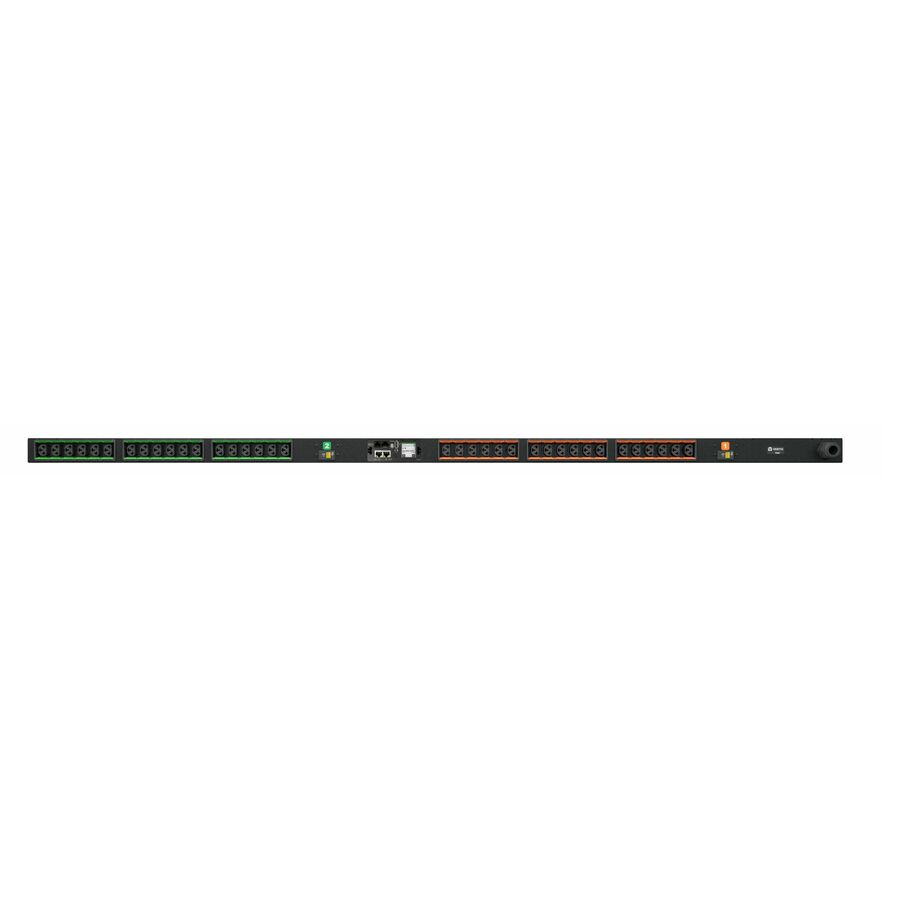
Vertiv
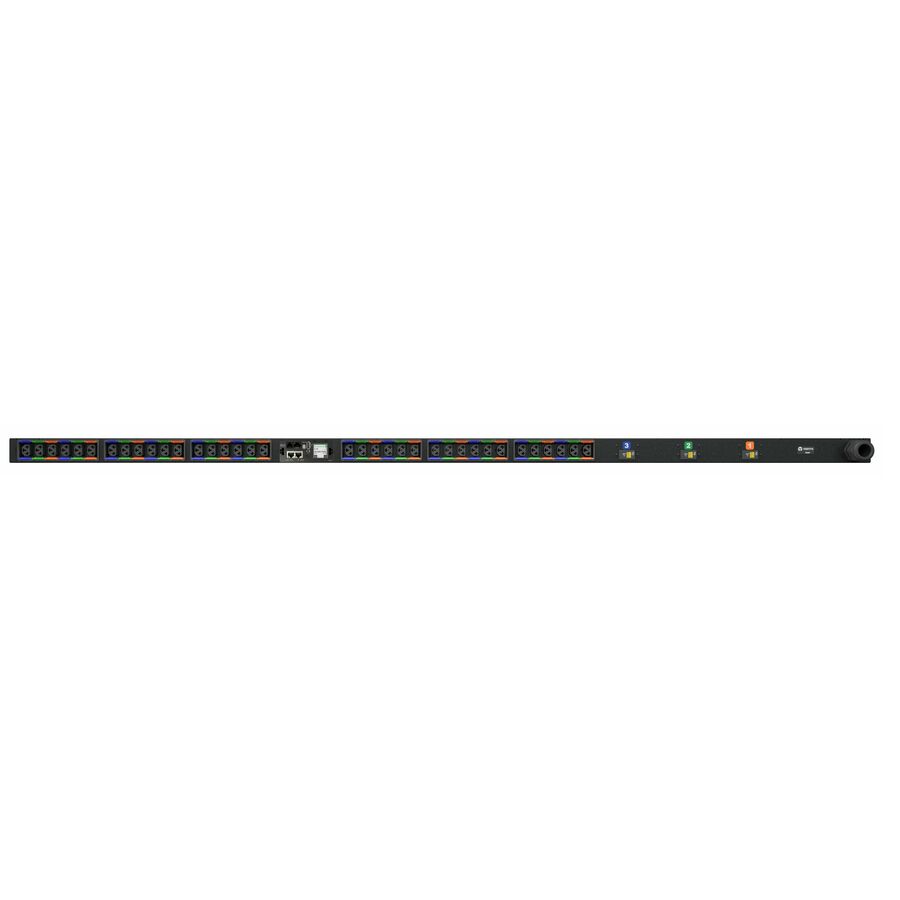
Vertiv Geist Monitored RPDU with Next-Generation IMD| 30A| 208V| 0U…
VP4N30AM
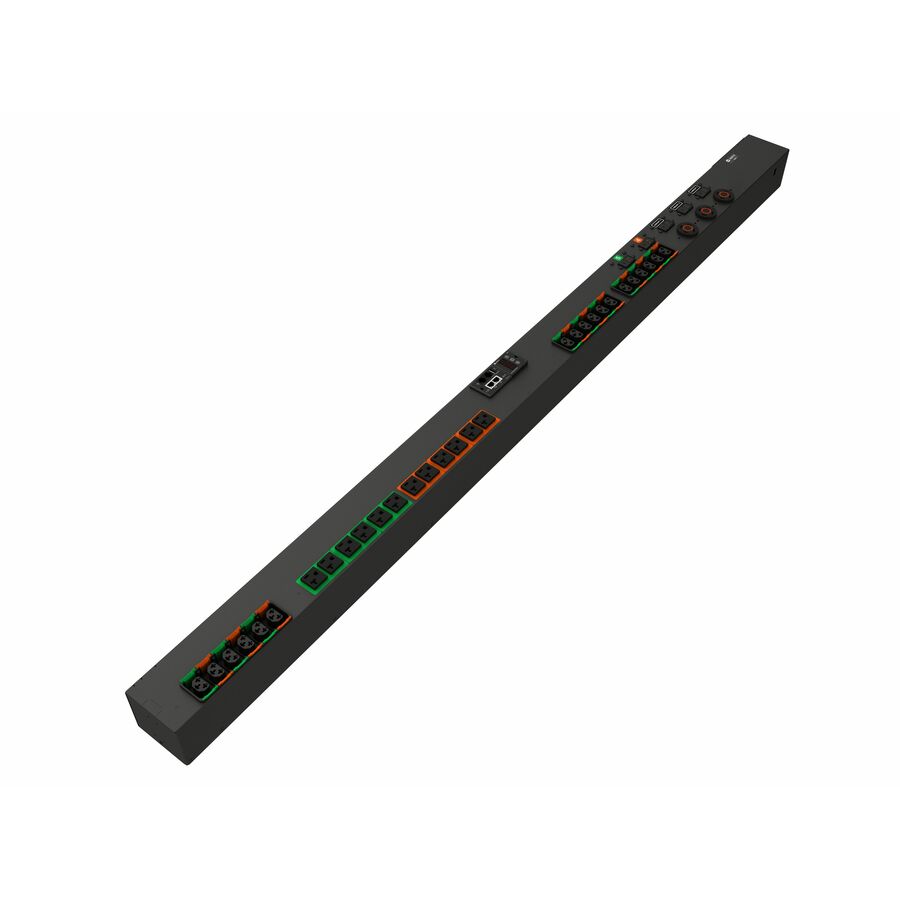
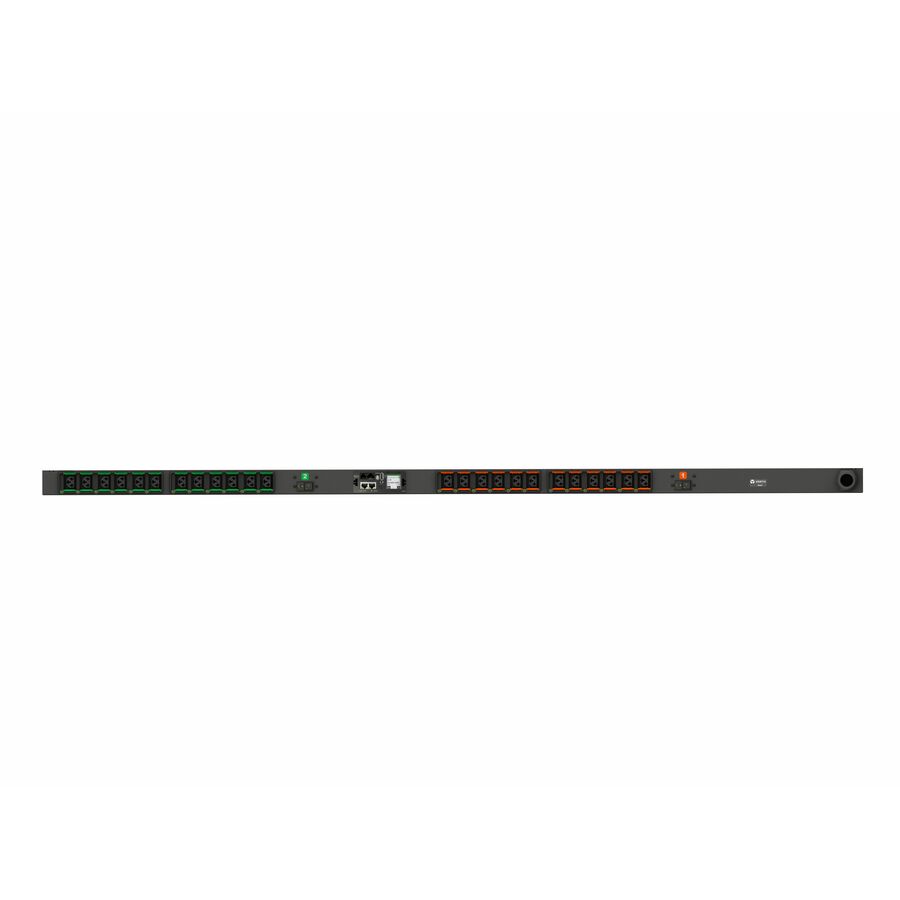
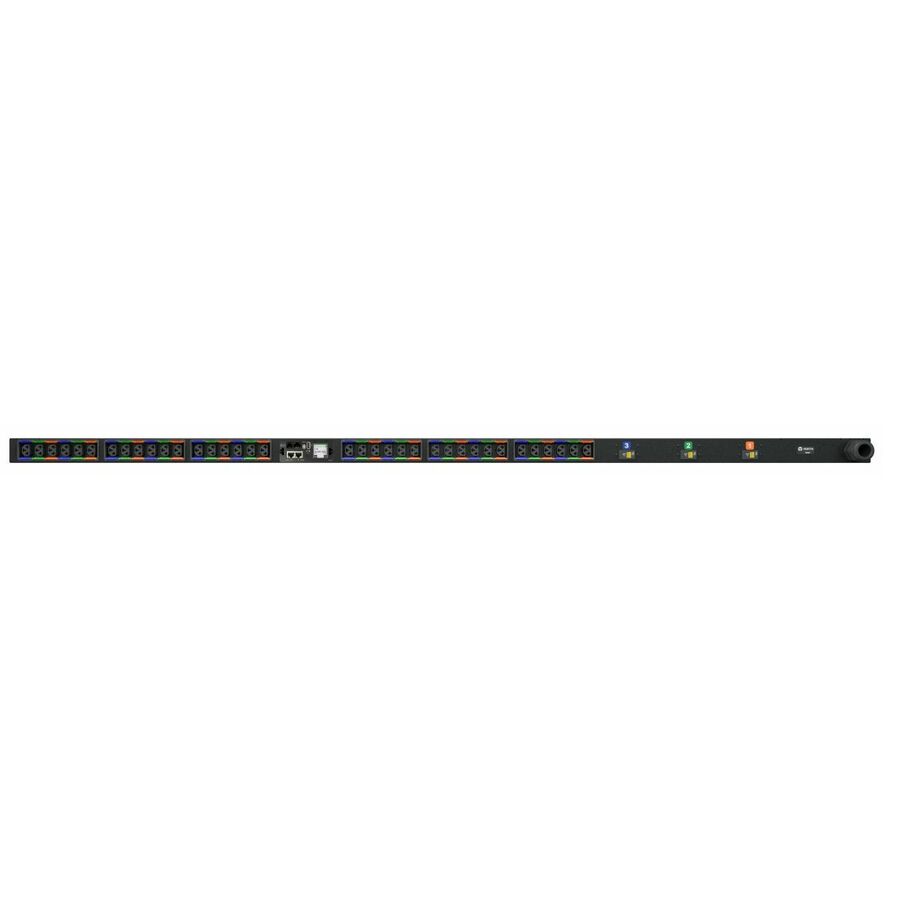
A 4.9 kW 0U monitored rack PDU with thirty-six combination C13/C19 outlets on an L6-30P plug at 208 V, with an interchangeable monitoring device, a high-visibility display and a redundant power-sharing port for the dense end of a cabinet.
$1,245.87*In stockSwitched 1U, 30 A
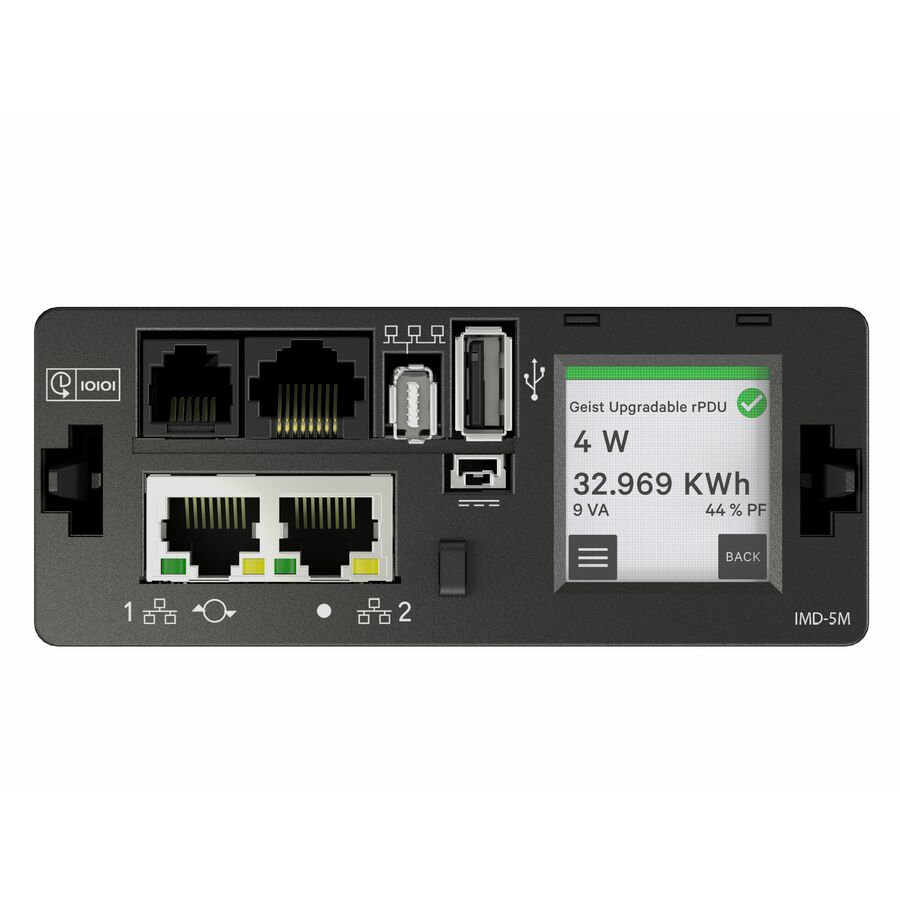
Vertiv
Vertiv Geist Switched Rack PDU with Next Generation IMD
VP5N31A1
The switched counterpart in a 1U horizontal body: twelve combination C13/C19 receptacles at 4.9 kW on an L6-30P plug, with per-outlet control and the same interchangeable monitoring device, for the racks you need to power-cycle remotely.
$1,529.33*In stockEight outlets, network
ATEN Technology
ATEN eco PDU PE6208A 8-Outlets PDU-TAA Compliant
PE6208A
An eight-outlet eco PDU in a 1U body — NEMA 5-20R outlets on a C20 inlet at 120 V with an RJ-45 network interface — a compact option where the rack needs remote reach but not thirty-six receptacles.
The TAA designation is carried in the manufacturer's own part title, as it is on every row this page renders.
$527.58In stockMore PDUs in the Uniqcli catalog
See all 4,668 PDUsMore from across this category. In-stock lines lead, and a back-ordered line carries the same estimated availability its product page does — with live pricing throughout, NDAA §889 screening before checkout and TAA verified on request.
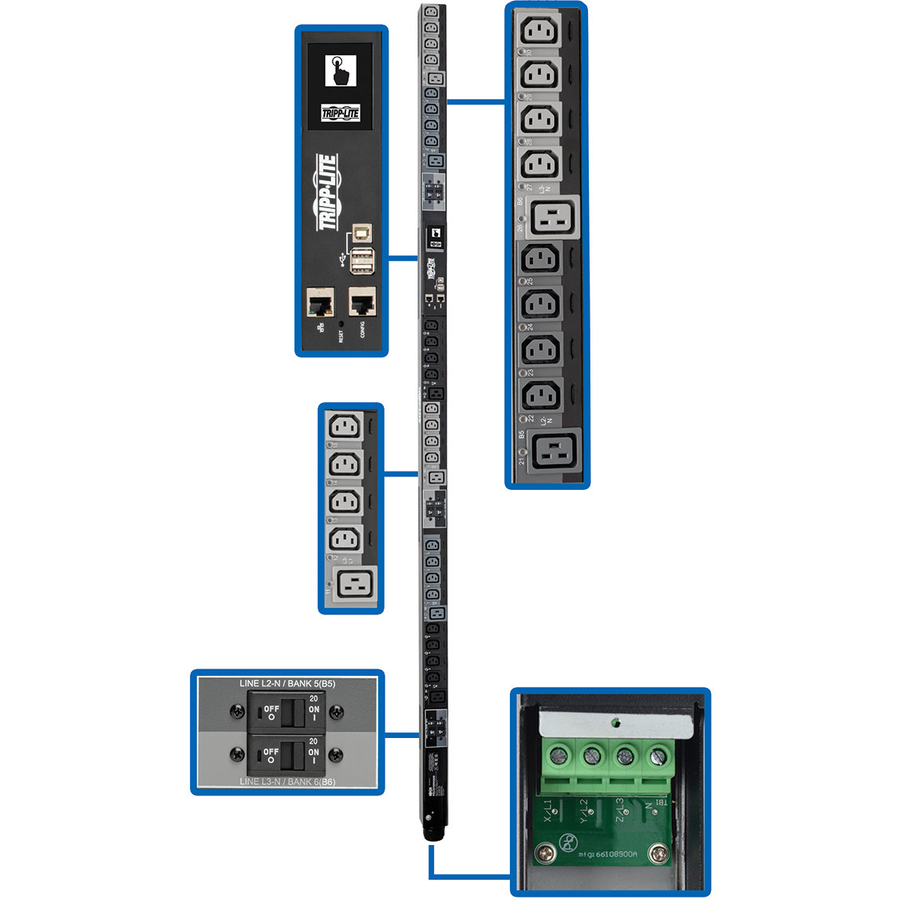
- EatonEaton Tripp Lite Series 28.8kW 220-240V 3PH Switched PDU - LX Interface, Gigabit, 30 Outlets, Hardwire 380-415V Input, LCD, 1.8 m Cord, 0U 1.8 m Height, TAA - Switched - Hardwired - 6 x IEC 60320 C19, 24 x IEC 60320 C13 - 380 V AC, 400 V AC, 415 V AC - 0U - Vertical - Rack Mount - Rack-mountable - TAA CompliantPDU3XEVSRHWB
$2,798.00
$2,574.16*
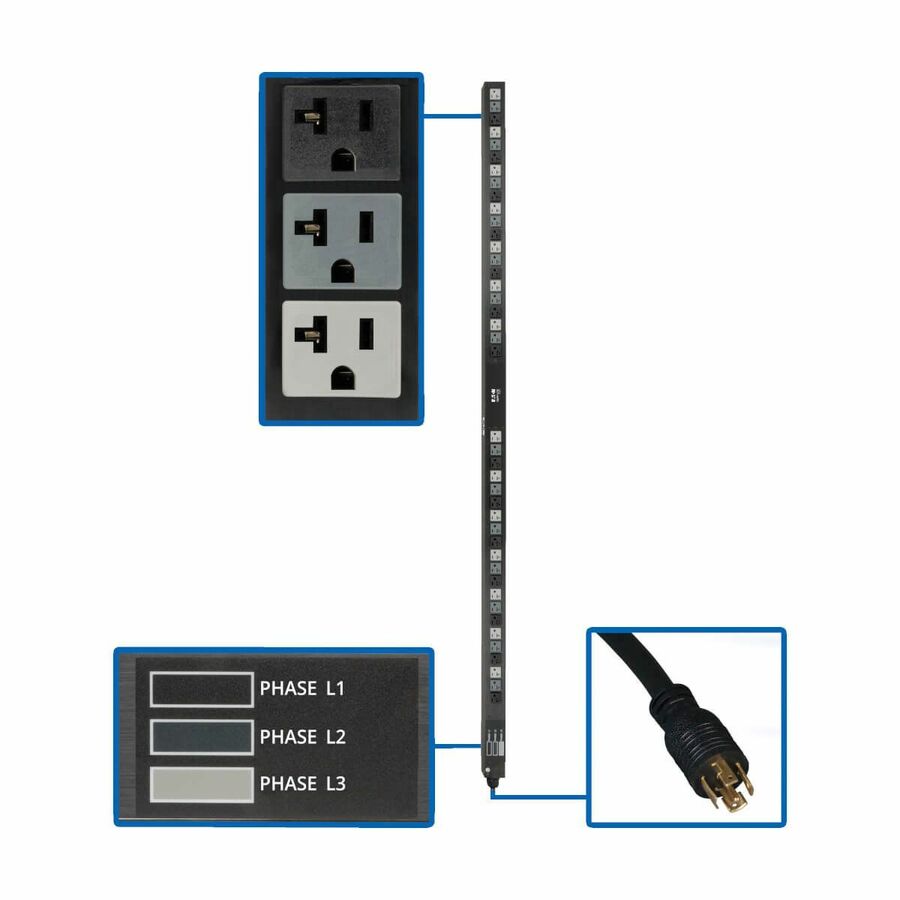
8 in stock - EatonTripp Lite by Eaton PDU 10kW 200-240V 3PH Switched PDU - LX Interface Gigabit 30 Outlets L21-30P Input LCD 1.8 m Cord 0U 1.8 m Height TAA - Switched - NEMA L21-30P - 6 x IEC 60320 C19, 24 x IEC 60320 C13 - 230 V AC - 0U - Vertical - Rack Mount - Rack-mountable - TAA CompliantPDU3EVSR6L2130
$2,722.00
$2,504.24*
26 in stock - EatonTripp Lite by Eaton PDU 6.7kW 200-240V 3PH Switched PDU - LX Interface Gigabit 30 Outlets L21-20P Input Outlet Monitoring LCD 1.8 m Cord 0U 1.8 m Height TAA - Switched - NEMA L21-20P - 6 x IEC 60320 C19, 24 x IEC 60320 C13 - 230 V AC - Network (RJ-45) - 0U - Vertical - Rack Mount - Rack-mountable - TAA CompliantPDU3EVSR6L2120
$2,520.00
$2,318.40*
16 in stock - EatonTripp Lite by Eaton PDU 10kW 200-240V 3PH Switched PDU LX Interface Gigabit 30 Outlets L21-30P Input LCD 1.8 m Cord 0U 1.8 m Height TAA - Switched - NEMA L21-30P - 6 x IEC 60320 C19, 24 x IEC 60320 C13 - 230 V AC - 0U - Vertical - Rack Mount - Rack-mountable - TAA CompliantPDU3EVS6L2130
$2,407.00
$2,214.44*
27 in stock - EatonTripp Lite by Eaton PDU 10kW 200-240V 3PH Monitored PDU - LX Interface Gigabit 48 Outlets NEMA L21-30P LCD 3 m Cord 0U 1.8 m Height TAA - Monitored - NEMA L21-30P - 6 x IEC 60320 C19, 42 x IEC 60320 C13 - 230 V AC - Network (RJ-45) - 0U - Vertical - Rack Mount - Rack-mountable - TAA CompliantPDU3EVN10L2130B
$2,014.00
$1,852.88*
9 in stock - EatonTripp Lite by Eaton PDU 7.7kW Single-Phase Switched Automatic Transfer Switch PDU Two 200-240V IEC309 32A Blue Inputs 16-C13 2-C19 Outlets 2U TAA - IEC 60309 32A BLUE (2P+E) - 16 x IEC 60320 C13, 2 x IEC 60320 C19 - 230 V AC - 7.40 kVA - 1U/2U - Horizontal RackmountPDUMH32HVATNET
$2,013.00
$1,851.96*
81 in stock


Need pricing on TAA-designated rack PDUs?
Tell us where to reach you and a Uniqcli specialist will follow up by email with current pricing, availability and lead time for the quantities you need — including parts that aren’t shown on this page.
Buying for an organization or for yourself — both work. No payment up front.
A power distribution unit is rarely the part that holds up a federal order, right up until it is. The rack is racked, the switches are staged, and the purchase order carries an origin clause the PDU on the drawing cannot answer — so the whole line goes back for a substitution that costs a fortnight. The units below exist to take that failure off the table early: each one carries a TAA designation in the manufacturer's own catalog title, which is the manufacturer's statement about that specific part number, and it is the statement a contracting officer will expect you to be able to point at.
Read that designation for exactly what it is. It is a per-part fact, not a family rule and not a brand rule — the same vendor will list a designated unit beside a non-designated one, and two units that look identical on a rack elevation can differ on origin. It is also the manufacturer's assertion rather than an independent certification: the Trade Agreements Act asks whether an item is wholly the growth, product or manufacture of the United States or a designated country, or was substantially transformed in one into a new and different article of commerce with a distinct name, character or use, and it is the party offering the item that certifies where that happened. What a buyer does with that is verify it on the exact part number on the order, not on the product family in the brochure.
When the rule bites is the other half of the question, and it is the half most often guessed at. As of August 2026 the World Trade Organization Government Procurement Agreement supply threshold sits at $174,000, set by FAR Case 2025-007 and effective 13 March 2026 (FAR 25.402, acquisition.gov) — so on an ordinary open-market buy the origin clause generally attaches at or above that figure. Schedule buying works differently: GSA states that the Trade Agreements Act applies to Multiple Award Schedule contracts unless the contract says otherwise, and because the clause attaches at the contract level rather than the order level, the origin rule reaches individual orders regardless of how small the order is. That is why a modest rack refresh can carry an origin requirement that a same-size commercial order would not, and why buying the designated part by default is usually cheaper than working out which of your orders escaped the rule.
Buyer's checklist
How to choose a rack PDU when the order carries an origin clause
- Verify the designation on the part number you are actually ordering, not on the model family. Every row on this page carries it in the manufacturer's own title; the wider PDU shelf mixes designated and non-designated units freely, and the difference is invisible on a rack elevation.
- Confirm the current designated-country list yourself rather than working from memory or from a vendor slide. FAR 25.003 defines a designated country as a WTO GPA country, a free trade agreement country, a least developed country or a Caribbean Basin country, and the four lists are amended periodically — accessions, trade-agreement changes and graduations all move them.
- Treat the origin question and the covered-entity question as separate tests. NDAA FY2019 Section 889 has no dollar threshold at all and applies to every acquisition including micro-purchases, and it asks who made the equipment rather than where; a part can satisfy one test and fail the other.
- Pick the tier by what you must be able to do without walking to the rack: basic for distribution behind a breaker, metered for a load reading on a local display, monitored to put that reading on the network for thresholds and history, switched for per-outlet power cycling. Where a title stacks the words — monitored with outlet-level metering, switched with an interchangeable monitoring device — read the exact row.
- Match the input plug, voltage and phase to the circuit the facility provides. These titles name their inlets per part, from NEMA 5-15P and L6-20P through L6-30P and IEC 60309 at 120 V, 208 V and 230 V, and a three-phase unit on a single-phase feed is a return rather than a workaround.
- Choose 0U vertical or 1U horizontal on which resource is scarce — rack units, or the side channel and depth a vertical body needs behind the equipment — and then standardize the part number per rack archetype so spares, cord lengths and outlet maps stay one decision instead of twenty.
- Plan the networked units as network devices. A monitored or switched PDU is addressed, patched and placed on the management network like any other out-of-band device, and any monitoring or DCIM licensing it implies belongs in the same purchase rather than in next year's renewal.
What a TAA designation on a PDU title does and does not tell you
The Trade Agreements Act question is about origin, and it has a specific shape. Under FAR 25.003 an end product qualifies if it is wholly the growth, product or manufacture of the United States or of a designated country, or if it was substantially transformed in one of those places into a new and different article of commerce with a name, character or use distinct from what it was made from. "Designated country" is itself four lists rolled into one term — the WTO Government Procurement Agreement countries, the free trade agreement countries, the least developed countries and the Caribbean Basin countries — and the composition of those lists is exactly the part that changes over time. As of August 2026 the FAR text published on acquisition.gov reflects FAC 2026-01, effective 13 March 2026. Treat any list you have saved as a snapshot, and confirm the current one at acquisition.gov or through GSA's own designated-country lookup before you rely on it in a determination.
What the designation on a catalog title does not do is settle the other compliance questions in the same order. It says nothing about NDAA Section 889, which is a different statute asking a different question and carrying no dollar threshold whatsoever: it applies at every acquisition value, including micro-purchases and commercial off-the-shelf items, and it names specific entities — Huawei, ZTE, Hytera, Hikvision and Dahua, with their subsidiaries and affiliates — rather than countries. A unit built in a designated country by an unrelated manufacturer answers the origin test and has nothing to do with the covered-entity test; a unit that clears the covered-entity test may still have been made somewhere that is not on the FAR 25.003 lists. Nor does the designation speak to encryption validation: where a networked PDU's management interface has to meet a cryptographic requirement, that is a NIST Cryptographic Module Validation Program question answered by looking the specific module up on csrc.nist.gov, not by reading a product title.
Reading the tiers, and where the compliance line usually lands
The four PDU tiers are a ladder of questions you can answer from your desk, and the origin clause tends to bite hardest at the top of it. A basic unit distributes outlets behind a breaker and nothing more, which in a comms cupboard somebody visits anyway is genuinely the whole requirement. A metered unit puts the circuit's load on a display at the rack, which is what stops a cabinet being filled until something trips. A monitored unit puts that reading on the network, where a threshold can raise an alert and a load history makes capacity planning possible. A switched unit adds per-outlet control, and its value is measured in trips not taken — a cage, an unstaffed edge site or a building across a campus pays for one the first weekend it saves a drive. The reason the clause matters more as you climb is that the networked tiers are where the part numbers proliferate: a vendor will carry near-identical monitored units differing only in inlet and origin, and the designated one is not always the one that comes up first in a distributor search.
Two planning notes save most of the rework on a federal rack build. Dual-corded equipment wants two feeds from two circuits, which means PDUs in matched pairs with the load balanced so either side can carry the rack alone — and if the order carries an origin clause, both halves of that pair have to satisfy it, which is a detail that gets missed when the second unit is added late. And the convention of loading a continuously loaded branch circuit to roughly eighty percent of its rating is a facility question to settle with your electrician against the actual circuit, breaker and local code, not something to infer from a product page. Send the rack elevations, the circuits the room provides and the equipment list, and the PDUs, the racks and cable management, the upstream power and any monitoring licensing can be quoted together on one document with lead times attached.
Related reading
- TAA compliance guide for federal IT buyers
- TAA designated countries: the current lists
- TAA vs NDAA Section 889
- Best rack PDUs: basic, metered, monitored and switched
- TAA-compliant business laptops
- TAA-designated KVM switches
- Best TAA-compliant patch cables
- Best TAA-compliant transceivers
- TAA compliance screening
FAQ
Common questions
- What does a TAA designation in a PDU's title actually mean?
- It is the manufacturer's statement that the specific part number is a U.S.-made or designated-country end product under the Trade Agreements Act — either wholly made in the United States or a designated country, or substantially transformed there into a new and different article of commerce. It is a per-part assertion by the party offering the item, not an independent certification and not a property of the brand or the product family. The same manufacturer will list a designated unit beside a non-designated one, so the designation has to be read on the exact part number that appears on the order, and confirmed there rather than on the datasheet for the range.
- Does the origin rule apply to a small PDU order?
- It depends on how the order is placed, and the answer surprises people. On an ordinary open-market buy the trade-agreement clause generally attaches at or above the applicable threshold — as of August 2026 the WTO Government Procurement Agreement supply threshold is $174,000, set by FAR Case 2025-007 effective 13 March 2026 and published at FAR 25.402 on acquisition.gov. On GSA Schedule buying, GSA states that the Trade Agreements Act applies to Multiple Award Schedule contracts unless the contract says otherwise, and because the clause sits at the contract level the origin rule reaches individual orders regardless of the order's value. A small Schedule order can therefore carry a requirement an equivalent open-market order would not. Confirm the clauses on your own solicitation or contract rather than reasoning from the order total.
- Is a TAA-designated PDU automatically clear under Section 889?
- No, and treating the two as one test is the most common compliance mistake on hardware orders. The Trade Agreements Act asks where an item was made or substantially transformed; NDAA FY2019 Section 889 asks who made it and, in its second part, whether your organization uses the named equipment anywhere in its own operations. Section 889 carries no dollar threshold — it reaches every acquisition including micro-purchases and commercial off-the-shelf items — and it names specific entities and their subsidiaries and affiliates rather than countries. A part can satisfy either test and fail the other, so both questions have to be asked about every line, separately.
- Where is the current designated-country list published?
- In the FAR itself, at FAR 25.003 and in clause 52.225-5, published by the FAR Council at acquisition.gov. The definition rolls up four groups — WTO Government Procurement Agreement countries, free trade agreement countries, least developed countries and Caribbean Basin countries — and the membership of those groups is amended periodically as agreements change and countries accede or graduate, so a list is only accurate as of the date you pulled it. As of August 2026 the FAR text on acquisition.gov reflects FAC 2026-01, effective 13 March 2026. Check the source before you put a country in a determination.
- Can business, government and education buyers order these?
- Every line Uniqcli quotes is sourced through US distribution and screened for TAA country-of-origin and NDAA §889 status before checkout — with documentation tied to the specific part number, not a product family.
Need TAA-designated rack PDUs pricing?
Send a bill of materials or part numbers — we confirm stock and a below-market total, with TAA verified on request. No payment up front.