
Network & data center services
AI Infrastructure Solutions
An AI build is a bill of materials before it is an accelerator. We size and quote the whole thing — GPU compute, the storage tier that feeds it, the fabric between nodes, the rack power and airflow underneath it, and the licensing that sits on top — then stage, rack and hand it over as one documented delivery.
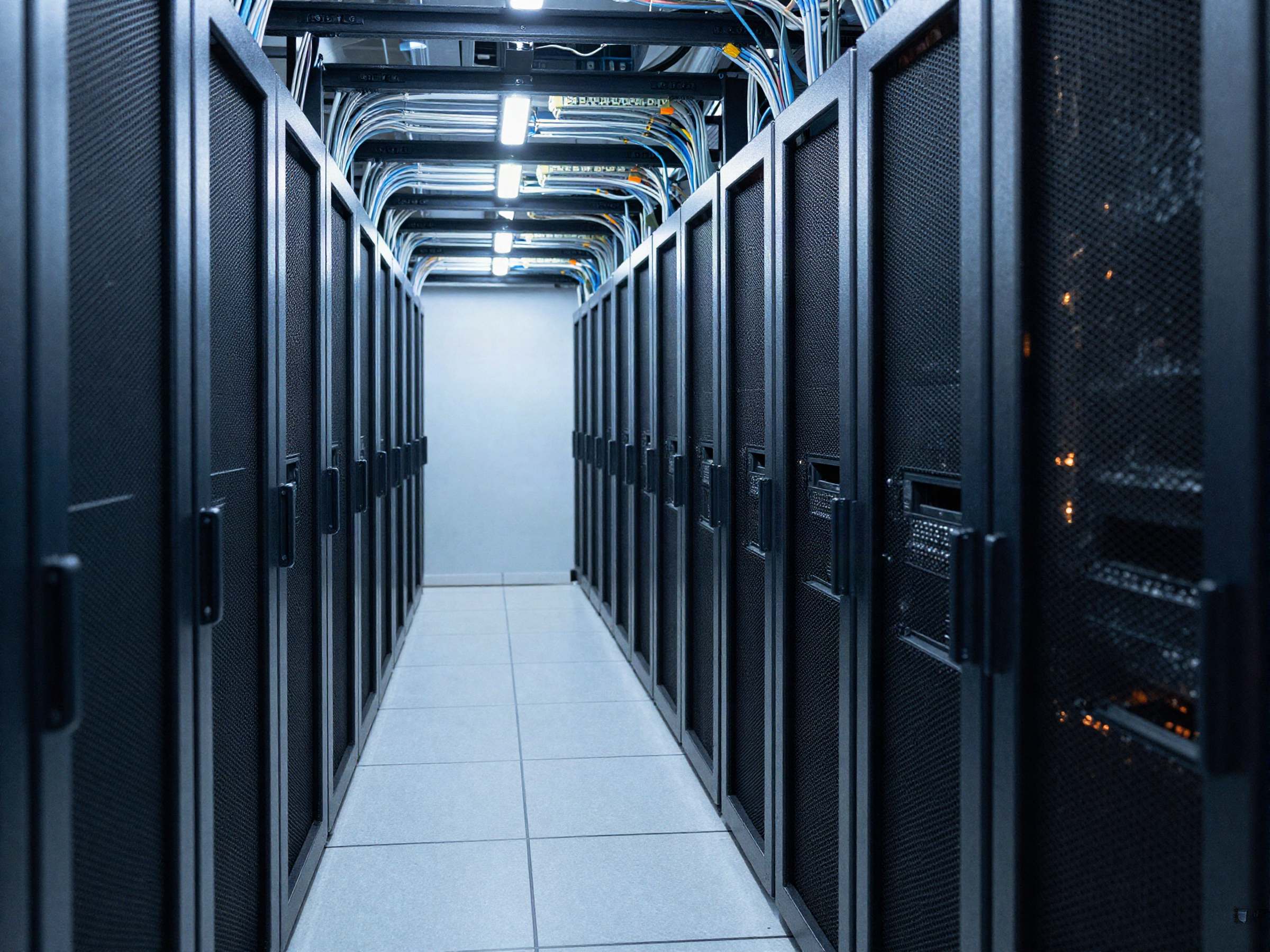
- Scope
- GPU compute · storage tier · cluster fabric · rack power and airflow
- Also quoted
- Platform, virtualization and support entitlements, alongside the metal
- Delivered
- Built, firmware-leveled, burned in and racked to a published elevation
- Boundary
- Models, data and the workload stay inside your program
Tell us the project — AI infrastructure
Tell us where to reach you and a Uniqcli specialist follows up by email to scope the work with you — what has to be covered, how many sites or buildings, and what already exists — then comes back with a quoted bill of materials across the equipment, the software licensing and the deployment work.
Priced against your own site rather than a package tier, sourced through US distribution and screened line by line. We specify, supply, stage and integrate; internet access is scoped separately from the equipment on this page, and operating the network stays with your team or the provider you contract.
The first number is our real one, not an opening one.
Tell us the scope and we come back with the best price we can do on it.
- Supporting federal, state & local purchasers
- GPC & P-Card accepted
- TAA & NDAA-889 screening before every quote
Live prices from our catalog right now — a starting point, not the project price. Your quote is scoped to the site and includes the licensing and services the job needs.
The accelerator is one line on a much longer bill of materials
Most AI infrastructure projects are priced twice: once as a set of accelerators, and again — six weeks later — as everything the accelerators turned out to need. The host that has the wrong PCIe topology or too few cores to keep the boards fed.
Continue readingShow less
The storage tier that cannot read fast enough to matter. The fabric nobody scoped, which becomes the bottleneck the moment there is more than one node. And the rack, which was built for a general-purpose row and is now being asked to carry several times the draw and the heat. We work the other order. Send the workload shape — model sizes, concurrency, whether this is training or inference, and the power the room can actually deliver — and one consolidated bill of materials comes back with the compute, the storage, the network, the rack power and the software entitlements as separate readable lines, each screened before the quote leaves.
Four layers, quoted as one document
Each layer changes the others, which is why quoting them separately is how projects overrun. Naming a manufacturer here describes the market and the lines we quote, not a Uniqcli partnership, authorization or endorsement.
Accelerated compute
Board-level accelerators — the NVIDIA H100, A100, L40S and RTX PRO families among them, carried by NVIDIA, PNY and Lenovo — matched to the chassis, the PCIe generation and the power supply that will actually hold them.
Continue readingShow less
The host is specified to the job rather than to a configurator default: lanes per board, cores per accelerator for data loading, and enough system memory that the CPU never becomes the thing the GPUs wait on.
The storage that feeds it
Accelerators are expensive to leave idle, and the most common reason they sit idle is a dataset arriving too slowly. The tier is sized against the read pattern the job actually has — sustained sequential for training, small random for retrieval — with local NVMe scratch beside the GPUs and the shared tier behind it, rather than one general-purpose array asked to do both.
Fabric between the nodes
One node is a server; two or more is a network problem. Adapter choice, switch port speed, optics or direct-attach copper, and the physical run lengths between racks are quoted as a matched set against the layout they have to reach — because a fabric specified after the racks are placed is a fabric that gets bought twice.
Rack, power and airflow
Accelerated racks land far above the density a general-purpose row was built for, which changes the PDU, the branch circuit, the receptacle type and often the containment strategy.
Continue readingShow less
Cabinet depth, static and rolling weight ratings, blanking and the power path are quoted in the same document as the compute, so none of it is discovered on install day.
One bill of materials, screened before it reaches you
Go to the formBoards are a storefront category; systems are a quote
It is worth being plain about which half of this is a shelf item. Board-level accelerators are a live, priced catalog category here — the data-center and professional lines are listed with availability, and plenty of buyers are adding capacity to hosts they already own. That is a straightforward purchase, and we treat it as one.
Continue readingShow less
Complete accelerated servers are not. Those are built and quoted to order through authorized US distribution rather than listed with a shelf price, because the configuration that matters — chassis, PCIe topology, power supplies, memory, local NVMe, adapters — is decided by the workload rather than by a SKU. Any supplier implying a full AI node is sitting on a shelf ready to ship is describing a stocking position rather than a build, and the difference shows up as a lead time nobody planned for.
Allocation is the other honest variable. Some accelerator and host lines move in days; constrained data-center parts run considerably longer, and that varies by part and by week. We quote the lead time distribution actually reports rather than an optimistic placeholder, and we flag the long-lead lines before an order is committed rather than after.
The half of an AI build that is not hardware
Software, subscriptions and support entitlements are sourced through authorized US distribution rather than held on a shelf, so stock language does not apply to them; what matters is the term, the node or socket count, and the co-termination date against the renewals you already carry.
Platform and virtualization licensing
Hypervisor, container platform, orchestration, GPU partitioning and the enterprise support entitlements that go with them are quoted as their own lines with their terms stated, rather than folded into a system price that goes quiet in a year.
Continue readingShow less
Where a line renews on a different anniversary from the hardware support, we say so on the quote.
Integration, staging and burn-in
Nodes are built, firmware-leveled to a common baseline, imaged where you supply the image, and burned in before they leave — then racked, cabled and labeled against a published elevation, with the cable schedule delivered as a document.
Continue readingShow less
What arrives is a rack that can be powered on, not a pallet that starts an investigation.
Lifecycle, spares and refresh
Support terms, spare boards, replacement power supplies and the refresh window are quoted alongside the build, because the second wave of an AI program is normally an expansion of the first rather than a clean sheet.
Continue readingShow less
Knowing which lines will still be sourceable in eighteen months is part of the specification, not an afterthought.
What's included in an AI infrastructure build
Four layers, quoted as one document — each one changes the others, which is why quoting them separately is how projects overrun.
- Accelerated compute — board-level accelerators matched to the chassis, the PCIe generation and the power supply they need
- The storage tier that feeds them, because the most common reason accelerators sit idle is a dataset arriving too slowly
- The fabric between the nodes, because one node is a server and two or more is a network problem
- Rack, power and airflow — the PDU, the branch circuit, the receptacle type and the containment strategy an accelerated rack actually needs
- Platform, virtualization and support entitlements quoted as their own lines with their terms stated, sourced through authorized US distribution rather than held on a shelf
- Integration, staging and burn-in — built, firmware-leveled to a common baseline, imaged where you supply the image, then racked, cabled and labeled against a published elevation
- Lifecycle, spares and refresh quoted alongside the build, because the second wave of a program is normally an expansion of the first
From a workload description to a rack that powers on
You do not need a finished design to start. The five inputs below are enough to produce a bill of materials that survives contact with the room.
- Send the workload shape — model sizes, concurrency, training or inference, and any framework the team is committed to
- Send the room: rack positions available, the circuits behind them, and the intake temperature the space genuinely holds
- A Uniqcli specialist returns one consolidated bill of materials — compute, storage, fabric, rack power and licensing as separate lines
- TAA (FAR 52.225-5) and NDAA §889 screening is performed on every line before the quote goes out, with alternates named for anything that does not clear
- Approved builds are assembled, firmware-leveled, imaged, burned in and racked to a published elevation before delivery
- Lifecycle and refresh planning is quoted alongside, so the expansion phase is not a fresh archaeology project
When an on-premises AI server is the right shape
The on premise AI server question is usually settled by three things that have nothing to do with performance. The first is where the data is allowed to live: a dataset under a handling restriction, a records policy or a residency requirement frequently decides the deployment model on its own, before anyone benchmarks anything. The second is utilization — accelerators that run near-continuously have a very different cost profile from ones that run in bursts, and honest utilization numbers are the input that matters most. The third is the room, because an on-premises node is only cheaper if the power, the cooling headroom and the rack space already exist or can be built without a construction project.
Continue readingShow less
Where those three point on-premises, the practical starting point is smaller than most teams expect: a single well-specified node, sized to the largest model that actually has to fit in memory, with the fabric and storage chosen so a second and third node can join it without re-buying the first. That is a different design from a one-off workstation-class box, and it is the difference between an expansion and a replacement eighteen months later.
Where they point the other way, we will say so. A requirement that is genuinely bursty, tiny or still exploratory is often better served by capacity you rent than by capacity you own, and quoting hardware into that situation is not a service to anybody.
Send the workload, not just the part number
Model sizes, concurrency, and the rack power you actually have are enough to start. One screened bill of materials comes back covering compute, storage, fabric, rack power and the licensing beside it.
Continue readingShow less
If you already have a parts list, send that instead and we will price and screen it line by line.
What stays yours, and what we do not do
We do not train, tune, host or operate models, and we do not run a data center. The scheduler, the container images, the dataset governance, the model weights, the guardrails and the decision about what the system is permitted to do all stay inside your program — which is correct, because those are the parts an auditor and a mission owner will ask you about, and they are not answerable by a supplier.
Continue readingShow less
We also make no performance, accuracy or availability promise from a purchase. A quote describes equipment, licensing and integration work; how a model behaves on it is a property of the model and the data, not of the bill of materials.
Facility electrical and mechanical work is the third boundary. Where a build needs new circuits, switchgear, structural fixings or a chilled-water loop, that work belongs to your electrical and mechanical contractors and the authority with jurisdiction. We coordinate the equipment specification with them and quote around that work rather than through it.
What we do own is the supply chain and the integration: sourcing through authorized US distribution, per-line origin and covered-entity screening, the build and burn-in, the physical deployment, and the licensing and support entitlements quoted beside the metal — handed over with documentation.
The layers underneath an AI program
Each of these is quotable on its own or as part of the same build.
AI infrastructure questions
What does an AI infrastructure quote actually include?
One document with the layers separated: accelerators and the host platform, the storage tier, the network adapters, optics and switching between nodes, the rack, PDUs and power path, and the software and support entitlements. Integration work — build, firmware leveling, imaging, burn-in, racking and labeling — is quoted as its own line rather than absorbed into a hardware price, so you can see what you are paying for and remove any part of it.
Can you quote accelerators on their own, or only whole systems?
Either. Board-level accelerators are a priced catalog category and a single board is a perfectly valid line item, which is what most capacity additions look like. We will ask which chassis and power supply it is going into, because the wrong pairing is the most common reason a GPU purchase comes back. Complete accelerated servers are built and quoted to order rather than listed with a shelf price, since the configuration is decided by the workload.
Should this run on premises or in the cloud?
Three inputs usually decide it, and none of them is benchmark performance: where the data is permitted to live, how continuously the accelerators will actually be used, and whether the room already has the power, cooling headroom and rack space. If the answer points to rented capacity, we will tell you — quoting hardware into a bursty or still-exploratory requirement helps nobody. Where it points on premises, we size the first node so the second and third can join it rather than replace it.
How long do accelerators take to arrive?
It depends entirely on the part and on the week. Some accelerator and host lines are in distribution stock and ship quickly; allocation-constrained data-center boards can run considerably longer. We quote the lead time distribution actually reports rather than an optimistic placeholder, identify the long-lead lines up front, and where a date is fixed we will say plainly which lines put it at risk.
Is this hardware TAA and NDAA §889 screened?
Every line, and on an accelerated build the accelerator is rarely the line that decides it. The screen usually turns on what surrounds the compute — the fabric switching and its optics, the rack PDUs, the out-of-band and management gear — because those come from a considerably wider set of makers than the boards do. Build-to-order systems add a second timing point: the configuration is screened as the final bill of materials rather than as a catalogue entry, so a component substituted during the build is checked rather than inherited from an earlier answer. Manufacturer-stated country of origin per line, each maker with its parent and affiliates against the §889 covered-entity list, alternates named for anything that does not clear.
How do we actually buy it — card, purchase order or something else?
GPC and P-Card are accepted up to your cardholder threshold and purchase orders otherwise, with availability and the final total confirmed before you commit. For a phased build it is common to split the order — long-lead compute on one line, the rack, power and cabling on another — so the room work can proceed while the accelerators are still in transit.
The solutions atlas
Every solution, by technology area and by customer.
By technology
By customer
- TAA & NDAA-889 Compliance Screening
- CMMC & CUI Solutions
- Federal & DoD
- State, Local & Education
- Healthcare
- Enterprise
- Rapid Procurement & GPC Buys
- Multi-Vendor Integration Projects
- eProcurement & Custom Catalogs
- FISMA Modernization
- CJIS-Compliant Justice Cloud & Local AI
- Federal Storage Modernization
- Government ERP & Business Systems Infrastructure
- Managed Procurement
- Secure AV & Conferencing
- Fiber Network Infrastructure
- Satellite & Resilient Connectivity
- Wavelength & Optical Transport
- Decentralized Data Centers
- Data Center Design & Build
One bill of materials, screened before it reaches you
Tell us the workload and the room, and a Uniqcli specialist returns the whole build as readable lines — compute, storage, fabric, rack power and licensing — with TAA (FAR 52.225-5) and NDAA §889 screening performed on every line before the quote goes out.