
Solutions
Fiber Network Infrastructure
OSP and ISP fiber, a DWDM-ready OS2 backbone, dark-vs-lit design support and layer-1 encryption gear — the cable, optics, test sets and splice equipment behind a campus fiber plant your program owns and operates, TAA- and §889-screened on every line.
- Scope
- OSP & ISP fiber · DWDM-ready OS2 backbone · optics · test & splice gear
- We supply
- Cable, optics, DWDM, OTDR & splice equipment — you design & operate
- Standards
- ANSI/TIA-568.3-D · IEEE 802.3 · ITU-T G.652.D / G.694.1
- Delivery
- Staged to schedule · TAA (FAR 52.225-5) & NDAA §889 screened
You design and operate the network — we supply the fiber, optics and test gear behind it
A campus or inter-building fiber plant is built from a long bill of materials: outside-plant and inside-plant cable, the optics and transceivers that light it, the mux/demux and amplification that multiply its capacity, and the test and splice equipment that proves every joint. Uniqcli sources and integration-tests that hardware — TAA- and §889-screened on every line — and stages it for delivery. We don't own fiber, hold routes or operate a network; your program, or the integrator it engages, designs the plant, installs and lights it, and holds every authorization around it. What we supply is the equipment, screened and documented, so the physical layer clears procurement cleanly.
Outside plant and inside plant are two different bills of materials
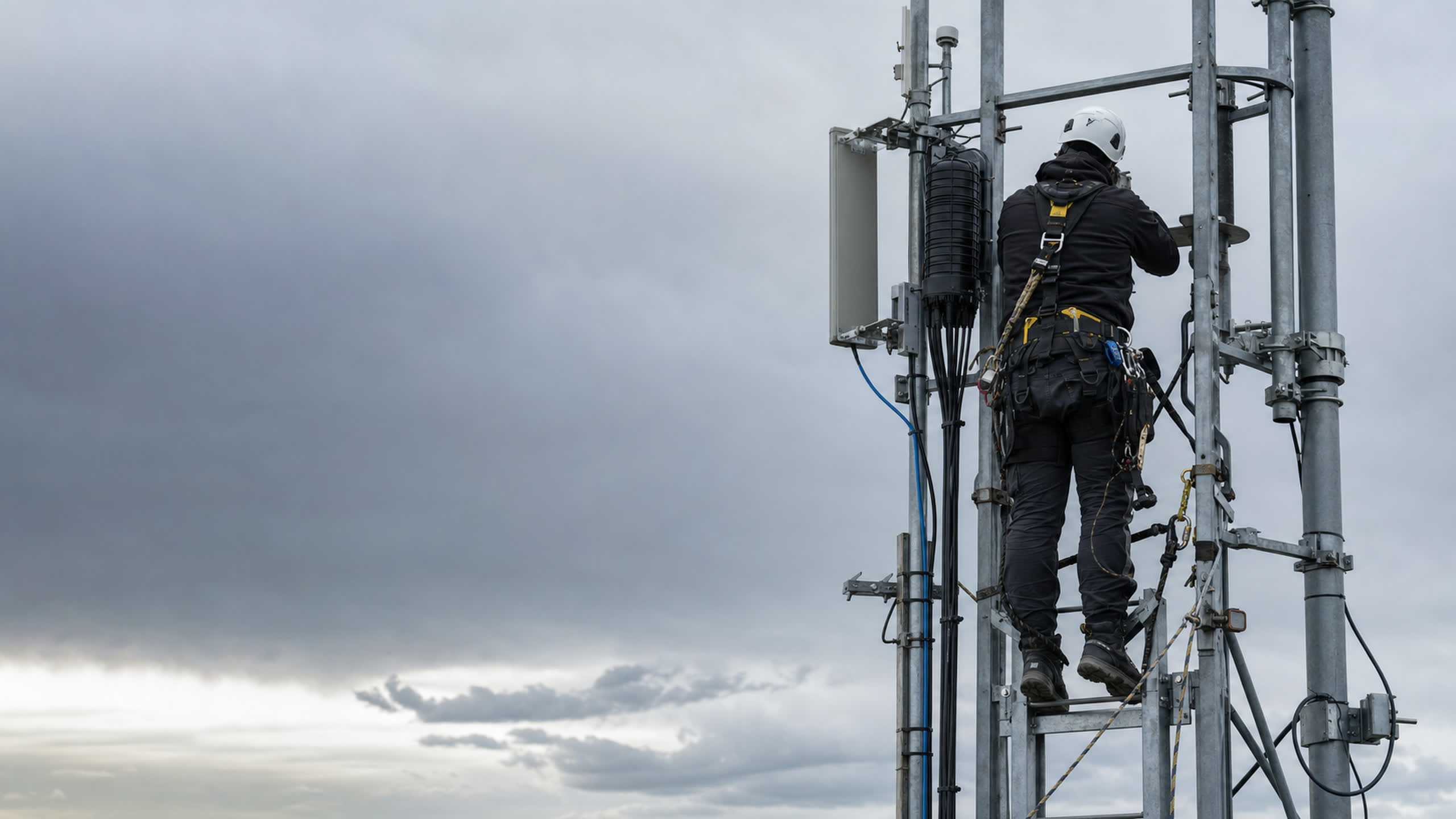
Outside plant (OSP) is everything between buildings — the cable, conduit, ducts, poles, splice enclosures, cabinets and handholes that carry fiber across a campus, a neighborhood or a metro up to the point it enters a building. It is engineered for distance and weather, dominated by single-mode fiber, and built by one of three methods: aerial cable on poles (least expensive and easiest to maintain, but exposed to wind and ice loading), direct-buried cable (trenched, plowed or directionally bored — cheaper than conduit but not upgradeable once in the ground), and underground conduit (costlier up front but reusable and better protected). Directional boring pulls a duct beneath a road or rail crossing without disturbing the surface; micro-trenching lays conduit in a narrow slot beside a roadway with far less excavation.
Inside plant (ISP) is the cabling and equipment inside the building — patch panels, cabinets, fiber risers and the networking gear — running in a controlled environment on lighter, more flexible cable than OSP. The two meet at the demarcation point. We supply the cable and hardware for both categories in the construction each calls for: armored, water-blocked direct-burial cable; loose-tube and ribbon builds for duct and backbone; all-dielectric self-supporting (ADSS) cable for long aerial spans; and the enclosures, panels and racks that terminate them. The install itself — pulling, terminating and certifying the cable plant — is our structured-cabling lane.
- Aerial, direct-buried and underground-conduit OSP cable, plus directional-bore and micro-trench duct
- Armored, water-blocked direct-burial cable; loose-tube, ribbon and ADSS builds for the span
- Inside-plant risers, patch panels, splice trays, cabinets and racks to the demarc
- Splice enclosures, handhole and pedestal hardware for the outside plant

OS2 single-mode, built DWDM-ready from day one
Any fiber leaving a building should be single-mode OS2, and once a campus run passes roughly 500 meters — or the footprint may grow — OS2 is the future-proof choice against both distance and evolving optics. These are the design facts we spec the backbone around; your engineer or integrator owns the design, and we supply the cable and optics that satisfy it.
Zero-water-peak OS2
OS2 fiber (ITU-T G.652.D) has a zero water peak that opens the full C-band (1530–1565 nm) for DWDM — supporting on the order of 96 channels where legacy OS1's water peak caps usable channels far lower. That is why OS2 is the standard for a DWDM-ready backbone.
The DWDM grid
ITU-T G.694.1 defines the DWDM channel grid every vendor interoperates on — fixed spacings of 100, 50, 25 and 12.5 GHz referenced to a 193.1 THz anchor, plus a flexible-grid extension. We spec mux/demux and optics to the grid your capacity plan targets.
Loss budget with margin
OS2 link attenuation typically runs ≤0.4 dB/km at 1310 and 1550 nm, with mated-connector loss around 0.75 dB per pair. A backbone loss budget should carry at least a 3 dB system margin for future degradation and connector wear — the spec we build the optics selection against.
Coherent pluggable optics
Campus, metro and data-center-interconnect links ride coherent pluggables — CFP2-DCO for flex-grid tuning and longer reach, QSFP-DD 400ZR for high-density 400G DCI. We source the tunable and fixed optics matched to the reach and channel plan.
Governing standards
Campus backbone design is governed by ANSI/TIA-568.3-D (optical fiber cabling, topology, distances and connectors) and IEEE 802.3 (the Ethernet optical reach and loss the backbone must satisfy). We supply hardware that meets the transceiver reach those standards set.
Resilient topology
Dual counter-rotating rings reroute around a cut in well under 50 ms, and true route diversity means paths entering a facility from different directions to separate upstream points — so one excavator can't take down both the primary and the 'redundant' path. We supply the cable, optics and gear for the topology your design calls for.
Who lights the fiber decides most of the bill of materials
With lit service, a carrier owns and operates the fiber and the optics and hands you a set amount of SLA-backed bandwidth for a monthly fee — plug-and-play, and often the right answer for moderate or distributed bandwidth needs. With dark fiber, you lease unlit strands and take on everything that lights them: the transceivers, the DWDM system, the monitoring and the end-to-end operation. You effectively become your own carrier — and you buy the electronics. Industry analyses generally place the crossover where sustained bandwidth reaches into the tens of gigabits and the horizon is measured in years; below that, managed lit service usually wins on total cost.
For defense, government and financial buyers the calculus is often about control, not just cost: dark fiber guarantees no carrier has visibility into traffic above the physical layer, which is exactly what a no-third-party-visibility requirement demands. Agencies procuring dark fiber also have a concrete federal path — GSA's Dark Fiber Service (DFS) offers point-to-point and multi-site dark-fiber connections for inter-city and intra-city routes. Whichever model you choose, if you're lighting your own strands we supply the optics, DWDM system and test gear that light them — mapped to the strand count and reach your route actually has.
- Lit service: carrier-owned optics, SLA-backed bandwidth — a managed handoff, not a hardware buy
- Dark fiber: you light and operate the strands, and you buy the transceivers, DWDM and monitoring
- Control driver: dark fiber keeps traffic invisible to any carrier above layer 1
- GSA Dark Fiber Service (DFS) is a federal dark-fiber procurement path for agency routes
Encryption and protected pathways are layers you add on top of the fiber
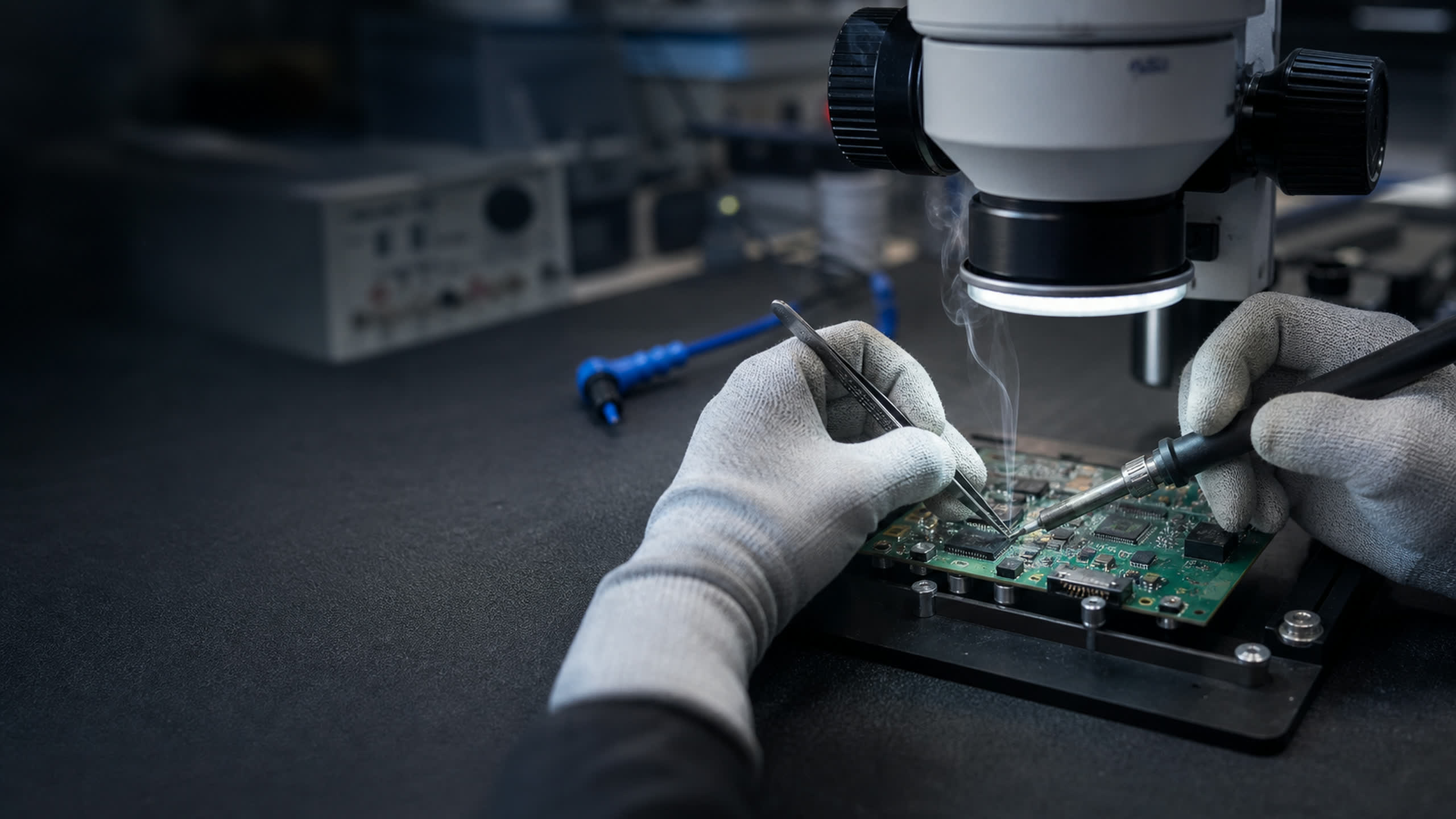
On a link that carries sensitive traffic, layer-1 optical encryption sits inline on the DWDM or OTN transport and encrypts at the wire — commercial units use AES-256 in Galois/Counter mode for both confidentiality and integrity, run at line rate up to 400G and beyond without added latency, and watch the fiber for the abnormal attenuation that can signal a tap. Government-oriented models are commonly validated to FIPS 140-3 and Common Criteria EAL2. We source that commercial layer-1 encryption gear as equipment; selecting and accrediting it stays with your security engineers.
Classified pathways add requirements no vendor signs off on. A Protected Distribution System (PDS) — governed by CNSSI No. 7003 — carries unencrypted classified traffic through physically secured, armored pathways rather than encrypting every point, and co-installing unclassified cable inside one requires review by a Certified TEMPEST Technical Authority. Where classified IP traffic is encrypted instead, that is NSA Type-1 territory — HAIPE encryptors and layered CSfC architectures built from government-controlled components. We supply the physical PDS materials (armored cable, conduit and enclosures) and the commercial transport around those systems; the Type-1 COMSEC, the CTTA approval and the accreditation belong to your program and the government.
- Commercial layer-1 optical encryption (AES-256-GCM, FIPS 140-3 / CC EAL2) sourced as equipment
- Continuous fiber monitoring for the attenuation shifts that can indicate tapping
- PDS armored-pathway materials to CNSSI No. 7003; CTTA review and accreditation stay with your program
- Type-1 (HAIPE/CSfC) COMSEC is government-controlled — we supply the transport around it, not the crypto

The fiber bill of materials, screened line by line
Buyers assemble a fiber project from four procurement categories — cable, optics, test equipment and field tools — plus the DWDM system and any encryption on top. We source and integration-test all of it, TAA- and §889-screened, and stage it for delivery.
OSP & ISP fiber cable
Loose-tube, ribbon, armored direct-burial and ADSS single-mode cable for the span and construction method — plus the enclosures, pedestals, patch panels and racks that terminate it.
Optics & transceivers
Pluggable optics from SFP to QSFP-DD, coherent CFP2-DCO and 400ZR modules, tunable DWDM optics, and the DACs, AOCs and AECs that go with them — matched to reach and channel plan.
DWDM / WDM system
Mux/demux, optical amplifiers and the WDM chassis that multiply a fiber pair into many channels of backbone capacity, specced to the ITU grid your plan targets.
OTDR & test equipment
OTDRs (typical dynamic range ~35–50 dB, 1310/1550 nm test wavelengths, 1–5 m dead zones), light sources, optical power meters and fiber-inspection scopes to certify every link.
Splice & field tools
Fusion splicers — the standard for permanent joints, where quality splices run well under 0.1 dB with virtually no back-reflection — plus cleavers, mechanical-splice kits and the consumables field crews carry.
Layer-1 encryption & DTN
Commercial FIPS-validated layer-1 optical encryptors, and data-transfer-node (DTN) and high-throughput networking hardware for the endpoints that move data across the finished plant.
Procurement built for a fiber project's schedule
- Open-market POs or the contract vehicle your program already holds
- TAA (FAR 52.225-5) and NDAA §889 screening documented per line item
- FIPS 140-3 / FIPS 197 validated encryption options where the link requires them
- OS2, connector type and reach confirmed against your plant before optics are quoted
- Staged, labeled and reel-managed delivery coordinated to the construction schedule
- GPC / P-Card accepted up to threshold; no payment up front on quoted orders
Where the fiber plant meets the rest of the program
The fiber is one layer. These are the adjacent scopes it connects to — the install labor beneath it, the managed optical transport beside it, and the switching and wireless that ride on top.
Structured cabling & install
Pulling, terminating, splicing and certifying the cable plant — the physical install labor, TIA-606 labeling and as-built documentation — is our low-voltage and structured-cabling capability.
Wavelength & optical transport
When the requirement is a managed optical channel between sites rather than strands you light yourself, the wavelength (lambda) transport path picks it up.
Wireless & campus connectivity
The switching, PoE and Wi-Fi that ride on top of the fiber backbone across a campus — access to core — quoted as one compliance-screened order.
Fiber network infrastructure questions
Does Uniqcli build or operate our fiber network?
No. We supply and integration-test the equipment — cable, optics, DWDM system, test sets, splice tools and encryption gear — and stage it for delivery, TAA- and §889-screened. Your program, or the integrator it engages, designs the plant, installs and lights it, and holds every authorization around it. The physical install and certification of the cable plant is our structured-cabling capability; the network operation stays with you.
Dark fiber or lit service — which should we procure?
It depends on sustained bandwidth, horizon and control. Lit service suits moderate or distributed needs with a carrier-managed SLA; dark fiber suits sustained high-bandwidth or security-driven programs that need traffic invisible to any carrier above the physical layer, and it means buying and operating your own optics. Federal agencies procuring dark fiber have a concrete path in GSA's Dark Fiber Service. Send the route and capacity target and we'll quote the electronics either model needs.
Why OS2, and what makes a backbone 'DWDM-ready'?
Any fiber leaving a building should be single-mode OS2, and its zero water peak (ITU-T G.652.D) opens the full C-band for dense wavelength-division multiplexing — so a single pair can carry many channels on the ITU-T G.694.1 grid as capacity grows. Building the backbone on OS2 with a loss budget that carries a 3 dB margin is what keeps it ready for DWDM optics you add later.
Can you supply layer-1 encryption for our fiber links?
We source commercial layer-1 optical encryptors — AES-256-GCM units, commonly FIPS 140-3 and Common Criteria EAL2 validated, that encrypt at line rate on the DWDM transport. Selecting and accrediting them stays with your security engineers. NSA Type-1 (HAIPE/CSfC) encryption for classified traffic is government-controlled equipment; we supply the commercial transport around it, not the Type-1 COMSEC itself.
Do you screen fiber and optics for TAA and §889?
Every line is screened for NDAA §889 before it's quoted — we confirm the manufacturer and its affiliates aren't on the covered list and source through US distribution, and that diligence ships with the quote. TAA country of origin under FAR 52.225-5 is verified on request.
What test and splice equipment do you carry?
OTDRs, light sources, optical power meters and fiber-inspection scopes on the test side; fusion splicers, cleavers and mechanical-splice kits on the field-tools side. Fusion splicing is the standard for permanent backbone joints — quality splices run well under 0.1 dB with virtually no back-reflection — and we quote the splicer class and consumables your crews actually use.
Procurement
Procure like a prime.
TAA-screened cable, optics and test gear — integration-tested and staged to the construction schedule, with the same team answering for it from bill of materials to a fiber plant your program owns.
The solutions atlas
Every solution, by technology area and by customer.
By technology
By customer
- TAA & NDAA-889 Compliance Screening
- CMMC & CUI Solutions
- Federal & DoD
- State, Local & Education
- Healthcare
- Enterprise
- Rapid Procurement & GPC Buys
- Multi-Vendor Integration Projects
- eProcurement & Custom Catalogs
- FISMA Modernization
- CJIS-Compliant Justice Cloud & Local AI
- Federal Storage Modernization
- Government ERP & Business Systems Infrastructure
- Managed Procurement
- Secure AV & Conferencing
- Fiber Network InfrastructureThis page
- Satellite & Resilient Connectivity
- Wavelength & Optical Transport
- Decentralized Data Centers
- Data Center Design & Build
Talk to us about your fiber network
Send a route, a strand count or a bill of materials and we'll return a consolidated, TAA- and §889-screened quote — OS2 cable, DWDM-ready optics, OTDR and splice equipment, and FIPS-validated encryption options where the link requires them, on the open market or the contract vehicle your program already holds.