
Solutions
Data Center Design & Build
Full-scale data-center buildout, sourced as one bill of materials — racks and containment, power and cooling, compute and storage, and the network-security fabric — integration-tested and staged for the hall your program designs, constructs and operates. TAA- and §889-screened on every line.
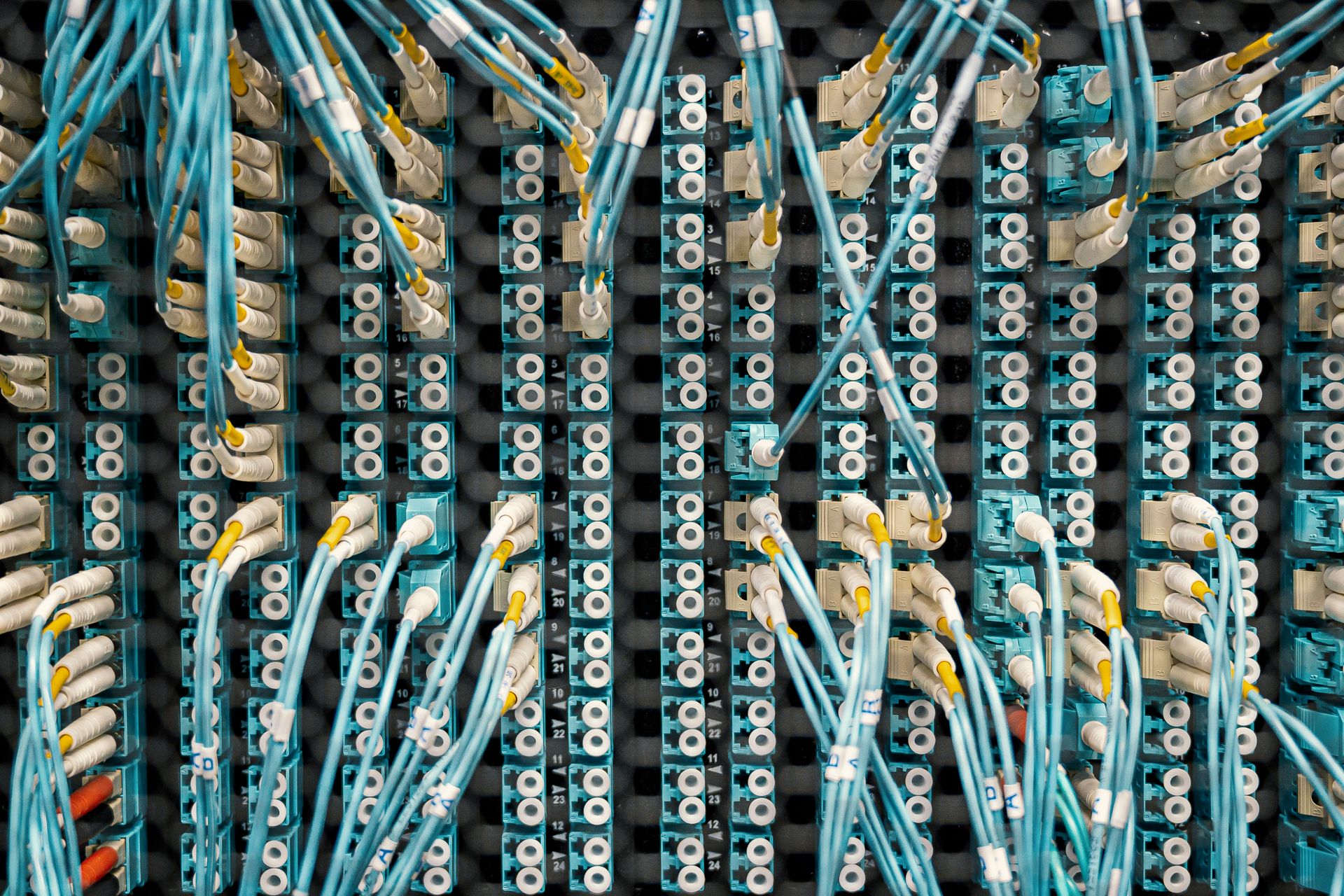
- Scope
- Racks, power, cooling, compute, storage, security
- Phases
- Design → procure → stage → integrate → deploy
- What we supply
- The equipment BOM, integration-tested & staged
- Screening
- TAA (FAR 52.225-5) & NDAA §889 per line
The data center is your program's to build and operate — the equipment inside it is ours to source
A full-scale data hall is an engineering, construction and operations program: civil works, electrical and mechanical design, commissioning, and the authorizations that come with running it. That program belongs to your agency and its design-build, electrical and mechanical contractors — Uniqcli doesn't build, own or operate data centers, and nothing on this page describes a Uniqcli facility. What we do is consolidate the equipment it's built from — racks and containment, power and cooling, compute and storage, and the security fabric at its boundary — into one bill of materials, integration-tested and staged, TAA- and §889-screened on every line. Your team designs the facility, stands it up and holds every authorization around it.
A data center is a multi-vendor bill of materials before it is a room
Whether you're standing up a new hall, refreshing an aging one or fitting out a colocation cage, the hardware list is the same shape: racks and containment to organize the space, UPS and switchgear to power it, precision cooling to keep it in its thermal envelope, compute and storage to fill it, and firewalls to defend its boundary. Sourced piecemeal across a dozen vendors, that list is a scheduling and provenance problem. Consolidated, it's a single accountable order.
That's the value we add: one bill of materials across power, cooling, racks, compute, storage and security, screened line-by-line for TAA and §889, staged and integration-tested before it ships so the install is a controlled sequence rather than a scavenger hunt. The edge, modular counterpart — factory-built blocks sited close to power and demand — is a separate model; this page is the full-scale hall, and the two cross-link below.
- Racks, containment and structured cabling to organize the hall
- UPS, switchgear, PDUs and precision cooling sized to the load
- Compute and storage from the manufacturers we carry
- Boundary and segmentation security, screened per line
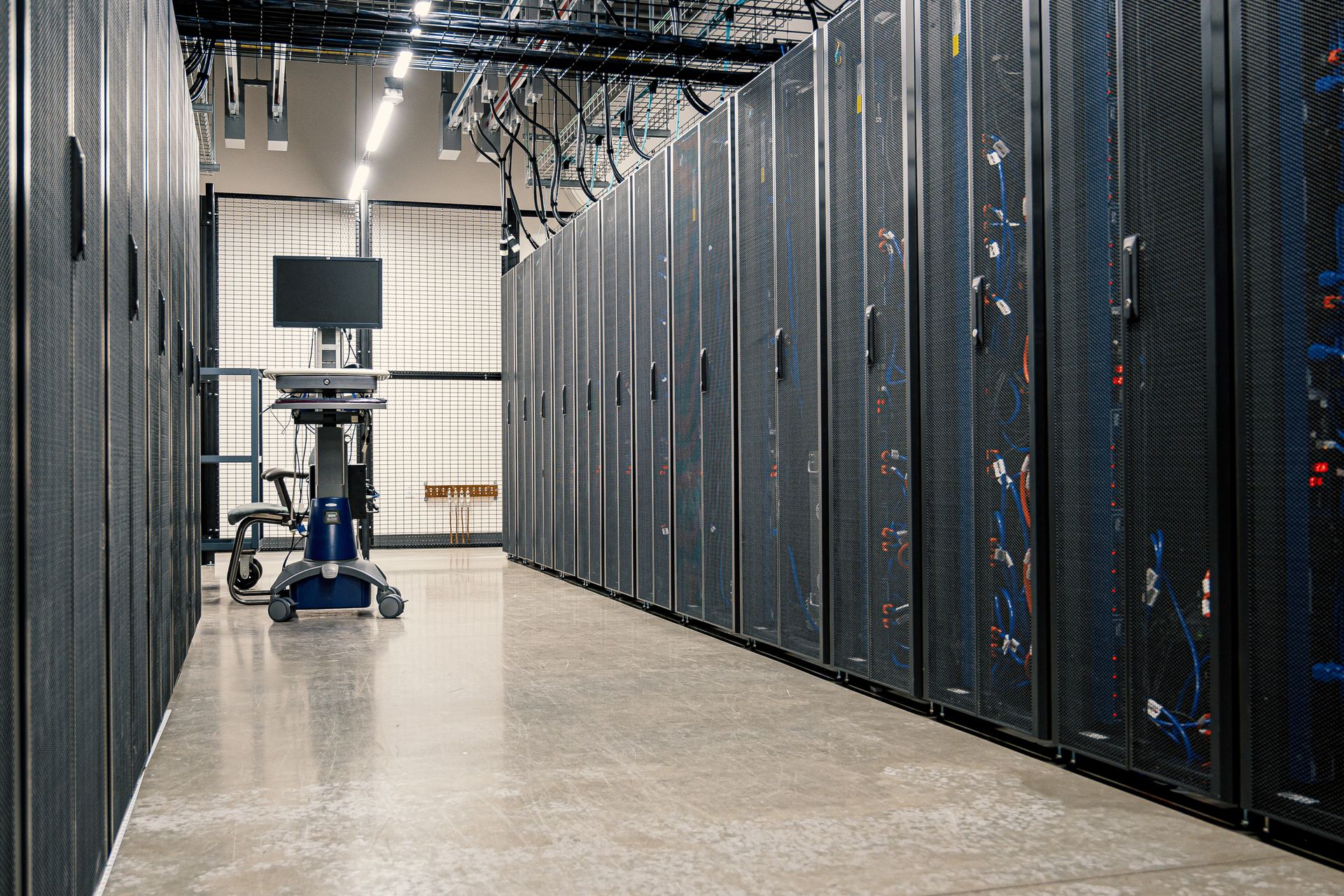
Six-year-flat industry-average PUE; hyperscale operators run 1.10–1.15, typical colo/enterprise 1.58–1.80 (Uptime Institute, 2025)
Uptime Institute Tier III availability — ≤1.6 hrs/year; Tier IV reaches 99.995% (≤26 min/year). Industry frameworks, never a Uniqcli rating
Average U.S. grid transmission & distribution losses, 2018–2022 — the baseline behind siting compute nearer generation (EIA)
Recoverable thermal output from a ~20 MW IT load — enough to heat 10,000–15,000 well-insulated apartments where waste-heat reuse is engineered (industry estimate)
A data hall, tier by tier
Every build is scoped to your site, load and workload — but the equipment breaks into consistent tiers. These are the categories we source and integration-test, drawn from the manufacturers we carry, so the hall arrives as staged, tested systems rather than a receiving-dock backlog. We supply the equipment behind each tier; your team installs, commissions and operates it.
Racks, containment & cabling
Server cabinets, open racks, hot/cold-aisle containment, overhead and under-floor pathways and the structured copper and fiber cabling that ties the hall together — Panduit-class racks, containment and cabling from our catalog.
Power & UPS
UPS, switchgear, PDUs, static transfer switches and battery — Eaton- and Vertiv-class power hardware sized to the load and the redundancy tier your design targets, from utility feed to the rack.
Precision cooling & thermal
Computer-room air handlers, in-row and rear-door cooling, chilled-water and coolant-distribution units and the liquid-cooling readiness rising densities demand — Vertiv-class thermal gear sized to the heat load.
Compute
Rack servers, blades and GPU-accelerated nodes for the workloads the hall is built for — HPE and Dell platforms we carry, configured, imaged and staged to your baseline.
Storage
All-flash, hybrid and object storage sized for capacity, throughput and retention — Dell and HPE storage we source, racked and tested alongside the compute it serves.
Network & boundary security
Top-of-rack and spine switching, and the next-generation firewalls and segmentation that defend the hall's boundary and east-west paths — Palo Alto Networks-class security we carry.
How the engagement runs
Five phases, framed as sourcing and integration
The build has a rhythm, and our part of it is the equipment — specified, procured, staged, integrated and delivered. The civil, electrical and mechanical construction, the commissioning and the operation stay with your program and its contractors.
Design
Bill of materials & reference architecture
We work from your load, redundancy target and workload to a line-item bill of materials and a reference architecture across power, cooling, racks, compute, storage and security — not stamped engineering drawings, which your MEP and design-build team own.
Procure
One screened order
The multi-vendor list becomes a single order through US distribution, every line screened for TAA (FAR 52.225-5) and §889 and confirmed for stock and lead time before anything moves.
Stage
Racked, imaged & integration-tested
Cabinets are built out, servers and storage imaged to your baseline, and the systems integration-tested at a U.S. facility so what lands on your dock is a known-good, documented configuration.
Integrate
Delivered as a controlled sequence
Equipment ships in install order with chain-of-custody and asset-tagging documentation, so your installers and contractors set a planned sequence rather than working from a pallet of unknowns.
Deploy
Handoff to your operations
Your team powers, commissions and operates the hall and holds every authorization around it; we stay on for spares, refresh and warranty support as the environment grows.
Power and cooling are where a build is won or lost
The number that governs a data-center design is power, and the number that governs its efficiency is PUE — the ratio of total facility energy to the energy that reaches the IT load. The industry average has sat flat near 1.54 for six years while hyperscale operators run 1.10–1.15 and typical colocation and enterprise halls run 1.58–1.80 (Uptime Institute). Where a build lands in that range is decided by the power and cooling design, so we size UPS, switchgear and cooling to the real load and the redundancy tier — Uptime's framework runs from Tier I basic to Tier III concurrently maintainable (≤1.6 hrs/yr downtime) and Tier IV fault-tolerant (99.995%) — rather than to a generic template.
Cooling is the other half. Every watt into the IT load comes back out as heat, and rising rack densities are pushing halls toward liquid cooling, rear-door heat exchangers and coolant-distribution units. That same heat is a resource where it can be captured: a roughly 20 MW IT load yields on the order of 20 MW of recoverable thermal output — enough to heat 10,000–15,000 well-insulated apartments where district-heating reuse is engineered, a practice already routine in the Nordics. It isn't automatic — exhaust runs far cooler than district heat needs, so heat pumps are the enabling technology — but we can source the thermal-recovery and heat-pump-adjacent hardware where a project pursues it.
- UPS, switchgear and cooling sized to the real load and redundancy tier, not a template
- PUE 1.54 industry average vs 1.10–1.15 hyperscale marks the efficiency gap to design against (Uptime)
- Liquid-cooling and CDU readiness where rack density demands it
- Waste-heat-recovery hardware sourced where the site engineers district-heating reuse
The reliability and sustainability programs your facility can pursue
These are the standards that govern the space. Every one is earned by an operating facility or its operator — none is held by Uniqcli, and we make no claim to any. We source equipment that helps your build satisfy the requirements behind them; the certification, and the facility, are yours.
Uptime Institute Tiers (I–IV)
The four-tier reliability standard — Tier I basic through Tier III concurrently maintainable (≤1.6 hrs/yr downtime) to Tier IV fault-tolerant (99.995%). Each tier builds on the one below; the certification is the facility's to earn.
ENERGY STAR
EPA certification for facilities scoring 75+ on the data-center efficiency scale, plus device-level labels for servers, UPS, storage and network gear — labeled servers average ~30% more efficient than non-certified units.
LEED BD+C: Data Centers
The USGBC green-building track written for data centers. Fewer than 5% of U.S. data centers hold LEED, so treat it as a goal to design toward rather than a baseline.
PUE (benchmark, not a cert)
Power usage effectiveness is the de-facto efficiency yardstick, not a certification. The persistent ~1.54 industry average against hyperscale's 1.10–1.15 is the gap an efficient build is measured by.
The security fabric inside, the carrier circuit coordinated alongside
Inside the hall, we source the switching and the boundary — top-of-rack and spine switches, and next-generation firewalls and segmentation that keep the environment from being a flat, trusted LAN. Palo Alto Networks-class security at the boundary and between zones is part of the same accountable order as the power, cooling and compute, screened per line and staged with the rest.
Between sites, a data center only earns its keep once it's connected, and that connectivity rides carrier dark fiber and wavelength (lambda) transport. We coordinate the carrier circuit alongside the build and source the customer-premise optical transport, demarcation and Layer-1 encryption gear on your side of the handoff — but we don't own fiber, hold routes or run points of presence. The carrier owns the light and the transport platform; your program operates the network and holds every authorization around it. Carrier selection and the service contract stay with you.
- Top-of-rack and spine switching sized to the hall's fabric
- Next-generation firewalls and zero-trust segmentation at the boundary and between zones
- Customer-premise optical transport and Layer-1 encryption (FIPS 140-3 / CC EAL2) sourced as equipment
- Carrier dark-fiber and wavelength circuits coordinated alongside — we don't own fiber, routes or POPs
The manufacturers behind the build




A data-center build is assembled from equipment made by the manufacturers we carry — power and cooling, racks and containment, compute and storage, and boundary security. Carrier fiber and wavelength are coordinated as a service, not shown here. All trademarks are the property of their respective owners; no endorsement, sponsorship or partnership beyond US distribution is implied.
Procurement built for how a build is funded
- One accountable bill of materials across racks, power, cooling, compute, storage and security
- Open-market POs or the contract vehicle your program already holds
- GPC / P-Card accepted up to threshold; no payment up front on quoted orders
- TAA (FAR 52.225-5) and NDAA §889 screening documented per line item
- Staged, imaged and integration-tested before delivery, with chain-of-custody documentation
- Volume-quoted across the full BOM — send the load, tier and workload and we return line-item pricing and lead times
Where the build connects
Decentralized Data Centers
The edge, modular counterpart — factory-built micro-DC blocks sited close to power and demand, sourced the same accountable way.
Fiber Network Infrastructure
The OSP/ISP cable, DWDM-ready optics and test gear behind the campus and inter-building fiber plant your program owns.
Wavelength & Optical Transport
Customer-premise optical gear and Layer-1 encryption for a managed lambda between sites, with the carrier circuit coordinated alongside.
Data-center build questions
Does Uniqcli build or operate data centers?
No. Uniqcli doesn't build, own or operate data centers, and holds no facilities. We consolidate the equipment a data center is built from — racks and containment, power and cooling, compute, storage and boundary security — into one TAA- and §889-screened bill of materials, integration-tested and staged. The civil, electrical and mechanical construction, the commissioning and the operation stay with your program and its contractors, as do all authorizations.
What does 'design' mean here if you don't stamp drawings?
Our design work is the equipment side: a line-item bill of materials and a reference architecture across power, cooling, racks, compute, storage and security, sized to your load, redundancy target and workload. The stamped electrical, mechanical and structural engineering belongs to your MEP and design-build team; we make sure the hardware they specify lines up, is screened, and arrives staged and tested.
How do you size power and cooling?
To your real load and the redundancy tier you're targeting, not a template. UPS, switchgear and cooling are sized against the IT load and the Uptime tier the design pursues — from concurrently maintainable Tier III to fault-tolerant Tier IV — and we flag liquid-cooling and coolant-distribution readiness where rack density calls for it. PUE is the efficiency yardstick we design against; the certification and the operating numbers are the facility's.
Are the Uptime, LEED or ENERGY STAR certifications held by Uniqcli?
No. Those are industry frameworks earned by an operating facility or its operator, and Uniqcli holds none of them. We source equipment that helps your build meet the requirements behind them — reliability, efficiency and green-building targets — but the certification, like the facility, is yours to earn and hold.
Do you screen for TAA and §889?
Every line is screened for NDAA §889 before it's quoted — we confirm the manufacturer and its affiliates aren't on the covered list, and that diligence ships with the quote. TAA country of origin under FAR 52.225-5 is verified on request, so state the requirement with your quote. Where a program pays by GPC / P-Card up to threshold or on standard net terms, we confirm stock and final total before any payment moves.
Can you coordinate the carrier connectivity too?
We coordinate the carrier dark-fiber or wavelength circuit alongside the build and source the customer-premise optical transport, demarcation and Layer-1 encryption gear on your side of the handoff. We don't own fiber, hold routes or run points of presence — the carrier owns the light and the transport platform, and your program operates the network. Carrier selection and the service contract stay with you.
Procurement
Procure like a prime.
The same team from a multi-vendor bill of materials to a staged, integration-tested data hall — TAA- and §889-screened, delivered to the facility your program builds and operates.
The solutions atlas
Every solution, by technology area and by customer.
By technology
By customer
- TAA & NDAA-889 Compliance Screening
- CMMC & CUI Solutions
- Federal & DoD
- State, Local & Education
- Healthcare
- Enterprise
- Rapid Procurement & GPC Buys
- Multi-Vendor Integration Projects
- eProcurement & Custom Catalogs
- FISMA Modernization
- CJIS-Compliant Justice Cloud & Local AI
- Federal Storage Modernization
- Government ERP & Business Systems Infrastructure
- Managed Procurement
- Secure AV & Conferencing
- Fiber Network Infrastructure
- Satellite & Resilient Connectivity
- Wavelength & Optical Transport
- Decentralized Data Centers
- Data Center Design & BuildThis page
Talk to us about a data-center build
Send your load, redundancy target and workload and we'll return a line-item bill of materials for the hall — racks, power, cooling, compute, storage and security — TAA- and §889-screened, with lead times and the carrier circuit coordinated alongside.