
Solutions
Decentralized Data Centers
The modular, edge micro-datacenter model — factory-built blocks sited close to power and demand — sourced as a bill of materials your program deploys and operates. We supply the enclosures, power, cooling, compute, storage and optical interconnect; you site it, power it and hold every authorization. TAA- and §889-screened on every line.
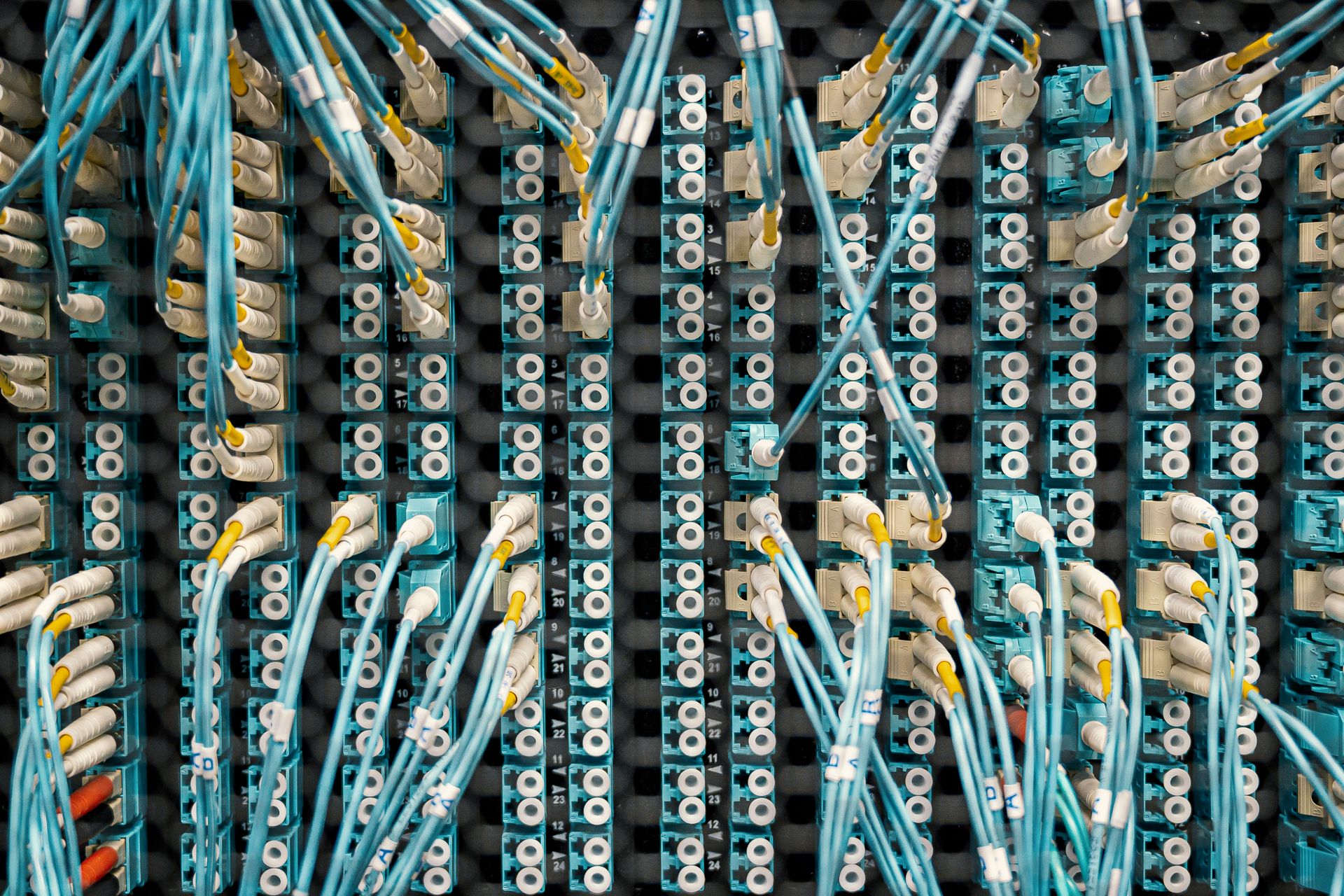
- The model
- Modular, factory-built micro-DC blocks
- Siting pattern
- Power-rich / behind-the-meter (industry)
- What we supply
- Enclosures, power, cooling, compute, optics
- Screening
- TAA (FAR 52.225-5) & NDAA §889 per line
The decentralized data center is a model you deploy — the infrastructure is ours to source
The industry is moving compute out of the single hyperscale hall and toward smaller, factory-built blocks placed where power and demand actually are — an edge, modular micro-datacenter pattern. Uniqcli doesn't own, operate or hold a network of these sites, and nothing on this page describes an existing Uniqcli fleet. What we do is source and integration-test the pieces one is built from — the enclosure, the power and cooling, the compute and storage, and the optical interconnect that stitches sites together — TAA- and §889-screened on every line. Your program chooses the site, secures the power, operates the facility and holds every authorization and certification around it.
Interconnection queues and surplus power are pushing compute to the edge
Grid interconnection has become the bottleneck. Industry reporting puts queues in major U.S. hubs at seven to ten years, which is the primary driver behind two adjacent trends: siting at power-rich locations, and going behind the meter — on-site or adjacent generation feeding the facility directly rather than waiting on a utility tie-in. One market tracker counted roughly 50 GW of behind-the-meter data-center power announced in 2025 alone. These are industry patterns, not Uniqcli projects.
Factory-built modular blocks are what make that practical. Power, cooling, IT and battery modules are assembled and tested in a factory, shipped, and reassembled on site — so a project can start earning on a partial build while the rest of the interconnection or generation catches up, instead of stranding capital in a multi-year hall. Uniqcli sources those blocks and the equipment inside them; siting, permitting, power procurement and operation stay with your program.
- Interconnection queues of ~7–10 years in major hubs are the industry's stated driver toward edge and behind-the-meter siting
- ~50 GW of behind-the-meter data-center power was announced in 2025 alone (Cleanview)
- Factory-built, testable blocks let a partial build begin operating early
- We source the blocks and their equipment; your program secures the site and the power
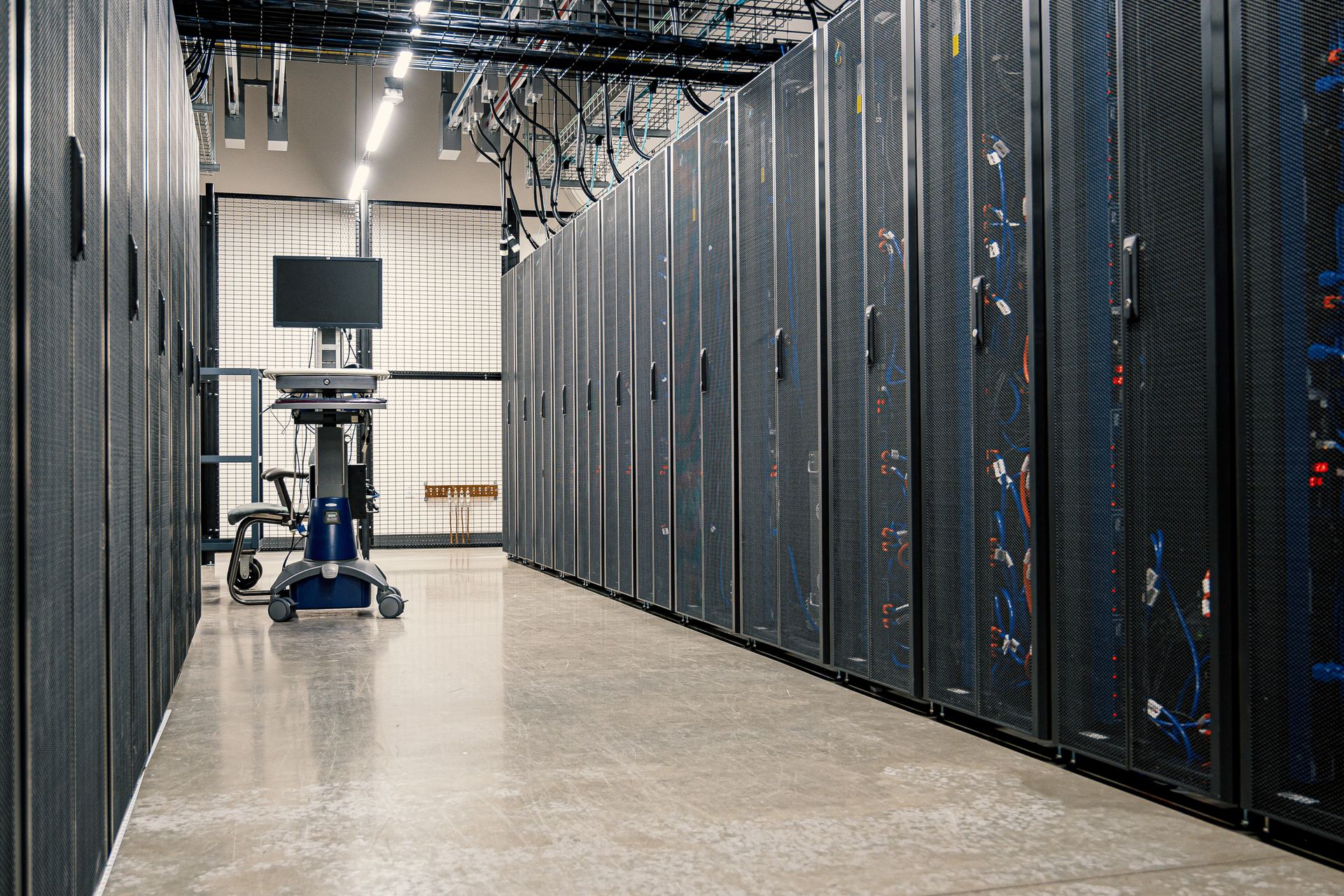
Average U.S. grid transmission & distribution losses, 2018–2022 — the baseline behind the 'compute closer to generation' argument (EIA)
Six-year-flat industry-average PUE; hyperscale operators run 1.10–1.15 (Uptime Institute, 2025)
Uptime Institute Tier III availability — ≤1.6 hours/year — an industry framework, never a Uniqcli rating
Behind-the-meter data-center power announced in 2025 alone (Cleanview)
A micro-datacenter block, tier by tier
Every build is scoped to your site, power envelope and workload — but the shape is consistent. These are the categories we source and integration-test, drawn from manufacturers we carry, so the block arrives as a staged, tested system rather than a pallet of parts. We supply the equipment behind each tier; your team operates it.
Modular enclosures & containment
Factory-integrated cabinets, hot/cold-aisle containment and outdoor-rated or containerized enclosures — the shell that lets a block ship tested and land as a controlled install, from vendors such as Panduit in our catalog.
Power & UPS
UPS, PDUs, switchgear, static transfer and battery — Eaton- and Vertiv-class power hardware sized to the block, and suited to the behind-the-meter and power-rich siting the edge model favors.
Precision cooling & thermal
Row- and rack-level precision cooling, rear-door heat exchangers and coolant-distribution units — Vertiv-class thermal gear, with liquid-cooling readiness where the density demands it.
Compute
Rack and edge-optimized servers, including GPU-accelerated nodes and the self-contained edge systems the market builds distributed compute on — HPE and Dell platforms we carry, sized to the workload.
Storage
Flash, hybrid and S3-compatible object storage for data that stays near where it's generated — Dell and HPE storage we source, sized for retention and throughput at the edge.
Optical interconnect & edge security
The optics, transport and boundary security that turn isolated blocks into a usable fabric — pluggable optics and Palo Alto Networks-class next-generation firewalls at the site boundary.
How the modular market builds it
The decentralized-datacenter model isn't a single product — it's a way of assembling proven building blocks. Prefabricated-DC vendors build power, cooling, IT and battery modules in a factory, test them, then ship and reassemble on site. Vertiv's SmartMod and prefabricated lines scale from roughly 500 kW to 10 MW, alongside containerized edge units up to about 200 kW; Schneider Electric's EcoStruxure Modular and Micro Data Center lines put a data-center-in-a-box into a single enclosure for edge and harsh-environment sites; and HPE's Edgeline EL8000 and modular Edge Center bring compute to distributed, low-latency sites. We reference these to describe the market honestly — Uniqcli sources equipment from the manufacturers it carries and integration-tests the block, rather than reselling any one vendor's turnkey program.
Because the blocks are factory-tested, the value we add is procurement and integration discipline: consolidating a multi-vendor bill of materials into one accountable order, screening every line for TAA and §889, staging and imaging the equipment before it ships, and documenting provenance from receipt through delivery. The siting, the power contract, the commissioning and the operation remain your program's — as do the authorizations and certifications the finished facility carries.
Three distinct efficiency levers — kept separate, and separately sourced
The environmental argument for distributed siting is really three mechanically different claims, and honest copy keeps them apart. First, avoided transmission losses: U.S. grid transmission and distribution losses average about 5% of delivered electricity (EIA), so processing and storing data physically nearer generation or demand can shave a real, if modest, share of that. Second, surplus and stranded power: pairing modular blocks with curtailed solar, wind or otherwise under-monetized generation lets a facility absorb power that would otherwise be wasted — the crux of the power-rich siting pattern.
Third, and entirely separate, is waste-heat reuse. Reusing data-center heat for district heating is already routine in Finland, Sweden, Denmark and Norway, and the EU's revised Energy Efficiency Directive requires member states to plan for it by 2030. It isn't free physics: air-cooled exhaust runs far cooler than district heat needs, so large heat pumps are the enabling technology — a single hot-aisle heat pump on a 3.5 MW London site was estimated to avoid over 4,000 tonnes of CO2. We can source the thermal-recovery and heat-pump-adjacent hardware where a project pursues it; the district-energy engineering and operation are the site's to own.
- Avoided transmission losses — a ~5% national baseline (EIA), not a guaranteed per-site figure
- Surplus / stranded / curtailed power co-location — the power-rich siting rationale
- Waste-heat reuse — proven in Nordic district heating; needs heat pumps, not just ducting
- Each lever sourced as equipment; the engineering and operation stay with your program
The industry frameworks your facility can pursue
These are the reliability and sustainability programs that govern this space. Every one is earned by an operating facility or its operator — none is held by Uniqcli, and we make no claim to any of them. We source equipment that helps your build satisfy the requirements behind them; the certification, and the facility, are yours.
Uptime Institute Tiers (I–IV)
The four-tier reliability standard — from Tier I basic through Tier III concurrently maintainable (≤1.6 hrs/yr downtime) to Tier IV fault-tolerant (99.995%). Vendors market modular blocks as Tier III/IV-attainable; the certification is the facility's to earn.
LEED BD+C: Data Centers
The USGBC green-building track written for data centers. It's still a minority differentiator — fewer than 5% of U.S. data centers hold LEED — so treat it as a goal to design toward, not a baseline.
ENERGY STAR
EPA certification for facilities scoring 75+ on the data-center efficiency scale, plus device-level labels for servers, UPS, storage and network gear — labeled servers average ~30% more efficient than non-certified units.
PUE (benchmark, not a cert)
Power usage effectiveness is the de-facto efficiency yardstick, not a certification. The persistent ~1.54 industry average versus hyperscale's 1.10–1.15 marks the gap an efficient edge build is measured against.
Nationwide deployment coverage — 4,500+ U.S. communities
The decentralized model's whole point is reach — a block can be sourced and stood up close to power and users almost anywhere, not just in a handful of hyperscale metros. The map plots roughly 4,600 real U.S. communities (all 50 states, DC, Alaska and Hawaii) to show the deployment and service footprint the model addresses. It depicts reach, not existing sites: the United States has on the order of 19,500 incorporated places, and where a program can secure a site and power, we can source and stage the block for it.
Carrier fiber and wavelength — coordinated alongside the block, never owned by us
Distributed blocks are only useful once they're stitched into a fabric, and that fabric rides carrier dark fiber and wavelength (lambda) transport. The established industry pattern is exactly that: carriers such as Zayo — whose network spans over 16.5 million fiber miles — have partnered with edge operators like EdgeConneX to deliver dark fiber, wavelength and Layer 2/IP connectivity to edge data centers across metros including Atlanta, Las Vegas, Nashville and Phoenix. That's a third-party market example, cited to show how the interconnect works — not a Uniqcli network.
On our side of the handoff, Uniqcli sources and integration-tests the customer-premise optical transport, demarcation and Layer-1 encryption gear, and coordinates the carrier circuit alongside it. We don't own fiber, hold routes or run points of presence; the carrier owns the light and the transport platform, and your program operates the network and holds every authorization around it. Carrier selection and the service contract stay with you — we make the premise hardware and the circuit line up.
- Customer-premise optical transport, muxponders and demarcation for the wave handoff
- Commercial Layer-1 optical encryption (AES-256-GCM, FIPS 140-3 / CC EAL2) sourced as equipment
- Carrier dark-fiber and wavelength circuits coordinated alongside the premise hardware
- We don't own fiber, routes or POPs — the carrier owns the light; your program runs the network
The manufacturers behind the block





A decentralized-datacenter block is built from equipment made by the manufacturers we carry — power and cooling, compute and storage, enclosures and edge security. Carrier fiber and wavelength are coordinated as a service, not shown here. All trademarks are the property of their respective owners; no endorsement, sponsorship or partnership beyond US distribution is implied.
Procurement built for the way infrastructure is funded
- One accountable bill of materials across enclosure, power, cooling, compute, storage and optics
- Open-market POs or the contract vehicle your program already holds
- GPC / P-Card accepted up to threshold; no payment up front on quoted orders
- TAA (FAR 52.225-5) and NDAA §889 screening documented per line item
- Staged, imaged and integration-tested before delivery, with chain-of-custody documentation
- Carrier circuit coordinated alongside the hardware — you keep the carrier contract and the network
Inside the block: compute, power and interconnect
A modular block is sized part by part — the array, the metered power at the rack, the optics between sites. These are the pages behind those choices.
Decentralized data center questions
Does Uniqcli operate a network of edge data centers?
No. Uniqcli doesn't own, operate or hold any data centers, points of presence or fiber. We source and integration-test the modular blocks and the equipment inside them — enclosures, power, cooling, compute, storage and optics — and coordinate the carrier circuit alongside. Your program sites, powers, commissions and operates the facility and holds every authorization around it.
What does the coverage map show?
Deployment and service reach — the roughly 4,600 U.S. communities where the model can be sourced and stood up close to power and users. It is not a map of existing Uniqcli facilities, POPs, fiber routes or an operating network; no such fleet exists. It's plotted from public Census place data to show the footprint the decentralized model addresses.
Are the Uptime, LEED or ENERGY STAR certifications held by Uniqcli?
No. Those are industry frameworks earned by an operating facility or its operator, and Uniqcli holds none of them. We source equipment that helps your build meet the requirements behind them — the reliability, efficiency and green-building targets — but the certification, like the facility, is yours to earn and hold.
Can you site a block at a behind-the-meter or surplus-power location?
We can source and stage a block suited to power-rich and behind-the-meter siting — that's the pattern the modular market is built for. Securing the site, the generation or utility power, the permits and the interconnection agreement is your program's to do; we make sure the equipment matches the power envelope and lands as a tested, documented system.
How does waste-heat reuse actually work?
It's a real lever, but not automatic. Data-center exhaust runs cooler than district heating needs, so large heat pumps are the enabling technology — the approach is proven in Nordic district-heating systems and now encouraged by EU policy. Where your project pursues it, we can source the thermal-recovery and heat-pump-adjacent hardware; the district-energy engineering, the offtake agreement and the operation stay with the site.
Do you screen for TAA and §889?
Every line is screened for NDAA §889 before it's quoted — we confirm the manufacturer and its affiliates aren't on the covered list, and that diligence ships with the quote. TAA country of origin under FAR 52.225-5 is verified on request, so state the requirement with your quote. Where a program pays by GPC / P-Card up to threshold or on standard net terms, we confirm stock and final total before any payment moves.
Procurement
Procure like a prime.
The same team from a multi-vendor bill of materials to a staged, integration-tested modular block — TAA- and §889-screened, delivered to the site your program controls.
The solutions atlas
Every solution, by technology area and by customer.
By technology
By customer
- TAA & NDAA-889 Compliance Screening
- CMMC & CUI Solutions
- Federal & DoD
- State, Local & Education
- Healthcare
- Enterprise
- Rapid Procurement & GPC Buys
- Multi-Vendor Integration Projects
- eProcurement & Custom Catalogs
- FISMA Modernization
- CJIS-Compliant Justice Cloud & Local AI
- Federal Storage Modernization
- Government ERP & Business Systems Infrastructure
- Managed Procurement
- Secure AV & Conferencing
- Fiber Network Infrastructure
- Satellite & Resilient Connectivity
- Wavelength & Optical Transport
- Decentralized Data CentersThis page
- Data Center Design & Build
Talk to us about a decentralized data center
Send your site, power envelope and workload and we'll return a bill of materials for the block — enclosure, power, cooling, compute, storage and optics — TAA- and §889-screened, with the carrier circuit coordinated alongside.