
Solutions
Government ERP & Business Systems Infrastructure
Certified compute, in-memory database hosts, high-IOPS storage, backup/DR and test/dev fleets for the ERP platforms agencies run — SAP, Oracle, Workday, Momentum, Infor — TAA- and §889-screened on every line.
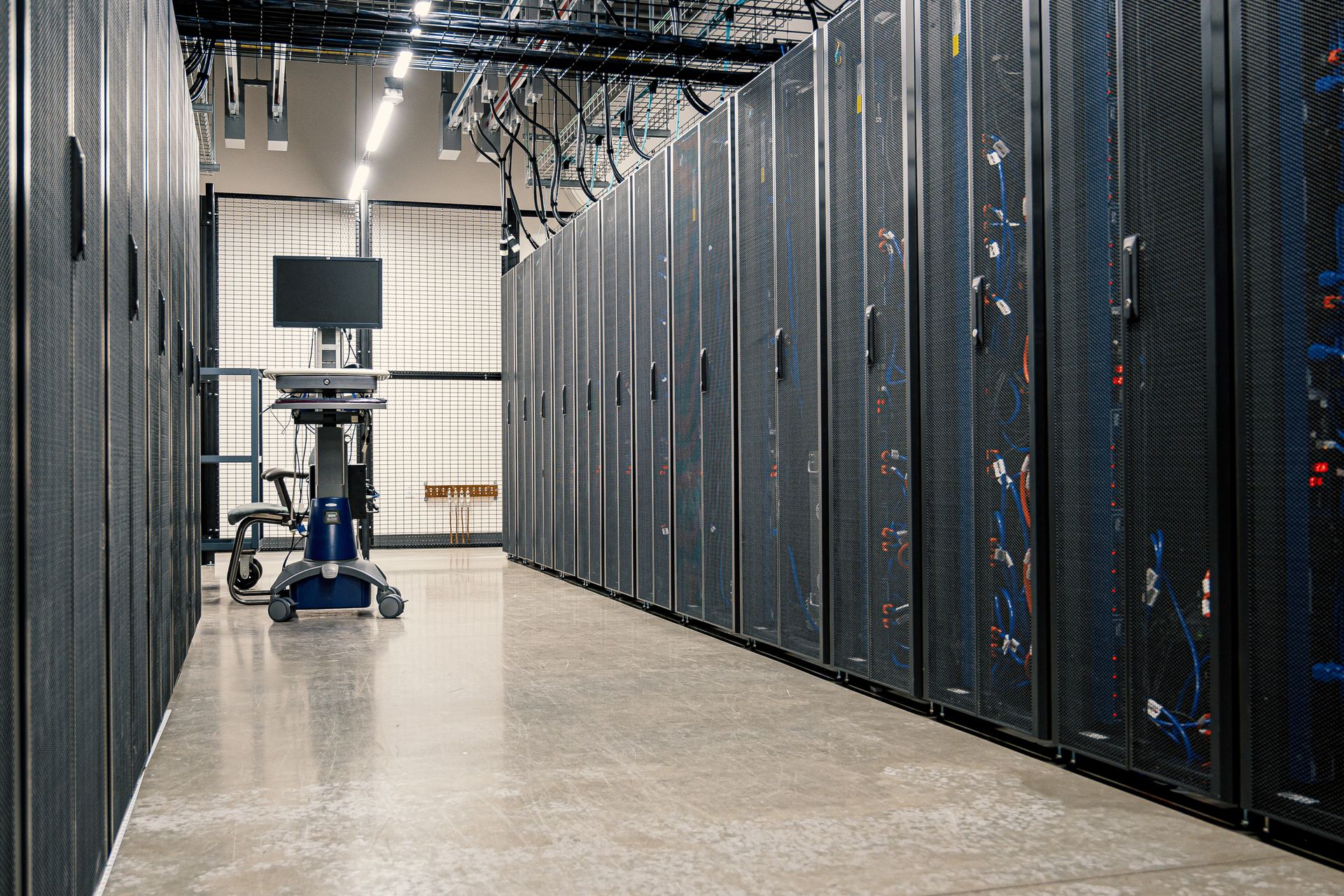
- What we supply
- Compute, memory, storage, DR & test/dev
- What stays yours
- The ERP platform, the data, the boundary
- Screened per line
- TAA (FAR 52.225-5) + NDAA §889
- ECC maintenance ends
- Dec 31, 2027 (extended to 2030 at +9%)
The ERP platform is the agency's to run — the infrastructure under it is ours to source
Government finance, logistics, payroll and asset systems are in the middle of the largest ERP refresh in a generation — legacy systems consolidating onto modern platforms, on hardware the agency owns and operates. Uniqcli doesn't license the ERP, implement it, or touch the data inside it. We source and integration-test the certified application and database compute, the high-memory hosts an in-memory database needs, the high-IOPS storage transactions run on, and the backup, disaster-recovery and non-production fleets around it — TAA- and §889-screened on every line — so the infrastructure side of a modernization clears procurement cleanly and stays inside a boundary your program controls.
A hard maintenance deadline and new license economics are moving migrations off the fence
The clock is the loudest driver. SAP has confirmed that mainstream maintenance for its ECC and Business Suite 7 releases ends December 31, 2027, with no further extensions; extended maintenance runs to December 31, 2030 at a 9% surcharge over standard fees. Agencies still on ECC are planning the move to S/4HANA now, and the migration path itself is specialized — SAP's Data Management and Landscape Transformation group has extended its Selective Data Transition method specifically for U.S. federal agencies, currently the only SAP-supported way to carry historical ECC transactional data into S/4HANA.
The economics moved too. GSA's OneGov agreement with SAP (December 2025) put an 80% discount on SAP's license-based products and 35% on its cloud services in front of federal agencies, with a first-year modernization credit and waived data-egress fees — governmentwide license terms projected to save agencies roughly $165 million. Those agreements settle the software side. What they don't include is the compute, memory, storage and disaster-recovery the platform actually runs on. That is the layer we source, screened and staged, whether the target lands on-premises, in a government cloud, or split across both.
- ECC / Business Suite 7 mainstream maintenance ends Dec 31, 2027 — extended to 2030 at a 9% surcharge
- Selective Data Transition — SAP's only supported ECC-to-S/4HANA historical-data method for U.S. federal agencies
- GSA's OneGov agreement with SAP reset federal license economics; the infrastructure underneath is separate
- We quote the hardware for on-premises, government-cloud or hybrid targets — the platform choice stays yours
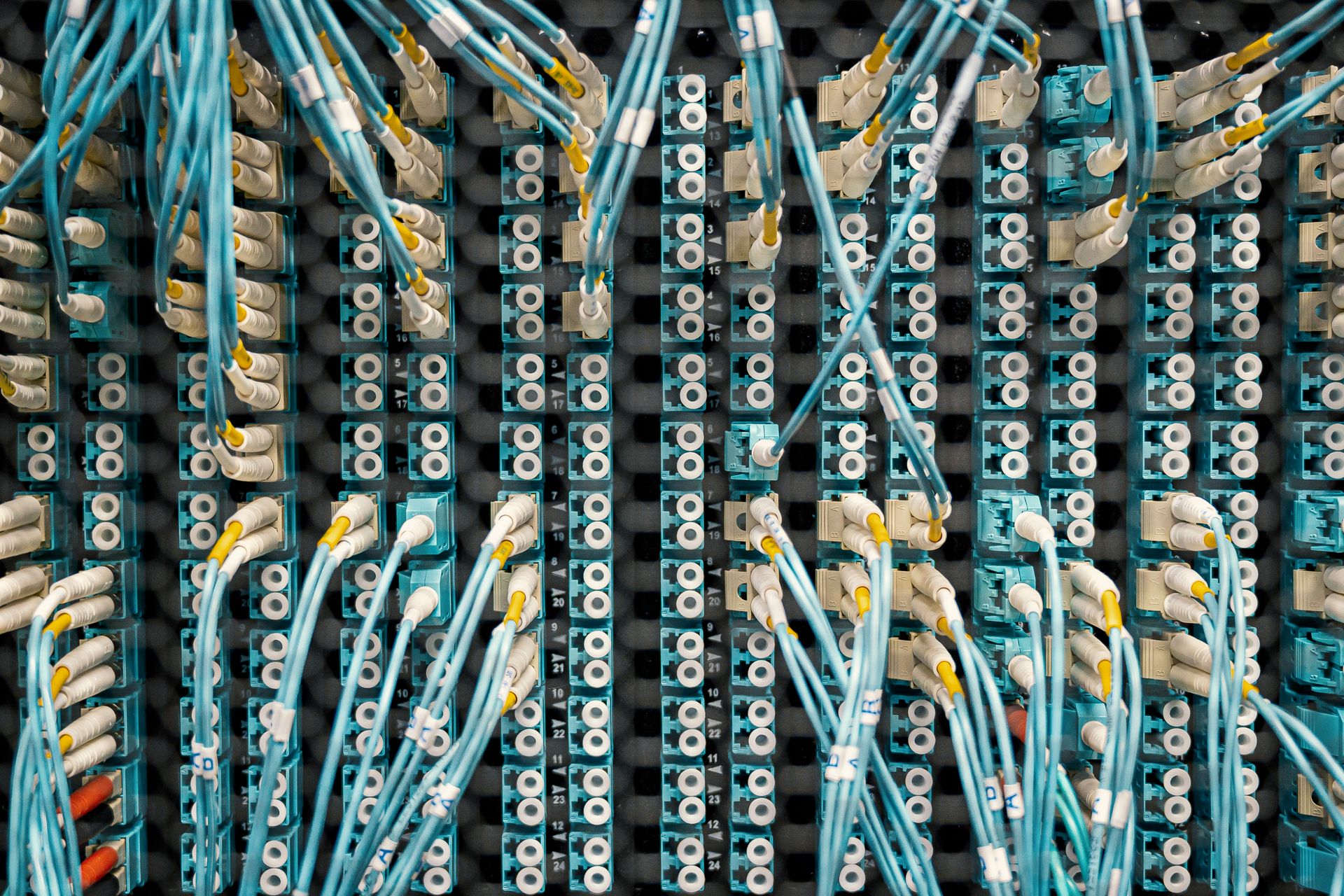
The ERP ecosystems behind government business systems
These are the platforms federal and public-sector programs run their finance, logistics, HR and asset systems on, described from each vendor's and program's own published material. Uniqcli supplies the infrastructure these platforms run on — we don't license, resell or implement the software, and claim no partnership with these vendors.
SAP S/4HANA
SAP's in-memory ERP suite and the migration target off legacy ECC. SAP S/4HANA Cloud joined the U.S. Treasury FM QSMO Marketplace in October 2025 as an approved shared-service financial-management option. Its HANA in-memory database is what drives the high-memory host requirement.
Oracle EBS, PeopleSoft & Fusion Cloud
Oracle E-Business Suite and PeopleSoft are among the largest single applications deployed at federal agencies; Oracle Cloud Federal Financials, part of Fusion Cloud ERP, was added to the FM QSMO Marketplace, with modernization paths from optimizing on-premises systems to full cloud SaaS.
Workday Government Cloud
Workday states more than 230 U.S. public-sector organizations run on its platform, with Workday Government Cloud operating under FedRAMP authorization — a SaaS model the vendor hosts and authorizes, not an infrastructure supplier.
CGI Momentum
Purpose-built exclusively for federal government, Momentum was, per CGI, the first core financial system approved by Treasury's FM QSMO and remains the only FM QSMO-approved core financial platform in production across federal environments; CGI describes it as cloud-agnostic across hosting.
Infor CloudSuite Public Sector
A StateRAMP-authorized ERP suite that Infor states also runs on a FedRAMP-authorized platform, for state, local, federal and tribal governments, covering financials, budgeting, HR, payroll and asset management — authorizations held by Infor's product, not by an infrastructure supplier.
Where we fit
Under all of them. On-premises and government-cloud landings still rest on certified compute, in-memory-capable memory, high-IOPS storage, backup and DR — the hardware tier we source, screen and stage regardless of which platform a program picks.
Government ERP already runs at national scale
Public examples of federal ERP programs, cited from the programs' and integrators' own published material — not Uniqcli engagements. We supply the class of infrastructure these systems run on; we don't operate them, implement them, or claim any affiliation with the programs or integrators named.
Army GFEBS (SAP)
The Army's General Fund Enterprise Business System, built on SAP commercial software, replaced more than 80 legacy accounting and asset systems when fully deployed in 2012 and processes on the order of a million transactions a day across 200-plus sites — more than $164 billion in annual transactions.
Air Force DEAMS (Oracle)
The Air Force's Defense Enterprise Accounting and Management System is built on Oracle software — a different platform ecosystem from the Army's SAP-based GFEBS, and a reminder that federal ERP is multi-platform by design.
DLA WMS to S/4HANA
The Defense Logistics Agency's SAP Warehouse Management System migration to S/4HANA — led by integrator C5MI and described as the largest SAP WMS deployment in the U.S. federal government — had deployed to 86 of 125 planned sites, an early example of the ECC-to-S/4HANA move inside the Department of Defense.
Defense Agencies Initiative (Oracle EBS)
DAI, a web-based Oracle E-Business Suite financial system implemented by integrator EDC Consulting, is a standing example of consolidated defense financial management on a commercial ERP platform.
Army IPPS-A (PeopleSoft)
The Army's Integrated Personnel and Pay System, implemented on Oracle PeopleSoft for roughly 1.2 million soldiers, shows the personnel-and-pay scale a single federal ERP instance now carries.
Shared-service marketplace
Treasury's FM QSMO Marketplace — where SAP S/4HANA Cloud, Oracle Cloud Federal Financials and CGI Momentum all appear as approved options — is steering agencies toward vetted platforms, each of which still needs an infrastructure tier underneath.
Five ERP-infrastructure capability groups, screened on every line
Each is a category of hardware and software we quote, integration-test and stage — mapped to the tier it serves under a government ERP landscape. What we supply is the equipment; licensing the platform, implementing it and owning the data stay with your program and its integrator.
Certified application & DB compute
Application, database and central-instance servers matched to the platform's published sizing and to the server models the OEMs have certified for it — right-sized cores and clock, not a generic rack fill.
In-memory database hosts
High-memory servers for in-memory databases like SAP HANA, where the working data set lives in RAM — large-DIMM, high-memory-bandwidth configurations sized to the database footprint rather than the CPU count.
High-IOPS transaction storage
All-flash and NVMe storage for the low-latency, high-IOPS read/write online transaction processing demands, plus the redo and log volumes an ERP database keeps under constant write.
Backup & disaster recovery
Immutable backup appliances, replication targets and alternate-site or standby hardware sized to the recovery-point and recovery-time objectives a financial system of record has to meet.
Test, dev & training fleets
The full non-production landscape — development, QA, sandbox, pre-production and training instances — because an ERP program is several parallel systems, not one, and each needs hardware to land on.
Integration & staging
Racked, cabled, firmware-leveled and burn-in-tested as a system before it ships, so installation in your data center or co-location space is a controlled bring-up rather than a build from cartons.
The clock
Why the infrastructure conversation is happening now
The move off legacy ERP has a fixed deadline and fresh economics behind it. Each milestone lands as compute, memory and storage on a modernization plan.
Oct 2025
S/4HANA joins the FM QSMO Marketplace
SAP S/4HANA Cloud is added to the U.S. Treasury Financial Management QSMO Marketplace as an approved shared-service financial-management option — alongside Oracle Cloud Federal Financials and CGI Momentum.
Dec 2025
GSA OneGov agreement with SAP
GSA announces a governmentwide OneGov agreement with SAP — an 80% discount on license-based products, 35% on cloud services, a first-year modernization credit and waived egress fees, projected to save agencies roughly $165 million. The license economics for moving off ECC change overnight.
Dec 31, 2027
ECC mainstream maintenance ends
SAP mainstream maintenance for ECC and Business Suite 7 ends, with no further extensions. Agencies must be on S/4HANA or under extended maintenance by this date — and the S/4HANA landscape needs certified compute and in-memory hosts underneath it.
Dec 31, 2030
Extended maintenance ends
Extended maintenance for ECC runs to the end of 2030 at a 9% surcharge over standard fees — the outer limit on the legacy platform, and the window inside which the infrastructure for the new one has to be sourced, staged and stood up.
On-premises, government cloud, or hybrid — the hosting pattern decides the hardware
Where an ERP landscape lands shapes what it needs from us. A cloud-hosted SaaS platform — Workday Government Cloud, or a vendor-run S/4HANA or Oracle cloud service — is authorized and operated by the software vendor under its own FedRAMP authorization; there, our role is the on-premises edge, the integration and connectivity hardware, and the non-production or DR footprint an agency keeps in its own data center.
A self-hosted or agency-operated deployment is the opposite: the compute, memory, storage, backup and DR are all yours to own, and all ours to source — sized to the platform's requirements and screened for TAA and §889 before a quote goes out. Many programs run a hybrid of the two, and cloud-agnostic platforms like CGI Momentum make the hosting choice, and therefore the hardware, genuinely the agency's to decide.
In every pattern the boundary is the same: Uniqcli supplies and stages infrastructure, and never asks for or touches the controlled data an ERP holds. Licensing, implementation and data ownership stay with your program and its system integrator; the hardware clears procurement as a clean, screened bill of materials.
Procurement built for a modernization program's budget
- Open-market POs or the contract vehicle your program already holds
- TAA (FAR 52.225-5) and NDAA §889 screening documented per line item
- Compute, memory and storage sized to the platform's published requirements, not a template
- One accountable partner across application compute, database hosts, storage, DR and non-production fleets
- Racked, imaged and burn-in-tested before delivery; free US ground shipping over $2,500
- GPC / P-Card accepted up to threshold; no payment up front on quoted orders
Sizing the compute, memory and storage underneath the platform
Government ERP infrastructure questions
Do you license or implement SAP, Oracle, Workday or Momentum?
No. We're an infrastructure supplier, not a software reseller or systems integrator, and we claim no partnership with those vendors. We source and stage the certified compute, in-memory database hosts, high-IOPS storage, backup and DR the platform runs on — your licensing and implementation stay with the vendor and your integrator.
What makes ERP compute different from a general server buy?
Sizing and certification. An in-memory database like SAP HANA is memory-bound, not core-bound, so the host is specified around its RAM footprint and memory bandwidth; the application and database servers are matched to the platform's published requirements and to the models the OEMs have certified for it; and the storage is specified for sustained high-IOPS transaction load. We quote to those requirements rather than a generic rack.
Why is the 2027 deadline driving hardware decisions now?
SAP mainstream maintenance for ECC and Business Suite 7 ends December 31, 2027 (extended maintenance to 2030 at a 9% surcharge), so agencies are migrating to S/4HANA on a fixed clock. The new landscape — production plus its dev, QA, sandbox, training and DR copies — needs certified compute and in-memory hosts sourced and staged well ahead of cutover. Starting the infrastructure conversation early is what keeps the deadline from becoming a scramble.
Can you supply the non-production and DR landscape, not just production?
Yes, and it's usually most of the footprint. An ERP program is several parallel systems — development, QA, sandbox, pre-production, training and disaster recovery — each needing hardware to land on. We quote the full landscape as one bill of materials, sized per tier, with one point of accountability.
Is the hardware TAA-compliant and §889-screened?
Every line is screened for NDAA §889 before it's quoted — we confirm the manufacturer and its affiliates aren't on the covered list, and that diligence ships with the quote, not as a surprise after award. TAA country of origin under FAR 52.225-5 is verified on request.
Procurement
Procure like a prime.
Integration-tested ERP compute, memory, storage and DR, TAA verified on request, and the same team answering for it from bill of materials to a landscape your program owns.
The solutions atlas
Every solution, by technology area and by customer.
By technology
By customer
- TAA & NDAA-889 Compliance Screening
- CMMC & CUI Solutions
- Federal & DoD
- State, Local & Education
- Healthcare
- Enterprise
- Rapid Procurement & GPC Buys
- Multi-Vendor Integration Projects
- eProcurement & Custom Catalogs
- FISMA Modernization
- CJIS-Compliant Justice Cloud & Local AI
- Federal Storage Modernization
- Government ERP & Business Systems InfrastructureThis page
- Managed Procurement
- Secure AV & Conferencing
- Fiber Network Infrastructure
- Satellite & Resilient Connectivity
- Wavelength & Optical Transport
- Decentralized Data Centers
- Data Center Design & Build
Talk to us about your ERP infrastructure
Send your target platform, landscape sizing and DR requirements and we'll return a tiered bill of materials — certified compute, in-memory hosts, high-IOPS storage, backup and non-production fleets — TAA- and §889-screened, with lead times.