
Solutions
Wavelength & Optical Transport
Wavelength (lambda) services, dark-fiber transport and Layer-1 optical encryption — the customer-premise optical gear behind a managed 10/100/400G wave between your sites, with the carrier circuit coordinated alongside it, TAA- and §889-screened on every line.

- Scope
- Wavelength (λ) services · dark fiber · DCI · Layer-1 encryption
- We supply
- Customer-premise optical gear + circuit coordination — the carrier owns the wave
- Bandwidths
- 1G–400G managed waves; 800G on newest coherent optics
- Delivery
- Staged to schedule · TAA (FAR 52.225-5) & NDAA §889 screened
The carrier owns the light — we supply the optical gear on your side and coordinate the circuit
A wavelength service is a managed optical channel — a dedicated 'color of light' at 10, 100 or 400 gigabits — that a carrier delivers over its own dense wavelength-division multiplexing (DWDM) platform, handing you an Ethernet interface while the provider owns and operates the optics in between. Because it is a Layer-1 connection, the traffic rides physically isolated from other customers and from the public internet, at a predictable fixed cost per wavelength. Uniqcli doesn't own fiber, hold routes or run a network. What we do is source and integration-test the customer-premise optical equipment behind that handoff — and, where your program lights its own dark fiber, the transponders and DWDM system that light it — TAA- and §889-screened on every line, with the carrier circuit coordinated alongside the hardware.
Between a managed Ethernet circuit and raw dark fiber
Optical transport runs on a spectrum. At one end is a managed Ethernet or MPLS circuit — pure bandwidth with no visibility into the optical layer. At the other is dark fiber: unlit glass you lease and light yourself, buying and operating every transponder, muxponder and reconfigurable optical add-drop multiplexer (ROADM) at each end. A wavelength (lambda) service sits in the middle: you get a dedicated, physically-isolated optical channel — commonly 10G, 100G or 400G, with 800G emerging on the newest coherent optics — but the carrier still owns and operates the DWDM equipment, and your touchpoint is an Ethernet or OTN interface.
The distinction is a build-vs-buy choice for the optical layer. With a lit, carrier-managed wave you receive a managed port and the carrier owns all the optics and wavelengths between your sites; with dark fiber you take on full responsibility for purchasing, installing, monitoring and servicing the optical equipment that lights the glass. Which one a program picks drives most of the bill of materials — and it is exactly the split we supply the premise-side hardware for, whichever way it lands.
- Managed Ethernet / MPLS — bandwidth only, no optical-layer visibility
- Wavelength (lambda) — a dedicated, physically-isolated 10/100/400G channel; carrier owns the DWDM
- Dark fiber — unlit glass you light yourself with your own transponders and DWDM
- The choice is build-vs-buy for the optical layer — and it sets most of the bill of materials

Lit wave, dark fiber, or somewhere between — and where the crossover is
Data-center interconnect and site-to-site links can be built on dark fiber, wavelength services, Ethernet circuits or MPLS — all private connectivity that bypasses the public internet. What separates them is who owns the optics and where the cost curves cross.
Wavelength (lambda) service
A managed optical channel over the carrier's DWDM, delivered as an Ethernet handoff at a predictable fixed OpEx per wavelength. The carrier owns and operates the optics; you own the gear on your side of the demarcation.
Dark fiber
Unlit strands you light with your own transponders, muxponders and ROADMs — CapEx-heavy up front, but full control of the optical layer and, at high sustained capacity, materially lower long-run cost.
The TCO crossover
In metro DCI, industry analysis places dark fiber ahead of managed wavelengths above roughly 100G of bandwidth — with about a 55% three-year total-cost-of-ownership saving versus wavelength services once capacity reaches 400G and beyond.
Managed Ethernet / MPLS
Pure managed bandwidth with an SLA and no optical-layer visibility — often the right answer for moderate or distributed needs where a dedicated wave or dark strands would be over-built.
Data-center interconnect, continuity replication, and an encryption overlay that adds microseconds
Three drivers push a program from a routed IP circuit toward a dedicated optical wave. The first is data-center interconnect: a primary and backup data-center pair, or a hybrid-cloud on-ramp, needs predictable high bandwidth and low, deterministic latency on a link that never touches the public internet. The second is continuity: synchronous or near-synchronous replication between a primary site and a COOP or disaster-recovery site depends on exactly that deterministic latency and dedicated capacity — and agencies are increasingly advised to diversify carriers and physical paths between those sites, not just the storage layer, so a single cut or a single carrier can't take down both ends.
The third is encryption. Because Layer-1 optical encryption adds only microseconds of latency, a program can run FIPS-validated, CNSA-compliant AES-256 encryption directly on the wavelength without the throughput penalty of encrypting at a higher layer — which matters for high-sensitivity bulk transport between sites. These are the reasons a wave gets chosen; the hardware each reason implies on your side of the link is what we source and screen.
- Data-center interconnect — primary/backup pairs and hybrid-cloud on-ramps off the public internet
- COOP / DR replication — deterministic low latency for synchronous site-to-site data replication
- Carrier and path diversity — a continuity requirement, not just a storage one
- Layer-1 encryption overlay — line-rate AES-256 that adds only microseconds
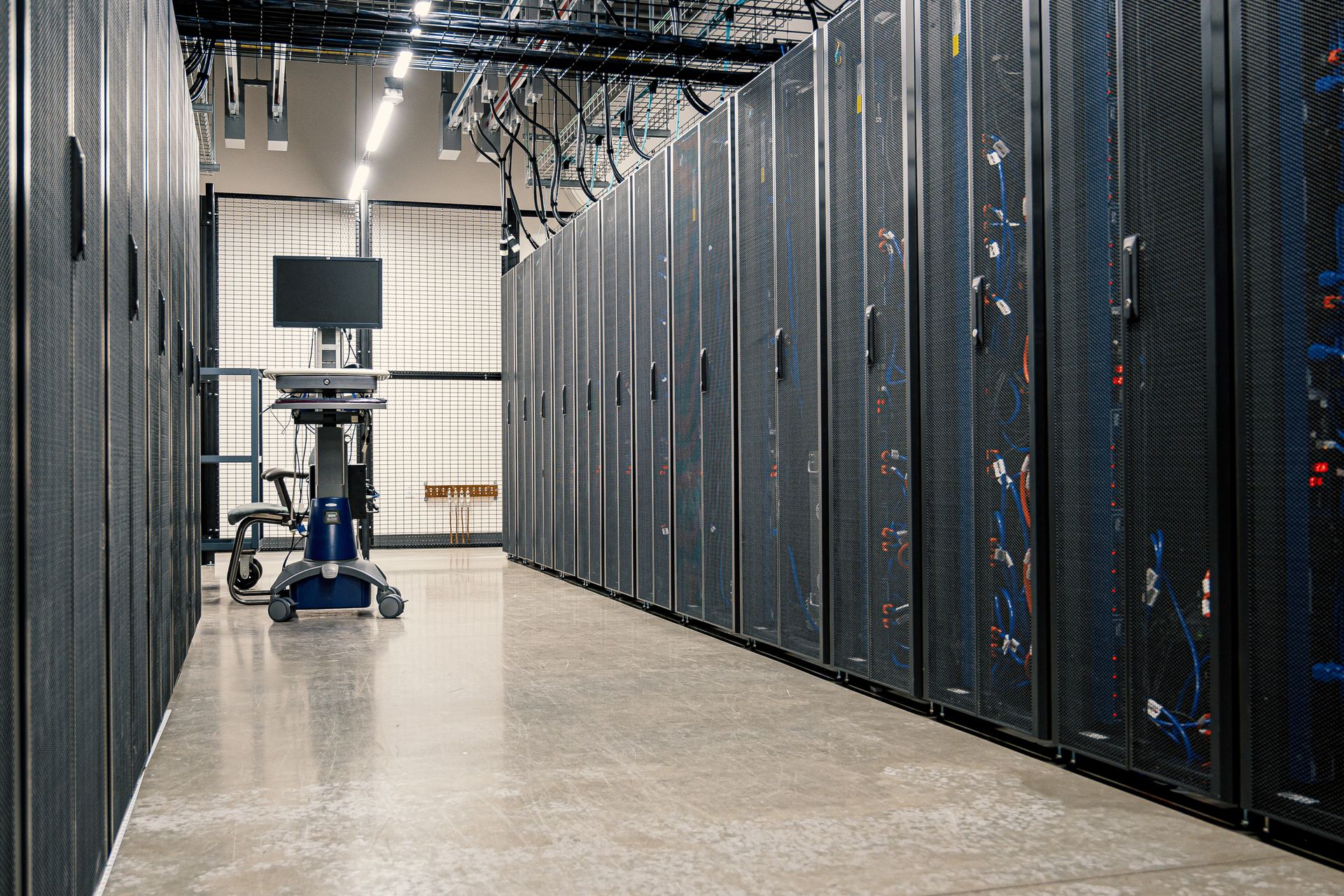
The optical-transport gear this market runs on
The DWDM and packet-optical platforms behind carrier waves and self-lit dark fiber are consolidated around a handful of manufacturers. We source customer-premise optical equipment through US distribution; naming these vendors describes the market, not a Uniqcli partnership or endorsement.
Ciena
Ciena Government Solutions supplies US federal civilian, defense and research/education networks with packet-optical transport and markets on-demand wavelength services; the Joint Interoperability Test Command (JITC) has certified Ciena optical-switching platforms for interoperability on Department of Defense networks.
Cisco optical transport
Cisco's optical transport line spans DWDM, OTN switching and packet-optical integration at 100G through 400G and beyond. Note that the older NCS 4000 family is in end-of-life wind-down — Cisco has published end-of-sale dates across its hardware, line cards and software — so a new build should be scoped on a current platform. We confirm lifecycle status on every line before it is quoted.
Nokia + Infinera
Nokia's 2024 acquisition of Infinera was projected to grow its optical-networking revenue by as much as 80% in 2025 and more than double its share of coherent DWDM port shipments — moving it closer in scale to market leader Ciena.
Infinera GX / ICE6
Infinera's open, disaggregated GX Series supports 100G-to-800G per-wavelength line rates; with its ICE6 coherent engine it can carry 800 Gbps on a single wavelength over more than 900 km without regeneration, built on OpenROADM, OpenConfig and OpenDaylight for multi-vendor interoperability.
Layer-1 encryption specialists
PacketLight and ADVA Network Security build the Layer-1 optical encryptors that ride inline on DWDM and OTN transport — the government-relevant overlay layer, validated for defense use.
What we supply
The customer-premise side of the link — transponders, muxponders, demarcation and encryption gear — sourced and integration-tested through US distribution, TAA- and §889-screened, and staged for delivery.
AES-256 on the wave itself — validated for government, measured in microseconds
Layer-1 optical encryption sits inline on the DWDM or OTN transport and encrypts at the wire, so the protection travels with the wavelength rather than being bolted on at a higher layer. Commercial units built for government use run GCM-AES-256 with Diffie-Hellman key exchange and SHA-384 authentication, compliant with the Commercial National Security Algorithm (CNSA) suite and validated to NIST FIPS 140-3 and Common Criteria EAL2 — delivering full line-rate transparency with under 12 microseconds of added latency on a 10-gigabit link.
The same approach is trusted at the national level elsewhere: one vendor's Layer-1 solution is approved by Germany's Federal Office for Information Security (BSI) for transporting EU/NATO Restricted and Confidential data at line-rate AES-256. We source that commercial Layer-1 encryption gear as equipment; selecting, accrediting and keying it stays with your security engineers and your program's authorizing official. NSA Type-1 COMSEC for classified traffic is government-controlled — we supply the commercial transport around it, never the Type-1 crypto itself.
- GCM-AES-256, DH key exchange, SHA-384 — CNSA-compliant, FIPS 140-3 and CC EAL2 validated
- Under 12 microseconds of added latency on a 10GbE link — line-rate transparency
- Sourced as commercial equipment; accreditation and keying stay with your security team
- NSA Type-1 (HAIPE/CSfC) is government-controlled — we supply the transport around it, not the crypto

How the government's own contract language frames the lit-vs-dark split
GSA's telecom service definitions formalize exactly the carrier-service-versus-customer-equipment split described above — a useful reference for how agencies scope optical transport, whichever vehicle a program procures through.
Optical Wavelength Service (OWS)
Under GSA's Networx/EIS OWS, the basic service is a point-to-point, bi-directional single link over WDM equipment, and the contractor always provides the optronics and fiber connectivity — agencies elect contractor-managed or self-managed operation.
OWS bandwidth ladder
OWS is offered at 1G, 2G, 4G, 8G, 10G, 16G, 32G, 100G and 400G, in both metro (flat pricing within the metro area) and CONUS long-haul variants, with OCONUS delivery available as an option.
Dark Fiber Service (DFS)
GSA's companion DFS is unlit fiber offered as point-to-point inter-city or intra-city connections within CONUS — and unlike OWS, the agency chooses whether to supply its own optoelectronics or obtain that equipment from the contractor.
How agencies scope lit vs dark
A lit wave is a managed service: the carrier provides the optronics and the fiber connectivity, and your program elects contractor-managed or self-managed operation. Dark fiber puts the optics, the transport equipment and the operational burden on your side, in exchange for control of the whole layer. Your program contracts the transport; we supply the premise equipment behind it.
Carrier service on one side, customer-premise equipment on the other — we supply the premise side and coordinate the circuit
Every optical link is two procurements wearing one requirement. There is the transport itself — a carrier's wavelength service (OWS-style, billed as OpEx per circuit) or dark fiber your program leases and lights — and there is the customer-premise equipment on each end of it: the transponders and muxponders that terminate the wave, the demarcation and OTN gear that hands it to your routers, the data-transfer nodes that feed it, and any Layer-1 encryptor riding on top. That premise equipment is a hardware bill of materials, and it is the half we own: sourced, integration-tested, TAA- and §889-screened, and staged for delivery.
The carrier circuit we coordinate rather than resell. We don't own fiber, hold routes, operate POPs or issue an SLA — the wave belongs to the carrier and the network belongs to your program. What we do is line the premise hardware up with the circuit order so the two arrive ready to turn up together, on the open market or the contract vehicle your program already holds. Where you're lighting dark fiber instead, the fiber-plant cable, optics and test gear are our fiber-network scope, and the wave becomes entirely yours to run.
- Premise side we supply — transponders, muxponders, demarcation/OTN gear, DTNs and Layer-1 encryptors
- Carrier circuit we coordinate, never resell — no Uniqcli fiber, routes, POPs or SLA
- Screened and staged so premise hardware and circuit turn up together
- Open-market POs or the contract vehicle your program already holds

Procurement built for an optical link's schedule
- Open-market POs or the contract vehicle your program already holds
- TAA (FAR 52.225-5) and NDAA §889 screening documented per line item
- FIPS 140-3 / CC EAL2 validated Layer-1 encryption options where the link requires them
- Reach, channel plan and demarcation confirmed against your circuit before optics are quoted
- Premise hardware staged and coordinated to the carrier's circuit turn-up date
- GPC / P-Card accepted up to threshold; no payment up front on quoted orders
Where the optical wave meets the rest of the program
The wave is one layer. These are the adjacent scopes it connects to — the fiber plant beneath it, the distributed-datacenter footprint it interconnects, and the resilient-connectivity paths that back it up.
Fiber network infrastructure
When you're lighting your own strands rather than buying a managed wave, the OSP/ISP cable, DWDM-ready OS2 backbone, optics and test gear are our fiber-network scope.
Decentralized datacenter
The distributed compute-and-storage footprint that private optical waves interconnect — the decentralized-datacenter model we can source and deploy for your program.
Satellite & resilient connectivity
Where an optical path needs a diverse, non-terrestrial backup for COOP and remote-site continuity, the SATCOM and multi-orbit ground segment picks it up.
Wavelength & optical transport questions
Does Uniqcli provide the wavelength circuit itself?
No. A wavelength service is a carrier-owned optical channel delivered over the carrier's DWDM platform — we don't own fiber, hold routes, operate POPs or issue an SLA. What we supply is the customer-premise optical equipment on each end of that circuit — transponders, muxponders, demarcation and OTN gear, data-transfer nodes and any Layer-1 encryptor — TAA- and §889-screened and staged for delivery, and we coordinate the premise hardware with the carrier's circuit order so both turn up together.
Wavelength service or dark fiber — which should we procure?
It depends on sustained bandwidth, horizon and control. A managed wavelength is predictable fixed OpEx with the carrier owning the optics — often right for moderate needs. Dark fiber means buying and operating your own transponders and DWDM, CapEx-heavy but with full optical-layer control and, in metro DCI above roughly 100G, a lower three-year total cost — industry analysis puts the saving near 55% once capacity reaches 400G and beyond. GSA formalizes both paths as Optical Wavelength Service and Dark Fiber Service. Send the route and capacity target and we'll quote the premise electronics either model needs.
Why would an agency choose a dedicated wave over a routed IP circuit?
Three reasons usually drive it: data-center interconnect between a primary and backup site off the public internet; COOP / disaster-recovery replication that needs deterministic low latency and carrier and path diversity; and a Layer-1 encryption overlay that adds only microseconds. A dedicated wave gives the physically-isolated, predictable-latency path those workloads want. We supply the premise hardware each of those reasons implies.
Can you supply Layer-1 encryption for an optical wave?
We source commercial Layer-1 optical encryptors — GCM-AES-256 units, CNSA-compliant and validated to FIPS 140-3 and Common Criteria EAL2, that encrypt at line rate on the DWDM or OTN transport with under 12 microseconds of added latency on a 10-gigabit link. Selecting, accrediting and keying them stays with your security engineers. NSA Type-1 (HAIPE/CSfC) encryption for classified traffic is government-controlled equipment; we supply the commercial transport around it, not the Type-1 COMSEC itself.
How do we buy the premise equipment?
Through a quote or RFQ against a standard purchase order, with GPC / P-Card accepted up to your cardholder threshold. We quote the customer-premise optics, transponders, demarcation gear and Layer-1 encryption; the carrier service itself is coordinated alongside and contracted by your program.
Do you screen optical transport gear for TAA and §889?
Every line is screened for NDAA §889 before it's quoted — we confirm the manufacturer and its affiliates aren't on the covered list and source through US distribution, and that diligence ships with the quote. TAA country of origin under FAR 52.225-5 is verified on request.
Procurement
Procure like a prime.
TAA- and §889-screened optical transport and encryption gear — integration-tested and staged to the carrier's turn-up date, with the same team answering for it from bill of materials to a wave your program runs.
The solutions atlas
Every solution, by technology area and by customer.
By technology
By customer
- TAA & NDAA-889 Compliance Screening
- CMMC & CUI Solutions
- Federal & DoD
- State, Local & Education
- Healthcare
- Enterprise
- Rapid Procurement & GPC Buys
- Multi-Vendor Integration Projects
- eProcurement & Custom Catalogs
- FISMA Modernization
- CJIS-Compliant Justice Cloud & Local AI
- Federal Storage Modernization
- Government ERP & Business Systems Infrastructure
- Managed Procurement
- Secure AV & Conferencing
- Fiber Network Infrastructure
- Satellite & Resilient Connectivity
- Wavelength & Optical TransportThis page
- Decentralized Data Centers
- Data Center Design & Build
Talk to us about your optical transport
Send the sites you're connecting, the bandwidth and reach, and whether you're buying a managed wave or lighting dark fiber — we'll return a consolidated, TAA- and §889-screened quote for the customer-premise optics, transponders, demarcation gear and Layer-1 encryption, and coordinate the carrier circuit alongside it, on the open market or the contract vehicle your program already holds.