
Solutions
Secure AV & Conferencing
Audiovisual and conferencing hardware for the accredited spaces your program operates — wired-only endpoints, FIPS-validated VTC, video walls, room control and the cabling, acoustic and RF-isolation gear your TEMPEST, ICD 705 and DoD Unified Capabilities requirements call for, TAA- and §889-screened on every line.

- Acoustic target
- ICD 705 STC 45 baseline · STC 50 for amplified/VTC rooms
- Wireless posture
- Wired-only endpoints where your accreditation bars PEDs
- Crypto
- FIPS 140-2/3 validated VTC cryptographic modules
- What we supply
- Endpoints, video walls, control, acoustics & cabling
The accreditation is your program's — the AV inside it is ours to source
Accrediting a SCIF, an emergency-operations center or a secure conference room is your program's responsibility, held by your accrediting official under the governance that applies to the space — it cannot be signed over to a vendor. Uniqcli doesn't accredit your facility, run an emanations assessment or touch a classified signal chain. We source and integration-test the audiovisual and conferencing equipment your team installs behind the space's technical requirements: wired collaboration endpoints, FIPS-validated video-teleconferencing codecs, large-format video walls, DSP-driven room control, assistive listening, and the red/black cabling, RF-isolation and STC-rated acoustic hardware your TEMPEST, ICD 705 and DoD Unified Capabilities requirements set — TAA- and §889-screened on every line.
ICD 705 acoustic target for amplified-speech and conferencing rooms
Minimum red/black wireline separation (15 cm for long parallel runs)
RF amplifier + attenuator isolation for CATV/SAT at the boundary
Assistive-listening receivers that must be hearing-aid-compatible
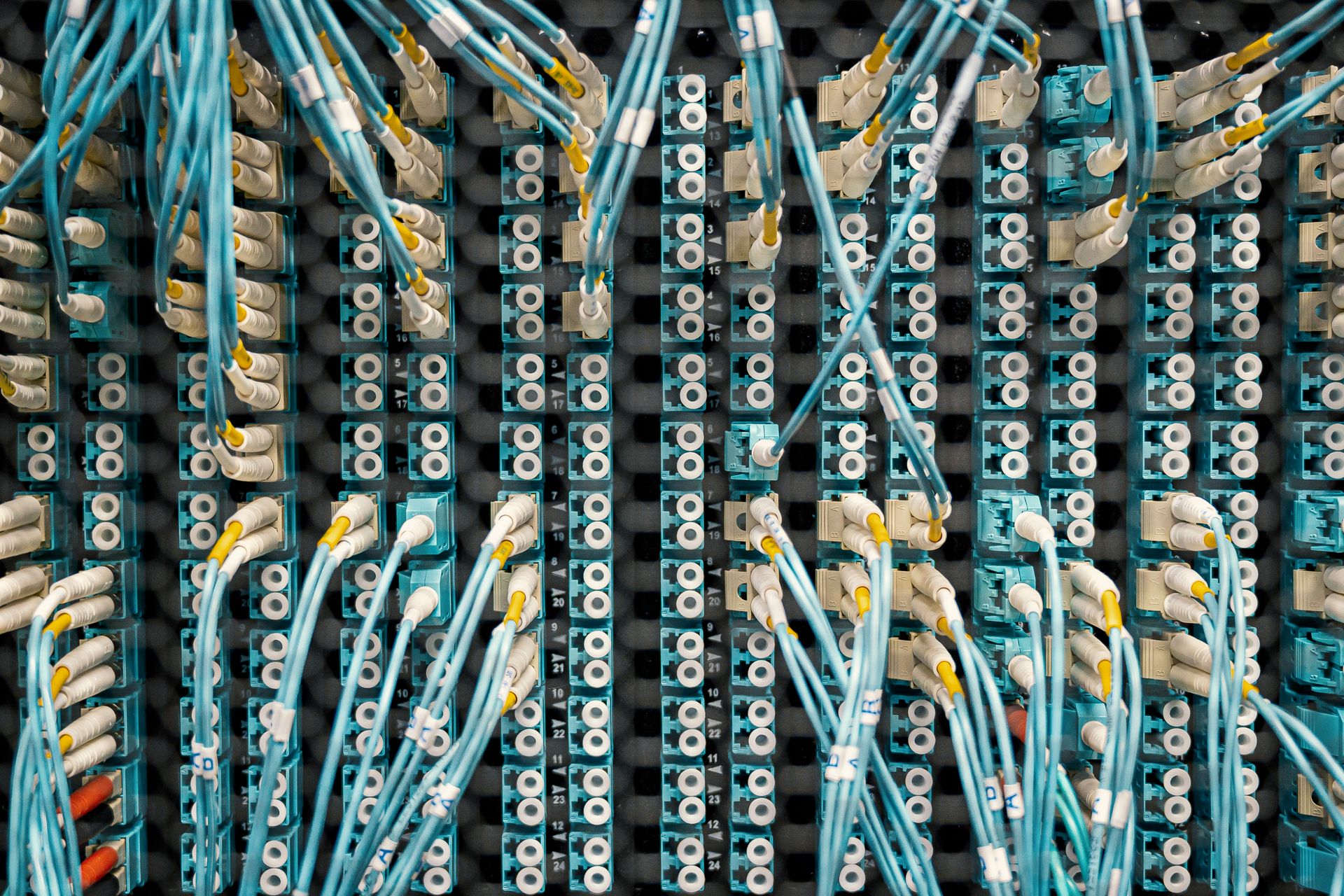
Before it is a picture-and-sound problem, secure AV is a cabling and emanations problem
In an ordinary conference room, AV design starts with sightlines and audio. In an accredited space it starts with how the signal is carried. The emanations-security guidance your accreditation follows — CNSSAM TEMPEST/1-13 and related CNSS direction — governs how any electronics, AV included, are wired and where their cables may run. RED (plaintext/classified) wireline is kept physically separated from BLACK (encrypted/unclassified) wireline, power and digital switches: commonly a minimum of 5 cm (2 in), or 15 cm (6 in) for parallel runs over 30 m (98 ft), unless the runs are carried in a metal distribution system such as conduit or enclosed cable tray.
RF feeds get the same scrutiny. CATV and satellite-television cabling that crosses a SCIF or SAPF boundary is isolated at the inside boundary — converted to fiber and back to wireline, or run through a 12 dB-minimum one-way RF amplifier paired with a 12 dB-minimum RF attenuator inline. These are your accreditation's requirements to set; ours to equip. We supply the shielded cable, conduit and cable tray, the fiber media converters, and the RF amplifier and attenuator pairs that satisfy them, and we stage the pathway hardware to your documented separation plan.
- Red/black pathway separation — shielded cable, conduit and enclosed cable tray
- RF/CATV boundary isolation — fiber media converters or 12 dB amplifier + attenuator pairs
- Cabling staged to your documented separation plan, not improvised on site
- The emanations requirement stays your program's; the hardware behind it is ours
STC-rated rooms — and the sound masking for when construction alone won't reach the number
Under ICD 705, acoustic protection is classified by Sound Group, tied to Sound Transmission Class. Sound Group 3 calls for STC 45 or better — loud speech faintly heard but not understood outside the space. Sound Group 4, STC 50 or better, applies specifically to spaces with amplified speech, conferencing or public-address systems — which is to say, exactly the rooms AV is built for. We supply the STC-rated doors, acoustic seals and gaskets, and panel systems that let a room reach its target.
Where wall design and construction alone can't hit the number, supplemental sound masking is added — amplified emitters near doors, windows, vents and shared walls that raise ambient noise above conversational level, with the wiring and transducers kept inside the perimeter so masking never becomes a new leakage path. One honest boundary: these acoustic measures address accidental sound leakage, not deliberate technical interception — TSCM is a separate discipline, and instrumented NIC testing is typically not required where wall design and construction quality are sound. We supply the masking hardware; the accreditation, the sweep and any testing stay with your program.
- STC-rated doors, seals and acoustic panels sized to your Sound Group target
- STC 50 assemblies for the amplified-speech and conferencing rooms AV serves
- Sound-masking emitters and transducers kept inside the accredited perimeter
- Acoustics address accidental leakage — TSCM and instrumented testing stay yours

The accreditation's rules, mapped to what we source
Accreditation stays your program's to hold. These are the AV categories we supply so the space your team accredits has the equipment behind it — the gear behind the requirement, never a Uniqcli certification.
Secure VTC endpoints & codecs
FIPS 140-2/3 validated video codecs and room and desktop endpoints from the conferencing manufacturers in this space — Cisco, Poly and peers — sourced to the interoperability and information-assurance path your network requires.
Video walls & display processors
Large-format LCD and LED video walls, wall controllers and display processors for command centers, SOCs and EOCs — the multi-screen, workstation-controlled walls agencies solicit under firm-fixed-price, short-delivery terms (a 2026 U.S. Secret Service command-center solicitation sought up to eight wall-mounted screens).
Room control & DSP
TAA-compliant control processors, audio DSP, touch panels and scheduling — the Crestron/AMX/Extron-class ecosystems marketed to government EOC, NOC, command-center and courtroom environments — configured to your room.
Wired collaboration peripherals
Wired microphones, cameras, speakerphones and headsets for spaces where wireless and Bluetooth are barred — and, where your policy requires, peripherals dedicated to a single classification domain so nothing crosses the boundary.
Red/black cabling & pathway
Shielded cable, conduit and enclosed cable tray for the pathway separation your emanations plan documents — staged to the distances and segregation your accreditation sets, not improvised on site.
RF/CATV boundary isolation
Fiber media converters and 12 dB RF amplifier and attenuator pairs to isolate CATV and satellite feeds at the facility boundary, so a briefing or entertainment feed isn't an emanations path.
Acoustic treatment hardware
STC-rated doors, acoustic seals and gaskets, and panel systems to bring a room to its ICD 705 Sound Group target — STC 45 baseline, STC 50 for amplified-speech and conferencing rooms.
Sound-masking systems
Emitters, transducers and generators placed near doors, windows, vents and shared walls, kept inside the perimeter, for when construction alone can't reach the acoustic number.
Assistive listening
Hearing-loop, FM/RF and infrared assistive-listening systems for the assembly and meeting spaces where the 2010 ADA Standards require them — at least 25% of receivers hearing-aid-compatible, and no fewer than two.
The conferencing hardware has to be allowed on the network before it can carry a call
A secure VTC endpoint is only useful if it's permitted on the network it rides. Under DoDI 8100.04, any product providing or supporting DoD Unified Capabilities — which includes UC audio and video conferencing — has to be certified for interoperability and information assurance, and DoD Components have to comply with the functional requirements, performance objectives and technical specifications in the Unified Capabilities Requirements (UCR).
That path is shifting. The Unified Capabilities Approved Products List — later the DoDIN APL, the list VTC and UC vendors historically had to appear on to sell into DoD networks — sunset on September 30, 2025. Cybersecurity requirements moved to the DISA RME vendor Security Technical Implementation Guides (STIG) program, with interoperability now defined by the UCR-CORE document and enforced contractually. We track that transition when we spec conferencing hardware, and we source endpoints carrying FIPS 140-validated cryptographic modules — the government is moving validation from FIPS 140-2 to FIPS 140-3 — documenting the validation with the quote.
- UCR/STIG-aligned VTC and UC conferencing hardware under DoDI 8100.04
- The DoDIN APL sunset (Sept 30, 2025) tracked — sourcing to the STIG + UCR-CORE path
- FIPS 140-2/3 validated cryptographic modules, documented per line
- Certification is the network's to grant; compliant hardware is ours to supply
The standards your secure-AV design references
These are the industry and government standards a secure-AV design is measured against. We source hardware that lets your team meet them; the accreditation and any instrumented testing remain your program's.
ANSI/AVIXA A102.01:2022
Audio Coverage Uniformity in Listener Areas — the AVIXA performance standard for measuring how evenly a system delivers early-arriving audio across a listener area, a core reference for conference-room and secure-space audio design.
2010 ADA Standards
Assistive-listening systems — hearing loop, FM/RF or infrared — required in assembly and meeting spaces where audible communication is integral, with at least 25% of receivers hearing-aid-compatible and no fewer than two.
ICD 705 Sound Groups
Acoustic classification tied to STC — Sound Group 3 at STC 45 or better, Sound Group 4 at STC 50 or better for spaces with amplified speech, conferencing or public-address systems.
CNSSAM TEMPEST/1-13
Red/black separation and RF-isolation pathway guidance — the minimum wireline separations and the fiber-conversion or amplifier/attenuator isolation your emanations plan documents.
DoDI 8100.04 · UCR-CORE · DISA RME STIGs
DoD Unified Capabilities interoperability and information assurance for UC audio/video conferencing — the successor regime to the sunset DoDIN APL, enforced contractually.
FIPS 140-2/3
Validated cryptographic modules for collaboration and VTC hardware, with the government transitioning validation from FIPS 140-2 to FIPS 140-3.
What we don't do — and won't pretend to
Secure-AV accreditation is governance, cleared people and testing. No hardware vendor supplies those. We support them only by sourcing and staging clean equipment and documenting it; the authority stays with your program.
- Facility accreditation and the authorization to operate — your accrediting official's, never a vendor's
- The TEMPEST/emanations assessment and any RED/BLACK determination — your program's authority
- TSCM sweeps and technical-surveillance countermeasures — a separate discipline we don't perform
- SCIF construction, RF shielding installation and instrumented NIC/acoustic testing — your cleared construction and testing teams
- Accreditation of the network the VTC rides — your ISSM and AO; we supply UCR/STIG-aligned hardware
- Classified operation of the room — your cleared staff; we supply and stage the equipment, never operate it
Procurement built for the acquisition cycle
- Open-market POs or the contract vehicle your program already holds
- GPC / P-Card accepted up to threshold; no payment up front on quoted orders
- TAA (FAR 52.225-5) country-of-origin and NDAA §889 screening documented per line item
- TAA compliance — the threshold behind GSA Schedule eligibility of AV control hardware — screened per line
- FIPS 140-2/3 validated VTC and UCR/STIG-aligned options where your network requires them
- Staged, imaged and kitted before delivery, so install is a controlled swap, not a build on a live space
The room hardware behind a secure AV build
Endpoint, audio, mounting and switching are chosen per room, against the separation and acoustic requirements your accreditation sets. These are the buying pages for each category.
Secure AV & conferencing questions
Can Uniqcli accredit our SCIF or secure conference room?
No vendor can. Accreditation belongs to your accrediting official under the governance that applies to the space — ICD 705 and related IC/DoD direction. What we do is source and integration-test the AV your team installs behind the space's technical requirements — wired endpoints, FIPS-validated VTC, video walls, control, acoustic treatment and red/black cabling — TAA- and §889-screened, so the equipment side clears procurement cleanly.
Why wired-only? Can't we use a wireless mic or a Bluetooth webcam?
In accredited SCI spaces, wireless is treated as the exception, not the rule, and personal electronic devices are prohibited unless government-approved and properly shielded. Under DoD policy, wireless headsets and wireless webcams are flatly prohibited in these spaces regardless of microphone capability, and the June 2021 'Collaboration Peripherals in Secure Spaces' memo bars personally-owned headsets, microphones, desktop telephones and webcams and stops USB peripherals from crossing the classified/unclassified boundary. We spec wired endpoints and, where required, peripherals dedicated to a single classification domain.
What acoustic rating does a secure conference room need?
Under ICD 705 Sound Groups, STC 45 is the baseline; STC 50 or better applies specifically to spaces with amplified speech, conferencing or public-address systems — the rooms AV is built for. We supply STC-rated doors, seals and panel systems, and where construction alone can't reach the target, sound-masking hardware kept inside the perimeter. Note that these acoustic measures address accidental sound leakage, not deliberate interception; TSCM is a separate discipline we don't perform.
Is the UC APL / DoDIN APL still the certification our conferencing gear needs?
The DoDIN APL sunset on September 30, 2025. Cybersecurity requirements moved to the DISA RME vendor STIG program and interoperability to the UCR-CORE document, enforced contractually under DoDI 8100.04. We source conferencing hardware aligned to that path and document the FIPS 140 validation of the cryptographic modules. Which products your network authorizes remains your ISSM and AO's call, not ours.
Do your VTC endpoints carry FIPS-validated cryptography?
We source endpoints whose cryptographic modules are FIPS 140-validated — for example, Poly's Unified Communications Cryptographic Module holds FIPS 140-2 Level 1 validation (certificate #3929) — and we document the validation with the quote. The government is transitioning validation from FIPS 140-2 to FIPS 140-3, and we track that when we spec hardware.
What payment methods do you accept?
GPC / P-Card up to your threshold and standard net-terms purchase orders. We confirm stock and the final total before any payment moves, with TAA verified on request, and quote against the open market or the contract vehicle your program already holds.
Procurement
Procure like a prime.
FIPS-validated, TAA-screened AV — integration-tested and staged — with the same team answering for it from bill of materials to a secure room your program accredits.
The solutions atlas
Every solution, by technology area and by customer.
By technology
By customer
- TAA & NDAA-889 Compliance Screening
- CMMC & CUI Solutions
- Federal & DoD
- State, Local & Education
- Healthcare
- Enterprise
- Rapid Procurement & GPC Buys
- Multi-Vendor Integration Projects
- eProcurement & Custom Catalogs
- FISMA Modernization
- CJIS-Compliant Justice Cloud & Local AI
- Federal Storage Modernization
- Government ERP & Business Systems Infrastructure
- Managed Procurement
- Secure AV & ConferencingThis page
- Fiber Network Infrastructure
- Satellite & Resilient Connectivity
- Wavelength & Optical Transport
- Decentralized Data Centers
- Data Center Design & Build
Talk to us about secure AV & conferencing
Send a room list, a target spec or a bill of materials and we'll return a consolidated, TAA- and §889-screened quote — FIPS-validated VTC and UCR/STIG-aligned options where your network requires them, on the open market or the contract vehicle your program already holds.