One access-control platform across Johnson Controls, HID, Mercury, LTS and DMP hardware, built for federal installation requirements, Navy CNIC programs and their Army and Air Force equivalents.
Access control on a government installation usually means five incompatible head-ends, one for each building era or vendor, and none of them talk to each other. UniQ Security is our platform practice for unifying that: one management layer operating panels, readers and controllers from Johnson Controls, HID, Mercury Security, LTS and DMP, so the badge office manages ONE system while the hardware underneath stays competitive, replaceable and §889-screened.
Every proprietary head-end is a future hostage negotiation: the panels age, the license renews, and the replacement quote assumes you can't leave. Running a provider-agnostic platform over open-controller hardware (Mercury-based lines and their peers) breaks that cycle. The platform stays in place while the hardware competes.
For defense and federal customers we design to the installation's actual program: Navy CNIC access-control requirements and their Army and Air Force counterparts, PIV/CAC credential flows, and FICAM-aligned architectures where required. The work is quoted line-by-line and staged like every Uniqcli delivery.
▪One management plane over JCI, HID, Mercury, LTS and DMP hardware
▪PIV/CAC-ready, FICAM-aligned where the program requires
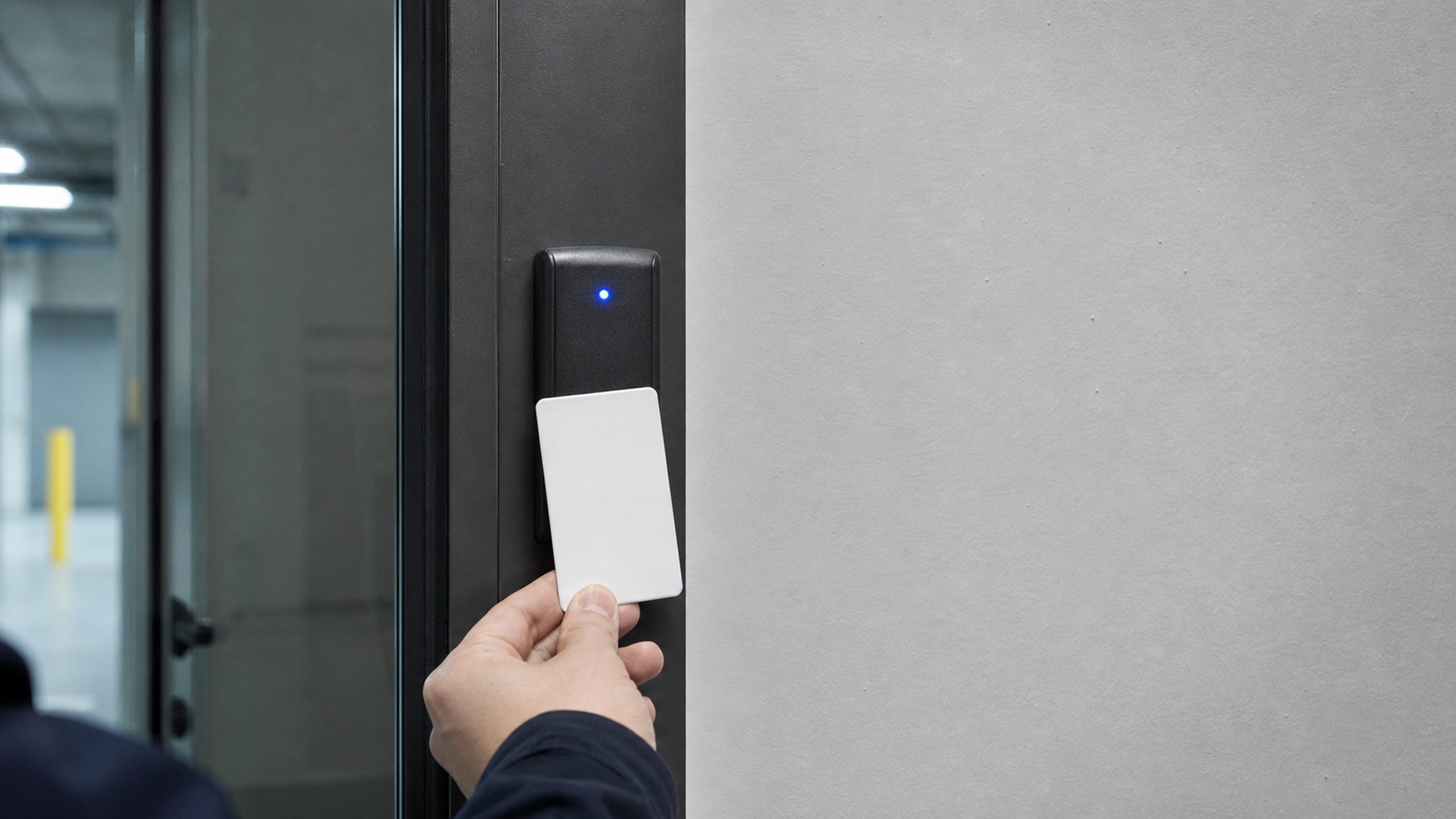
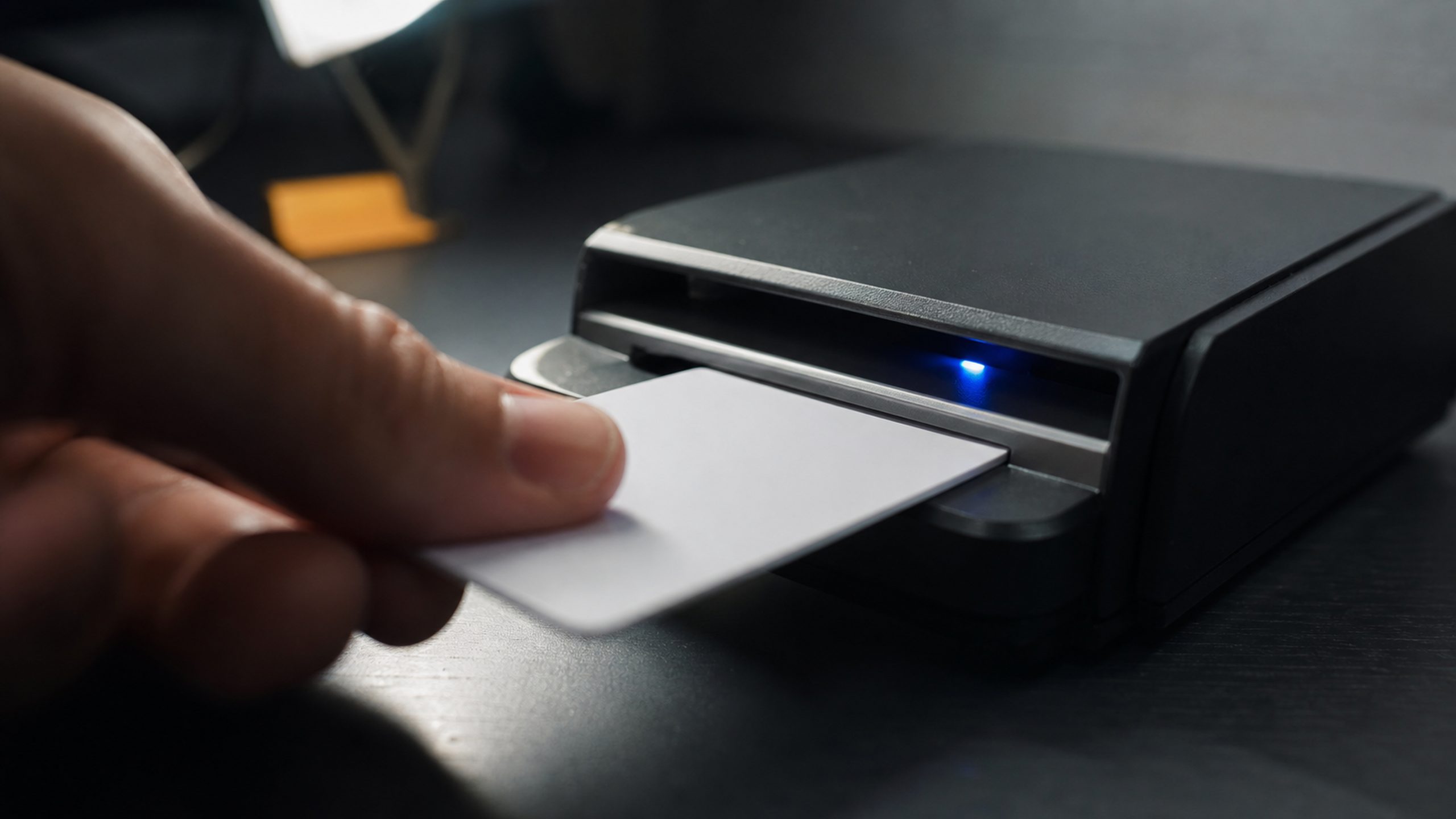
▪Badge card being presented to an access-control reader.
The platform
UniQ Security, in depth
In this section
Provider-agnostic PACS
UniQ Security decouples the management layer of physical access control (PACS) from the field hardware. Panels and controllers from Johnson Controls, HID (including Mercury-based lines), LTS and DMP operate from one platform, while doors, readers, request-to-exit devices and locks are inventoried and standardized building by building.
Open-controller architecture is what makes that possible. Mercury controller firmware became the closest thing physical access control has to a lingua franca: multiple manufacturers build on the same controller platform, so the software above it can be replaced without ripping out the panels below. That is the structural break from proprietary head-ends. Because the platform stays while the hardware competes, every future bid has more than one qualified answer.
UniQ Security is designed to support the access-control requirements that Navy installations operate under CNIC, and the equivalent programs at Army and Air Force installations. Visitor management and gate operations are integrated locally as the program directs.
Installation access programs share a common shape: identity proofing at enrollment, credential validation at every opening, and an audit trail that can answer who passed which door and when. The platform is built around those requirements, with normalized event streams, readable audit records and credential lifecycle management. Each site is scoped against its own program's controls. Acceptance belongs to the program and attaches to a deployment, never to a shelf product.
▪Designed to support Navy CNIC installation access-control requirements
▪Army and Air Force equivalent programs addressed the same way
▪Visitor and gate workflows integrated as the program directs
PIV, CAC and derived credentials are first-class: reader and panel selections are made for the credential population actually in the field, with FICAM-aligned deployments where the program requires them, and graceful handling of visitor and contractor populations that don't carry the primary credential.
PIV (Personal Identity Verification) is the federal civilian smart-card credential; CAC (Common Access Card) is its DoD counterpart. FICAM (Federal Identity, Credential and Access Management) is the government-wide architecture for how those credentials are issued, validated and used. A FICAM-aligned PACS validates the credential cryptographically at the door rather than trusting the card's mere presence. Designing to that model from the start means the credential path doesn't have to be rebuilt when the program tightens.
▪PIV/CAC-ready reader and panel selections
▪FICAM-aligned architecture where the program requires it
▪Visitor and contractor credentials handled without weakening the employee path
▪Credential lifecycle (issue, rotate, revoke) in one place
Migration starts with an audit of what's installed: every door, panel, reader and credential population, documented. Wiring, locks and doors that still serve are kept; head-ends and dying panels are replaced first; and old and new systems run in parallel during cutover so a door never goes dark.
The sequencing is deliberately boring. The head-end migrates first because it's the layer that unifies; panels follow as they age out, one building at a time, on a schedule your project manager can actually hold. Parallel-run cutover means each opening is proven on the new platform while the old one still stands behind it. If a cutover fails, the door falls back to the old system rather than leaving a building locked.
Panels bench-configured, door kits labeled per opening.
4 · Cutover & sustain
Parallel-run migration, then support and expansion under one partner.
Questions
UniQ Security: common questions
▪Which manufacturers does the platform operate?
Johnson Controls, HID (including Mercury-based controllers), LTS and DMP today; the open-controller approach extends coverage as programs need.
▪Is it approved for Navy/CNIC use?
Installation access programs approve DEPLOYMENTS, not shelf products. UniQ Security is designed to support CNIC-governed requirements and Army/AF equivalents, and we scope each site against its program's controls.
▪PIV/CAC support?
Yes; reader and panel selections are made for the credential population, FICAM-aligned where required.
▪Do we have to replace everything?
No; the platform's point is keeping what serves and replacing only the layers that fail the mission, panel by panel.
▪Cameras and intrusion too?
Access control is the core; video and intrusion integrate through the same event plane, with hardware sourced through our security storefront.
The solutions atlas
Every solution, by technology area and by customer.