
Network & data center services
SD-WAN Solutions
An SD-WAN program is bought three times — the appliance at each site, the license that renews behind it, and the staging and logistics that put a hundred of them into service.
- Edge appliances · license terms · per-site staging · rollout
- We quote all three as one document and stage them per site
- The overlay policy stays yours to design and run
We quote all three as one document and stage them per site. The overlay policy stays yours to design and run.
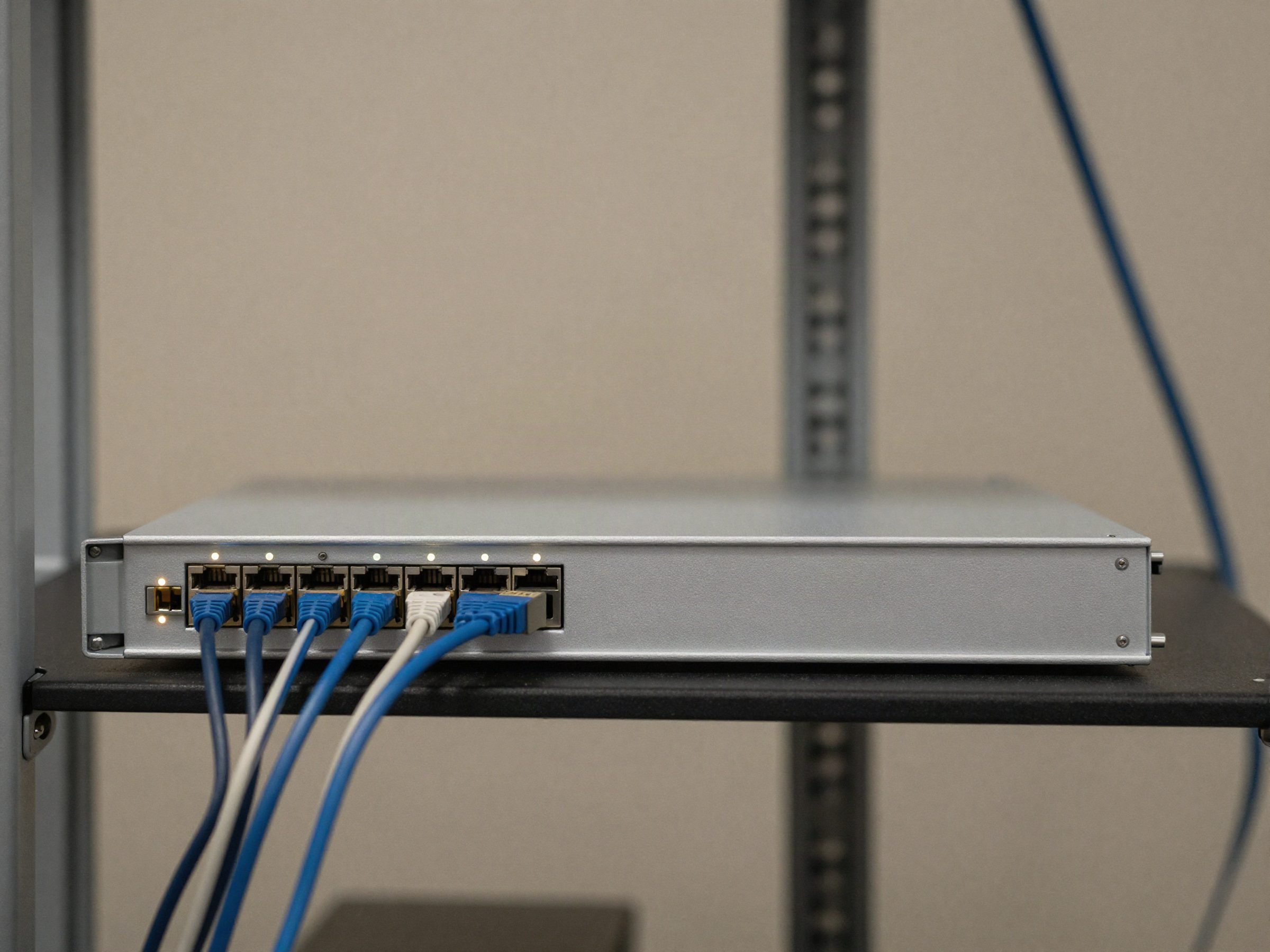
- Scope
- Edge appliances · license terms · per-site staging · rollout sequence
- Licensing
- Sourced on request and quoted with its term — never a shelf item
- Priced lines
- Peplink and Cradlepoint on the catalog; firewall lines quoted alongside
- Boundary
- No overlay design or operation — the policy and the platform are yours
Tell us the project — SD-WAN program
Tell us where to reach you and a Uniqcli specialist follows up by email to scope the work with you — what has to be covered, how many sites or buildings, and what already exists — then comes back with a quoted bill of materials across the equipment, the software licensing and the deployment work.
Priced against your own site rather than a package tier, sourced through US distribution and screened line by line. We specify, supply, stage and integrate; internet access is scoped separately from the equipment on this page, and operating the network stays with your team or the provider you contract.
The first number is our real one, not an opening one.
Tell us the scope and we come back with the best price we can do on it.
- Supporting federal, state & local purchasers
- GPC & P-Card accepted
- TAA & NDAA-889 screening before every quote
Live prices from our catalog right now — a starting point, not the project price. Your quote is scoped to the site and includes the licensing and services the job needs.
Three purchases wearing one name
By the time an organization is shopping for SD-WAN, the interesting technical arguments are usually settled — the platform is chosen, the policy is drafted, the transports are contracted. What is left is a program with three separate cost structures inside it.
Continue readingShow less
There is the appliance at each site, a one-time capital line. There is the subscription behind it, a recurring line that renews on its own anniversary whether or not anybody budgeted for it. And there is the rollout: a hundred boxes that each need an image, a label, a delivery date and someone on site who can plug them in without a console session. The third one decides whether the program takes a quarter or a year, and it is the one least often costed. We quote all three together, stage the hardware per site, and say plainly which parts remain yours.
The four lines behind a multi-site deployment
Priced as one document per site tier rather than as a list of parts, because the appliance, its subscription and the labor to deploy it are decided together or they are decided badly.
Continue readingShow less
Naming a manufacturer describes the lines we quote, not a Uniqcli partnership, authorization or endorsement.
The appliance at each site
Sized against the transports the site actually terminates and the throughput it needs with inspection turned on, not against its headcount. Peplink carries priced rows across multi-WAN routing on our catalog — the case where wired, fiber and cellular paths are managed together at the edge.
Continue readingShow less
Where your platform requires a specific appliance, it is sourced on request through authorized US distribution and quoted with an honest lead time rather than an implied stock position.
The license that renews behind it
Nearly every platform in this category licenses per site per year, usually in bandwidth or feature tiers, with the security services sold as their own subscription on top.
Continue readingShow less
Licenses are sourced through authorized US distribution rather than held on a shelf, so stock language never applies to them — what matters is the term, the tier and the co-termination date against the renewals you already carry.
The path that is not the primary path
The reason most organizations adopt SD-WAN at all is to use more than one transport per site, which means each site needs a second path that fails differently from the first.
Continue readingShow less
Cradlepoint carries priced cellular routing for branch and remote sites; the airtime rides its own contract and its own budget line rather than this quote.
The rollout itself
Staging, imaging with the configuration your team supplies, kitting per location, labeling and release in the sequence your install plan calls for.
Continue readingShow less
This is where the schedule is won: a site visit that is a swap takes an hour, and a site visit that is a build takes a day and a technician who knows the platform.
Price the program, not the parts
Go to the formFour decisions that set the bill of materials
The first is how many transports each site terminates. A site with one circuit and a cellular backup is a different appliance from a site with two wired services and a cellular path, and the difference is not marginal — it changes the port count, the throughput class and often the license tier. Getting the transport plan per site written down before the hardware is chosen is the single highest-value hour in the whole program.
Continue readingShow less
The second is whether the firewall is the edge or sits behind it. In many branch designs the SD-WAN appliance and the security appliance are the same box, and its throughput with inspection enabled becomes the constraining number. In others the edge device passes traffic to a separate firewall, which is a cleaner separation of duties and one more device per site to buy, power and rack. Both are defensible; what is not defensible is discovering which one you chose at deployment.
The third is site tiering. Estates are never uniform, but they are almost always reducible to three or four repeatable templates plus a short list of exceptions — a distribution center, a regional office, a small branch, and the two sites that are unlike anything else. Tiering is what turns a rollout into a repeatable order; without it, every site is a bespoke quote and the program slows to the pace of its purchasing.
The fourth is what happens at the aggregation points. Regional hubs and data center terminations are usually larger appliances with their own licensing, and they are frequently forgotten in a budget that was assembled by counting branches. They belong on the same document as the branches, because they are on the same critical path.
The half of the program that renews
Software in this category is sourced against your own term and tier, never quoted from a shelf position. We will not imply stock on a license line, and we will not quote a subscription without stating what it renews at.
Term and co-termination
Multi-year terms usually price better per year, but a program that co-terminates everything on one date concentrates the renewal into a single budget event.
Continue readingShow less
Where an estate is already carrying subscriptions on staggered dates, aligning new sites to an existing anniversary is often worth more than the multi-year discount. Both figures are worth seeing before the term is set.
Tiers and what pushes a site up one
Bandwidth ceilings, feature sets and the number of tunnels or transports a site uses are the usual tier boundaries. Adding a second circuit at a branch in year two can move it up a tier and cost more than the circuit does, which is the sort of thing worth modelling at quoting time rather than discovering on an invoice.
Appliances coupled to their subscription
In several platforms the hardware is only fully functional while its subscription is current, so a lapsed term is not a support gap — it is a device doing less than the design assumes.
Continue readingShow less
We quote the term with the hardware, state the renewal position, and flag every date rather than leaving them to surface in a renewal notice a year later.
What's included in an SD-WAN program
Everything a site needs to go live, listed once per tier — and the exceptions listed as exceptions.
- The edge appliance at each site, sized against the transports it terminates and the throughput it needs with inspection turned on
- The licence that renews behind it, sourced on request and quoted with its term and tier rather than from a shelf position
- Co-termination handled deliberately, with the trade-off between a multi-year term and one concentrated renewal event named
- The path that is not the primary path — a second transport per site that fails differently from the first
- Staging and imaging with the configuration your team supplies, kitting per location and labeling to the site
- TAA (FAR 52.225-5) and NDAA §889 screening on every line before the quote goes out — the overlay policy and the platform stay yours to design and run
From a site list to a phased rollout
The document that makes this quotable is the site list with its tiers and transports. Everything else follows from it.
- Send the site list with each location's transports, its rough throughput expectation and which sites are exceptions
- Sites are grouped into tiers and each tier is priced once — appliance, subscription term and any backup path together
- Where your platform mandates a specific appliance, it is sourced on request and quoted with an honest lead time rather than implied stock
- Units are staged with the image your team supplies, labeled to the site, kitted with accessories and held for release
- Shipments are released in the sequence your install plan calls for, so receiving is not asked to absorb the whole estate at once
- GPC / P-Card accepted up to your cardholder threshold; purchase orders otherwise. TAA (FAR 52.225-5) and NDAA §889 screening is performed on every line, before the quote goes out
Pilot, freeze the template, then buy volume
The rollouts that finish on schedule share a shape. A small pilot goes in first — three or four sites chosen to be genuinely representative rather than conveniently close — and it runs long enough for real traffic to find the gaps in the template. Then the template is frozen: the appliance model per tier, the license tier, the cabling and mounting kit, the label format and the runbook the site technician follows. Only then does volume purchasing start.
Continue readingShow less
Freezing the template is what makes the rest of it repeatable. It converts a hundred bespoke site visits into a hundred instances of the same visit, which is what allows staging to do its job — because a staged unit is only useful if the thing it was staged against has stopped changing. It also makes the quote stable, since a frozen template is a fixed bill of materials that can be priced once and reordered.
The order in which sites go live is worth deciding deliberately rather than alphabetically. Sites whose circuits are already installed go first; sites waiting on a carrier build go last regardless of their priority, because no amount of staging accelerates a construction interval. We release shipments against that sequence rather than pushing the whole estate to a dock that cannot store it.
Send the site list and the standard build
Tell us the appliance your platform requires, how many sites sit in each tier and what each one uses for backup. One document comes back with per-site hardware, subscription terms and the staging work costed as readable lines, sequenced to your rollout rather than shipped all at once.
What stays yours to design and run
The overlay is not ours. Path selection policy, application steering, the controller and its tenancy, the tunnels and everything that makes SD-WAN more than a set of routers are designed and operated by your team or the platform partner you engage. We will load an image you supply and label the box it goes in; we will not claim to have designed the network it joins, and we do not run a managed SD-WAN service.
Continue readingShow less
We also do not carry a cloud-security or SASE practice. Where an architecture includes a cloud-delivered security service, that is a subscription relationship between your organization and that vendor, and we would rather point at the boundary than blur it to look broader. On the same principle, we make no uptime, availability or performance commitment on a network we do not operate.
And the transports are not part of this scope. The access underneath an SD-WAN — dedicated internet, broadband, private lines, cellular airtime — is carrier service on its own contracts and its own budget line, quoted separately from the appliances and licensing on this page, and in most programs already in place before the overlay conversation starts. What this page quotes is the hardware that terminates those transports and the subscriptions that hardware requires, sourced through authorized US distribution and screened line by line.
What sits under and beside an SD-WAN program
The overlay rides on transports, terminates on hardware and has to be monitored by somebody. These are the lanes most often quoted around it.
SD-WAN procurement questions
How is this different from your SD-WAN edge hardware page?
That page is the shelf: the branch appliances, firewalls and cellular routers we carry, and how they are staged. This page is the program around them — the site tiering, the subscription terms and co-termination, the aggregation points, and the sequencing that decides how long a rollout takes. If you already know exactly which appliance you need and how many, the hardware page is the shorter route. If you are still deciding what the standard build is, start here.
Do you sell SD-WAN licenses?
We source them on request through authorized US distribution and quote them with the term, the tier and the renewal position stated. What we will not do is present a license as a stock item, because software is sourced rather than shelved and any availability language attached to it would be misleading. Send the platform, the site count and the term you want and the subscription is quoted alongside the hardware on one document.
Which edge appliances do you carry priced today?
Peplink carries priced rows across multi-WAN routing and Cradlepoint across branch and remote-site cellular routing, so those are the lines we can quote from the catalog directly. Firewall lines, including Fortinet, are quoted alongside the edge with their service terms stated. Anything else your design mandates is sourced on request with an honest lead time — and the difference between the two is always stated per line rather than blurred.
Do you design the overlay or run it for us?
No. Path selection, application policy, the controller and day-two operation belong to your network team or your platform partner. Saying so plainly is more useful to you than a claim we could not stand behind. What we own is the procurement, the screening, the staging and the logistics — a real and load-bearing part of the program, and the part most likely to be underestimated.
Can you stage a hundred branch appliances?
Yes, and it is the case the integration lane exists for. Units are configured with the image your team supplies, labeled to the site, kitted with their accessories and power, and held for release in the order your install plan calls for. Site teams receive exactly what their plan expects rather than a shared pallet, which is what turns a build into a swap.
Are the circuits underneath it part of this quote?
Not this one. Dedicated internet, broadband, private lines and cellular airtime are carrier services on their own contracts and their own recurring budget line, scoped separately from the appliances and licensing here — and most estates already have them in place before an SD-WAN program starts. This page quotes the hardware that terminates those transports and the subscriptions that hardware needs, and we will happily tell you what to ask a provider before you sign. We hold no routes or spectrum of our own; access is carried by whoever operates it.
The solutions atlas
Every solution, by technology area and by customer.
By technology
By customer
- TAA & NDAA-889 Compliance Screening
- CMMC & CUI Solutions
- Federal & DoD
- State, Local & Education
- Healthcare
- Enterprise
- Rapid Procurement & GPC Buys
- Multi-Vendor Integration Projects
- eProcurement & Custom Catalogs
- FISMA Modernization
- CJIS-Compliant Justice Cloud & Local AI
- Federal Storage Modernization
- Government ERP & Business Systems Infrastructure
- Managed Procurement
- Secure AV & Conferencing
- Fiber Network Infrastructure
- Satellite & Resilient Connectivity
- Wavelength & Optical Transport
- Decentralized Data Centers
- Data Center Design & Build
Price the program, not the parts
Send the site list with its tiers, transports and standard build. One document comes back with per-site appliances, subscription terms, backup paths and the staging work as readable lines, sequenced to your rollout. TAA (FAR 52.225-5) and NDAA §889 screening is performed on every line, before the quote goes out.