
Network & data center services
Business WiFi Systems for Offices and Sites
Business WiFi is a coverage and capacity problem before it is an access point problem.
We scope the coverage, the switching that powers it, the licensing that manages it and the deployment that puts it in service — quoted as one package against your own floor plan.
- Scope
- Access points · PoE switching · controllers · licensing
- Design order
- Coverage and capacity first — access point count last
- Lines
- UniFi, EnGenius and Netgear priced; Aruba and Meraki quoted
- Boundary
- We scope, source and deploy — the network stays yours to run
Tell us the project — Business WiFi
Tell us where to reach you and a Uniqcli specialist follows up by email to scope the work with you — what has to be covered, how many sites or buildings, and what already exists — then comes back with a quoted bill of materials across the equipment, the software licensing and the deployment work.
Priced against your own site rather than a package tier, sourced through US distribution and screened line by line. We specify, supply, stage and integrate; internet access is scoped separately from the equipment on this page, and operating the network stays with your team or the provider you contract.
The first number is our real one, not an opening one.
Tell us the scope and we come back with the best price we can do on it.
- Supporting federal, state & local purchasers
- GPC & P-Card accepted
- TAA & NDAA-889 screening before every quote
Live prices from our catalog right now — a starting point, not the project price. Your quote is scoped to the site and includes the licensing and services the job needs.
The access point count is the last decision, not the first
Most business WiFi projects that disappoint were sized the same way: somebody divided the square footage by a number and ordered that many access points. Coverage is only half the question, and on a modern floor it is the easier half.
Continue readingShow less
What decides the design is capacity — how many devices associate in the busiest room at the busiest hour, what they are actually doing, and how much of the airtime a handful of older clients will consume on their own. Then the building itself intervenes: dense stud walls, foil-backed insulation, elevator shafts, glass partitions and metal shelving all change what an access point reaches, and none of them appear on a floor plan. We scope in that order — what has to be covered, how much traffic each area has to carry, what the wired side can power and backhaul, and only then which access points answer it. Ubiquiti UniFi, EnGenius and Netgear carry priced rows in our catalog; Aruba and Cisco Meraki are quoted alongside them through authorized US distribution.
The four rooms that decide an office WiFi design
Every office has the same handful of hard areas, and a design that handles them tends to handle the rest of the floor by default. Naming a manufacturer describes the lines we quote, not a Uniqcli partnership, authorization or endorsement.
Open-plan desks and device density
The area where capacity beats coverage decisively. A single access point can blanket an open floor with signal and still run out of airtime once every desk carries a laptop, a phone and a headset.
Continue readingShow less
Density designs use more access points at lower transmit power on carefully separated channels, which is the opposite instinct to covering a warehouse — and it is why the same floor area can need two very different bills of materials.
Meeting rooms and video calls
Conference rooms concentrate the traffic that is least tolerant of retries. A room with a glass wall on one side and a plasterboard wall on the other has an asymmetric radio picture, and a room booked back-to-back has a client population that changes every half hour.
Continue readingShow less
These rooms usually justify their own access point rather than borrowing coverage from the corridor, and they are the positions worth confirming on site rather than on paper.
Back office, stockroom and loading
Racking, roller doors and refrigeration change propagation more than any office wall does, and these areas are frequently left off the plan because nobody sits there.
Continue readingShow less
They still carry scanners, printers, tablets and increasingly cameras, and the devices in them are often the oldest on the network — which matters, because a slow client holds airtime that faster clients then queue behind.
Lobbies, guest access and the outdoor edge
Guest traffic is a policy problem with a hardware consequence: a separate network, a captive portal or voucher flow, and rate limits that keep visitors off the capacity the business is paying for.
Continue readingShow less
Patios, courtyards and covered loading areas need outdoor-rated hardware with its own power and mounting story, which is normally where a cheap-looking wireless line stops being cheap.
Scope your business WiFi with someone who asks about the building
Go to the formThe lines we quote, and how their management differs
Wireless platforms differ less in radio performance than in how the management plane is bought. Some lines include management with the hardware and let you host the controller yourself; some sell the controller as an appliance or a cloud tenancy; some licence per access point per year and stop managing the device when the term lapses. That difference is the single largest variable in a five-year figure, and it is worth settling before anybody picks a model number.
Continue readingShow less
Ubiquiti UniFi, EnGenius and Netgear carry priced rows in the hub catalog, so those lines can be quoted or carted directly. Aruba and Cisco Meraki sit in our sister catalogs rather than the hub cart — send the part numbers with the requirement and they come back priced on the same quote as the switching, mounting and deployment work. The ordering path differs; the sourcing does not.
Software and subscriptions are sourced through authorized US distribution rather than held on a shelf, so stock language does not apply to them. What matters on a licence line is the access point count it covers, the term, and the co-termination date against the renewals you already carry — three things a product page cannot know and a quote can.
The three lines behind a working wireless network
Availability is stated per line: some of this is genuinely stocked, some is quote-and-source through authorized US distribution, and the quote says which is which.
Access points and mounting
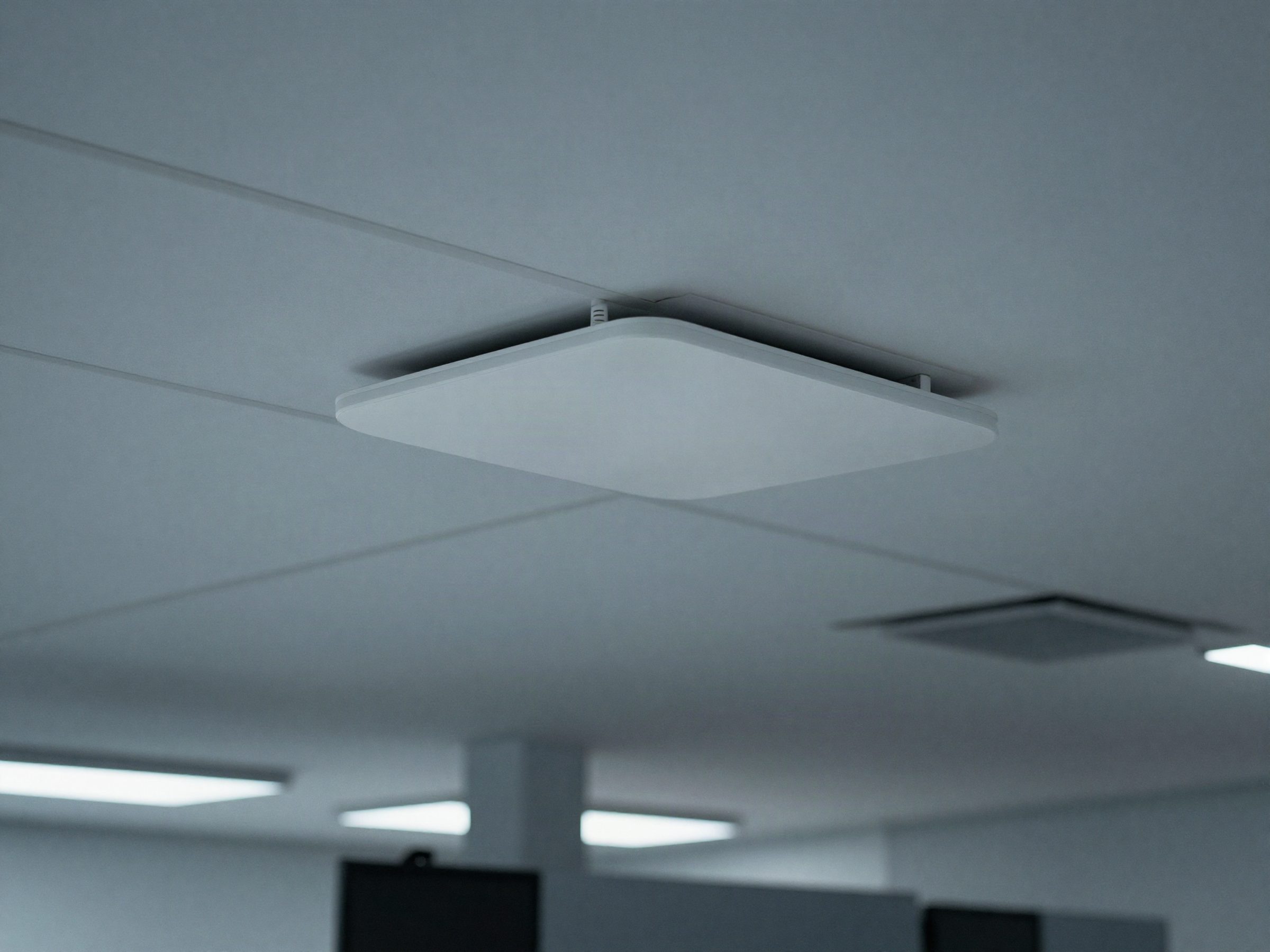
Indoor ceiling and wall units, in-wall units where the desk density is high and the cabling already exists, and outdoor-rated hardware for the edges of the site.
Continue readingShow less
Mounting hardware, brackets and the cabling to reach each position are quoted as their own lines rather than assumed, because a position that needs a new pull is a different number to one that reuses a drop.
PoE switching and power
Every access point is a powered device, and the power class it draws decides the switch behind it. Wi-Fi 6E and Wi-Fi 7 units routinely need 802.3at or 802.3bt rather than the older standard, and a closet switch that ran the last generation comfortably may not have the budget for the next.
Continue readingShow less
Injectors and midspans are quoted where a full switch replacement is not warranted yet.
Management, licensing and renewals
Controllers, gateways and cloud tenancies, with the licence term written down beside them and the renewal date named rather than implied. Where a site already runs a platform, the renewal is quoted against the access point count actually deployed, and co-terminated with the rest of the estate wherever the licensing model allows it.
What's included in a business WiFi package
Coverage and capacity are scoped first and the access point count is the last decision — and every line below is quoted on the same document rather than left as an installer's surprise.
- Access points for indoor ceiling and wall positions, in-wall units where desk density is high, and outdoor-rated hardware for the edges of the site
- Mounting hardware, brackets and the cabling to reach each position, quoted as their own lines rather than assumed
- PoE switching sized against the power class the units actually draw, with injectors or midspans where a full switch replacement is not warranted yet
- Controllers, gateways or cloud tenancies with the licence term written down beside them and the renewal date named rather than implied
- The wired half checked on the same quote — run length and category, the PoE budget per closet, and the uplink out of each closet
- Installation, cabling and commissioning scoped against a site survey where you want them, or hardware shipped configured for your own team
- Hardware, software licensing and the deployment work that puts both into service, sourced through authorized US distribution on one quote
From a floor plan to a screened order
There is no shelf price on a wireless system, because the access point is rarely the largest line. Cabling, switching, licensing and the labor to install and commission are what move the total.
- Send the site — a floor plan, a room list, the device counts you expect, or the platform you already standardize on
- A Uniqcli specialist works the coverage and capacity with you, area by area, and flags where a survey is worth doing first
- Access point, switching, mounting, cabling and licensing lines are sourced through authorized US distribution and priced against that scope
- One consolidated quote comes back with hardware, licensing and any deployment work as separate, readable lines
- TAA (FAR 52.225-5) and NDAA §889 screening is performed on every line before the quote goes out, with alternates where a line does not clear
- GPC / P-Card accepted up to your cardholder threshold; purchase orders otherwise, with stock and final total confirmed before you commit
Wireless problems are usually wired problems
The complaint is always about WiFi and the cause is frequently behind the ceiling tile. An access point is a powered device on a copper run with a switch port at the other end, and each of those three things has a limit that shows up as a wireless symptom. A run that is over length, terminated poorly or still on an older category will negotiate down or drop power; a closet switch with a PoE budget sized for the last generation will power some units and quietly refuse others; an uplink that was adequate when the floor ran one radio per room becomes the bottleneck once every access point can move multi-gigabit traffic.
Continue readingShow less
So the wired side is scoped on the same quote rather than left as an installer's surprise. Runs are checked for length and category against what the new hardware needs, the PoE budget is calculated per closet against the actual power class of the units going in, and the uplink from each closet is sized for the aggregate the new access points can generate rather than the traffic the old ones did. Where a pull is needed, it is a line on the quote before the order, not a change order after it.
Where a site already has structured cabling worth keeping, that is normally the cheaper path and we say so. The honest answer on a survey is often that two closets need work and the rest do not.
Send the floor plan, get a real number
A floor plan, a room list or simply the device counts you expect is enough to start. One consolidated quote comes back with access points, switching, mounting, licensing and any deployment work as readable lines, screened for TAA and §889 before it leaves.
What a wireless package does not do
We do not operate the network after handover. Monitoring, SSID and policy administration, firmware decisions, guest access approvals and the help desk behind all of them stay with your IT team or the provider you contract. What we supply is the equipment, the licensing and the integration work that puts both into service, handed over with documentation.
Continue readingShow less
Internet access is not part of this scope either — this page quotes the wireless system and the work that puts it into service, and the circuit behind it is a separate scope with its own quote. Nothing here carries an uptime or performance commitment. Wireless coverage is a design property that depends on positions, construction materials, interference and the client devices actually in use — it is verified by testing on the ground rather than asserted on a quote, which is why a survey is worth its cost on any site where the layout is unusual or the stakes are high.
Naming a manufacturer describes the lines we quote, not a Uniqcli partnership, authorization, dealership or endorsement. Where a program has its own acceptance or accreditation requirement, that attaches to the deployment and to the organization operating it, never to a shelf product or to its supplier.
The lanes either side of the access points
Wireless rarely arrives on its own. These are the adjacent scopes most often quoted on the same order.
Business WiFi questions
How many access points does an office actually need?
Fewer than a coverage-only rule of thumb suggests in a warehouse, and more than it suggests in a dense open-plan floor. The count follows from capacity: how many devices associate in the busiest area at the busiest hour, what they are doing, and how much airtime the slowest clients consume. Construction materials then adjust it — dense walls, foil insulation and metal racking all shorten reach. Send a floor plan and the device counts you expect and we will scope it with you rather than divide the square footage.
Can you supply Ubiquiti UniFi for a business network?
Yes. Ubiquiti UniFi, EnGenius and Netgear carry priced rows in our catalog, so those lines can be quoted or ordered directly. Aruba and Cisco Meraki sit in our sister catalogs and are quoted on the same document as the switching and licensing. Naming a line describes what we can source and quote, not a manufacturer partnership, authorization or endorsement.
Do we need a controller, or is cloud management enough?
Both work; the difference is commercial rather than technical for most offices. A self-hosted or appliance controller is a capital line you own and maintain. A cloud tenancy is a recurring line that usually includes the management plane and stops managing the hardware when the term lapses. We quote the licence term and its renewal date explicitly so the five-year shape is visible before you choose, rather than after the first anniversary.
Will our existing switches power the new access points?
Sometimes, and it is worth checking before the order rather than on install day. Current-generation access points frequently need 802.3at or 802.3bt where the previous generation ran on the older standard, and a closet switch has a total power budget as well as a per-port class. We calculate the budget per closet against the actual units going in and quote injectors, midspans or a switch change only where the numbers require it.
Do you install the access points, or do we?
Either. Installation, cabling and commissioning are scoped against a site survey and quoted as their own lines where you want them, and hardware can equally ship configured for your own team or your integrator to mount. What stays with you in both cases is the operation: the SSIDs, the policy, the firmware decisions and the day-to-day running of the network.
Are wireless orders screened for TAA and §889?
Every line, before the quote goes out — and on a wireless bill of materials the interesting lines are rarely the radios. Access points are what everybody checks. It is the surrounding hardware that gets waved through: the injectors, the mounting and pole kits, the uplink optics and the patch cords, each from a different maker than the access point it serves. We record manufacturer-stated country of origin on every one of them rather than inferring it from the headline brand, check each maker with its parent and affiliates against the NDAA §889 covered-entity list, and name alternates for anything that does not clear before you see a total. Screening is diligence we perform on the goods; the determination on your award stays with your contracting officer.
The solutions atlas
Every solution, by technology area and by customer.
By technology
By customer
- TAA & NDAA-889 Compliance Screening
- CMMC & CUI Solutions
- Federal & DoD
- State, Local & Education
- Healthcare
- Enterprise
- Rapid Procurement & GPC Buys
- Multi-Vendor Integration Projects
- eProcurement & Custom Catalogs
- FISMA Modernization
- CJIS-Compliant Justice Cloud & Local AI
- Federal Storage Modernization
- Government ERP & Business Systems Infrastructure
- Managed Procurement
- Secure AV & Conferencing
- Fiber Network Infrastructure
- Satellite & Resilient Connectivity
- Wavelength & Optical Transport
- Decentralized Data Centers
- Data Center Design & Build
Scope your business WiFi with someone who asks about the building
Send a floor plan, a room list or the platform you already standardize on. One consolidated quote comes back with access points, PoE switching, mounting, cabling and licensing as readable lines — screened for TAA and §889 before it leaves.