
Network & data center services
Wireless Network Installation
The gap between a pallet of access points and a working network is a sequencing problem, not a hardware one.
We kit per closet, apply the configuration and firmware baseline before anything ships, and coordinate the installation against the placement plan so install day is a mounting exercise rather than an improvisation.
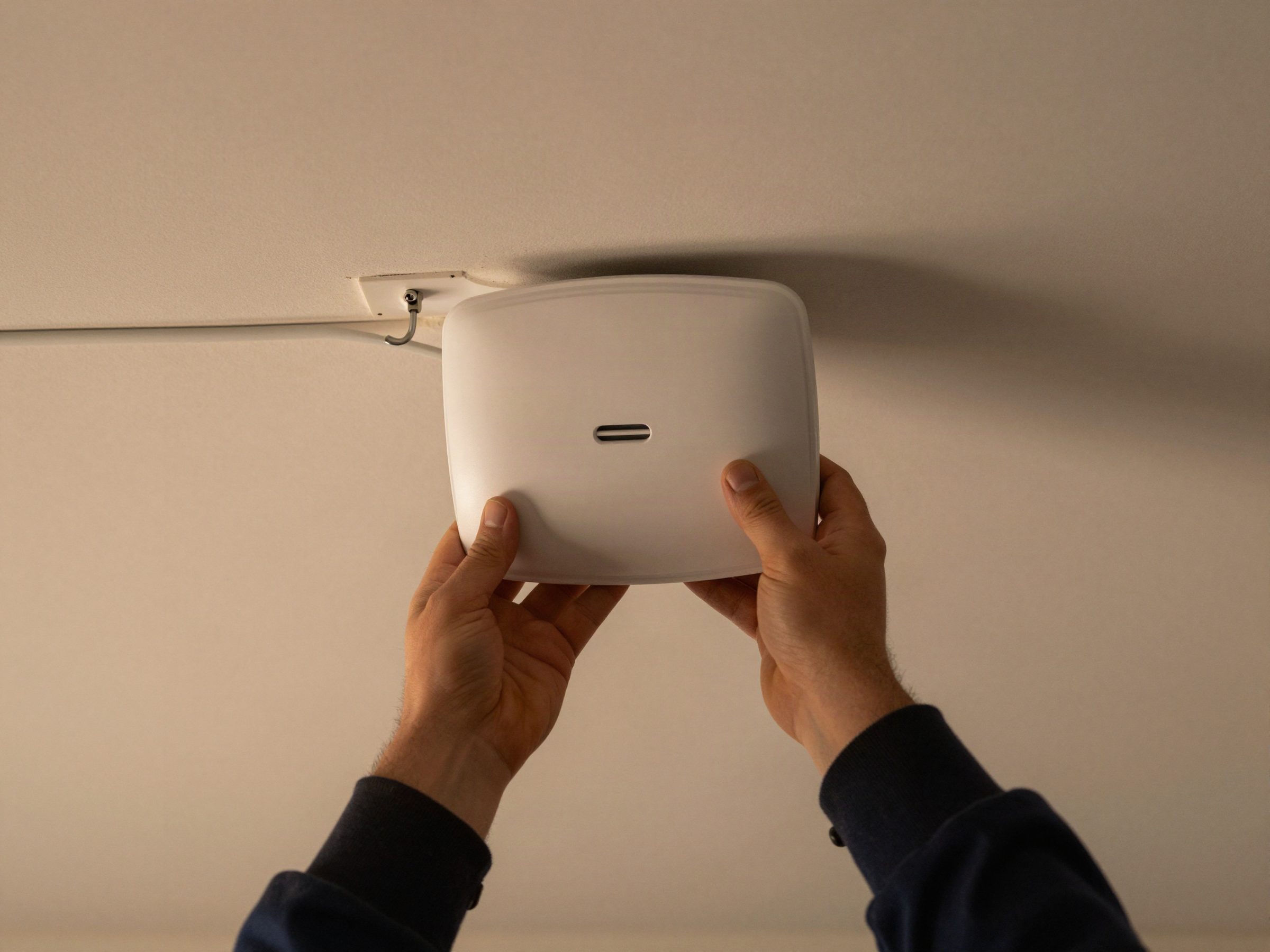
- Scope
- Kitting · staged configuration · coordinated install · handover docs
- Quoted
- Access points, mounts, PoE switching, cabling and the labour line
- Sequence
- Design and survey first, staging second, install day last
- Boundary
- We install, validate and hand over — operation stays with you
Tell us the project — Wireless installation
Tell us where to reach you and a Uniqcli specialist follows up by email to scope the work with you — what has to be covered, how many sites or buildings, and what already exists — then comes back with a quoted bill of materials across the equipment, the software licensing and the deployment work.
Priced against your own site rather than a package tier, sourced through US distribution and screened line by line. We specify, supply, stage and integrate; internet access is scoped separately from the equipment on this page, and operating the network stays with your team or the provider you contract.
The first number is our real one, not an opening one.
Tell us the scope and we come back with the best price we can do on it.
- Supporting federal, state & local purchasers
- GPC & P-Card accepted
- TAA & NDAA-889 screening before every quote
Live prices from our catalog right now — a starting point, not the project price. Your quote is scoped to the site and includes the licensing and services the job needs.
Install day is where a wireless design survives or gets improvised
Wireless hardware arrives as a pallet of identical boxes, and everything that goes wrong between that pallet and a working network goes wrong for the same handful of reasons. Access points that were never configured get configured on a ladder.
Continue readingShow less
Mount hardware ordered on a separate line lands a week after the radios. Half the positions on the plan turn out to need a cable pull nobody costed, and the closet cannot power the last four units at the class they negotiate. None of that is a hardware fault — it is sequencing, and it is either resolved before the truck rolls or improvised in front of the customer. A wireless network installation is worth buying as a scoped line precisely because that sequencing is the deliverable.
The work that decides how install day goes
Staging is not packaging. It is the point at which the design becomes a set of numbered, configured, labelled bundles that a crew can install without a laptop, a spreadsheet and a phone call.
Kitting per closet, floor or site
Equipment is packaged and kitted to the way the rollout is actually sequenced — by closet, by floor, by building or by site — so what lands on the dock matches what the install plan expects that week.
Continue readingShow less
For a multi-site standardization each location leaves as an identical numbered bundle, which is what makes the tenth site as predictable as the first rather than a fresh negotiation.
Configuration and firmware baseline
Firmware is brought to a known baseline and the configuration is applied before shipment, so units arrive adopting the right controller or cloud tenant with the right names rather than being provisioned one at a time from a lift.
Continue readingShow less
Where a controller-based or subscription-managed line is involved, the licence term is quoted with the hardware and stated on the document instead of surfacing a year later.
Mounts, cabling and power in one delivery
Mount hardware, drop ceiling tiles, brackets, patch cords, injectors and the access switching go on the same order as the radios and, wherever availability allows, in the same delivery.
Continue readingShow less
The most common cause of a half-finished install is not a missing access point — it is the cheapest item on the order, shipped separately and still in transit.
Serialized records and labelling
Serialized inventory, asset records and per-position labelling are produced during staging rather than reconstructed afterwards, so each unit is traceable to the position it was designed for.
Continue readingShow less
When something has to be replaced two years later, the record says where it is and what was on it — which is the difference between a warranty swap and an expedition.
Quote the install with the equipment, not after it
Go to the formCabling and power set the install schedule
Every access point position on a placement plan is three commitments in the closet: a switch port, a power budget and, for any position without a drop already at it, a cable run with a pathway, a length limit and a labour line. Positions that need new cable set the critical path, because cable goes in before anything is mounted on it — and a phase plan that ignores that ordering sends the same crew to the same floor twice.
Continue readingShow less
Power is the line most often discovered late. Newer access points negotiate higher classes than the generation they replace, and a closet sized for the previous standard can carry a one-for-one swap on paper while failing to deliver full capability across the whole switch. The honest planning number is the total negotiated class across every position on that switch, checked against the budget of the switch that feeds them. Where it does not fit, that is an access switching line, and it belongs on the same quote rather than in a change order.
Uplinks are the third. A closet whose access layer moves to a current wireless generation frequently needs its uplink moved with it, along with the optics to match the platform at both ends. We quote access points, access switching, power headroom, uplinks, cabling and installation on one document, so the sequence is visible before the first purchase order rather than after the first delivery.
What the installation itself covers
The scope is written before it is scheduled, and it is written against the placement plan rather than against a floor count.
Mounting and cabling to the plan
Positions are mounted at the heights and orientations the design calls for, with the mount hardware specified per position, and each drop is terminated, tested and labelled at both ends.
Continue readingShow less
Where a scope requires licensed electrical or structural work, that portion is performed by licensed trades and named on the quote as its own line rather than absorbed silently.
Configuration, cutover and phasing
Because configuration was applied during staging, install day is adoption and verification rather than provisioning. Cutovers are commonly phased per floor, wing or building, with the legacy wireless left carrying traffic until the new coverage in that zone is proven — so a user-facing service is never down while a phase is in progress.
Validation and as-built documentation
A post-installation walk measures what was actually mounted against the thresholds the design was held to, and the differences — a position moved around an obstruction, a channel changed for a neighbour — are recorded rather than left in somebody's memory.
Continue readingShow less
You receive as-built records, labelling, serialized asset records and the final channel and power plan at handover.
What's included in a wireless installation
Staging is not packaging — the work that decides how install day goes happens before the truck rolls.
- Kitting per closet, floor, building or site, so what lands on the dock matches what the install plan expects
- Firmware brought to a known baseline and the configuration applied before shipment, so units arrive adopting the right controller or cloud tenant
- Mounts, ceiling tiles, brackets, patch cords, injectors and the access switching on the same order as the radios
- Serialized inventory, asset records and per-position labelling produced during staging rather than reconstructed afterwards
- Mounting and cabling to the plan, with each drop terminated, tested and labelled at both ends
- A post-installation validation walk against the thresholds the design was held to, with as-built documentation of the differences
From a placement plan to a documented handover
An installation quote is only as honest as the design it is priced from, which is why the first line of this list is a document rather than a number.
- Send the placement plan — yours, your designer's, or the one produced by a survey we scope with you
- Site conditions get named early: ceiling type, mounting access, working hours, escort or clearance requirements, and where lifts are needed
- Access points, mounts, access switching, power headroom, uplinks, cabling and the installation labour are quoted as separate readable lines
- Equipment is kitted and configured before shipment, released against your install calendar rather than all at once
- Installation is coordinated to the phase plan, with legacy coverage carrying each zone until the new coverage there is proven
- TAA (FAR 52.225-5) and NDAA §889 screening is performed on every line before the quote goes out
- GPC / P-Card accepted up to your cardholder threshold; purchase orders otherwise, with availability confirmed before you commit
Phased rollouts and standardizing across locations
A single-building install is a scheduling exercise. A twenty-site rollout is a repeatability exercise, and the thing that makes it repeatable is deciding the standard once — the same access point model, the same mount, the same switch, the same configuration baseline, the same labelling scheme — and then shipping that standard as numbered per-site bundles released to the install calendar.
Continue readingShow less
Doing the pricing and the screening once, up front, for the whole estate is what keeps a phased programme from re-negotiating itself every quarter. Long-lead lines are identified at the start so one back-ordered part does not stall a phase, and the substitution rule for anything that goes end-of-life mid-rollout is agreed on paper rather than improvised at site fourteen.
Where sites differ enough to matter — a warehouse among the offices, an outbuilding across a yard — the deviation is designed and priced as a deviation rather than pretending the standard covers it. Consistency is worth a great deal, and it is worth exactly nothing when it is applied to a building it does not fit.
Send the placement plan, or the building
If a design already exists, we quote and stage against it. If it does not, we scope the survey that produces one first. Either way the quote comes back with hardware, cabling, power and the installation as separate lines, and the equipment arrives configured, labelled and kitted the way the rollout is sequenced.
What we hand over, and what stays yours
We install, validate and hand over. We do not operate the network afterwards: SSID and policy decisions, day-to-day tuning, monitoring, security operations and the service commitments your users are held to stay with your team or the provider you contract. There is no monitoring desk behind this page and no uptime or throughput commitment attached to it, because neither would be ours to make about a building we do not run.
Continue readingShow less
We are also not the authority on your building. Permits, building access, escort and clearance arrangements, roof and structural approvals and any asbestos or fire-stopping determination stay with the site owner, and licensed electrical or structural work is performed by licensed trades. Where one of those is on the critical path we will say so during scoping rather than discovering it on the morning of the install.
What we do claim is narrow and checkable: the equipment specified against a design, sourced through authorized US distribution and screened per line, kitted and configured before it ships, installed to the placement plan, validated against stated thresholds, and handed over with as-built documentation and serialized asset records.
Either side of the install
The design that comes before, the wiring underneath, and the platforms these deployments most often land on.
Wireless installation questions
Do you install the access points, or only supply them?
Installation is scoped and quoted as its own line beside the hardware. What it covers is written down before it is scheduled — mounting and cabling to the positions on the placement plan, the staged configuration applied before shipment, commissioning against the design, a validation walk and the as-built documentation at the end — and it is coordinated to your phase plan. Where a scope requires licensed electrical or structural work, that portion is performed by licensed trades and named on the quote as such.
Can the access points be configured before they ship?
Yes, and it is the single largest saving on install day. Firmware is brought to a known baseline, the configuration is applied, each unit is labelled for the position it was designed for, and the bundle is kitted per closet or per site. A crew then mounts and verifies rather than provisioning from a ladder, which is also why the validation walk at the end is short.
Can a rollout be phased floor by floor or building by building?
Yes, and for an occupied site it is normally the only sane approach. Equipment is held configured and released against your install calendar, and legacy wireless keeps carrying each zone until the new coverage there has been measured — so coverage is never interrupted for a phase that is still in progress. Pricing and screening are done once for the whole estate even though delivery follows the phases.
Who pulls the cable to the new positions?
Cabling is scoped and quoted in the same document as the radios, because positions needing new drops are what set the schedule. Runs are terminated, tested and labelled at both ends, and the test results are part of the deliverable rather than an assurance. Where local code requires licensed trades for a portion of the work, that portion is performed by licensed contractors and appears as its own line.
Can you standardize the installation across a lot of sites?
That is the case staging pays for most. The standard is decided once — model, mount, switch, configuration baseline, labelling scheme — and each site leaves as an identical numbered bundle released to the calendar. Long-lead lines are flagged at the start, and the substitution rule for anything that goes end-of-life mid-programme is agreed on paper rather than improvised at the fourteenth site.
Can the hardware and the installation go on one purchase order?
Yes. One quote and one order, with hardware, cabling, licensing terms and the installation labour as separate readable lines so each is reviewable on its own. Splitting them across orders is equally fine where a capital and an operating budget have to be kept apart — tell us which shape you need before the quote is cut.
The solutions atlas
Every solution, by technology area and by customer.
By technology
By customer
- TAA & NDAA-889 Compliance Screening
- CMMC & CUI Solutions
- Federal & DoD
- State, Local & Education
- Healthcare
- Enterprise
- Rapid Procurement & GPC Buys
- Multi-Vendor Integration Projects
- eProcurement & Custom Catalogs
- FISMA Modernization
- CJIS-Compliant Justice Cloud & Local AI
- Federal Storage Modernization
- Government ERP & Business Systems Infrastructure
- Managed Procurement
- Secure AV & Conferencing
- Fiber Network Infrastructure
- Satellite & Resilient Connectivity
- Wavelength & Optical Transport
- Decentralized Data Centers
- Data Center Design & Build
Quote the install with the equipment, not after it
Send the placement plan and the site conditions — ceiling type, working hours, access and escort requirements. A Uniqcli specialist returns access points, mounts, switching, power headroom, cabling and the installation as readable lines, with the equipment kitted, configured and labelled before it ships.