
Network & data center services
Ubiquiti UniFi for Business Networks
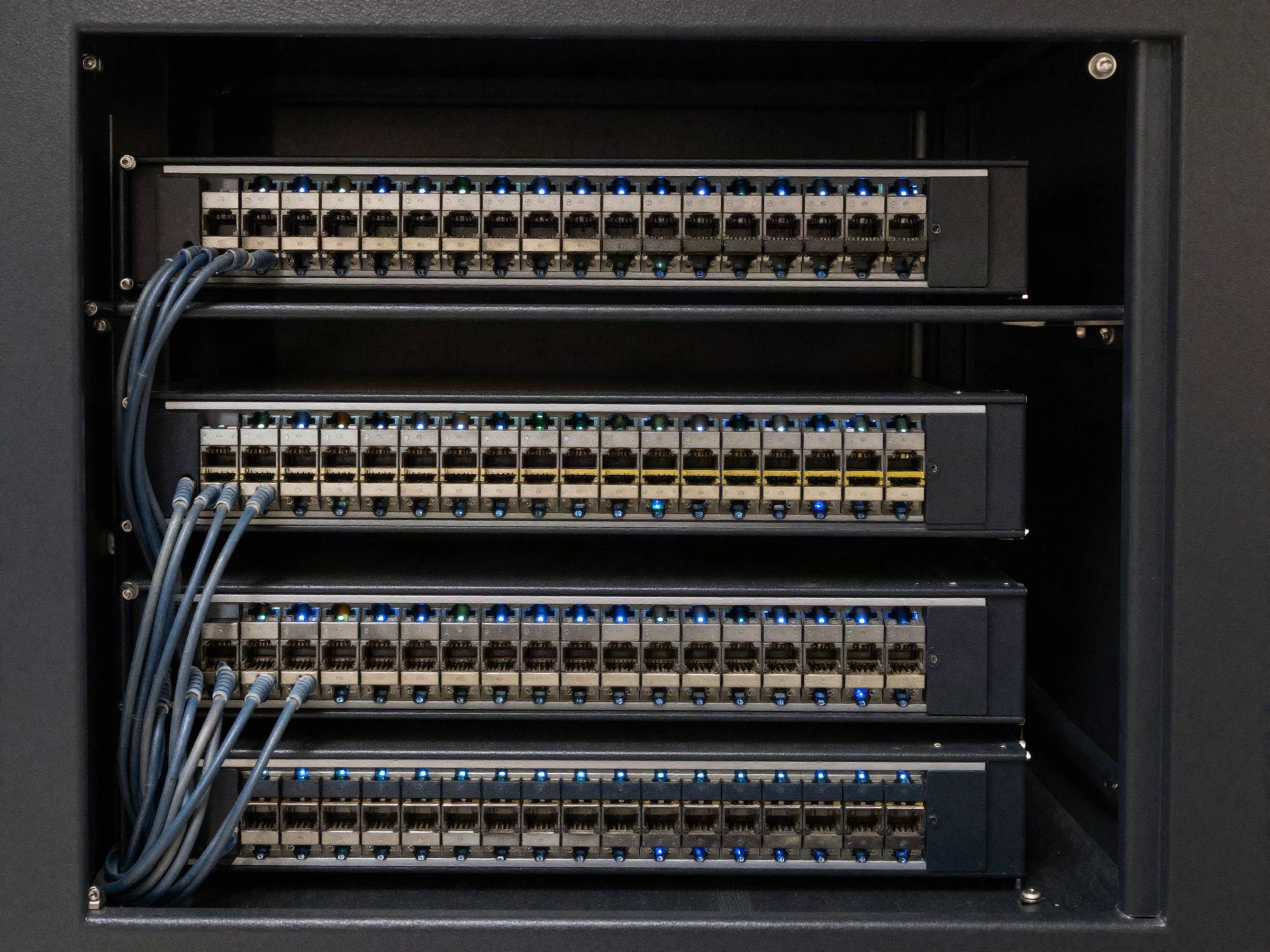
We quote the UniFi line as a reseller sourcing through authorized US distribution — access points, switching, gateways and the outdoor airMAX links — and scope the switching, cabling and installation work that has to arrive with them.
The platform is yours to run; the hardware, the licensing and the deployment work behind it are quotable.
- Scope
- UniFi access points · switching · gateways · airMAX links
- Sourcing
- Authorized US distribution — a reseller, not a manufacturer partner
- Staging
- Labeled and kitted per site, with your configuration loaded before it ships
- Boundary
- We specify, supply and hand over — the network stays yours to run
Tell us the project — Ubiquiti UniFi
Tell us where to reach you and a Uniqcli specialist follows up by email to scope the work with you — what has to be covered, how many sites or buildings, and what already exists — then comes back with a quoted bill of materials across the equipment, the software licensing and the deployment work.
Priced against your own site rather than a package tier, sourced through US distribution and screened line by line. We specify, supply, stage and integrate; internet access is scoped separately from the equipment on this page, and operating the network stays with your team or the provider you contract.
The first number is our real one, not an opening one.
Tell us the scope and we come back with the best price we can do on it.
- Supporting federal, state & local purchasers
- GPC & P-Card accepted
- TAA & NDAA-889 screening before every quote
Live prices from our catalog right now — a starting point, not the project price. Your quote is scoped to the site and includes the licensing and services the job needs.
UniFi is a platform decision before it is a purchase order
Organizations arrive at UniFi from two directions. One is a business that has outgrown consumer access points and is tired of rebooting them; the other is a multi-site operator who wants one management view across twenty locations without a per-device subscription attached to it.
Continue readingShow less
Both are sound reasons to be here, and both go wrong at the same moment — the access points are ordered before anyone has decided where the network application actually runs, how much power the switching has to deliver, and who owns the platform after the last unit is mounted. Uniqcli quotes the UniFi line as a reseller sourcing through authorized US distribution: access points, switching, gateways and the outdoor airMAX links, with availability stated per line rather than implied. Naming a manufacturer describes the lines we quote, not a Uniqcli partnership, authorization or endorsement — we are not a Ubiquiti partner, dealer or certified installer, and we will not describe ourselves as one.
The four lines a UniFi order is actually made of
An access-point count is the visible part of a wireless order and rarely the expensive part. These are the four lines we scope together, because changing any one of them moves the other three.
Access points — indoor, outdoor and high density
The model follows the room, not the square footage. A warehouse aisle under racking, an open office, a lecture space with several hundred associated clients and an exterior mount over a loading apron are four different radio problems, and the density case is the one where a rule-of-thumb count fails hardest.
Continue readingShow less
Mounting height, antenna pattern and the client devices actually in use decide the model; a survey decides the count.
Switching and the power budget behind it
Every access point is a powered device, and the switch is where a wireless project quietly becomes a switching project. Newer radios draw more than the older ones they replace, cameras and phones are usually on the same budget, and a closet that was comfortable at the last refresh can be over its ceiling before the new units are unboxed.
Continue readingShow less
We count powered devices by class against installed capacity before anything is quoted.
Gateways, routing and where the application lives
The network application that adopts and manages the fleet has to run somewhere — on a console appliance, on a host your team maintains, or on the gateway itself — and that choice sets backup, firmware and recovery behavior for the life of the deployment.
Continue readingShow less
It is the decision most often deferred and most expensive to revisit, so we put it on the quote rather than leaving it to install day.
airMAX and outdoor point-to-point links
Where a building, a yard camera or an outbuilding sits past economical trenching, a licensed-exempt link is often what makes the position affordable at all.
Continue readingShow less
Link budget, line of sight, mounting and the grounding and surge protection an outdoor position needs are scoped together; the mast and the pathway are usually the harder half of that quote, not the radio.
Send the sites and the count
Go to the formThe upgrade that has to happen once, not twice
Most first UniFi orders are a replacement for equipment that was never specified for the job — a handful of consumer routers and range extenders, added one at a time as complaints arrived, each with its own network name and its own idea of who is in charge. The visible symptom is Wi-Fi that drops when somebody walks between rooms, and the actual cause is almost always that there is no single system: two devices handing out addresses, no common channel plan, and nothing that lets a client move from one radio to the next without starting over.
Continue readingShow less
What changes on the way to a managed platform is more than the access points. Consumer equipment is powered from a wall outlet at the point it hangs; managed access points are powered over the same cable that carries their traffic, which means the switch has to deliver that power and the cable has to reach the position from a closet rather than from the nearest desk. That is the line item that surprises people, and it is the reason we scope the switching and the cabling in the same conversation as the radios instead of after them.
The second change is ownership. A managed platform has firmware to keep current, backups to hold somewhere other than the device itself, and an administrative account somebody has to still control in three years. None of that is difficult, but all of it has to belong to a named person. We quote the equipment and the deployment work; we say plainly which of these stay with your team so nothing is assumed into existence.
UniFi in an enterprise or multi-site setting — the questions that decide it
This is a fit question, not a ranking, and it is answered by the way your organization buys and operates rather than by a feature list. Three variables settle it in most conversations.
How you prefer to pay for management
The management application is not licensed per access point, so the recurring line that dominates many wireless budgets is largely absent here.
Continue readingShow less
That is a genuine difference and it cuts both ways: there is also no annual support contract sitting behind it, which means escalation looks different from a platform where a support agreement is what you renew. Decide which of those two shapes your organization actually wants before the model is chosen.
Who operates the platform on day 400
Someone has to own firmware, adoption, backups and the administrative credentials once the installer has gone. Where that owner exists in-house, a self-operated platform is straightforward.
Continue readingShow less
Where it does not, the honest options are to contract the operation to a provider or to choose a platform whose vendor support carries more of it — and it is far cheaper to answer that at quoting time than at the first outage.
How hard the radio environment is
Density and interference decide more outcomes than brand does. A warehouse with moving racking, a school hall at assembly, a clinic with a lot of metal or a campus with adjacent buildings on overlapping channels all need a survey and a channel plan, whatever equipment ends up on the order.
Continue readingShow less
Where the environment is genuinely difficult, the survey is the purchase that saves money.
What's included in a UniFi order
The whole order rather than the radio count — everything that has to arrive with the access points is on the same document.
- Access points chosen against the room rather than the square footage — indoor, outdoor and high-density models
- Switching and the power budget behind it, because every access point is a powered device
- Gateways, and the decision about where the network application runs — a console appliance, a host your team maintains, or the gateway itself
- airMAX point-to-point links where a building, a yard camera or an outbuilding sits past economical trenching
- The switching, cabling and installation work that has to arrive with the radios, quoted on the same document
- Sourced as a reseller through authorized US distribution — not as a manufacturer partner, dealer or certified installer
From a floor plan to a staged order
Volume orders are quoted as one document per site tier rather than assembled as a cart of line items, because a wireless order that is priced without its switching and cabling is priced wrong.
- Send the sites — a floor plan, an access-point and switch count, or a photograph of the equipment you are replacing
- A Uniqcli specialist works the port count, the power budget and the uplink media with you before anything is priced
- Access points, switching, gateways and the outdoor links are quoted as one document, with availability stated per line
- Units can be staged and labeled per site, with a configuration or provisioning file your team supplies loaded before they ship
- Manufacturer-stated country of origin is recorded per line: TAA (FAR 52.225-5) and NDAA §889 screening is performed on every line, before the quote goes out
- GPC / P-Card accepted up to your cardholder threshold; purchase orders otherwise, with the final total confirmed before you commit
The installation half, scoped as its own line
Hardware and labor are quoted separately here on purpose, because they are governed by different things. The hardware follows the design; the labor follows the building. A ceiling that is open grid, an exterior wall that needs a penetration and a fire-rated corridor that needs a rated pathway are three different costs for the same access point, and folding them into one per-unit figure hides exactly the variable that decides the project total.
Continue readingShow less
The cabling and pathway work is set against a survey and installed to the standards that govern it, then labeled and documented before handover so the plant is legible to whoever works on it next. For multi-site rollouts the equipment can be staged, imaged with the configuration your team supplies, kitted per location and released in the sequence your install plan calls for — so a site visit is a mount-and-plug rather than a build.
What we will not do is quote a wireless design from a floor area. Access-point counts derived from square footage are the single most common reason a network is re-quoted after it is installed. Where the environment matters — density, materials, outdoor coverage, or a client population nobody has inventoried — the survey comes first and the count comes out of it.
Price the sites, not the boxes
Send a floor plan, a device count or the site list and a Uniqcli specialist scopes the access points, the switching and the power budget together, then quotes them as one document with availability stated per line. If you would rather start from a parts list, the catalog is open.
What we are not, stated plainly
We are not a Ubiquiti partner, authorized dealer, certified installer or training provider, and no purchase from us confers any of those. We are a reseller sourcing the line through authorized US distribution, which is what lets us quote it, screen it and stage it — and it is a different thing from a manufacturer relationship, so we describe it as what it is.
Continue readingShow less
We also do not operate the network after handover. The console and its administrative credentials, the firmware policy, the channel plan once it is tuned and the monitoring around all of it stay with your organization or with the provider you contract to carry them. Where you would rather someone else held that, it is a separate engagement scoped on its own terms rather than something implied by a hardware order — and we make no uptime, availability or coverage-outcome commitment on equipment we do not operate.
One honest caveat on compliance: on value-oriented wireless hardware, country of origin is the question that comes up far more often than the covered-entity list does. We record the manufacturer-stated origin per line rather than assuming it, and where a line will not clear a TAA-restricted requirement we say so before you order and put alternates beside it. The determination on your award stays with your contracting officer; the diligence behind it is ours to run.
The work either side of the access points
A wireless order rarely arrives alone. These are the adjacent lanes most often scoped on the same document.
Ubiquiti and UniFi procurement questions
Are you a Ubiquiti partner or a certified installer?
No, and we will not describe ourselves that way. We are a reseller: the UniFi and airMAX lines are sourced through authorized US distribution, quoted with availability stated per line, and screened before the quote goes out. The mounting, cabling and commissioning work is scoped and quoted as its own line against a survey of the building. Naming a manufacturer here describes what we can source and quote — it is not a partnership, authorization or endorsement claim.
Can you quote UniFi in volume across multiple sites?
Yes, and it is the case the quote is built for. Sites are grouped into tiers — a standard small site, a standard large site, and the handful of exceptions every estate has — and each tier is priced as a repeatable bill of materials rather than a one-off list. Units can then be staged, labeled and kitted per location and released in the sequence your rollout calls for, so receiving gets numbered bundles instead of a pallet of loose boxes.
We are replacing consumer access points. What actually changes?
More than the radios. Managed access points are powered over the network cable rather than from a nearby outlet, so the switch has to supply that power and the cabling has to reach the mounting position from a closet. There is one management application instead of several independent devices, which is what allows a client to move between radios cleanly. The access point is usually the cheapest part of that upgrade, which is why we scope the switching and cabling with it rather than after it.
Is UniFi the right platform for an enterprise network?
It depends on three things, and none of them is a feature comparison. First, how you prefer to pay: the management application is not licensed per access point, so there is no annual per-device renewal — and no annual support contract behind it either. Second, who operates the platform once it is live, since firmware, backups and administrative credentials have to belong to a named owner. Third, how difficult the radio environment is, because density and materials decide more outcomes than the badge does. We will talk through all three with you rather than hand you a ranking.
Does this hardware clear TAA for a restricted requirement?
That is answered per line, never per brand. We record the manufacturer-stated country of origin on each line and check the maker and its affiliates against the NDAA §889 covered-entity list before quoting. Value-oriented wireless hardware is a category where TAA is frequently the binding constraint, so where a line will not clear we flag it with alternates in the same category before you see a total rather than after an award is questioned.
How long does a multi-site order take to arrive?
Availability is stated per line on the quote rather than implied, because a partial shipment discovered at install week is worse than an honest lead time at quoting time. Where a rollout is phased, we hold configured and labeled equipment and release it against your install calendar so each site receives what its plan calls for, in the order the plan calls for it.
The solutions atlas
Every solution, by technology area and by customer.
By technology
By customer
- TAA & NDAA-889 Compliance Screening
- CMMC & CUI Solutions
- Federal & DoD
- State, Local & Education
- Healthcare
- Enterprise
- Rapid Procurement & GPC Buys
- Multi-Vendor Integration Projects
- eProcurement & Custom Catalogs
- FISMA Modernization
- CJIS-Compliant Justice Cloud & Local AI
- Federal Storage Modernization
- Government ERP & Business Systems Infrastructure
- Managed Procurement
- Secure AV & Conferencing
- Fiber Network Infrastructure
- Satellite & Resilient Connectivity
- Wavelength & Optical Transport
- Decentralized Data Centers
- Data Center Design & Build
Send the sites and the count
A floor plan, an access-point and switch count, or simply the list of locations is enough to start. One document comes back with the radios, the switching, the power budget and the deployment work as readable lines. TAA (FAR 52.225-5) and NDAA §889 screening is performed on every line, before the quote goes out.