
Network & data center services
Warehouse Wi-Fi
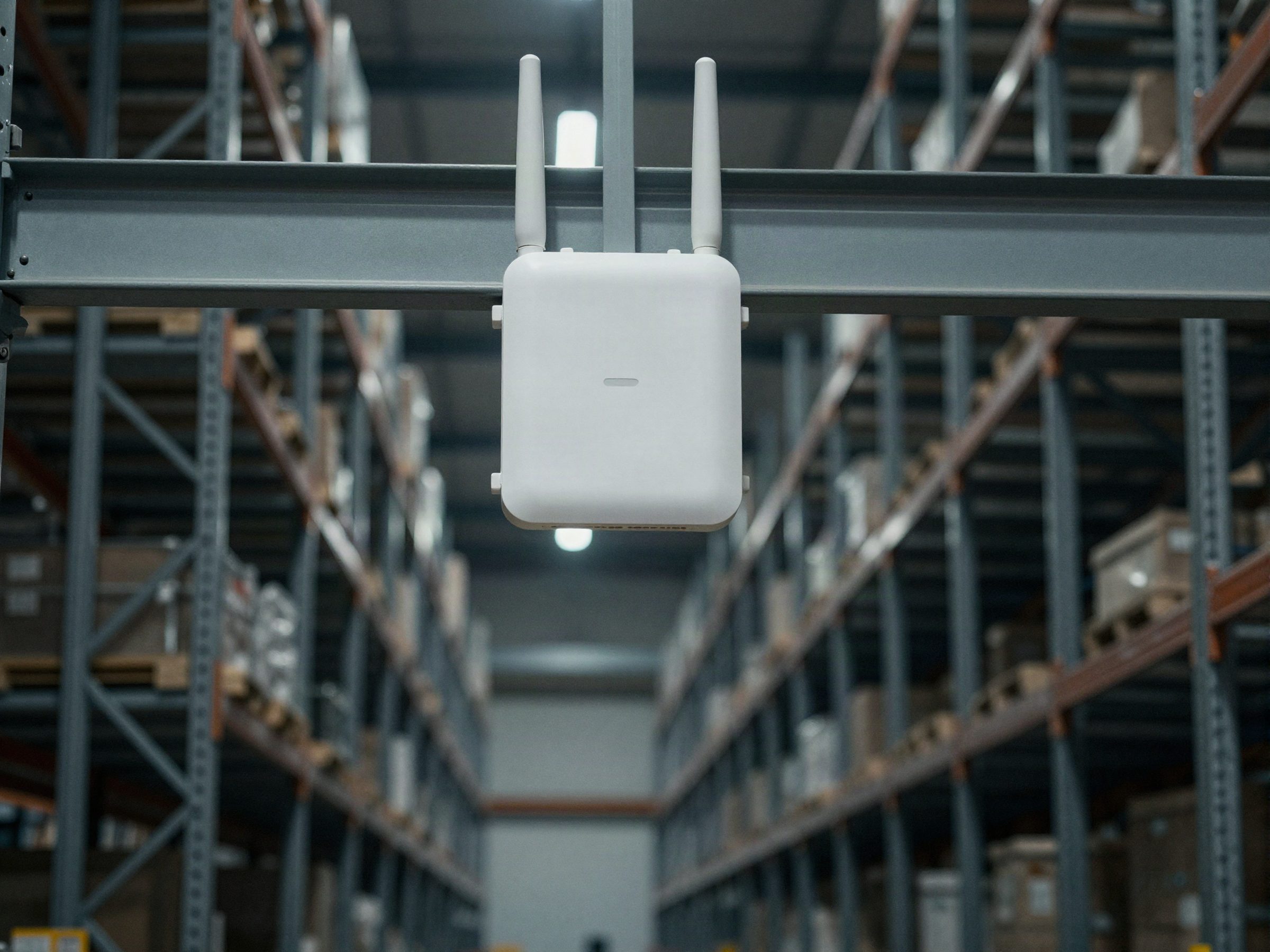
A warehouse is a radio environment that changes with the inventory in it. Coverage is designed against the racking layout, the aisle count and the oldest scanner still in service — not against square footage — and the access points, switching, mounts and the AIDC devices that ride the network are quoted together.
- Designed on
- Racking layout, aisle count and stock profile — not floor area
- Zones
- Aisles and pick faces · docks · yard · cold storage
- Quoted with it
- PoE switching, mounts, cabling, scanners and mobile computers
- Boundary
- Coverage is verified on the floor, never promised from a plan
Tell us the project — Warehouse Wi-Fi
Tell us where to reach you and a Uniqcli specialist follows up by email to scope the work with you — what has to be covered, how many sites or buildings, and what already exists — then comes back with a quoted bill of materials across the equipment, the software licensing and the deployment work.
Priced against your own site rather than a package tier, sourced through US distribution and screened line by line. We specify, supply, stage and integrate; internet access is scoped separately from the equipment on this page, and operating the network stays with your team or the provider you contract.
The first number is our real one, not an opening one.
Tell us the scope and we come back with the best price we can do on it.
- Supporting federal, state & local purchasers
- GPC & P-Card accepted
- TAA & NDAA-889 screening before every quote
Live prices from our catalog right now — a starting point, not the project price. Your quote is scoped to the site and includes the licensing and services the job needs.
The racking is the building, not the walls
An empty distribution centre is a wonderful radio environment and a completely misleading one. Fill the racks and every aisle becomes a corridor with absorbent, reflective walls whose behaviour depends on what is in the pallet positions — cased liquids soak up signal, metal reflects it, mixed stock does both differently on every shelf.
Continue readingShow less
That is why warehouse Wi-Fi designed from square footage fails predictably: it was designed against a building that only exists during the fit-out. Coverage here is designed per aisle and per zone, from a ceiling that is frequently thirty feet up, for handhelds and vehicle-mounted terminals that are moving the whole time. Get the aisles right and the offices come free; do it the other way round and the pick face is the part that does not work.
Where warehouse coverage is won and lost
Pricing a distribution centre as one uniform space is how a site ends up with excellent coverage of the front office and none of the pick face.
Racking aisles and pick faces
Long, narrow and lined with stock that changes weekly. Coverage down an aisle is a propagation exercise rather than a ceiling-grid one: mounting height is set by the racking rather than by preference, and directional antennas aimed down the aisle often beat more omnidirectional positions above it.
Continue readingShow less
Where the slotting plan changes seasonally, a design that survives a re-slot is worth more than one tuned perfectly to this month's layout.
Docks, staging and receiving
The busiest scanning in the building happens where the building is open to the weather, with steel doors moving, trailers backing in and metal everywhere.
Continue readingShow less
Positions here have to cover the staging lanes and the trailer interior at the dock plate — a scanner inside a trailer is effectively inside a metal box — which normally means dedicated positions at the doors rather than an assumption that the aisle coverage reaches.
Yard, trailer parking and outdoor
Outdoor coverage carries a different cost structure: rated enclosures, surge protection and grounding, and power that frequently is not where you need it.
Continue readingShow less
That last constraint is the one that cannot be engineered around cheaply, so yard coverage is designed as fewer, better positions rather than more of them — and where a trench is not viable, a surveyed point-to-point link is often what makes a position affordable at all.
Cold storage and freezer
Freezer environments are their own design problem: the temperature range on the datasheet has to cover the actual space rather than the loading dock outside it, condensation on entry and exit is a real failure mode, and mounting inside an insulated envelope means the cabling penetration has to be planned with the refrigeration contractor rather than discovered.
Continue readingShow less
Where equipment cannot be placed inside, coverage is designed from the boundary with antennas positioned into the space.
Design it from the racking, not the floor area
Go to the formThe oldest scanner sets the design, not the newest laptop
In an office the design target is a modern laptop. In a warehouse it is whatever handheld the operation actually runs, and warehouse handhelds have long service lives — a five-year-old scanner with a modest radio and a smaller antenna gives up at a signal level a laptop would still be comfortable at. Because coverage has to be usable for the weakest device on the list, that device sets the cell edge. This is the single most common reason a warehouse network reads as fine on a survey and fails on the floor: it was measured with the wrong client.
Continue readingShow less
The device list also decides more than the thresholds. Vehicle-mounted terminals on forklifts move fast and roam constantly, so roaming behaviour matters more here than raw throughput. Voice-directed picking is unforgiving about gaps that a data application would simply retry through. Legacy devices that only speak 2.4 GHz have to be carried on a band that is congested by design, and pretending otherwise is how a modernization project strands the trucks.
Automatic identification and data capture is part of the same purchase rather than a separate one. Honeywell and Zebra both carry priced rows in our catalog across barcode scanners, mobile computers and the accessories around them, so the scanners, the network they ride on and the switching underneath can be quoted on one document. Naming a manufacturer describes the lines we quote, not a Uniqcli partnership, authorization or endorsement.
The network, the power under it and the devices on it
Availability is stated per line rather than assumed, and anything sourced to order is quoted with an honest lead time instead of an implied stock position.
High-bay, rugged and outdoor access points
Ubiquiti anchors the priced outdoor and bridging estate, with EnGenius, TRENDnet and Netgear covering indoor and outdoor access alongside it.
Continue readingShow less
Antenna pattern and mounting are specified per zone — down an aisle, across a staging lane or out into a yard are three different products, not three settings.
PoE switching and the power behind it
Allied Telesis and Netgear carry priced rows across the access and closet tiers. Switches are sized to the negotiated power class of the positions they feed plus the uplink the aggregate traffic needs, and Eaton carries priced UPS inventory for the closets that cannot simply drop when the plant does.
Scanners, mobile computers and accessories
Honeywell and Zebra carry priced rows across handheld scanners, mobile computers, charging and mounting accessories. Send the part numbers your warehouse management system is certified against and they come back on the same quote as the network — device software, MDM and the WMS itself stay with your team.
What's included in a warehouse Wi-Fi package
Coverage is designed against the racking layout, the aisle count and the oldest scanner still in service — and the network, the power under it and the devices on it are quoted together.
- Aisle and pick-face coverage designed against the racking layout and the stock profile rather than the floor area
- Dock, staging and receiving positions, where the building is open to the weather and there is metal everywhere
- Yard and trailer parking with rated enclosures, surge protection and grounding, and the power those positions actually have
- Cold storage and freezer areas specified to the temperature range of the space itself rather than the dock outside it
- High-bay, rugged and outdoor access points, with the PoE switching and the power behind them
- Scanners, mobile computers and their charging and mounting accessories on the same order as the network
- Availability stated per line, with anything sourced to order quoted with an honest lead time instead of an implied stock position
- TAA (FAR 52.225-5) and NDAA §889 screening on every line before it is quoted
What a warehouse Wi-Fi scope actually needs
None of this is exotic and all of it changes the answer. A design built without it is a guess with a heat map attached.
- A floor plan with the racking layout on it — aisle count, aisle width, rack height and the clear height to the roof deck
- The stock profile: broadly what sits in the pallet positions, and whether the racks run full or run empty
- The device list, including the oldest radio still in service and anything running voice-directed picking
- Dock door count and the staging area, plus whether scanning happens inside trailers
- Yard extent, trailer parking and what power exists out there today
- Cold storage or freezer areas with their temperature range, and who controls penetrations through the envelope
- GPC / P-Card accepted up to your cardholder threshold; purchase orders otherwise, with availability confirmed before you commit
The things nobody writes on the floor plan
A distribution building is full of transmitters that were never inventoried as network equipment. Cordless and DECT handsets, wireless sensors on doors and equipment, video senders in a break room, and machinery with an RF component all sit in the same unlicensed bands as the network. The battery charging area is worth a separate look, and so is anything with a motor drive or an induction sealer nearby. None of this appears in a coverage model; it appears in a spectrum walk and in the channel plan that comes out of it.
Continue readingShow less
The other unwritten variable is the operation itself. A re-slot, a mezzanine, a new automation cell or a seasonal peak that doubles the device count all change the radio environment that the original design was measured against. The honest advice is that a warehouse network should be re-validated after any material layout change, and that a design which was built with headroom absorbs those changes while one built exactly to the day-one count does not.
Where an operation is expanding into yard coverage or across a road to a second building, that becomes a link design rather than a coverage design — different equipment, different mounting, different failure modes — and it is priced as its own scope rather than smuggled into the access point count.
Send the racking layout and the scanner list
Those two documents answer more design questions than a floor plan ever will. A Uniqcli specialist scopes the coverage per zone with you and returns access points, mounts, PoE switching, cabling and the AIDC devices as separate readable lines, screened and availability-stated.
What we supply, and what the operation keeps
We do not promise coverage or throughput from a plan. In a building whose radio environment changes with the inventory, a guaranteed rate at a position would be a fiction, so we state thresholds, design to them and verify on the floor with the devices that actually have to work. Where a zone is genuinely marginal we say it is marginal and price the equipment that gives it margin rather than the cheaper option.
Continue readingShow less
We also do not operate the network or the systems on it. The warehouse management system, the device management platform, the labelling and scanning applications, day-to-day network tuning, monitoring and security operations stay with your team or the provider you contract. What we supply is the equipment, the licensing and the integration work that put the design into service, handed over documented.
Everything named on this page is sourced through authorized US distribution and screened per line for TAA (FAR 52.225-5) and NDAA §889 before it is quoted. Naming a manufacturer here describes the lines we quote, not a partnership, authorization or endorsement, and where a line has to be sourced to order it is quoted with an honest lead time rather than an implied stock position.
The lanes a distribution site usually needs next
Warehouse coverage rarely arrives alone — the yard, the plant floor and the wider standard are normally on the same programme.
Warehouse Wi-Fi questions
Why does our warehouse Wi-Fi drop in the aisles when the racks are full?
Because the racking is the building as far as the radio is concerned, and full racking is a different building from empty racking. Cased liquids absorb signal, metal reflects it, and an aisle lined with both becomes a corridor rather than an open space — so a design validated during fit-out, or modelled from a floor plan, describes conditions that no longer exist. The fix is a design that treats each aisle as its own coverage problem, usually with directional positions aimed down the aisle rather than more omnidirectional ones above it.
How many access points does a warehouse need?
There is no square-footage rule worth quoting, and any supplier offering one is guessing at the variables that matter. The count comes out of the aisle layout and rack height, the stock profile, the dock and staging areas, the yard, and the weakest device that has to stay connected. Two buildings of identical size routinely differ by a wide margin. That is exactly the question a survey exists to answer, and it is cheaper to answer it before the cabling is pulled.
Do we need outdoor access points for the yard and dock doors?
For the yard, almost always — outdoor positions need rated enclosures, surge protection and grounding, and the constraint is usually power rather than radio. For dock doors, the more common miss is not the enclosure but the coverage target: if scanning happens inside trailers, the design has to reach into a metal box at the dock plate, which normally means dedicated positions at the doors rather than assuming the aisle coverage carries that far.
Will the network cover our freezer or cold storage?
It can, but it is designed as its own zone. The equipment has to be rated for the actual temperature inside the space rather than the dock outside it, condensation as devices and people move in and out is a real failure mode, and any penetration through the insulated envelope has to be planned with whoever maintains it. Where equipment cannot sit inside, coverage is designed from the boundary with antennas positioned into the space instead.
Can you supply the scanners and mobile computers as well as the network?
Yes. Honeywell and Zebra carry priced rows in our catalog across handheld scanners, mobile computers and their charging and mounting accessories, so devices and network can sit on one quote and one order. Send the part numbers your warehouse management system is certified against — device software, MDM enrolment and the WMS itself stay with your team, and we will not claim otherwise.
We are re-slotting the warehouse. Does the design have to change?
It should at least be re-validated. A re-slot changes what is in the pallet positions and often the aisle geometry as well, which is the same as changing the walls of the building for radio purposes. A design built with headroom usually absorbs it; one built exactly to a day-one device count usually does not. A validation walk after a material layout change is far cheaper than the ticket queue that follows one.
The solutions atlas
Every solution, by technology area and by customer.
By technology
By customer
- TAA & NDAA-889 Compliance Screening
- CMMC & CUI Solutions
- Federal & DoD
- State, Local & Education
- Healthcare
- Enterprise
- Rapid Procurement & GPC Buys
- Multi-Vendor Integration Projects
- eProcurement & Custom Catalogs
- FISMA Modernization
- CJIS-Compliant Justice Cloud & Local AI
- Federal Storage Modernization
- Government ERP & Business Systems Infrastructure
- Managed Procurement
- Secure AV & Conferencing
- Fiber Network Infrastructure
- Satellite & Resilient Connectivity
- Wavelength & Optical Transport
- Decentralized Data Centers
- Data Center Design & Build
Design it from the racking, not the floor area
Send the racking layout, the stock profile and the device list — including the oldest scanner still in service. A Uniqcli specialist scopes the coverage per zone and returns access points, mounts, PoE switching, cabling and AIDC devices as readable lines, screened per line with availability stated.