
TAA-Designated KVM Switches for Federal Buyers
Desktop, secure, rackmount and over-IP KVM switches whose manufacturers designate the part TAA-compliant in its own title — read alongside how the origin rule actually reaches a federal order.
TAA-designated KVM switches in stock at Uniqcli
How to choose →A curated selection with live pricing — in-stock lines first, then back-ordered lines with a typical lead time. Every line is sourced through US distribution and screened for NDAA §889 status before checkout, with TAA verified on request.
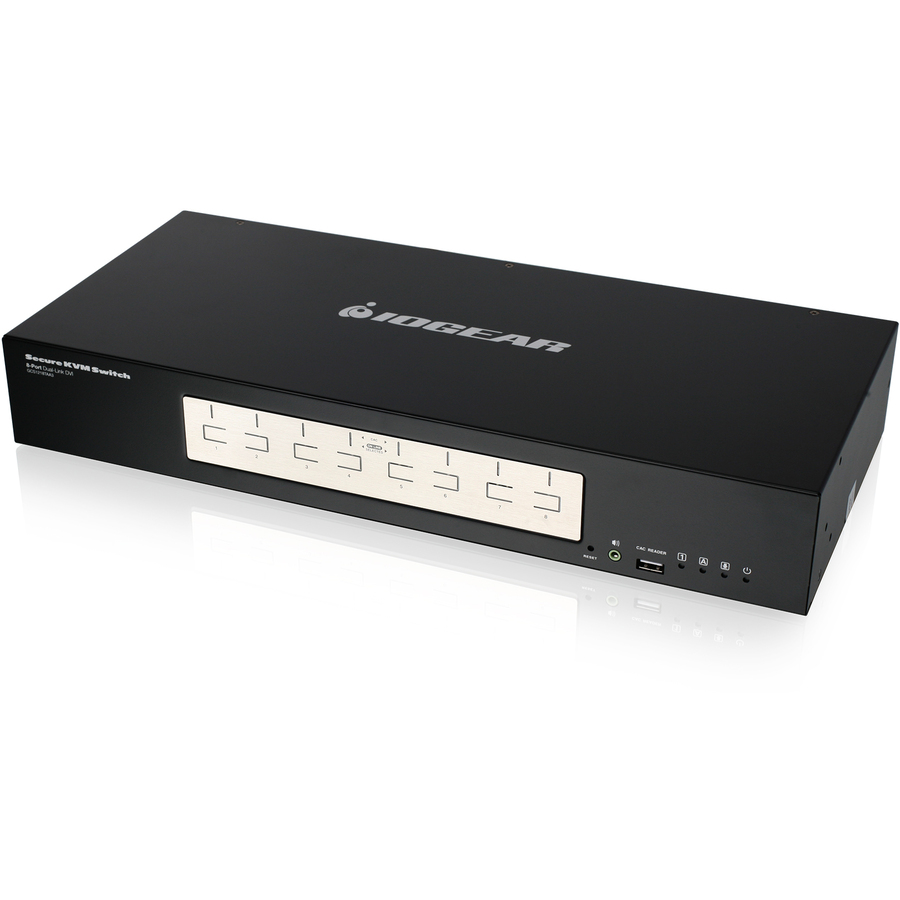
- IOGEARIOGEAR GCS1218TAA3 Secure KVM Switchbox - 8 Computer(s) - 1 Local User(s) - 3840 x 2160 - USB - 9 x DVI - Desktop - TAA CompliantGCS1218TAA3
$1,299.95
$42.38*
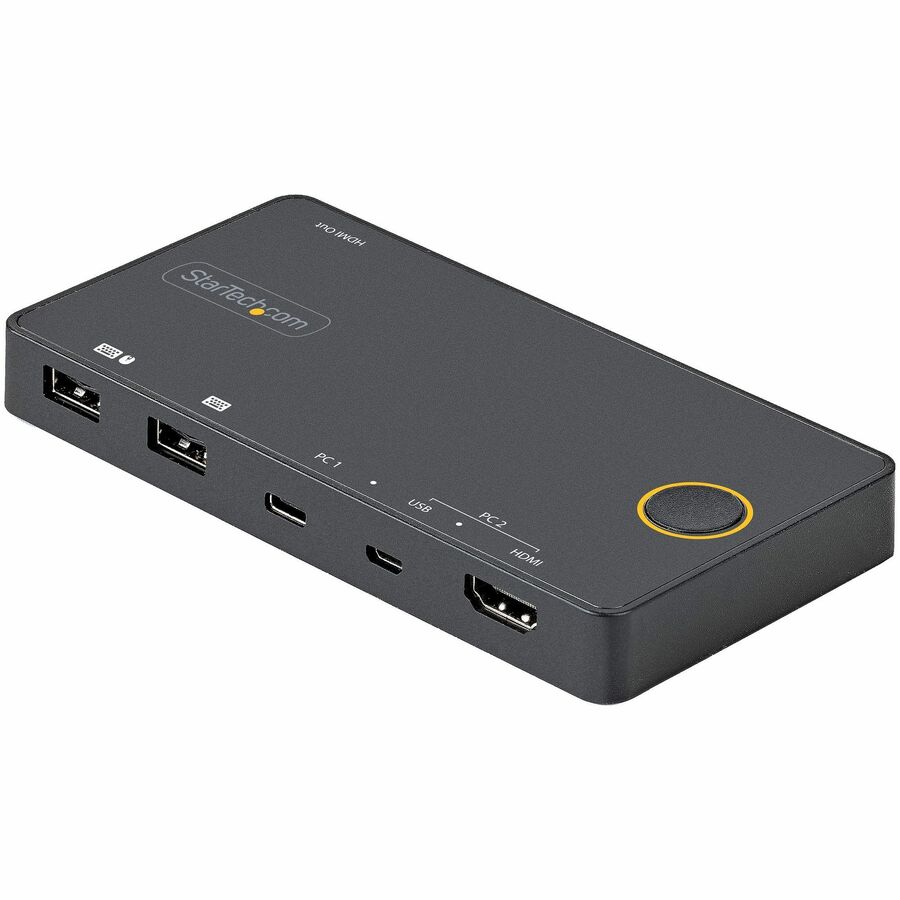
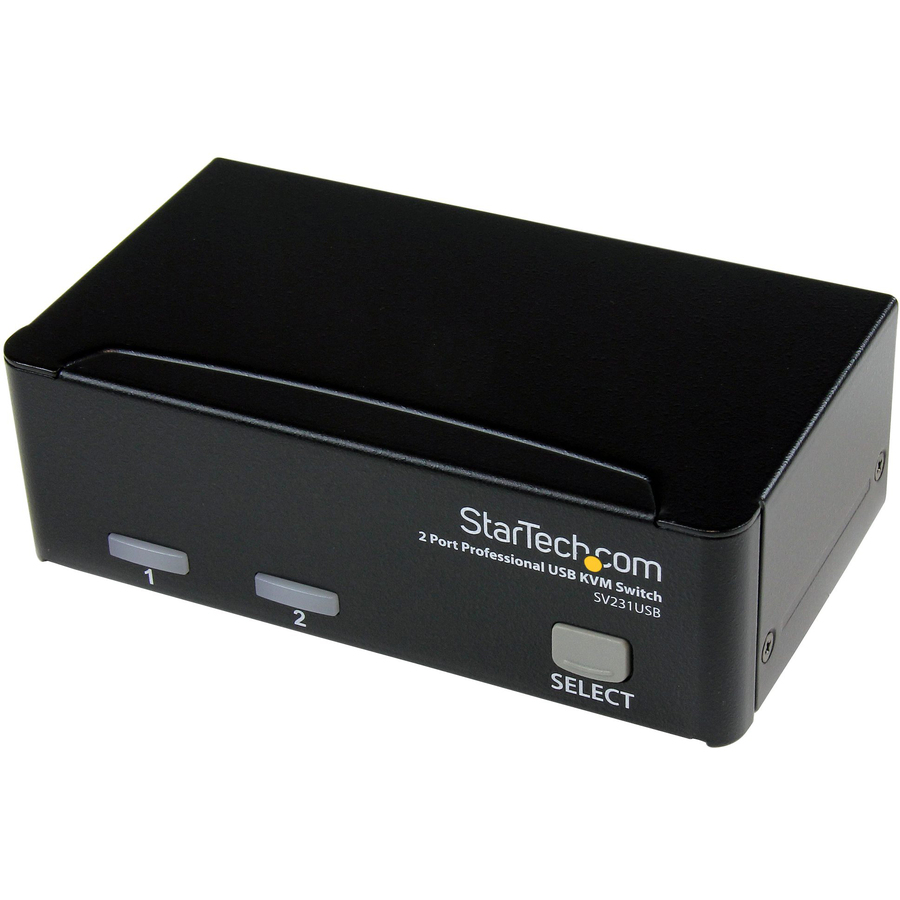
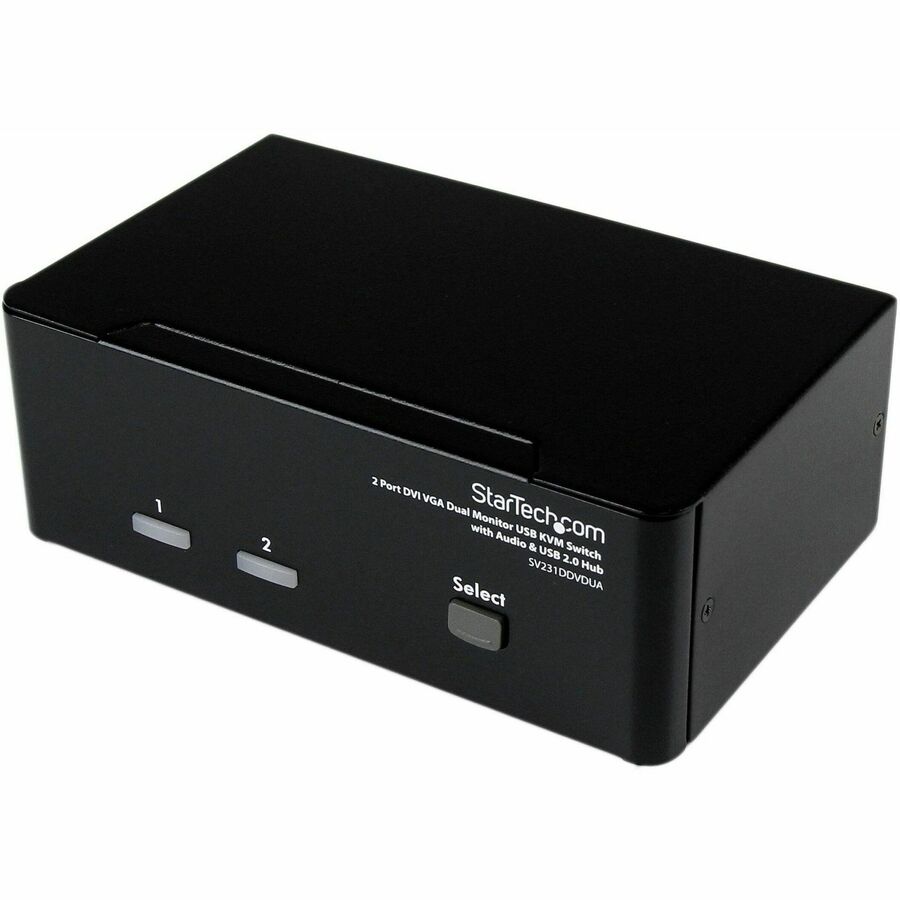
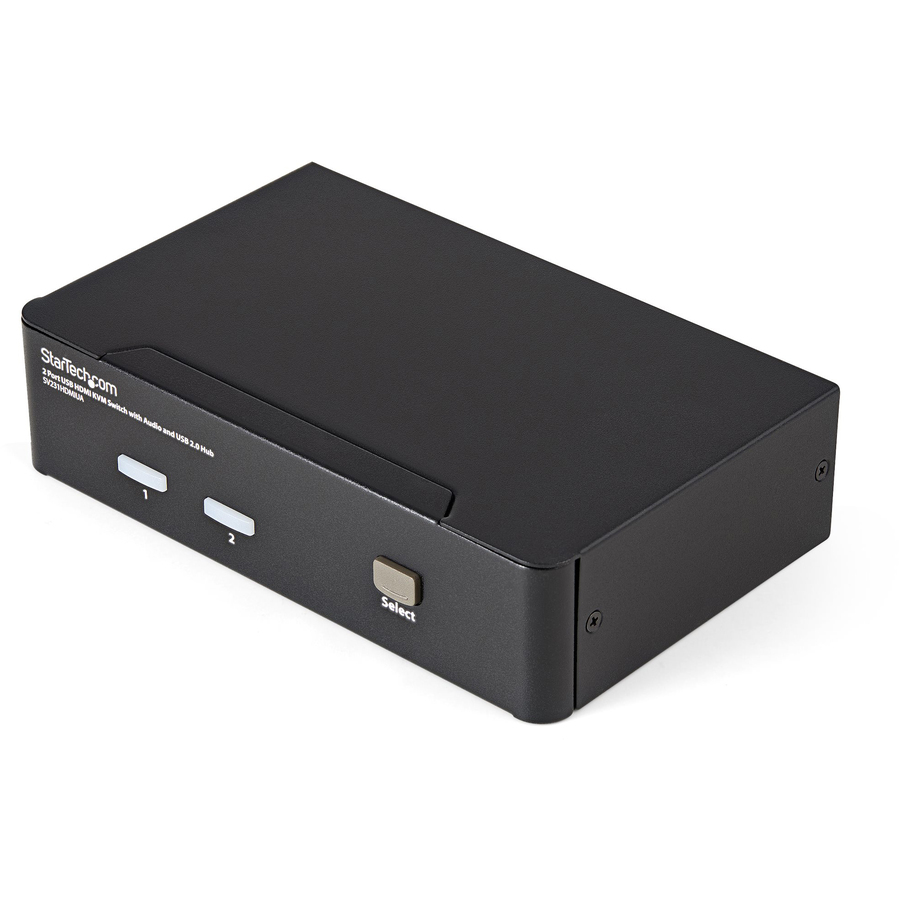
3 in stock - StarTech.comStarTech 2 Port DVI VGA Dual Monitor KVM Switch USB with Audio & USB 2.0 Hub, TAA - Share a keyboard and mouse as well as 1 VGA and 1 DVI displays/monitors between 2 multimedia computers - Dual Monitor KVM - dual monitor kvm switch - usb kvm switch - 2 port kvm switch - dvi vga kvmSV231DDVDUA
$182.44
$167.84*
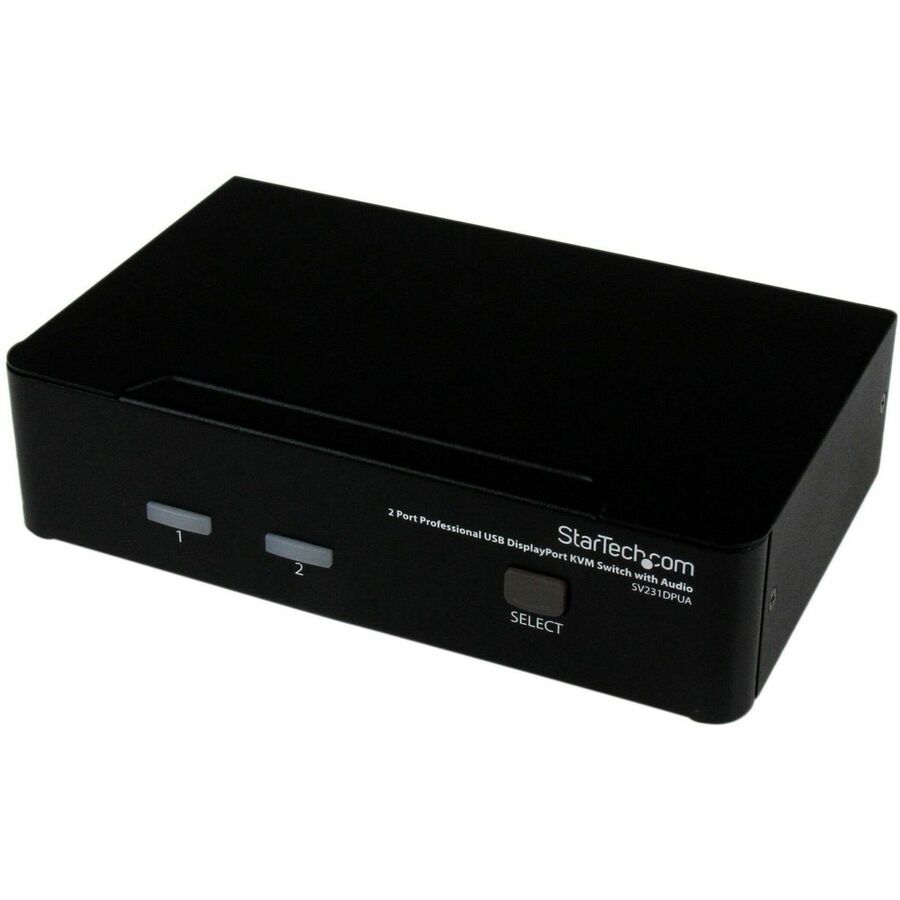
30 in stock - StarTech.comStarTech 2 Port USB DisplayPort KVM Switch with Audio, TAA - Control two computers from a single console, with high-resolution DisplayPort video, USB keyboard, mouse, and audio - usb kvm switch - displayport kvm switch - displayport KVM - desktop kvm switchSV231DPUA
$269.56
$248.00*
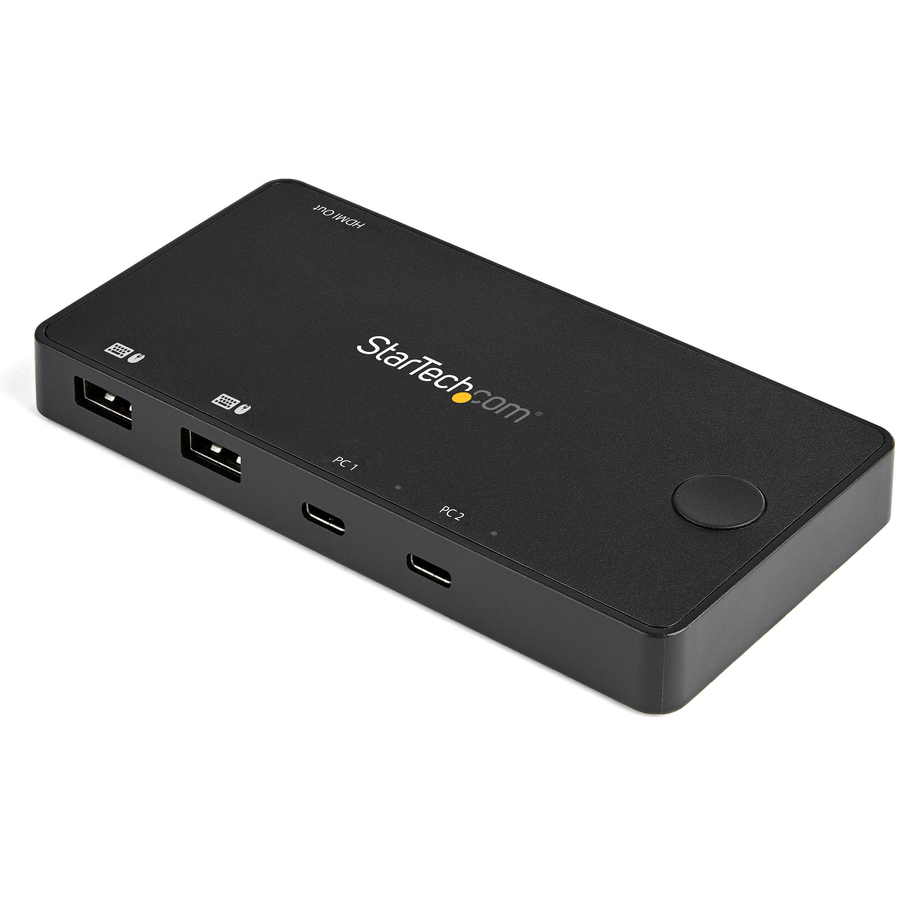
23 in stock - StarTech.comStarTech 4-Port KM Switch w/ Mouse Switching, USB 3.0 Keyboard/Mouse Switcher for 4 Computers, 3.5mm and USB Audio, TAA Compliant - Mouse Roaming allows users to instantly switch computers by moving the mouse between monitors without using hotkeys or physical buttons; 3x USB HID and 2x USB 5Gbps ports; Independent audio switchingP4A20132-KM-SWITCH
$312.61
$287.60*
167 in stock




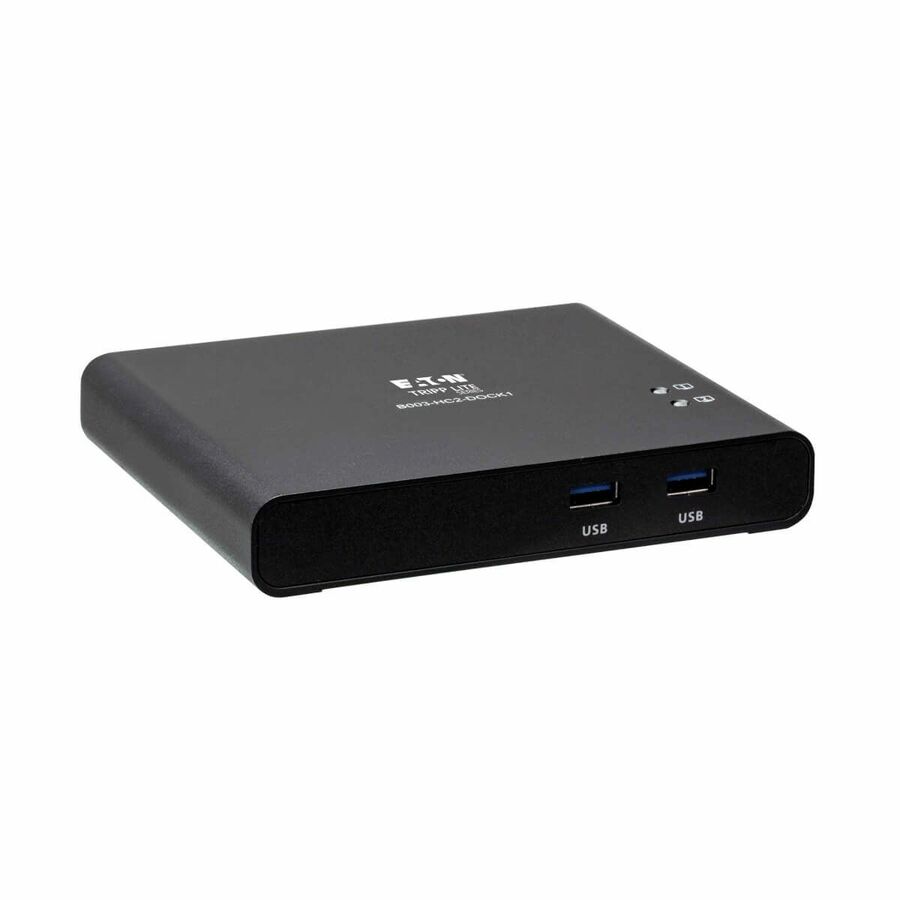

Two machines, dual view
IOGEAR
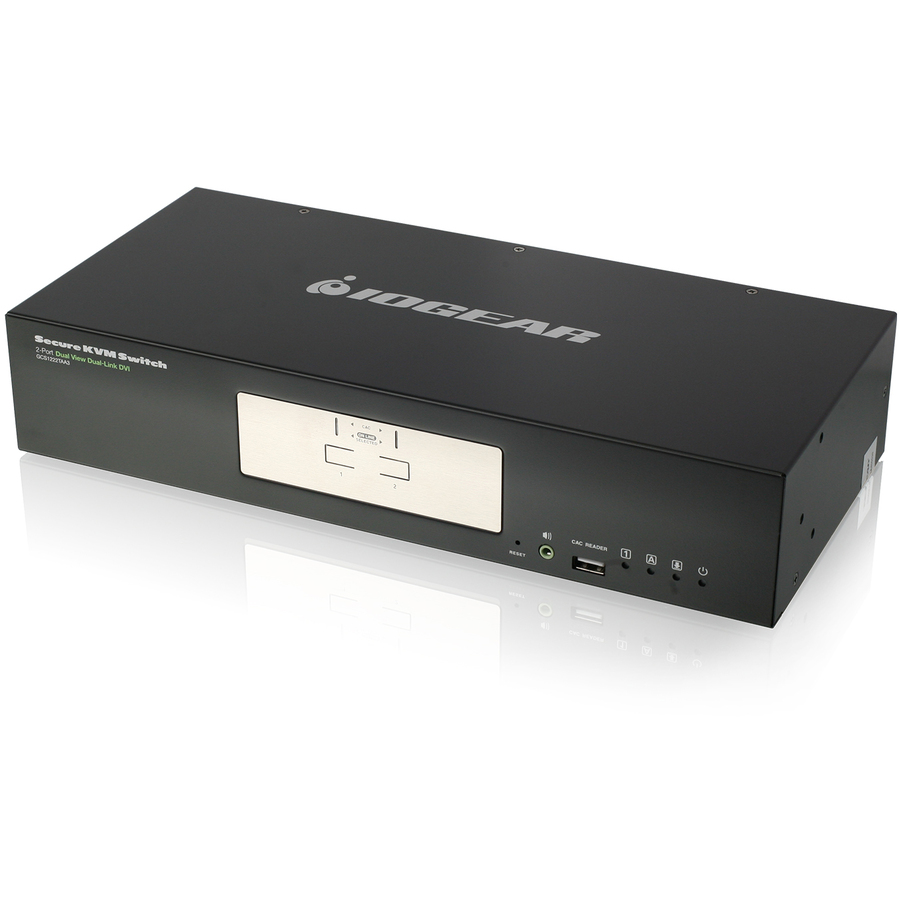
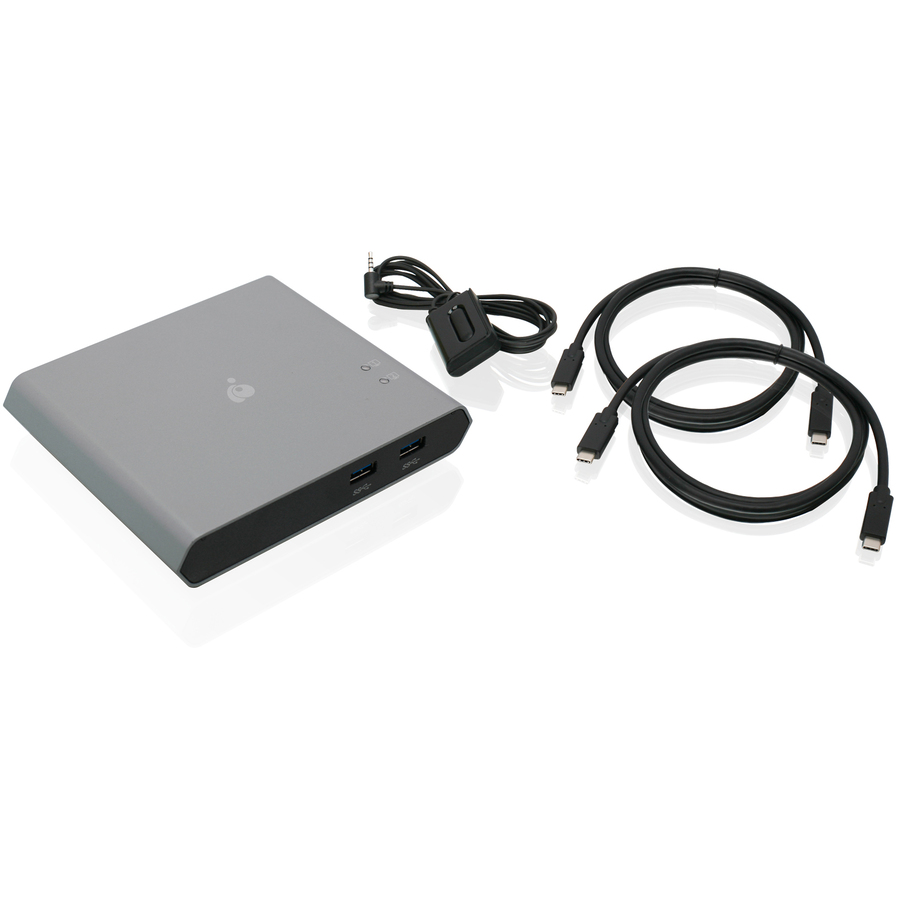
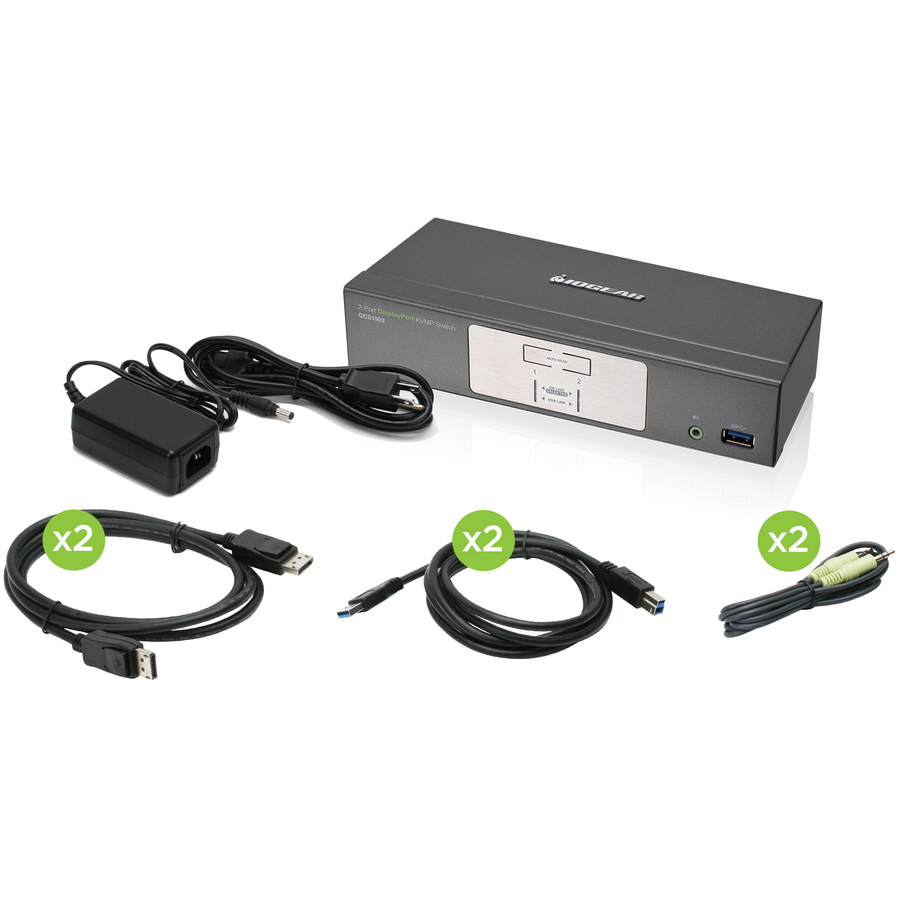
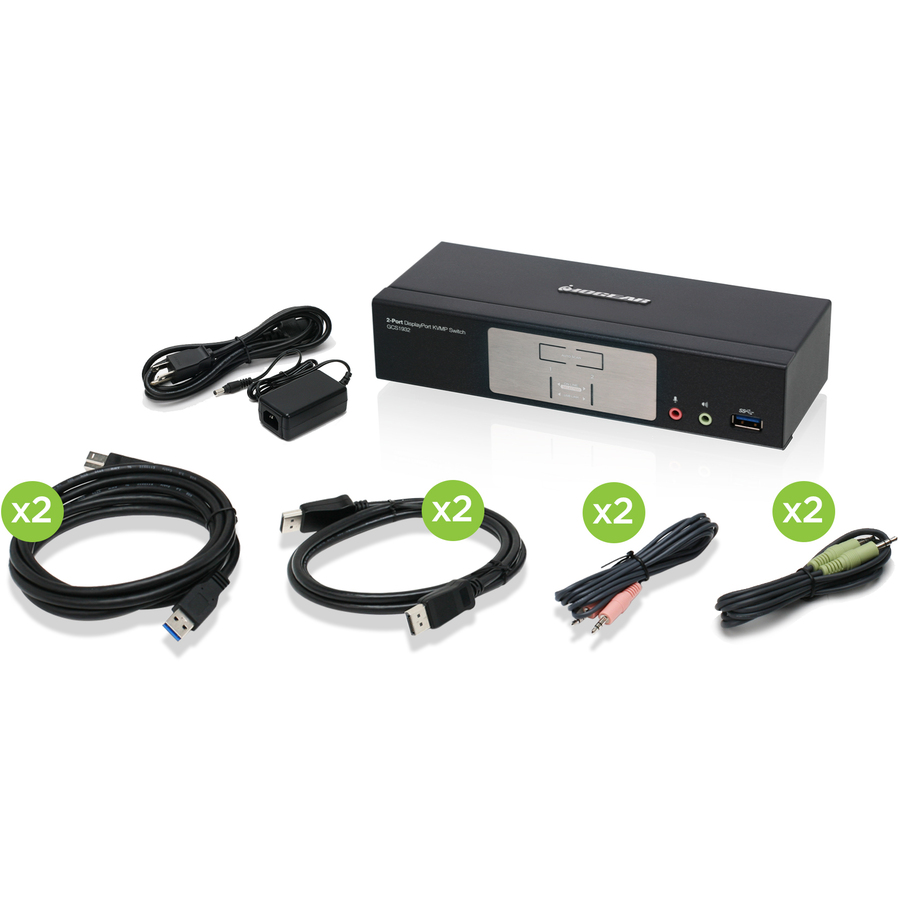
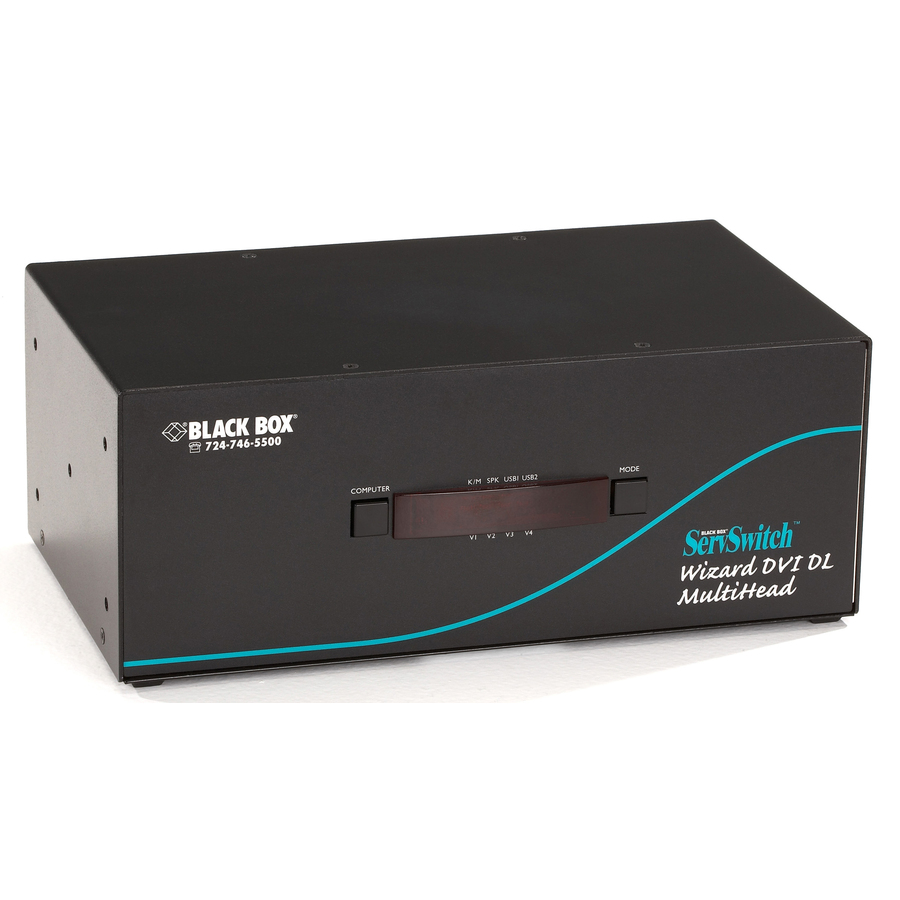
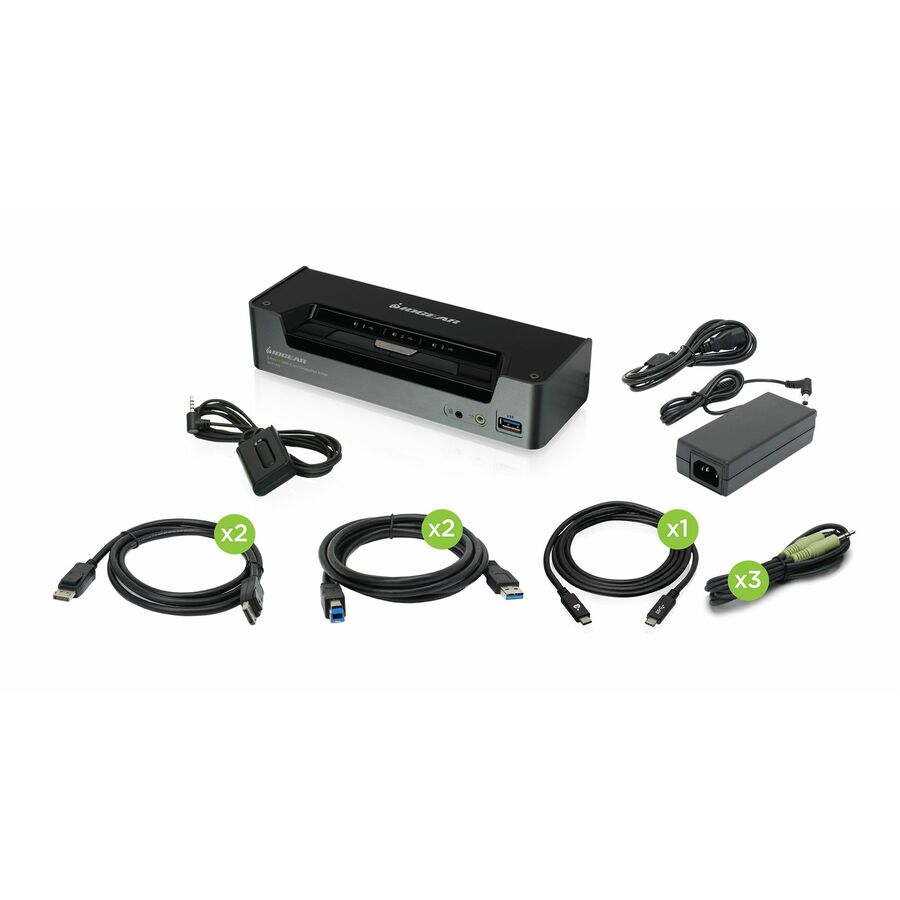
IOGEAR 2-Port Dual View Dual-Link DVI Secure KVM Switch
GCS1222TAA3
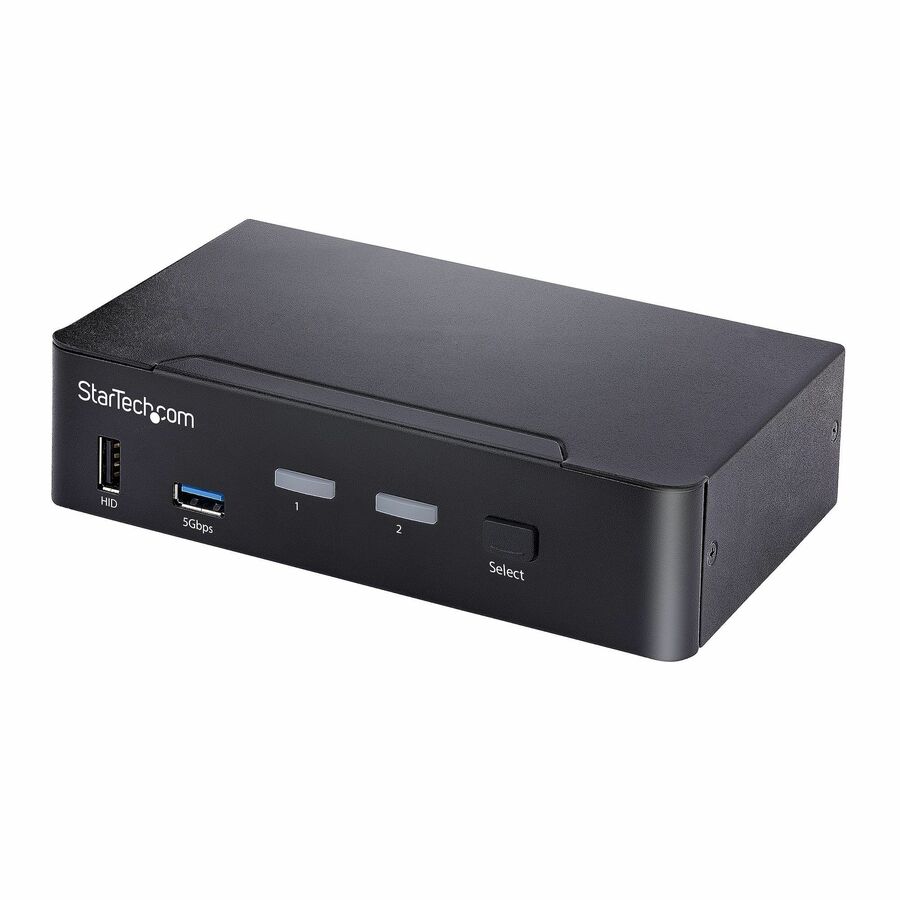
A two-port dual-view secure KVM for one seated position: two computers and one local user across dual-link DVI at 3840 x 2160, with six DVI connections and USB on a desktop body.
Its manufacturer titles it a secure switch and designates the part TAA compliant; it states no NIAP evaluation, so verify the listing if your requirement calls for one.
$71.59*In stockRackmount, 4-port
StarTech.com
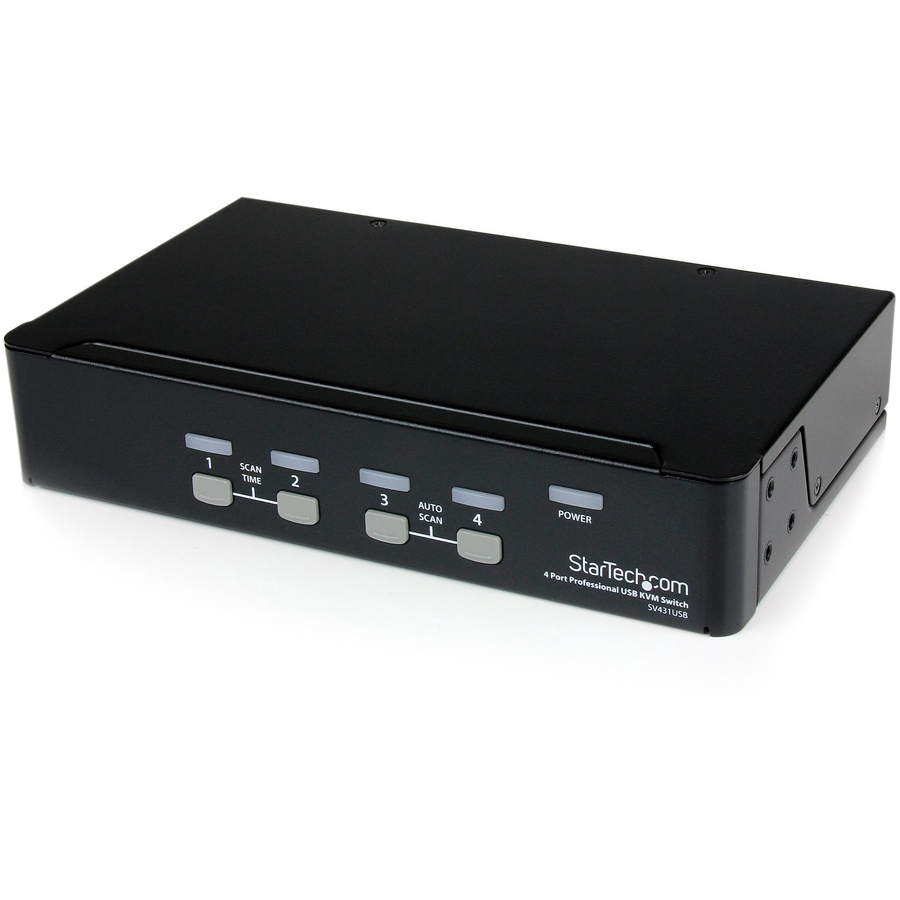
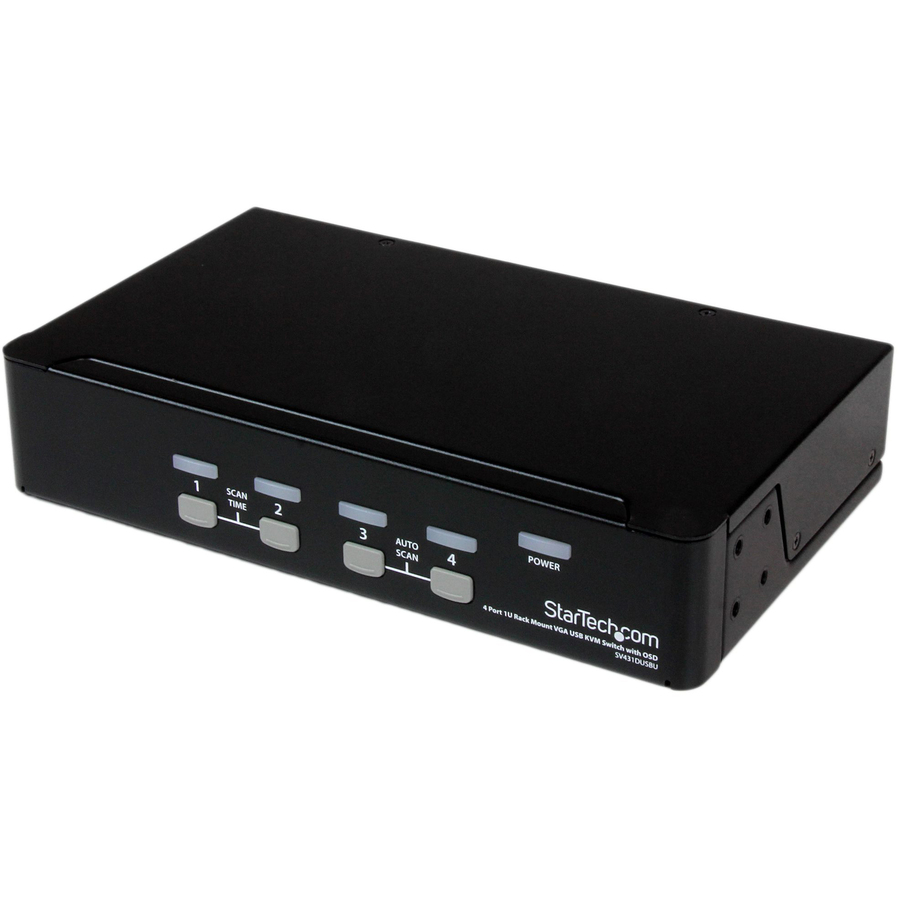
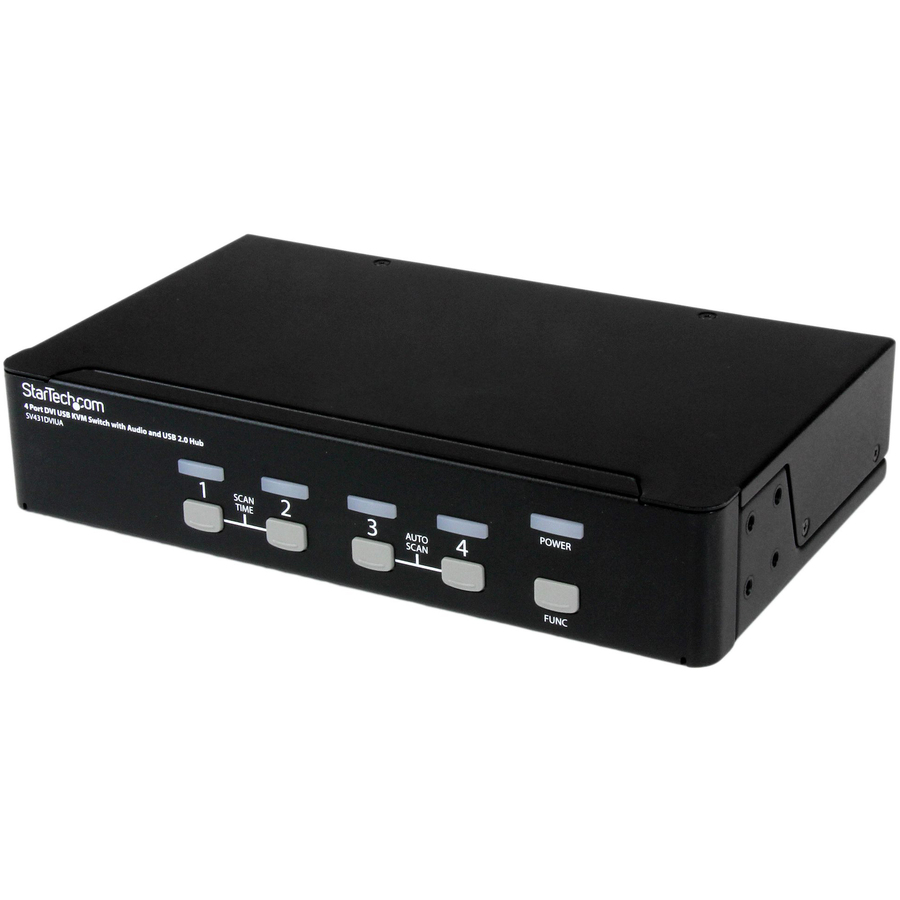
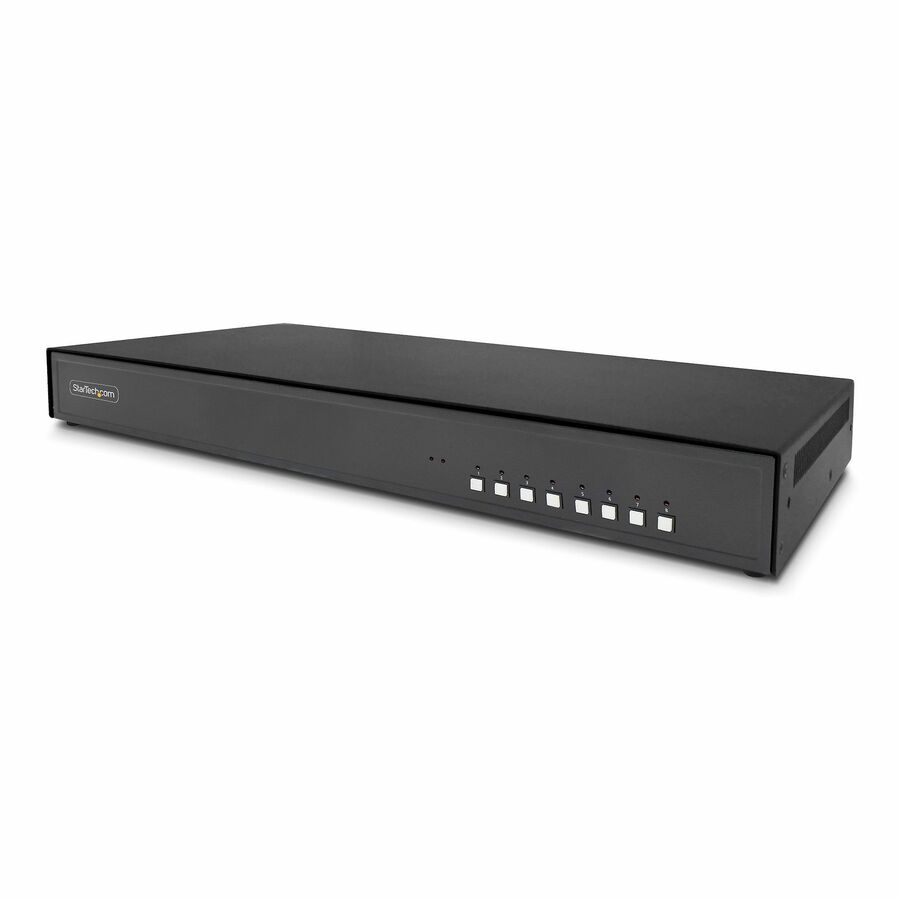
StarTech 4 Port 1U Rackmount USB KVM Switch with OSD, TAA
SV431DUSBU
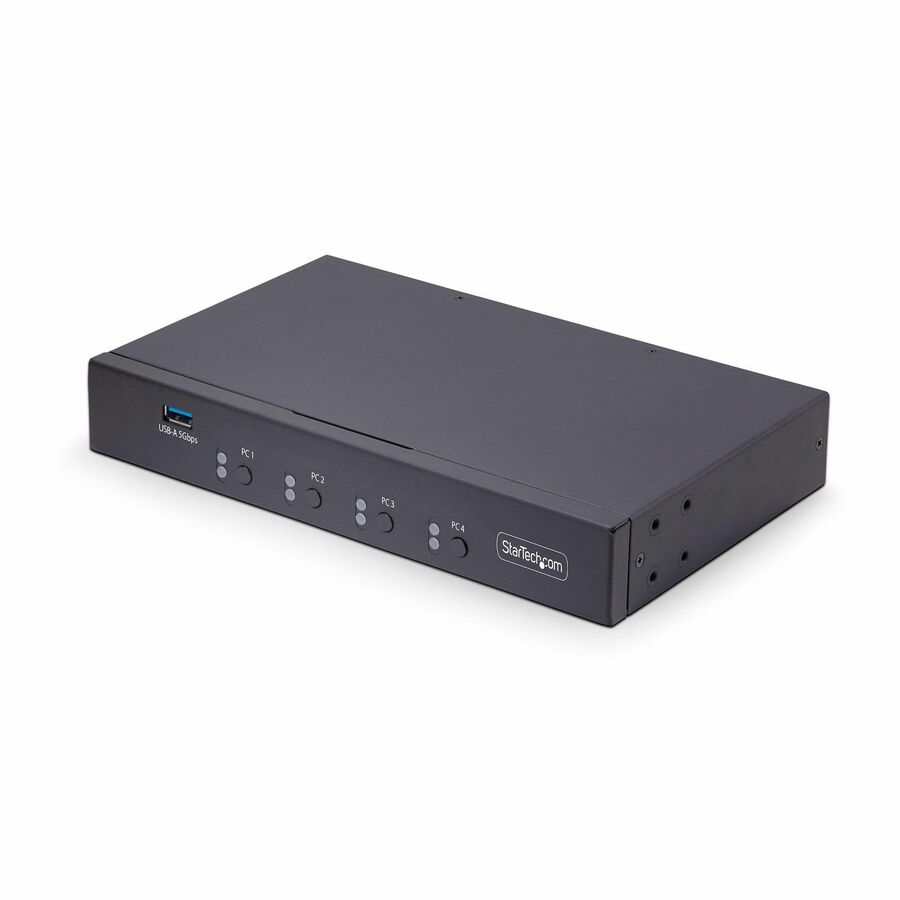
The aisle answer rather than the desk one: a 1U rackmount switch controlling up to four VGA and USB computers from a single keyboard, mouse and monitor, with an on-screen display for picking between them.
$186.70*In stockDisplayPort KVMP, 4K
ATEN Technology
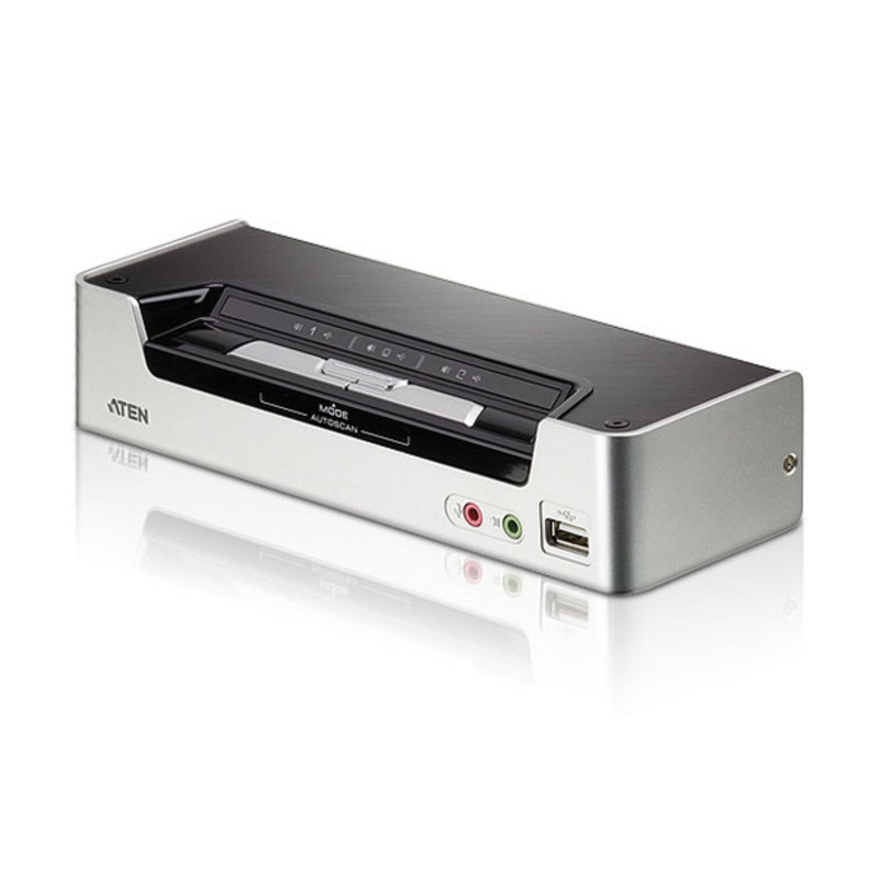
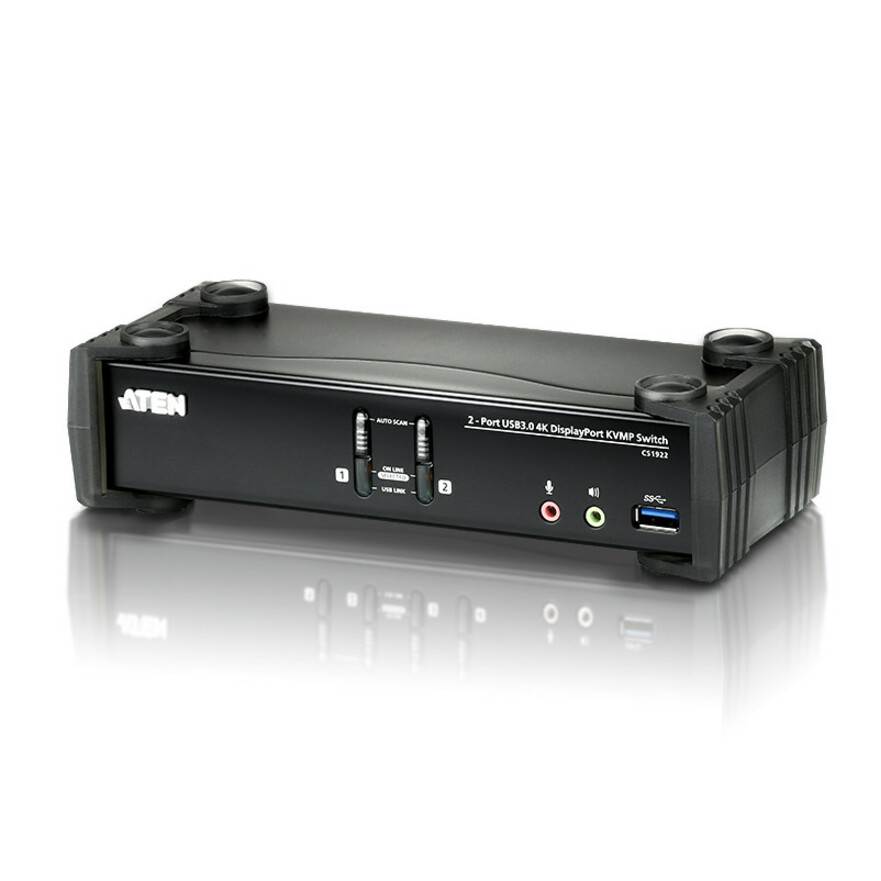
ATEN 2-Port USB 3.0 4K DisplayPort KVMP Switch-TAA Compliant
CS1922
A two-port DisplayPort KVMP switch with a USB 3.0 hub — two computers and one local user at up to 4096 x 2160, across three DisplayPort and six USB connections, so peripherals follow the console rather than the machine.
$234.95In stockDual-monitor DisplayPort
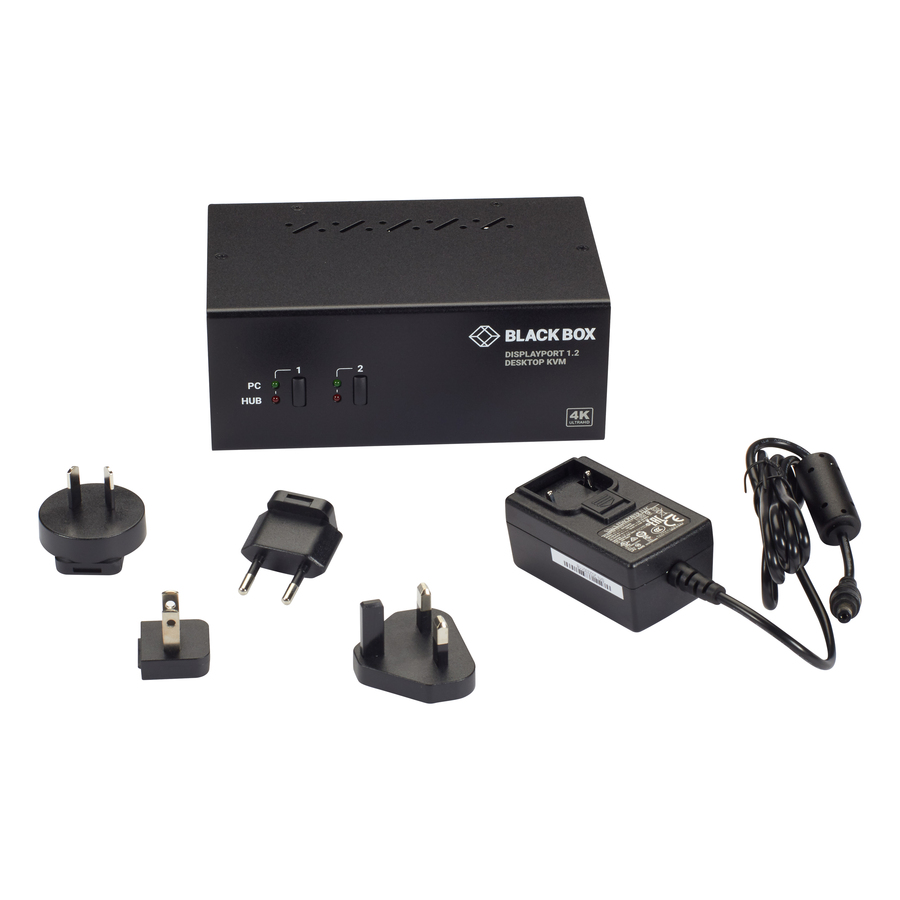
Black Box
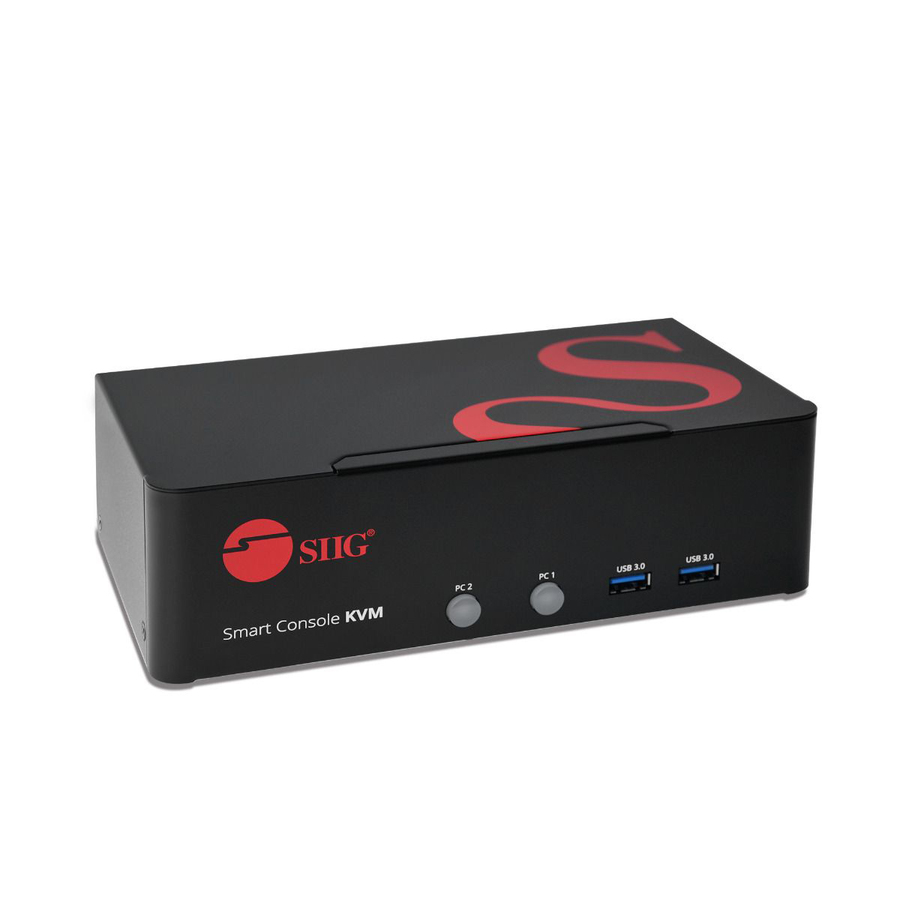
Black Box KVM Switch
KV6222DP
A two-computer, dual-monitor switch on DisplayPort 1.2 at 4K 60Hz with a USB 3.0 hub and audio, for the two-headed desk that has to keep both displays live through the switch rather than through an adapter.
$269.00*Back-orderedModular secure, 4-port
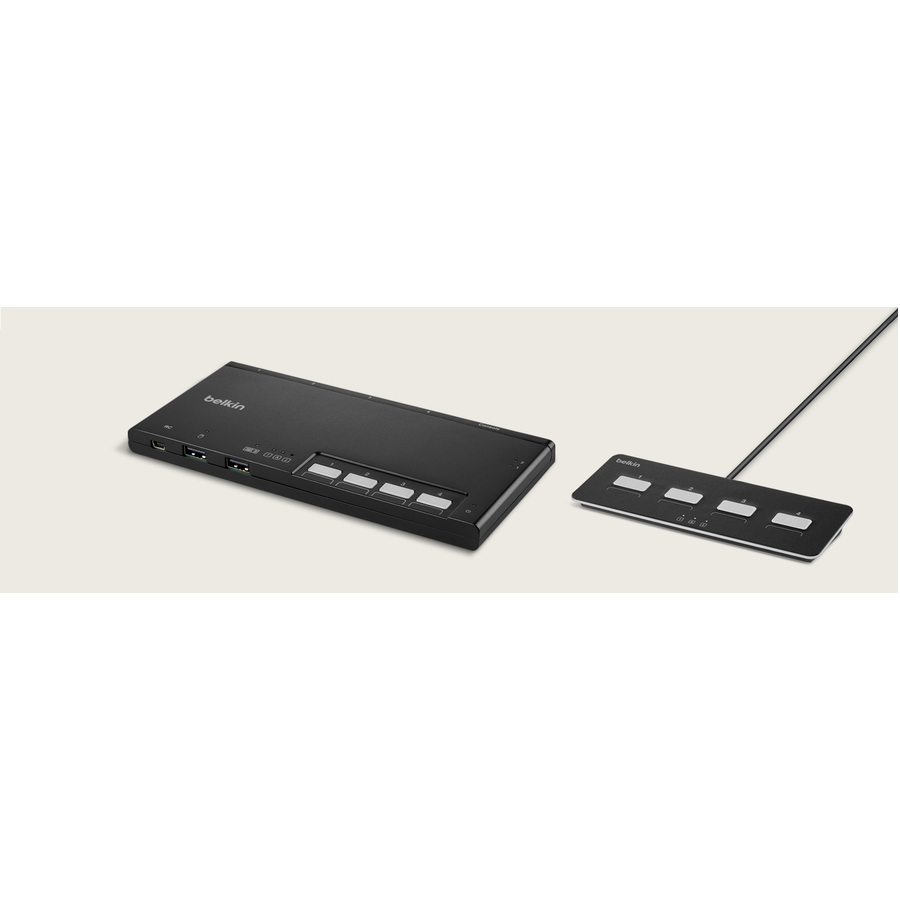
Belkin International
Belkin 4-Port Dual-Head Modular Secure KVM Switch Base Unit PP 4.0…
F1DN204MOD-BA-4
A four-port dual-head secure KVM base unit with a remote, for four computers and one local user at 3840 x 2160, mounted on the desktop or under the table where a shared console serves separated systems.
The manufacturer's own title names Protection Profile 4.0 and identifies the part as a base unit in a modular range — read the exact part number against the console you are standardizing on.
$566.71*Back-orderedSecure HDMI to DP out
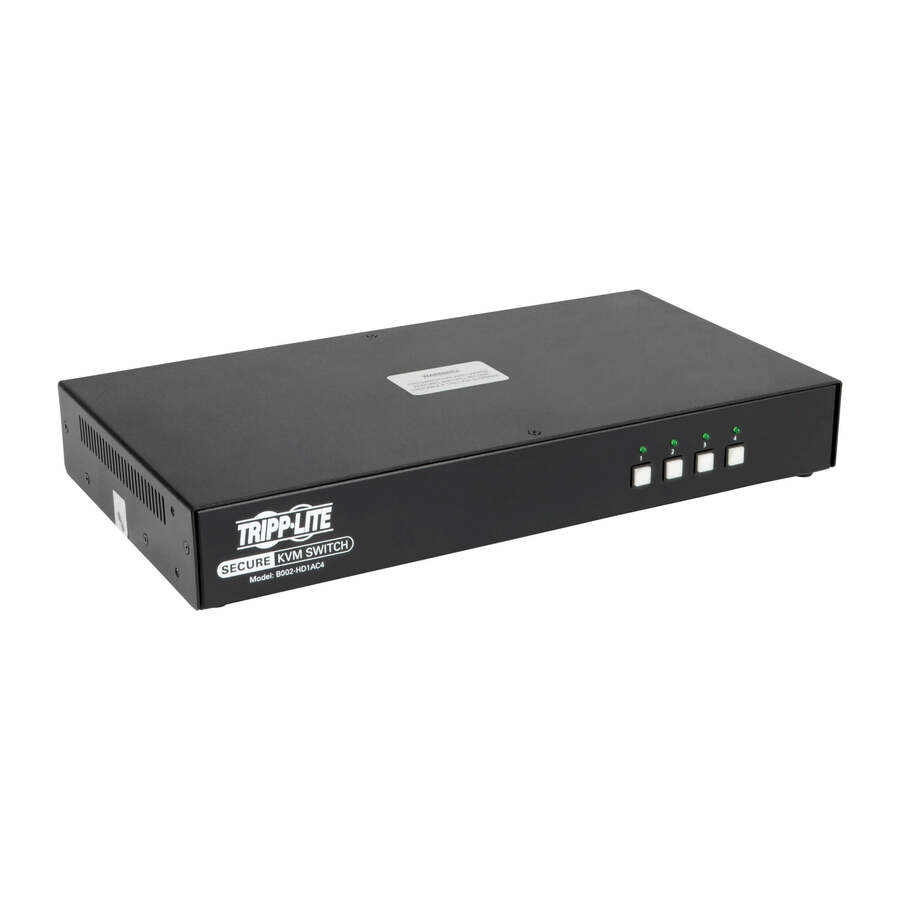
Eaton
Tripp Lite by Eaton Secure KVM Switch, 4-Port, HDMI to DisplayPort, 4K…
B002-HD1AC4
A four-port single-monitor secure switch taking HDMI in and driving DisplayPort out at 3840 x 2160, with audio and eleven USB connections across four computers and one local user.
Its manufacturer's title states NIAP PP3.0 certification and common access card support; confirm the model and version on NIAP's Product Compliant List before it goes on a requirement.
$822.48*In stockTwo-port secure, 4K 60Hz
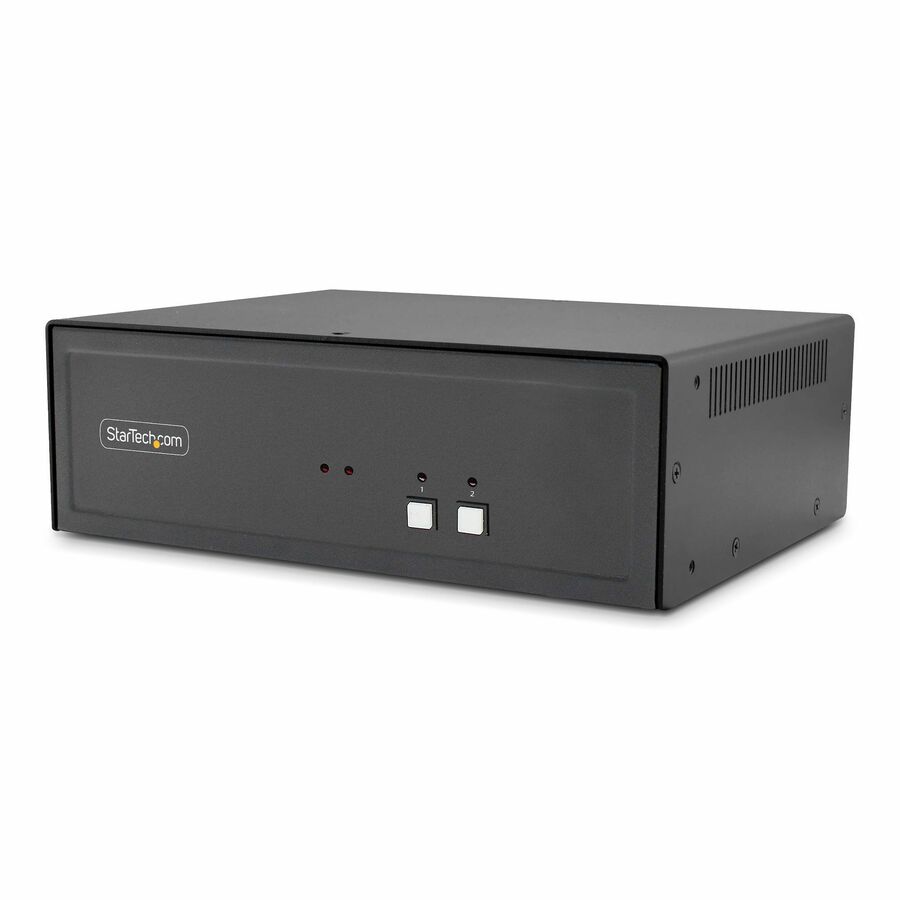
StarTech.com
StarTech Secure 2-Port KVM Switch, HDMI or DisplayPort, 4K 60Hz, NIAP…
CK4-HP102C
A two-port secure switch for HDMI or DisplayPort desktops at 4K 60Hz, whose manufacturer describes isolated systems with no internal memory, anti-tamper switches and a card-reader port — the shape of console a separated desk is usually required to buy.
The title states NIAP 4.0, a CAC port and that the unit is built in the USA, and carries the TAA designation on the part; verify the evaluation by model on the Product Compliant List.
$619.15*In stockKVM over IP, 16 port
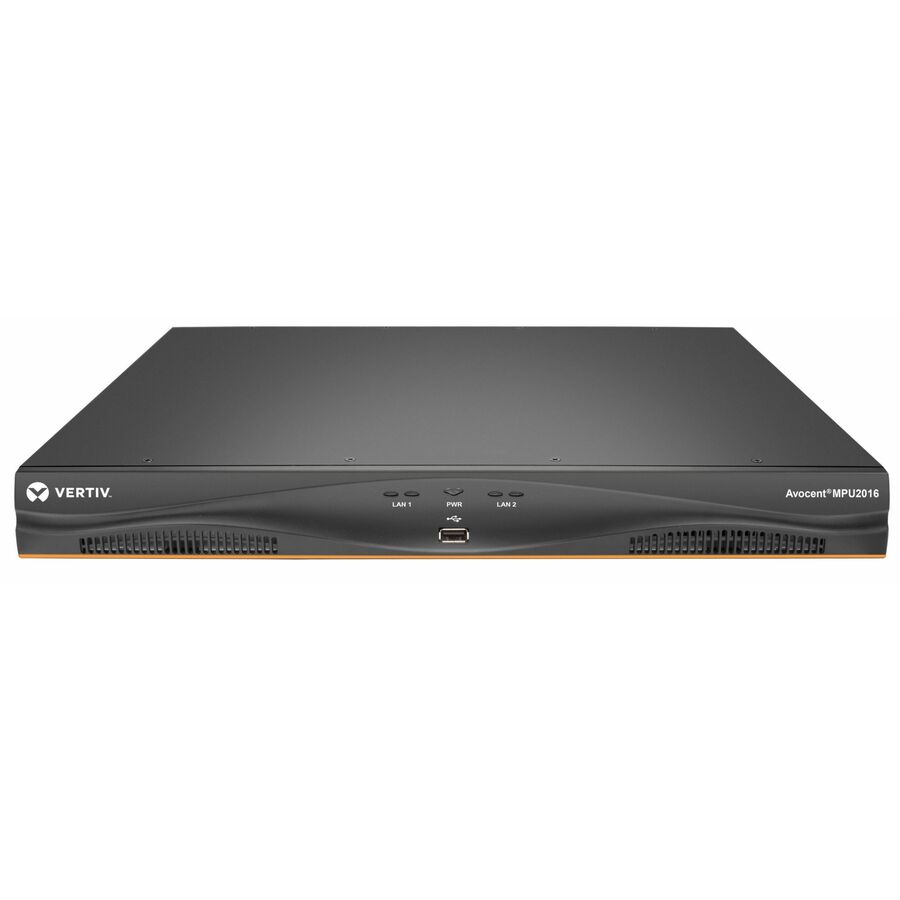
Vertiv
Vertiv Avocent MPU KVM Switch | 16 port | 2 Digital Path | Dual AC…
MPU2016DAC-400
The out-of-band tier: a sixteen-port KVM over IP switch with two digital paths and dual AC power, giving remote access to KVM, USB and serial connections for machines that have stopped answering on their own.
The TAA designation is carried in the manufacturer's own part title, as it is on every row this page renders. Treat it as a managed network device — address, patching and any encryption requirement on its management interface belong in the same plan.
Request pricingMore KVM switches in the Uniqcli catalog
See all 878 KVM switchesMore from across this category. In-stock lines lead, and a back-ordered line carries the same estimated availability its product page does — with live pricing throughout, NDAA §889 screening before checkout and TAA verified on request.
- VertivVertiv Avocent Cybex Secure MultiViewer KVM Switch, 16 Port, Cursor Navigation Switching, NIAP Version 4.0 Certified, TAA Compliant (SCMV2160DPH-400) - Switches | Universal Video Port | Multiple Viewer | DPP Channel | 4 x USB 2.0 Type A | 2x DP/HDMI universal port | UHD 4K at 30SCMV2160DPH-400
$19,646.00
$15,624.85*
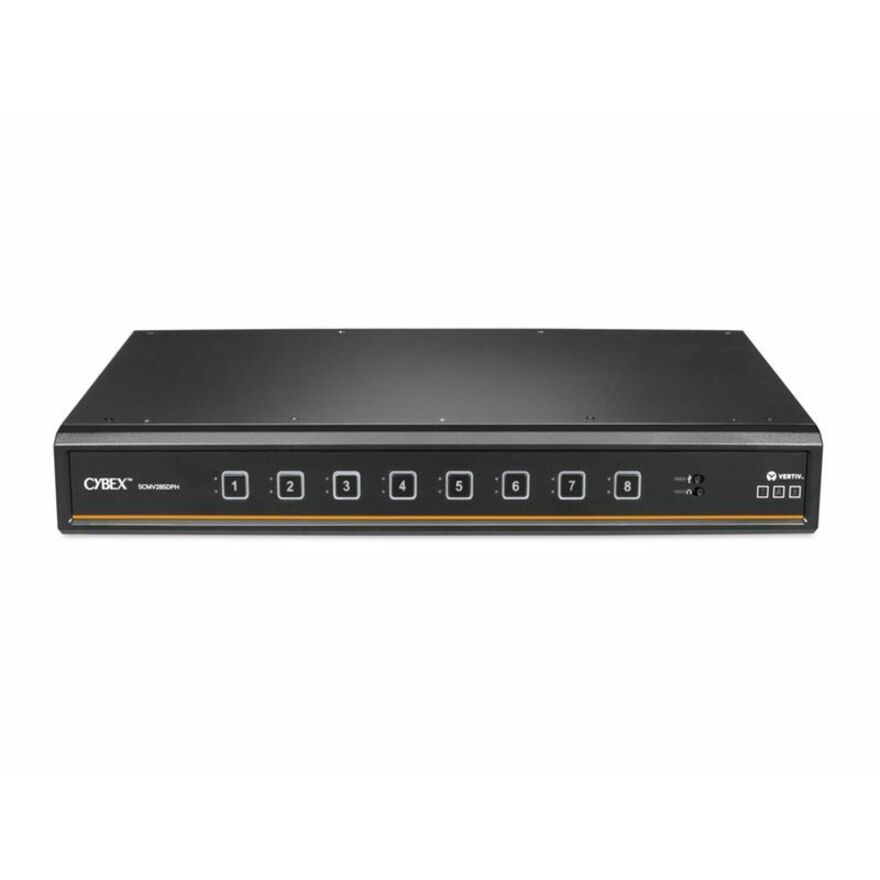
38 in stock - VertivVertiv Avocent Cybex Secure MultiViewer KVM Switch, 8 Port, Cursor Navigation Switching, NIAP Version 4.0 Certified, TAA Compliant (SCMV285DPH-400) - Switches | Universal Video Port | Multiple Viewer | DPP Channel | DP | HDMI | DVI-D | 0 to 40C or 32 to 104 F | AC Input Voltage | 100 - 240V ACSCMV285DPH-400
$11,764.00
$9,356.14*
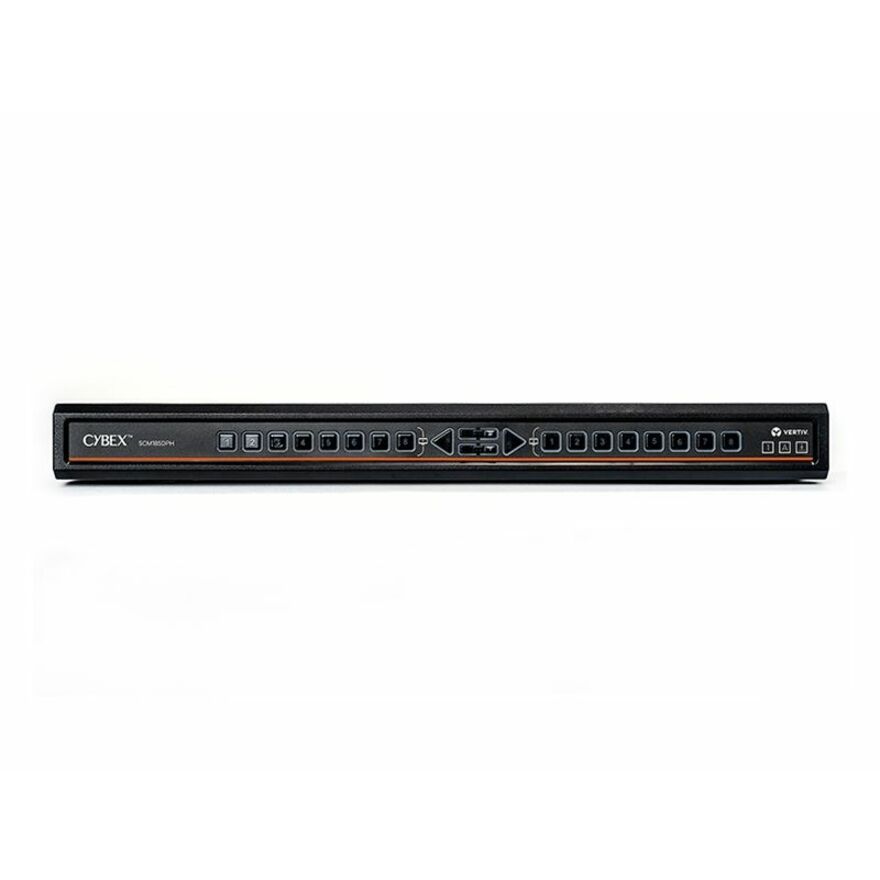
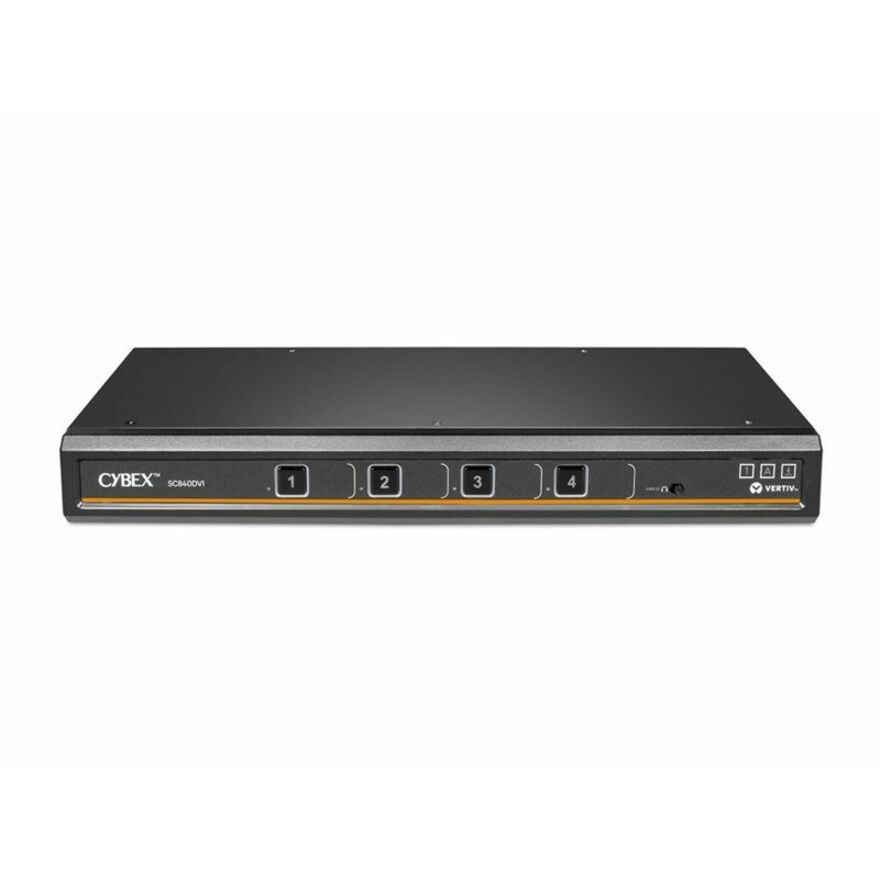
90 in stock - VertivVertiv Avocent Cybex Secure Desktop KVM Switch, 8 Port, Common Access Card, Touch Screen Support, NIAP Version 4.0, TAA Compliant (SCM185DPH-400) - 4 Computer(s) | 2 Local User(s) | 3840 x 2160 | 11 x USB | USB 2.0 | 6 x DVI | Desktop | TAA CompliantSCM185DPH-400
$3,419.00
$2,719.20*
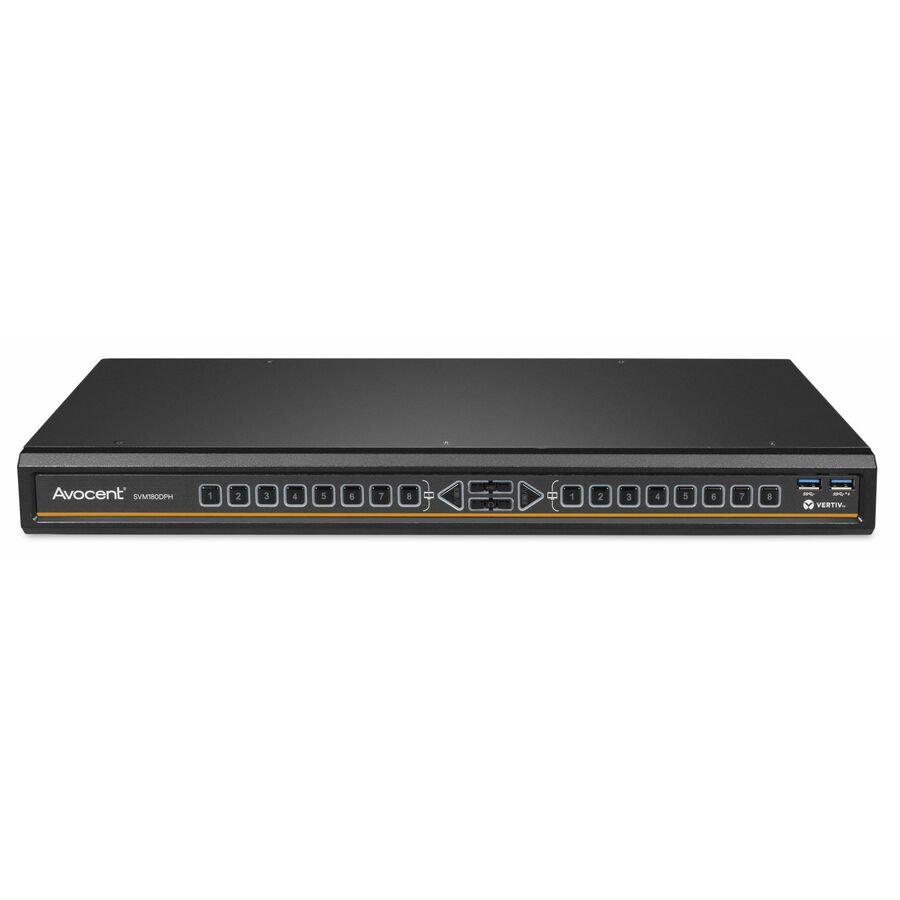
268 in stock - VertivVertiv Avocent SwitchView Matrix | 8 Port | DisplayPort | HDMI | DVI-D | TAA Compliant - Desktop Matrix | Single Head | Zero Delay Switching | Universal Video Connector | USB Port | TAA Compliant | 2-Year Full Coverage Factory Warranty - Optional Extended Warranty AvailableSVM180DPH-400
$2,836.00
$2,255.53*
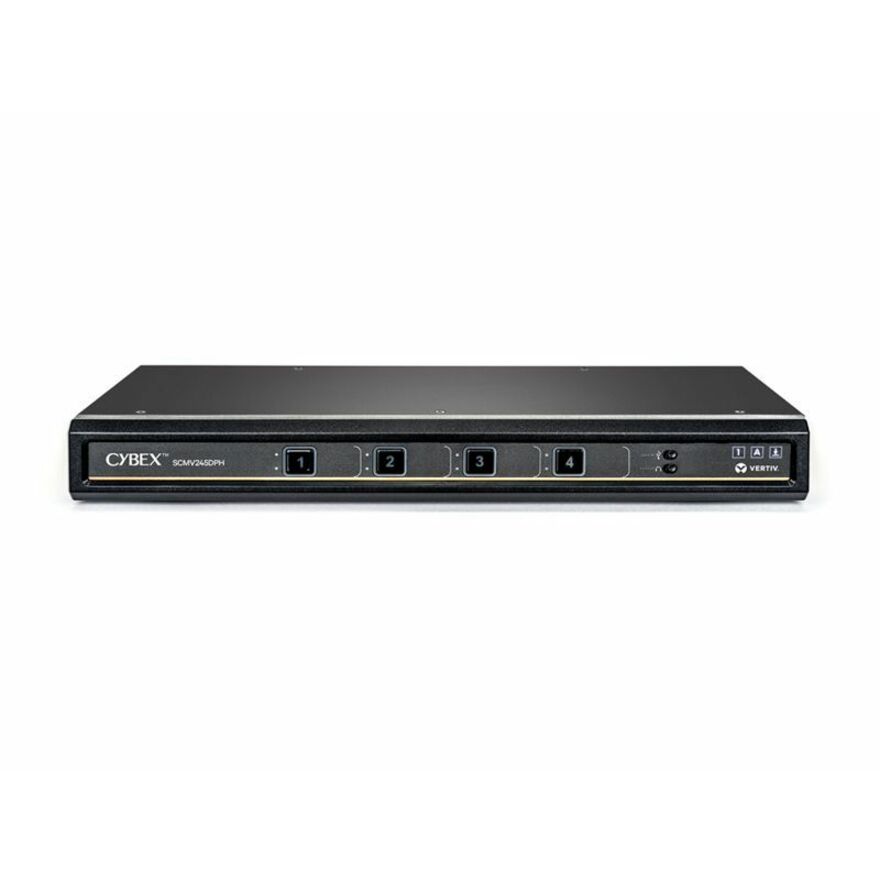
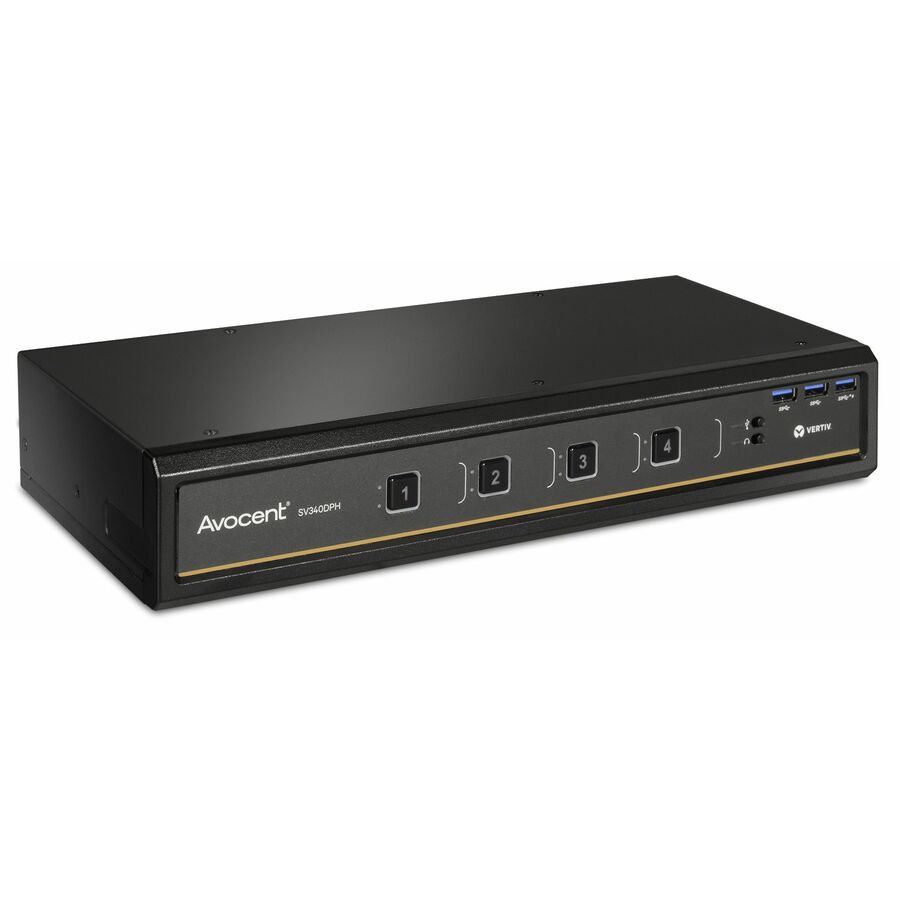
232 in stock - VertivVertiv Avocent SwitchView Desktop KVM | 4 Port | Dual Head | Universal Connector | TAA Compliant - Desktop KVM Switches | Zero Delay Switching | Universal Video Connector | USB Port | TAA Compliant | 2-Year Full Coverage Factory Warranty - Optional Extended Warranty AvailableSV340DPH-400
$2,335.00
$1,857.07*
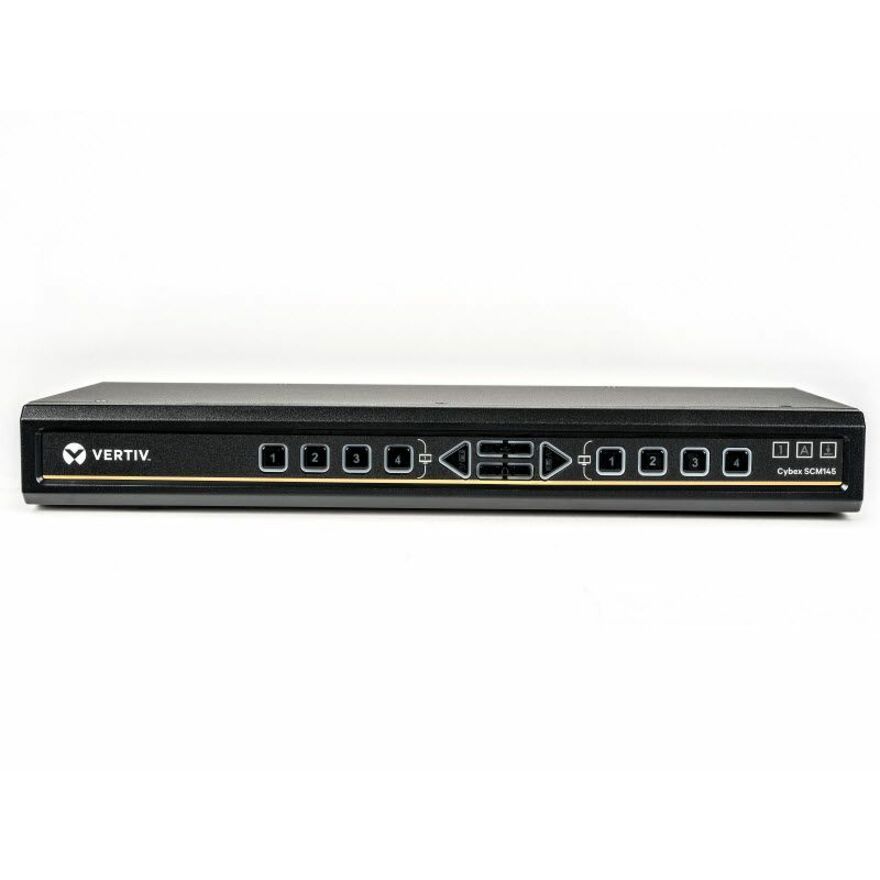
193 in stock - VertivVertiv Avocent Cybex Secure Desktop KVM Switch, 4 Port, Common Access Card, Touch Screen Support, NIAP Version 4.0, TAA Compliant (SCM145DPH-400) - 4 Computer(s) | 1 Local User(s) | 3840 x 2160 | 3 x USB | USB 2.0 | Desktop | TAA Compliant | Multiple Viewer | DPP ChannelSCM145DPH-400
$2,308.00
$1,835.59*
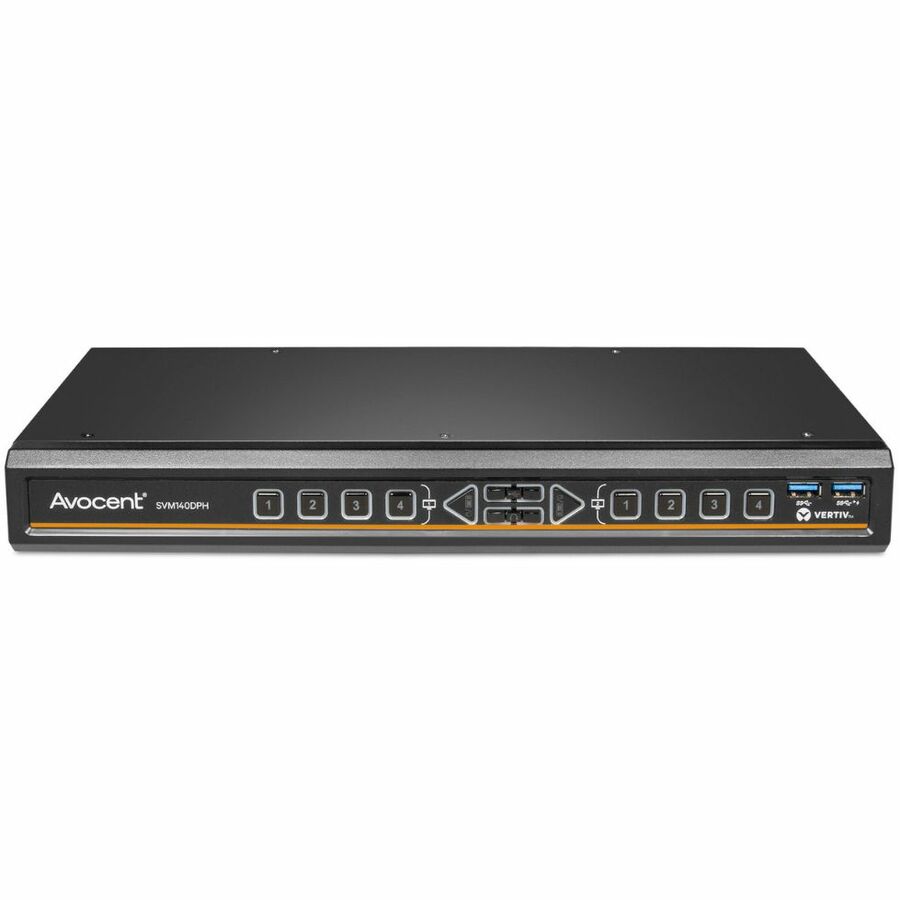
125 in stock - VertivVertiv Avocent SwitchView Matrix | 4 Port | DisplayPort | HDMI | DVI-D | TAA Compliant - Desktop Matrix | Single Head | Zero Delay Switching | Universal Video Connector | USB Port | TAA Compliant | 2-Year Full Coverage Factory Warranty - Optional Extended Warranty AvailableSVM140DPH-400
$1,835.00
$1,459.41*
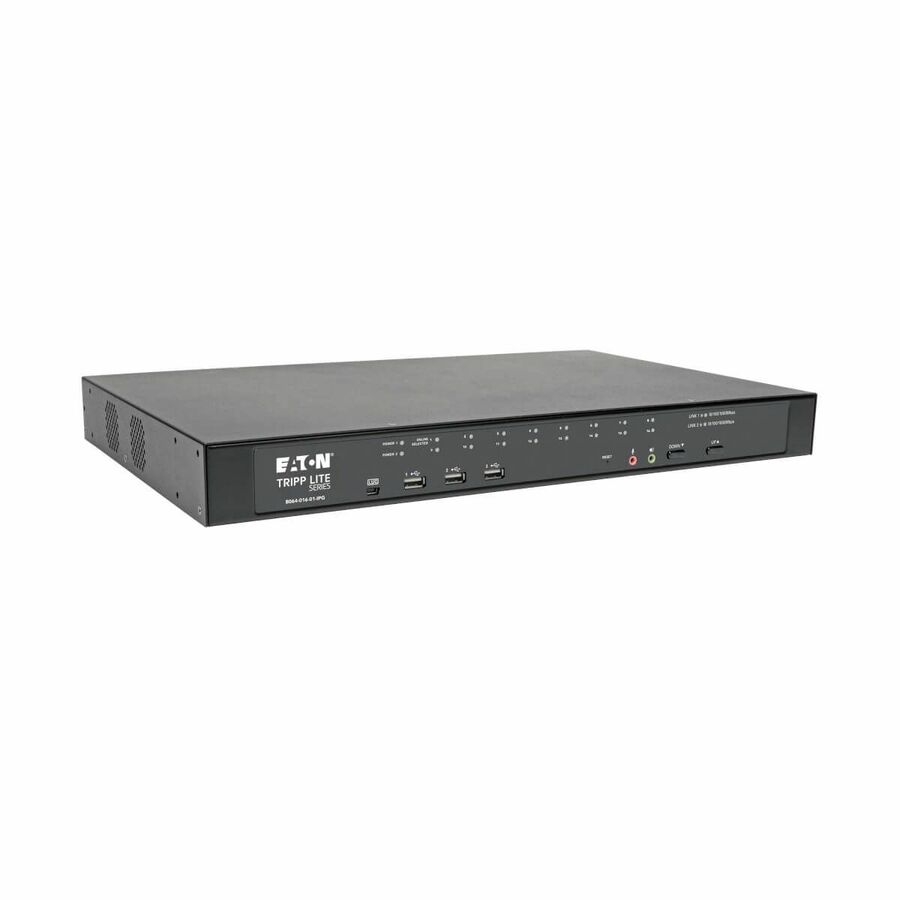
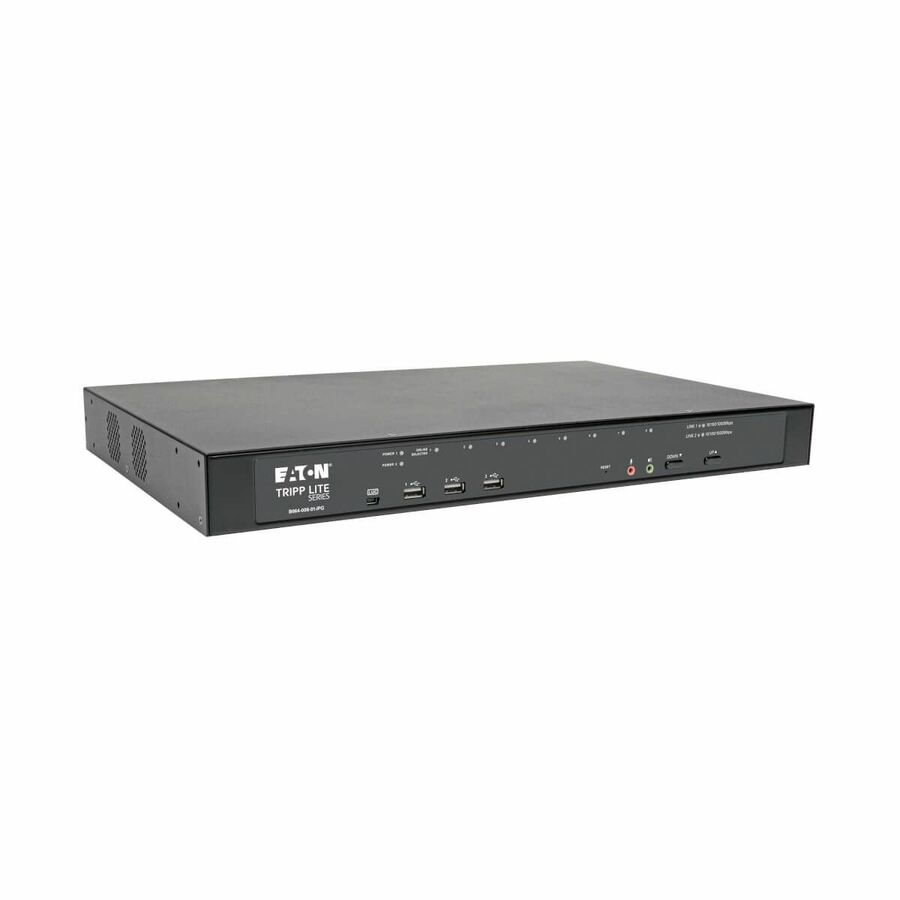
203 in stock - EatonTripp Lite by Eaton NetDirector 16-Port Cat5 KVM over IP Switch - Virtual Media 1 Remote + 1 Local User 1U Rack-Mount TAA - 16 Computer(s) - 1 Local User(s) - 1 Remote User(s) - 19 x Network (RJ-45) - 2 x PS/2 Port - 6 x USB1 x VGA - Rack-mountable, Desktop - 1U - TAA CompliantB064-016-01-IPG
$4,509.24
$4,148.50*
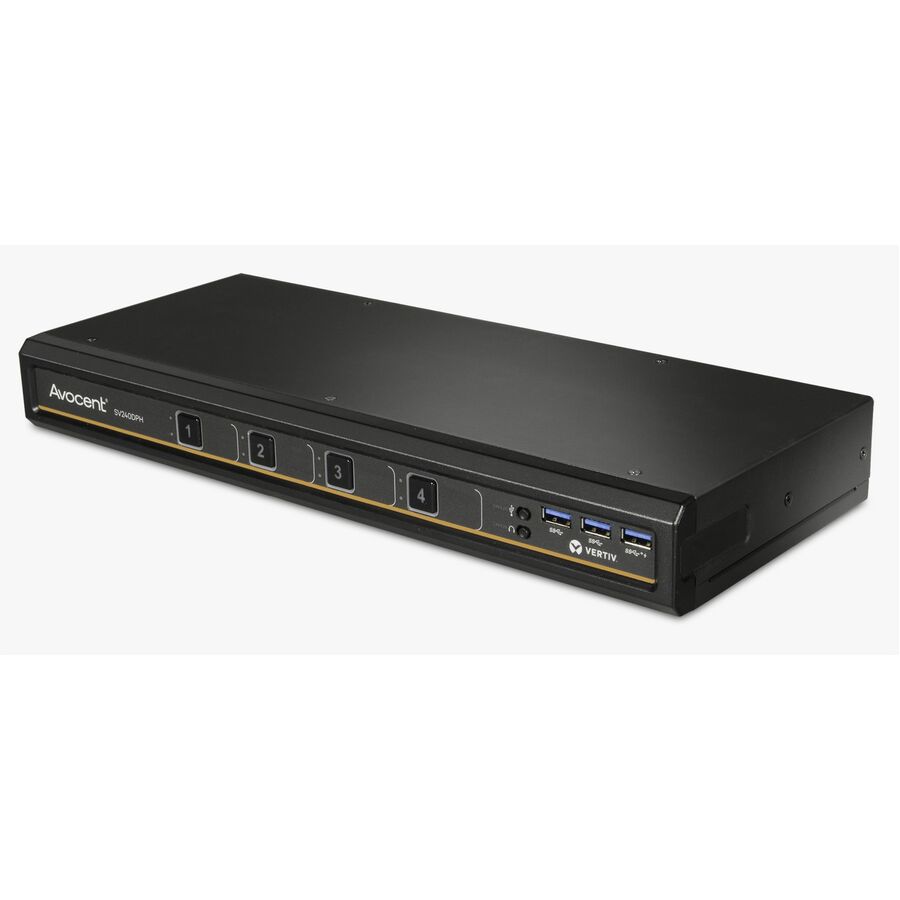
6 in stock - VertivVertiv Avocent SwitchView Desktop KVM | 4 Port | Single Head | Universal Connector | TAA Compliant - Desktop KVM Switches | Zero Delay Switching | Universal Video Connector | USB Port | TAA Compliant | 2-Year Full Coverage Factory Warranty - Optional Extended Warranty AvailableSV240DPH-400
$1,667.00
$1,325.80*
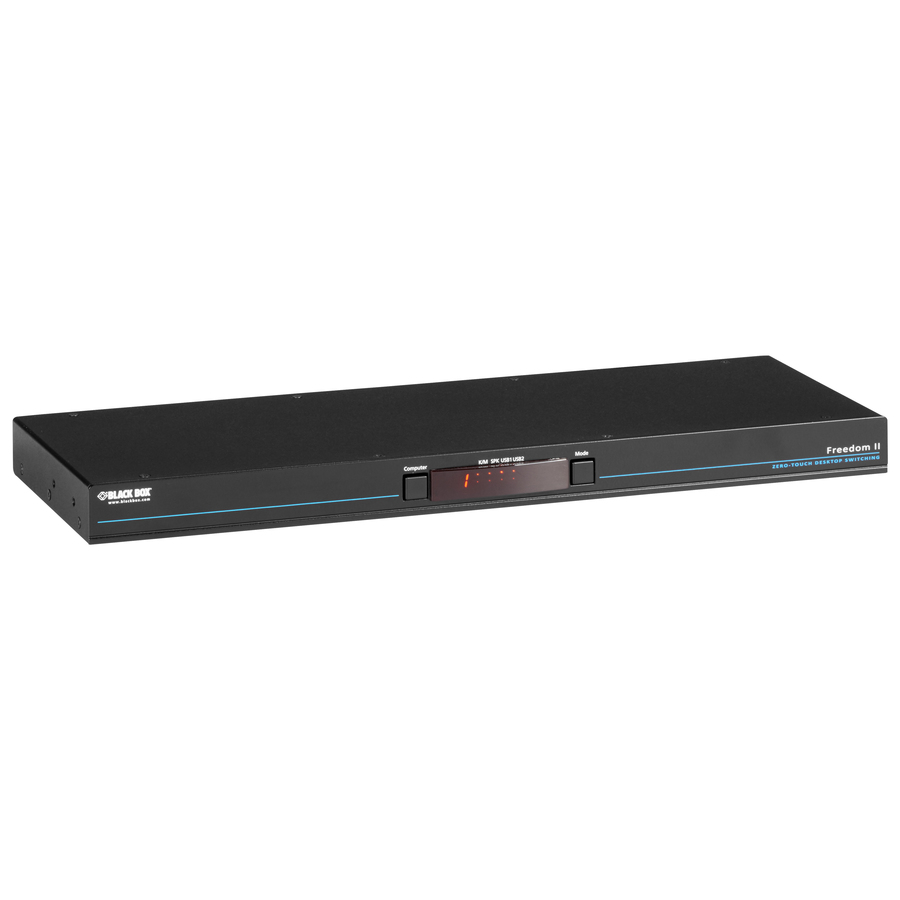
422 in stock - Black BoxBlack Box Freedom II KM Switch - 8-Port - 8 Computer(s) - 1 Local User(s) - 2 x Network (RJ-45) - 2 x PS/2 Port - 13 x USB - TAA CompliantKV0008A-R2
$1,853.64
$1,582.52*
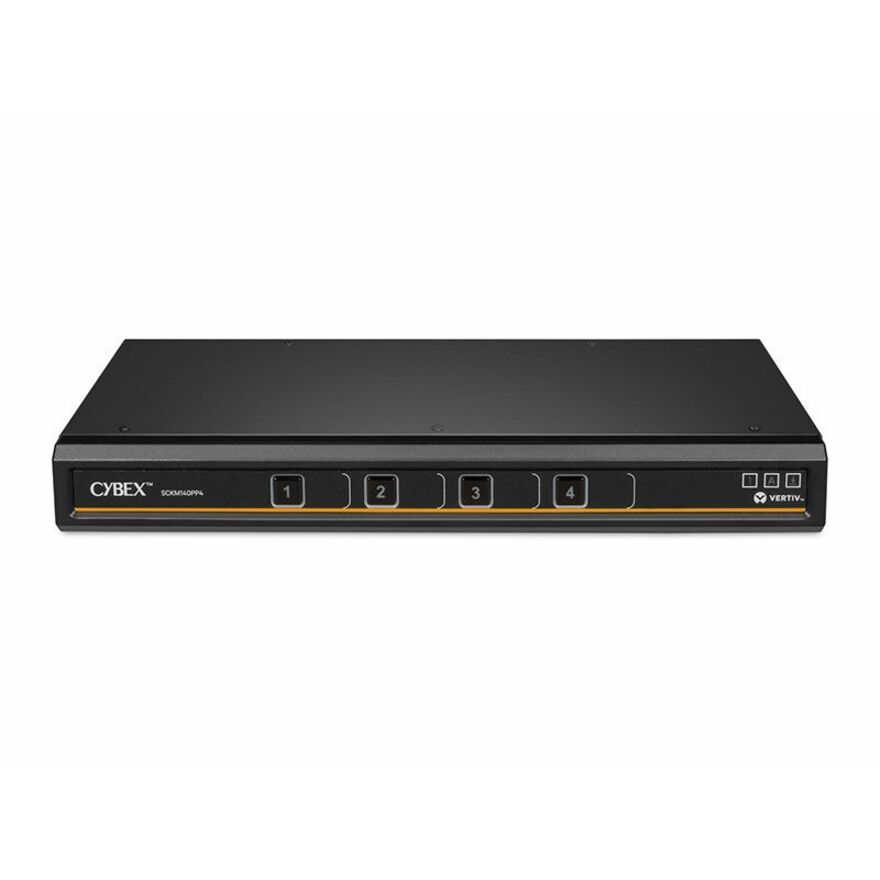
11 in stock - VertivVertiv Avocent Cybex SCKM100 Secure Desktop KVM Switch, 4 Port, Dedicated Peripheral Port, NIAP Version 4.0 Certified, TAA Compliant (SCKM140PP4-400) - Switches | Universal Video Port | DPP Channel | USB 2.0 | DP/HDMI | LED | PC | Switch Box | Cursor Navigation Switching | 100 - 240V ACSCKM140PP4-400
$1,133.00
$901.10*
456 in stock - EatonTripp Lite by Eaton 8-Port Cat5 KVM over IP Switch with Virtual Media - 1 Local & 1 Remote User 1U Rack-Mount TAA - 8 Computer(s) - 1 Local User(s) - 1 Remote User(s) - 11 x Network (RJ-45) - 2 x PS/2 Port - 6 x USB1 x VGA - Rack-mountable, Desktop - 1U - TAA CompliantB064-008-01-IPG
$2,742.22
$2,522.84*
77 in stock - StarTech.comStarTech Secure 8-Port DisplayPort KVM Switch, 4K 30Hz, NIAP 4.0, CAC, Made in the USA - Securely control eight DisplayPort desktops or servers from one mouse, keyboard, and a 4K 60Hz monitor; NIAP 4.0 Certified prevents data leaks, isolates systems, and has no internal memory; CAC port; Anti-tamper switches; TAA, Built in the USACK4-P108C
$2,334.94
$2,148.14*
22 in stock - StarTech.comStarTech 4-Port DisplayPort KVM Switch with Mouse Roaming and Multi-View / Picture-in-Picture, 4K 60Hz, USB 3.0 (5Gbps) Hub, TAA - Control up to four DisplayPort computers with one keyboard, mouse, and 4K 60Hz monitor; Full Screen, Quad, PiP, or PbP modes; Switch via buttons, hotkeys, mouse, or serial (RJ-11/USB-C); Mirrored dual outputs (DP + HDMI) to two displaysP4AD122M-KVM-SWITCH
$2,136.09
$1,965.20*
29 in stock



Need pricing on TAA-designated KVM switches?
Tell us where to reach you and a Uniqcli specialist will follow up by email with current pricing, availability and lead time for the quantities you need — including parts that aren’t shown on this page.
Buying for an organization or for yourself — both work. No payment up front.
Every switch on this page carries a TAA designation in the manufacturer's own catalog title. Read that for what it is: a per-part statement rather than a family or brand rule — the same vendor lists designated and non-designated units side by side — and the manufacturer's own assertion rather than an independent certification. Verify it on the exact part number on the order.
A KVM switch is a small line on a large order and a disproportionate source of trouble on a federal one. It sits at the point where a person touches several machines — a watch floor, an operations desk, a rack aisle — and it is exactly the class of part a purchasing office will ask an origin question about, because it handles keyboard, video and mouse traffic between systems that are not supposed to be casually joined. The units below exist to take one of those questions off the table early: each carries a TAA designation in the manufacturer's own catalog title, which is the manufacturer's statement about that specific part number, and it is the statement a contracting officer will expect you to be able to point at.
Read that designation for exactly what it is. It is a per-part fact, not a family rule and not a brand rule — the same vendor will list a designated unit beside a non-designated one, and two switches with the same port count and the same connectors can differ on origin. It is also the manufacturer's assertion rather than an independent certification: the Trade Agreements Act asks whether an item is wholly the growth, product or manufacture of the United States or a designated country, or was substantially transformed in one into a new and different article of commerce with a distinct name, character or use, and it is the party offering the item that certifies where that happened. What a buyer does with that is verify it on the exact part number on the order, not on the product family in the brochure.
When the rule bites is the other half of the question, and it is the half most often guessed at. As of August 2026 the World Trade Organization Government Procurement Agreement supply threshold sits at $174,000, set by FAR Case 2025-007 and effective 13 March 2026 (FAR 25.402, acquisition.gov) — so on an ordinary open-market buy the origin clause generally attaches at or above that figure. Schedule buying works differently: GSA states that the Trade Agreements Act applies to Multiple Award Schedule contracts unless the contract says otherwise, and because the clause attaches at the contract level rather than the order level, the origin rule reaches individual orders regardless of how small the order is. A four-port desktop switch is a small purchase by any measure and can still arrive inside a contract that carries the clause, which is why buying the designated part by default is usually cheaper than working out which of your orders escaped the rule.
Buyer's checklist
How to choose a KVM switch when the order carries an origin clause
- Verify the designation on the part number you are actually ordering, not on the model family. Every row on this page carries it in the manufacturer's own title; the wider KVM shelf mixes designated and non-designated units freely, and on a rack elevation or a bill of materials the two are indistinguishable.
- Confirm the current designated-country list yourself rather than working from memory or from a vendor slide. FAR 25.003 defines a designated country as a WTO GPA country, a free trade agreement country, a least developed country or a Caribbean Basin country, and the four lists are amended periodically — accessions, trade-agreement changes and graduations all move them.
- Treat the origin question and the covered-entity question as separate tests. NDAA FY2019 Section 889 has no dollar threshold at all and applies to every acquisition including micro-purchases, and it asks who made the equipment rather than where; a part can satisfy one test and fail the other.
- Decide first whether you need a secure KVM or an ordinary one, because they are different products solving different problems. An ordinary switch shares one console across machines for convenience; a secure peripheral sharing device is built to stop data moving between the connected systems through the console itself, and it is what a site separating security domains at one desk is usually required to buy.
- Where a secure device is required, look the model up on NIAP's Product Compliant List by part number rather than trusting a product page — an evaluation is granted to a specific model and version, and "secure" in a product name is a marketing word until the listing says otherwise. Where a common access card has to pass through to the connected machine, confirm the unit has a dedicated reader port, since not every secure model does.
- Size the console before the switch: how many computers, how many display heads per user, which connector the machines actually present (DisplayPort, HDMI, DVI or USB-C), and what resolution and refresh the desk needs. Mismatched heads and connectors are the most common reason a switch is re-ordered, and video adapters in the middle of a secure console are their own argument.
- Choose desktop, rackmount or over-IP on where the hands are. A desktop unit serves one seated position; a 1U rackmount unit with an on-screen display serves an aisle; an over-IP switch puts the console on the network for remote access, which makes it a managed network device with an address, a patch, a firmware lifecycle and — where a cryptographic requirement applies to its management interface — a validation question of its own.
What a TAA designation on a KVM title does and does not tell you
The Trade Agreements Act question is about origin, and it has a specific shape. Under FAR 25.003 an end product qualifies if it is wholly the growth, product or manufacture of the United States or of a designated country, or if it was substantially transformed in one of those places into a new and different article of commerce with a name, character or use distinct from what it was made from. "Designated country" is itself four lists rolled into one term — the WTO Government Procurement Agreement countries, the free trade agreement countries, the least developed countries and the Caribbean Basin countries — and the composition of those lists is exactly the part that changes over time. As of August 2026 the FAR text published on acquisition.gov reflects FAC 2026-01, effective 13 March 2026. Treat any list you have saved as a snapshot, and confirm the current one at acquisition.gov or through GSA's own designated-country lookup before you rely on it in a determination.
What the designation on a catalog title does not do is settle the other compliance questions in the same order, and on this class of part there are usually three of them. It says nothing about NDAA Section 889, which is a different statute asking a different question and carrying no dollar threshold whatsoever: it applies at every acquisition value, including micro-purchases and commercial off-the-shelf items, and it names specific entities — Huawei, ZTE, Hytera, Hikvision and Dahua, with their subsidiaries and affiliates — rather than countries. It says nothing about whether a secure model has been evaluated against NIAP's protection profile for peripheral sharing devices, which is a listing you look up by model and version on NIAP's Product Compliant List, not something a title can settle. And it says nothing about cryptographic validation on an over-IP switch's management interface: that is a NIST Cryptographic Module Validation Program question, answered by looking the specific module up on csrc.nist.gov and checking whether its certificate sits on the Active or the Historical list. Buyers with a FIPS requirement should note the calendar — CMVP has said that modules validated to FIPS 140-2 will move to the Historical list on 21 September 2026, which does not revoke a certificate or stop an existing system running, but does mean a module in that state is a poor choice to specify into a new build.
Secure, standard and over-IP: where the compliance line usually lands
The KVM shelf splits into three jobs, and the paperwork gets heavier as you move along it. A standard switch shares one keyboard, monitor and mouse across two, four, eight or sixteen machines because walking between them is a waste of a person; the questions are port count, connector, resolution and whether the console needs audio and a USB hub. A secure peripheral sharing device answers a different requirement entirely — it exists so that a console shared across separated systems cannot itself become the path between them, which is why its titles talk about isolation, absence of internal memory, anti-tamper switches and dedicated card-reader ports rather than about convenience features. An over-IP switch moves the console onto the network so an administrator can reach a machine that has stopped answering, and in doing so it becomes a piece of out-of-band infrastructure that has to be addressed, patched, access-controlled and, in a good many federal environments, encrypted to a standard someone will ask you to evidence.
Two planning notes save most of the rework. The first is that a secure console is a system, not a switch: the evaluated device, the cables the manufacturer specifies for it, the card reader if identity has to pass through, and the displays and their connectors are one decision, and substituting any of them late is how a desk ends up with an adapter chain nobody wants to explain during an assessment. The second is that the origin clause reaches all of it. A switch bought against a TAA-clause order sits beside cables, extenders, rack rails and sometimes a second unit for the adjacent desk, and each of those lines carries its own origin answer — the clause does not stop at the item that happened to be on the drawing. Send the console layout, the number of machines per position, the connectors those machines present and whether a secure or over-IP device is required, and the switches, the cabling, the racks and any console hardware can be quoted together on one document with lead times attached.
FAQ
Common questions
- What does a TAA designation in a KVM switch's title actually mean?
- It is the manufacturer's statement that the specific part number is a U.S.-made or designated-country end product under the Trade Agreements Act — either wholly made in the United States or a designated country, or substantially transformed there into a new and different article of commerce. It is a per-part assertion by the party offering the item, not an independent certification and not a property of the brand or the product family. The same manufacturer will list a designated unit beside a non-designated one, so the designation has to be read on the exact part number that appears on the order, and confirmed there rather than on the datasheet for the range.
- Does the origin rule apply to a small KVM order?
- It depends on how the order is placed, and the answer surprises people. On an ordinary open-market buy the trade-agreement clause generally attaches at or above the applicable threshold — as of August 2026 the WTO Government Procurement Agreement supply threshold is $174,000, set by FAR Case 2025-007 effective 13 March 2026 and published at FAR 25.402 on acquisition.gov. On GSA Schedule buying, GSA states that the Trade Agreements Act applies to Multiple Award Schedule contracts unless the contract says otherwise, and because the clause sits at the contract level the origin rule reaches individual orders regardless of the order's value. A two-port desktop switch can therefore carry a requirement an equivalent open-market order would not. Confirm the clauses on your own solicitation or contract rather than reasoning from the order total.
- Is a TAA-designated KVM switch automatically a secure or NIAP-evaluated one?
- No — they are unrelated questions and conflating them is the most common mistake on this class of part. The TAA designation is about where the unit was made or substantially transformed. Whether a device has been evaluated against NIAP's protection profile for peripheral sharing devices is a separate determination granted to a specific model and version, and the only reliable way to confirm it is to look the part number up on NIAP's Product Compliant List. Several units on this page state a NIAP evaluation in the manufacturer's own title and several deliberately do not; where your requirement is for an evaluated device, verify the listing rather than reading the word "secure" in a product name.
- Is a TAA-designated KVM switch automatically clear under Section 889?
- No, and treating the two as one test is the most common compliance mistake on hardware orders generally. The Trade Agreements Act asks where an item was made or substantially transformed; NDAA FY2019 Section 889 asks who made it and, in its second part, whether your organization uses the named equipment anywhere in its own operations. Section 889 carries no dollar threshold — it reaches every acquisition including micro-purchases and commercial off-the-shelf items — and it names specific entities and their subsidiaries and affiliates rather than countries. A part can satisfy either test and fail the other, so both questions have to be asked about every line, separately.
- Can business, government and education buyers order these?
- Every line Uniqcli quotes is sourced through US distribution and screened for TAA country-of-origin and NDAA §889 status before checkout — with documentation tied to the specific part number, not a product family.
Need TAA-designated KVM switches pricing?
Send a bill of materials or part numbers — we confirm stock and a below-market total, with TAA verified on request. No payment up front.