
Short answer
FIPS 140-3 is the standard for validating cryptographic modules, run by NIST through the Cryptographic Module Validation Program and aligned to ISO/IEC 19790 and ISO/IEC 24759. It sets four security levels, from approved algorithms on production-grade hardware at Level 1 to environmental and side-channel protection at Level 4. Ask a vendor for a certificate number, never for the word FIPS.
Key facts
- FIPS 140-3, Security Requirements for Cryptographic Modules, was published on 22 March 2019 and supersedes FIPS 140-2.
- It is aligned to ISO/IEC 19790:2012, with test requirements drawn from ISO/IEC 24759.
- CMVP began accepting FIPS 140-3 submissions on 22 September 2020 and stopped accepting new FIPS 140-2 submissions on 22 September 2021.
- Remaining FIPS 140-2 certificates move to the Historical list on 21 September 2026; after that date they may be used only in existing systems.
- A FIPS 140-3 validation stays active for five years, or two years for an interim validation.
- There are four security levels: Level 1 approved algorithms on production-grade equipment, rising to environmental and side-channel protection at Level 4.
By Uniqcli Team
FIPS 140-3 is the U.S. federal standard for cryptographic modules — the hardware or software component inside a product that actually performs encryption, key generation, and key storage. A product is described as "FIPS 140-3 validated" when that module has been tested by an accredited laboratory and issued a certificate under the Cryptographic Module Validation Program (CMVP), run jointly by NIST and the Canadian Centre for Cyber Security. FIPS 140-3 is aligned to the international standard ISO/IEC 19790, with the test requirements drawn from ISO/IEC 24759.
For a federal buyer, the practical importance is narrower than the marketing suggests: validation covers the cryptographic module, not the whole appliance, and it is a point-in-time certificate against a specific version and configuration. That is why the certificate number matters more than the sentence on the datasheet. Everything below is written as of September 2026, after CMVP’s acceptance of FIPS 140-2 modules for new systems ended, and the CMVP listings it describes change continuously — the authoritative source is always the CMVP validated modules search at csrc.nist.gov.
What "FIPS 140-3 validated" actually means
A validation certificate says that an accredited third-party laboratory tested a named cryptographic module, at a stated version and in a stated operational configuration, against the requirements of FIPS 140-3, and that CMVP reviewed and accepted that testing. The certificate names the module, the vendor, the validated version or firmware level, the security level achieved, and the approved algorithms the module implements. It is evidence about that module — nothing wider.
Three distinctions save buyers the most trouble. First, validated is not the same as compliant: "FIPS-compliant" and "uses FIPS-approved algorithms" are vendor phrasings that carry no certificate behind them, while "validated" points at a numbered CMVP entry you can look up. Second, a module ships in more than one mode — many products are only operating within the boundary of their certificate when FIPS mode is explicitly enabled during setup, which is a configuration step your administrators have to perform and document. Third, the boundary is the module, not the box: a switch, a laptop, or a storage array may embed a validated module while large parts of the product sit outside the tested boundary entirely.
None of this makes the standard less useful. It just means the useful artifact is the certificate, and the useful question to a vendor is "which certificate number, at which version, and what has to be configured to stay inside it?"
Where the FIPS 140-2 transition stands (as of September 2026)
FIPS 140-3 replaced FIPS 140-2 as the standard new modules are tested against. CMVP began accepting FIPS 140-3 submissions on September 22, 2020, and stopped accepting new FIPS 140-2 submissions on April 1, 2022. Since then the population of 140-2 certificates has been fixed and shrinking in relevance, while the 140-3 population has been growing.
The date that governed was September 21, 2026. CMVP accepted modules validated to FIPS 140-2 from U.S. and Canadian federal agencies for the protection of controlled unclassified information (Designated Information in Canada) through that date, and from September 22, 2026 it places the remaining FIPS 140-2 validated modules on the Historical list, which — in CMVP's own framing — allows agencies to continue using those modules for existing systems only. Confirm the status of any specific certificate in the CMVP search; the listing, not this guide, is the record.
Historical is not revoked. Certificates issued before the move are not retroactively invalidated, and deployed systems do not stop working or stop being lawful to operate. What changes is the posture for new work: agencies are expected to stop specifying Historical-list modules into new procurements and new systems, and CMVP's guidance is to keep using an existing FIPS 140-2 module until a replacement FIPS 140-3 module is available. In practice that makes "is there a 140-3 certificate for the version we would actually deploy, and if not, when?" the right question to put to a manufacturer this year — laboratory and CMVP queues under 140-3 have generally run longer than they did under 140-2, so a current, well-regarded product with no 140-3 certificate yet is a common and not necessarily alarming situation.
The four security levels in buyer terms
FIPS 140-3 defines four security levels. They are cumulative — each builds on the one below — and they describe how hard the module is to physically attack, not how strong its encryption is. The approved algorithms are the same across all four.
Level 1 requires approved algorithms implemented in production-grade equipment, with no physical security requirements beyond production-quality components. This is where most software cryptographic modules, operating-system crypto libraries, and general-purpose implementations land. Level 2 adds tamper evidence — seals, coatings, or pick-resistant enclosures that show visible signs of entry — together with role-based authentication, so a later inspection can tell whether a device was opened.
Level 3 adds tamper resistance and active response: the module is designed to detect intrusion and automatically zeroize its keys when it happens, with identity-based authentication and stronger separation between interfaces and critical security parameters. Hardware security modules and many purpose-built secure network devices target this level. Level 4 is the highest, requiring robust protection against physical and environmental attack — including side-channel and fault-injection techniques — with active tamper response across the entire module envelope. It is rare and appears in specialized, high-assurance equipment.
Most federal requirements are written to Level 1 or Level 2 unless the system handles keys whose compromise would be catastrophic, in which case Level 3 is the usual bar. Specifying a higher level than the requirement calls for narrows the field of available products sharply and rarely buys the mission anything.
How to verify a module yourself on NIST CMVP
Verification is a public, free lookup and it takes a couple of minutes. Go to the Cryptographic Module Validation Program on csrc.nist.gov and open the validated modules search. Search by certificate number if the vendor gave you one, or by module name and vendor name if they did not. Never treat a marketing claim as the verification — the certificate is the verification.
When you find the entry, read four fields before anything else. The module name and version: confirm it matches the firmware or software release you would actually deploy, because a certificate for version 3.2 says nothing about version 4.0. The standard: 140-2 or 140-3. The security level. And the status: Active or Historical, which since September 22, 2026 is the field that tells you whether the module belongs in a new system or only in an existing one.
Then read the module's security policy, which is published alongside the certificate. It states the cryptographic boundary and the approved mode of operation, and it is where you will find the configuration steps required to run the module inside its validation. That document, not the datasheet, is what your security team should be handed. If a vendor cannot produce a certificate number, the honest reading is that the product has not been validated — which may still be acceptable, but it should be a decision your organization makes deliberately rather than one it discovers during an audit.
Where FIPS validation shows up in an IT purchase
Self-encrypting drives and storage arrays are the most common encounter. Self-encrypting SSDs and hard drives implement full-disk encryption in the drive controller, and the controller's cryptographic module is what gets validated; the certificate typically names the drive family and a specific firmware level, which is why firmware version control matters as much as the model number on a storage buy.
Hardware security modules and smart cards sit at the other end of the range, since a validated module is essentially the entire product proposition. Network security devices — VPN concentrators, firewalls, and routers terminating encrypted tunnels — commonly carry validated modules for their IPsec and TLS implementations, and usually require an explicit FIPS mode that disables non-approved algorithms and older protocol versions. Operating systems and platforms contribute their own validated crypto libraries, which is the layer most application software inherits rather than validating separately. Multifunction printers and copiers appear more often than buyers expect, because they hold scanned documents on internal storage.
Two purchasing habits follow from this. Put the certificate requirement in the requirement document rather than the evaluation notes, phrased against the module and version rather than the product family. And confirm at delivery that FIPS mode is part of the build configuration, because a validated module running in a non-approved mode gives you the procurement paperwork without the property it was bought for.
How FIPS fits with the rest of federal IT compliance
FIPS validation is one input among several, and it answers a question none of the others answer. FedRAMP authorization is about a cloud service offering's security posture as a whole and reaches down to require FIPS-validated cryptography where the service protects federal data. CMMC assessments for the defense industrial base likewise expect FIPS-validated cryptography to be the mechanism protecting controlled unclassified information, rather than accepting encryption generically. DISA STIGs specify configuration hardening and frequently require FIPS mode to be enabled on systems that support it.
Two questions that often get conflated with FIPS are genuinely separate. The Trade Agreements Act asks where an item was made or substantially transformed — a country-of-origin question. Section 889 of the FY2019 NDAA asks who made the equipment, naming specific covered entities, and it applies at every dollar value. A module can hold a current FIPS 140-3 certificate and still fail either of those tests, and a product from a designated country with no §889 exposure may hold no certificate at all. Treat them as three independent checks on the same line item.
For the origin question on quoted line items, Uniqcli performs TAA country-of-origin screening before the quote. Cryptographic validation status remains the manufacturer's published certificate and the CMVP listing, and should always be confirmed there.
Key takeaways
- FIPS 140-3 validates a cryptographic module — not the whole product — against ISO/IEC 19790, with certificates issued by the NIST/CCCS Cryptographic Module Validation Program (CMVP).
- "Validated" means a numbered CMVP certificate exists for a named module at a named version; "FIPS-compliant" or "uses FIPS algorithms" is vendor phrasing with no certificate behind it.
- As of September 2026 the transition has happened: CMVP stopped accepting new FIPS 140-2 submissions on April 1, 2022, accepted 140-2 modules for new systems only through September 21, 2026, and places the remaining FIPS 140-2 modules on the Historical list from September 22, 2026.
- Historical is not revoked — existing deployments stay valid and CMVP advises continuing until a 140-3 replacement is available; the change is that Historical modules should not be specified into new systems.
- Levels 1-4 describe physical protection, not encryption strength: Level 1 production-grade, Level 2 tamper evidence, Level 3 tamper response with key zeroization, Level 4 full-envelope attack resistance.
- Verify every claim yourself in the CMVP validated modules search on csrc.nist.gov — check module version, standard, level, and Active-versus-Historical status, then read the published security policy.
- FIPS answers a cryptography question only; country of origin (TAA) and covered-entity status (§889) are separate checks that a validated product can still fail.
Shop it at Uniqcli
Parts for this job
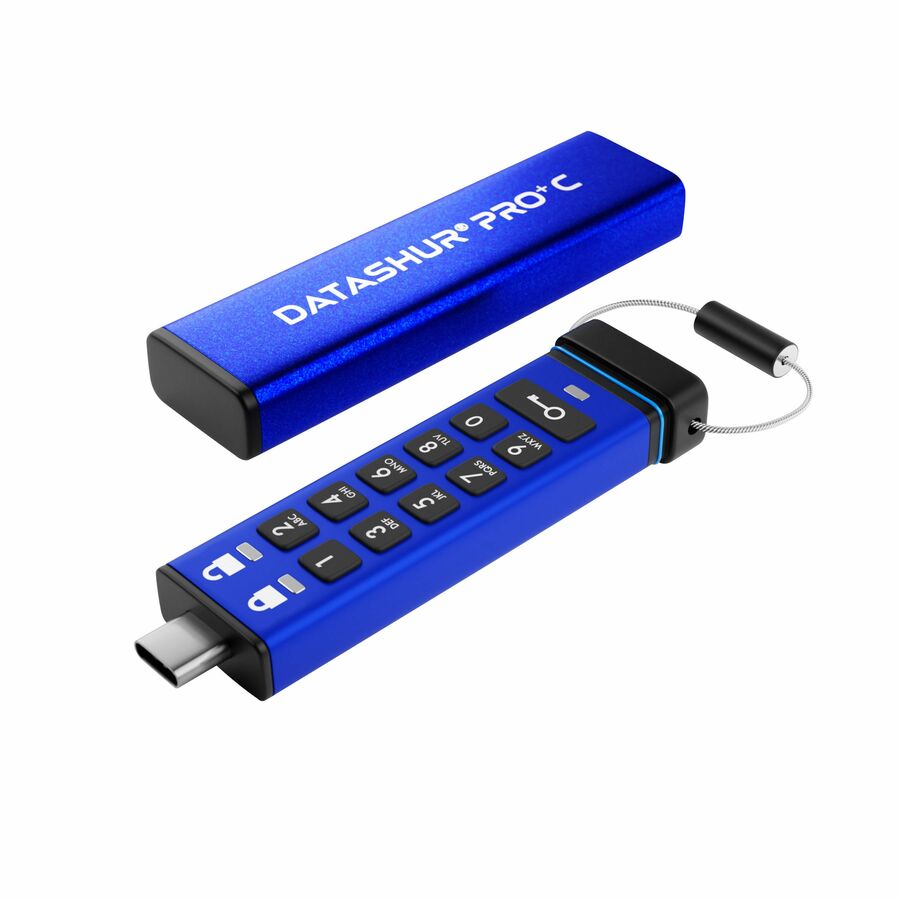
USB-C keypad drive
iStorage/Kanguru
iStorage datAshur PRO+C 32GB | FIPS 140-3 Level 3 Certified | Secure…
IS-FL-DA3C-256-32
A PIN-protected hardware-encrypted USB-C flash drive using XTS-AES 256-bit. The manufacturer's listing records it as FIPS 140-3 Level 3.
Confirm the certificate number on the CMVP validated modules search before it goes into a specification.
$189.08In stockUSB-A, 64 GB
iStorage/Kanguru
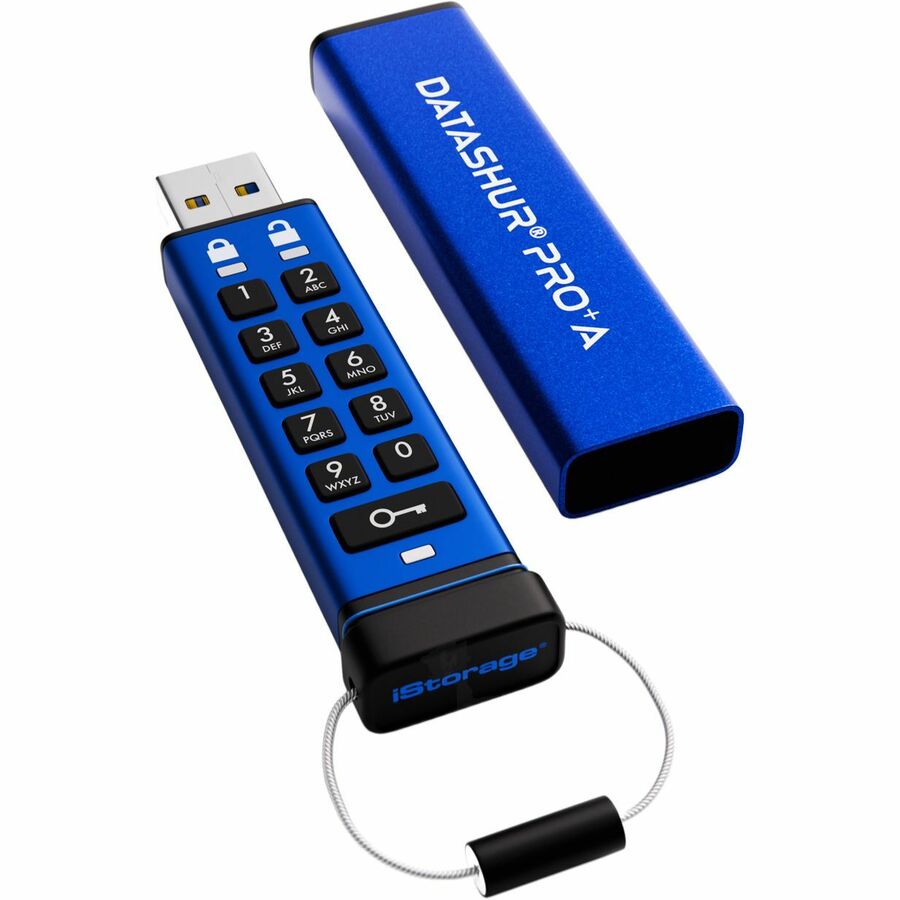
iStorage datAshur PRO+A FIPS 140-3, Level 3 Hardware Encrypted Flash…
IS-FL-DA3A-256-64
The Type-A version of the same keypad drive at 64 GB, for fleets whose machines have no USB-C port to spare.
$221.75*Back-orderedPortable SSD
iStorage/Kanguru
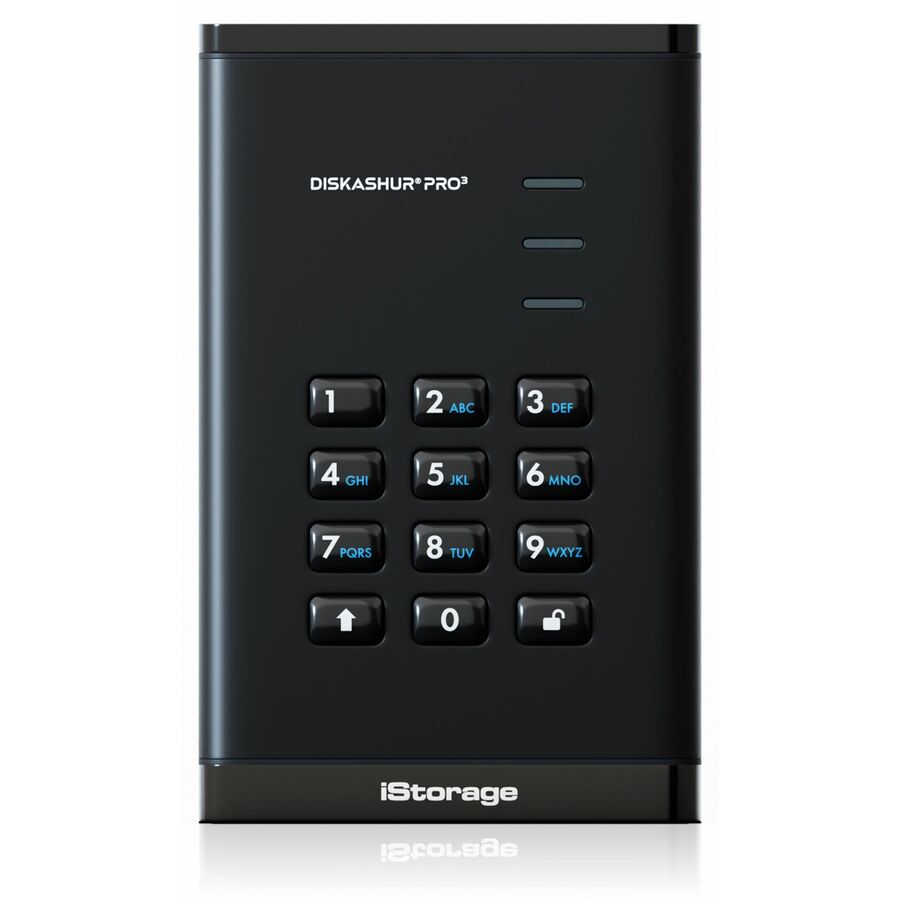
iStorage diskAshur PRO3 512 GB Portable Solid State Drive | FIPS 140-3…
IS-DAP3-256-SSD-512-F
A 512 GB PIN-protected portable SSD over USB-C for a working set too large for a flash drive.
The manufacturer's listing records FIPS 140-3 Level 3 as pending, not granted. Treat it as unvalidated until a certificate number exists.
$359.94*Back-orderedFrequently asked
- Is FIPS 140-3 still valid?
- Yes. FIPS 140-3 is the current standard for cryptographic module validation and CMVP has accepted submissions against it since 22 September 2020. It is FIPS 140-2 that is winding down: new 140-2 submissions stopped on April 1, 2022, acceptance for new systems ended on September 21, 2026, and the remaining 140-2 certificates sit on the Historical list.
- When did FIPS 140-3 come out?
- FIPS 140-3 was published on 22 March 2019. CMVP began accepting validation submissions against it on 22 September 2020, a year later, which is why certificates dated before then are all FIPS 140-2.
- What are the requirements for FIPS 140-3 compliant hardware?
- There is no such thing as compliant hardware in the abstract — a specific cryptographic module is validated at a specific security level, and the evidence is a certificate number in CMVP. Level 1 requires approved algorithms on production-grade equipment; higher levels add tamper evidence, tamper resistance with identity-based authentication, and finally environmental and side-channel protection. Decide the level your system needs, then search CMVP for a module that holds it.
- What is the difference between FIPS 140-2 and FIPS 140-3?
- FIPS 140-3 is the current standard and is aligned to the international standard ISO/IEC 19790, with test requirements from ISO/IEC 24759; FIPS 140-2 was the previous U.S.-specific standard. The four security levels carry over, but the documentation, self-test, and lifecycle requirements were reworked. Operationally the difference that matters to buyers is timing: CMVP has accepted FIPS 140-3 submissions since September 22, 2020 and stopped accepting new FIPS 140-2 submissions on April 1, 2022, so anything newly validated is validated to 140-3.
- Are FIPS 140-2 certificates still valid?
- For existing systems, yes; for new systems, no. CMVP accepted FIPS 140-2 validated modules from U.S. and Canadian federal agencies for protecting controlled unclassified information through September 21, 2026, and from September 22, 2026 it places them on the Historical list. Historical does not revoke a certificate or invalidate a deployed system — CMVP's guidance is to keep using an existing module until a FIPS 140-3 replacement is available — but Historical-list modules should not be specified into new procurements or new systems. Confirm the current status of any specific module on the CMVP listing.
- How do I check whether a product is FIPS 140-3 validated?
- Use the validated modules search in the Cryptographic Module Validation Program on csrc.nist.gov. Search by certificate number, or by module and vendor name, then confirm four things: that the module version matches the release you will deploy, whether the certificate is against 140-2 or 140-3, the security level, and whether the status is Active or Historical. Then read the published security policy for the cryptographic boundary and the configuration required to operate in the approved mode. A vendor datasheet is not verification; the CMVP entry is.
- Which FIPS 140-3 security level do I need?
- That is set by your system's requirements, not by the product catalog. Most federal requirements are written to Level 1 or Level 2 — Level 1 for approved algorithms in production-grade equipment, Level 2 where tamper evidence and role-based authentication are needed. Level 3, which adds tamper response with automatic key zeroization and identity-based authentication, is the usual bar where key compromise would be severe, and is typical of hardware security modules. Level 4 is rare and specialized. Specifying above your actual requirement sharply narrows the products available to you.
- Does FIPS 140-3 validation mean a product is TAA compliant?
- No. They answer unrelated questions. FIPS validation is about a cryptographic module's tested conformance to a security standard. The Trade Agreements Act asks where an end product was manufactured or substantially transformed, and Section 889 of the FY2019 NDAA asks whether the equipment comes from specific named covered entities and applies at every dollar value. A module can hold a current FIPS 140-3 certificate and still fail either origin or covered-entity screening, so treat all three as independent checks on a line item.
- Why does a current product sometimes have no FIPS 140-3 certificate?
- Validation is a laboratory-and-review process with real lead time, and queues under FIPS 140-3 have generally run longer than they did under 140-2. A shipping, well-regarded product may therefore hold only a FIPS 140-2 certificate, or have a 140-3 submission in progress, while newer firmware releases wait their turn behind the version that was tested. Ask the manufacturer for the certificate number covering the exact version you would deploy and, where none exists yet, for the submission status — then decide deliberately rather than assuming.
- Do I have to turn FIPS mode on?
- Usually, yes. Many products are only operating inside the boundary described by their certificate when FIPS mode is explicitly enabled, which typically disables non-approved algorithms and older protocol versions and can affect interoperability with legacy systems. The module's published security policy states the approved mode of operation and what configuration it requires. Making FIPS mode part of the documented build configuration — and verifying it at delivery — is what turns a validated module into a validated deployment.
Sources
- 1.FIPS 140-3 — Security Requirements for Cryptographic Modules (NIST)csrc.nist.gov
- 2.NIST Cryptographic Module Validation Programcsrc.nist.gov
- 3.CMVP validated modules searchcsrc.nist.gov
Keep reading