
Best Industrial and DIN-Rail Ethernet Switches
Cabinet and plant-floor switching — DIN-rail or panel mount, wide operating temperature, DC terminal-block power and IP30 housings instead of a desktop box and a wall wart.
Industrial Ethernet switches in stock at Uniqcli
How to choose →A curated selection with live pricing — in-stock lines first, then back-ordered lines with a typical lead time. Every line is sourced through US distribution and screened for NDAA §889 status before checkout, with TAA verified on request.
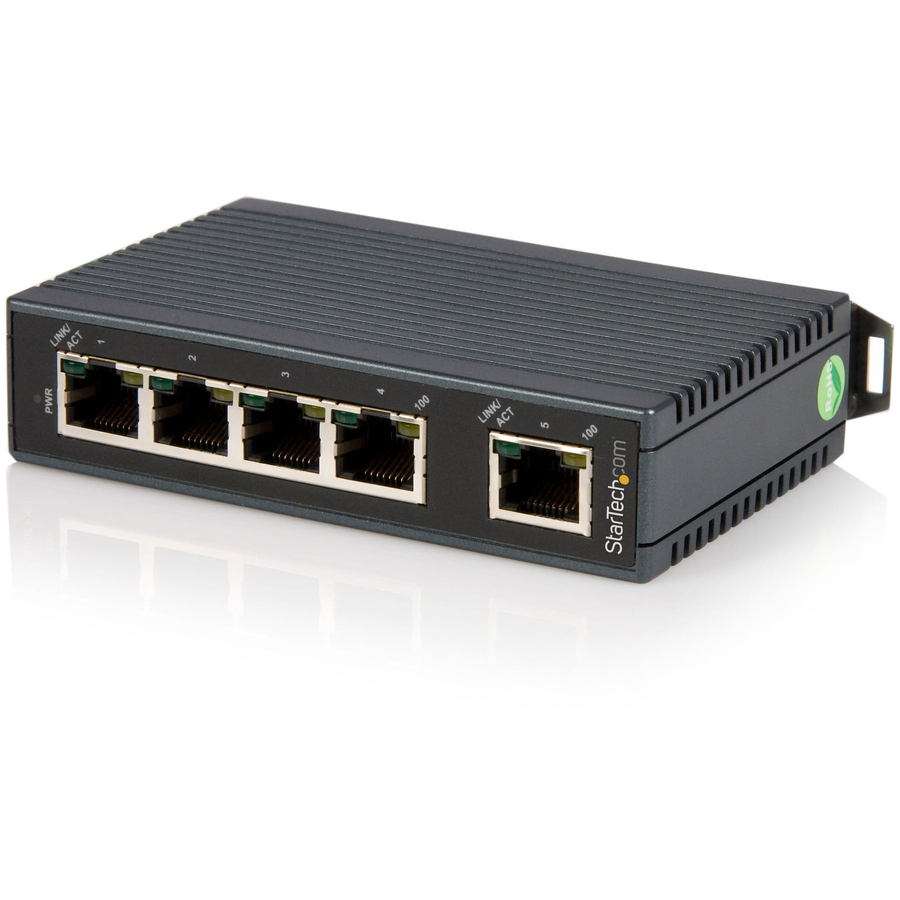
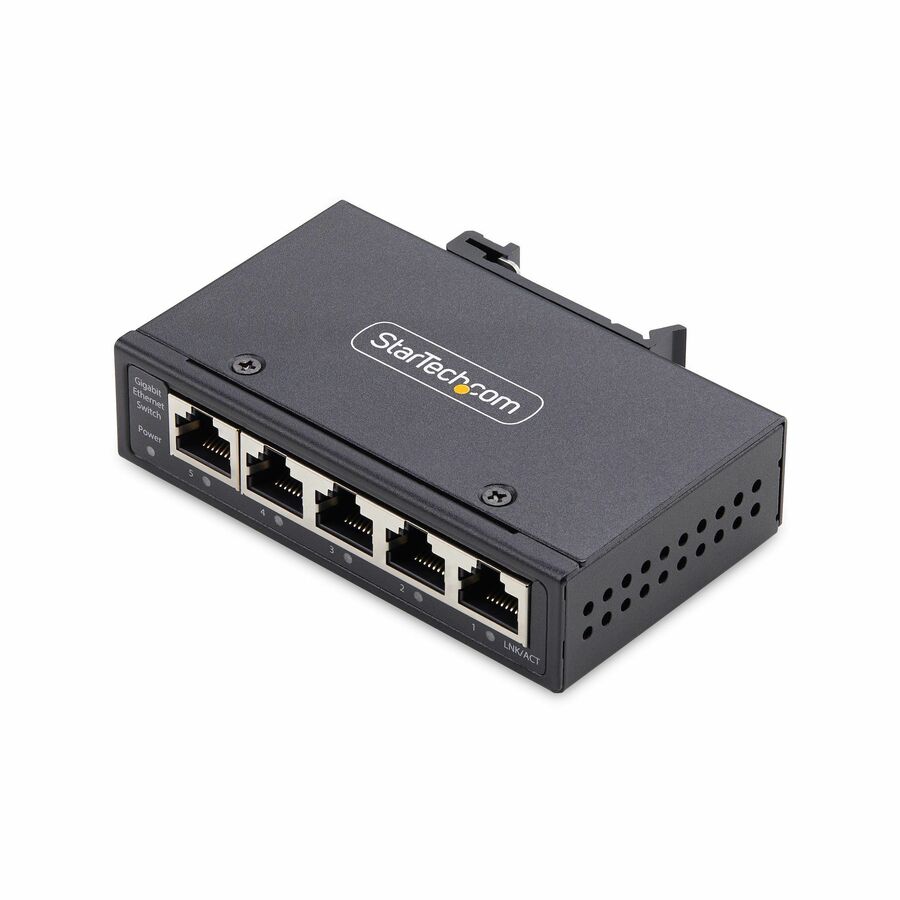
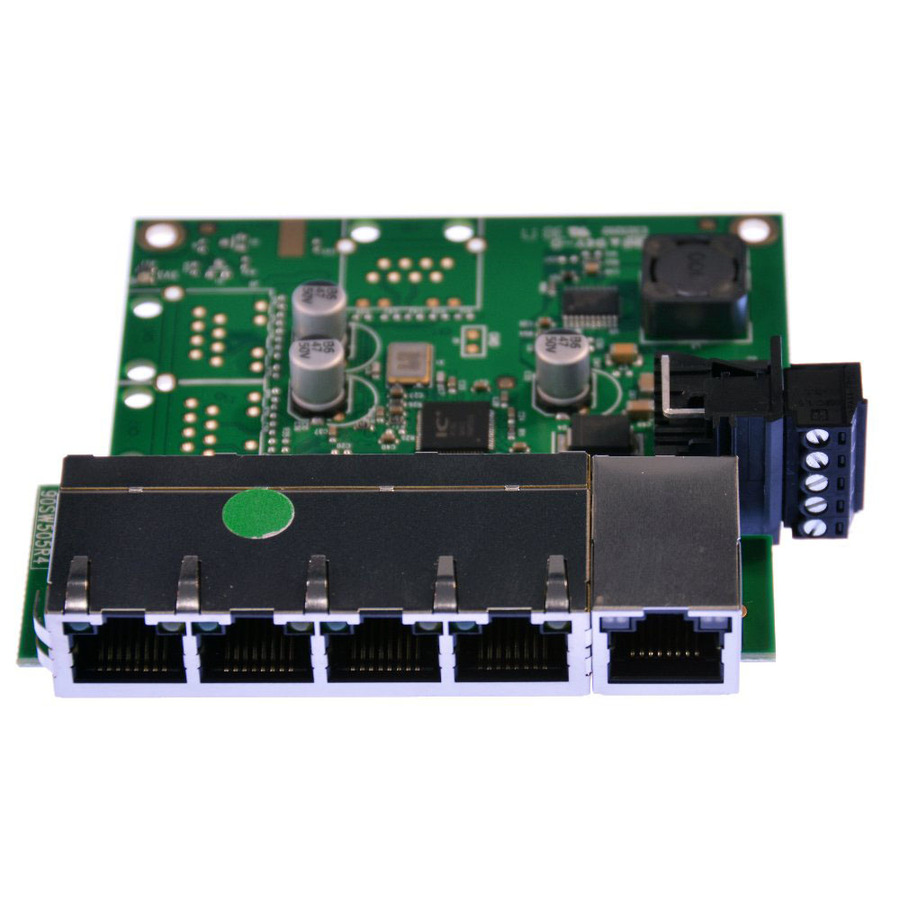
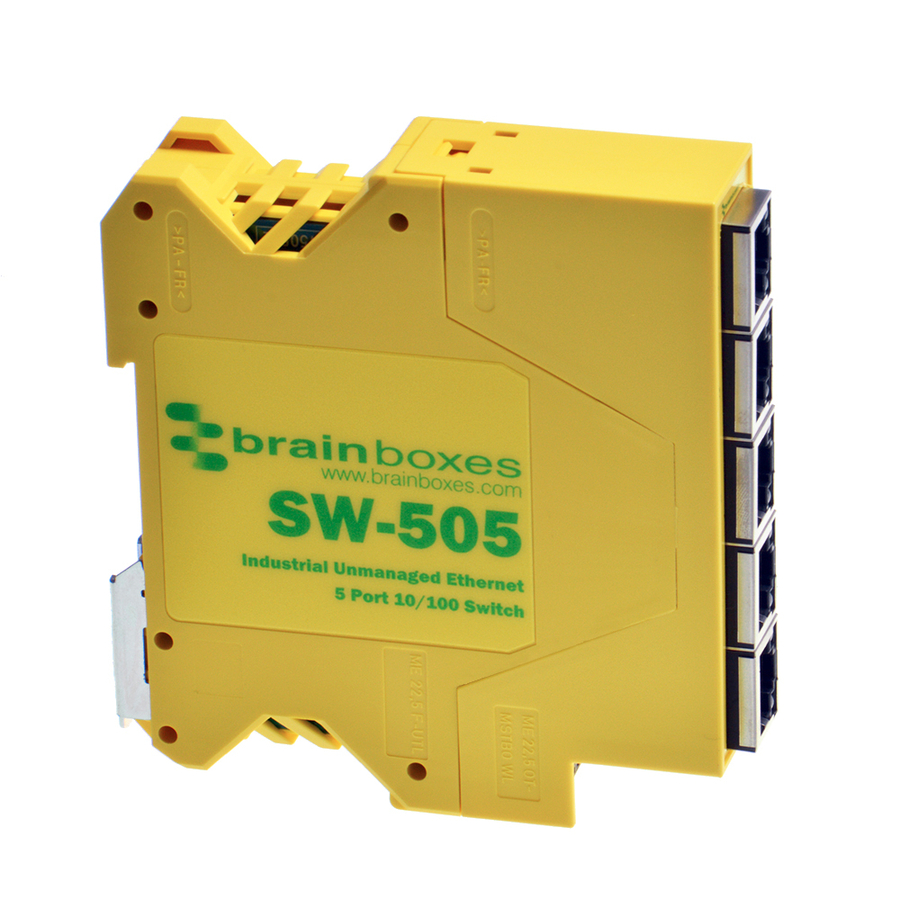
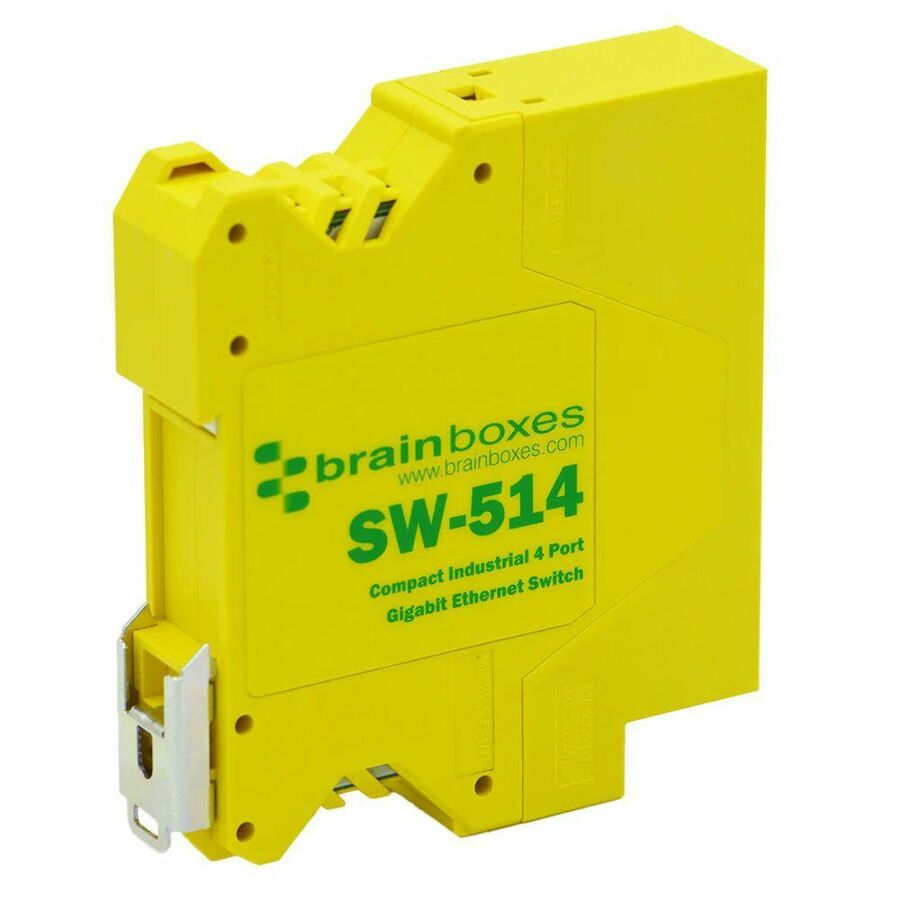
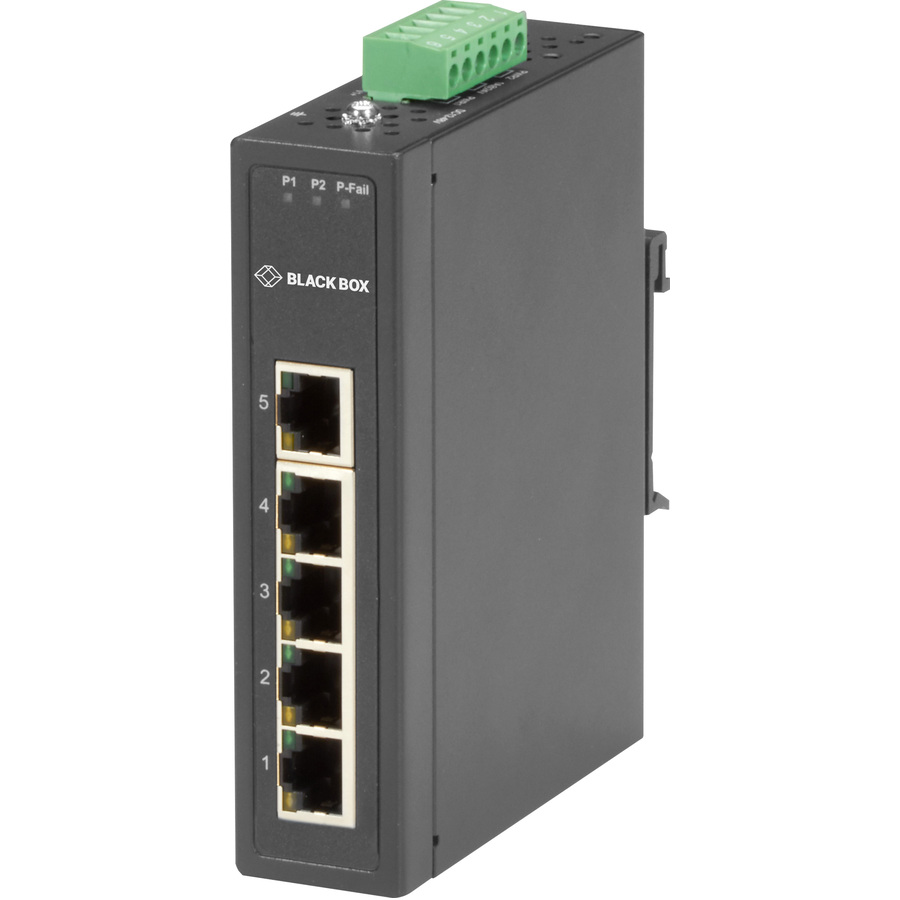
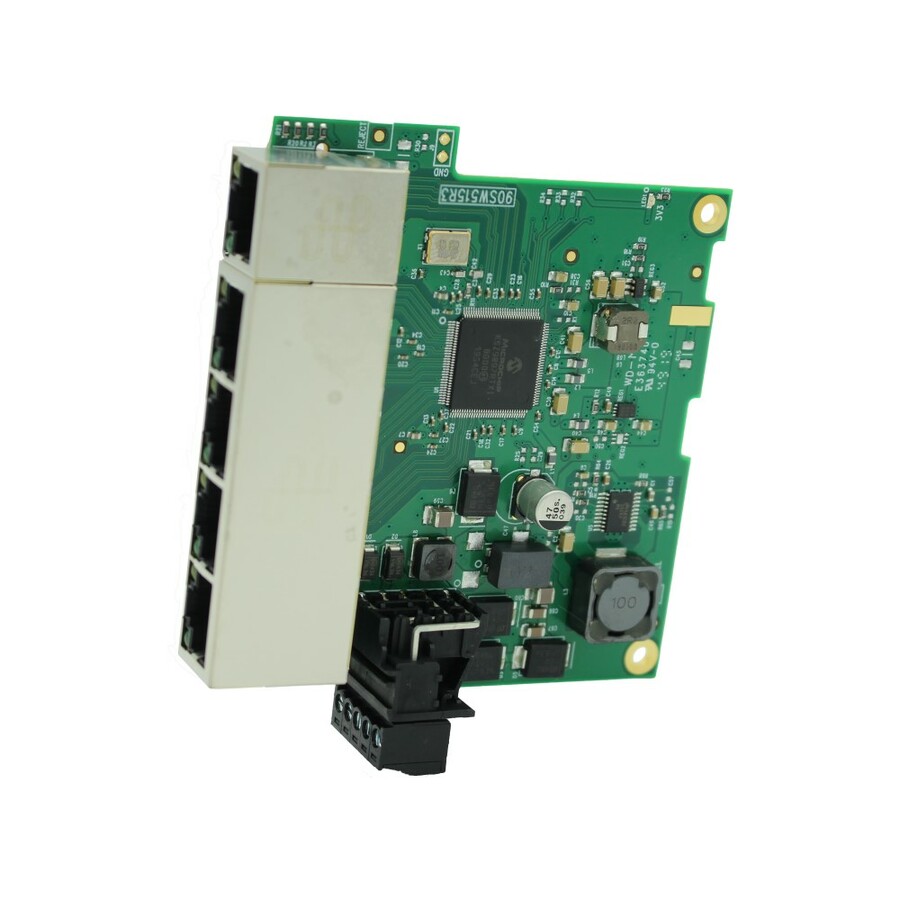
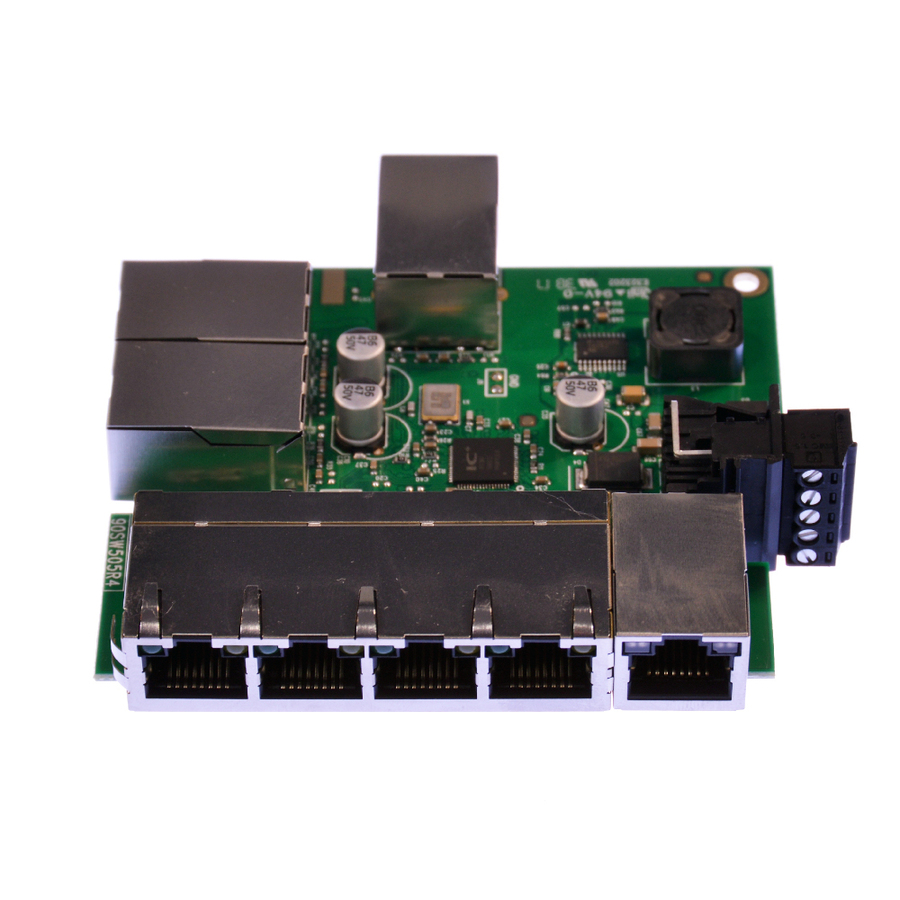
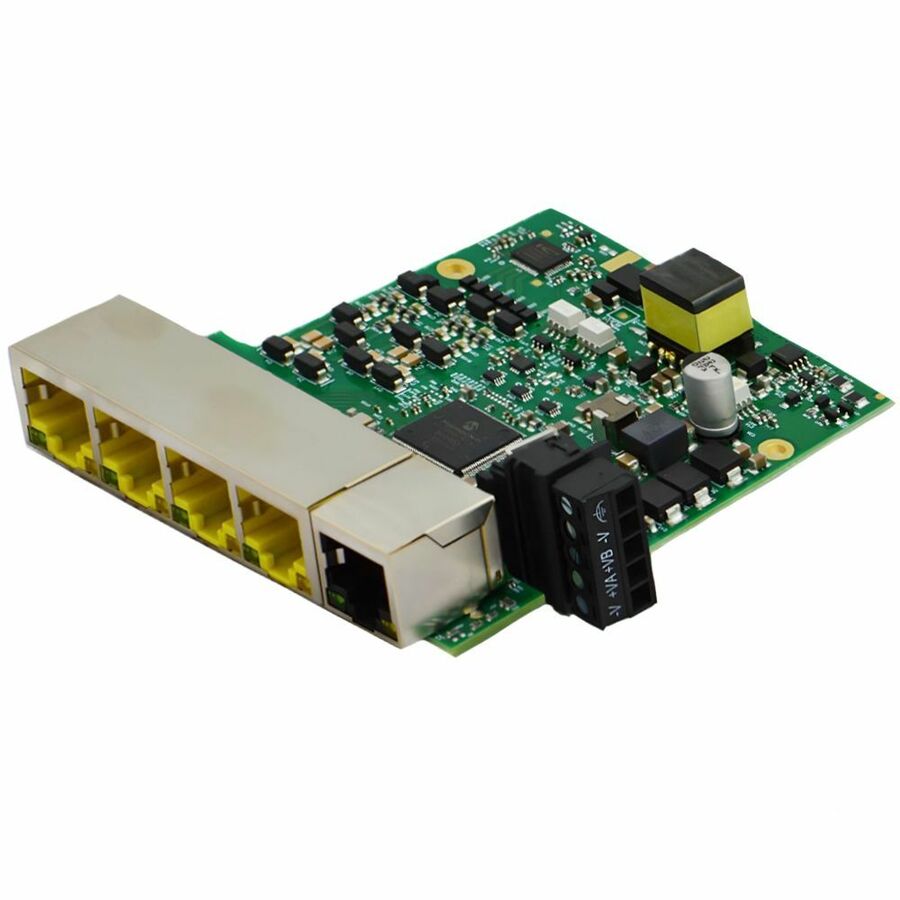
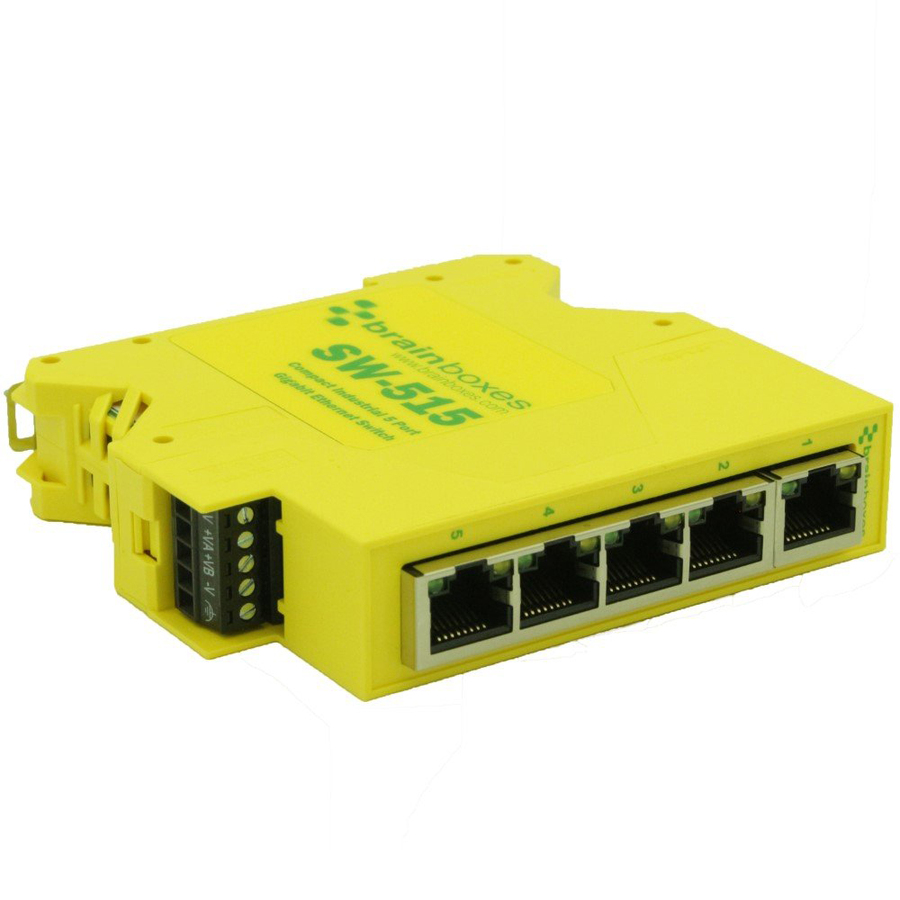
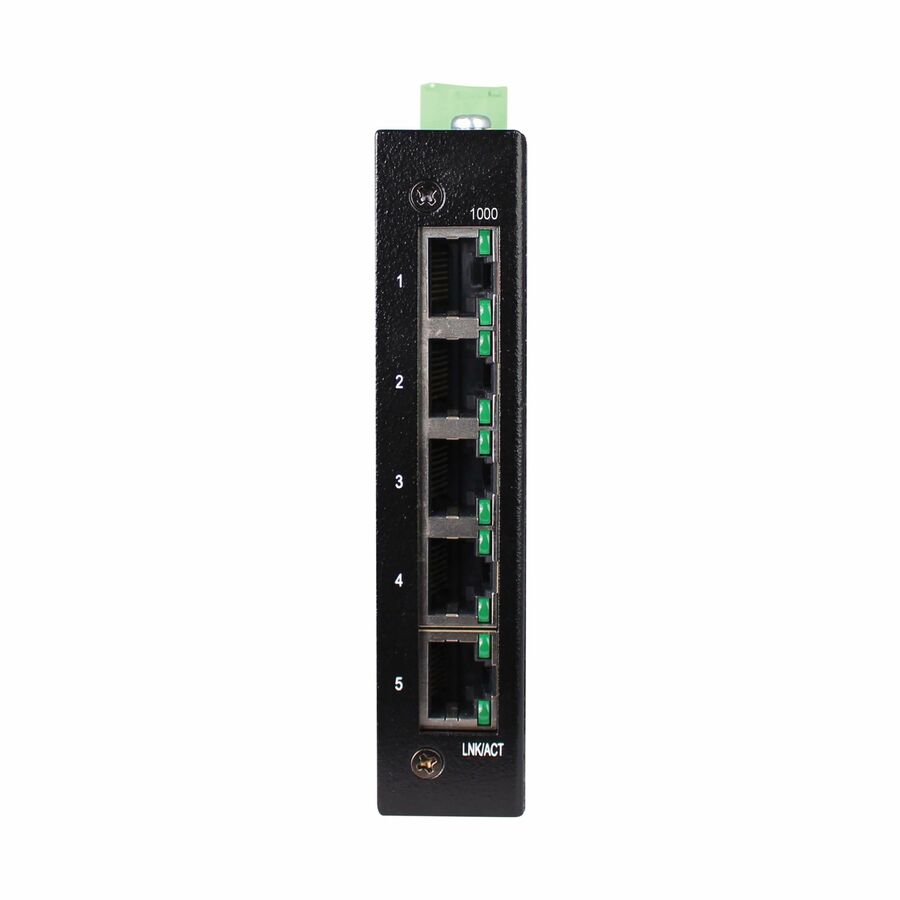
- StarTech.comStarTech 5-Port Unmanaged Industrial Network Switch, 10/100/1000 Ethernet, DIN Rail/Wall-Mount, IP30 Rated, -40F-167F, 9~60V DC, TAA - Expand your network connectivity with simple plug-and-play setup; 5x 10/100/1000Mbps; 9-60V DC; Auto-negotiates speed; OCP; Rugged metal; Operating temp: -40°F-167°F; 9K Jumbo Frames; Front-facing LEDs; Mounting kits included; TAAI51G-ETHERNET-SWITCH
$98.39
$90.52*
154 in stock



Top pick
StarTech.com
StarTech 5-Port Unmanaged Industrial Network Switch, 10/100/1000…
I51G-ETHERNET-SWITCH
Five gigabit ports in an IP30 metal housing rated -40°F to 167°F, taking 9 to 60 V DC on a terminal block, with DIN-rail and wall mounting kits in the box and 9K jumbo frames supported. Gigabit is the reason it leads: a 10/100 switch is a permanent ceiling on every device behind it, and this is the class of unit that removes that ceiling without leaving the hardened tier.
Our catalog data records this part number as TAA compliant. We confirm that screening against this exact part number on the quote rather than restating it as a Uniqcli certification.
$90.52*In stockFast Ethernet cabinets
StarTech.com
StarTech 5 Port Industrial Ethernet Switch, DIN Rail Mountable, TAA
IES5102
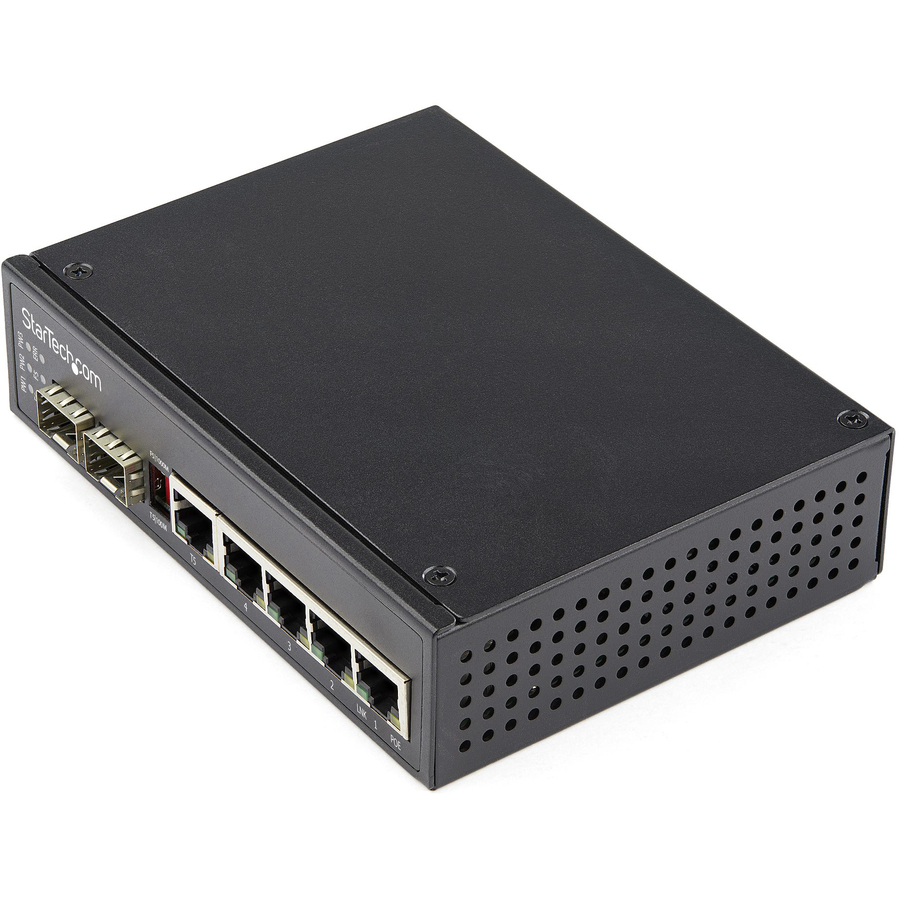
A five-port 10/100 unit with a built-in DIN-rail bracket, a wide-range 12 to 48 V DC terminal block, an IP30 rating and a wider operating temperature than office hardware — the honest specification for a cabinet whose endpoints are serial gateways, I/O blocks and sensors that will never exceed 100 Mbps.
Fast Ethernet is a hard ceiling on the whole segment. If any device in that cabinet is gigabit now or at the next refresh, take the gigabit model instead.
$89.57*In stockEtherNet/IP cells
Eaton
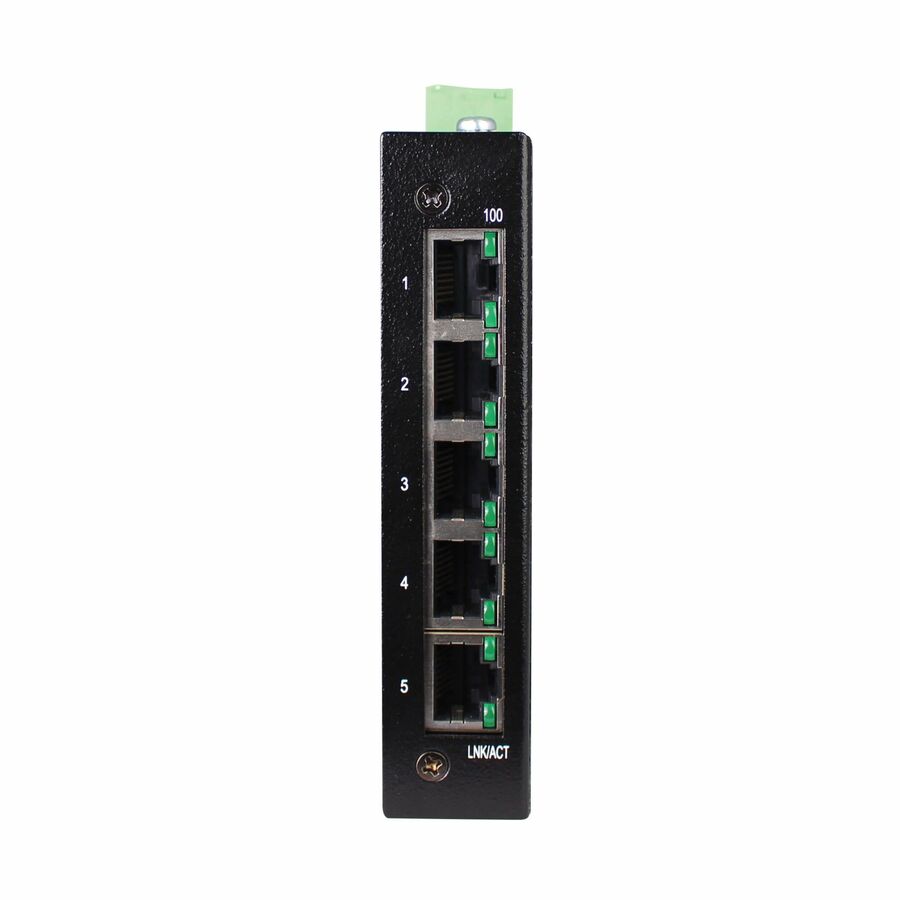
Eaton Tripp Lite Series 5-Port Unmanaged Industrial Ethernet Switch
NFIU05A
A compact five-port ruggedized unit rated -40 to 75 °C with EtherNet/IP QoS, DIN-rail and wall mounting, and a 3 W draw that will not trouble a panel supply. The QoS handling is the differentiator for an automation cell: control traffic keeps its priority when the same segment is also carrying file transfers or a camera stream.
Our catalog data records this part number as TAA compliant, confirmed against the part number on the quote.
$174.36*In stockPoE+ for cameras
StarTech.com
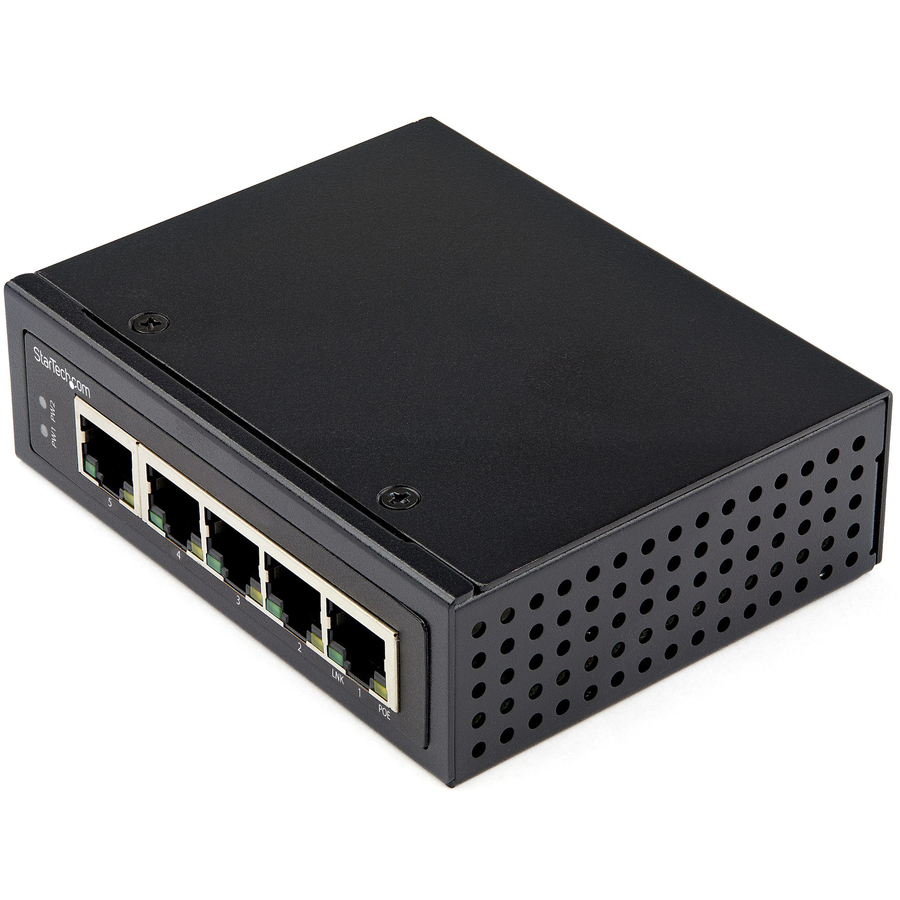
StarTech Industrial 5 Port Gigabit PoE Switch 30W, Power Over Ethernet…
IESC1G50UP
Five gigabit ports delivering PoE+ at up to 30 W per port, with redundant power inputs, an alarm relay contact and an industrial -40 to 75 °C rating in an IP30 case. This is the unit for a cabinet that also feeds cameras or outdoor access points — check the total power budget against the sum of the device wattages, because the budget runs out before the ports do.
$244.22In stockMore switches and bridges in the Uniqcli catalog
See all 6,646 switches and bridgesMore from across this category. In-stock lines lead, and a back-ordered line carries the same estimated availability its product page does — with live pricing throughout, NDAA §889 screening before checkout and TAA verified on request.
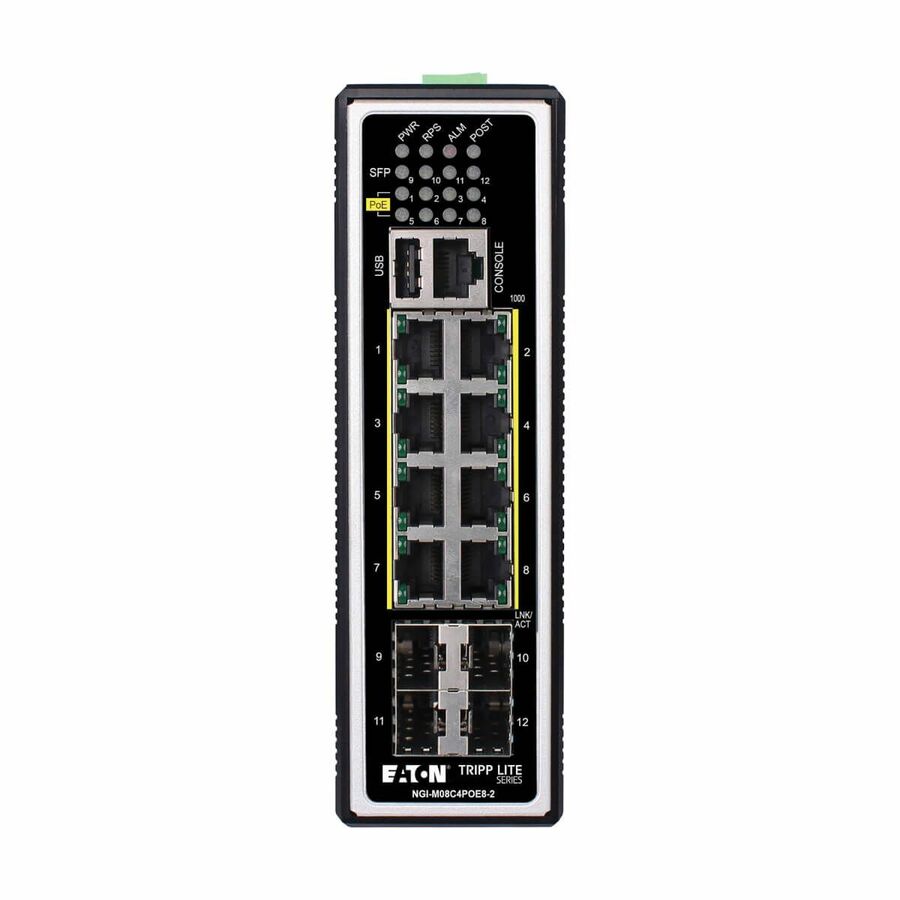
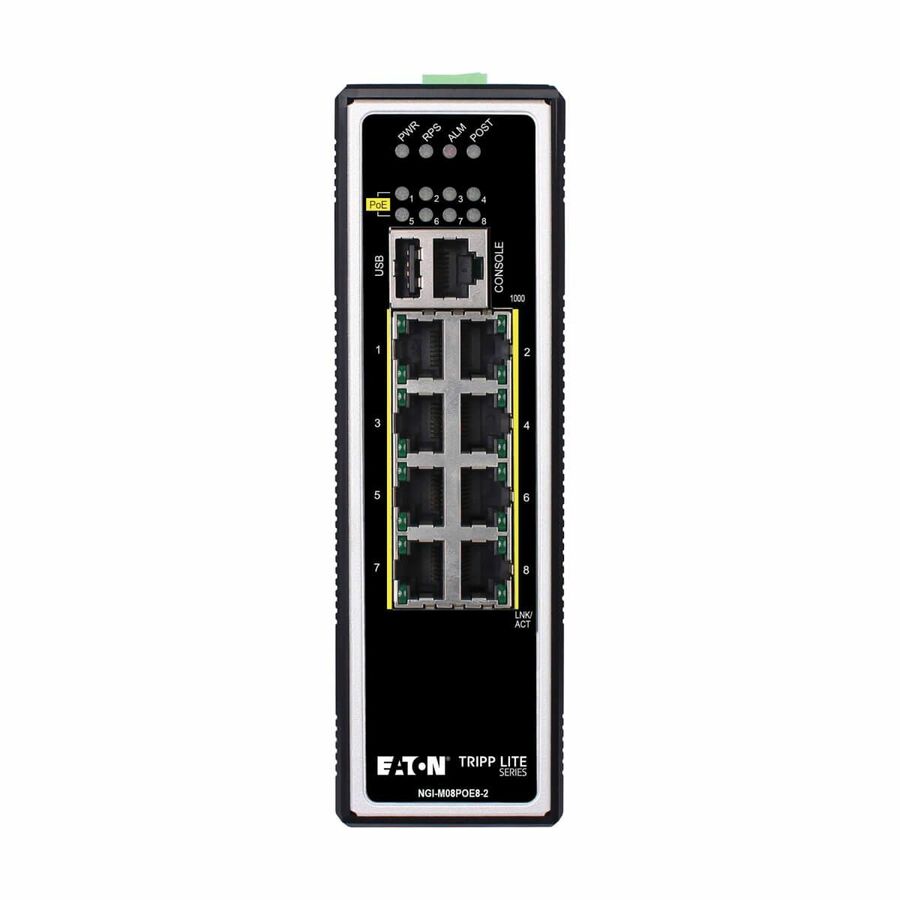
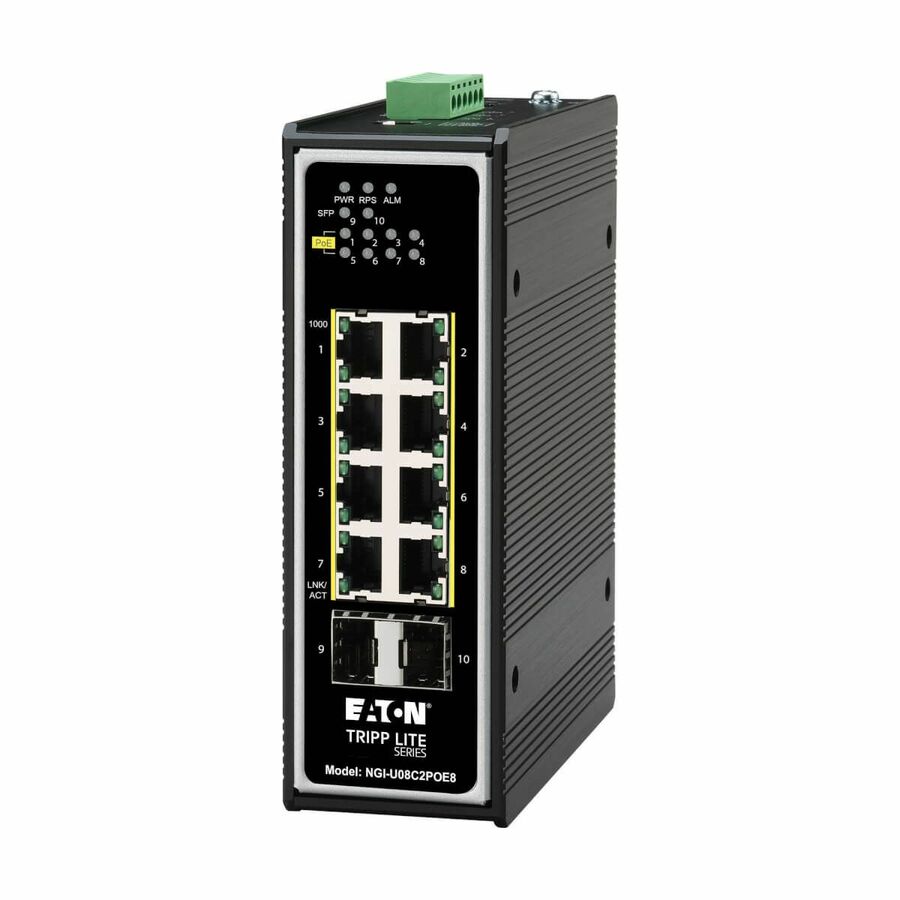
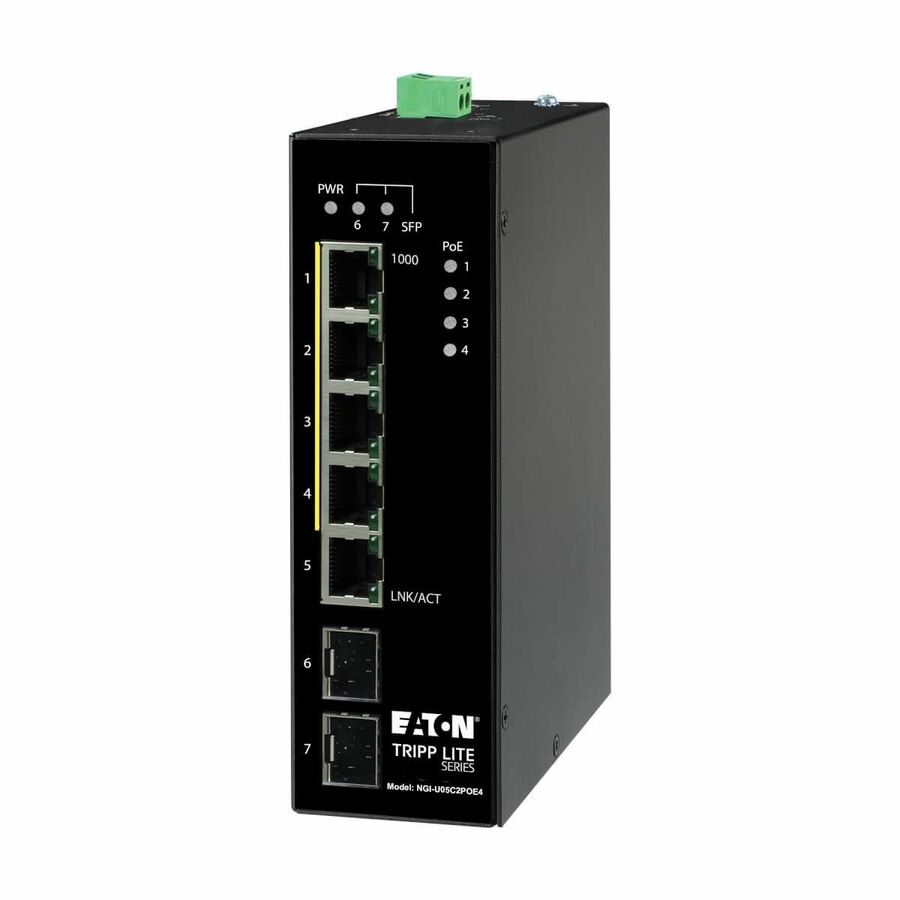
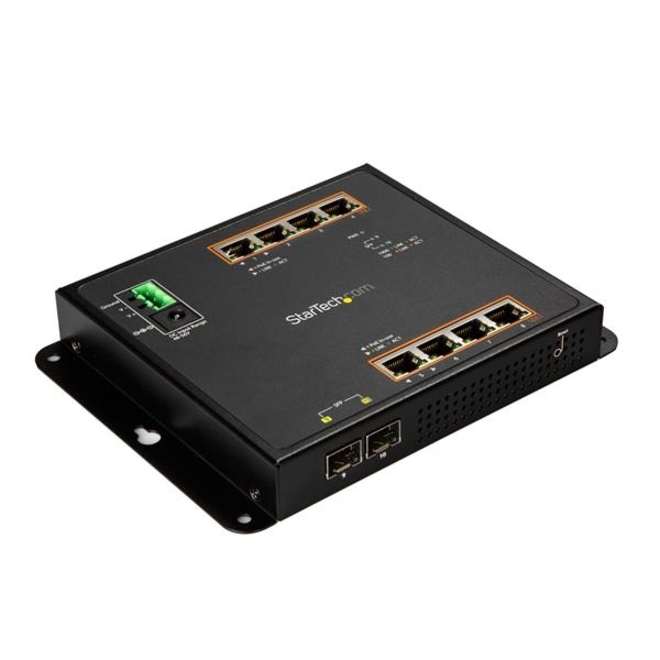
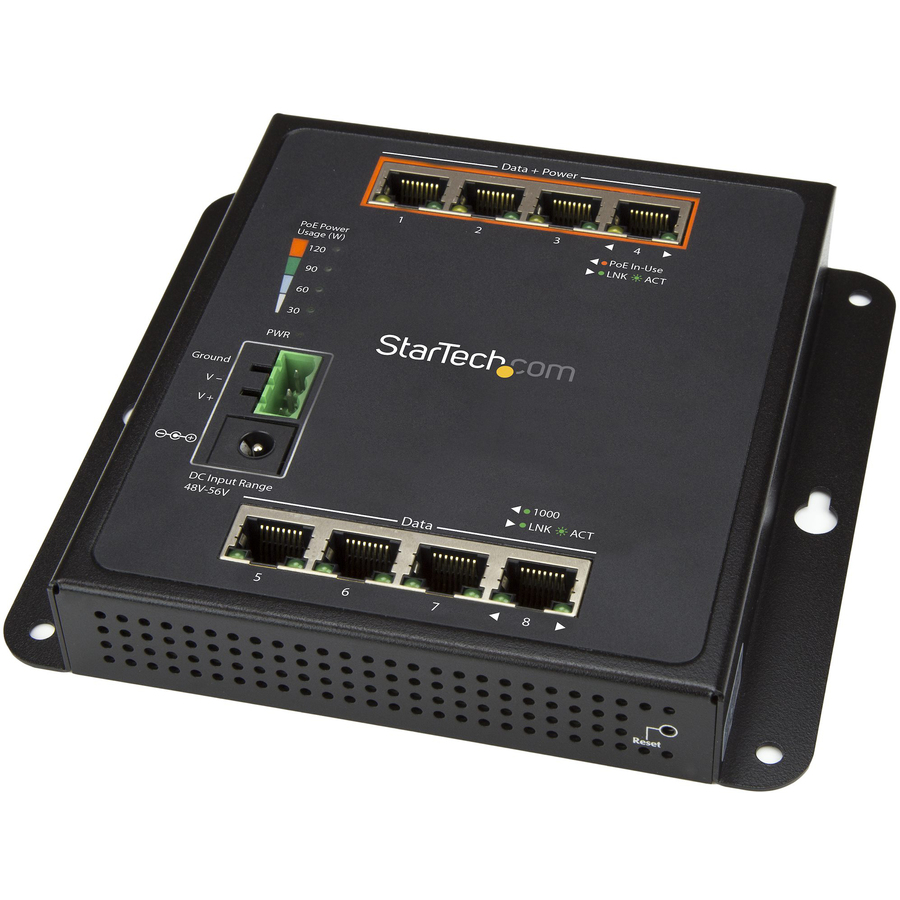
- EatonTripp Lite by Eaton 8-Port Managed Industrial Gigabit Ethernet Switch - Layer 2, 1 Gbps, PoE+ 30W, -40° to 75°C, DIN Mount - 8 Ports - Manageable - Gigabit Ethernet - 10/100/1000Base-T - TAA Compliant - 2 Layer Supported - 240 W PoE Budget - Twisted Pair - PoE Ports - DIN Rail Mountable - 3 Year Limited WarrantyNGI-M08POE8-L2
$1,351.36
$1,243.25*
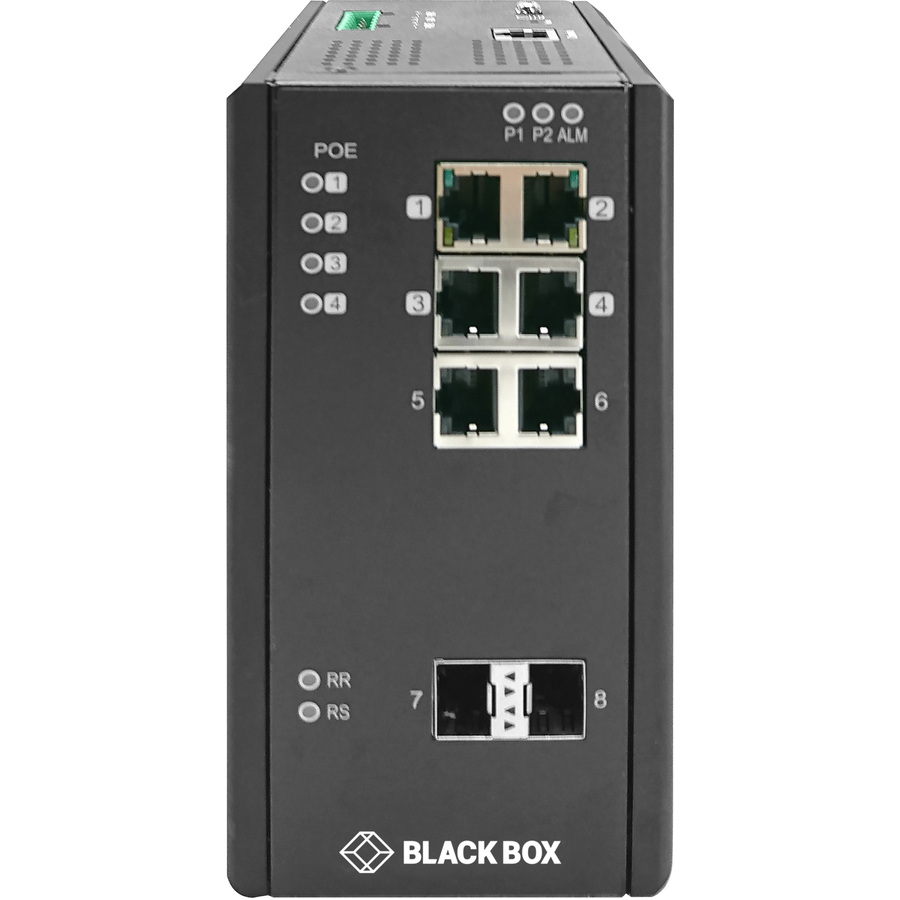
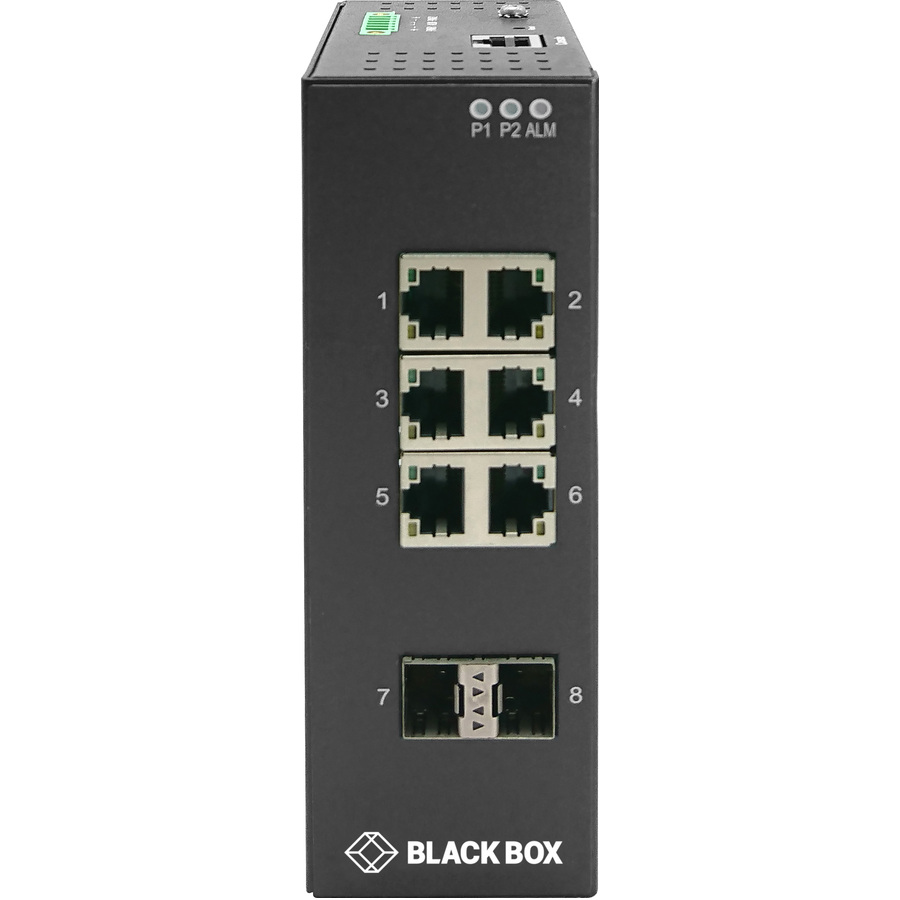
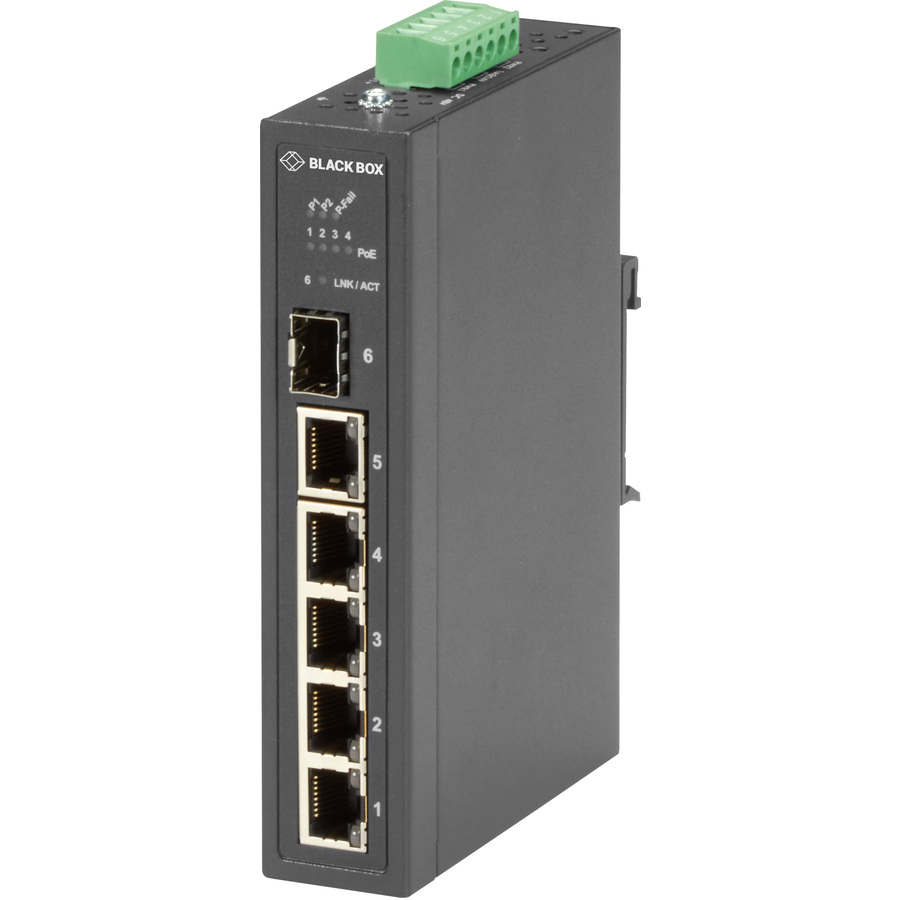
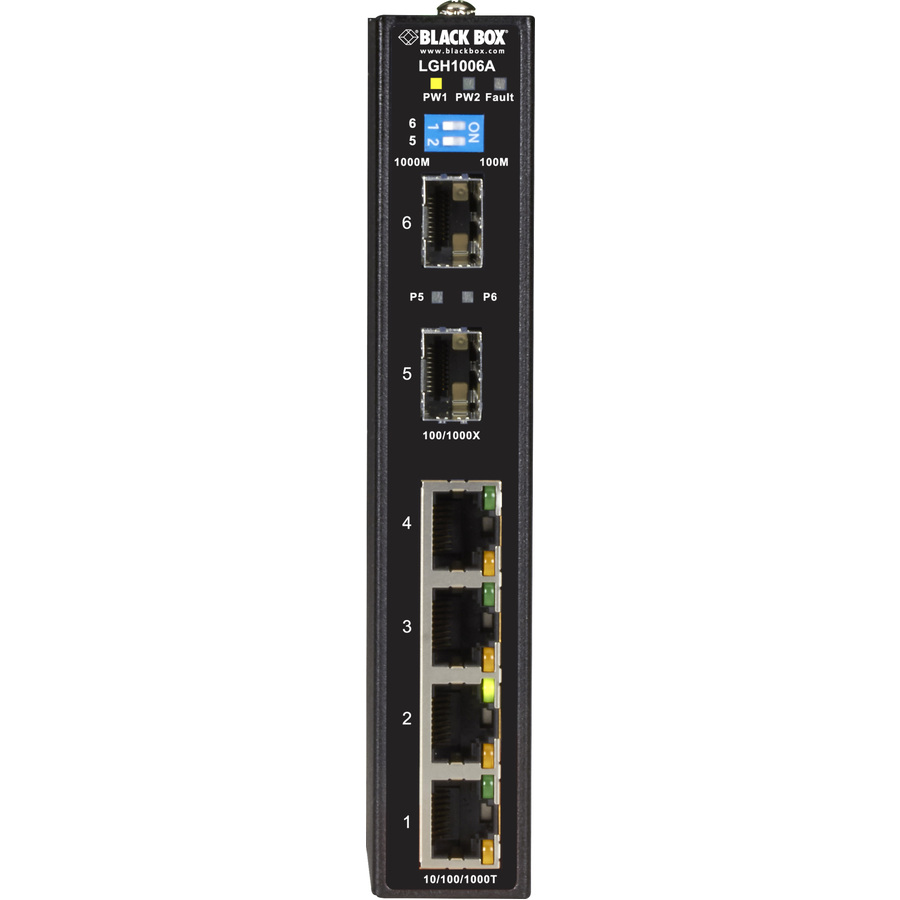
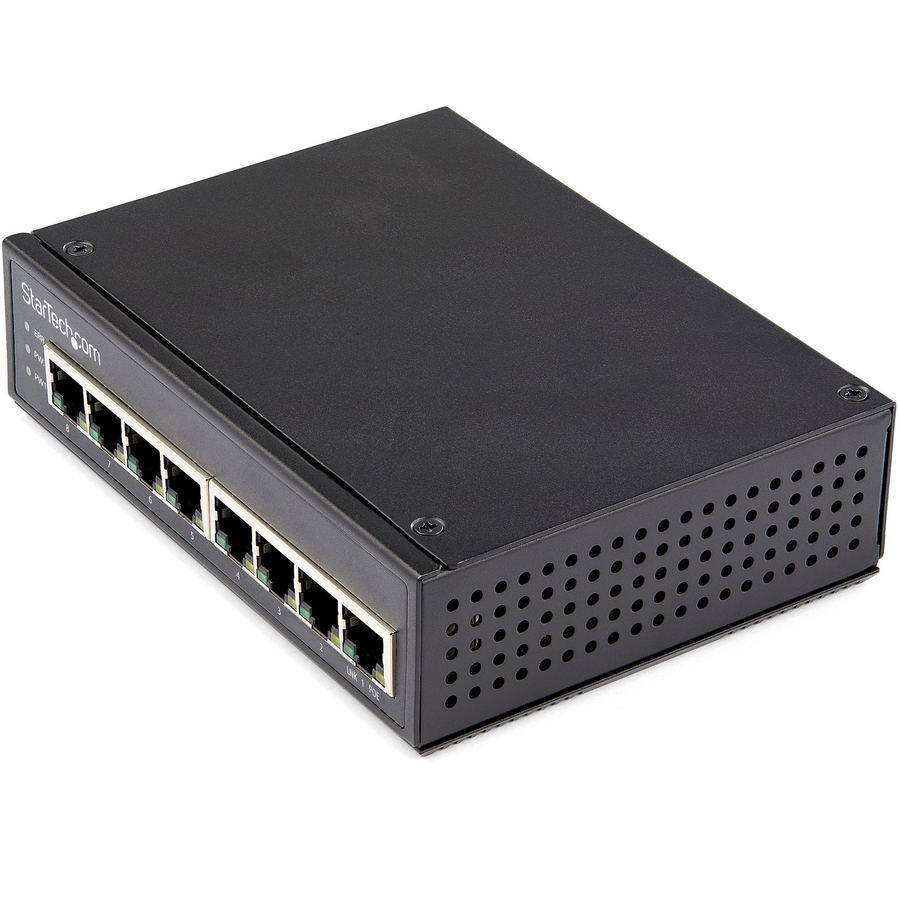
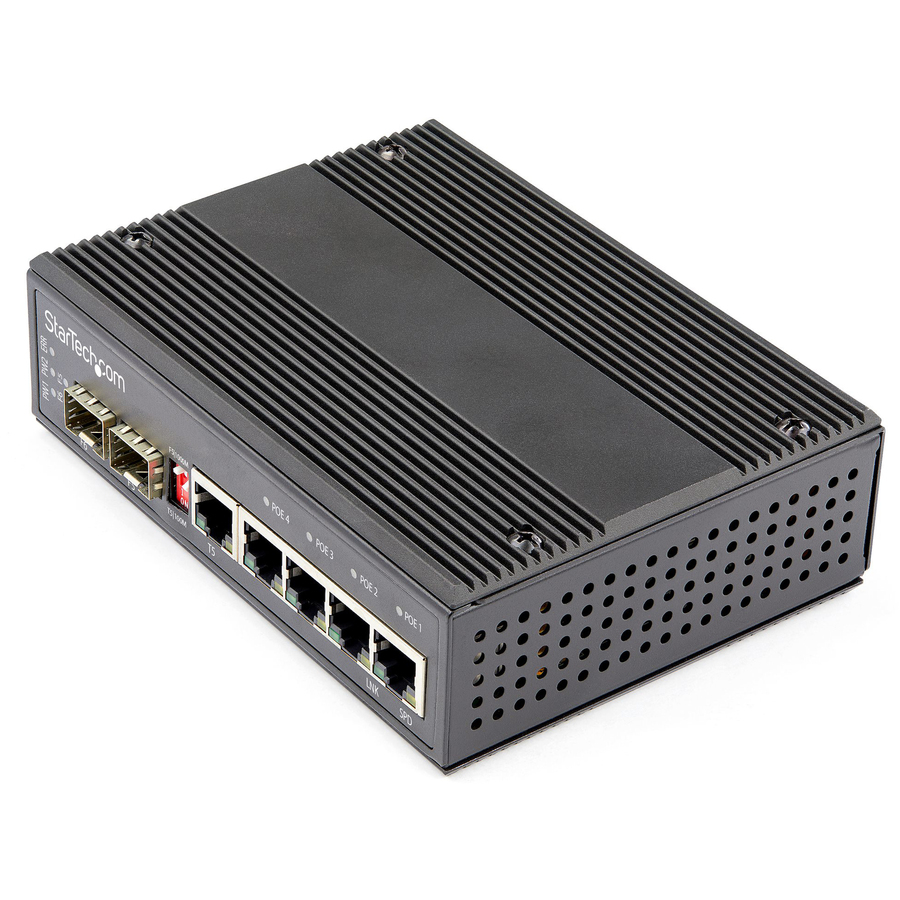
52 in stock - Black BoxBlack Box Industrial Ethernet PoE+ Switch - Unmanaged, Extreme Temperature, 6-Port - 5 Ports - Fast Ethernet - 10/100/1000Base-T - 2 Layer Supported - Modular - 1 SFP Slots - Twisted Pair, Optical Fiber - Wall Mountable, DIN Rail Mountable, Panel-mountable - 1 Year Limited WarrantyLPH3061A
$416.40
$355.51
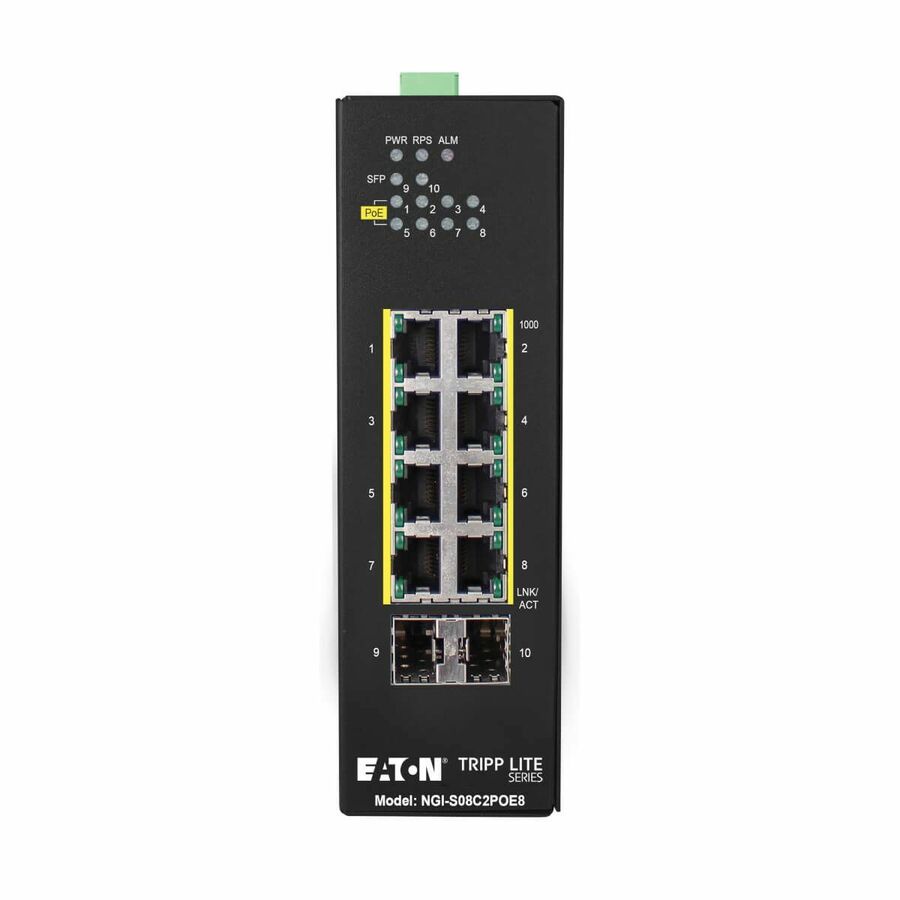
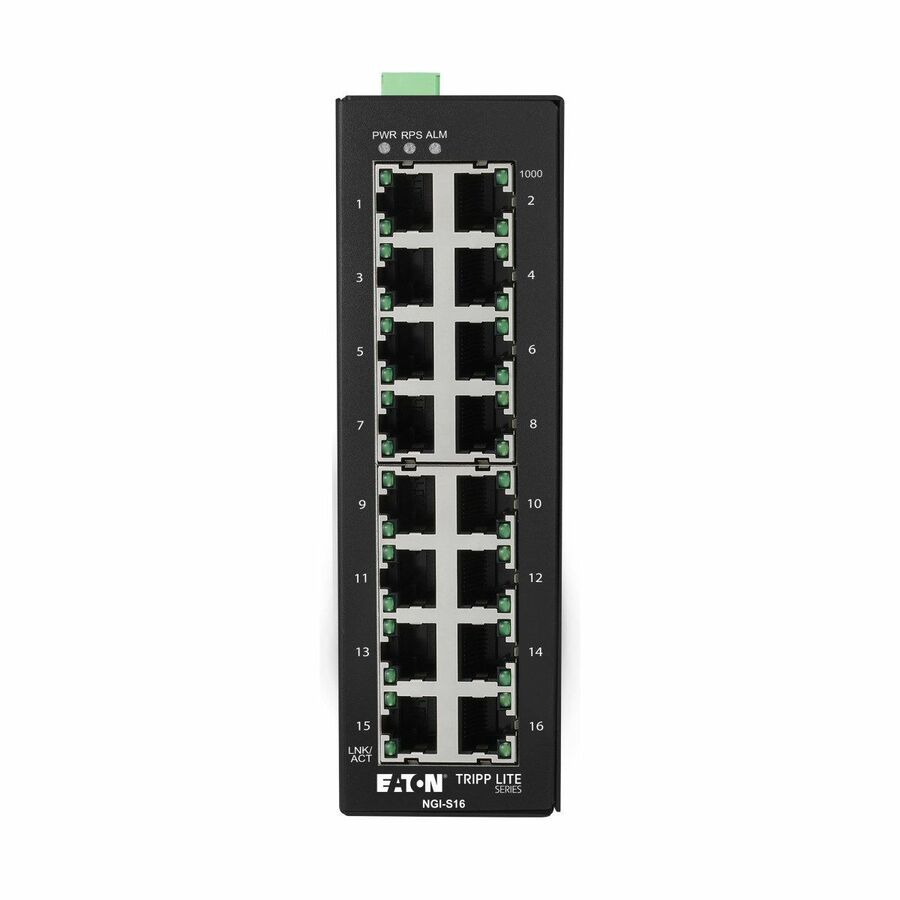
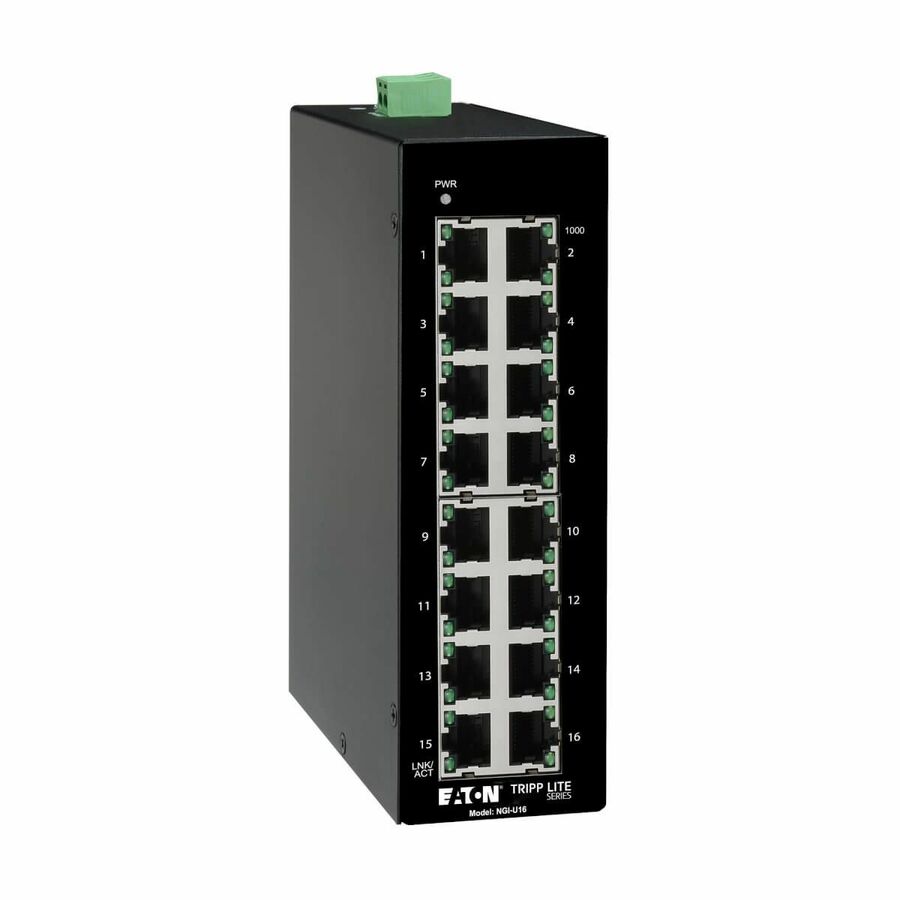
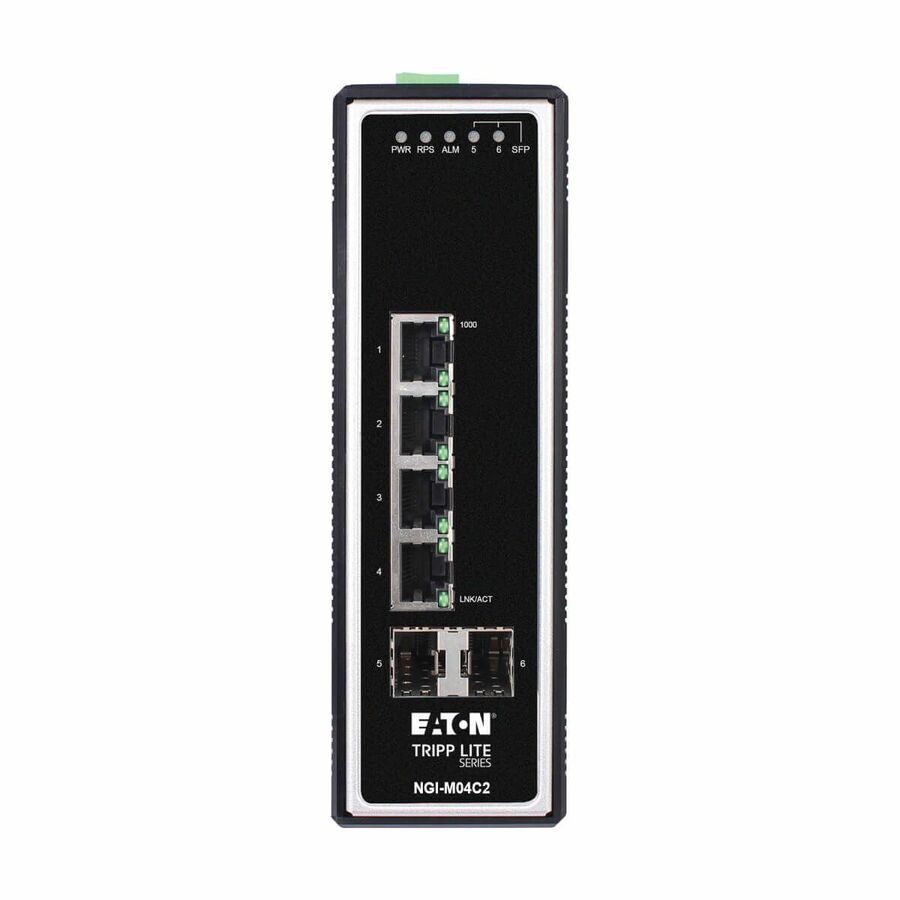
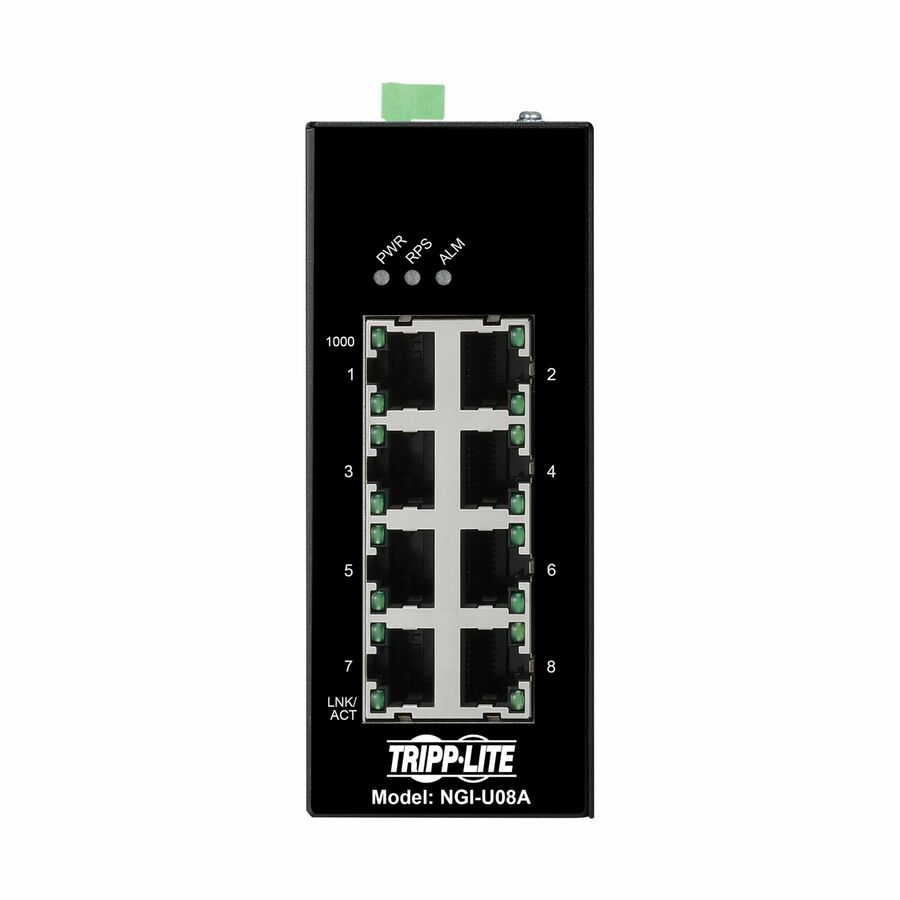
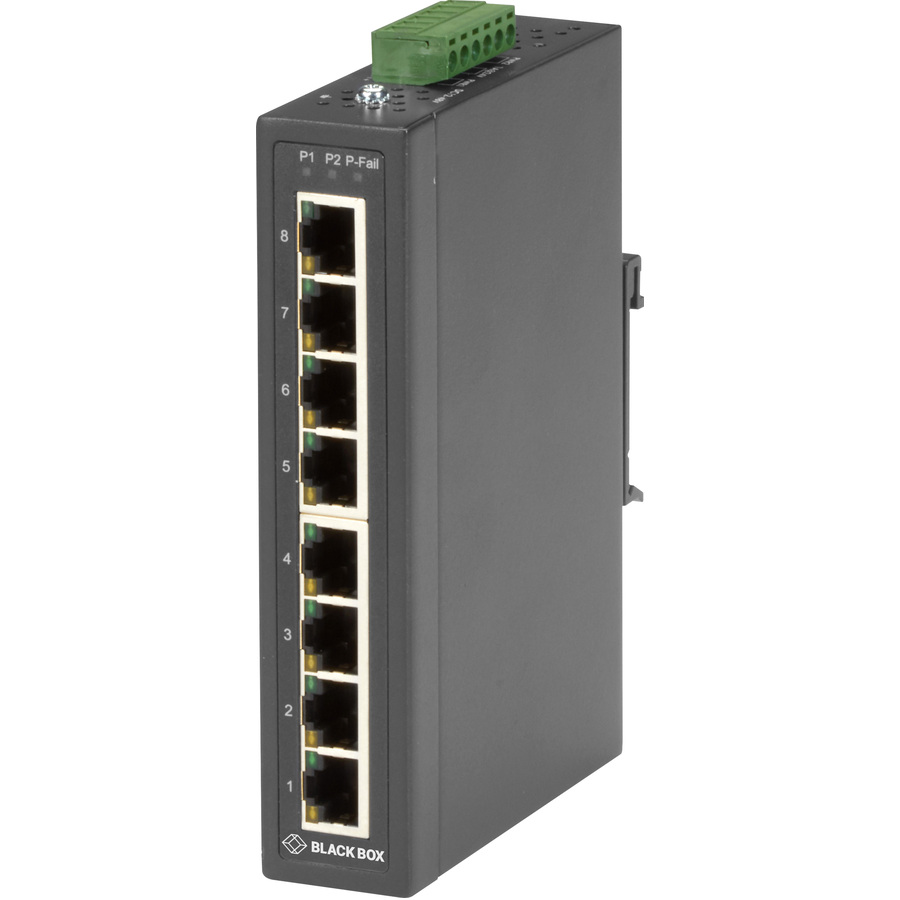
48 in stock - EatonTripp Lite by Eaton 16-Port Unmanaged Industrial Gigabit Ethernet Switch - 10/100/1000 Mbps DIN Mount - 16 Ports - Gigabit Ethernet - 10/100/1000Base-T - TAA Compliant - 2 Layer Supported - 16 W Power Consumption - Twisted Pair - DIN Rail Mountable - 3 Year Limited WarrantyNGI-U16
$687.01
$632.05*
737 in stock

Need pricing on industrial Ethernet switches?
Tell us where to reach you and a Uniqcli specialist will follow up by email with current pricing, availability and lead time for the quantities you need — including parts that aren’t shown on this page.
Buying for an organization or for yourself — both work. No payment up front.
What makes a switch industrial is not the port count. It is DC power on a terminal block — 9 to 60 V and 12 to 48 V inputs are both common here, often redundant — a wide operating range around -40 to 75 °C, DIN-rail or panel mounting, and a fanless IP30 metal housing. After that, decide managed or unmanaged by whether anybody will actually administer it.
What makes a switch industrial is not the port count, and it is rarely the throughput. It is the four things a desktop switch gets wrong the moment it leaves a climate-controlled room: power, temperature, mounting and ingress. Industrial models take DC on a terminal block — the units here accept ranges such as 9 to 60 V and 12 to 48 V, often on redundant inputs, so the switch feeds off the same supply as everything else in the cabinet instead of needing an outlet and an adapter that will eventually be knocked out. They are rated across wide operating ranges, commonly around -40 to 75 °C, they clip to a DIN rail or bolt to a panel, and they come in sealed metal IP30 housings that survive dust and incidental contact. They are also fanless, which removes the part most likely to fail in a dirty environment.
The second decision is managed versus unmanaged, and the honest test is whether anybody will actually administer the thing. The entry tier of this catalog is unmanaged — compact four-, five- and eight-port units that plug in and forward, which is the correct answer for a handful of sensors, a serial gateway and a panel HMI in one cabinet. Managed models step up to VLANs, QoS, port security, diagnostics, ring redundancy protocols that heal a broken loop in milliseconds, and awareness of industrial protocols such as EtherNet/IP. That capability is real, but it is only worth buying where somebody owns the configuration, the backups and the alerts; an unconfigured managed switch is an unmanaged switch with a larger attack surface and a bigger invoice.
Third, count the power and the distance. PoE and PoE+ models push power out to the cameras, access points and sensor gateways hanging off the cabinet, and the budget is what runs out first — a switch with several PoE ports rarely powers all of them at full draw simultaneously, so add up the device wattages before you pick the port count. Distance is the other constraint, because the run from an outbuilding or a plant floor back to the control room usually exceeds the 100 m copper limit and wants a fiber uplink, either through an SFP slot on the switch itself or a hardened media converter at each end. Uniqcli quotes the whole assembly on one order — switches, optics, PoE injectors, the management or monitoring software licensing where a managed estate needs it, and the installation and lifecycle services to commission and support it.
Buyer's checklist
How to choose an industrial Ethernet switch
- Start from the power in the cabinet: confirm the DC input range the switch accepts (9–60 V and 12–48 V terminal blocks are both common here) and whether you need dual inputs so a single supply failure does not take the segment down.
- Match the operating temperature to the worst case, not the average — a switch in an unheated enclosure or a hot roof space wants the -40 to 75 °C class rather than an office-rated range.
- Check the mounting and the housing: DIN rail, wall or panel, and an IP30-rated metal case for dust and incidental contact. Fanless is the norm in this class and is a reliability feature, not a cost saving.
- Size the ports for the link speed, not just the count. A 10/100 switch is a hard ceiling on everything attached to it, so if any endpoint is gigabit today — or will be at the next refresh — buy the gigabit model now.
- If you are powering devices, add up their wattage before choosing a PoE switch. Ports and power budget are different numbers, and it is the budget that runs out when every camera draws at once.
- Decide managed or unmanaged honestly. Buy managed for VLAN segmentation, ring redundancy, industrial-protocol QoS or diagnostics you will genuinely use; buy unmanaged where nobody will ever log in.
- Plan the uplink to the control room: past 100 m of copper you need fiber, either an SFP slot on the switch or a hardened media converter at each end, and the optics have to match the fiber that is already in the ground.
- Send the part numbers for TAA country-of-origin and NDAA Section 889 screening before you commit, so the documentation is tied to the exact part rather than to a product family.
Where the extra cost actually goes
An industrial switch costs more than a desktop switch with the same port count, and it is worth knowing what the money buys, because the answer is not performance. It buys a power stage that tolerates a wide, noisy DC supply and often a second input for redundancy; a component set specified across a temperature range that would shut a consumer unit down; a fanless sealed enclosure; and mechanical design meant to be mounted once and left, including terminal blocks that stay connected under vibration. Several models add an alarm relay contact so a failure or a lost power input can be wired into the panel and noticed by the same system that watches everything else in the cabinet.
The corollary is that an industrial switch is a poor purchase for an office. In a rack, in a room with air conditioning, on mains power, a standard managed switch delivers more ports and more features for the money. The class earns its premium precisely where the environment is hostile or the mounting is constrained — and where the cost of a site visit to replace a failed unit dwarfs the difference in purchase price.
Cabinets, cells and the topology you actually build
Most industrial installations are not one switch. They are a small switch per cabinet or cell, uplinked to a larger one in the control room, with the local unit aggregating a PLC, a few I/O blocks, an HMI and perhaps a camera. Sizing at the cabinet is therefore about ports you will need in three years, not the ones you are cabling today — four- and five-port units are inexpensive and are also the ones most often replaced when a single extra device arrives, so an eight-port unit in a cabinet with five devices is usually the cheaper decision over the life of the panel.
Redundancy is where managed hardware pays for itself. A ring topology with a redundancy protocol survives a cut cable with a sub-second heal; a daisy chain of unmanaged switches does not, and worse, it takes down everything downstream of the break. If the process cannot tolerate that, the right time to buy managed switches is when the ring is designed, because retrofitting redundancy across an installed base of unmanaged units is a rewiring job rather than a configuration change. Segmentation is the second argument: keeping control traffic on its own VLAN, away from cameras and general IT, is standard practice in plant networks and is not possible on unmanaged hardware.
Compliance, spares and the whole-project quote
Industrial network hardware tends to be bought once and lived with for a decade, which makes two things worth settling at purchase. The first is spares: a cold spare on the shelf for each switch model in the estate turns a failure into a ten-minute swap instead of a lead-time problem, and it costs least when it is ordered with the original batch. The second is documentation — the part numbers, the power inputs, the port assignments and the temperature ratings, captured while the installer is still on site.
On compliance, several StarTech and Eaton rows on this page carry a TAA string in the catalog data we hold. Uniqcli does not restate that as a certification of its own. Every line is sourced through US distribution and screened for TAA country-of-origin and NDAA Section 889 status before checkout, with documentation tied to the specific part number rather than the product family, so an acquisition team is verifying the SKU that ships. Switches, DIN-rail power supplies, optics, patch leads, the management software licensing a managed estate needs and the installation and support services can all be quoted on the same order.
FAQ
Common questions
- What makes an Ethernet switch industrial rather than just rugged-looking?
- Four measurable things: a wide DC input on a terminal block, often with redundant supplies, instead of a mains adapter; a wide operating temperature rating, commonly around -40 to 75 °C; DIN-rail, wall or panel mounting; and a sealed, fanless IP30-rated metal enclosure. Many models add an alarm relay contact so a fault or a lost power feed can be signalled to the panel. Port counts and speeds in this class are modest by design — the engineering is spent on surviving the environment.
- Do I need a managed industrial switch?
- Only if someone will use the management. Buy managed where you need VLAN segmentation between control traffic and everything else, ring redundancy that heals a broken loop in milliseconds, QoS for an industrial protocol such as EtherNet/IP, or diagnostics on a remote cabinet. Buy unmanaged where the cabinet holds a PLC, some I/O and an HMI and nobody will ever log in — an unconfigured managed switch adds attack surface and cost without adding capability.
- How do I get a network link out to a building past 100 m?
- Copper Ethernet stops at 100 m, so the run goes to fiber: either an industrial switch with an SFP slot at each end, or a hardened media converter pair bridging copper to fiber over the span. Multimode covers short in-building hops; single-mode covers campus distances. Match the optics to the fiber already in the ground — type, wavelength and connector — and quote the optics and patch leads with the switches so the link arrives complete.
- How are these screened for TAA and NDAA compliance?
- Every line Uniqcli quotes is sourced through US distribution and screened for TAA country-of-origin and NDAA §889 status before checkout — with documentation tied to the specific part number, not a product family.
Need industrial Ethernet switches pricing?
Send a bill of materials or part numbers — we confirm stock and a below-market total, with TAA verified on request. No payment up front.