
Best Fiber Media Converters for Copper-to-Fiber Links
Copper-to-fiber converters for links past the 100 m limit — fixed-optic or open-SFP, multimode or single-mode, standalone, chassis card or DIN-rail hardened.
Fiber media converters in stock at Uniqcli
How to choose →A curated selection with live pricing — in-stock lines first, then back-ordered lines with a typical lead time. Every line is sourced through US distribution and screened for NDAA §889 status before checkout, with TAA verified on request.
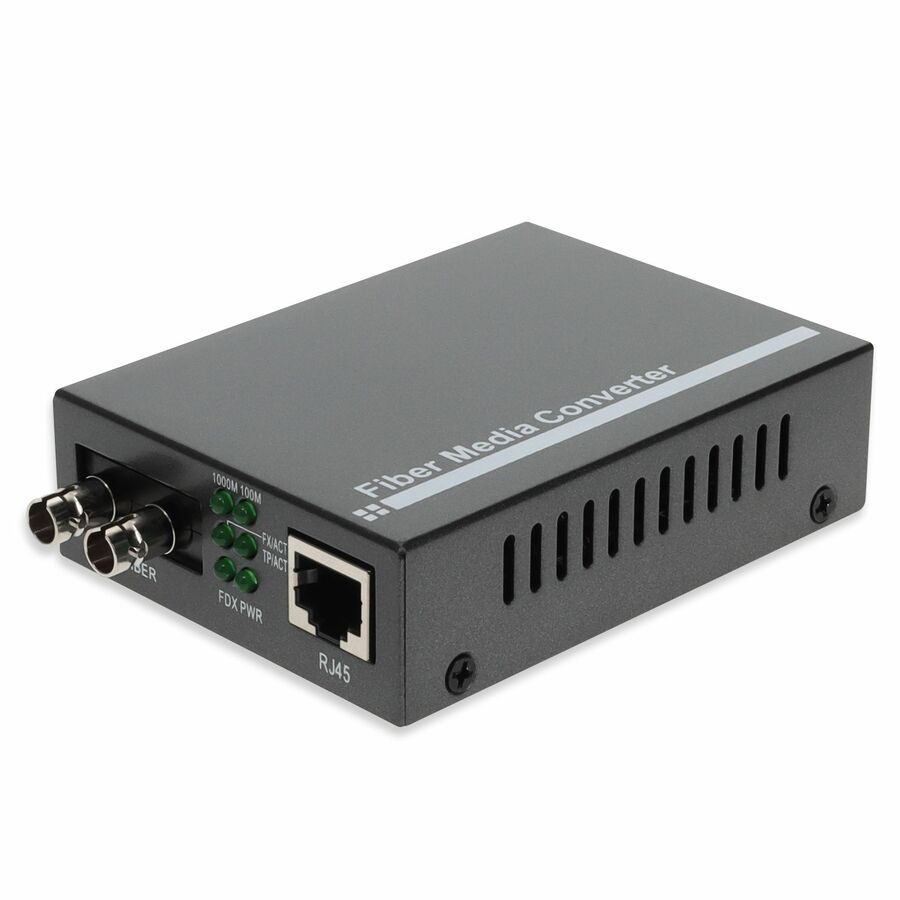
- AddOnAddOn 10/100Base-TX(RJ-45) to 100Base-FX(ST) MMF 1310nm 2km Media Converter - 100% compatible and guaranteed to workADD-FMC-FX-ST
$70.00
$64.40
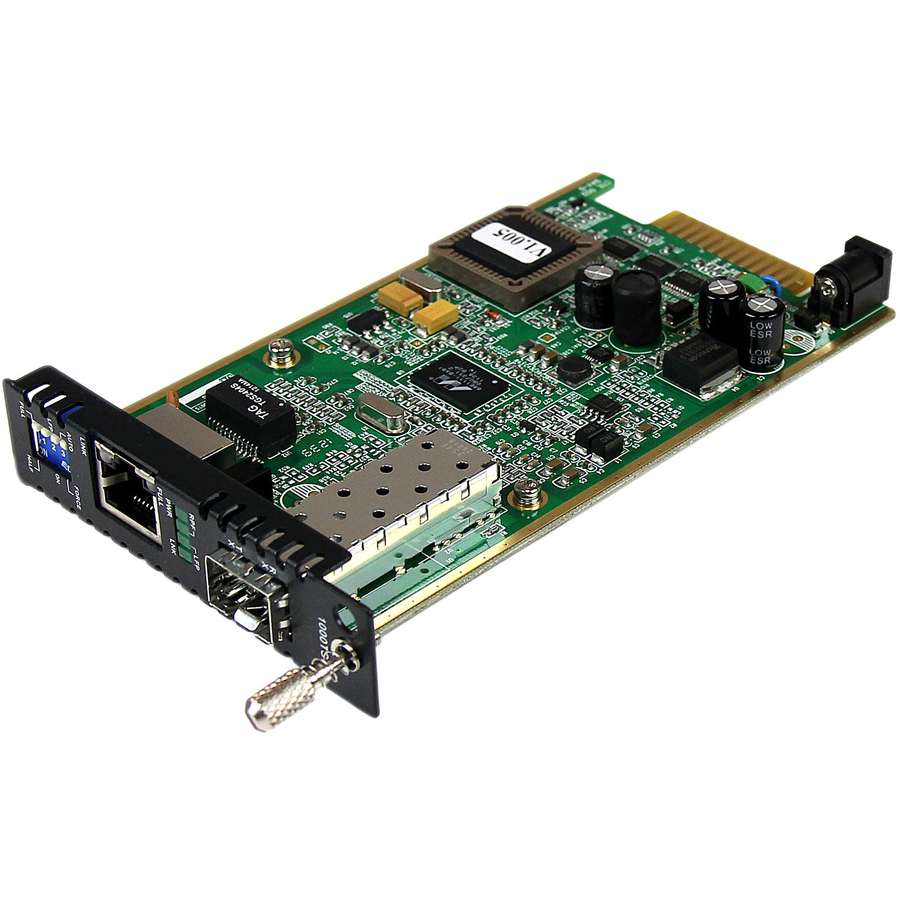
67 in stock - StarTech.comStarTech Gigabit Ethernet Fiber Media Converter Card Module with Open SFP Slot, TAA - Convert a Gigabit Ethernet connection over fiber using the Gigabit SFP of your choice - card module for media converter chassis - Gigabit Ethernet Fiber Optic Media Converter Card Module w/ Open SFP Slot - Fiber to Ethernet ConverterET91000SFP2C
$71.99
$66.23*
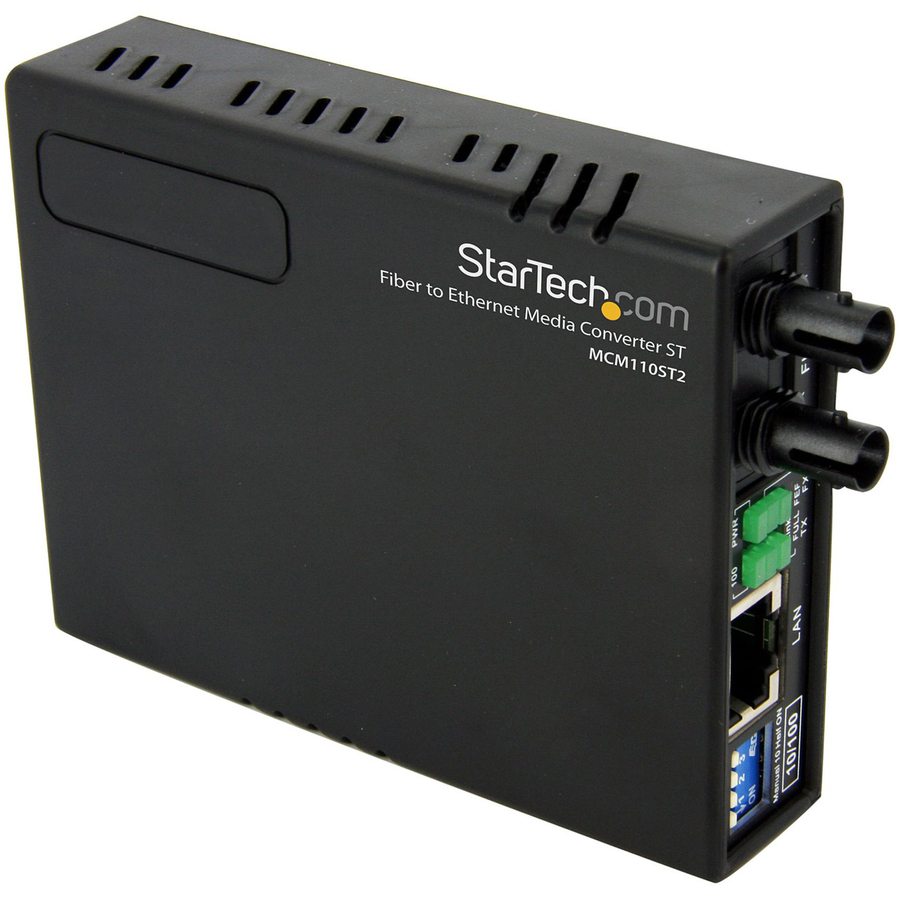
116 in stock - StarTech.comStarTech 10/100 Multi Mode Fiber Copper Fast Ethernet Media Converter ST 2 km, TAA - Convert and extend a 10/100 Mbps Ethernet connection up to 2 km over Multi Mode ST fiber - fiber converter - ethernet media converter - fibre converter - 10/100 media converter - utp to fiberMCM110ST2
$79.94
$73.54*
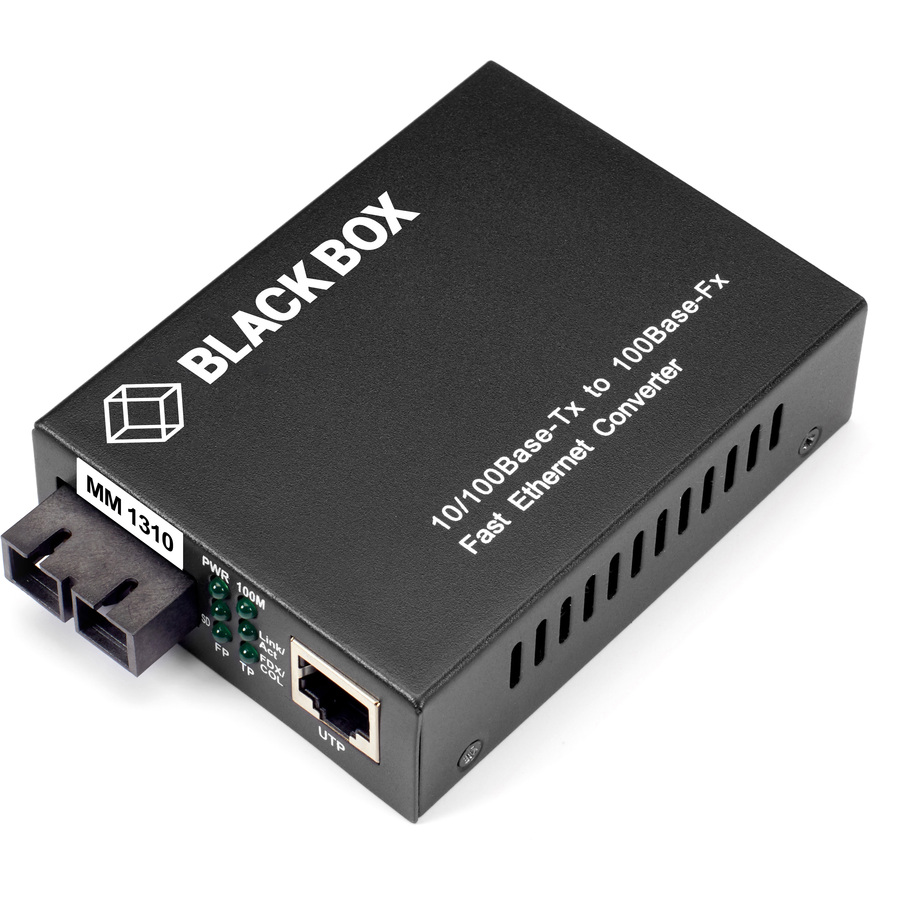
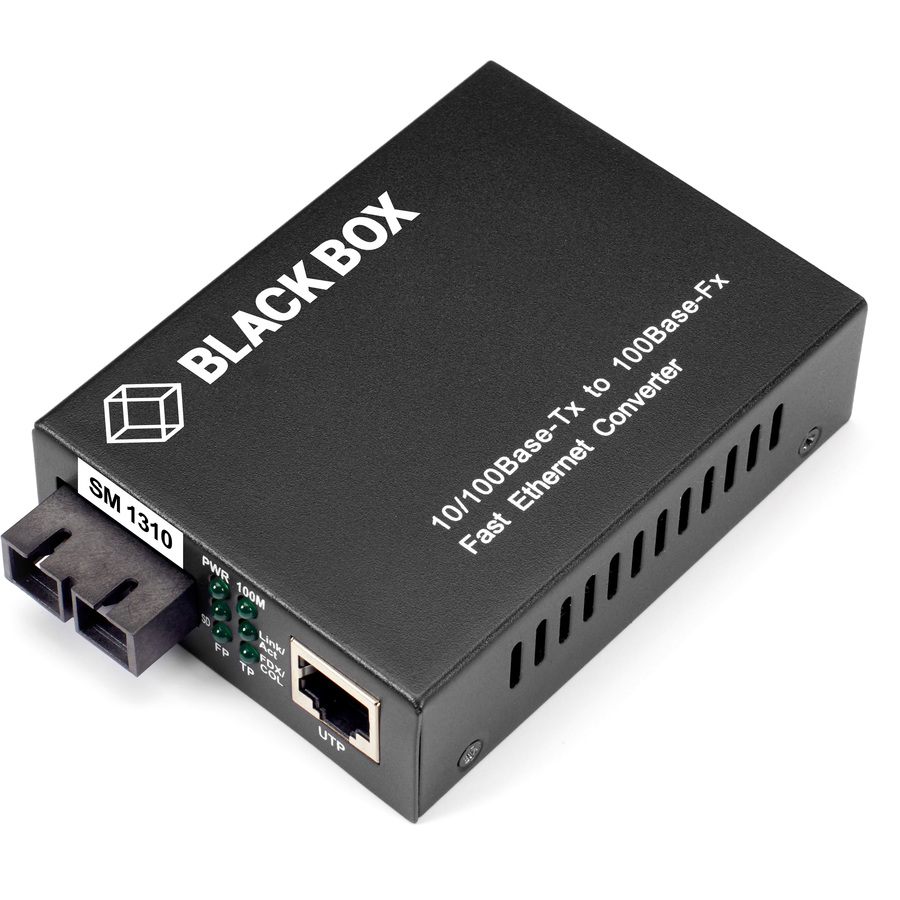
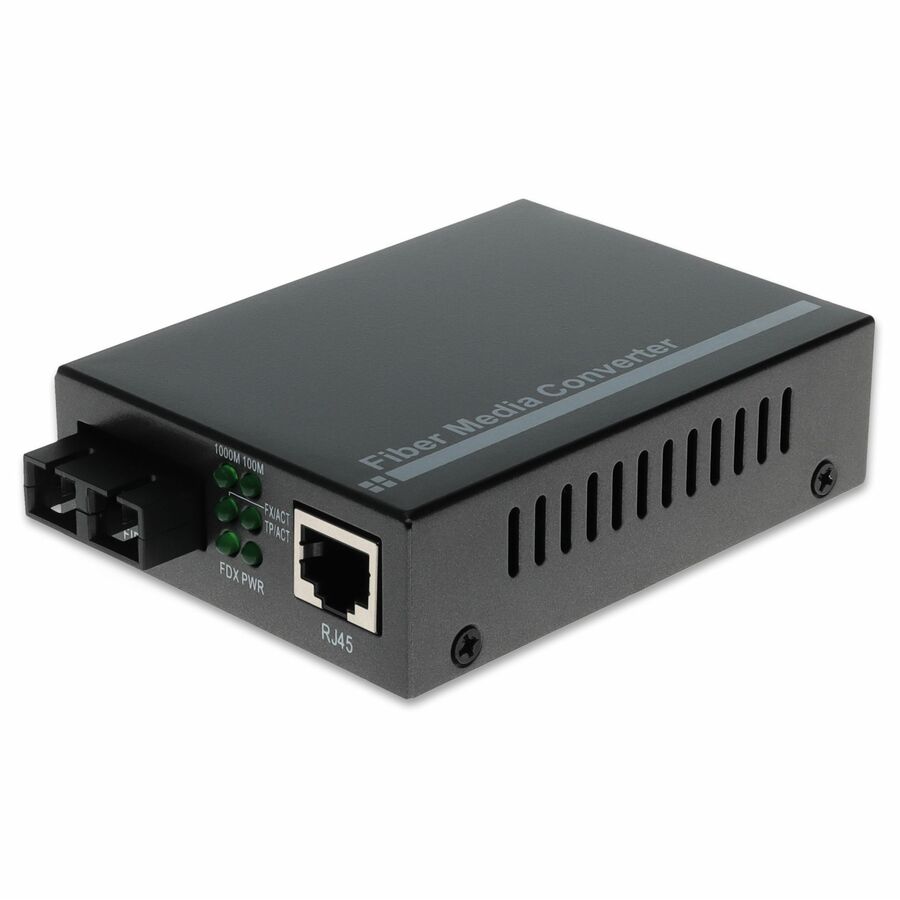
192 in stock - AddOnAddOn 10/100Base-TX(RJ-45) to 100Base-FX(SC) MMF 1310nm 2km Media Converter - 100% compatible and guaranteed to workADD-FMC-FX-SC
$80.00
$73.60
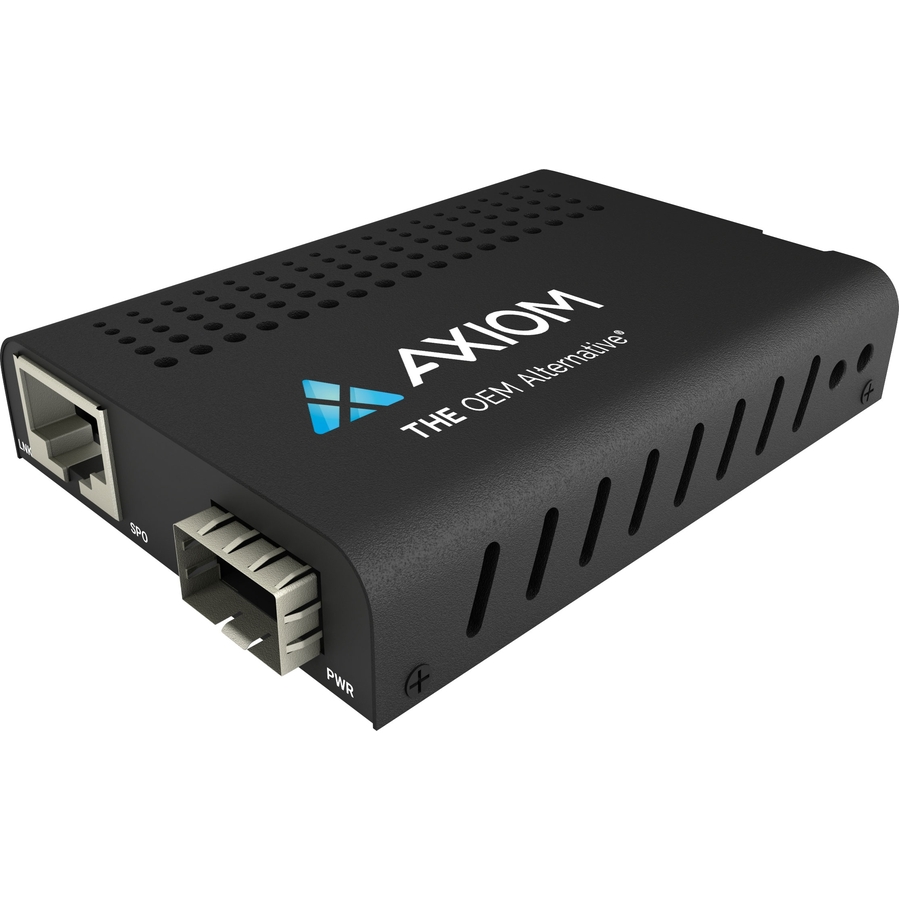
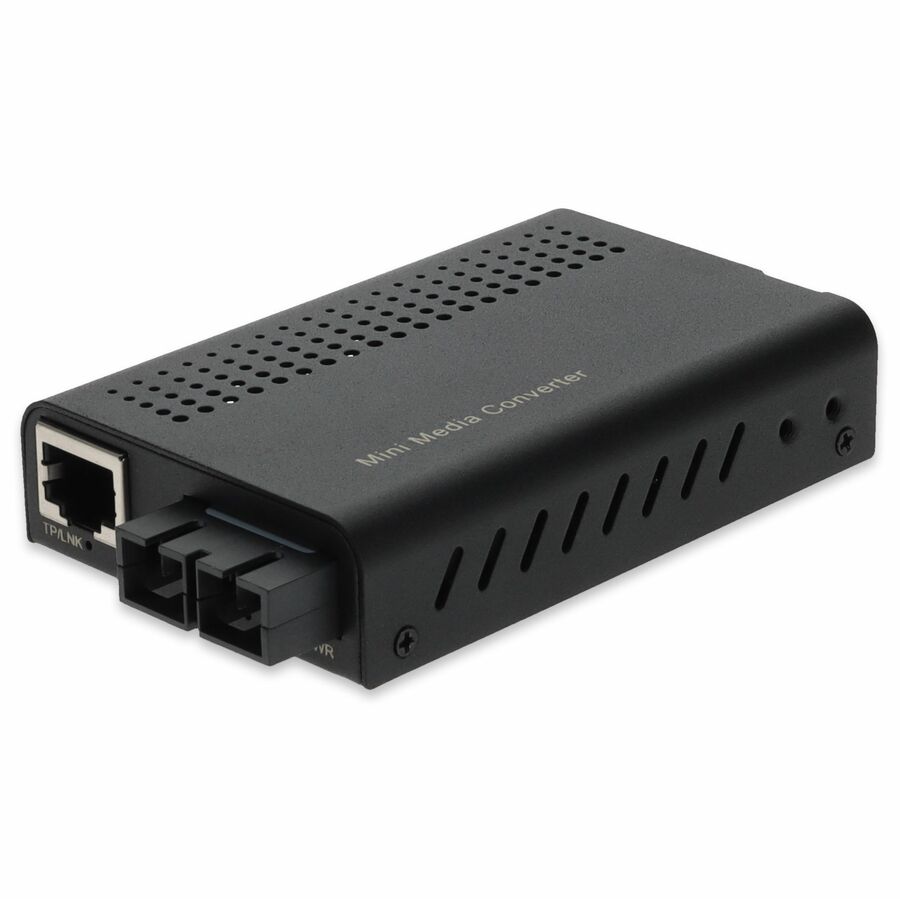
202 in stock - AddOnAddOn 10/100Base-TX(RJ-45) to 100Base-FX(SC) MMF 1310nm 2km Mini Media Converter - 100% compatible and guaranteed to workADD-FMCMN-FX-SC
$80.00
$73.60
8 in stock





Top pick
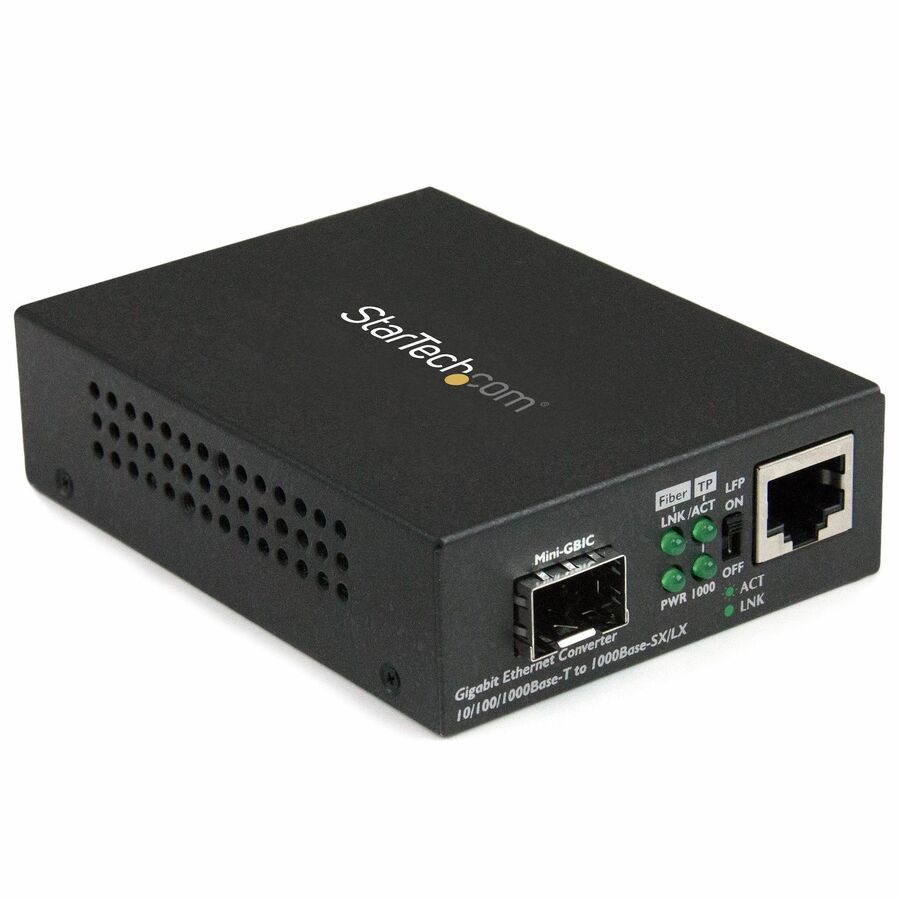
StarTech.com
StarTech Gigabit Ethernet Fiber Media Converter with Open SFP Slot…
MCM1110SFP
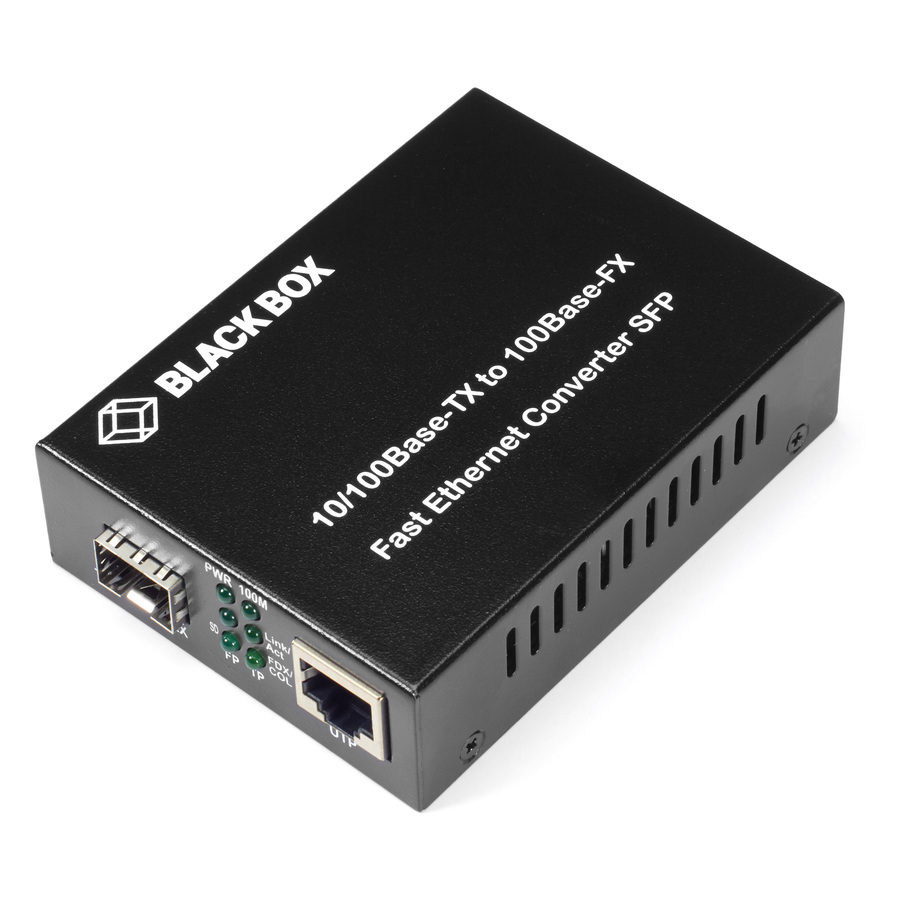
A gigabit copper-to-fiber converter with an open SFP slot, which is the version that survives a change of plan: the same unit fronts a short multimode hop and a 20 km single-mode span depending on the module you fit, and a failed optic is swapped rather than returned. Supports 10/100/1000 on the copper side with auto-MDIX, so it drops onto either a straight or a crossover run.
Our catalog data records this part number as TAA compliant. We confirm that screening against this exact part number on the quote rather than restating it as a Uniqcli certification.
$70.83*In stockBest value
AddOn
AddOn 10/100Base-TX(RJ-45) to 100Base-FX(SC) MMF 1310nm 2km Media…
ADD-FMC-FX-SC
The plain answer to a short in-building hop: 10/100Base-TX to 100Base-FX over multimode at 1310 nm, SC connectors, rated 2 km. Nothing to specify beyond the pair, nothing to lose, and no optic to source separately — which is exactly what you want when the far end is a known 100Base-FX port that is not going to change.
Fixed optics mean the wavelength and connector are the purchase. An ST-terminated plant needs the ST variant of the same unit, and a gigabit endpoint is capped at 100 Mbps by this converter for the life of the link.
$73.60In stockSingle-mode spans
StarTech.com
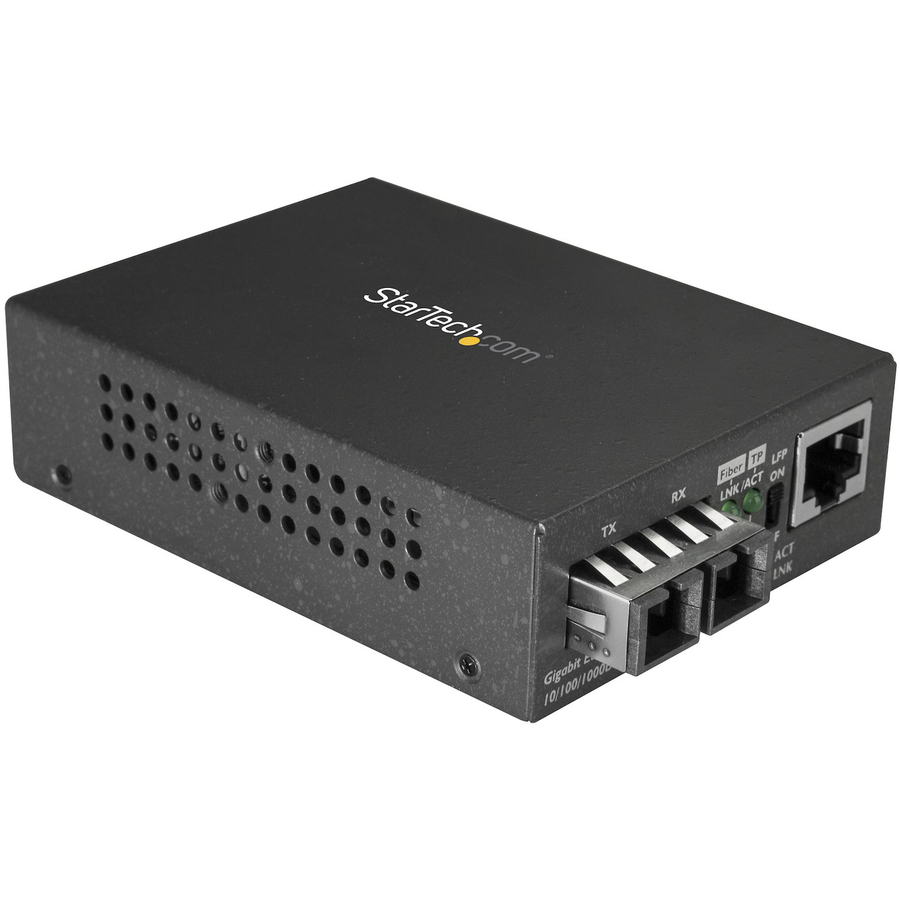
StarTech Singlemode SC Fiber Ethernet Media Converter, 1000BASE-LX…
MCMGBSCSM10
Gigabit copper to 1000BASE-LX single-mode at 1310 nm, SC, rated 10 km — the shape most between-buildings campus links take. Link-fault pass-through is the detail worth paying for here: when the fiber side drops, the copper side drops with it, so the switch and your monitoring see the outage instead of forwarding into a hole. ESD and surge protection on the copper port suits a run that leaves the building.
Our catalog data records this part number as TAA compliant, confirmed against the part number on the quote.
$93.34*In stockCabinet and plant floor
AddOn
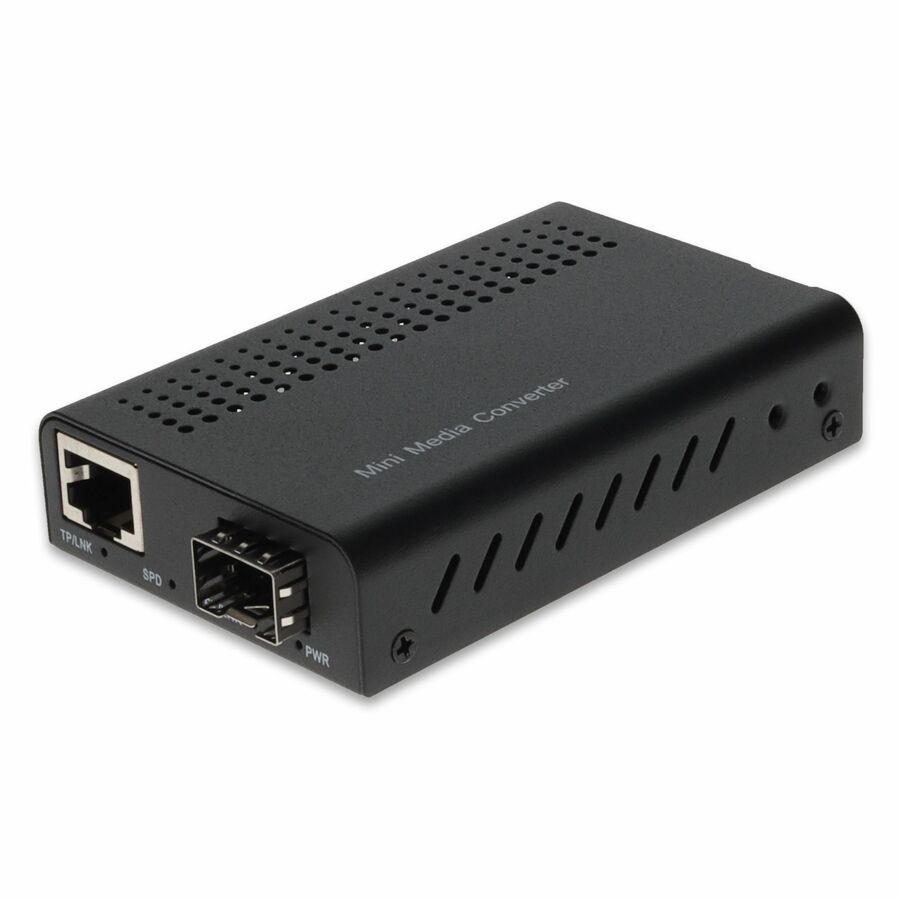
AddOn 10/100/1000Base-TX(RJ-45) to Open SFP Port Industrial Mini Media…
ADD-IGMCMN-SFP
A gigabit open-SFP mini converter built for a cabinet rather than a desk — industrial-rated with AC or DC input, so it runs off the DC supply already in the enclosure instead of occupying an outlet and a wall adapter. The open slot matters more in the field than in a closet, because one stocked spare covers whatever optic that site turned out to need.
$103.04In stockFor a converter chassis
StarTech.com
StarTech Gigabit Ethernet Fiber Media Converter Card Module with Open…
ET91000SFP2C
A card module rather than a standalone box: gigabit with an open SFP slot, designed to drop into a media-converter chassis. This is the right shape once several links terminate in the same rack — one shared power feed and one place to service, instead of a shelf of individual units each with its own adapter.
Our catalog data records this part number as TAA compliant. It needs a compatible chassis, which we can quote alongside the modules.
$66.23*In stockMore transceivers and media converters in the Uniqcli catalog
See all 3,320 transceivers and media convertersMore from across this category. In-stock lines lead, and a back-ordered line carries the same estimated availability its product page does — with live pricing throughout, NDAA §889 screening before checkout and TAA verified on request.
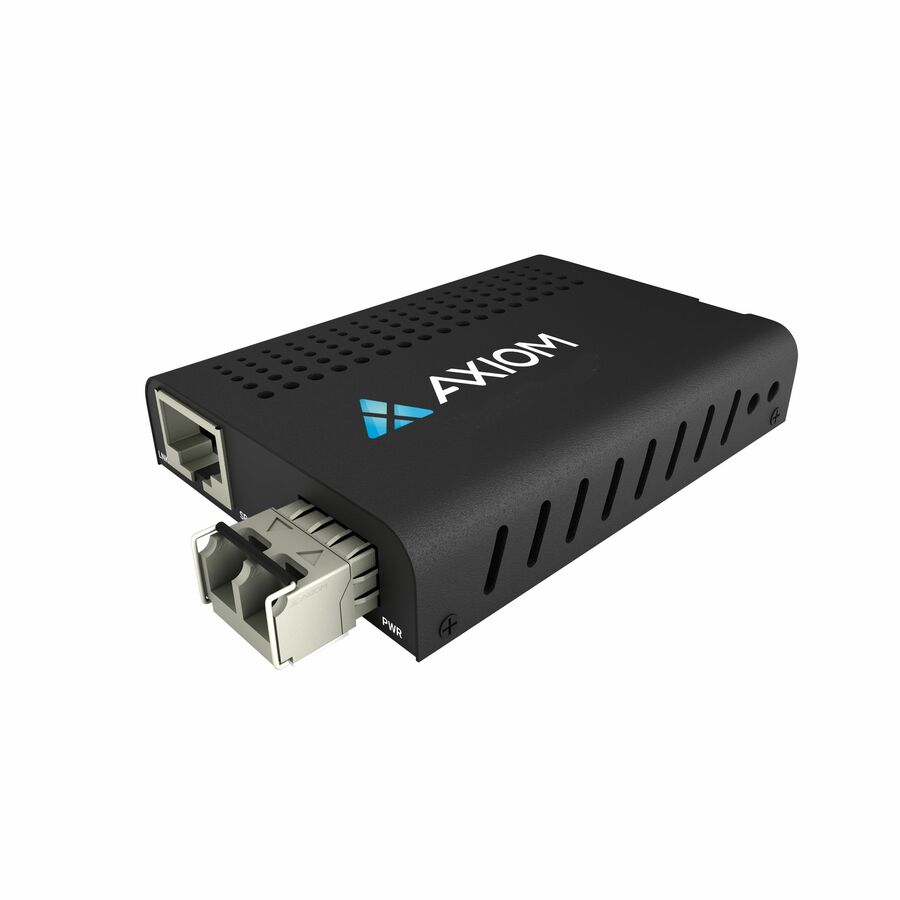
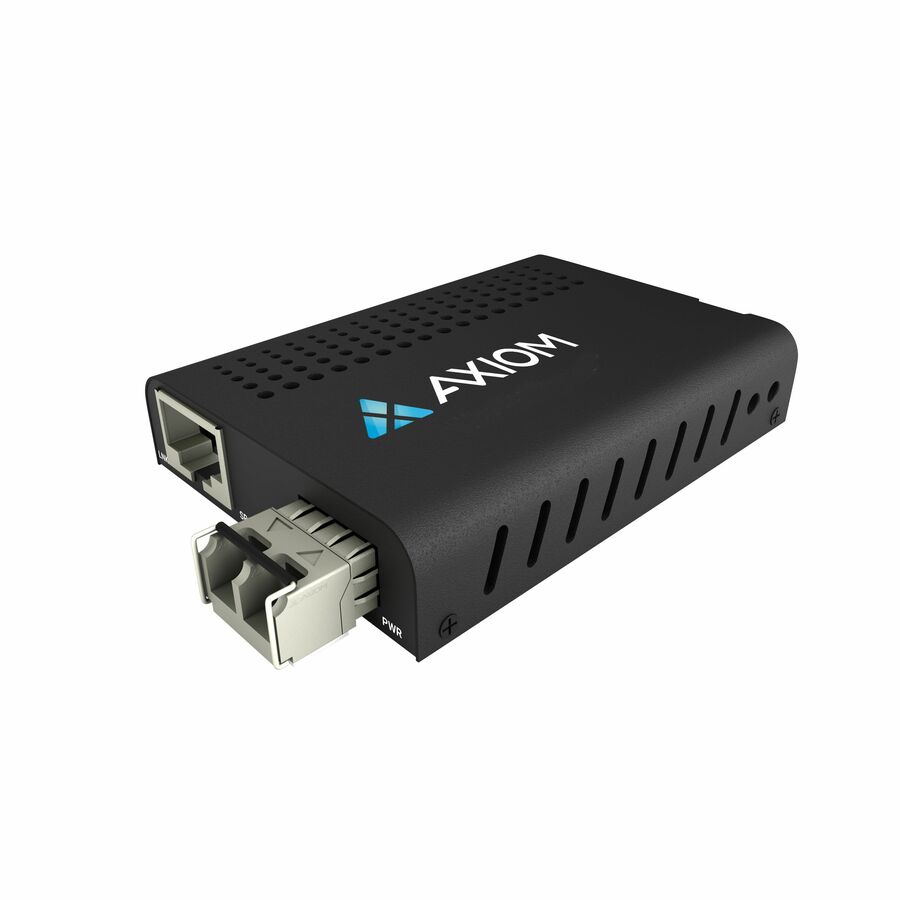
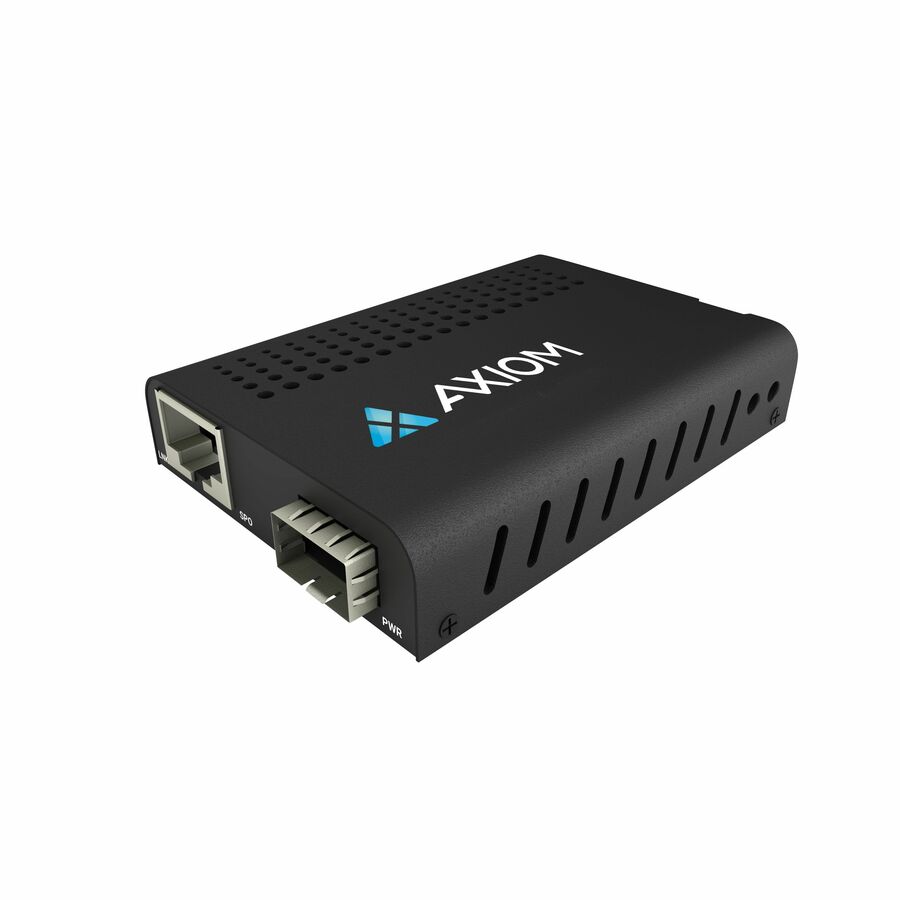
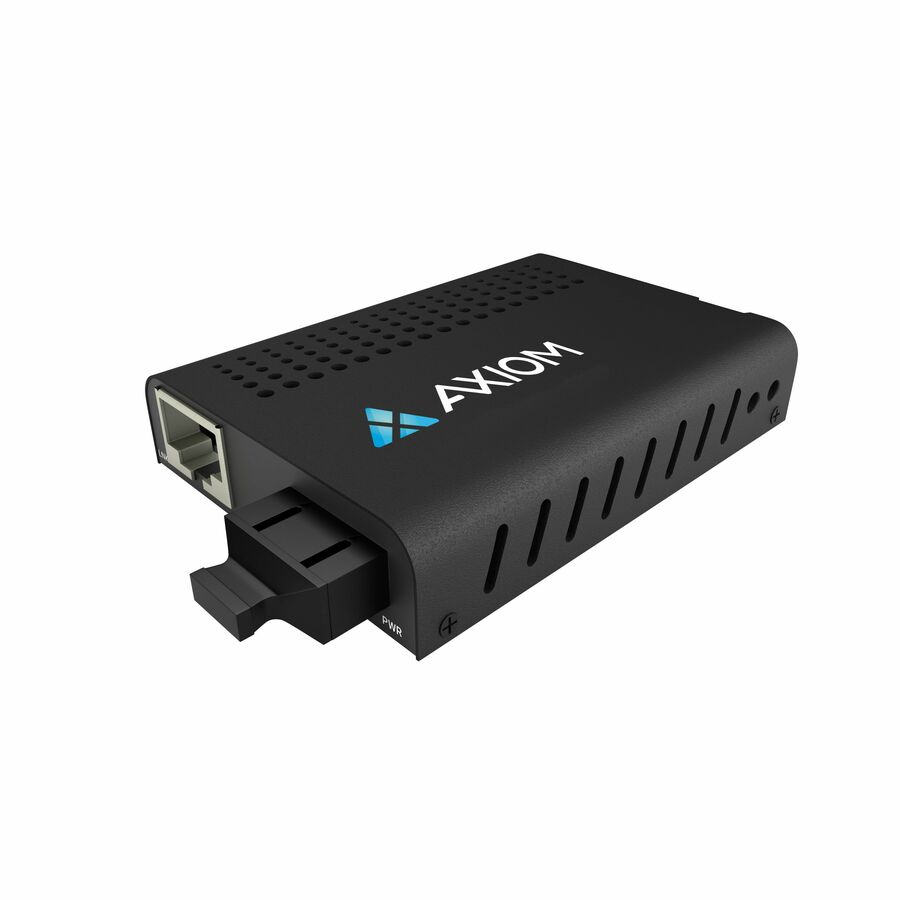
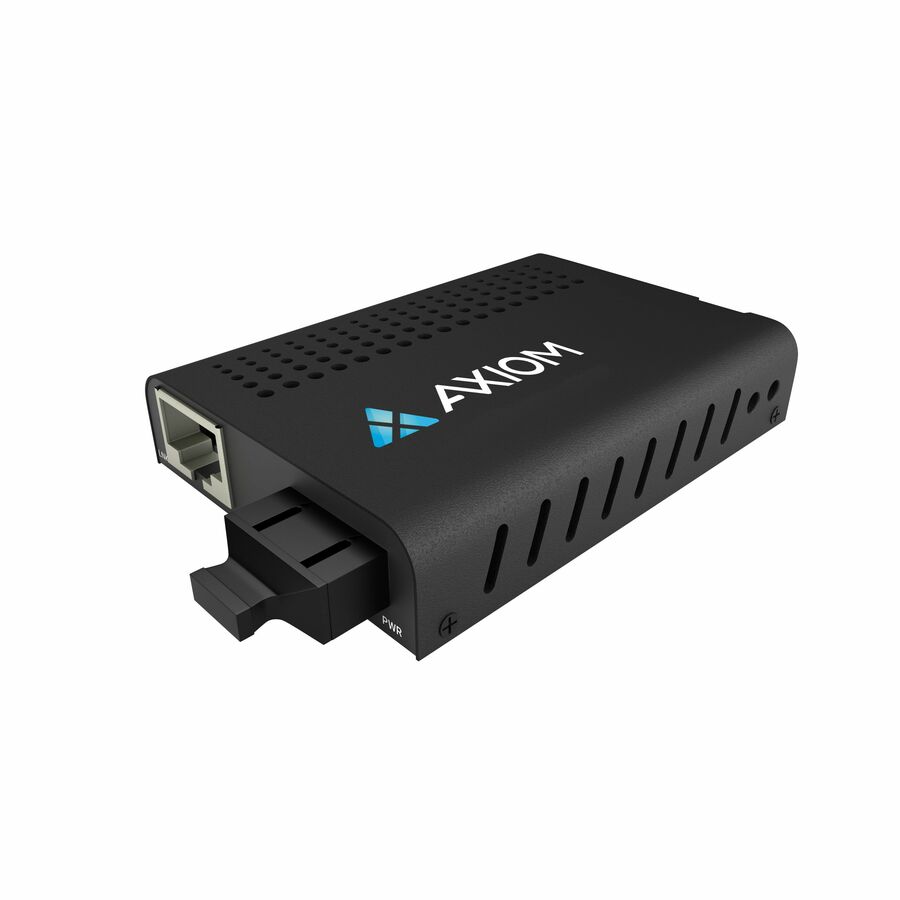
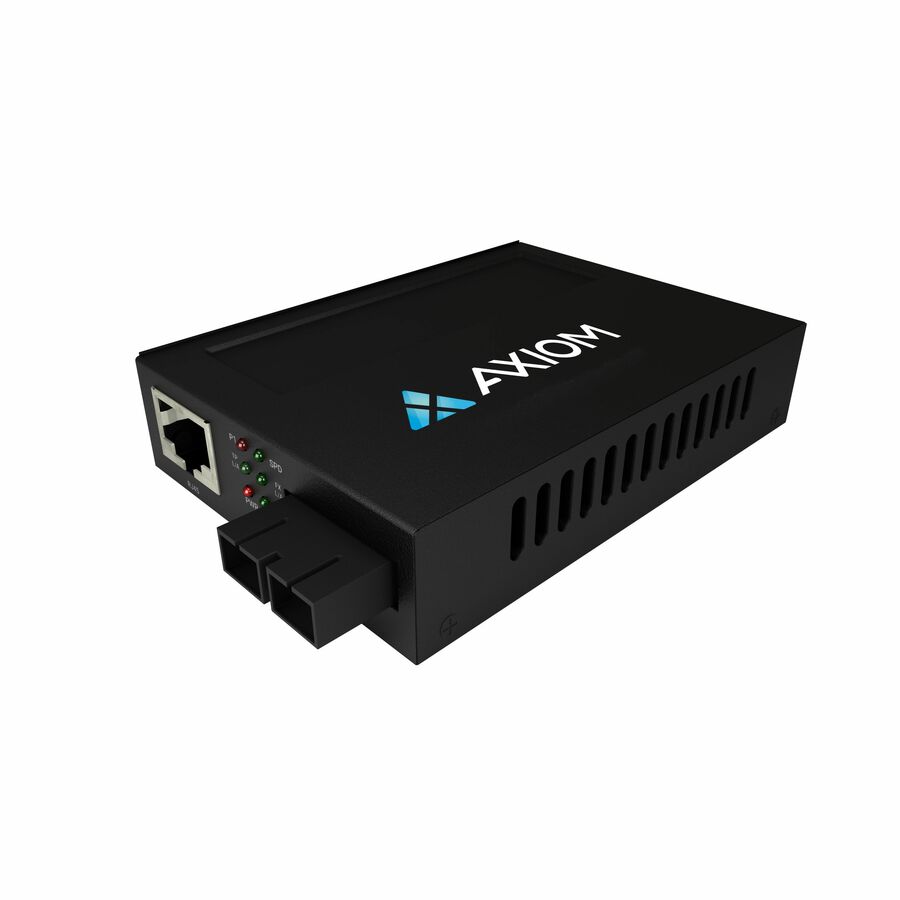
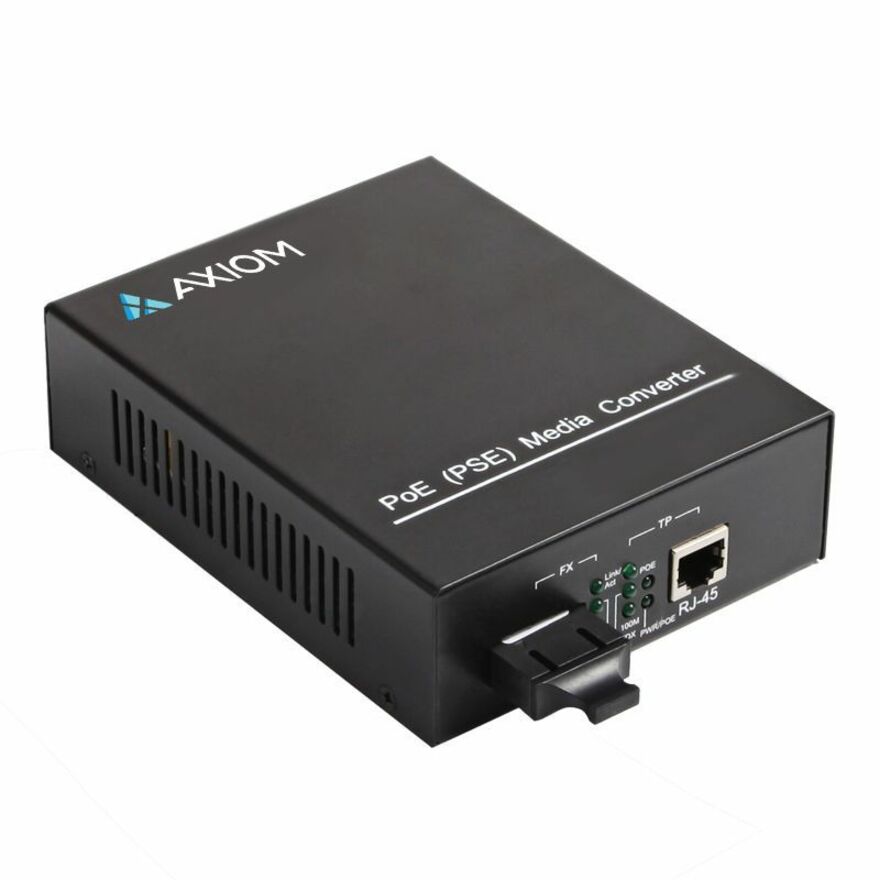
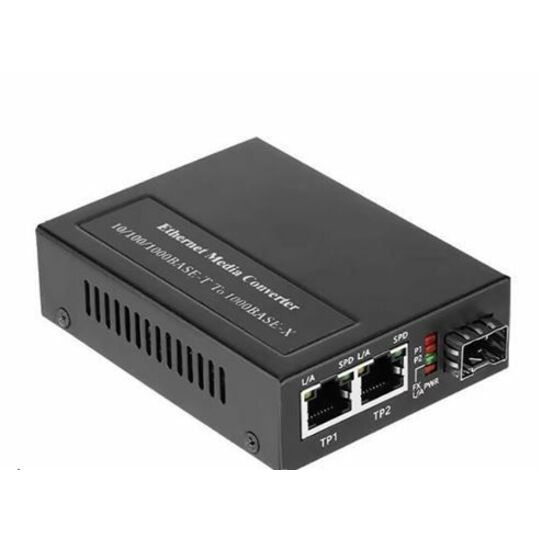
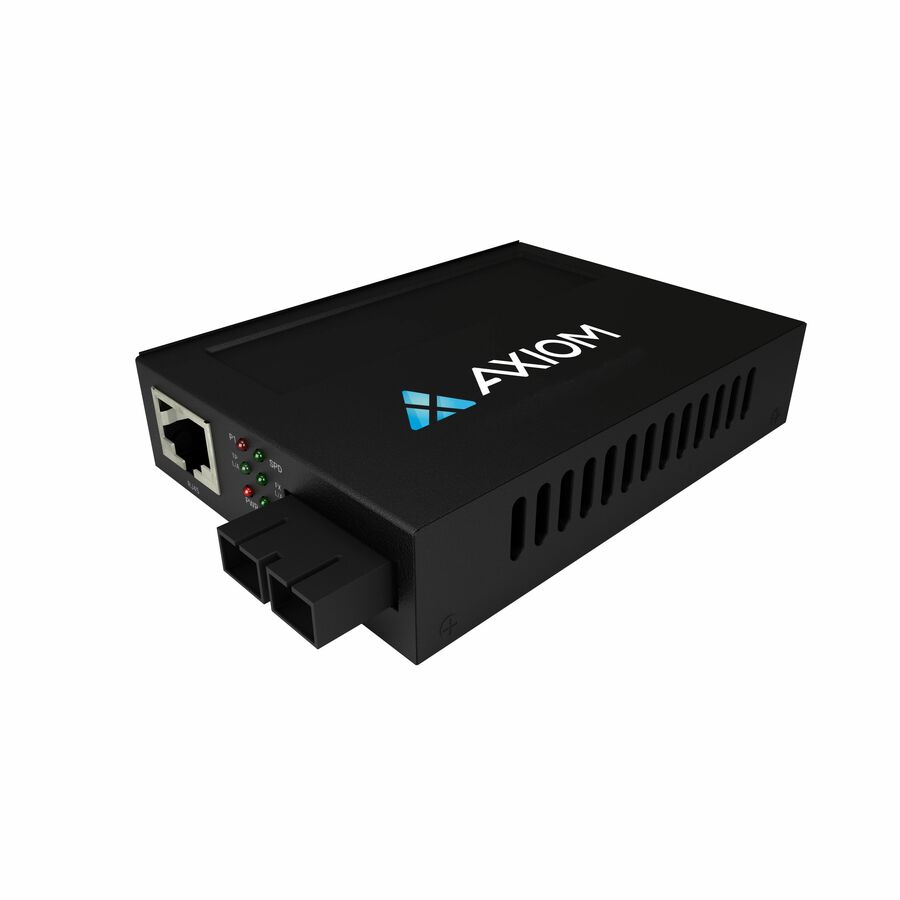
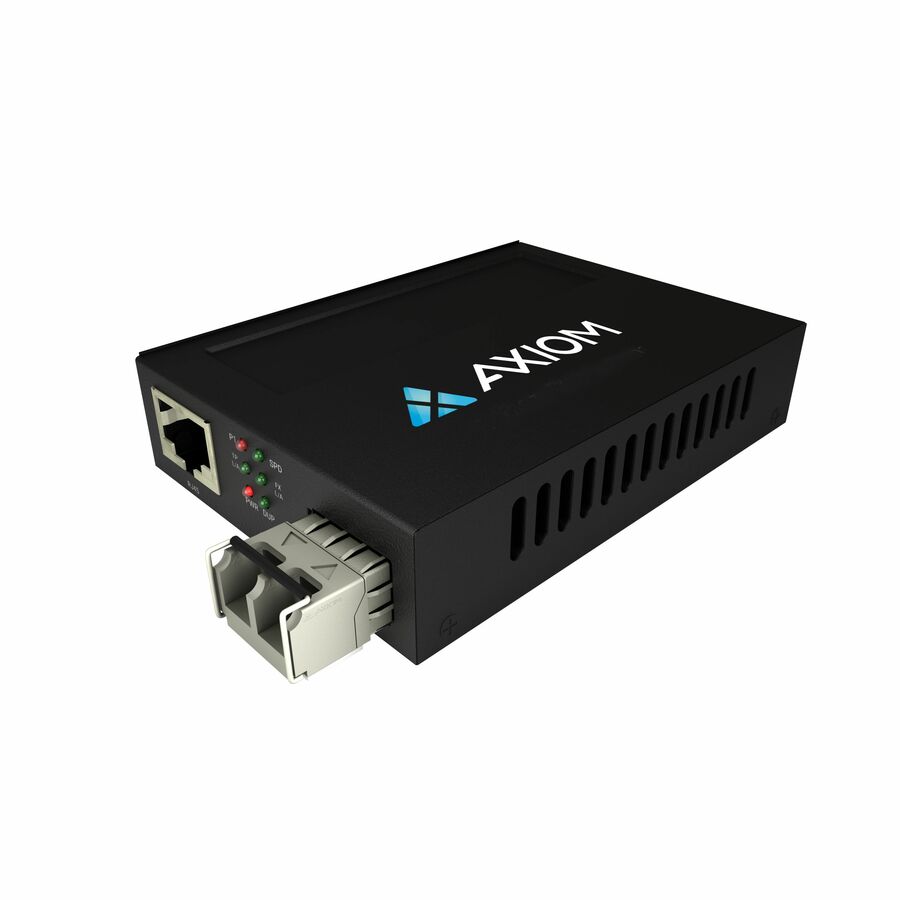
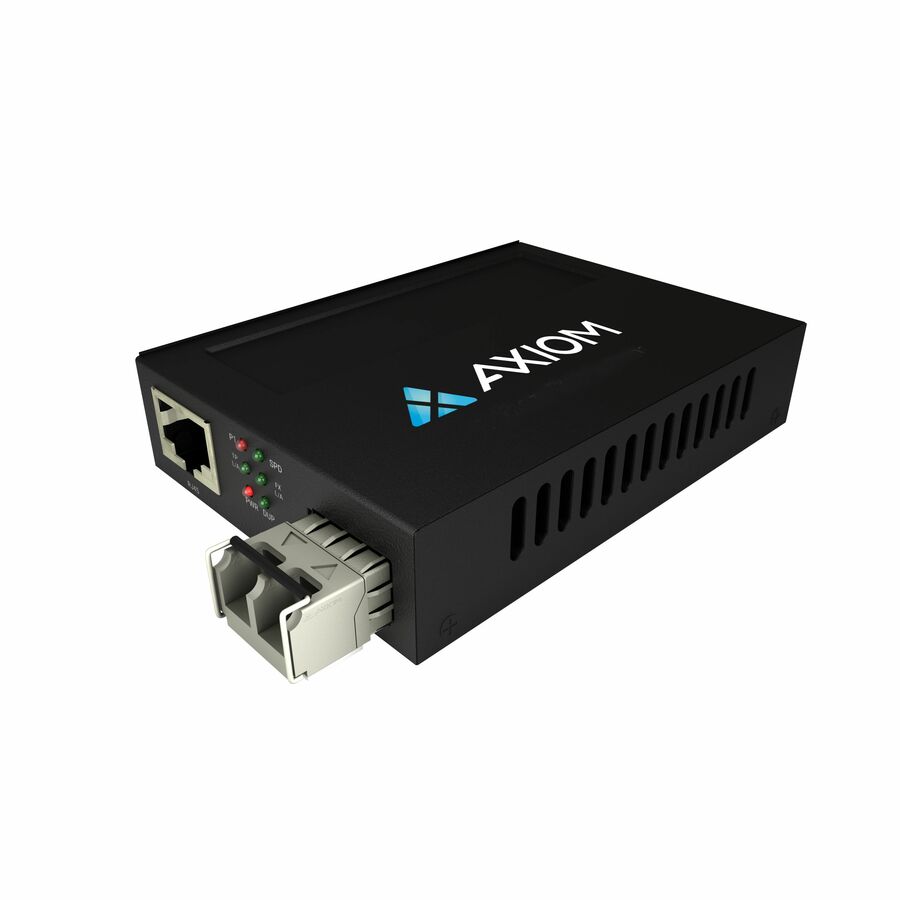
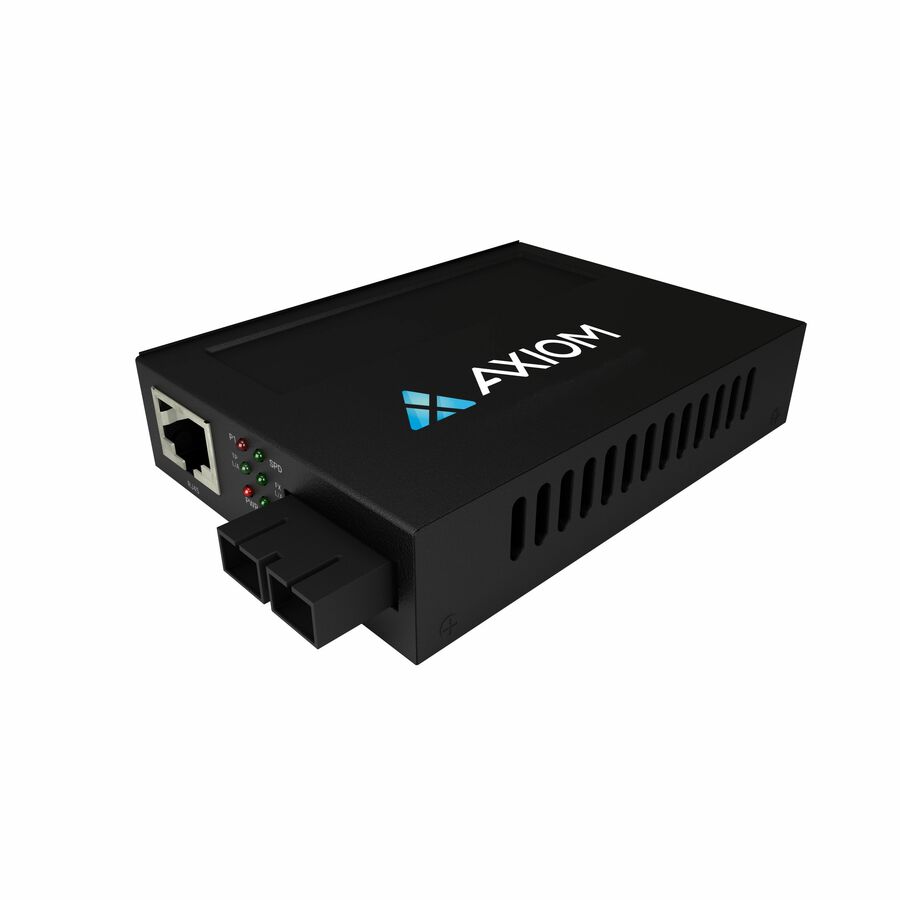
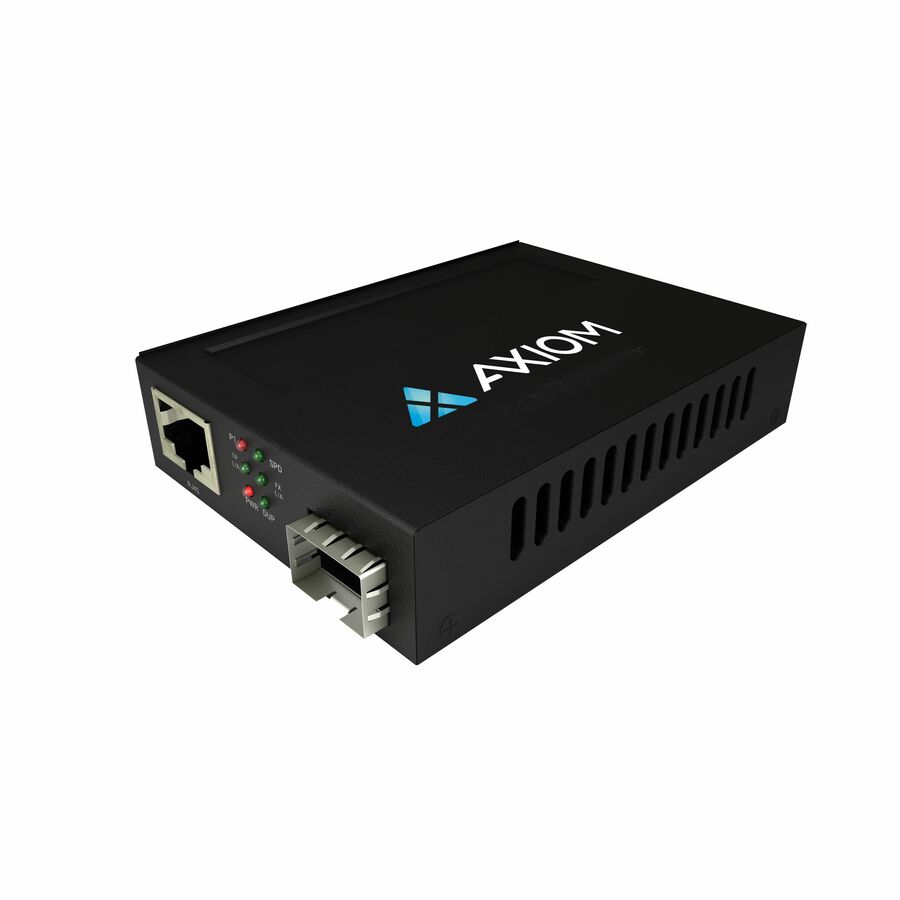
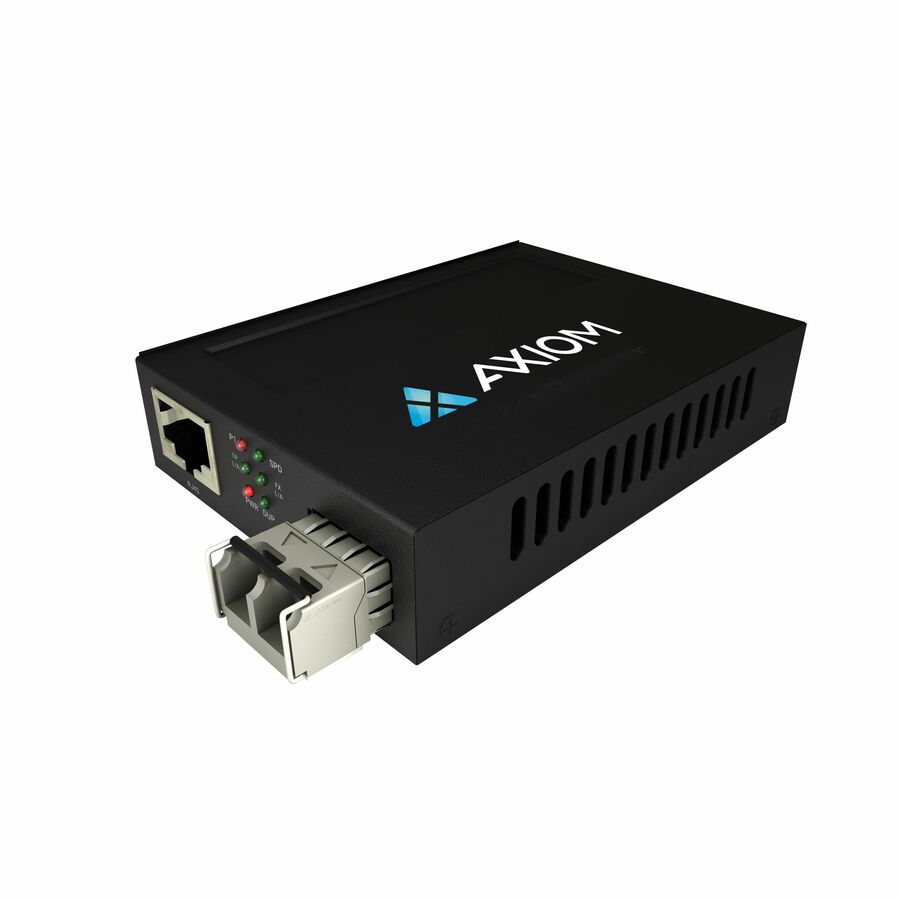
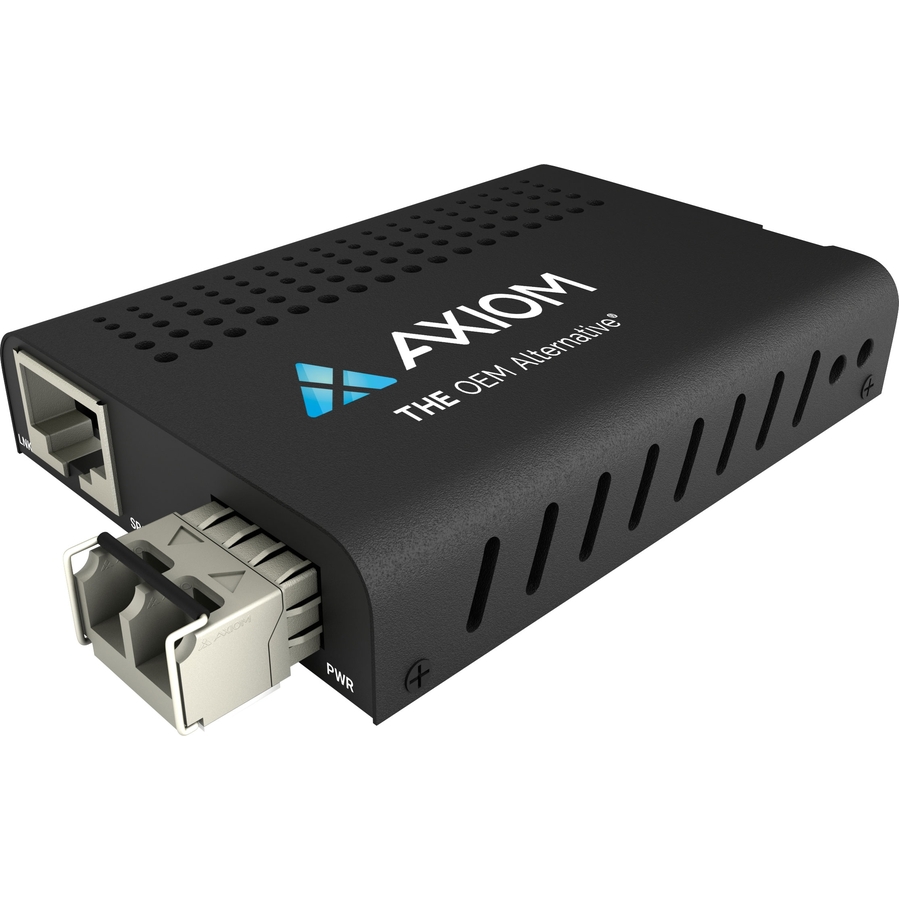
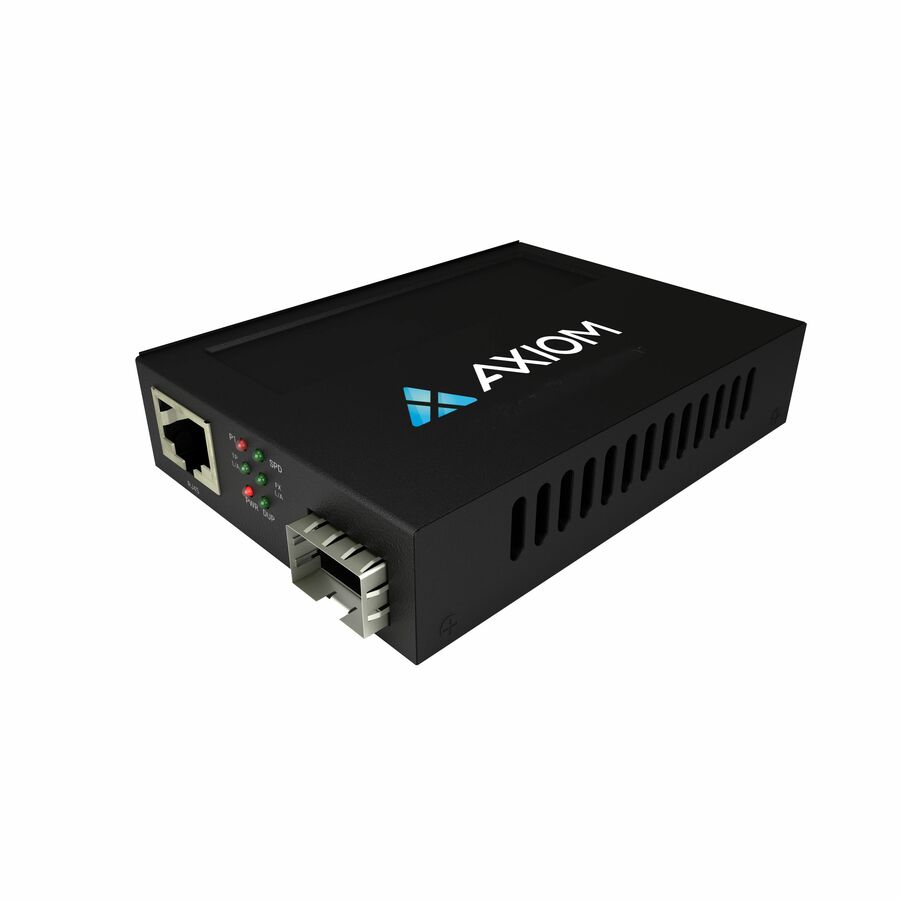
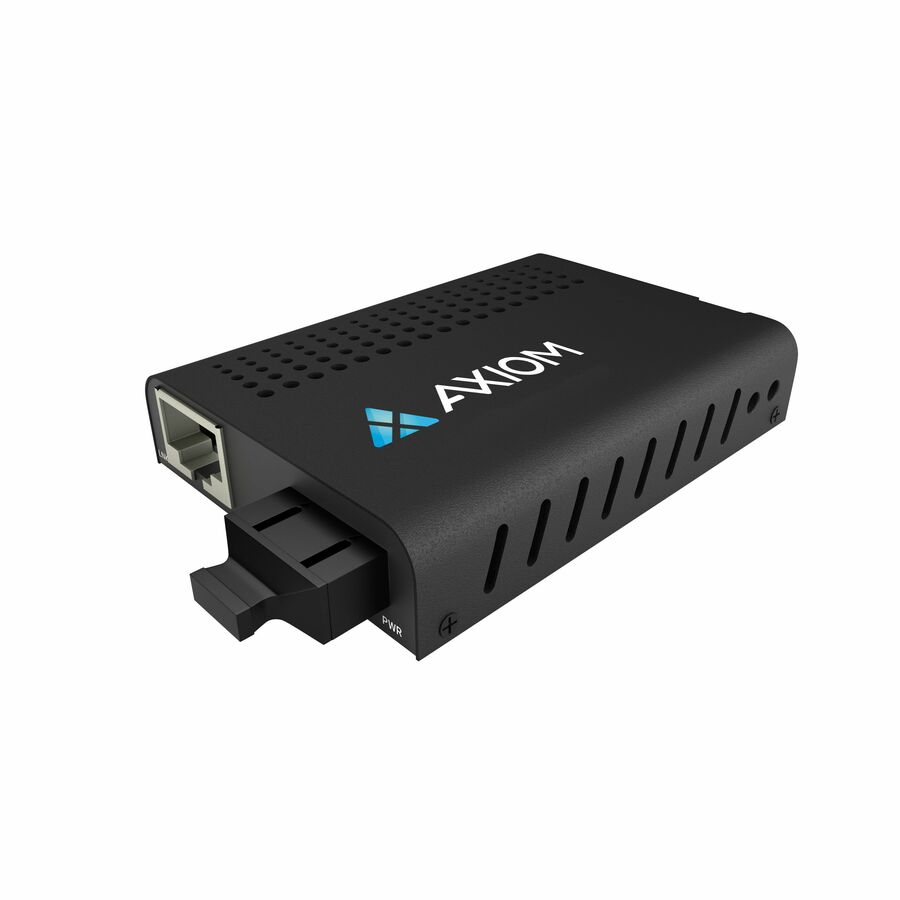
- Axiom Memory SolutionsAxiom Transceiver/Media Converter - 1 x Network (RJ-45) - Single-mode, Multi-mode - 1310 nm, 1550 nm, 850 nm Fiber - 10 Gigabit Ethernet - 10GBase-FX, 10GBase-T - 10 Gbit/s - 80 km - 1 x Expansion Slots - SFP+ - 1 x SFP+ Slots - DC - Compact, Rack-mountable, Standalone - TAA CompliantAXG99357
$2,120.00
$841.11*
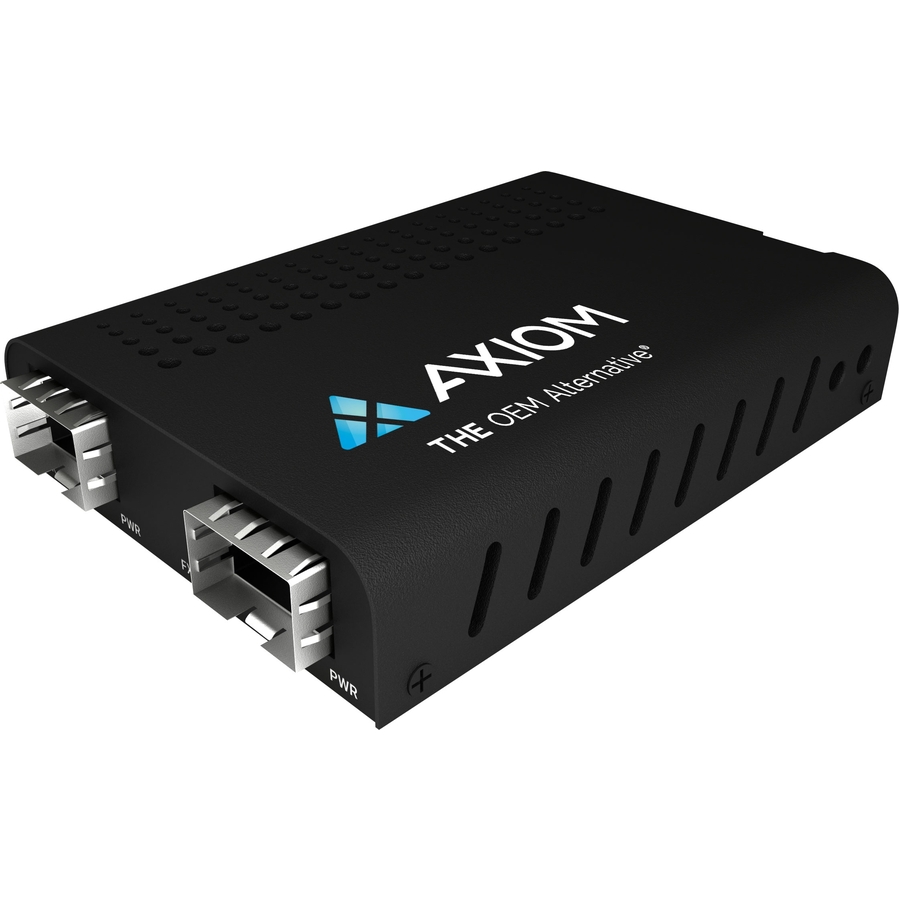
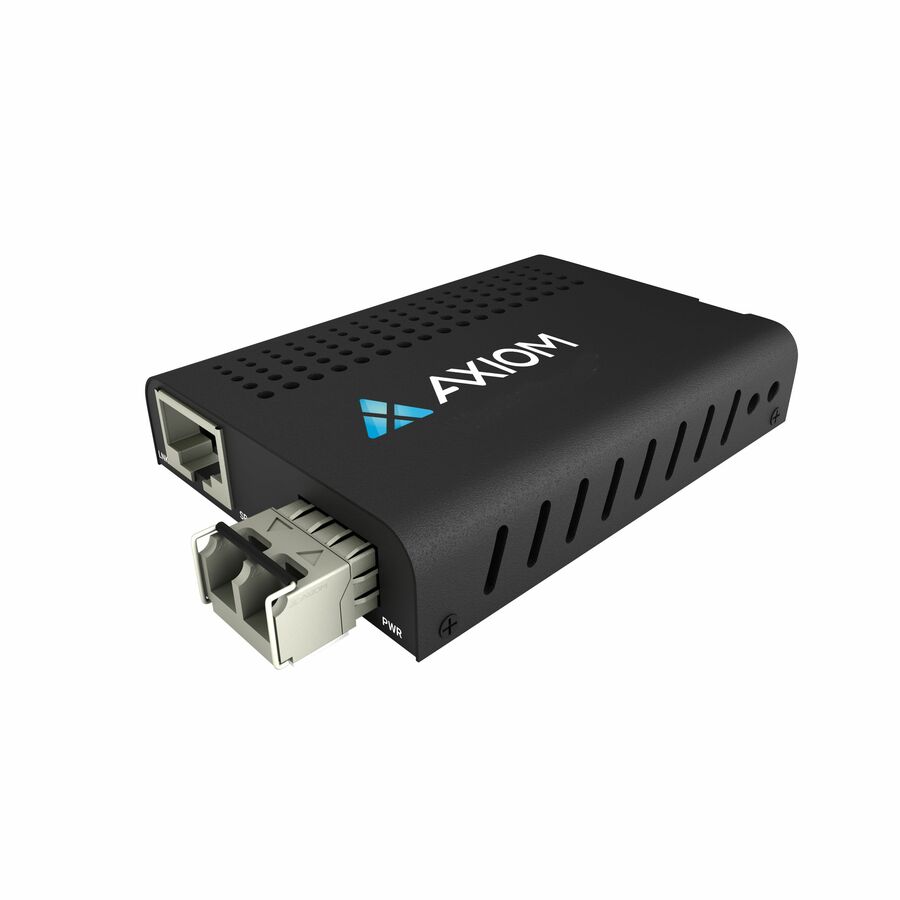
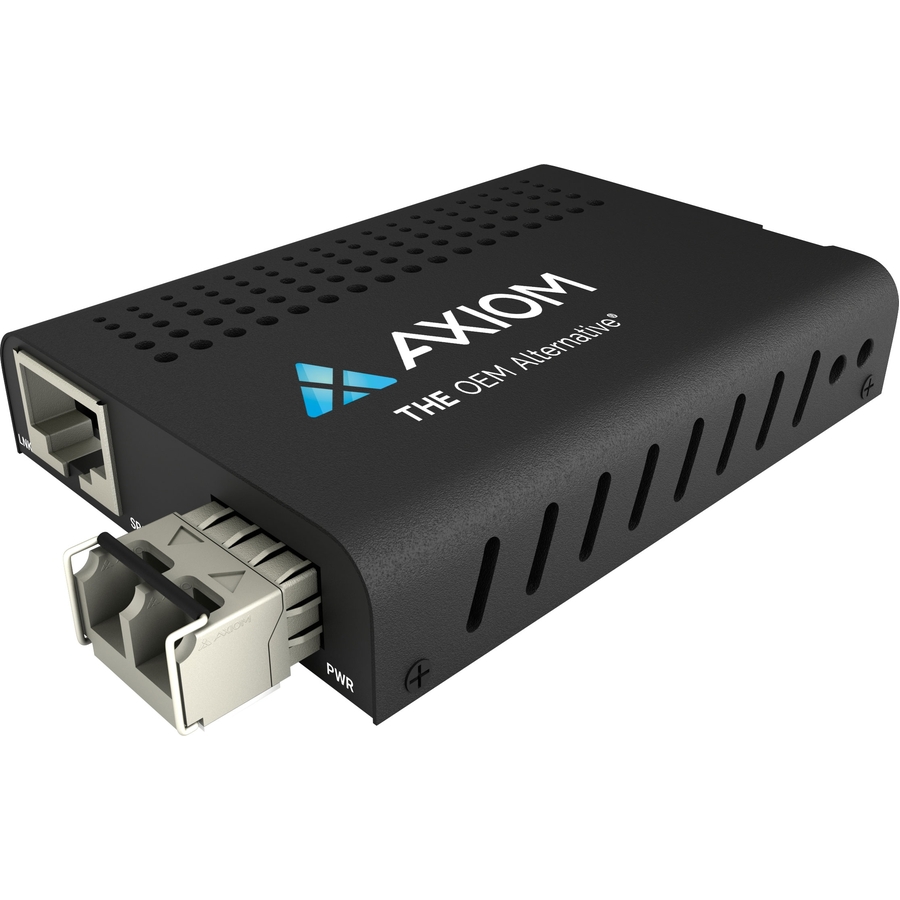
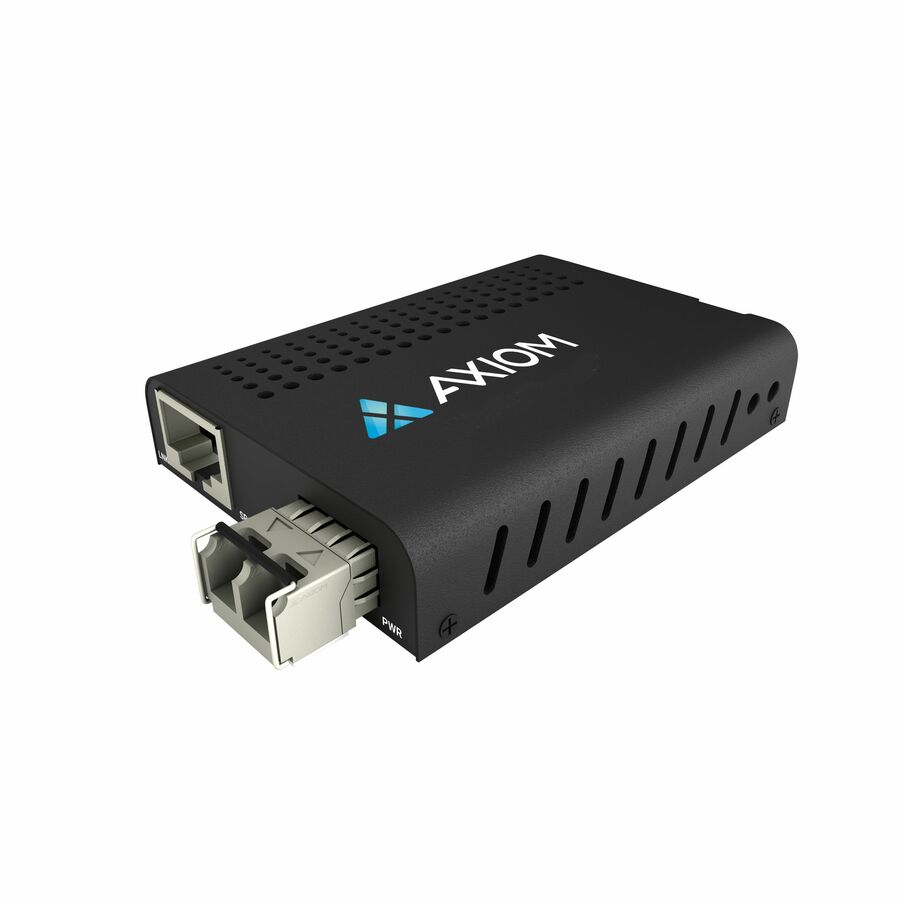
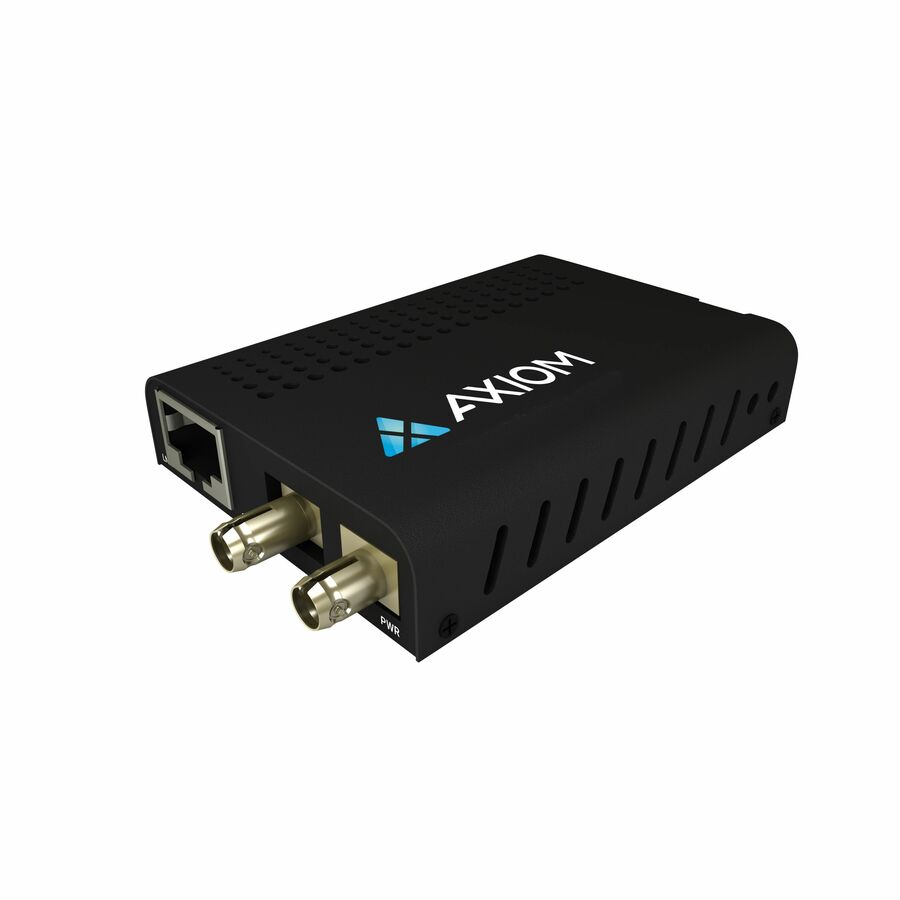
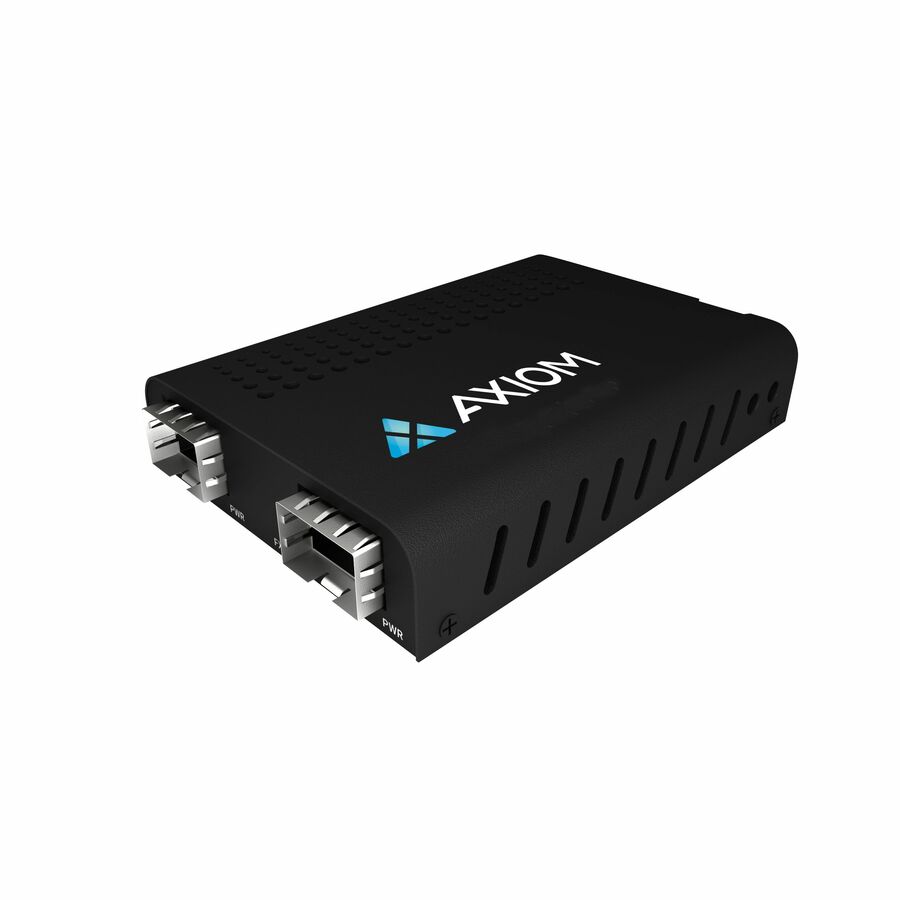
1 in stock - Axiom Memory SolutionsAxiom Mini Transceivers/Media Converter - Multi-mode, Single-mode - 850 nm, 1310 nm Fiber - Fast Ethernet, Gigabit Ethernet - 1000Base-SX, 1000Base-LX - 1.25 Gbit/s - 0.55 km - 2 x Expansion Slots - SFP (mini-GBIC) - 2 x SFP Slots - DC - TAA CompliantAXG102676
$490.00
$195.14*
2 in stock

Need pricing on fiber media converters?
Tell us where to reach you and a Uniqcli specialist will follow up by email with current pricing, availability and lead time for the quantities you need — including parts that aren’t shown on this page.
Buying for an organization or for yourself — both work. No payment up front.
Copper Ethernet stops at 100 m; a media converter takes the link optical past that. Both ends have to agree on speed, wavelength, fiber type and connector — a 100Base-FX unit will not link to a 1000Base-X unit. Multimode is the short hop (the 1310 nm units here are rated around 2 km); single-mode covers campus and long-haul, with rated reaches from 10 km to 120 km.
Copper Ethernet stops at 100 meters. Past that — between two buildings, across a plant floor, down a tunnel, or anywhere the run crosses a ground-potential difference or a source of electrical noise — the link has to go optical, and a media converter is the smallest way to do it: RJ-45 in on one side, fiber out on the other, with no switch to configure and no rack to fill. It earns its place indoors as well, wherever a fiber plant already reaches a closet whose switch has no fiber port and nobody wants to replace that switch to light a single link.
Converters work in pairs unless the far end is already a fiber switch port, and the two ends have to agree on more than the word fiber. They must match on speed — a 100Base-FX unit will not link to a 1000Base-X unit — and on wavelength, fiber type and connector, so the box has to be chosen against what is actually terminated in the ground rather than against what the drawing says. Multimode is the short-haul answer, and the 1310 nm multimode converters in this catalog are rated around 2 km; single-mode is what covers campus and long-haul distances, with rated reaches here running 10, 20, 40, 60, 80 and 120 km depending on the optic. That split, not the price, is the first decision.
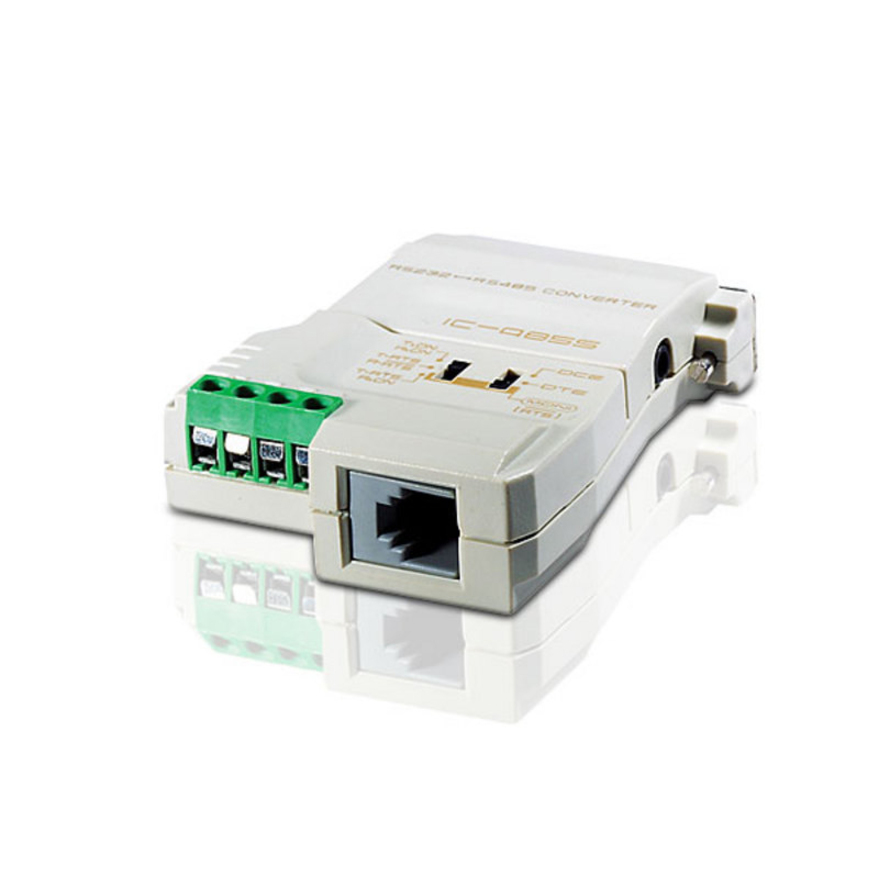
After distance comes form. A fixed-optic converter has its fiber spec set on the label, which is the least ambiguous thing to buy when the far end is known and settled; an open-SFP model leaves the optic to you, so one part number covers a short multimode hop today and a 20 km single-mode span after the next build, and a dead optic becomes a module swap rather than a returned converter. Then choose the enclosure: a standalone unit with an external supply for one link, a card module once several links land in the same rack and want one shared power feed, a hardened DIN-rail unit with a DC input for a cabinet or roadside enclosure, or a PoE model that carries power over the copper leg to a far-end camera or access point. Read the copper side carefully too — this catalog category also lists serial RS-232/422/485-to-fiber converters whose titles look almost identical in a grid. Optics, patch cords, the switch licensing at either end and the field labor to terminate, test and document the link can all be quoted on the same order, so a fiber build does not have to be assembled from three suppliers.
Buyer's checklist
How to choose a fiber media converter
- Fix the distance and the fiber type before anything else — multimode for short in-building hops (the 1310 nm multimode units here are rated around 2 km), single-mode for campus and long-haul spans, where rated reaches in this catalog run from 10 km to 120 km.
- Match both ends exactly: speed, wavelength, fiber type and connector (SC, ST or LC). A 10/100 converter and a gigabit converter will not link, and a fixed-optic unit terminated for SC cannot be persuaded to fit an ST plant.
- Choose fixed optics or an open SFP slot deliberately. Fixed is simpler where the far end is settled; an open slot lets one part number serve different distances and turns a failed optic into a module swap.
- Read the copper side as a ceiling, not a label: 10/100Base-TX, 10/100/1000Base-T or faster. A 10/100 converter caps a gigabit endpoint at 100 Mbps for the life of the link.
- Pick the enclosure for the environment — standalone with an external supply, a card module for a converter chassis, or a hardened DIN-rail unit with a DC input for a cabinet, plant floor or outdoor enclosure.
- Decide whether the far end needs power over the same run (PoE models carry it to a camera or access point) and whether the link needs to be visible: link-fault pass-through tells the switch that the fiber side dropped, which a plain unmanaged converter otherwise hides.
- Send the exact part numbers for TAA country-of-origin and NDAA Section 889 screening before you commit, so the documentation that comes back is tied to the part number you are buying rather than to a product family.
Fixed optics or an open SFP slot
The cheapest converters have their optics built in, and the label tells you the whole story: 100Base-FX on multimode at 1310 nm with an SC connector, rated 2 km, and nothing about that can change later. That is the right purchase when both ends of the link are known, the fiber is already terminated, and the job is to bridge one gap and forget it. It is the wrong purchase when the plant is mid-migration, because a fixed unit terminated for the wrong connector or the wrong wavelength is not a configuration mistake, it is the wrong part.
An open-SFP converter moves that decision into a module. The same chassis takes a short-reach multimode optic for a hop across a building and a 20 km single-mode optic for the span to the next one, so a standard part number can be stocked for spares while the optics vary per link. It also changes the failure story: optics fail more often than converters do, and swapping a module at a patch panel is a different afternoon from RMA-ing a powered unit. The trade is one more line item to specify and stock, plus the discipline to keep both ends on optics that actually match.
The failure modes worth designing out
Most converter problems are not converter faults. Speed and duplex mismatches head the list, because an unmanaged converter passes frames without negotiating on your behalf: a 10/100 unit dropped into a gigabit segment quietly caps it, and a hard-set duplex at one end against auto-negotiation at the other produces a link that comes up and then collapses under load. Dirty or mismatched connectors are the second: a single-mode patch cord pushed into a multimode port will sometimes link and then behave erratically at distance, which reads as an intermittent application fault for weeks before anyone suspects the fiber.
The third is invisibility. A plain converter is transparent by design, so when the fiber side drops the copper side can stay up and the switch keeps forwarding into a hole. Link-fault pass-through — carried by several units in this catalog — is the cheap fix: the converter drops the copper link when the fiber link fails, so the switch, and therefore monitoring, sees the outage. On spans you cannot easily reach, managed converters go further with diagnostics and SNMP, which is worth the premium exactly once: the first time a remote link fails at two in the morning.
Industrial, PoE and chassis deployments
Environment drives the last third of the decision. A converter in an office closet can live on an external power adapter; one in a control cabinet, a pump house or a roadside enclosure needs a DC input, a wide operating temperature range and something to mount to, which is what the industrial and DIN-rail models here provide. Where the far end is a camera, a sensor gateway or an access point with no local power, PoE converters carry power over the copper leg so the remote site needs fiber and nothing else. And once several links land in one rack, card modules in a shared converter chassis replace a shelf of separate bricks and their adapters with one power feed and one place to look.
Procurement should be planned as one package rather than as a converter purchase. A working link needs the converters, the optics if the units take modules, patch cords and any pigtails or splices, capacity on the switch at both ends, and the labor to terminate, test and document what was installed — plus, on managed hardware, whatever software licensing the management platform expects. Uniqcli quotes all of it on a single order, including the deployment and lifecycle services, and screens each part number for TAA country-of-origin and NDAA Section 889 status through US distribution before checkout. Several StarTech units on this page carry a TAA string in the catalog data we hold; we confirm that screening against the exact part number on the quote rather than treating it as a claim across a product line.
FAQ
Common questions
- Do I need two media converters for one fiber link?
- Two, unless the far end already has a fiber port. A converter changes copper to fiber, so a converter-to-converter pair bridges two RJ-45 endpoints across a fiber run, while a single converter is enough when the other end lands on a switch with an SFP slot or a fixed fiber port. Whichever shape you use, both ends must agree on speed, wavelength, fiber type and connector — mixing a 100Base-FX unit with a gigabit unit produces no link at all.
- Should I buy a fixed-optic converter or one with an open SFP slot?
- Buy fixed when the link is known and static: the optic is built in, there is nothing to specify separately, and there is no chance of a mismatched module. Buy an open SFP slot when distances vary across sites, when the fiber plant is being migrated, or when you want one spare part number to cover several link types — the optic becomes the variable, and a failed optic is a module swap instead of a replaced converter.
- How far can a media converter actually reach?
- It depends on the optic, not the converter. In this catalog the 1310 nm multimode units are rated around 2 km, and single-mode models are rated at 10, 20, 40, 60, 80 and 120 km depending on the part. Those are optical budgets under good conditions — splices, patch panels, tight bends and aging connectors all eat into that budget, so specify against the measured loss on the actual span rather than against the headline number on the box.
- How are these screened for TAA and NDAA compliance?
- Every line is sourced through US distribution and screened for TAA country-of-origin and NDAA Section 889 status before checkout, with documentation tied to the specific part number so it matches what ships. This is a sourcing and screening service, not an independent Uniqcli certification. Several parts on this page carry a TAA marking in the catalog data we hold; we confirm the screening result against that exact part number on the quote rather than restating a manufacturer's claim as our own.
Need fiber media converters pricing?
Send a bill of materials or part numbers — we confirm stock and a below-market total, with TAA verified on request. No payment up front.