
Best 1000BASE-LX Single-Mode SFP Modules
MSA-compliant 1000BASE-LX and LX/LH modules for campus and building-to-building links — coded for the switch you already own.
1000BASE-LX SFP modules in stock at Uniqcli
How to choose →A curated selection with live pricing — in-stock lines first, then back-ordered lines with a typical lead time. Every line is sourced through US distribution and screened for NDAA §889 status before checkout, with TAA verified on request.
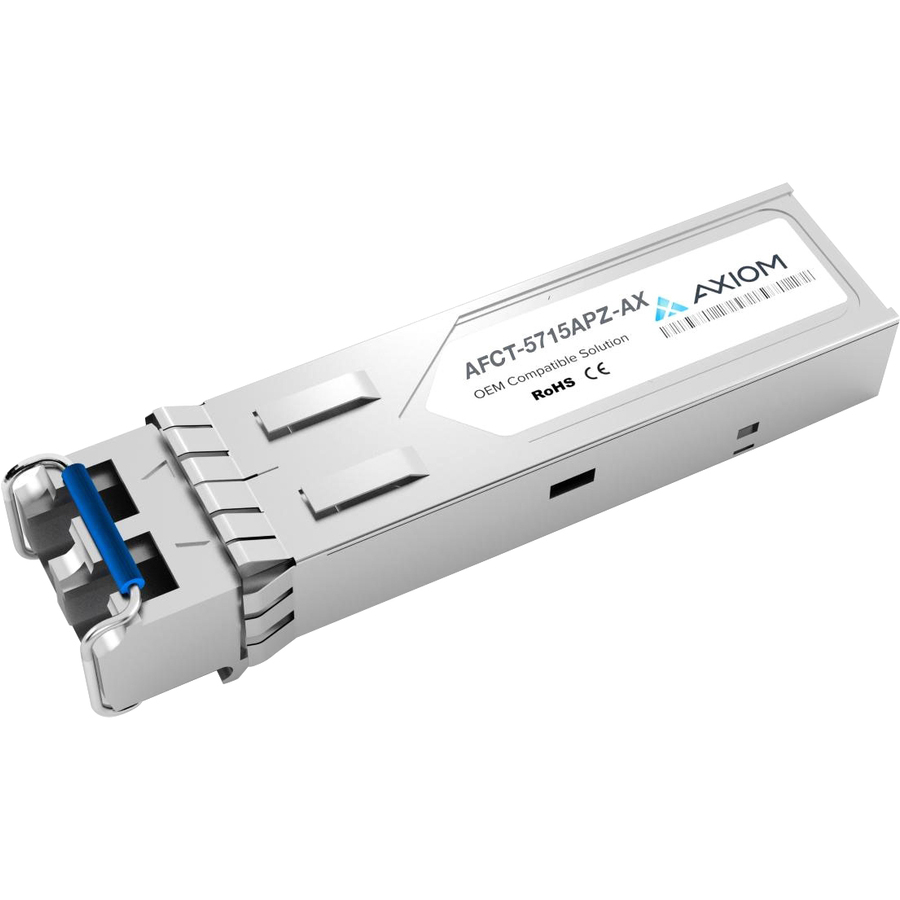
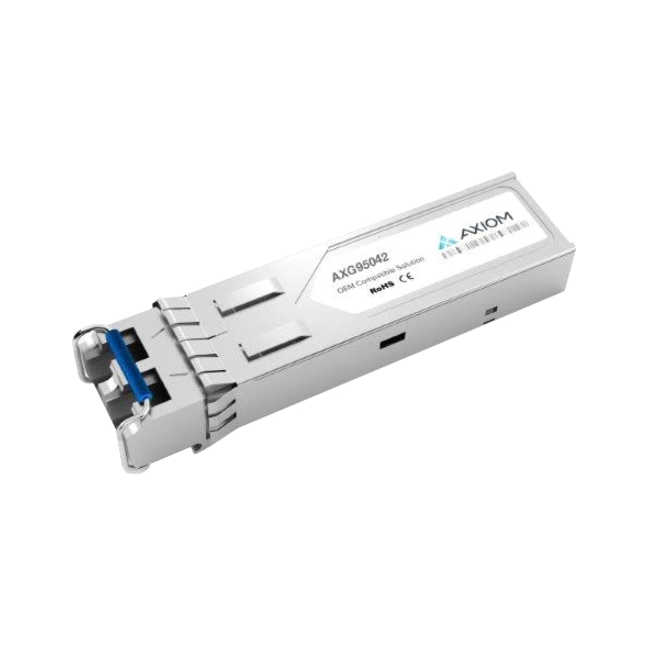
- Axiom Memory SolutionsAxiom 1000BASE-LX Industrial Temp SFP Transceiver for Avago - AFCT-5715APZ - 100% Avago Compatible 1000BASE-LX SFPAFCT-5715APZ-AX
$49.00
$42.65
132 in stock


Juniper-coded pick
StarTech.com
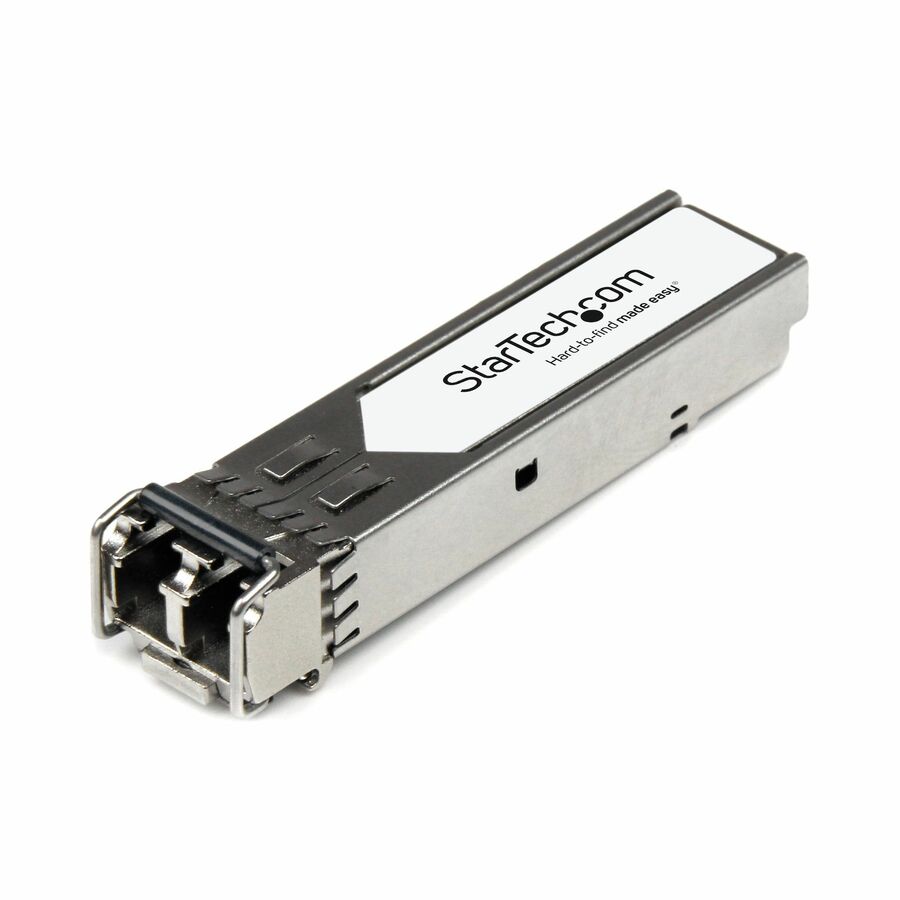
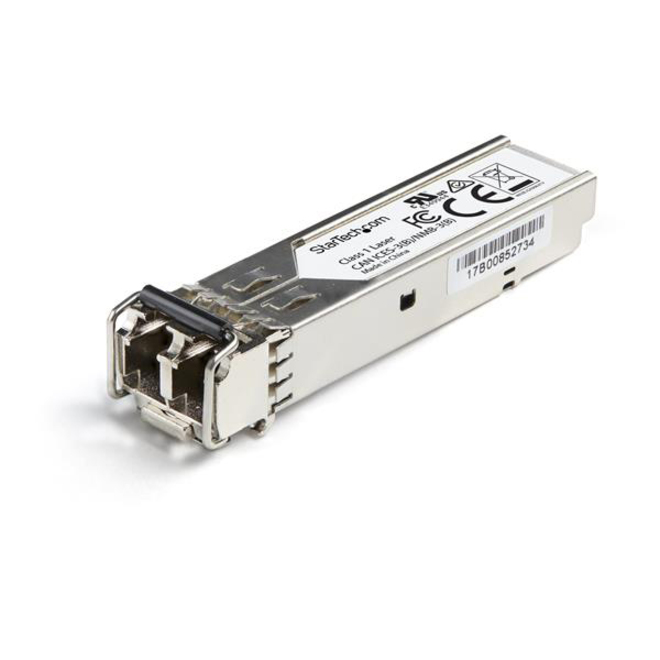
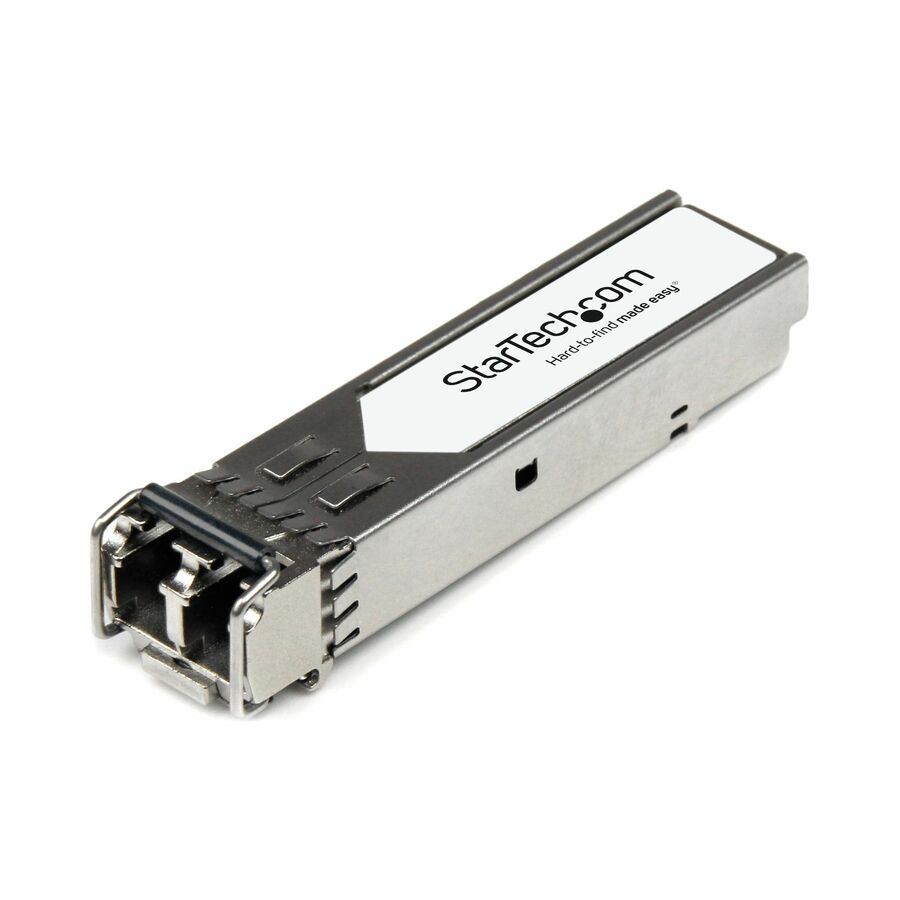
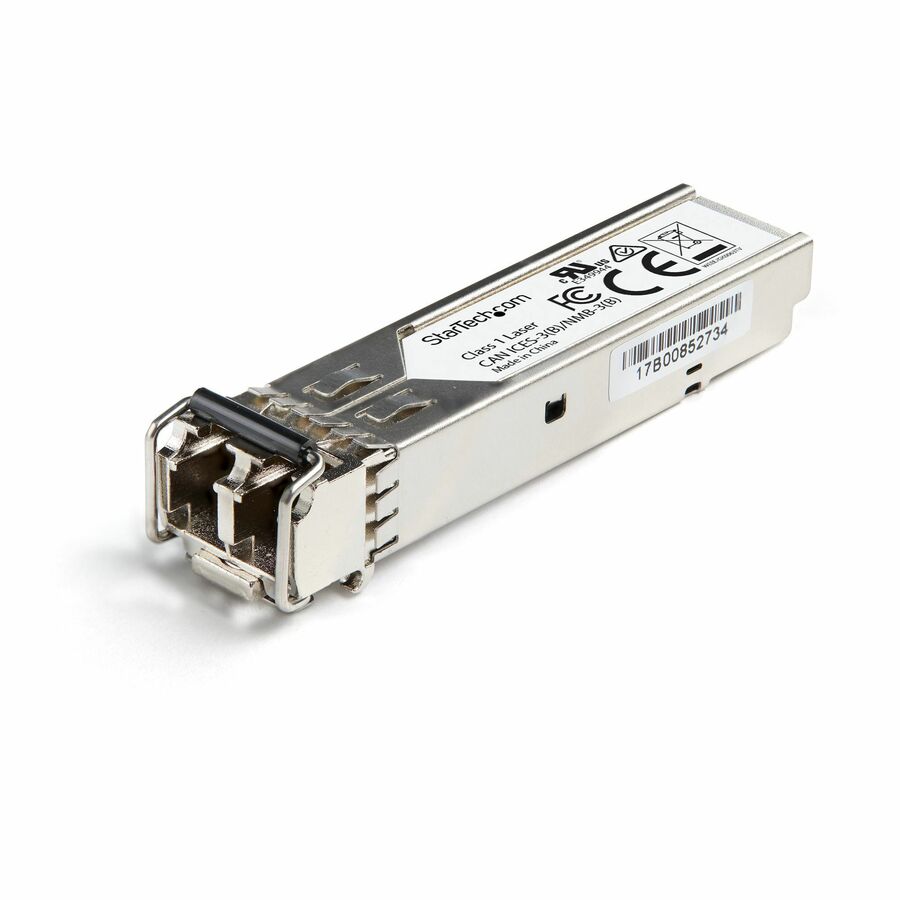
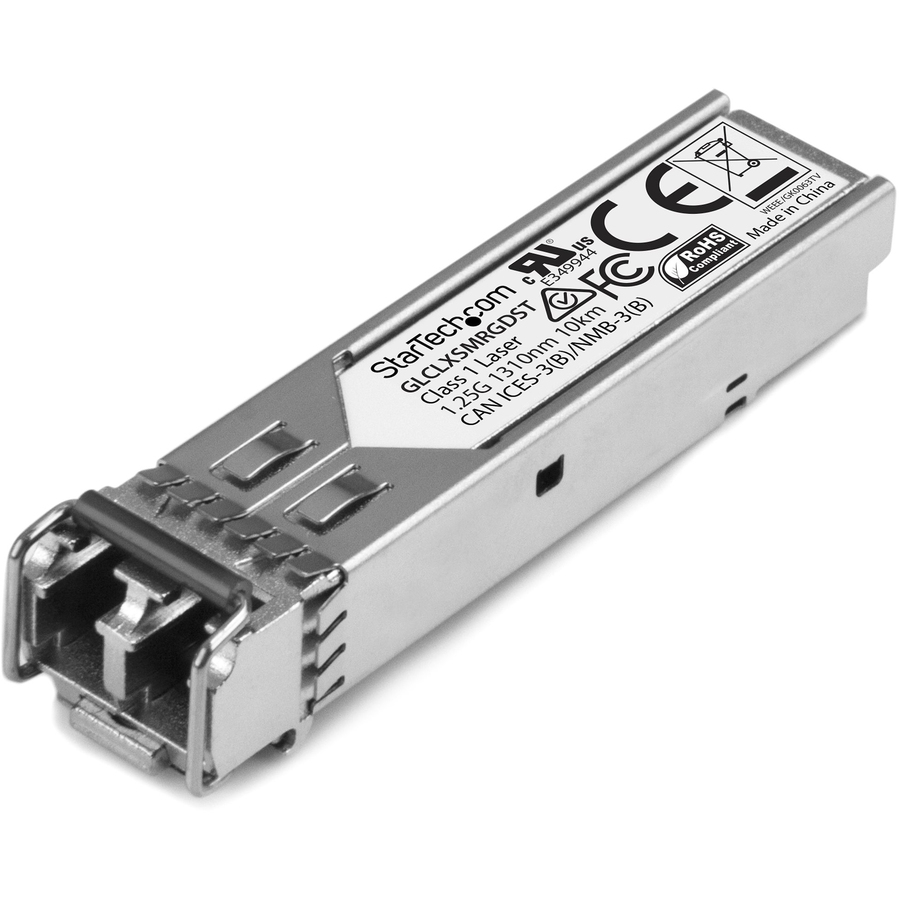
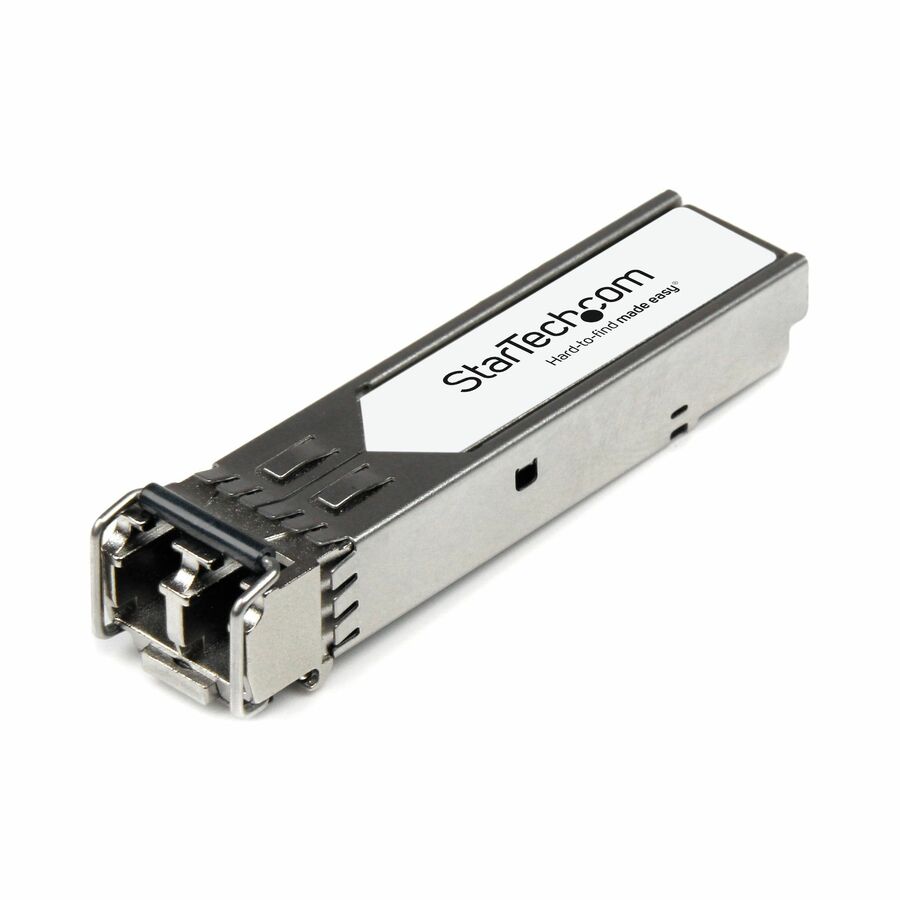
StarTech Juniper RX-10KM-SFP Compatible SFP Module
RX10KMSFPST
StarTech's Juniper RX-10KM-SFP equivalent: 1310 nm, a listed 10 km reach, LC connector and DOM support, described by the manufacturer as hot-swappable and MSA compliant. The listing records support for both single-mode and multi-mode fiber and states a lifetime warranty.
$15.63In stockCisco-coded pick
Lantronix
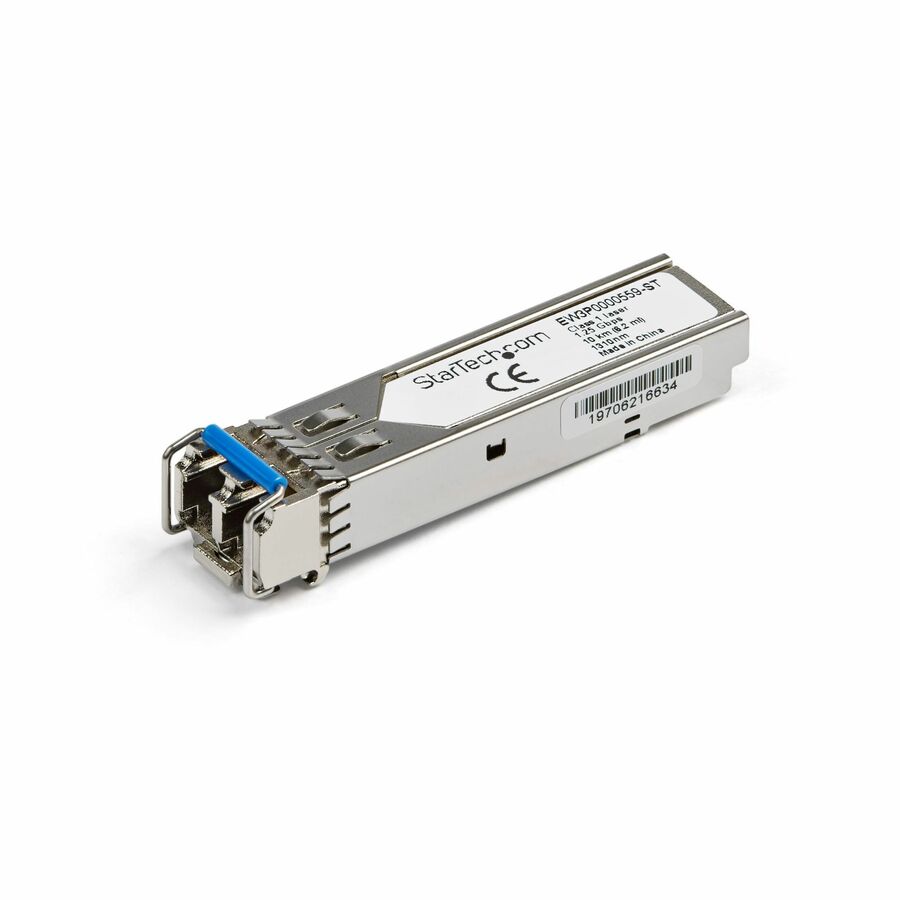
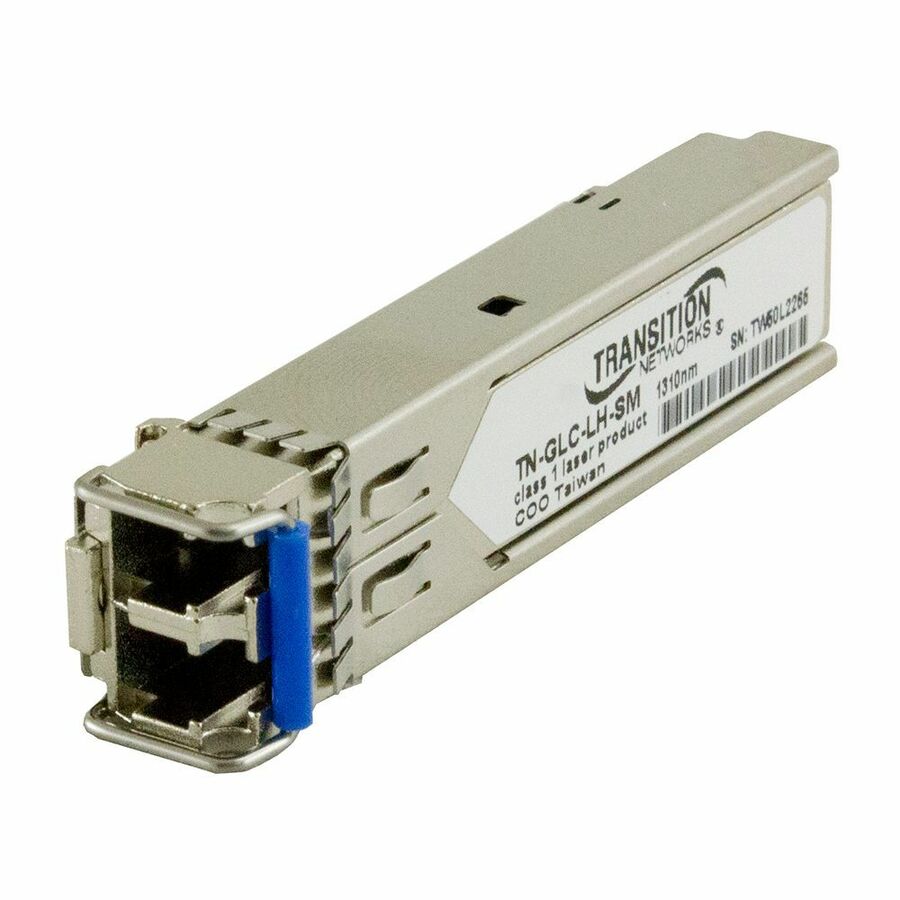
Lantronix TN-GLC-LH-SM Cisco SFP (mini-GBIC) Module
TN-GLC-LH-SM
Lantronix builds this against the Cisco GLC-LH-SM: single-mode optical fiber, one LC 1000BASE-LX port and a listed 10 km maximum distance. The manufacturer's listing records it as TAA compliant.
$27.28*In stockDell EMC pick
StarTech.com
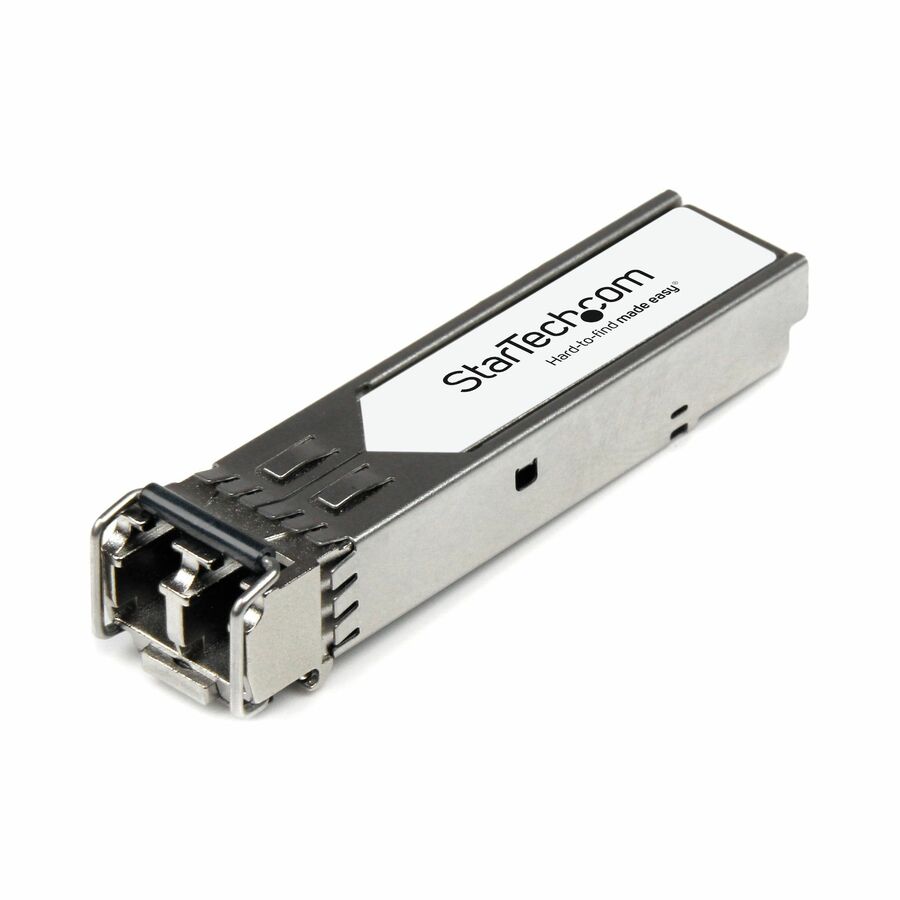
StarTech Dell EMC SFP-1G-LX Compatible SFP Module
SFP1GLXEMCST
Coded for the Dell EMC SFP-1G-LX — 1310 nm single-mode, LC, a listed 10 km reach with DOM. The manufacturer describes it as hot-swappable and MSA compliant and states a lifetime warranty on the listing.
$35.82In stockExtreme Networks pick
StarTech.com
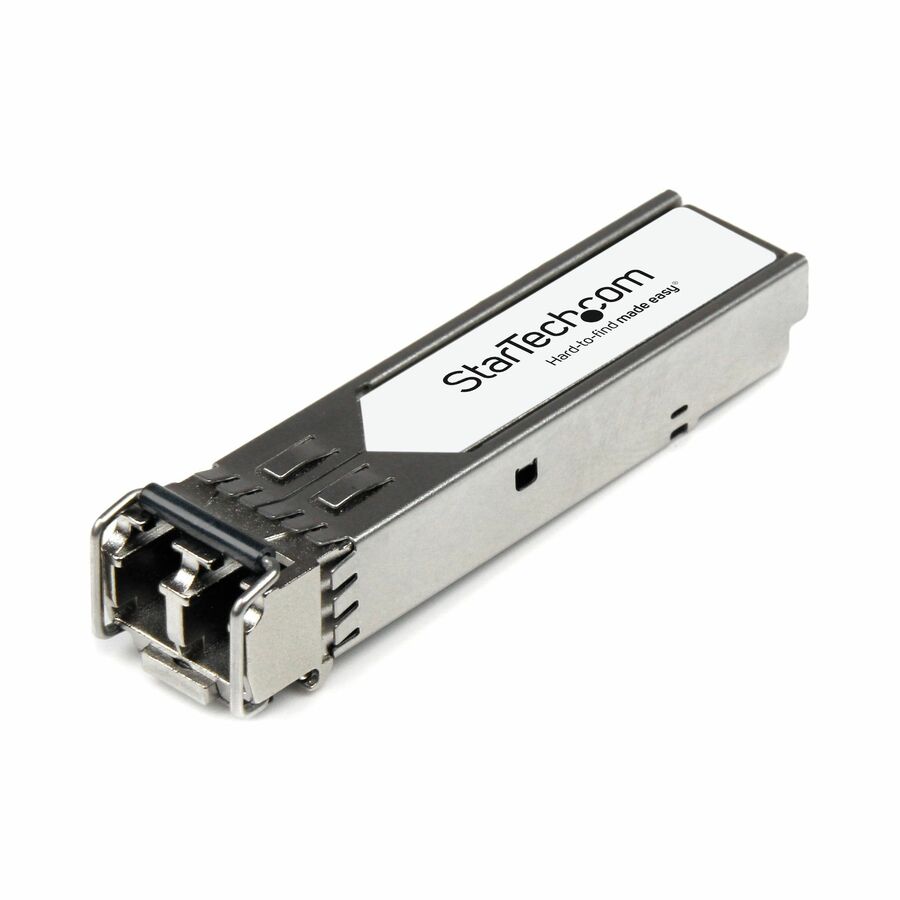
StarTech Extreme Networks 10052 Compatible SFP Module
10052-ST
The Extreme Networks 10052 equivalent, same optical shape: 1310 nm single-mode, LC connector, a listed 10 km reach and DOM. Useful where a campus core is Extreme and the closets are something else entirely.
$35.82In stockRuggedized Cisco pick
StarTech.com
StarTech Cisco GLC-LX-SM-RGD Compatible SFP Module
GLCLXSMRGDST
Built against the Cisco GLC-LX-SM-RGD, the ruggedized variant of the standard part, for industrial and outdoor-cabinet switch lines. Single-mode, 1310 nm, LC, a listed 10 km reach.
Check the host switch is one of the ruggedized platforms — the coding is specific to that family.
$37.71In stockGBIC option, not SFP
NSI Industries
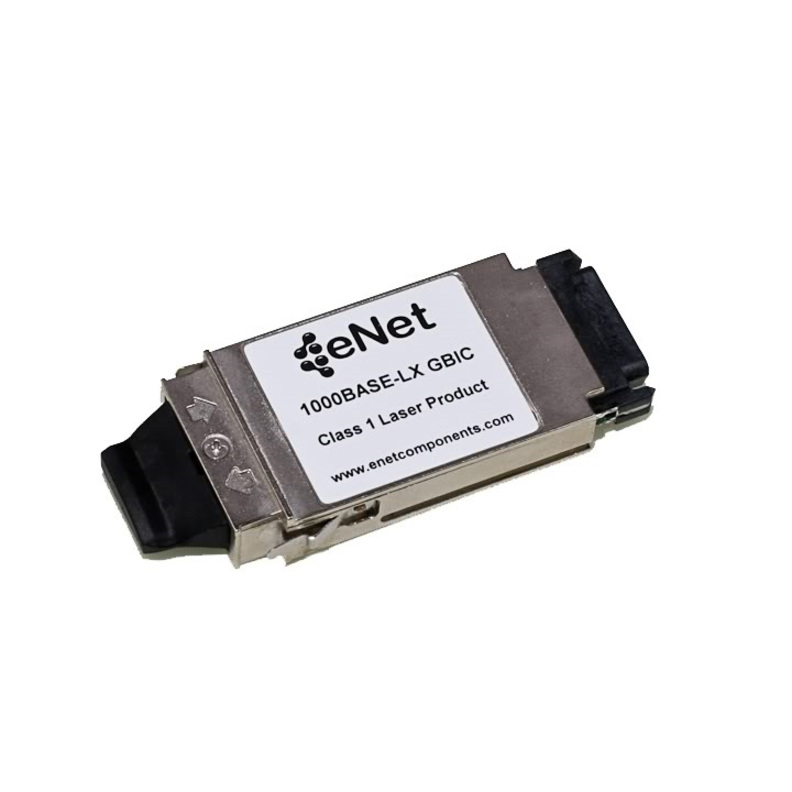
ENET Ruckus (Formerly Brocade) Compatible E1G-LX TAA Compliant…
E1G-LX-ENC
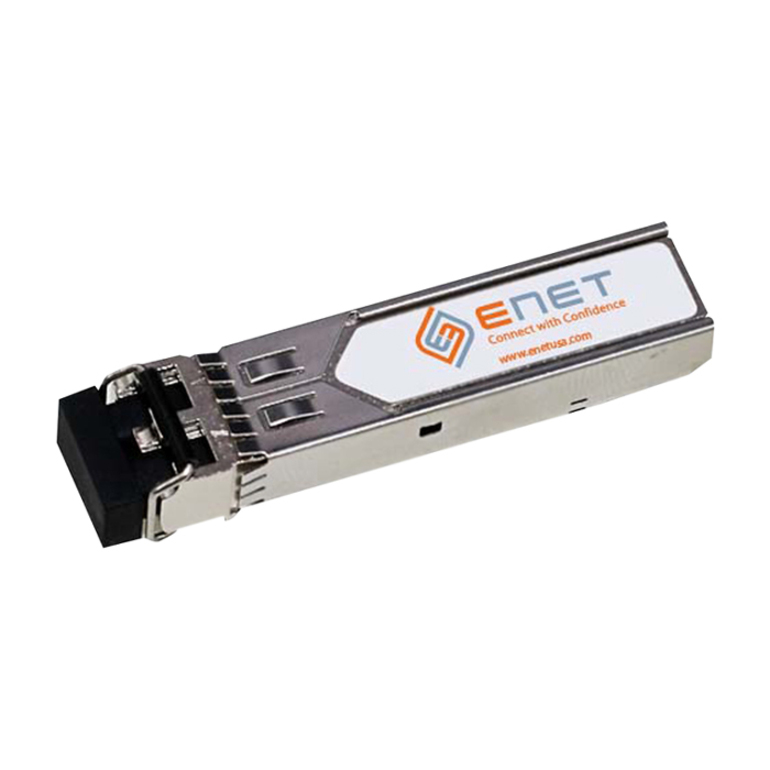
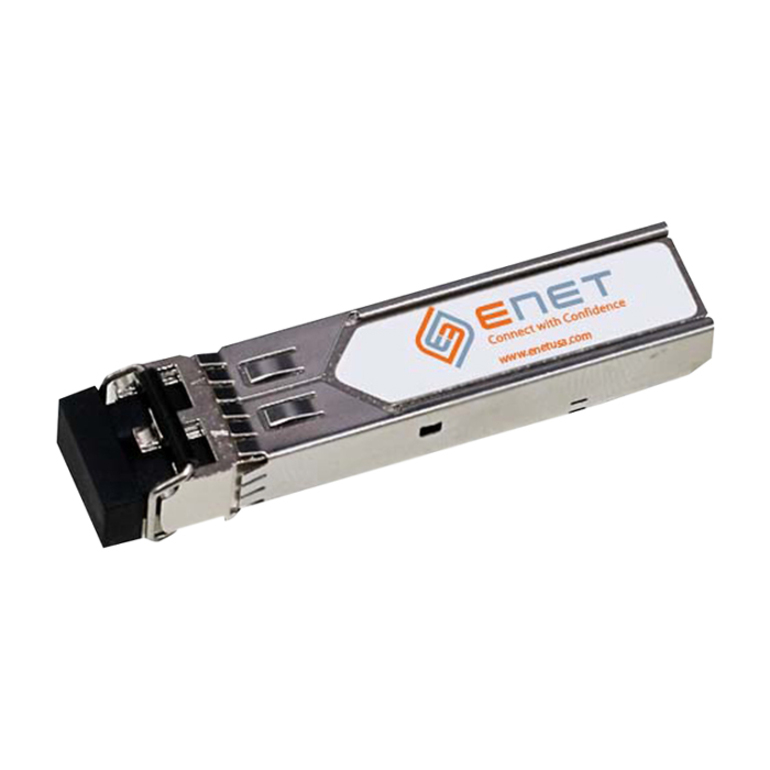
ENET's Ruckus (formerly Brocade) E1G-LX equivalent, and deliberately the odd one here: it is a 1000BASE-LX/LH GBIC with a duplex SC connector, not an SFP, so it fits the older Brocade-era slots and nothing else. The listing records TAA compliance, a lifetime warranty, and that it is programmed, tested and supported in the USA.
GBIC form factor — it will not fit an SFP cage. Check the slot before ordering.
$53.99In stockMore transceiver modules in the Uniqcli catalog
See all 19,405 transceiver modulesMore from across this category. In-stock lines lead, and a back-ordered line carries the same estimated availability its product page does — with live pricing throughout, NDAA §889 screening before checkout and TAA verified on request.
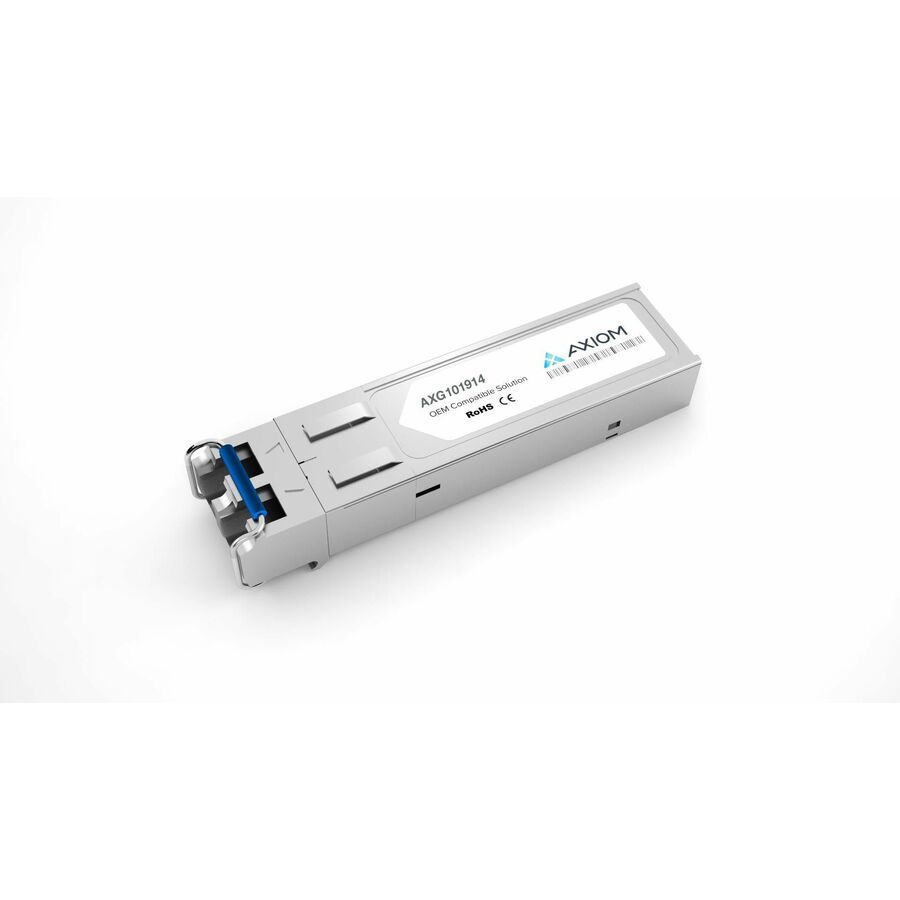
- Axiom Memory SolutionsAxiom 10GBASE-LR/1000BASE-LX Dual Rate SFP+ Transceiver - TAA Compliant - For Data Networking, Optical Network - 1 x LC 10GBASE-LR/1000BASE-LX Network - Optical Fiber - Single-mode - 10 Gigabit Ethernet, Gigabit Ethernet - 10GBase-LR, 1000Base-LX10 km Maximum Distance - TAA CompliantAXG101914
$820.00
$326.32*
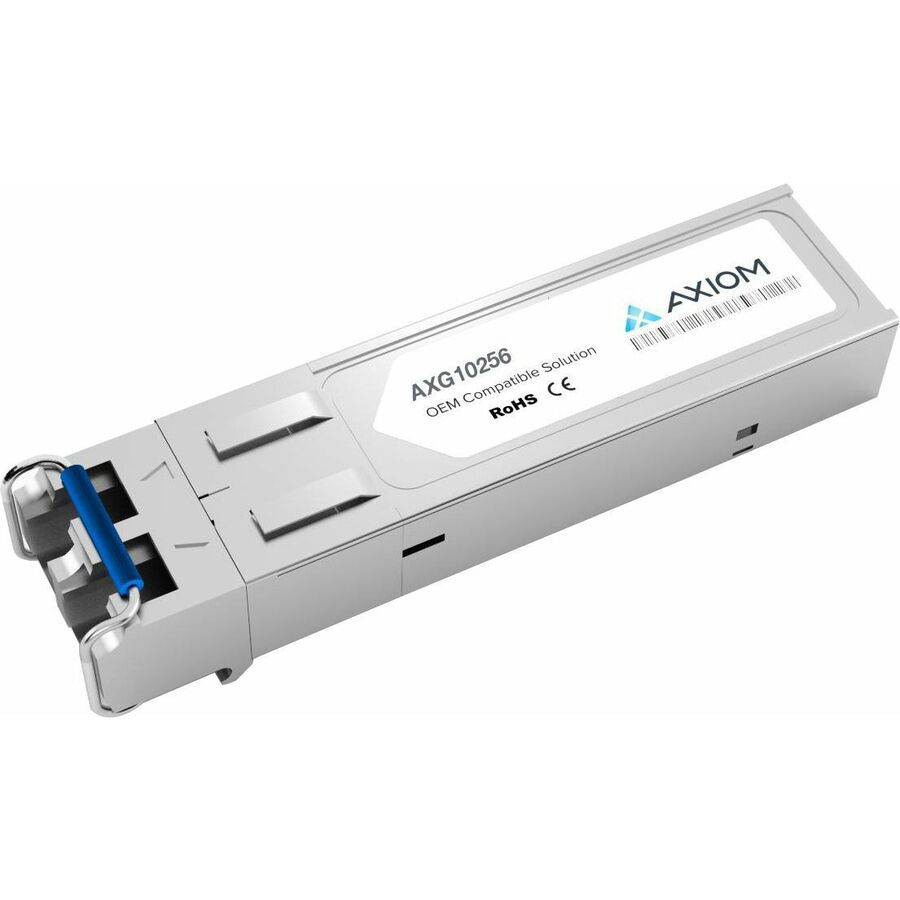
1 in stock - Axiom Memory SolutionsAxiom 10GBase-LR/1000Base-LX Dual Rate SFP+ Transceiver for Dell - For Optical Network, Data Networking - 1 x LC 10GBase-LR Network - Optical Fiber - Single-mode - Gigabit Ethernet, 10 Gigabit Ethernet - 10GBase-LR, 1000Base-LX - 10 Gbit/s - 10 km Maximum Distance - TAA CompliantAXG101256
$820.00
$326.32*
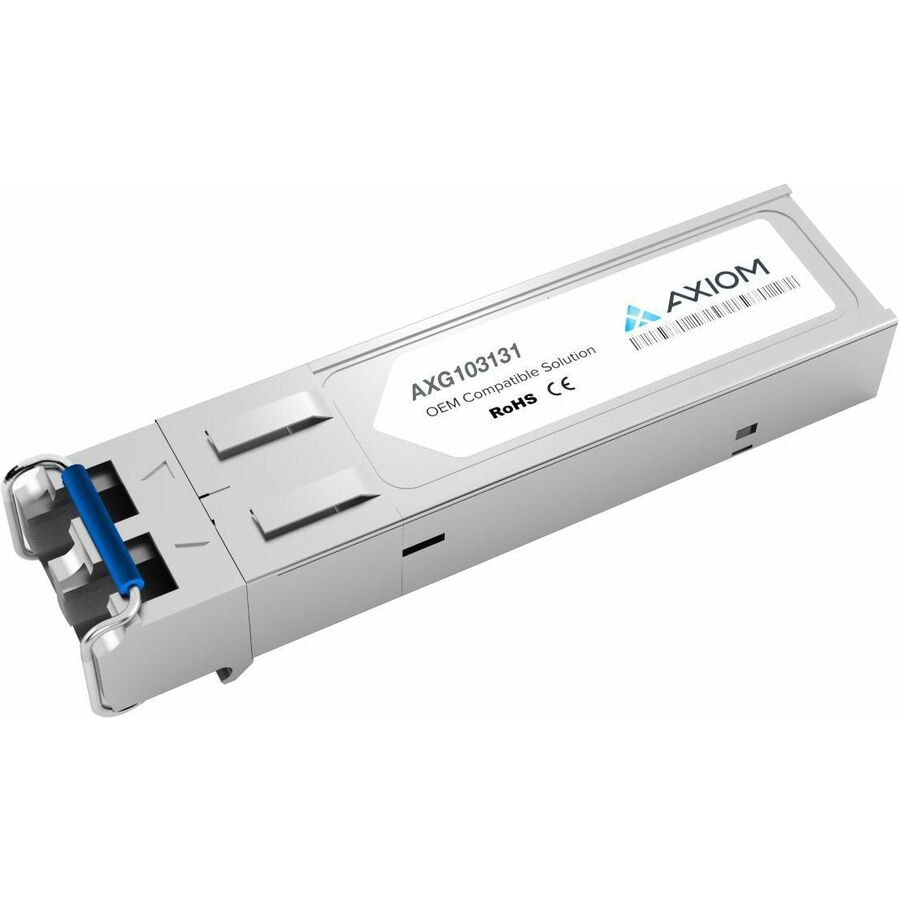
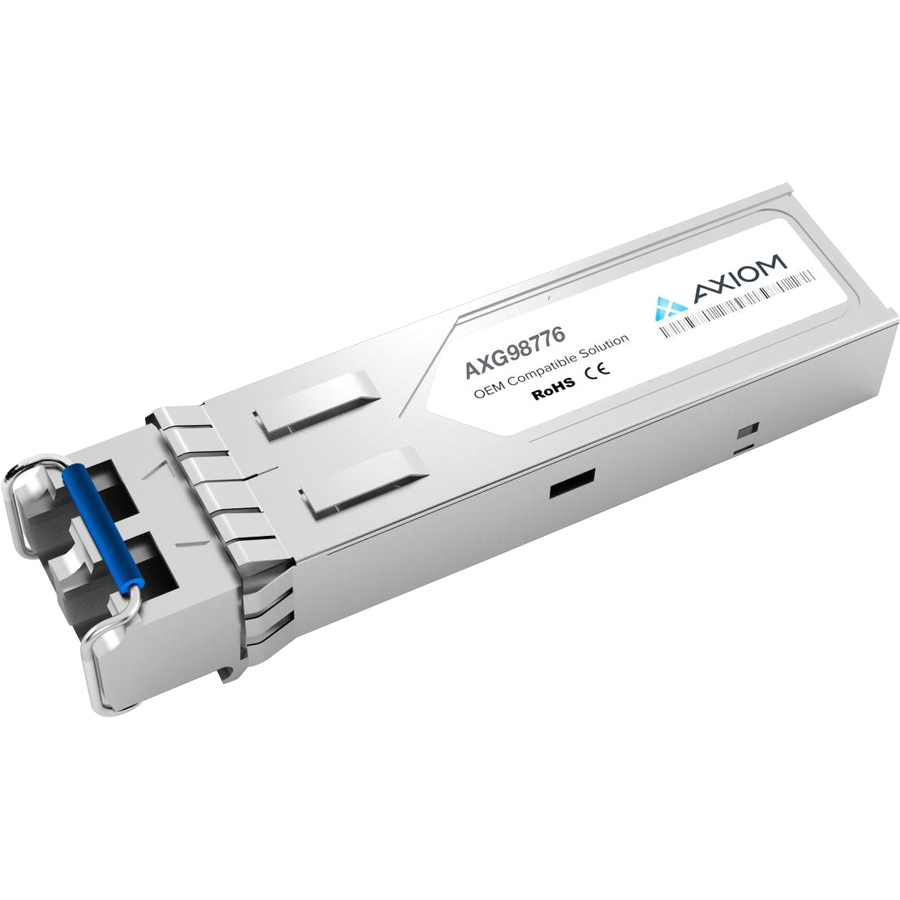
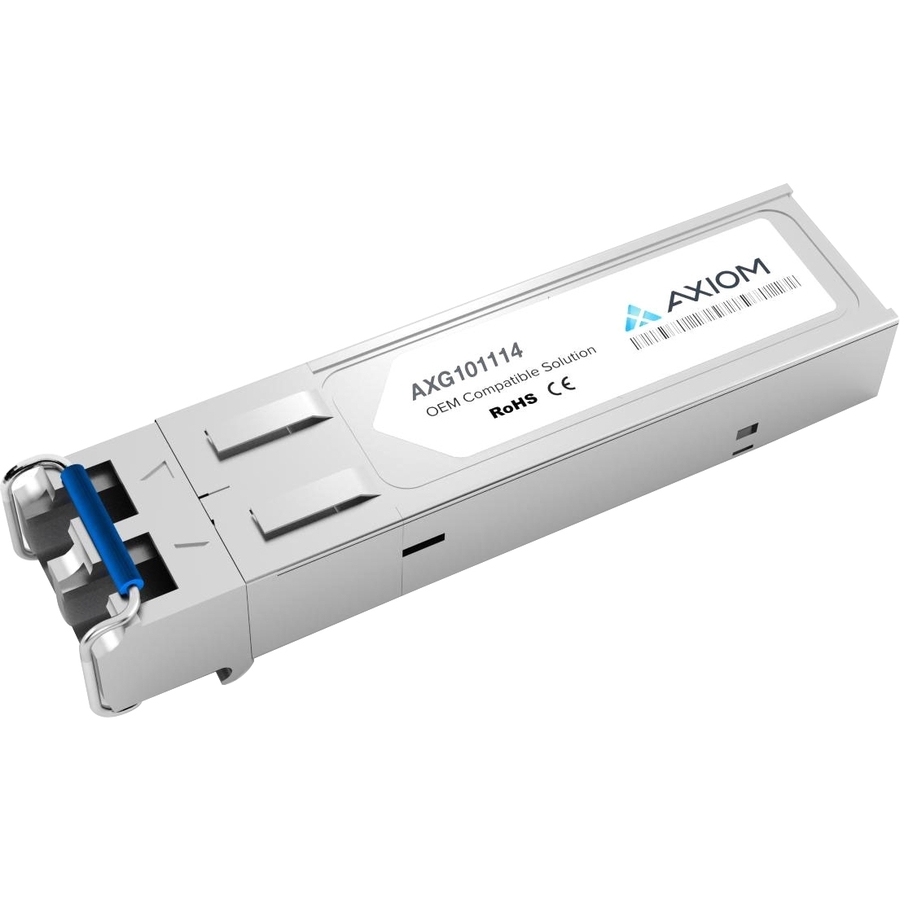
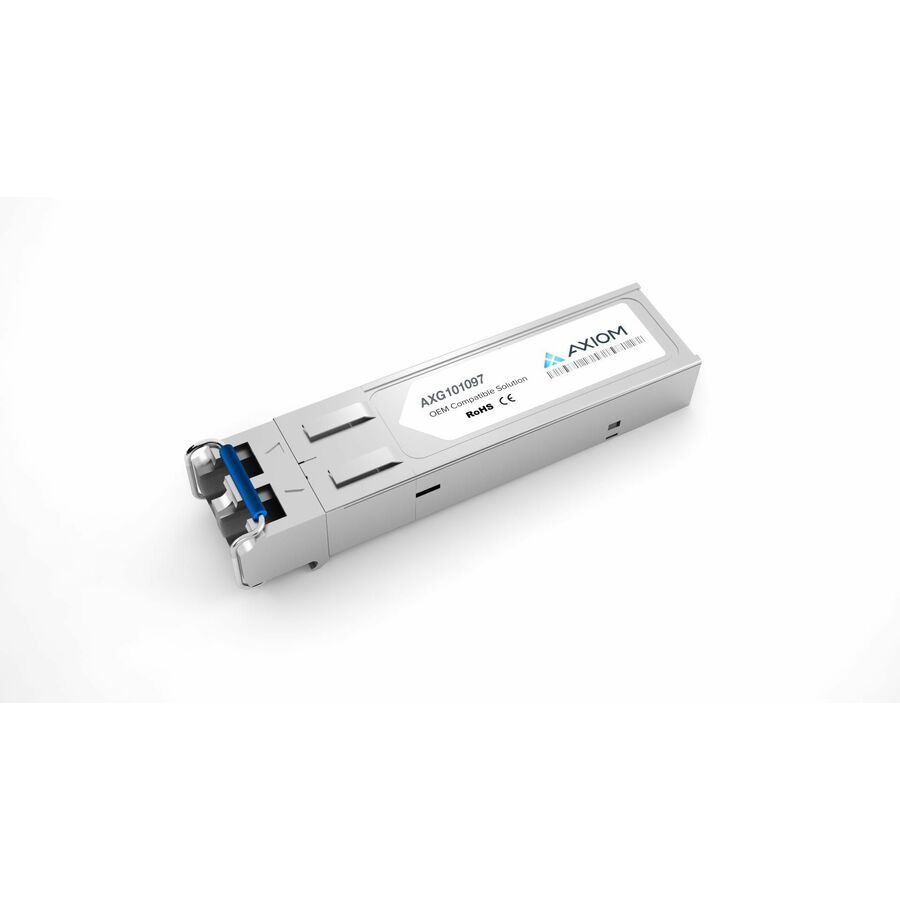
2 in stock - Axiom Memory SolutionsAxiom 1000BASE-LX SFP Transceiver for Ixia - 958-0031 - 100% Ixia Compatible 1000BASE-LX SFPAXG98776
$206.67
$82.60*
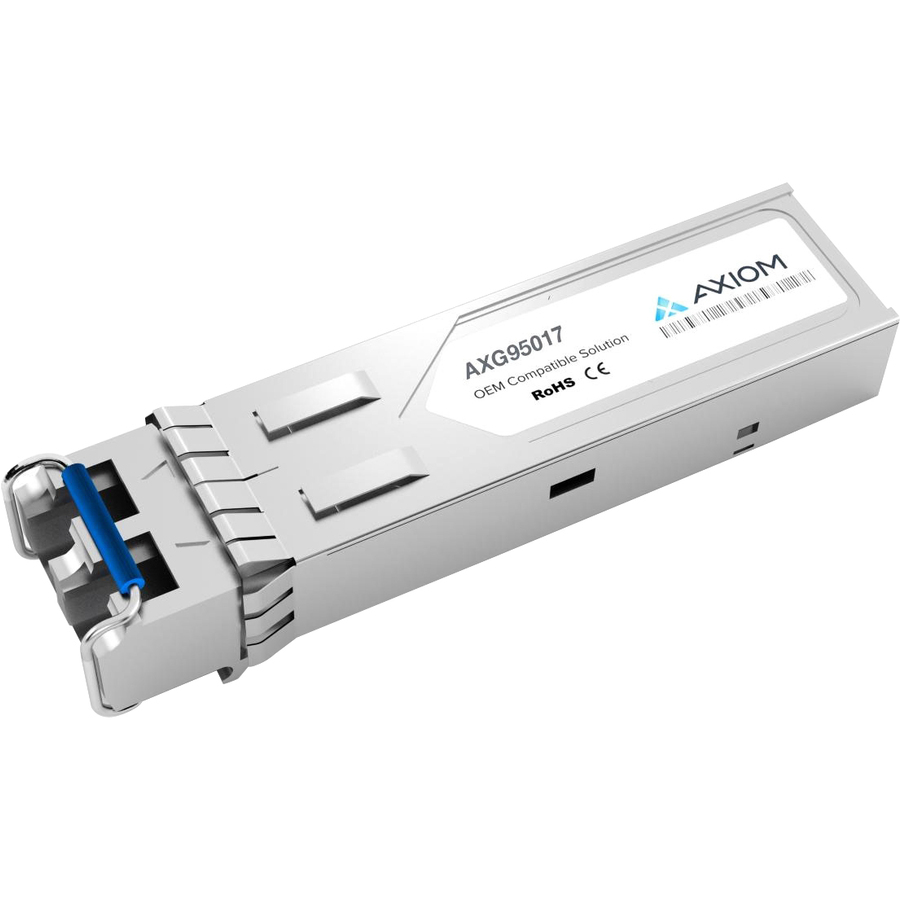
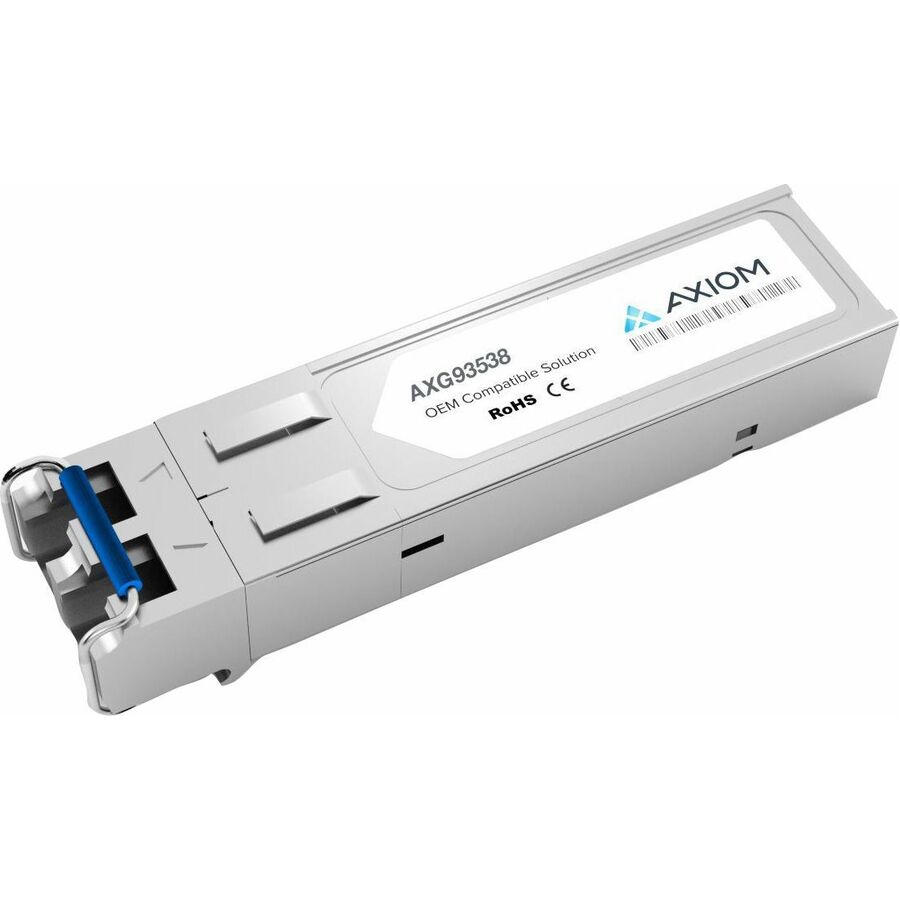
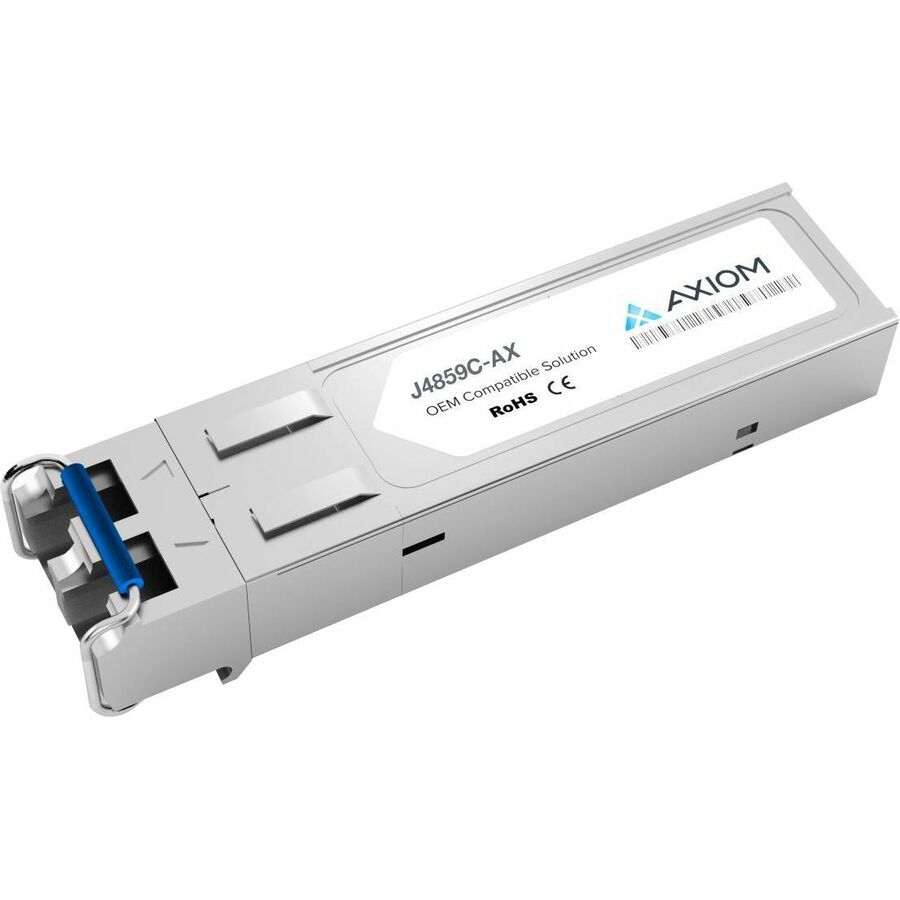
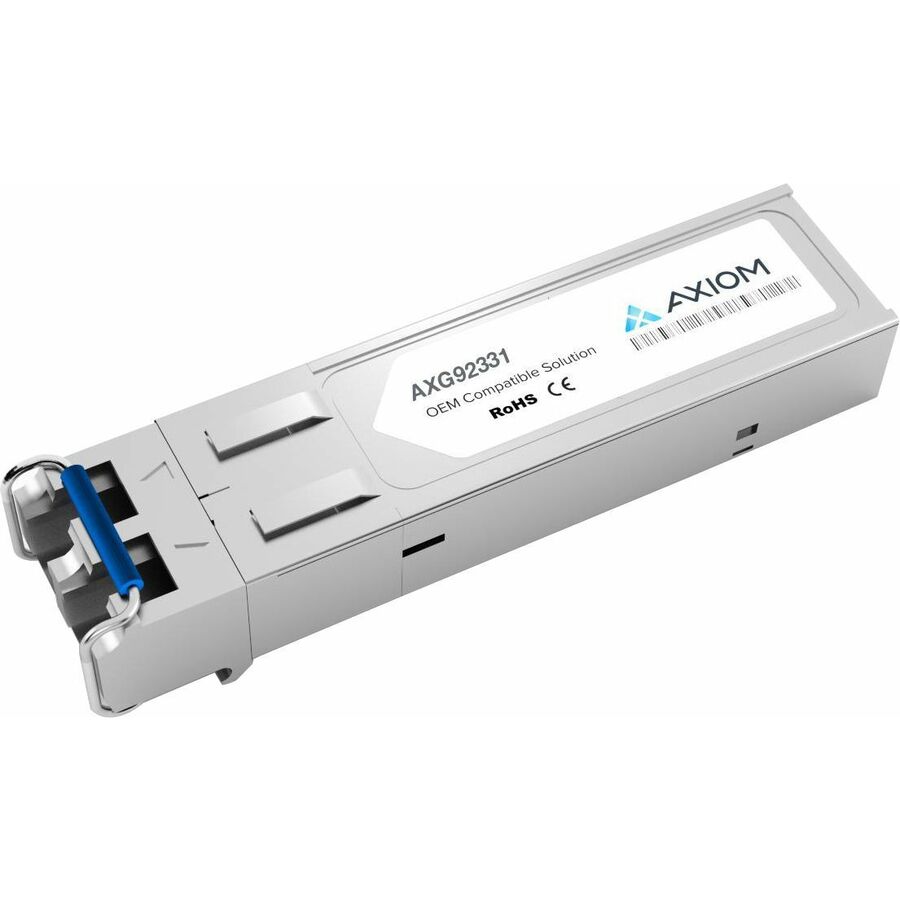
101 in stock - Axiom Memory SolutionsAxiom 1000Base-LX SFP Transceiver for Alcatel - SFP-GIG-LX - TAA Compliant - For Optical Network, Data Networking - 1 x LC Duplex 1000Base-LX Network - Optical Fiber - Single-mode - Gigabit Ethernet - 1000Base-LX - 1 Gbit/s - 10 km Maximum Distance - TAA CompliantAXG92331
$160.00
$63.96*
466 in stock

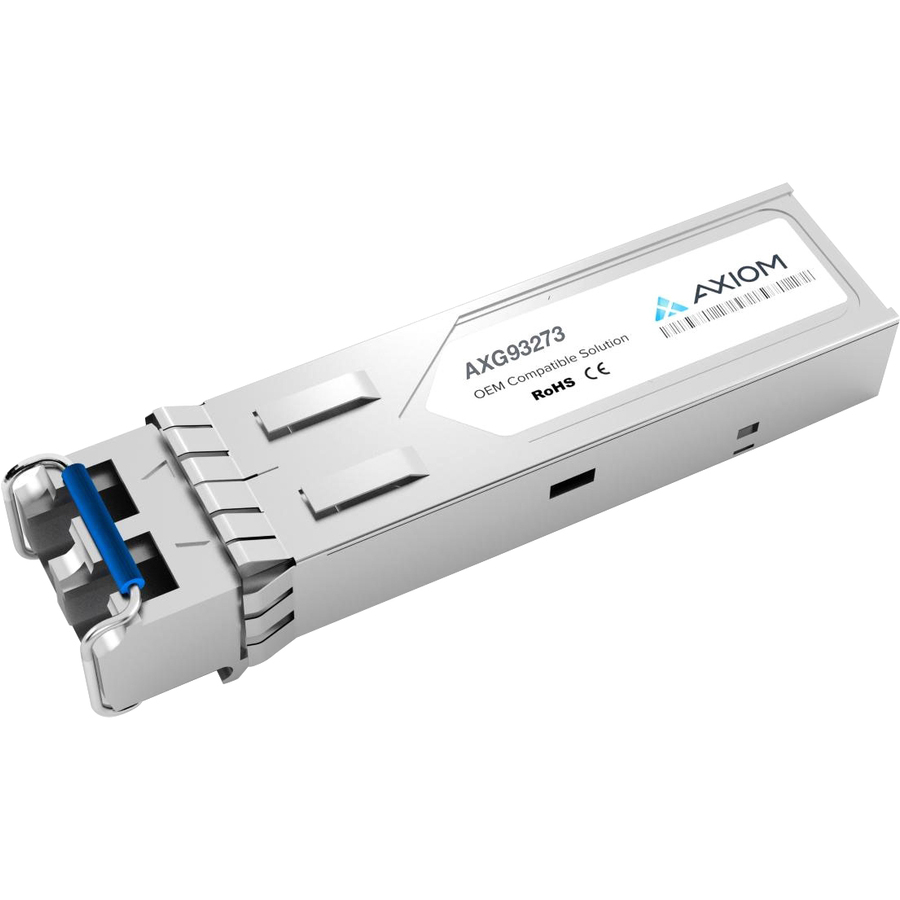
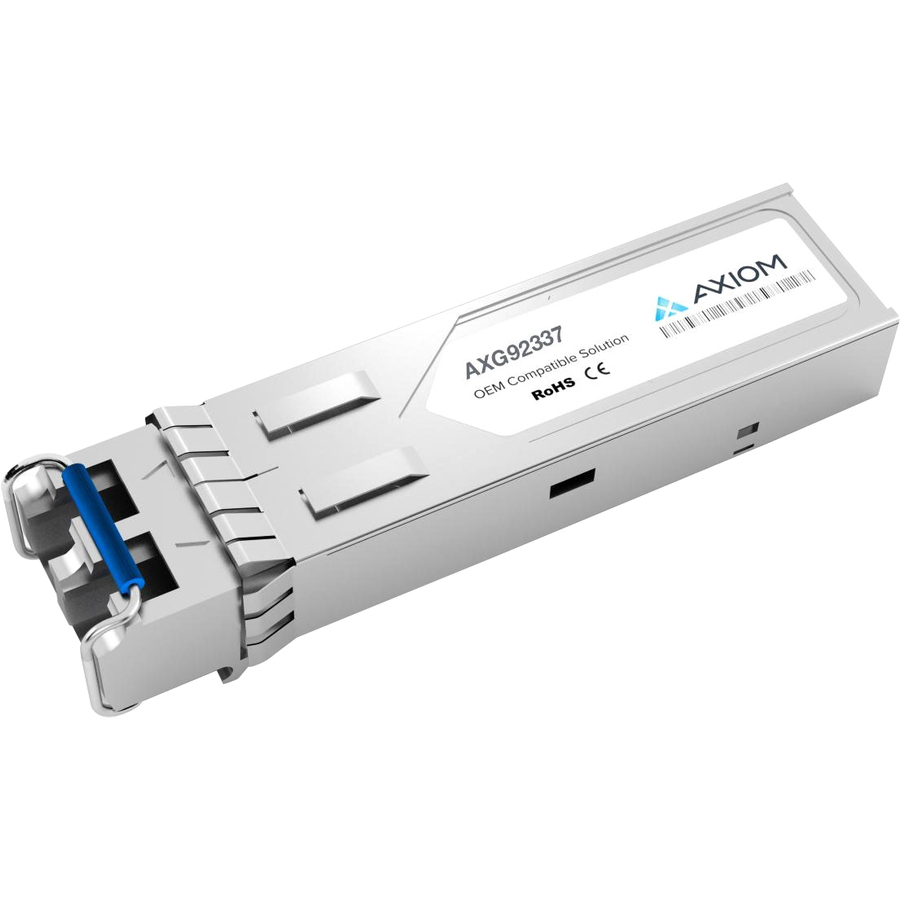
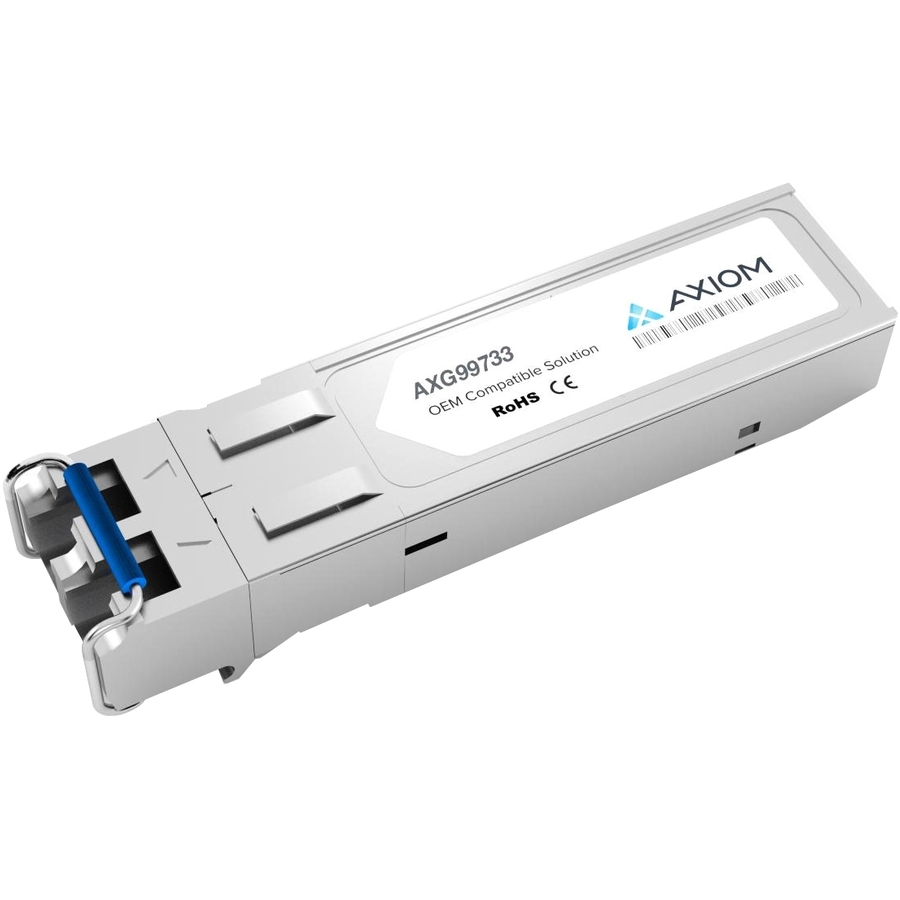
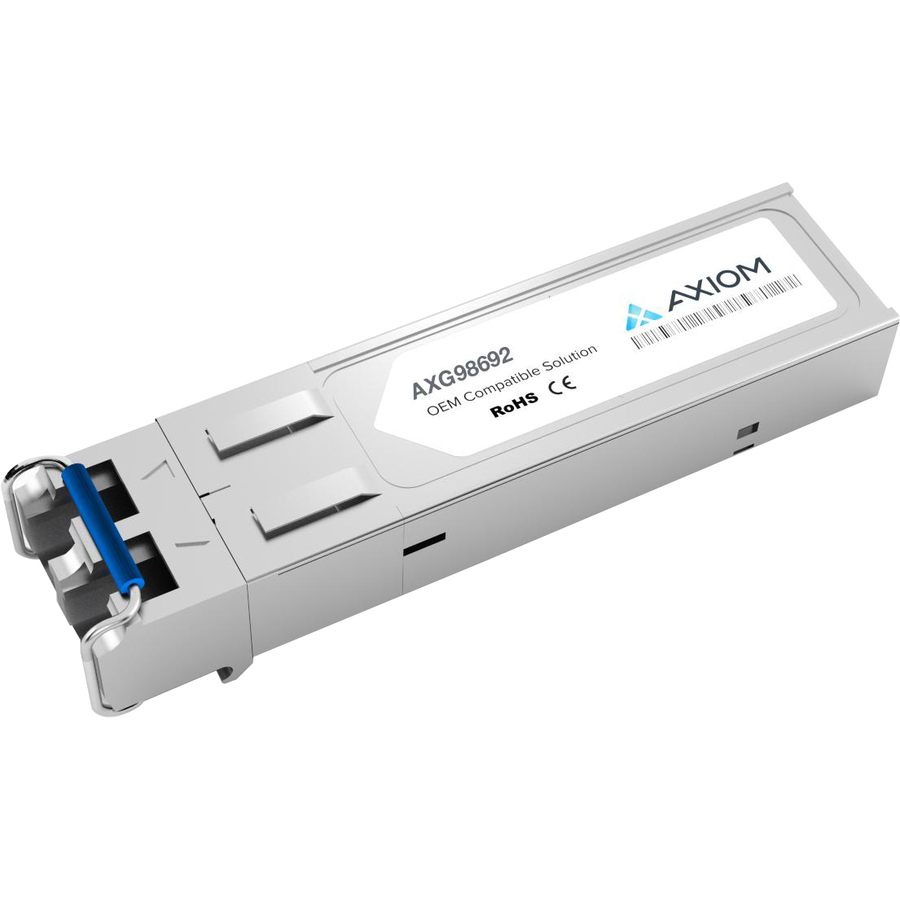
Need pricing on 1000BASE-LX SFP modules?
Tell us where to reach you and a Uniqcli specialist will follow up by email with current pricing, availability and lead time for the quantities you need — including parts that aren’t shown on this page.
Buying for an organization or for yourself — both work. No payment up front.
1000BASE-LX is the gigabit optic that leaves the building: 1310 nm over single-mode fiber, specified to 5 km in IEEE 802.3 and rated to 10 km on the modules sold for it. Start with the plant, not the module — single-mode is jacketed yellow and printed 9/125, multimode orange or aqua at 50/125 or 62.5/125, and multimode needs 1000BASE-SX. Then match the coding at both ends.
1000BASE-LX is the gigabit optic that leaves the building. It transmits at 1310 nm over single-mode fiber, and while IEEE 802.3 specifies the standard to 5 km, the modules sold for it are rated to 10 km — which is what a campus backbone, a building-to-building link or a run out to a remote closet actually needs. The decision that brings people here is almost never LX versus something faster — it is the discovery that the fiber in the ground is single-mode and the module already ordered is not.
So start with the plant, not the module. Single-mode fiber is typically jacketed yellow and printed 9/125; multimode is orange or aqua and printed 50/125 or 62.5/125. Single-mode plant needs LX at both ends. Multimode plant needs 1000BASE-SX, and while some LX modules will run over multimode with a mode-conditioning patch cord, that is a workaround for legacy plant rather than a design. The second decision is coding: an SFP carries an identity EEPROM and most switch platforms check it before bringing the port up, so a module has to be programmed for the platform it is going into. Every module below is a third-party part built to the MSA specification and coded for a named platform, with the compatibility statement quoted from the manufacturer's own listing.
Two form-factor traps are worth naming before the grid. The older GBIC form factor appears in this same standard with an SC connector and will not fit an SFP cage — one of the picks below is deliberately a GBIC, labelled as such, because older Brocade and Ruckus estates still take them. And LX/LH is a common vendor extension rather than a separate standard: the module runs the LX optical spec but the manufacturer rates it further on single-mode, which is why the same part often appears under both names. The selection below is drawn from the 1000BASE-LX modules Uniqcli currently carries, with live pricing and stock status on each card.
Buyer's checklist
How to choose a 1000BASE-LX SFP
- Confirm the fiber is single-mode before anything else — yellow jacket, 9/125 legend. Multimode plant needs 1000BASE-SX, and mixing the two is the most expensive mistake in this category.
- Name the exact switch, router or NIC at BOTH ends. Coding is per-platform and sometimes per-family, and it decides whether the module is accepted at all.
- Check the form factor against the cage: SFP takes duplex LC, the older GBIC form takes duplex SC, and they are not interchangeable even within the same standard.
- Read LX versus LX/LH on the specific listing — LX/LH is a vendor extension rated further on single-mode, not a different standard, and the rating belongs to the manufacturer.
- If the run is legacy multimode and single-mode is not an option, ask about a mode-conditioning patch cord rather than assuming the module will simply cope.
- Specify DOM/DDM where your monitoring platform reads per-port optical power — it cannot be retrofitted onto a module that lacks it.
- Keep a spare per site. A building-to-building link failing on a Friday is a different problem from an access port failing, and the spare is what decides how long it lasts.
Single-mode or multimode: settle this first
The fiber already in the ground decides which module you can buy, and it is not a preference. Single-mode fiber has a 9 µm core, is usually jacketed yellow and is printed 9/125; it carries 1310 nm light a long way with very little dispersion, which is why IEEE 802.3 specifies 1000BASE-LX to 5 km on it and the modules sold for it are rated to 10 km. Multimode has a much larger core, is jacketed orange for OM1/OM2 and aqua for OM3/OM4, and is printed 50/125 or 62.5/125; it is a short-reach medium and belongs to 1000BASE-SX.
Where this bites is a link that crosses a boundary — out of a building, across a campus, into a remote closet at the far end of a site. Those runs are almost always single-mode, and an SX module ordered for them will either not link or will link and then fail intermittently. If you cannot read the cable legend, the patch panel label or the as-built drawing usually settles it; if none of those exist, a light-source test costs an hour and saves a redelivery.
LX, LX/LH, and what the extra letters mean
1000BASE-LX is the IEEE standard: 1310 nm, single-mode, specified to 5 km — the 10 km figure printed on most LX modules is the manufacturer's own rating, not the standard's. LX/LH is a widely used vendor extension that runs the same optical specification but is rated by the manufacturer for a longer single-mode reach, and it is why the same physical part frequently appears under both names in a catalog. Neither designation changes the connector, the wavelength or the fiber type; what changes is the distance figure the manufacturer will stand behind, so read it on the specific part number rather than on the standard.
Longer-reach variants exist beyond LX/LH — 1000BASE-EX and ZX push out to 40 and 70 km on single-mode — and they are a different purchase with different optical budgets and, on very short runs, a real risk of overdriving the receiver. If a link is genuinely longer than the LX class covers, tell us the distance and we will price the right optical budget rather than the next part number up.
The GBIC problem, and why one pick is deliberately not an SFP
GBIC is the form factor SFP replaced. It is physically larger, uses duplex SC rather than duplex LC, and it appears in this same 1000BASE-LX standard on older switch lines — Brocade, and the Ruckus platforms that inherited them, are the estates most likely to still have GBIC slots in service. A GBIC will not fit an SFP cage and an SFP will not fit a GBIC slot, so the form factor is a hard fork rather than a preference. One pick below is a GBIC and is labelled as one for exactly that reason.
If you are refreshing a site that still has GBIC-era switches, the honest answer is usually that the optics are the cheap part of the problem and the switch generation is the expensive one. That refresh carries the switches, the management or controller licensing that goes with them, the patch and structured cabling between the module and the plant, and the staging and installation labour. Uniqcli quotes all of it through US distribution rather than only the pieces that fit in a cart.
FAQ
Common questions
- How do I know whether my fiber is single-mode or multimode?
- Read the cable. Single-mode is typically jacketed yellow and printed 9/125; multimode is orange for OM1 and OM2 and aqua for OM3 and OM4, printed 50/125 or 62.5/125. If the jacket is unreadable or the run is buried, the patch panel label or the as-built drawing usually settles it. Failing both, a light-source and power-meter test takes about an hour and is far cheaper than ordering the wrong optics twice. The rule of thumb that holds most of the time: anything that leaves the building is single-mode and needs 1000BASE-LX.
- What is the difference between LX and LX/LH?
- LX is the IEEE standard — 1310 nm over single-mode, specified to 5 km, though modules sold as plain LX are commonly rated to 10 km by their manufacturer. LX/LH is a widely adopted vendor extension that runs the same optical specification but carries a longer single-mode reach rating from the manufacturer, which is why one physical part often appears under both names. The connector, wavelength and fiber type do not change. What changes is the distance figure the manufacturer stands behind, so read it on the specific part number rather than treating LH as a separate standard.
- Can a 1000BASE-LX module run over multimode fiber?
- Sometimes, with a mode-conditioning patch cord, and it is a legacy workaround rather than a design. Launching 1310 nm single-mode light straight into a multimode core produces differential mode delay that limits distance and can make a link unstable rather than simply short. A mode-conditioning cord offsets the launch to avoid that, and the module and cord both have to be rated for it. If you are cabling something new, run the correct fiber for the standard; if you are lighting an existing multimode riser, tell us the distance and the fiber grade and we will say whether it is viable.
- Will a GBIC fit an SFP port?
- No. GBIC is the older, physically larger form factor that SFP replaced, and it uses a duplex SC connector rather than duplex LC. The two are not interchangeable in either direction, even inside the same 1000BASE-LX standard. Older Brocade switch lines — and the Ruckus platforms that inherited them — are the estates most likely to still have GBIC slots in service, which is why we carry the form and label it explicitly. Check the slot on the switch before ordering, because the standard on the label will not tell you which one you have.
- Can Uniqcli quote single-mode optics for a government or education order?
- Every line Uniqcli quotes is sourced through US distribution and screened for TAA country-of-origin and NDAA §889 status before checkout — with documentation tied to the specific part number, not a product family.
Need 1000BASE-LX SFP modules pricing?
Send a bill of materials or part numbers — we confirm stock and a below-market total, with TAA verified on request. No payment up front.