
Solutions
End-of-Life Hardware Refresh
An announced end-of-support date is the cleanest refresh trigger there is. We turn a published notice into a costed replacement bill of materials, a staging plan and a disposition path for what comes out.
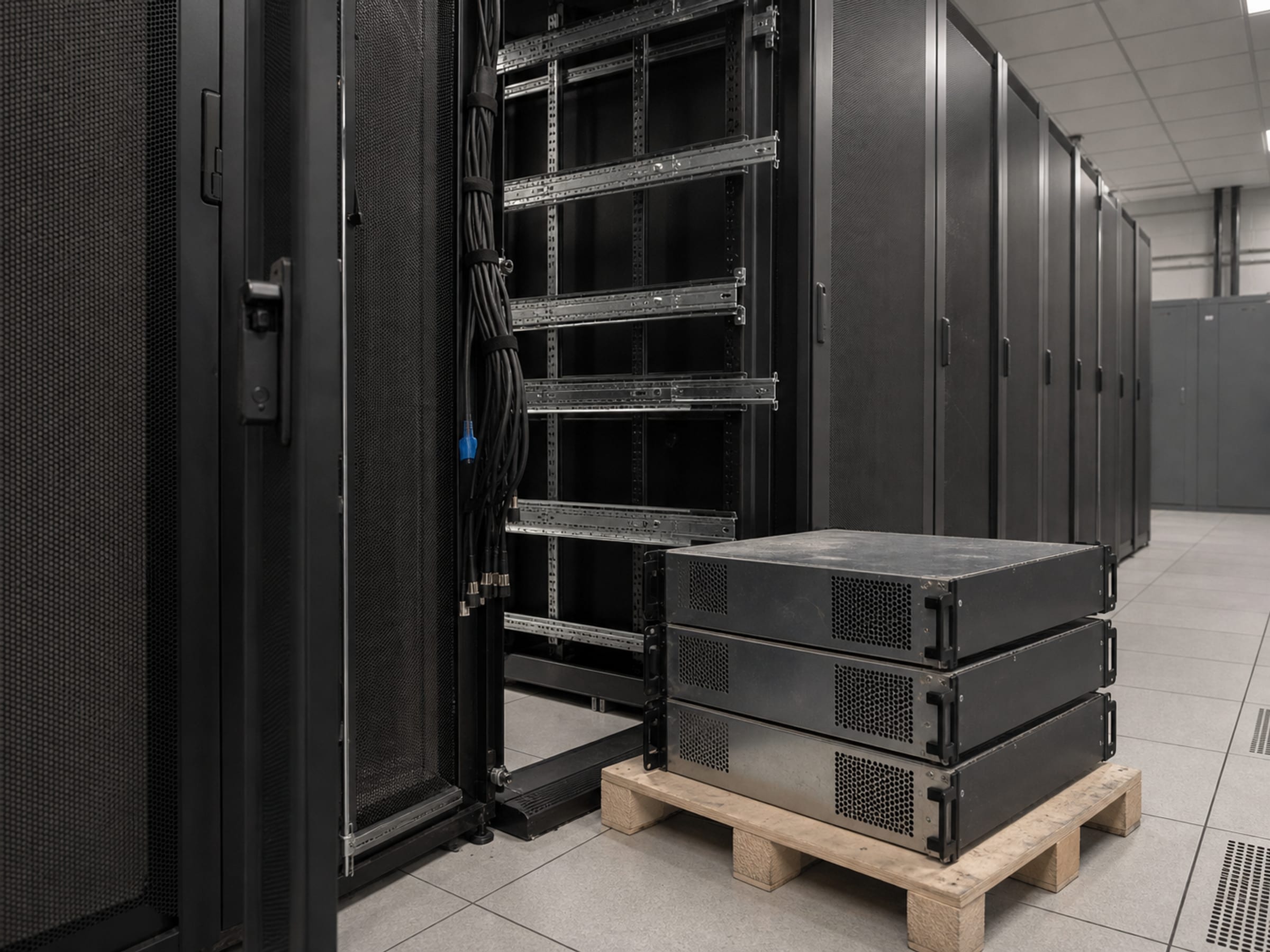
- Trigger
- Manufacturer-published end-of-sale and end-of-support notices
- What we quote
- Replacement hardware, staging, and the reverse-logistics lane
- Tooling
- Live lifecycle checkers for HPE, Dell and Juniper on /tools
- Boundary
- The dates are the manufacturer's — we read them, never extend them
A published date is the one refresh argument that does not need a business case
Most refresh proposals die in the gap between an engineer who knows the kit is tired and a finance office that sees equipment still passing traffic. An end-of-support notice closes that gap, because it converts an opinion into a date somebody else published: after it, there are no firmware fixes, no security patches, and no spare-part obligation. Uniqcli works from those notices. We check the affected models against the manufacturer's own published lifecycle data, turn the in-scope estate into a costed replacement bill of materials, plan the staging and cutover sequence around it, and handle the disposition of what comes out. What we never do is invent the date or offer to extend it — the notice belongs to the manufacturer, and our job is to be accurate about what it says.
Four dates, and only two of them are really deadlines
Manufacturers typically publish a ladder: end of sale, end of software maintenance, end of vulnerability and security support, and end of support or end of service life. The first is a purchasing constraint. The last is an operational one. The two in the middle are where the real risk sits, because a device can be fully supported for hardware replacement while no longer receiving security fixes — which is a compliance conversation rather than an availability one.
Our lifecycle checkers on /tools read the manufacturers' official notices for HPE, Dell and Juniper and return what those notices actually say for a given product identifier, including the notice reference. They are a lookup against published data, not a Uniqcli assessment: where a manufacturer has published nothing for a model, the checker says so rather than guessing.
From there the work is ordinary and unglamorous. Group the estate by model and site. Decide what is like-for-like, what consolidates, and what changes shape because the successor product does. Cost it. Sequence it against the sites that can take an outage and the ones that cannot. Then decide what happens to the removed equipment, which is a decision most refresh plans leave until the pallets are already in a corridor.
Replacement lines for the estate that ages first
Networking, endpoints and site power are where published end-of-support dates bite earliest. Naming a manufacturer describes the market, not a Uniqcli partnership or endorsement.
Access and edge switching
Allied Telesis and Netgear carry deep priced switching lines across access, PoE and small-core roles, with availability stated per line — the layer where an aging stack is usually both the biggest count and the easiest swap. Replacement is quoted per site with the uplink and optics that the new generation actually needs, which is frequently not the same as the ones that came out.
Servers, workstations and endpoints
Lenovo runs the widest endpoint and server line we hold, with fresh warranty terms available on the replacement rather than an extension on the outgoing unit. Where a refresh is driven by an operating-system support date rather than a hardware one, the specification conversation starts with what the new baseline actually requires.
Edge security appliances
SonicWall firewall and secure-edge hardware carries its own lifecycle ladder, and the security-support date is the one that matters — an appliance past vulnerability support is a boundary device without patches. Replacement is quoted with the subscription term alongside it, since the two rarely expire together.
Site power at end of life
UPS plant ages on its own clock and is the quiet half of most refresh plans. Eaton units and their battery packs make up the bulk of what we replace here, and the decision is usually whether the pack or the whole unit is the economical swap. Battery-only cycles are handled as their own program.
What a refresh package contains before anyone approves it
- Affected models confirmed against the manufacturer's published notice, with the reference
- In-scope estate grouped by model, site and the date that actually binds
- Costed replacement bill of materials, including the optics, cables and mounts the successor needs
- Staging and imaging scoped so units arrive configured rather than boxed
- Cutover sequenced against sites that can take an outage and sites that cannot
- Disposition path for removed equipment agreed before the first pallet ships
Disposition is part of the plan, not a problem for later
Removed equipment is an asset record and, where it holds data, a security question. Our logistics and lifecycle lane runs reverse logistics with certified data sanitization or destruction for data-bearing drives, and returns disposition records that satisfy both the security office and the asset-management system. It is scoped with the refresh rather than sold as a standalone service.
Where the outgoing platform is HPE, Dell or Juniper, replacement lines for those manufacturers are quoted on request through the same RFQ path as anything else off-catalog — the lifecycle checker will still tell you what the published notice says regardless of where the replacement comes from.
Refresh questions
Can we keep running equipment past end of support?
Physically, usually. Whether you should is a risk decision that belongs to your security and operations leadership, not to a supplier. What changes at that date is that there are no further security fixes and no spare-part obligation, which turns an ordinary failure into an unbounded outage. We can quote a replacement and a spares position; the decision to accept the risk is yours.
Where do the lifecycle dates come from?
The manufacturers' own published notices. Our checkers on /tools read those notices and return what they say for a given product identifier, with the reference. We do not maintain an independent opinion about a product's life, and where a manufacturer has published nothing we say nothing rather than estimating.
Do you handle the removal and disposal?
Reverse logistics with certified data sanitization or destruction for data-bearing drives is scoped as part of the refresh, with disposition records returned for your asset register. We coordinate it through the same logistics lane that handles staging and delivery rather than presenting it as a separate service line.
How far ahead should a refresh start?
For anything with lead time — servers, storage, larger switching — a refresh that has to complete before a published date should be quoted two quarters out. The specification and the disposition decision take longer than the procurement does, and stock reality on any given line is confirmed before you commit rather than assumed.
The solutions atlas
Every solution, by technology area and by customer.
By technology
By customer
- TAA & NDAA-889 Compliance Screening
- CMMC & CUI Solutions
- Federal & DoD
- State, Local & Education
- Healthcare
- Enterprise
- Rapid Procurement & GPC Buys
- Multi-Vendor Integration Projects
- eProcurement & Custom Catalogs
- FISMA Modernization
- CJIS-Compliant Justice Cloud & Local AI
- Federal Storage Modernization
- Government ERP & Business Systems Infrastructure
- Managed Procurement
- Secure AV & Conferencing
- Fiber Network Infrastructure
- Satellite & Resilient Connectivity
- Wavelength & Optical Transport
- Decentralized Data Centers
- Data Center Design & Build
Turn a notice into a costed plan
Send the affected models or an installed-base export. We confirm them against the published notices and come back with a replacement BOM and a staging sequence.