
Solutions
Server Room & IDF Buildout
Most agencies and districts are building a closet, not a data hall. We quote the whole small-scale room as one delivered package — rack, UPS, PDU, switching, patch field and labeling — sized for the space that actually exists.
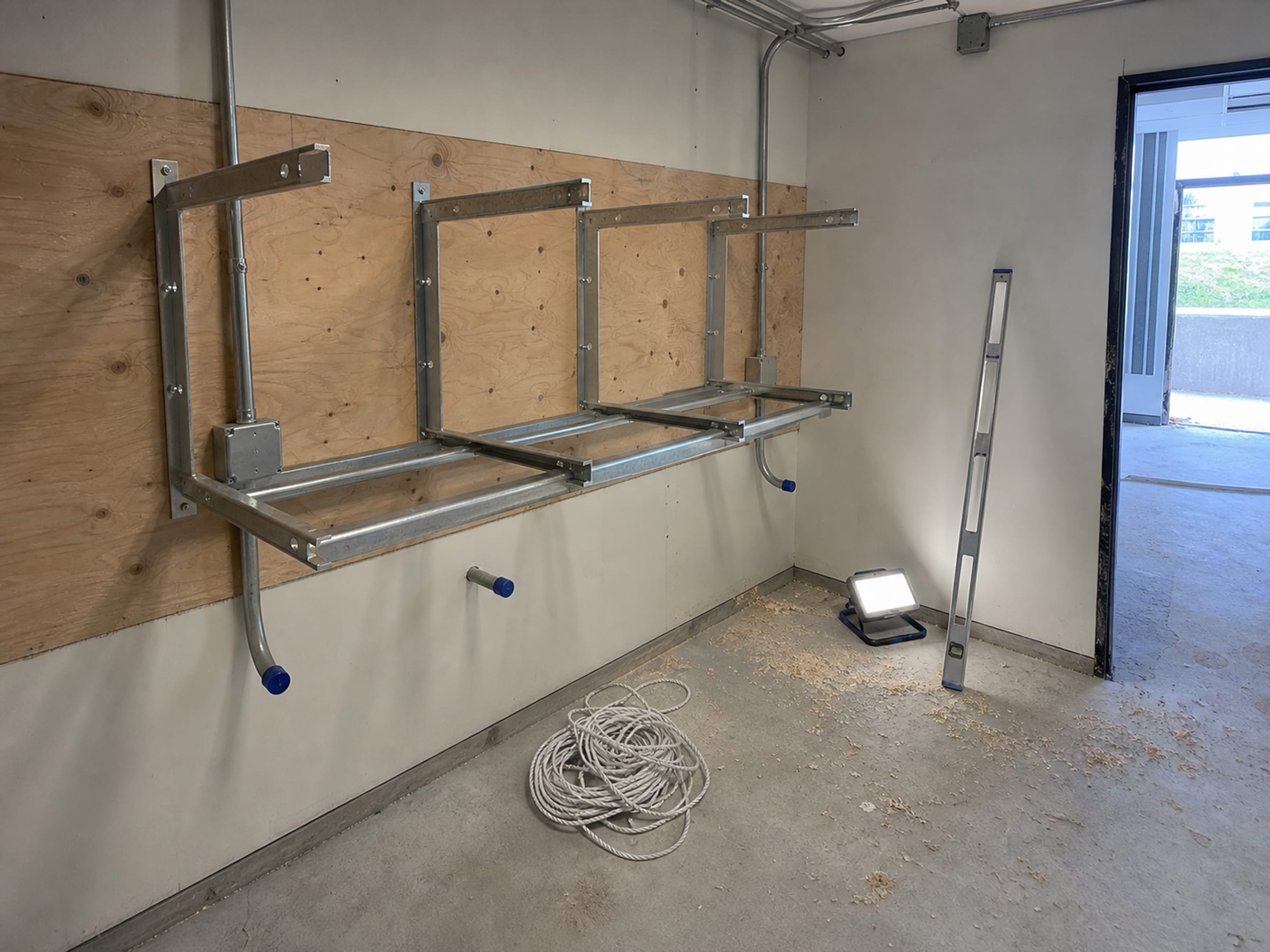
- Scope
- Single-rack and IDF-scale rooms, not full-facility halls
- What we quote
- Rack, UPS, PDU, switching, patch field, cable management
- Delivered as
- One bill of materials, staged and racked before it ships
- Boundary
- Electrical work and construction stay with your contractor
One rack in a converted room is a different problem from a hall
The overwhelming majority of rooms being built right now are not data centers. They are a rack in a converted store cupboard behind a school library, an IDF on the third floor of a municipal building, a communications room in a clinic. The constraints are entirely different: the ceiling is low, the door is narrow, there is one twenty-amp circuit and no prospect of a second, cooling is whatever the building's air handling happens to do to that room, and nobody is going to walk past it for weeks at a time. Uniqcli quotes that room as one package — rack, power protection, distribution, switching, the patch field and the labeling — sized for the space that exists rather than scaled down from a design meant for a hall.
How this differs from a full data-center build
Our data center design and build page covers the other end of the range: a full-facility bill of materials with containment, precision cooling, switchgear, compute and storage at scale, and a network-security fabric at the boundary. That work is measured in halls and rows.
This page is measured in rack units. The differences are practical rather than cosmetic — a single-rack room usually has one circuit rather than redundant feeds, an enclosed cabinet rather than open racking because the room is not secure, a switch stack rather than a chassis, and no realistic prospect of adding cooling. Specifying it well means respecting those limits rather than treating them as a smaller version of a facility design.
The most common mistake we see is buying a full-depth cabinet for a room that cannot open its door onto one, or a UPS whose runtime figure assumes a load nobody measured. Both are avoidable with ten minutes of questions before anything is quoted.
Four blocks, quoted together
A room quoted piecemeal arrives with mismatched depths, the wrong plug type and no blanking panels.
Rack and enclosure
Enclosed cabinet or open frame, chosen by whether the room itself is secure. Depth, door swing and floor loading confirmed before anything is ordered.
Power protection
A rack-mount UPS sized against the measured load and the runtime the site actually needs — enough to ride through a blip, or enough to shut down cleanly.
Switching
Access switching sized for today's port count plus honest growth, with PoE budget checked against what the room will feed rather than the port count alone.
Patch field and labeling
Patch panels, pathway and a labeling standard applied at build time, because nobody ever goes back and labels a room that is already live.
The lines that finish the room
Legrand, Panduit, Eaton, Schneider Electric, CyberPower, Allied Telesis and Netgear cover the whole small-room bill of materials from verified, priced lines. Naming a manufacturer describes the market, not a Uniqcli partnership or endorsement.
Rack power distribution
The PDU decision is made once and cannot be revisited without powering the rack down, so it is worth ten minutes even in a single-rack room. Metered units are the sensible default wherever anyone will later ask how much headroom is left on the circuit.
Cable management and pathway
Panduit and Legrand carry very deep priced lines in cable management, pathway and blanking. In a small room this is not cosmetic — a rack with no vertical management is a rack nobody can work in six months later, and blanking panels are the cheapest thermal improvement available.
Cabinets and stands for constrained rooms
Wall-mount cabinets, shallow enclosures and open stands for rooms that cannot take a full-depth cabinet at all. This is where most IDF closets actually land, and specifying it correctly is mostly a matter of measuring the door before ordering.
The measurements that stop a room going wrong
- Room dimensions, ceiling height and — critically — the door and corridor width
- Available circuits: how many, what rating, and whether a second is realistic
- Measured or estimated load, with the PoE budget stated separately
- What cooling the room actually gets, honestly described
- Port count today and the growth the site genuinely expects
- Whether the room itself is secure, which decides enclosed cabinet versus open frame
Small-room buildout questions
Can you rack and stage it before it ships?
Yes. Rack integration, imaging, firmware baseline and configuration staging are part of our integration lane, delivered as deployment-ready racks with a serialized asset record. For a single-room build that usually means the cabinet arrives populated, cabled and labeled rather than as a pallet of components.
Do you do the electrical work?
No. The circuit, the panel, the conduit and the permit belong to your electrical contractor, and we do not represent otherwise. We tell you what the equipment draws and what plug types it needs so your contractor has accurate numbers to work from.
What if the room cannot be cooled?
Then the design has to respect that, which usually means less equipment, more blanking, and honest thermal expectations rather than a bigger UPS. We will say when a proposed load does not belong in a given room instead of quoting it and letting the site discover the problem in July.
How is this different from your data center build page?
Scale and scope. Data center design and build covers full-facility bills of materials — containment, precision cooling, switchgear, compute and storage at row scale. This page is single-rack and IDF work, where there is one circuit, one cabinet and no prospect of adding infrastructure to the building.
The solutions atlas
Every solution, by technology area and by customer.
By technology
By customer
- TAA & NDAA-889 Compliance Screening
- CMMC & CUI Solutions
- Federal & DoD
- State, Local & Education
- Healthcare
- Enterprise
- Rapid Procurement & GPC Buys
- Multi-Vendor Integration Projects
- eProcurement & Custom Catalogs
- FISMA Modernization
- CJIS-Compliant Justice Cloud & Local AI
- Federal Storage Modernization
- Government ERP & Business Systems Infrastructure
- Managed Procurement
- Secure AV & Conferencing
- Fiber Network Infrastructure
- Satellite & Resilient Connectivity
- Wavelength & Optical Transport
- Decentralized Data Centers
- Data Center Design & Build
Send the room, not just the parts list
Dimensions, circuits, port count and what the room is expected to hold. We come back with one bill of materials, staged and racked before it ships.