
Solutions
School Safety Technology
Campus safety is bought as separate systems and lived as one incident. We quote the cameras, access hardware, notification audio and the network, power and storage underneath them as a single integrated package.
- Scope
- Notification audio, PoE network, video retention, access hardware
- Integration
- One bill of materials across four systems that must interoperate
- Routing
- Access-control and camera hardware routes to our physical-security storefront
- Boundary
- We supply and integrate — no safety or compliance outcome is promised
Four systems, four purchase orders, one incident
Campus safety technology is almost always bought in pieces: cameras this year from one budget, door hardware next year from another, a notification system from a grant, and the network and storage they all depend on from the general IT line. Each piece works. The problem appears on the day they have to work together — the notification system cannot reach the classrooms without the paging infrastructure, the cameras fill their retention window early because the storage was sized against a smaller frame rate, and the switch in the closet has no PoE budget left for the last four cameras. We quote across those boundaries: the infrastructure that carries all four systems, sized against the whole load rather than the piece being bought this quarter.
What sits underneath campus safety
Four layers that get funded separately and fail together. Naming a manufacturer describes the market, not a Uniqcli partnership or endorsement.
Notification and paging audio
Intelligible audio in classrooms, corridors, cafeterias and outdoors is the layer everything else depends on — an alert nobody can make out is not an alert. AtlasIED and Harman both carry priced rows across speakers, amplifiers and paging infrastructure on our catalog. Specified by zone and coverage, not by speaker count.
PoE network capacity
Cameras, access points, speakers, intercoms and door controllers all draw from the same PoE budget in the same closets. Allied Telesis carries a deep priced switching line on the hub. The right question is not how many ports the switch has but how many watts remain after everything already hanging off it.
Video retention capacity
Retention is a capacity calculation with a policy attached: camera count times frame rate times resolution times days retained. Nexsan and Western Digital both carry priced storage rows on our catalog. Sizing against the district's stated retention policy, and re-sizing when a camera count grows, is what keeps footage available when it is asked for.
Access control and cameras
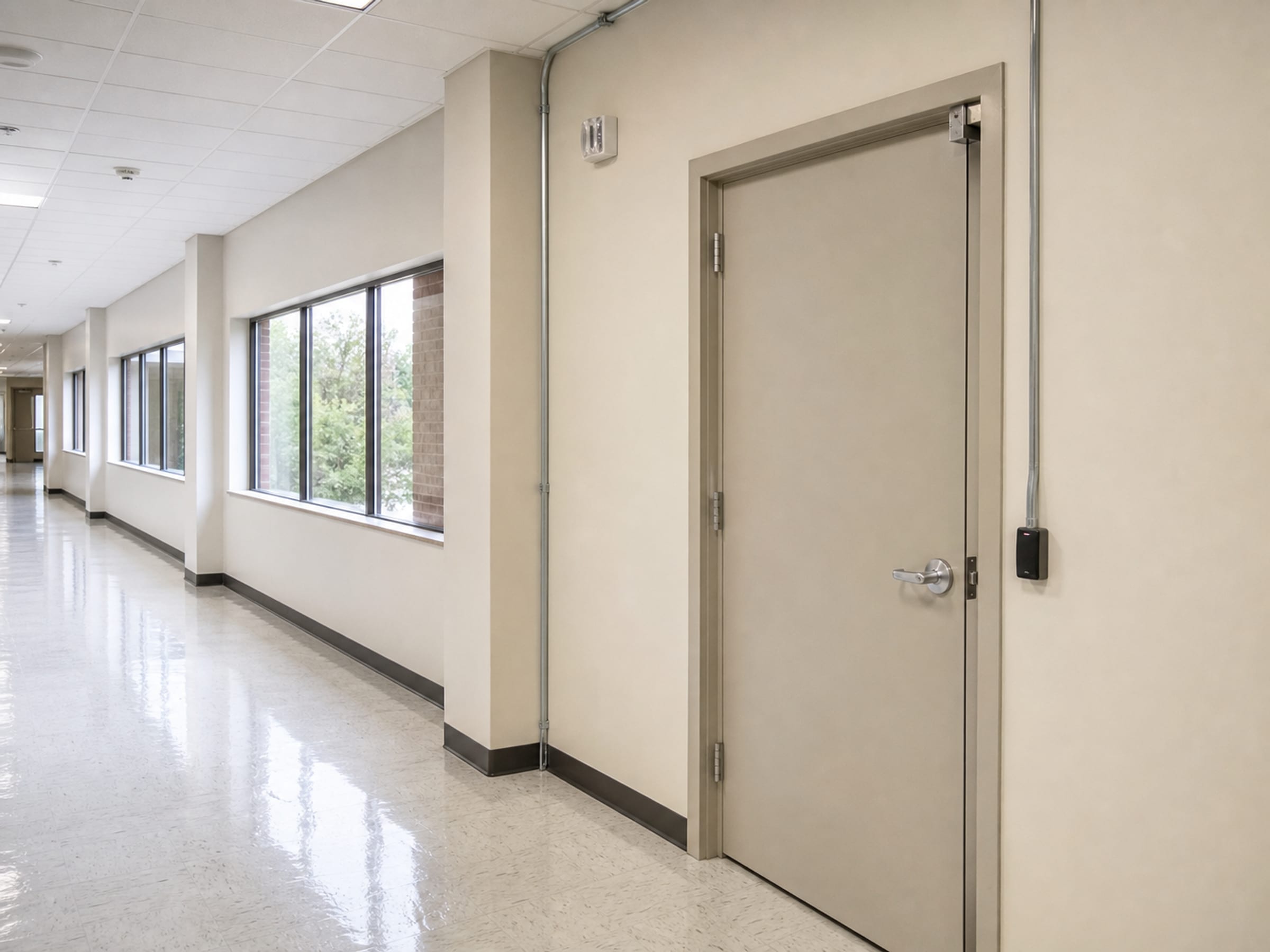
Door controllers, readers, credentials and the camera hardware itself are our physical-security storefront's inventory rather than hub catalog rows, so those lines are routed there and quoted as part of the same package. Nothing on this page should be read as a claim that a purchase produces a secure campus.
What technology does and does not do here
No product makes a school safe, and any supplier who implies otherwise is selling something other than equipment. What technology does is shorten the distance between something happening and the right people knowing about it, and preserve a record afterwards. That is worth buying well. It is not the same as a safety outcome, and we will not write it as one.
The program is the district's. Emergency operations plans, drill schedules, threat assessment teams, the relationships with local law enforcement and the decisions about who can open which door at which hour are all district and jurisdictional responsibilities. We supply and integrate the equipment those decisions run on. We do not monitor cameras, we do not staff an operations center and we do not administer the access system after handover.
One practical note that saves money: the sequencing usually matters more than the specification. Sizing the network and storage layer against the eventual camera and device count — rather than against the first phase — is the single decision that most often determines whether phase three needs a closet rebuild.
Scoping a package that has to work together
- Send the building list, the existing camera and device counts, and your stated retention policy in days
- We size the PoE, network and storage layer against the whole eventual load, not the current phase
- Access-control and camera hardware is routed to our physical-security storefront and quoted on the same package
- Long-lead lines are flagged in the quote; nothing is substituted without your approval
- Delivery is staged by building; configuration and integration are scoped with the deployment
- Handover includes the documentation your facilities and IT teams need to operate it themselves
Campus safety technology questions
How much storage does a school camera system need?
It is arithmetic rather than a rule of thumb: camera count multiplied by bitrate multiplied by the retention period, with headroom for the cameras that get added later. A district retaining 30 days at higher resolution needs several times the capacity of one retaining seven at a lower frame rate. Send the camera count, the resolution and frame-rate settings and your retention policy in days, and we will size it and show the arithmetic.
Do you monitor the cameras or run the access system?
No. We source, integrate and hand over the equipment; monitoring, administration and day-to-day operation stay with the district or whoever it contracts for that. We do not operate a monitoring center and do not hold credentials to your systems after handover.
Can notification reach classrooms that have no speakers?
Only if something in the room can produce audible and visible alerting — a paging speaker, a classroom endpoint, or a display capable of receiving the notification. That coverage gap is usually discovered late, which is why we quote notification by zone against a room list rather than by device count. Where a room genuinely cannot be covered by the chosen approach, we will say so rather than quote around it.
Will this make us compliant with our state's school safety requirements?
Nothing we supply produces compliance on its own. State requirements vary considerably and generally cover plans, drills, staffing and assessment alongside any equipment provisions. We quote to whatever specification your safety plan or your state's requirement sets out, and we will tell you plainly when a requirement is asking for something equipment cannot deliver.
Safety background and the systems alongside it
The solutions atlas
Every solution, by technology area and by customer.
By technology
By customer
- TAA & NDAA-889 Compliance Screening
- CMMC & CUI Solutions
- Federal & DoD
- State, Local & Education
- Healthcare
- Enterprise
- Rapid Procurement & GPC Buys
- Multi-Vendor Integration Projects
- eProcurement & Custom Catalogs
- FISMA Modernization
- CJIS-Compliant Justice Cloud & Local AI
- Federal Storage Modernization
- Government ERP & Business Systems Infrastructure
- Managed Procurement
- Secure AV & Conferencing
- Fiber Network Infrastructure
- Satellite & Resilient Connectivity
- Wavelength & Optical Transport
- Decentralized Data Centers
- Data Center Design & Build
Scope it across the systems, not one at a time
Send the building list, the current device counts and your retention policy. The quote comes back as one package covering notification audio, network and storage capacity, and the access and camera lines routed through our physical-security storefront. TAA (FAR 52.225-5) and NDAA §889 screening performed on every line before the quote goes out.