
Best DIN-Rail Power Supplies for Industrial Control Panels
35mm-rail AC-to-DC power for control cabinets and network enclosures — single-output 12, 24 and 48 VDC units by wattage.
DIN-rail power supplies in stock at Uniqcli
How to choose →A curated selection with live pricing — in-stock lines first, then back-ordered lines with a typical lead time. Every line is sourced through US distribution and screened for NDAA §889 status before checkout, with TAA verified on request.
- Transition NetworksTransition Networks Industrial DIN Rail Mounted Power Supply - DIN Rail Mountable - 120 V AC, 230 V AC Input - 24 V DC Output - 10 W - 84% Efficiency25135
$56.10
$44.77
Back-orderedBack-ordered — estimated OEM lead time 3–8 weeks (Nov 1 – Dec 6 if ordered today).
- AdvantechAdvantech IPS-D22A60W 60W Power Supply - DIN Rail Mountable - 120 V AC, 230 V AC Input - 12 V DC Output - 60 W - 88% Efficiency - LED indicatorIPS-D22A60W12V-A
$44.94
Back-orderedBack-ordered — estimated OEM lead time 3–8 weeks (Nov 1 – Dec 6 if ordered today).
- AdvantechAdvantech IPS-D22A60W 60W Power Supply - DIN Rail Mountable - 120 V AC, 230 V AC Input - 24 V DC Output - 60 W - 88% Efficiency - LED indicatorIPS-D22A60W24V-A
$44.94
Back-orderedBack-ordered — estimated OEM lead time 3–8 weeks (Nov 1 – Dec 6 if ordered today).
- AdvantechAdvantech IPS-D22A60W48V-A 60W Power Supply - Compact, DIN Rail Mountable, Enclosed - 120 V AC, 230 V AC, 100 V DC, 375 V DC Input - 48 V DC, 56 V DC Output - 60 W - 88% EfficiencyIPS-D22A60W48V-A
$44.99
Back-orderedBack-ordered — estimated OEM lead time 3–8 weeks (Nov 1 – Dec 6 if ordered today).
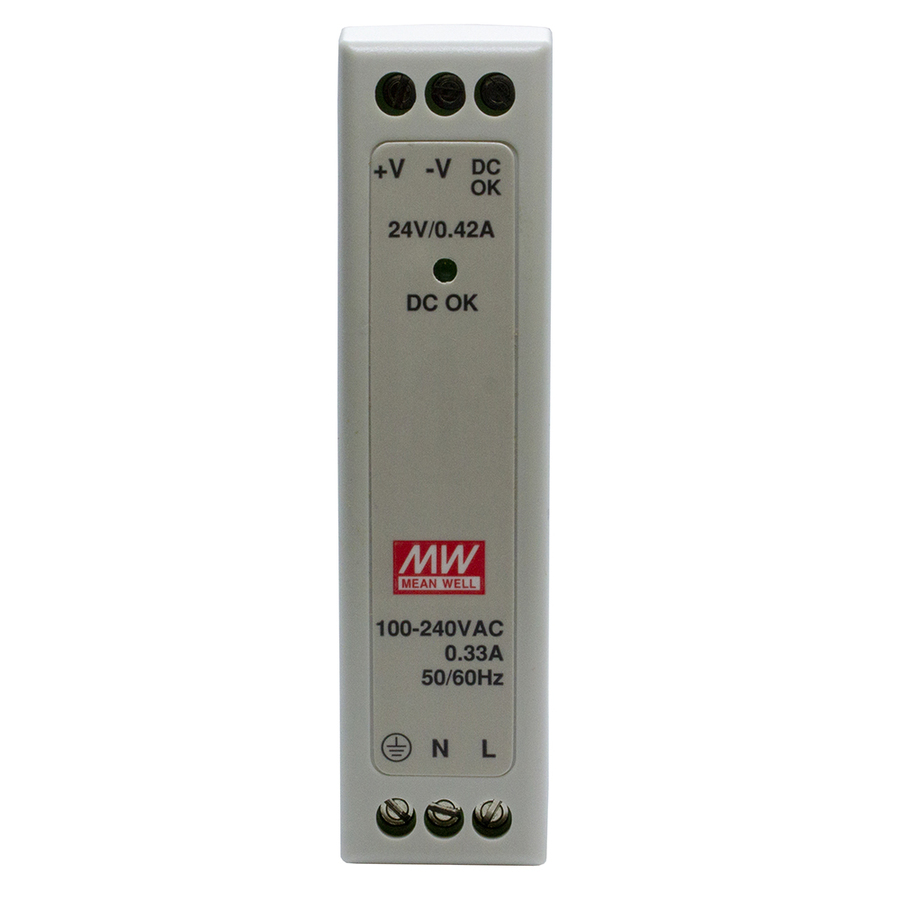
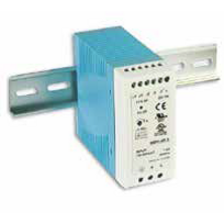
- AdvantechAdvantech MeanWell MDR-100 Power Supply - DIN Rail - 120 V AC, 230 V AC Input - 24 V DC OutputMDR-10-24
$57.35
Back-orderedBack-ordered — estimated OEM lead time 3–8 weeks (Nov 1 – Dec 6 if ordered today).
- Transition NetworksTransition Networks Industrial DIN Rail Mounted Power Supply - DIN Rail Mountable - 120 V AC, 230 V AC Input - 48 V DC Output - 39.80 W25130
$92.40
$72.40
Back-orderedBack-ordered — estimated OEM lead time 3–8 weeks (Nov 1 – Dec 6 if ordered today).
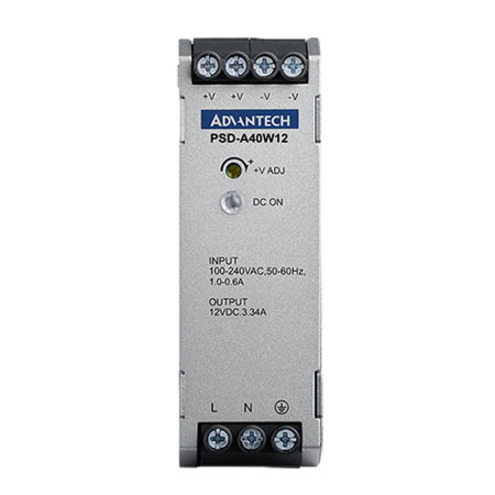
- AdvantechAdvantech Power Supply - DIN Rail Mountable - 110 V DC, 230 V AC, 375 V DC Input - 12 V DC Output - 40 W - 88% EfficiencyPSD-A40W12
$80.11
Back-orderedBack-ordered — estimated OEM lead time 3–8 weeks (Nov 1 – Dec 6 if ordered today).
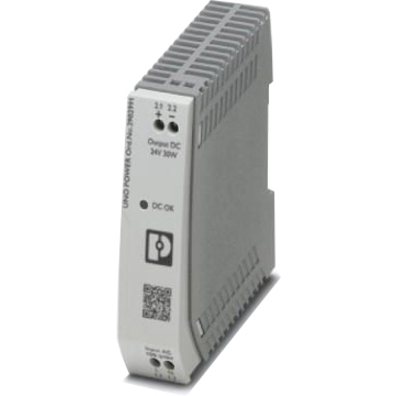
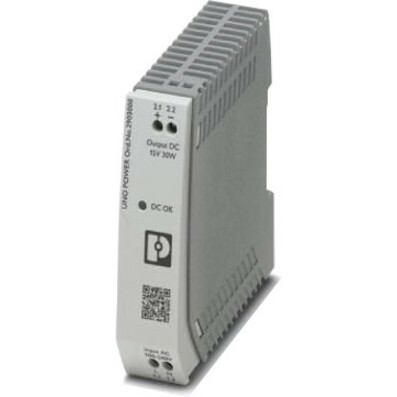
- Perle SystemsPerle UNO-PS/1AC/24DC/30W Single-Phase DIN Rail Power Supply - DIN Rail Mountable - 120 V AC, 230 V AC Input - 24 V DC Output - 30 W - 88% Efficiency29029918
$82.23
Back-orderedBack-ordered — we expect to receive stock the week of Nov 23–29 and will process your delivery right after.
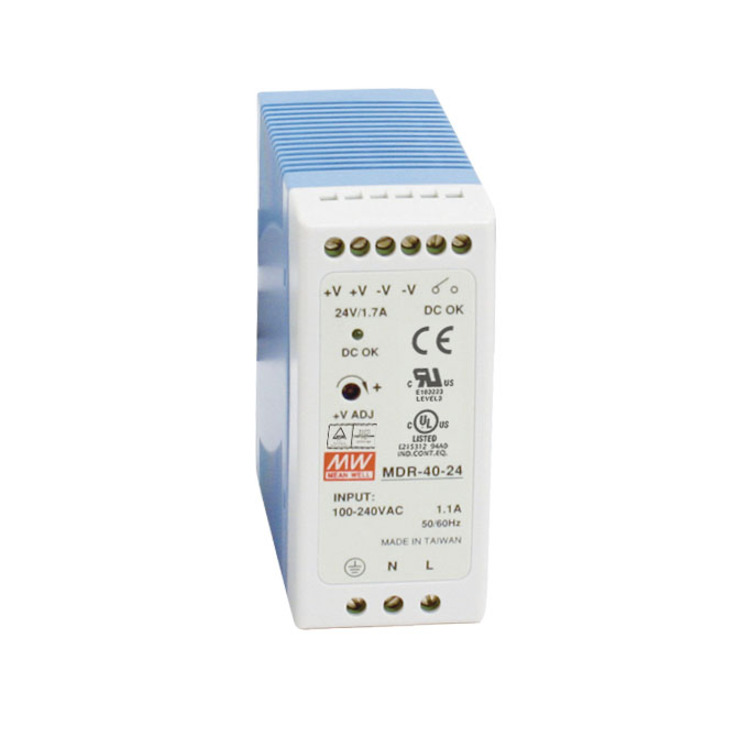
- Black BoxBlack Box DIN Rail Industrial Power Supply - 40W, 24VDC - DIN Rail Mountable - 24 V DC Output - 40 WMDR-40-24
$85.86
Back-orderedBack-ordered — estimated OEM lead time 3–8 weeks (Nov 1 – Dec 6 if ordered today).
- Perle SystemsPerle UNO-PS/1AC/15DC/30W Single-Phase DIN Rail Power Supply - DIN Rail Mountable - 120 V AC, 230 V AC Input - 15 V DC Output - 30 W - 86% Efficiency29030008
$86.06
Back-orderedBack-ordered — estimated OEM lead time 3–8 weeks (Nov 1 – Dec 6 if ordered today).
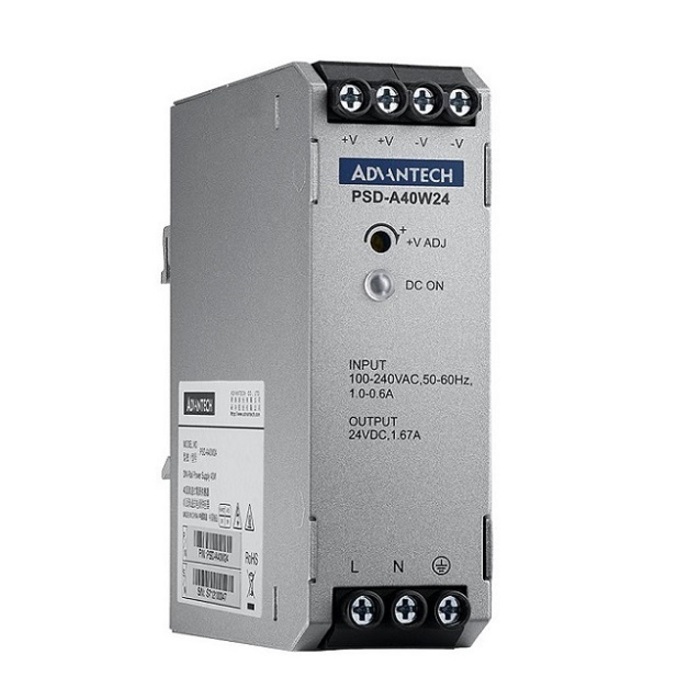
- AdvantechAdvantech 40 Watts Compact Size DIN-Rail Power Supply - DIN Rail Mountable - 110 V DC, 120 V AC, 230 V AC, 375 V DC Input - 24 V DC Output - 40 W - 89% EfficiencyPSD-A40W24
$86.57
Back-orderedBack-ordered — estimated OEM lead time 3–8 weeks (Nov 1 – Dec 6 if ordered today).
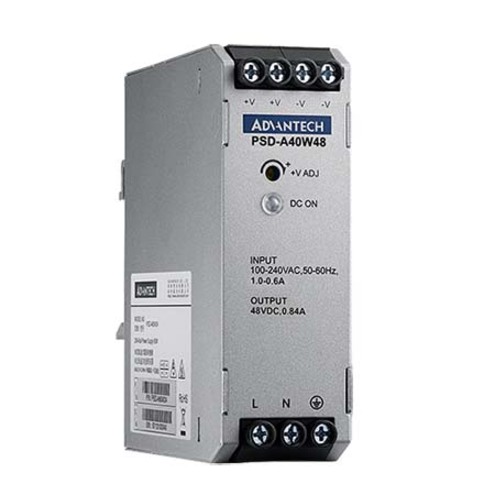
- AdvantechAdvantech 40 Watts Compact Size DIN-Rail Power Supply - DIN Rail Mountable - 110 V DC, 120 V AC, 230 V AC, 375 V DC Input - 48 V DC Output - 40 W - 89% EfficiencyPSD-A40W48
$86.57
Back-orderedBack-ordered — estimated OEM lead time 3–8 weeks (Nov 1 – Dec 6 if ordered today).
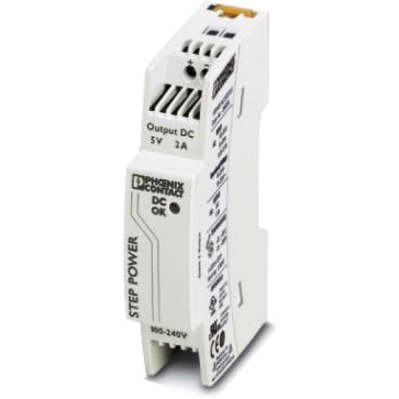
- Perle SystemsPerle STEP-PS/1AC/5DC/2 Single-Phase DIN Rail Power Supply - DIN Rail Mountable - 120 V AC, 230 V AC, 250 V DC, 95 V DC Input - 5 V DC Output - 10 W - 81% Efficiency23205138
$87.79
Back-orderedBack-ordered — estimated OEM lead time 3–8 weeks (Nov 1 – Dec 6 if ordered today).
- AdvantechAdvantech 60 Watts Compact Size DIN-Rail Power Supply - DIN Rail Mountable - 120 V AC, 230 V AC Input - 24 V DC Output - 60 W - 89% EfficiencyPSD-A60W24
$88.40
Back-orderedBack-ordered — estimated OEM lead time 3–8 weeks (Nov 1 – Dec 6 if ordered today).
- Perle SystemsPerle STEP-PS/1AC/24DC/0.75/FL Single-Phase DIN Rail Power Supply - DIN Rail Mountable - 120 V AC, 230 V AC, 250 V DC, 95 V DC Input - 24 V DC Output - 18 W28686228
$88.82
Back-orderedBack-ordered — estimated OEM lead time 3–8 weeks (Nov 1 – Dec 6 if ordered today).
- Perle SystemsPerle UNO-PS/1AC/12DC/30W Single-Phase DIN Rail Power Supply - DIN Rail Mountable - 120 V AC, 230 V AC Input - 12 V DC Output - 30 W - 87% Efficiency29029988
$88.88
Back-orderedBack-ordered — estimated OEM lead time 3–8 weeks (Nov 1 – Dec 6 if ordered today).
- Perle SystemsPerle STEP-PS/1AC/12DC/1 Single-Phase DIN Rail Power Supply - DIN Rail Mountable - 120 V AC, 230 V AC, 250 V DC, 95 V DC Input - 12 V DC Output - 12 W - 83% Efficiency28685388
$90.64
Back-orderedBack-ordered — estimated OEM lead time 3–8 weeks (Nov 1 – Dec 6 if ordered today).
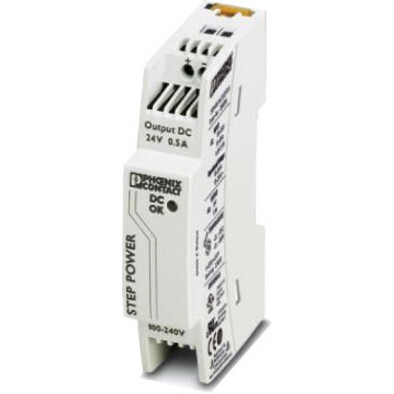
- Perle SystemsPerle STEP-PS/1AC/24DC/0.5 Single-Phase DIN Rail Power Supply - DIN Rail Mountable - 120 V AC, 230 V AC, 250 V DC, 95 V DC Input - 24 V DC Output - 12 W28685968
$90.64
Back-orderedBack-ordered — estimated OEM lead time 3–8 weeks (Nov 1 – Dec 6 if ordered today).
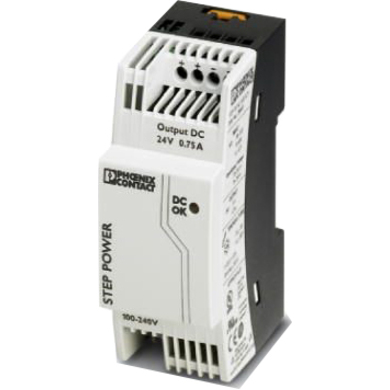
- Perle SystemsPerle STEP-PS/1AC/24DC/0.75 Single-Phase DIN Rail Power Supply - DIN Rail Mountable - 120 V AC, 230 V AC, 250 V DC, 95 V DC Input - 24 V DC Output - 18 W - 84% Efficiency28686358
$90.72
Back-orderedBack-ordered — estimated OEM lead time 3–8 weeks (Nov 1 – Dec 6 if ordered today).
- BrainboxesBrainboxes 60W Single Output Industrial DIN Power Supply - DIN Rail Mountable - 120 V AC, 230 V AC Input - 24 V DC Output - 60 W - 85% EfficiencyPW-245
$91.72
Back-orderedBack-ordered — estimated OEM lead time 3–8 weeks (Nov 1 – Dec 6 if ordered today).
- Perle SystemsPerle STEP-PS/48AC/24DC/0.5 Single-Phase DIN Rail Power Supply - DIN Rail Mountable - 43 V AC, 52 V AC, 60 V DC, 80 V DC Input - 24 V DC Output - 12 W - 81% Efficiency28687168
$96.35
Back-orderedBack-ordered — estimated OEM lead time 3–8 weeks (Nov 1 – Dec 6 if ordered today).




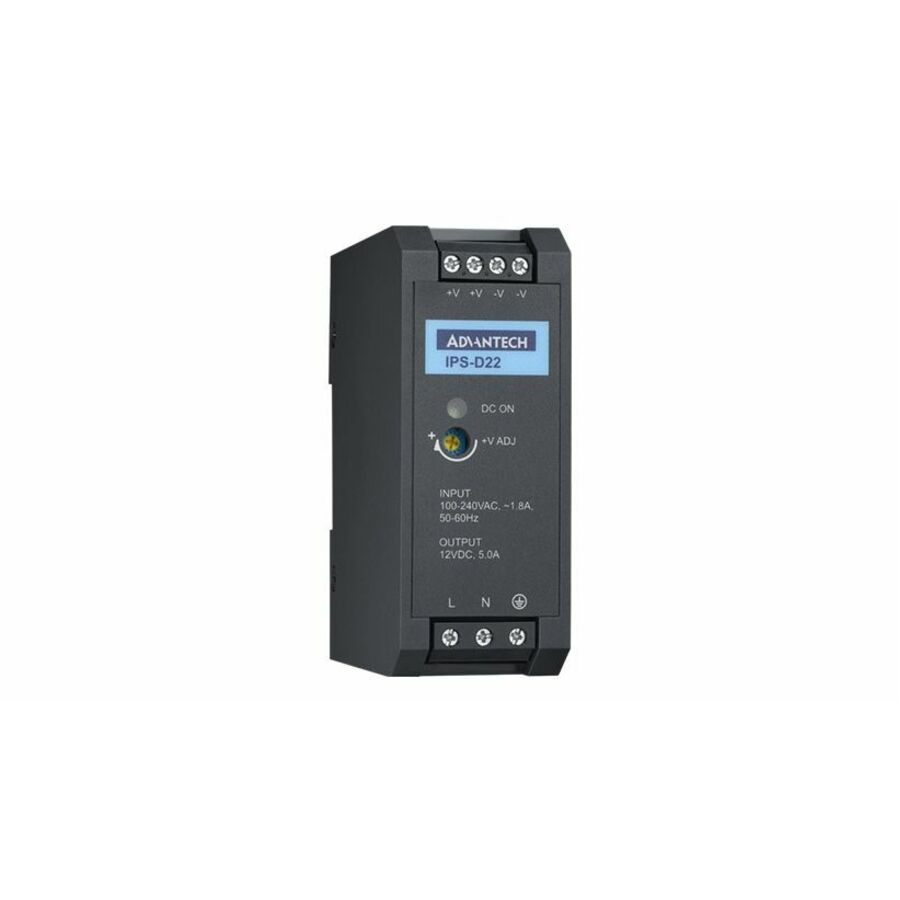

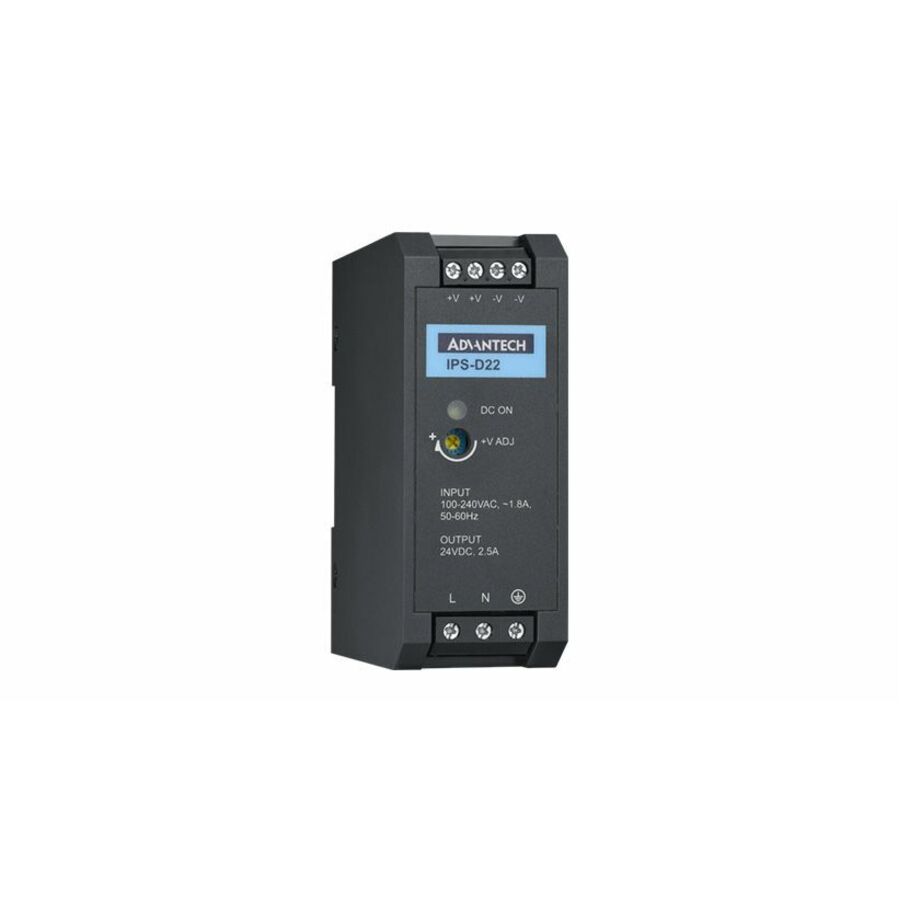
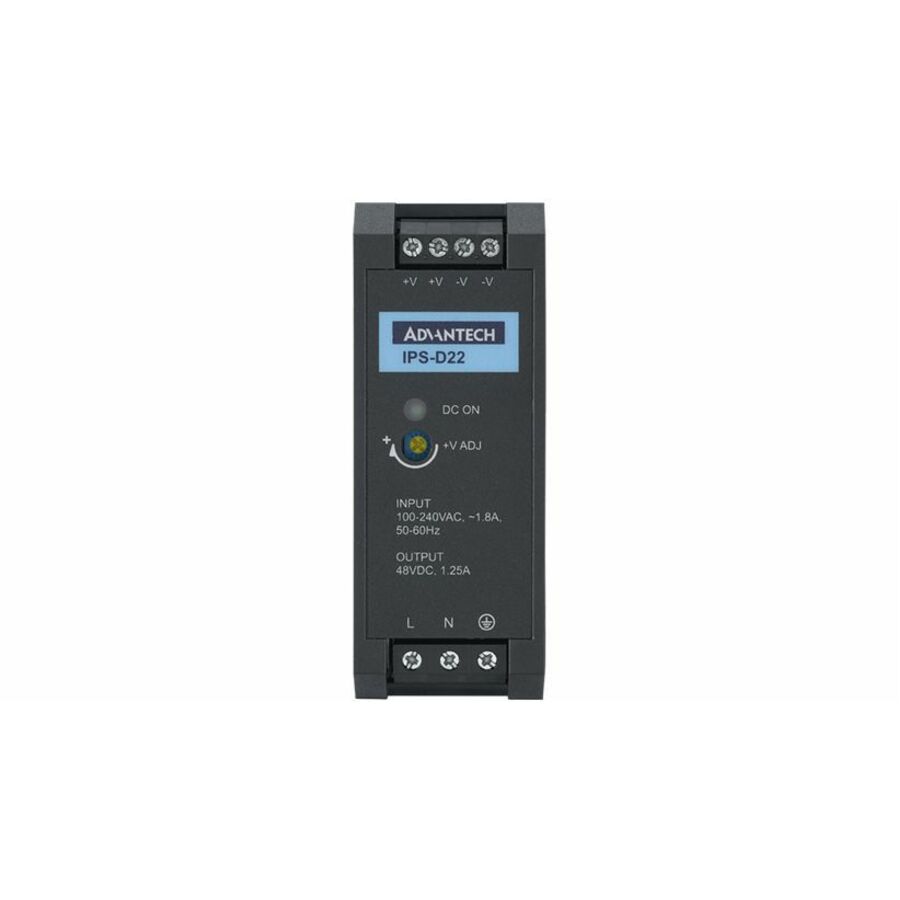
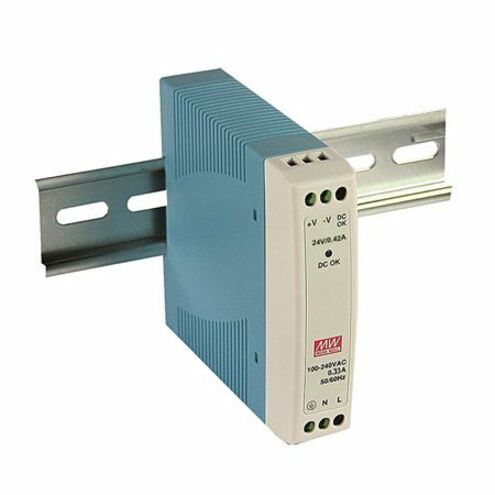
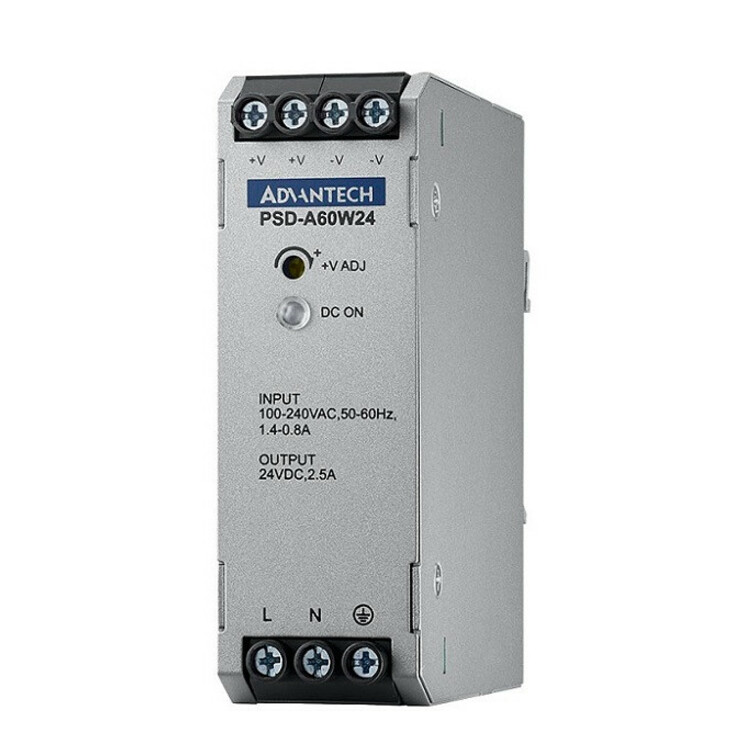
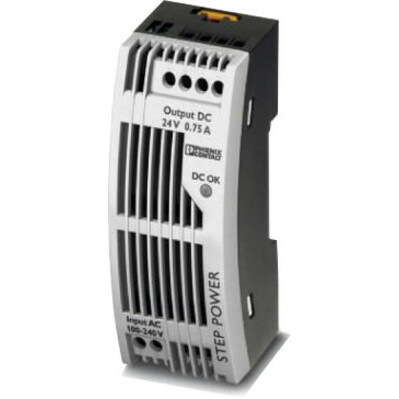
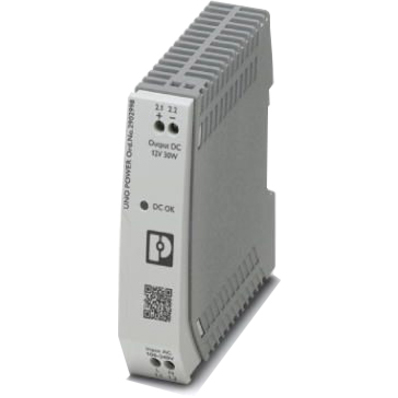
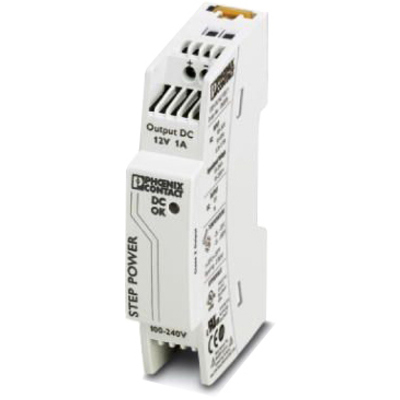

60W, 24V
Advantech
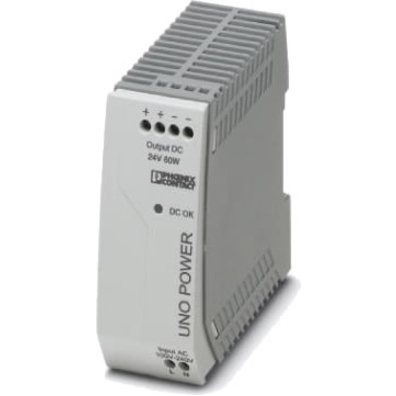
Advantech IPS-D22A60W 60W Power Supply
IPS-D22A60W24V-A
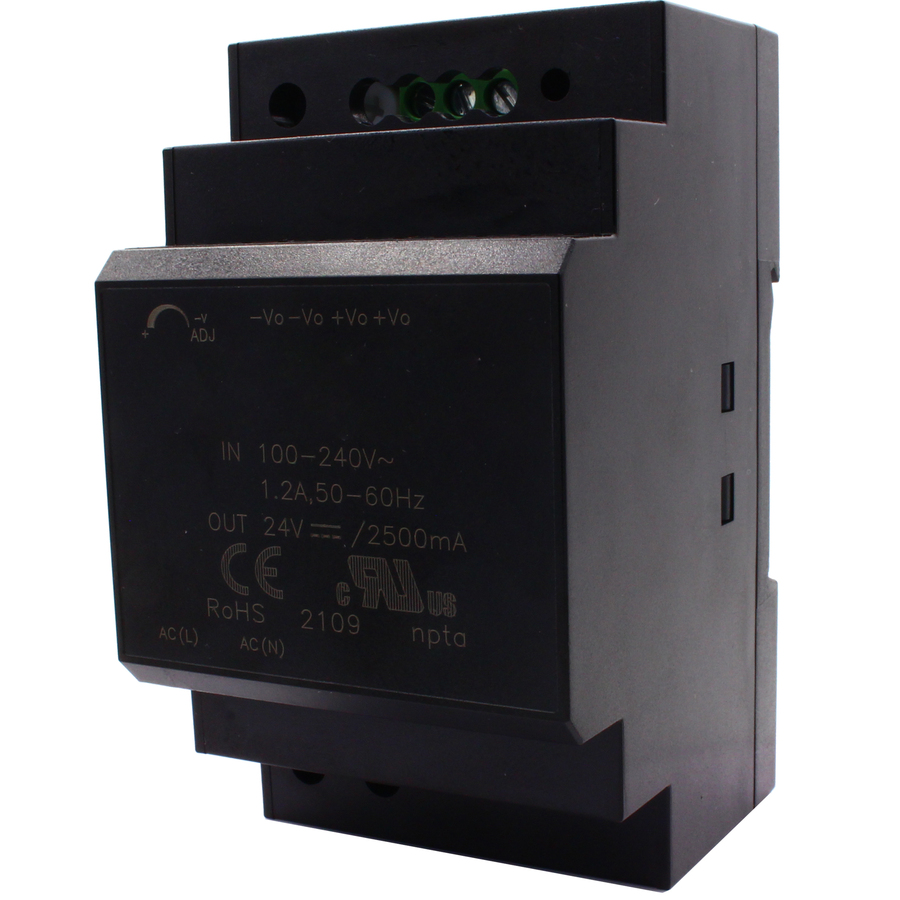
Advantech's IPS-D22A60W, a compact enclosed 60W DIN-rail supply at 24 VDC output from wide 120/230 VAC input, rated around 88% efficiency — a standard 24V control-panel workhorse.
$44.94Back-ordered240W, 24V
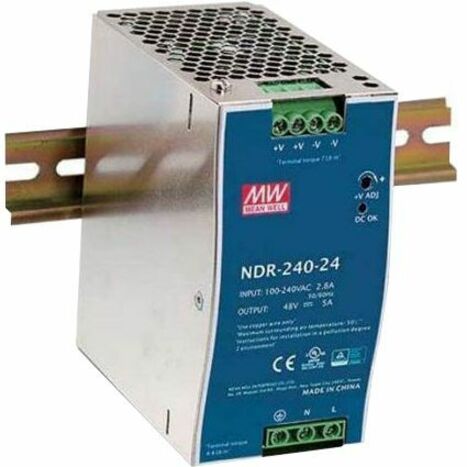
Advantech
Advantech Power Supply 240W
96PSD-A240W24-MN
Advantech 240W DIN-rail power supply at 24 VDC — the high-wattage option on this page for a panel driving a heavy 24V load bank or several downstream devices.
$119.72Back-ordered60W, 12V
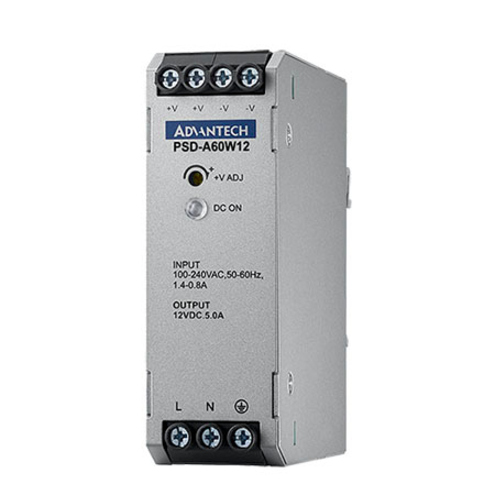
Advantech
Advantech 60 Watts Compact Size DIN-Rail Power Supply
PSD-A60W12
Advantech 60W compact DIN-rail supply at 12 VDC output, rated around 89% efficiency — the 12V option for a panel whose bus runs at 12 rather than 24.
$99.00Back-ordered30W, 24V
Perle Systems
Perle UNO-PS/1AC/24DC/30W Single-Phase DIN Rail Power Supply
29029918
Perle UNO-PS 30W single-phase DIN-rail supply at 24 VDC from 120/230 VAC input — a small, well-regulated 24V unit for a sensor and controller rail.
$82.23Back-ordered90W, 24V
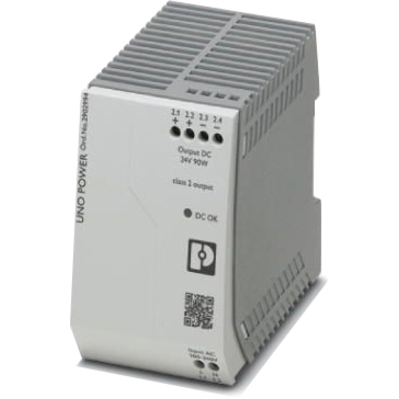
Perle Systems
Perle UNO-PS/1AC/24DC/90W Single-Phase DIN Rail Power Supply
29029948
Perle UNO-PS 90W single-phase DIN-rail supply at 24 VDC — the step up in the same line when the 30W unit runs short of headroom on a growing rail.
$134.70Back-orderedQUINT 30W, 24V
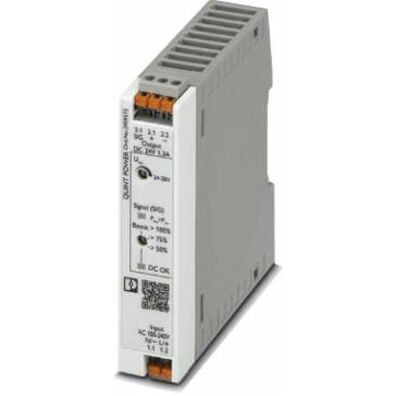
Perle Systems
Perle QUINT 30W Power Supply
29095758
Perle's QUINT-series 30W DIN-rail supply at 24 VDC, rated around 90.7% efficiency — the higher-efficiency 24V option for a warm, sealed cabinet.
$113.65Back-ordered60W, 24V
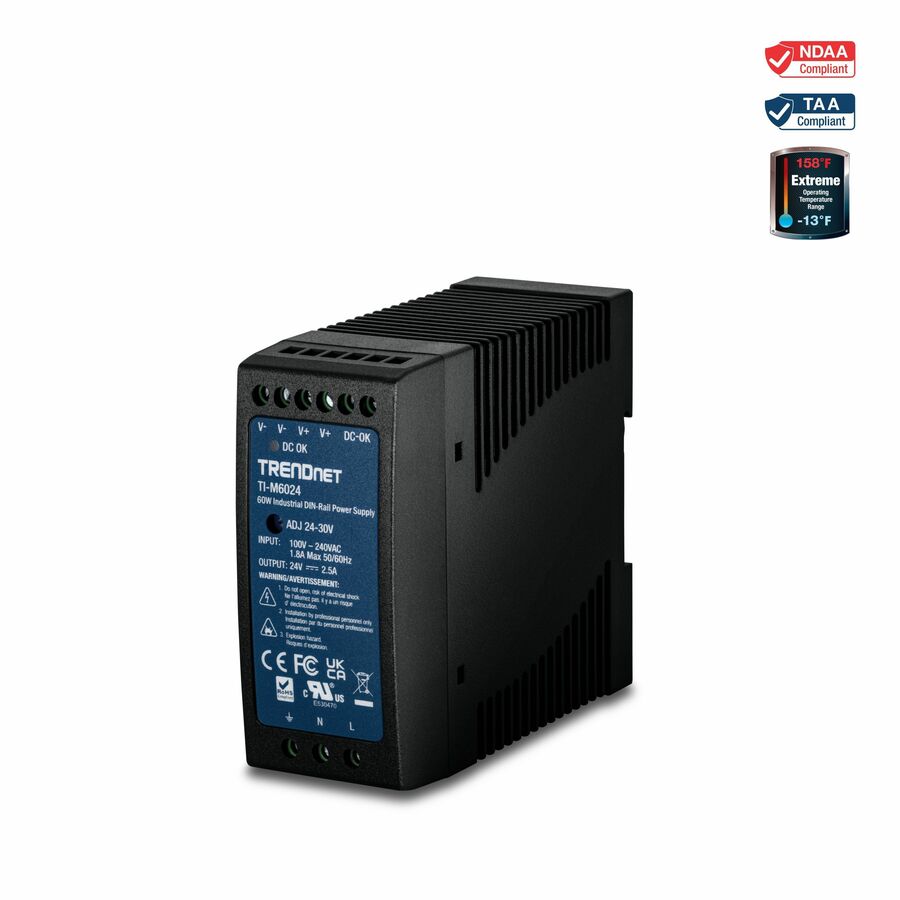
TRENDnet
TRENDnet TI-M6024, 60W, 24V DC, 2.5A AC to DC DIN-Rail Power Supply
TI-M6024
TRENDnet TI-M6024, a 60W 24 VDC 2.5A AC-to-DC industrial DIN-rail supply — a straightforward 24V unit for a network enclosure or a small control panel.
$53.92In stock150W, 52V
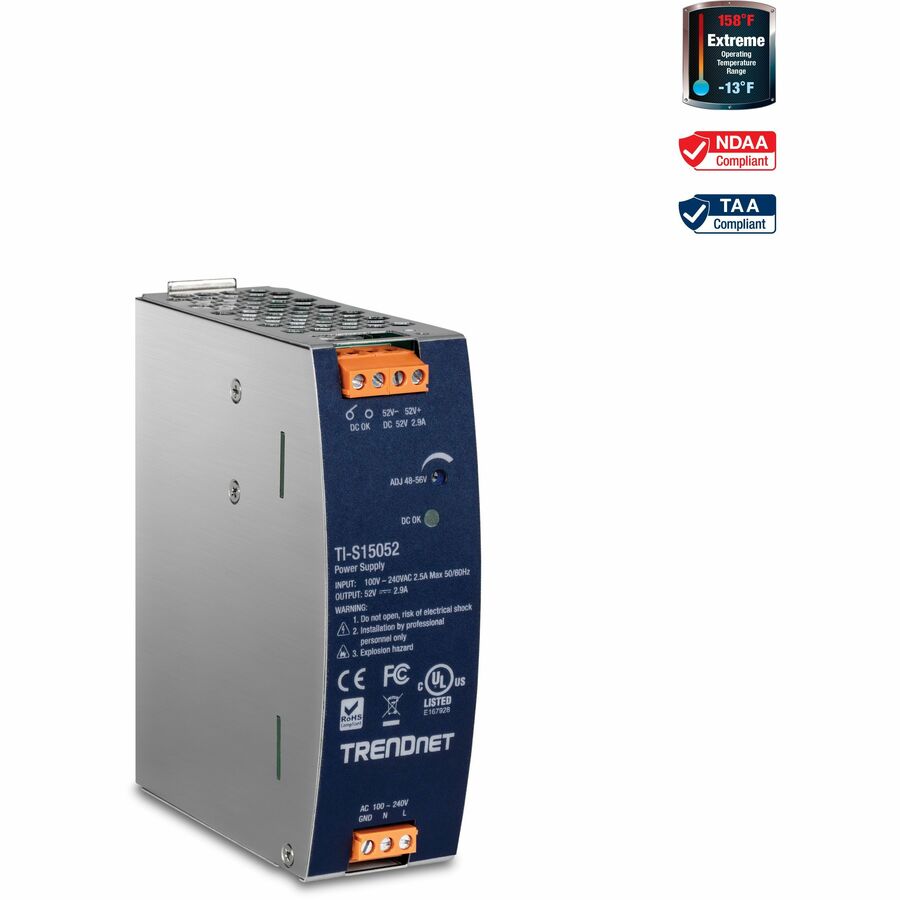
TRENDnet
TRENDnet 150W, 52V DC, 2.89A AC to DC DIN-Rail Power Supply, TI-S15052…
TI-S15052
TRENDnet TI-S15052, a 150W 52 VDC DIN-rail supply with built-in power-factor correction — the higher-voltage unit for PoE injectors or a 48-to-54V load.
$114.41Back-ordered40W, 24V
Black Box
Black Box DIN Rail Industrial Power Supply
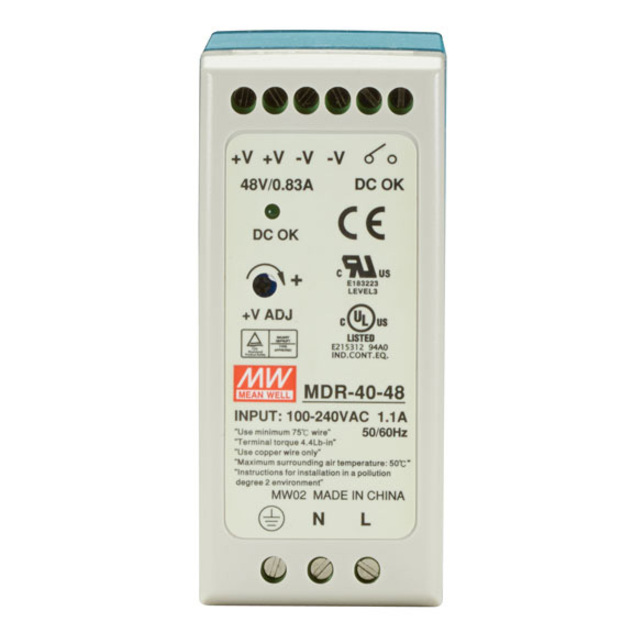
MDR-40-24
Black Box MDR-series 40W industrial DIN-rail supply at 24 VDC — a compact enclosed unit for a modest 24V rail in a network or control cabinet.
$85.86Back-ordered40W, 48V
Black Box
Black Box DIN Rail Power Supply, 40 Watts, 48 VDC
MDR-40-48
Black Box 40W DIN-rail supply at 48 VDC — the 48V option in the same compact family, for a panel whose bus runs at 48 rather than 24.
$114.25In stock24V single-output
Transition Networks
Transition Networks Industrial DIN Rail Mounted Power Supply
25135
Transition Networks industrial DIN-rail-mounted supply at 24 VDC from 120/230 VAC input — an entry-point 24V unit for an industrial-switch enclosure.
$44.77Back-ordered96W, 48V
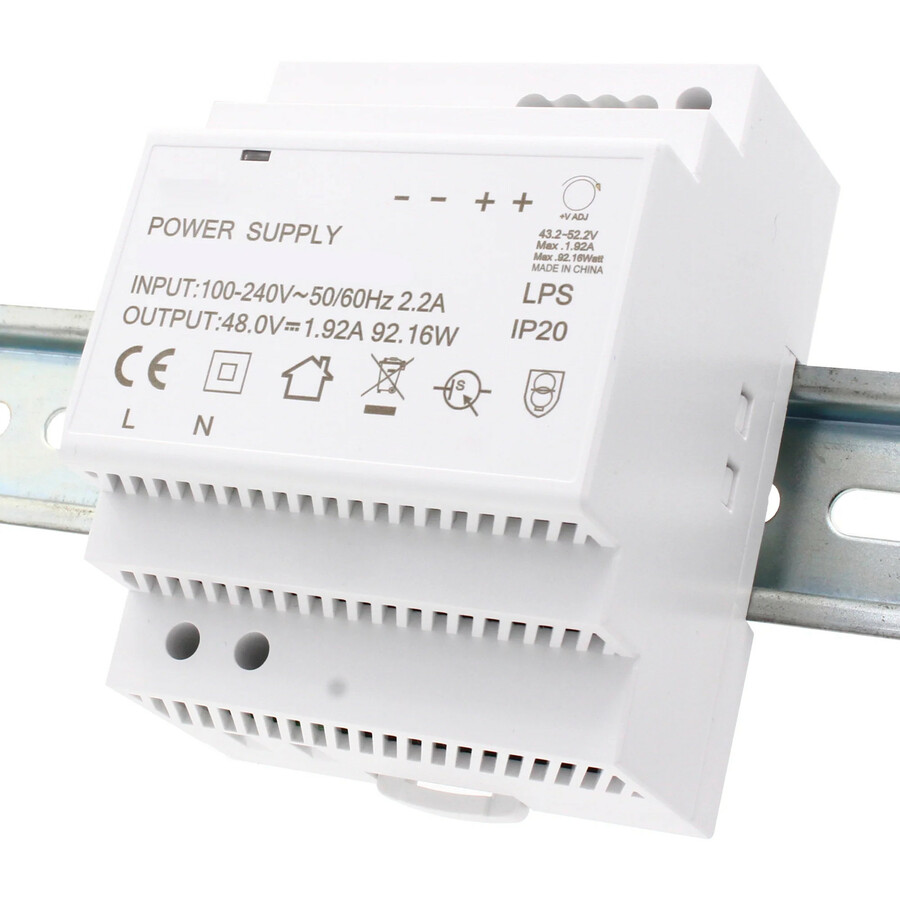
Brainboxes
Brainboxes 96W Single Output Industrial DIN Power Supply
PW-301
Brainboxes 96W single-output industrial DIN power supply at 48V, rated around 85% efficiency — a higher-wattage 48V unit for a busier enclosure.
$132.48Back-ordered24V, DRB series
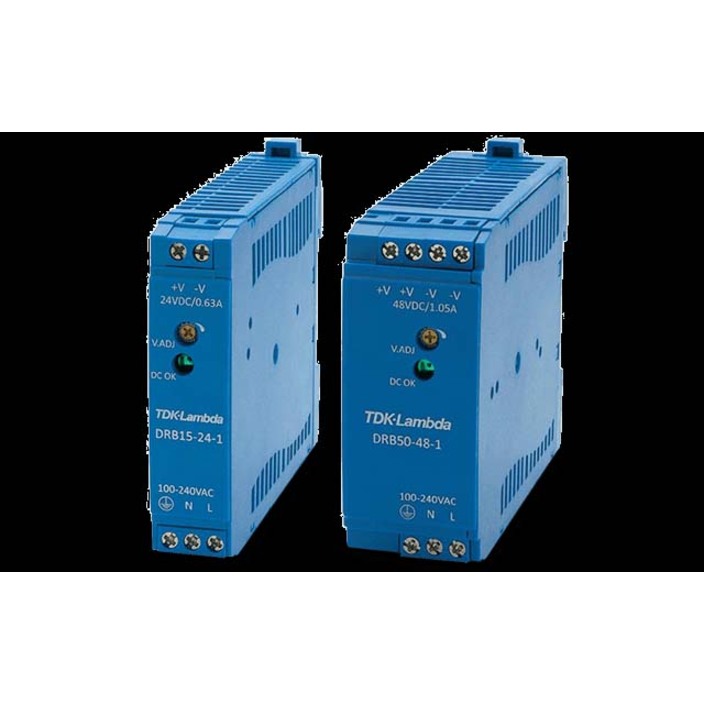
Allied Telesis
Allied Telesis DRB Series Single Output Industrial DIN Rail Power Supply
AT-DRB15-24-1
Allied Telesis DRB-series single-output industrial DIN-rail supply at 24 VDC, rated around 90% efficiency — a 24V unit that pairs cleanly with Allied Telesis industrial switching.
$102.74Back-orderedMore power supplies in the Uniqcli catalog
See all 1,972 power suppliesMore from across this category. In-stock lines lead, and a back-ordered line carries the same estimated availability its product page does — with live pricing throughout, NDAA §889 screening before checkout and TAA verified on request.
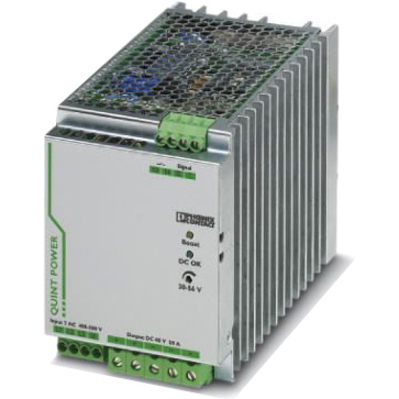
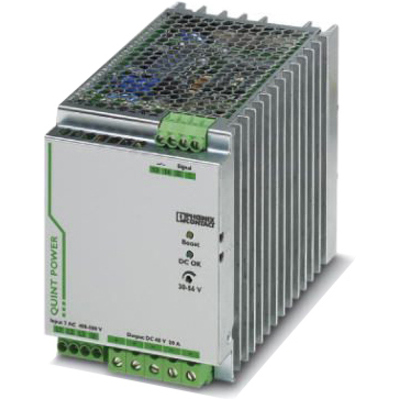
- Perle SystemsPerle QUINT-PS/3AC - 3-Phase DIN Rail Power Supply - DIN Rail Mountable - 320 V DC, 450 V DC, 575 V AC, 800 V DC Input - 48 V DC Output - 960 W - 93% Efficiency23208278
$1,593.90
$1,465.17
Back-orderedBack-ordered — estimated OEM lead time 3–8 weeks (Nov 1 – Dec 6 if ordered today).
- Perle SystemsPerle QUINT-PS/1AC/48DC/20 Single-Phase DIN Rail Power Supply - DIN Rail Mountable - 120 V AC, 230 V AC Input - 48 V DC Output - 960 W - 93% Efficiency28666958
$1,608.20
$1,479.56
Back-orderedBack-ordered — estimated OEM lead time 3–8 weeks (Nov 1 – Dec 6 if ordered today).
- Perle SystemsPerle QUINT-PS/3AC - 3-Phase DIN Rail Power Supply - DIN Rail Mountable - 320 V DC, 450 V DC, 575 V AC, 800 V DC Input - 24 V DC Output - 960 W - 94% Efficiency28668028
$1,580.70
$1,453.18
Back-orderedBack-ordered — estimated OEM lead time 3–8 weeks (Nov 1 – Dec 6 if ordered today).
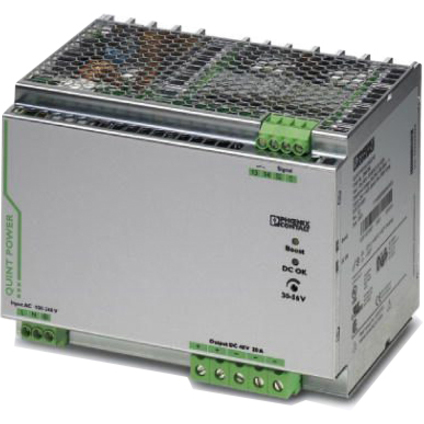
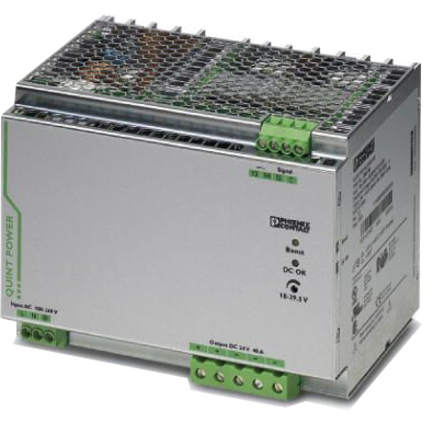
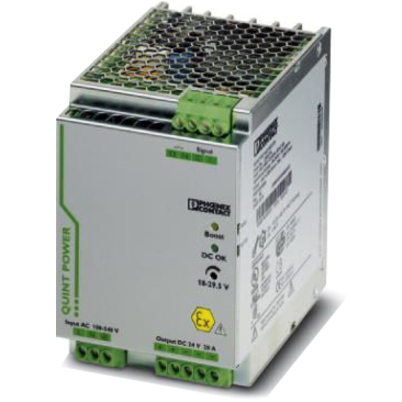
- Perle SystemsPerle QUINT-PS/1AC/24DC/40 Single-Phase DIN Rail Power Supply - DIN Rail Mountable - 120 V AC, 230 V AC, 300 V DC, 90 V DC Input - 24 V DC Output - 960 W - 92% Efficiency28667898
$1,486.10
$1,367.20
Back-orderedBack-ordered — estimated OEM lead time 3–8 weeks (Nov 1 – Dec 6 if ordered today).
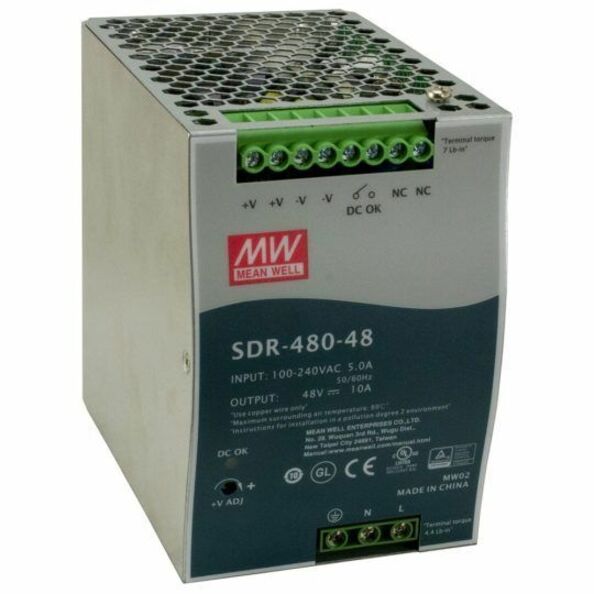
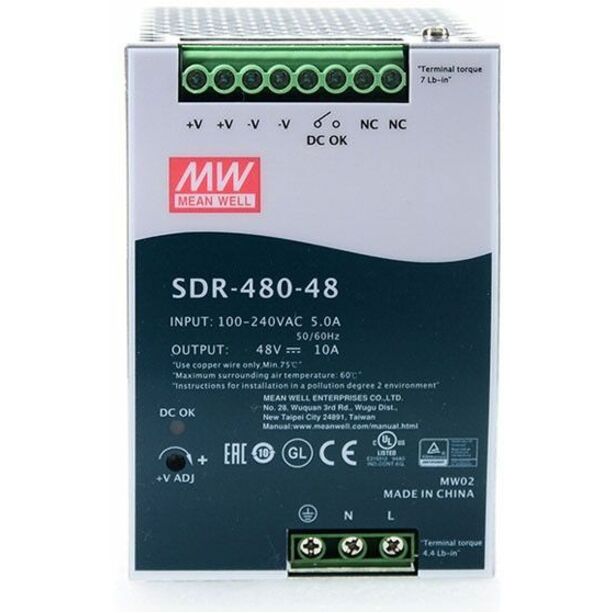
- LantronixHardened DIN Rail Mounted Power Supply - MEANWELL SDR-480-48_PS, 48VDC@10A, UNIV.AC, DIN RAIL, MODIFIED TO 54VDC25160
$517.00
$410.59*
Back-orderedBack-ordered — estimated OEM lead time 3–8 weeks (Nov 1 – Dec 6 if ordered today).
- Perle SystemsPerle QUINT-PS/3AC/24DC/20/CO - 3-Phase DIN Rail Power Supply - DIN Rail Mountable - 360 V AC, 450 V DC, 575 V AC, 800 V DC Input - 24 V DC Output - 480 W - 93% Efficiency23209248
$1,086.80
$998.83
Back-orderedBack-ordered — estimated OEM lead time 3–8 weeks (Nov 1 – Dec 6 if ordered today).
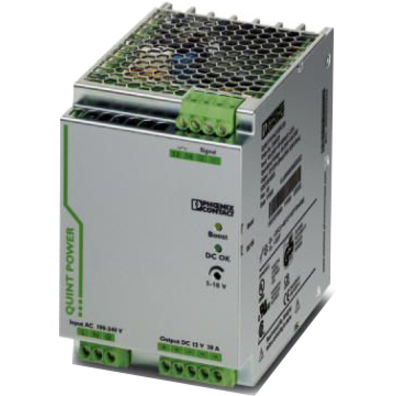
- Perle SystemsPerle QUINT-PS/1AC/12DC/20 Single-Phase DIN Rail Power Supply - DIN Rail Mountable - 120 V AC, 230 V AC, 350 V DC, 90 V DC Input - 240 W - 90% Efficiency28667218
$1,089.00
$1,001.08
Back-orderedBack-ordered — estimated OEM lead time 3–8 weeks (Nov 1 – Dec 6 if ordered today).
- Perle SystemsPerle QUINT-PS/1AC/CO - Single Phase DIN Rail Power Supply - DIN Rail Mountable - 120 V AC, 230 V AC, 410 V DC, 90 V DC Input - 24 V DC Output - 480 W - 93% Efficiency23208988
$1,046.10
$961.84
Back-orderedBack-ordered — estimated OEM lead time 3–8 weeks (Nov 1 – Dec 6 if ordered today).
- Allied TelesisAllied Telesis 480W Power Supply - DIN Rail Mountable - 120 V AC, 230 V AC Input - 48 V DC Output - 480 W - Active PFC - 94% EfficiencyAT-IE048-480/C-20
$425.00
$349.31
Back-orderedBack-ordered — estimated OEM lead time 3–8 weeks (Nov 1 – Dec 6 if ordered today).
- Perle SystemsPerle QUINT-PS/1AC/CO - Single Phase DIN Rail Power Supply - DIN Rail Mountable - 120 V AC, 230 V AC, 410 V DC, 90 V DC Input - 24 V DC Output - 240 W - 92.5% Efficiency23209118
$892.10
$819.92
Back-orderedBack-ordered — estimated OEM lead time 3–8 weeks (Nov 1 – Dec 6 if ordered today).
- Perle SystemsPerle QUINT-PS/60-72DC/24DC/10/CO DC to DC Converter Regulated DIN Rail Power Supply - DIN Rail Mountable - 24 V DC Output - 240 W - 91% Efficiency29050118
$851.40
$782.29
Back-orderedBack-ordered — estimated OEM lead time 3–8 weeks (Nov 1 – Dec 6 if ordered today).
- Perle SystemsPerle QUINT-PS/96-110DC/24DC/10/CO DC to DC Converter Regulated DIN Rail Power Supply - DIN Rail Mountable - 24 V DC Output - 240 W - 92% Efficiency29050128
$841.50
$773.21
Back-orderedBack-ordered — estimated OEM lead time 3–8 weeks (Nov 1 – Dec 6 if ordered today).
- Perle SystemsPerle QUINT Power Supply - DIN Rail Mountable - 48 V DC Output23201288
$840.40
$772.18
Back-orderedBack-ordered — estimated OEM lead time 3–8 weeks (Nov 1 – Dec 6 if ordered today).
- Perle SystemsPerle QUINT4-PS/1AC/48DC/10 Single-Phase DIN Rail Power Supply - DIN Rail Mountable - 110 V DC, 120 V AC, 230 V AC, 250 V DC Input - 48 V DC Output - 480 W - 95% Efficiency29046118
$805.20
$740.54
Back-orderedBack-ordered — estimated OEM lead time 3–8 weeks (Nov 1 – Dec 6 if ordered today).
- Allied TelesisAllied Telesis IE048-480 Power Supply - DIN Rail Mountable - 48 V DC Output - 94% EfficiencyAT-IE048-480-20
$370.00
$305.59
Back-orderedBack-ordered — estimated OEM lead time 3–8 weeks (Nov 1 – Dec 6 if ordered today).
- Transition NetworksTransition Networks 48 VDC Industrial Power Supply - DIN Rail Mountable - 110 V AC, 220 V AC Input - 48 V DC Output25105
$291.50
$227.39
Back-orderedBack-ordered — estimated OEM lead time 3–8 weeks (Nov 1 – Dec 6 if ordered today).
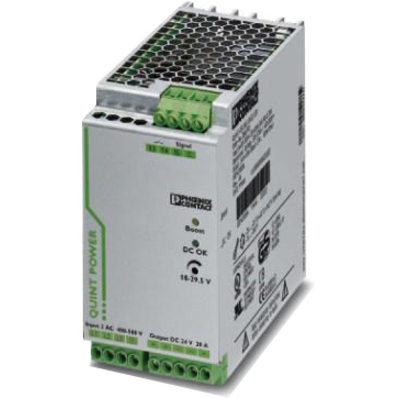
- Perle SystemsPerle QUINT-PS/3AC - 3-Phase DIN Rail Power Supply - DIN Rail Mountable - 226 V DC, 320 V AC, 360 V AC, 390 V DC, 550 V AC Input - 24 V DC Output - 480 W - 93.9% Efficiency29046228
$794.20
$730.14
Back-orderedBack-ordered — estimated OEM lead time 3–8 weeks (Nov 1 – Dec 6 if ordered today).
- Perle SystemsPerle QUINT-PS/48DC/48DC/5 DC to DC Converter Regulated DIN Rail Power Supply - DIN Rail Mountable - 48 V DC Output - 240 W - 93% Efficiency29050088
$785.40
$721.70
Back-orderedBack-ordered — estimated OEM lead time 3–8 weeks (Nov 1 – Dec 6 if ordered today).
- Perle SystemsPerle QUINT Power Supply - DIN Rail Mountable - 24 V DC Output23201028
$794.20
$730.68
Back-orderedBack-ordered — estimated OEM lead time 3–8 weeks (Nov 1 – Dec 6 if ordered today).
- Perle SystemsPerle TRIO-PS/1AC/48DC/10 Power Supply - DIN Rail Mountable - 120 V AC, 230 V AC Input - 48 V DC Output - 480 W - 91% Efficiency28665018
$792.00
$729.07
Back-orderedBack-ordered — estimated OEM lead time 3–8 weeks (Nov 1 – Dec 6 if ordered today).
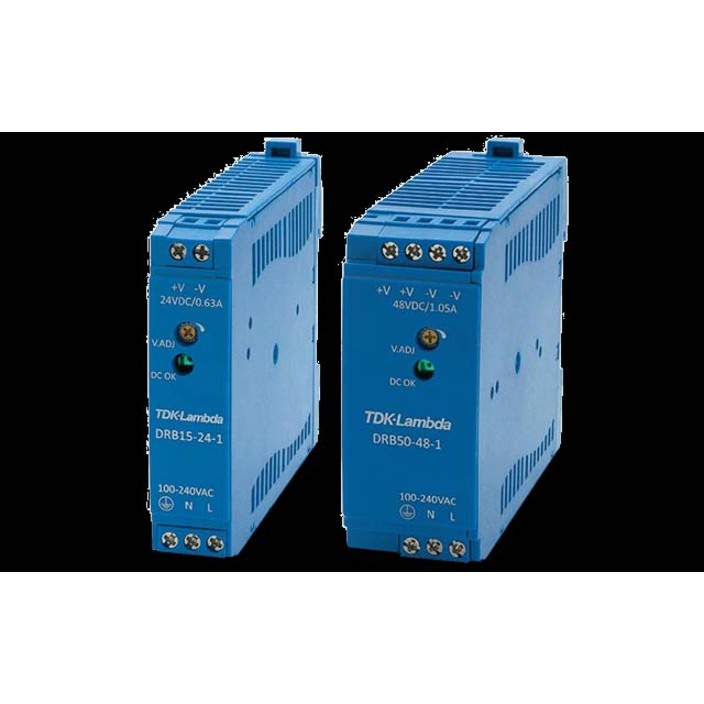
- Allied TelesisAllied Telesis DRB Series Single Output Industrial DIN Rail Power Supply - DIN Rail Mountable - 48 V DC Output - 91% EfficiencyAT-DRB50-48-1
$200.00
$137.20
Back-orderedBack-ordered — estimated OEM lead time 3–8 weeks (Nov 1 – Dec 6 if ordered today).
- Perle SystemsPerle QUINT-PS/96-110DC/24DC/10 DC to DC Converter Regulated DIN Rail Power Supply - DIN Rail Mountable - 24 V DC Output - 240 W29050108
$768.90
$706.60
Back-orderedBack-ordered — estimated OEM lead time 3–8 weeks (Nov 1 – Dec 6 if ordered today).
- Perle SystemsPerle TRIO-PS-2G/3AC - 3 Phase DIN Rail Power Supply - DIN Rail Mountable - 400 V AC, 500 V AC Input - 24 V DC Output - 960 W - 93.3% Efficiency29031568
$772.20
$711.55
Back-orderedBack-ordered — estimated OEM lead time 3–8 weeks (Nov 1 – Dec 6 if ordered today).
- Omnitron SystemsMean Well SDR-480 9170-PS-240 240W Power Supply - DIN Rail Mountable - 120 V AC, 230 V AC Input - 48 V DC Output - 240 W - Active PFC - 94% Efficiency9170-PS-240
$410.05
$350.28
Back-orderedBack-ordered — estimated OEM lead time 3–8 weeks (Nov 1 – Dec 6 if ordered today).



Need pricing on DIN-rail power supplies?
Tell us where to reach you and a Uniqcli specialist will follow up by email with current pricing, availability and lead time for the quantities you need — including parts that aren’t shown on this page.
Buying for an organization or for yourself — both work. No payment up front.
A DIN-rail power supply is defined by where it mounts and what it feeds. It clips onto the 35mm rail that runs the length of an industrial control cabinet, takes line-voltage AC in and hands regulated DC — most often 24 VDC — to the PLC, the industrial switch, the sensors and the field devices sharing that rail. Choosing one well is mostly a matter of matching three things to the panel: the output voltage the load bank runs on, the continuous wattage the load actually draws with headroom left over, and the width the unit takes on a rail that is usually already crowded. Every unit on this page names DIN-rail mounting in the manufacturer's own title, which is the fact a panel builder is checking first.
Output voltage is the decision that cannot be wrong. Industrial controls standardise on 24 VDC far more often than anything else, but 12 VDC and 48 VDC panels exist and the units here are titled per voltage — a 48 VDC supply on a 24 VDC bus is a design error you find at commissioning, not a preference. Wattage is the decision people cut too fine: a supply sized exactly to the calculated draw runs hot and has no margin for the inrush of a contactor or the day a device is added, so the reliable rule is to size the continuous load and then step up, not to buy to the number on the schedule.
The third decision is the rail itself. A control cabinet's rail is a fixed length shared by breakers, terminal blocks, relays and the supply, and a wide brick that fits on the bench may not fit beside the parts it powers — the compact and slim units here exist precisely for that constraint. Cards carry live pricing and current availability from the catalog; send the panel's DC load list and we will size the supply, the rail space and the upstream protection together.
Buyer's checklist
How to choose a DIN-rail power supply
- Fix the output voltage to the bus, not the vendor. Industrial controls are usually 24 VDC, but 12 and 48 VDC panels exist and these units are titled per voltage. A supply on the wrong bus is a commissioning failure, so read the output voltage on the row before anything else.
- Size the continuous load, then step up. Add the steady draw of every device on the rail, leave headroom for inrush and for the device someone adds next year, and buy the next wattage up. A supply run at its rated ceiling runs hot, and heat is what shortens a supply in a sealed cabinet.
- Measure the rail space you actually have. A control cabinet's 35mm rail is shared with breakers, terminals and relays; the compact and slim units here exist for crowded panels, and the width on the datasheet is the number that decides whether the build fits.
- Check the input range against the site. These units are titled with their AC (and often DC) input ranges — 120/230 VAC is common, several accept wide AC/DC input. Match it to the panel's supply and to any generator or DC backup feeding it.
- Read the efficiency and the thermal envelope. The titles here state efficiency figures; in a sealed enclosure the waste heat has nowhere to go, so a more efficient supply is also a cooler cabinet, and the ambient rating is what governs derating.
- Plan for redundancy where the process cannot stop. A second supply, a redundancy module or an upstream UPS belongs in the design where a dropped 24V rail stops a line — decide it at the panel stage, not after the first nuisance trip.
- Order the supply with what protects and mounts it. The upstream breaker, the DIN terminals, the rail itself and the enclosure land on the same panel; quoting them together is what avoids a second delivery in the middle of a build.
Voltage and wattage: the two numbers that decide the row
Almost every DIN-rail supply on this page is a single-output AC-to-DC unit, and the two numbers that separate them are output voltage and continuous wattage. Voltage is the hard constraint: the field devices, the PLC and the industrial switch on the rail all expect one DC bus, and 24 VDC is the overwhelming default in industrial controls, with 12 VDC and 48 VDC panels the exceptions the titles here call out. Get it right once, at the design stage, and it never has to be revisited.
Wattage is where judgement comes in. The honest figure is the sum of the continuous draw of everything on the rail, plus margin for the inrush a contactor or a motor starter pulls at switch-on and for the growth every panel eventually sees. The units here run from around 18W up to 240W, and the reliable practice is to size the load and then step up a band rather than buy to the calculated number — a supply run at its ceiling in a sealed cabinet runs hot, and heat is the thing that ages it.
Where these live and what ships around them
A DIN-rail supply is rarely bought on its own. It is one clip on a rail that also carries the branch breaker that protects it, the terminal blocks that distribute the DC bus, and the PLC, relays and industrial switch it feeds — and the whole assembly lives in an enclosure rated for the environment, whether that is a clean control room or a washdown line. The compact and slim units here exist because that rail is finite: a build that is correct electrically still fails if the supply is wider than the gap left for it.
Uniqcli quotes the supply alongside the rest of the panel and the enclosure, and alongside the industrial switching, media converters and field devices it powers, so an industrial-automation or edge-networking build lands as one accountable order rather than several. Send the DC load list, the bus voltage, the input available at the site and the rail space, and we will come back with sized part numbers, availability, lead times and volume pricing, with the protection and mounting hardware alongside.
FAQ
Common questions
- What voltage DIN-rail supply do I need?
- The one your control bus runs on, which in industrial controls is 24 VDC far more often than anything else — but 12 VDC and 48 VDC panels exist and the units on this page are titled per output voltage. The load decides it: the PLC, the industrial switch, the sensors and the field devices on the rail all expect one DC bus, so read the output voltage on the row and match it to the bus rather than to a preference. A supply on the wrong voltage is a design error you discover at commissioning.
- How much wattage should I size for?
- Add the continuous draw of everything on the rail, then step up a band rather than buying to the exact number. Leave headroom for the inrush a contactor or motor starter pulls at switch-on and for the devices a panel accumulates over its life. The units here run from roughly 18W to 240W; a supply sized exactly to the calculated load runs at its ceiling, and a supply run at its ceiling in a sealed cabinet runs hot, which is what shortens its life.
- Will a DIN-rail supply fit any control cabinet?
- It clips onto the standard 35mm DIN rail every industrial cabinet uses, so the mounting is universal — but the width is not. That rail is shared with breakers, terminal blocks and relays, and a wide supply that fits on the bench may not fit beside the parts it powers. The compact and slim units here are titled as such for exactly that reason; check the unit's width against the free rail space in the panel before you order.
- Are these units suitable for wet or washdown environments?
- The supply itself belongs inside a rated enclosure; it is the enclosure, not the supply, that carries the environmental rating for a washdown or outdoor location. Read each unit's stated operating temperature range and mount it in a cabinet rated for the site. Where the environment is harsh, plan the enclosure and its rating at the same time as the supply — the two decisions are one, and we can quote the enclosure alongside the panel.
- Can business, government and education buyers order these?
- Every line Uniqcli quotes is sourced through US distribution and screened for TAA country-of-origin and NDAA §889 status before checkout — with documentation tied to the specific part number, not a product family.
Need DIN-rail power supplies pricing?
Send a bill of materials or part numbers — we confirm stock and a below-market total, with TAA verified on request. No payment up front.