
Network & data center services
IT Infrastructure Services
Infrastructure work is rarely one purchase. It is hardware, the software licensing that makes the hardware useful, the staging and integration that put both into service, and a refresh plan that keeps the estate supported.
- Procurement · licensing · staging and deployment · lifecycle
- Quoted as readable lines against one bill of materials
- Authorized US distribution, screened per line
We quote all four as readable lines against one bill of materials.
- Lanes
- Procurement · licensing · staging and deployment · lifecycle
- Stack
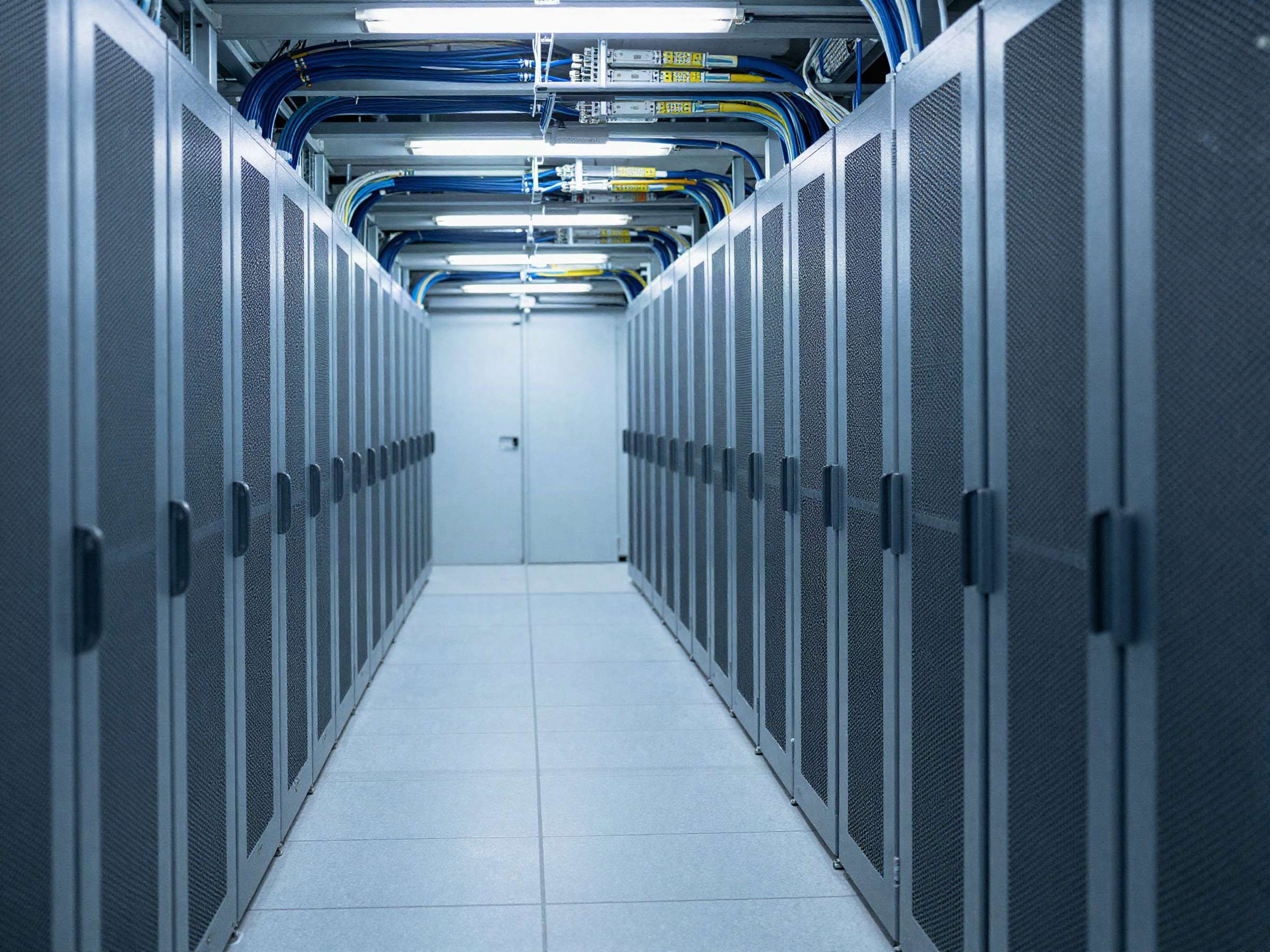
- Network closets, server rooms, data centers and compute
- Sourcing
- Authorized US distribution, screened per line
- Boundary
- We supply, stage and integrate — operations stay with your team
Tell us the project — IT infrastructure
Tell us where to reach you and a Uniqcli specialist follows up by email to scope the work with you — what has to be covered, how many sites or buildings, and what already exists — then comes back with a quoted bill of materials across the equipment, the software licensing and the deployment work.
Priced against your own site rather than a package tier, sourced through US distribution and screened line by line. We specify, supply, stage and integrate; internet access is scoped separately from the equipment on this page, and operating the network stays with your team or the provider you contract.
The first number is our real one, not an opening one.
Tell us the scope and we come back with the best price we can do on it.
- Supporting federal, state & local purchasers
- GPC & P-Card accepted
- TAA & NDAA-889 screening before every quote
Live prices from our catalog right now — a starting point, not the project price. Your quote is scoped to the site and includes the licensing and services the job needs.
The four things an infrastructure project actually needs bought
Ask what an infrastructure project costs and the answer usually names hardware, because hardware is the part with a part number. The rest arrives later: the licensing and subscriptions that decide whether a platform keeps its features, the staging and integration work that turns a pallet into a working system, and the support and refresh lines that keep it supported in year three.
Continue readingShow less
IT infrastructure services here mean all four are quoted at the same time, as separate readable lines, against one bill of materials — so nothing lands as a surprise in a later budget cycle. We source hardware and licensing through authorized US distribution, screen every line before the quote goes out, stage and integrate what needs it, and hand the result over with documentation. What stays with your team is the running of it.
Procurement, licensing, deployment, lifecycle
Most buyers need two or three of these on a given project. They are quoted separately so you can see what each one costs rather than reading a single system price.
Procurement and sourcing
Bill-of-materials sourcing through authorized US distribution, with availability stated per line rather than implied and long-lead items identified while the schedule can still absorb them.
Continue readingShow less
Where a line is unavailable or fails screening, alternates in the same category are offered rather than a substitution made quietly.
Software licensing and subscriptions
Licences are sourced rather than shelved, so stock language does not apply to them; what matters is the metric, the term and how it lines up with the renewals you already carry.
Continue readingShow less
We quote the licence with its term written beside it and say what happens when the term ends, rather than shipping an appliance that goes quiet in a year.
Staging, integration and deployment
Hardware received into a build, configured to the standard your team supplies, racked and cabled to your elevations, exercised before shipment, kitted per site and released on your schedule.
Continue readingShow less
The first time a system is assembled is on a bench, where a problem is a work order rather than a site delay.
Lifecycle, refresh and end-of-support
An estate is a set of dates: support expiry, firmware maintenance, warranty and the point at which a platform stops receiving fixes. Keeping those dates visible is what turns a refresh into a plan with phases rather than an emergency requisition.
Continue readingShow less
Decommissioned equipment is quoted for lifecycle handling as its own decision.
One bill of materials, four lanes, one quote
Go to the formThe same discipline from the closet to the compute floor
In the network closet, infrastructure work is port and power counts, uplink media, patch fields and the rack the whole thing lives in — and a bill of materials that includes the optics, stacking cables and rails that get left off. In the server room it becomes rack elevations, power distribution and protection, cooling that has to work in a room with no ventilation, and structured cabling that is certified rather than assumed. The disciplines are the same; the constraints move.
Continue readingShow less
On a data center floor or in a migration, the sequencing is the hard part: what has to be built before anything moves, what can be staged in advance, which lines have lead times measured in months, and what has to stay running throughout. That is why staging matters more at scale, not less — equipment that arrives configured, labeled and recorded against a manifest is the difference between a move window that closes on time and one that does not.
Compute and accelerated workloads add a power and cooling problem before they add a server problem. Draw per rack, circuit and protection capacity, airflow and the weight the floor carries all constrain the design before a model is chosen, and pretending otherwise produces a quote that cannot be installed. We size those constraints into the bill of materials rather than leaving them to the install crew.
Three artifacts worth insisting on
These are what separate an infrastructure program that can be handed to somebody new from one that lives in a single person's memory.
A standard, written down
A kit definition per site type or per rack type — what goes in it, at what configuration, with which spares. Once the standard exists, every later order is a comparison against it rather than a fresh design, and quoting becomes fast because the questions have already been answered once.
A serialized asset record
Serial numbers, asset tags, loaded configuration and firmware level, and the site or rack position each unit is destined for, captured as equipment moves through staging.
Continue readingShow less
The receiving team reconciles against a manifest rather than cataloging boxes, and property accountability begins at delivery.
A renewal and support calendar
Licence terms, subscription end dates and manufacturer support expiry gathered in one place, with co-termination handled deliberately instead of by accident.
Continue readingShow less
A renewal that surfaces four weeks out is a scramble; the same renewal seen two quarters out is a line in a budget.
What's included in an infrastructure engagement
Four lanes, quoted as readable lines against one bill of materials. Most buyers need two or three of them on a given project.
- Procurement — bill-of-materials sourcing through authorized US distribution, availability stated per line and long-lead items identified while the schedule can still absorb them
- Software licensing and subscriptions, sourced rather than shelved, with the metric, the term and how it lines up against the renewals you already carry
- Staging and integration — received into a build, configured to the standard your team supplies, racked and cabled to your elevations, exercised before shipment
- Kitting per site and release on your schedule
- A standard written down: a kit definition per site type or rack type, with what goes in it, at what configuration, and which spares
- A serialized asset record — serial numbers, asset tags, loaded configuration and firmware level, and the site or rack position each unit is destined for
- A renewal and support calendar — licence terms, subscription end dates and manufacturer support expiry in one place, with co-termination handled deliberately rather than by accident
From a requirements list to equipment in service
- Send what you have — a bill of materials, part numbers, a design document or just the requirement in plain language
- Scope is worked with a specialist: what is hardware, what is licensing, what needs staging and what is a later phase
- One consolidated quote comes back with equipment, licensing and integration work as separate readable lines
- TAA (FAR 52.225-5) and NDAA §889 screening is performed on every line before the quote goes out, with alternates flagged
- Approved orders are staged, configured to your standard, recorded against serials and released on your schedule
- Support terms, licence renewals and end-of-support dates are handed over as a calendar rather than left in a drawer
The half of the estate that renews every year
Software licensing is where infrastructure budgets are most often wrong, because the first year is quoted with the hardware and the years after it are not quoted at all. Platforms licence on different metrics — per device, per channel, per socket, per user, in bands — and adding a modest amount of capacity in year two frequently crosses a band boundary that costs more than the capacity did. Quoting against the count you are planning for rather than the one you have today is a five-minute conversation that avoids a very expensive one.
Continue readingShow less
Licences are sourced through authorized US distribution rather than held on a shelf, so availability language does not apply to them. What does apply is the term, the renewal date and whether it can be co-terminated with the agreements you already carry. Where a line ships with a term in the box that renews later at a different rate, we say so on the quote rather than letting it surface as a surprise invoice.
Get the whole stack on one quote
Hardware, licensing, staging and the lifecycle lines that follow, priced as separate readable lines against one bill of materials — and screened per line before the quote goes out.
Where our part of the work ends
We are a supplier and an integrator, not an operator. We do not administer your servers, run a monitoring desk, staff a help desk, hold credentials on your systems after handover or make availability, response-time or uptime commitments. The infrastructure program is yours; the equipment, the licensing and the integration work behind it are what we quote.
Continue readingShow less
We also do not author your architecture policy. Addressing, segmentation, identity, backup regime and security baseline are decisions your technical owners make. We record them as requirements, specify equipment that can implement them, and stage the configuration your team supplies before it ships.
Availability is stated honestly rather than promised. A meaningful share of any catalog is backordered at a given moment, so a project with a fixed date gets its long-lead lines identified at quote time. Where a manufacturer support contract carries the coverage, that coverage is the manufacturer's and is quoted as its own line.
Where infrastructure work usually starts
The lanes most often quoted alongside an infrastructure program.
IT infrastructure services questions
What is included in IT infrastructure services?
Four lanes, quoted separately: sourcing hardware through authorized US distribution; software licensing and subscriptions with their terms; staging, configuration and integration that make equipment deployment-ready; and lifecycle work — support terms, renewal dates and refresh phasing. Most projects use two or three of them, and the quote shows what each one costs rather than a single system price.
Do you manage or monitor infrastructure after it is installed?
No. We supply, stage, integrate and hand over with documentation. Administration, monitoring, patching and the help desk stay with your team or the provider you contract, and we make no availability or response-time commitments. If you already have a managed provider, we work to the standard they set and hand the equipment over configured to it.
Can you work from our existing standards and part numbers?
That is the easiest way to start. Send the bill of materials, the part numbers or the design document you already have and it comes back priced line by line with availability stated per line. Where a part is discontinued or fails screening, we offer alternates in the same category rather than substituting quietly — the substitution is always your decision.
How do you handle software licensing and renewals?
Licences are sourced through authorized US distribution rather than held in stock, so the questions that matter are the licensing metric, the term and the renewal date. We quote the term explicitly, say what happens when it ends, and hand over a renewal calendar so co-termination is a decision rather than an accident.
Is equipment screened for TAA and NDAA §889?
Everything we quote, before the quote goes out — and the boundary matters on a refresh, because a refresh mixes new lines with an estate that is already installed. We screen what we supply: manufacturer-stated country of origin per line for TAA (FAR 52.225-5), each maker with its parent and affiliates against the §889 covered-entity list, alternates named for anything that does not clear. We do not audit the equipment already in your racks and we issue no finding on it. Where a survey happens to turn up something in service that would not clear, we will say so plainly, but that is an observation for your team rather than a determination — determinations on your award stay with your contracting officer.
How is an infrastructure order placed?
One consolidated quote covers equipment, licensing and integration as separate lines, with stock and the final total confirmed before you commit. GPC / P-Card is accepted up to your cardholder threshold and purchase orders otherwise, and a phased project can be requisitioned phase by phase against the same bill of materials.
The solutions atlas
Every solution, by technology area and by customer.
By technology
By customer
- TAA & NDAA-889 Compliance Screening
- CMMC & CUI Solutions
- Federal & DoD
- State, Local & Education
- Healthcare
- Enterprise
- Rapid Procurement & GPC Buys
- Multi-Vendor Integration Projects
- eProcurement & Custom Catalogs
- FISMA Modernization
- CJIS-Compliant Justice Cloud & Local AI
- Federal Storage Modernization
- Government ERP & Business Systems Infrastructure
- Managed Procurement
- Secure AV & Conferencing
- Fiber Network Infrastructure
- Satellite & Resilient Connectivity
- Wavelength & Optical Transport
- Decentralized Data Centers
- Data Center Design & Build
One bill of materials, four lanes, one quote
Send a requirements list, a design document or the part numbers you already have. Hardware, licensing, staging and lifecycle come back as separate readable lines with availability stated per line.