
Short answer
The main difference is the number of live conductors: single-phase is one voltage across two of them, three-phase is three lines offset by a third of a cycle, so the same voltage and amperage carries about 1.732 times the power. Choose single-phase when the cabinet's draw fits one or two 208 V circuits; choose three-phase when it does not.
Key facts
- Three-phase carries the square root of three — about 1.732 times — the power of single-phase at the same voltage and current.
- Total power on a three-phase rack PDU is line current x 208 V x 1.732, then derated to 80% for continuous load.
- A 30 A 208 V single-phase feed gives about 5.0 kW usable; the same 30 A rating in three-phase gives about 8.6 kW.
- At 60 A the pair is roughly 10.0 kW single-phase against 17.3 kW three-phase — Raritan's own spec example prints 17.3 kVA.
- UL requires components derated to 80% continuous load, which is why a 30 A input is budgeted at 24 A.
- Servers are single-phase loads either way: a three-phase PDU splits its input into single-phase outlet banks.
This question almost never arrives as electrical theory. It arrives as a PDU order. Someone is filling a rack, adds up what the servers, storage and top-of-rack switching will draw, and finds that the 208 V circuit the room has been giving every rack will not carry it. Or a facility is being fitted out and has to decide what to run to each cabinet before anything is racked. Or a refresh drops denser nodes into a cabinet that was specified years ago for a much lighter load, and the existing feed becomes the constraint on how many of them fit.
The difference itself is simple. A single-phase rack circuit is one alternating voltage between two conductors — a line and a neutral at 120 V, or two lines at 208 V. A three-phase circuit brings three line conductors whose voltages are offset by a third of a cycle from each other, plus a neutral in the common wye arrangement. Because those three legs peak at different moments, the line-to-line voltage is the line-to-neutral voltage multiplied by the square root of three, and a three-phase circuit carries roughly 1.73 times the power of a single-phase circuit at the same voltage and the same amperage. Put the National Electrical Code's continuous-load rule against that — a load running three hours or more is sized so the breaker is loaded to no more than 80 %, which every rack load is — and the two useful numbers fall out: a 30 A 208 V single-phase circuit delivers about 5.0 kW of usable capacity, and a 30 A 208 V three-phase circuit delivers about 8.6 kW from the same amperage rating.
Two scope notes before the table, because they save most of the confusion. First, this page is about rack and room power for server deployments — the PDU, the whip and the branch circuit feeding a cabinet. Building distribution and anything residential is a licensed electrician's work and a local-code question, and nothing here is wiring guidance. Second, your servers are single-phase loads either way. A three-phase PDU does not deliver three-phase power to a server; it takes a three-phase feed and splits it into single-phase outlet banks. Three-phase is a property of the distribution, not of the equipment, which is why the equipment list almost never tells you which one you need — the total draw does.
At a glance
Side by side
| Factor | Single-phase rack feed | Three-phase rack feed |
|---|---|---|
| Conductors arriving at the rack | One line and a neutral, or two lines, plus ground | Three lines, plus a neutral in the common wye arrangement, plus ground |
| Typical North American rack voltages | 120 V line-to-neutral, or 208 V taken across two legs | 208Y/120 V; newer high-density builds use 415Y/240 V |
| Usable capacity on a 30 A feed | About 2.9 kW at 120 V, about 5.0 kW at 208 V | About 8.6 kW at 208 V — roughly 1.73× the single-phase figure |
| Usable capacity on a 60 A feed | About 10.0 kW at 208 V | About 17.3 kW at 208 V |
| The arithmetic | Volts × amps × 0.8 for continuous load | Volts (line-to-line) × amps × 1.732 × 0.8 |
| What the equipment sees | Single-phase outlets | Still single-phase outlets — the PDU splits the feed into banks |
| Common input plugs | NEMA L5-30P, L6-30P; IEC 60309 pin-and-sleeve in larger sizes | NEMA L15-30P (delta) or L21-30P (wye); IEC 60309 pin-and-sleeve in larger sizes |
| Load balancing to manage | None — one circuit, one budget | Real: outlets are grouped by phase pair, and an unbalanced rack strands capacity |
| Effect of losing one leg | The circuit and everything on it goes down | On a wye PDU with 208 V line-to-line outlet banks, the two banks using that leg drop and the third keeps running |
| Circuits per kilowatt | More whips and more breaker positions for the same load | More kilowatts per whip and per breaker position |
| Where it usually belongs | Closets, comms rooms, branch and edge sites, low-density racks | Data centers, high-density compute, GPU and AI nodes, dense storage or blade racks |
| The trap | Assuming a 208 V outlet means the rack is on three-phase | Ordering a three-phase PDU for a room that has no three-phase feed to it |
Single-phase is the right feed when
- The rack's measured or nameplate draw fits inside one or two 208 V circuits with headroom — a cabinet of switches, firewalls and a few 1U servers usually does
- The site is a closet, a comms room, a branch office or an edge cabinet, where a three-phase feed would be a facility project rather than a circuit
- You are standardizing many small sites and want one whip type, one PDU part number and one spares kit covering all of them
- Redundancy is being met by two independent single-phase circuits on separate upstream paths feeding dual-corded equipment, and that is enough capacity on each side
- The room genuinely has no three-phase distribution to the cabinet — that is a building question with a cost and a lead time, and it belongs in the project before the PDU does
Three-phase is the right feed when
- The rack's load has outgrown what one or two single-phase circuits carry, and the alternative is four or six whips into one cabinet
- The build is dense by design — GPU or accelerated compute, blade chassis, a full column of modern two-socket servers, or high-drive-count storage
- Breaker positions in the room's distribution panel are the scarce resource, and each three-phase position delivers roughly 1.73 times what a single-phase one does
- The A and B feeds each have to carry the whole rack on their own during maintenance, which doubles the capacity each side needs
- You are specifying for a refresh cycle rather than today's load, and the honest expectation is that what goes in the cabinet next will draw more than what is in it now
Bottom line
Use the single-phase the room already has until the cabinet's draw no longer fits one or two 208 V circuits; then bring in three-phase. Settle it with arithmetic. Sum the draw of everything going in the cabinet, add the headroom you want, then compare it against the usable capacity available: roughly 5.0 kW from a 30 A 208 V single-phase feed, roughly 8.6 kW from the same amperage in three-phase, and about 17.3 kW at 60 A three-phase. If the load fits comfortably in single-phase, take it: the PDUs are cheaper, the circuits are ordinary, and there is no phase balance to manage. If it does not, three-phase is the only sensible way to avoid running four or six separate whips into one cabinet. Three procurement details decide whether the order works. Confirm the feed exists before you buy the PDU, because a three-phase unit is scrap on a single-phase circuit and the plug is not adaptable. Confirm the input plug and voltage explicitly rather than inferring them from the outlet mix, since 208 V appears in both worlds. And on a three-phase PDU, plan how the outlets will be populated across the phase pairs: a rack under its total rating can still trip a bank breaker if one pair carries most of it.
Products for this decision
Single-phase cabinet
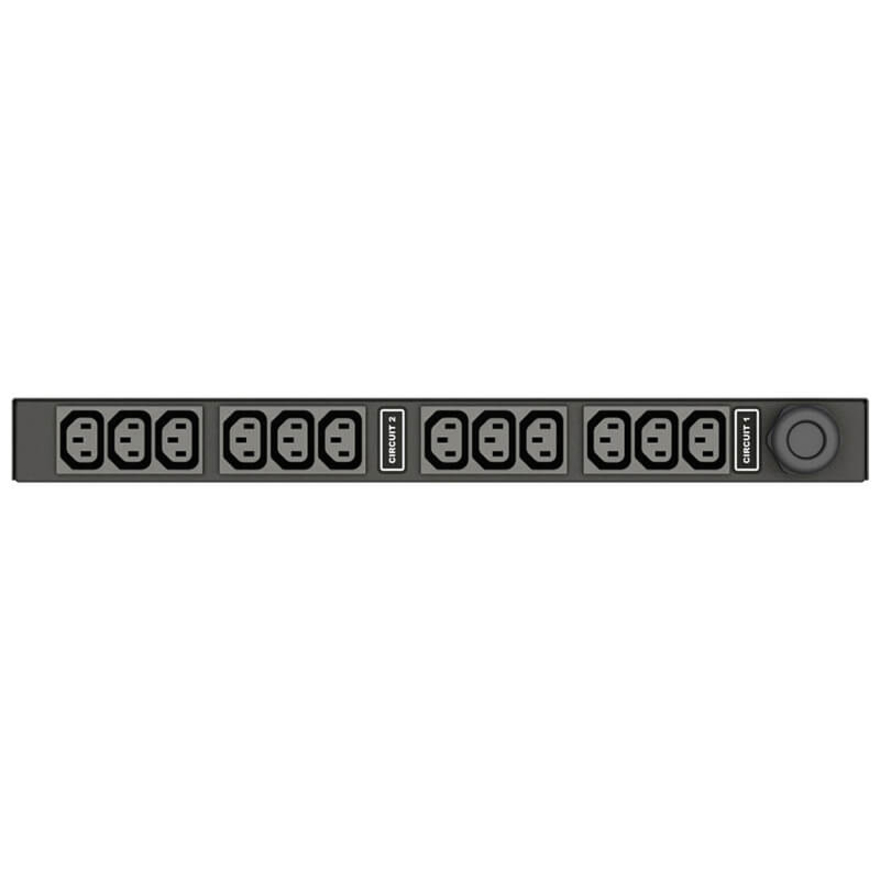
Vertiv
Vertiv Geist Basic Rack PDU
VP9571A
A 30 A 208 V single-phase basic rack PDU on an L6-30P input, rated 4.9 kW — the capacity a 30 A single-phase whip actually delivers after the continuous-load derate.
Confirm the whip and panel schedule show a two-pole single-phase circuit before ordering; the plug is not adaptable.
$404.62Back-orderedThree-phase, same amperage
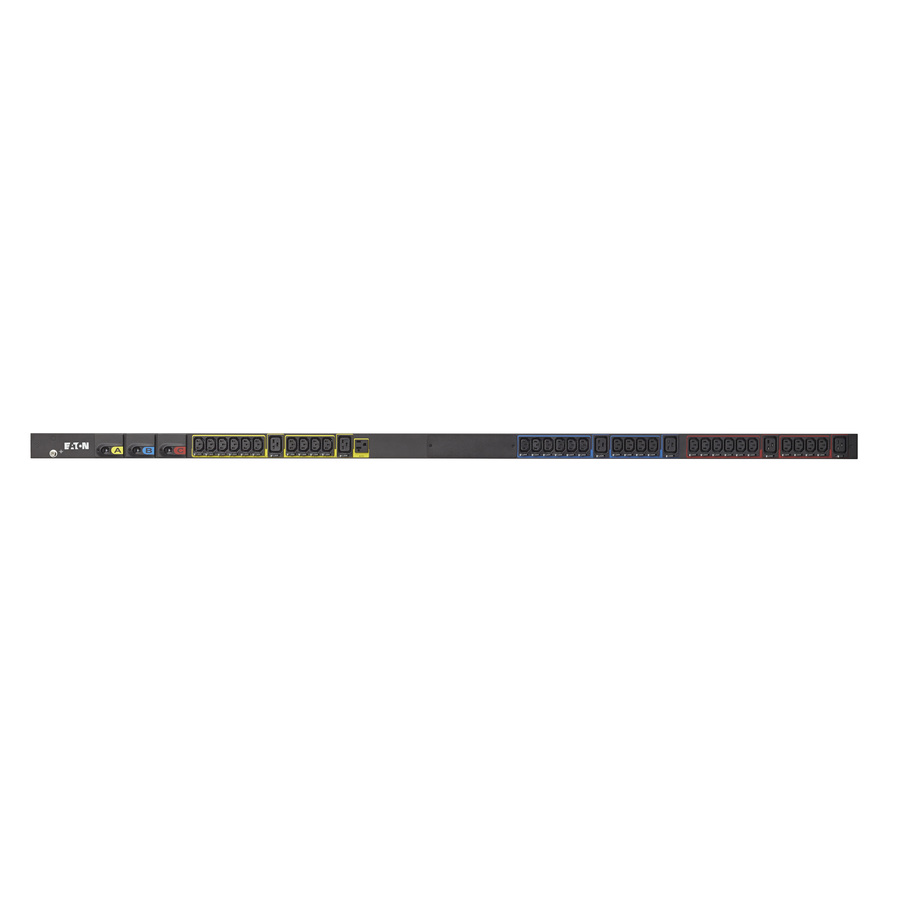
Eaton
Eaton Basic rack PDU, 0U, L21-30P input, 8.64 kW max, 120/208V, 24A, 10…
EBA310-10
A 0U three-phase basic PDU on an L21-30P input rated 8.64 kW at 120/208 V — the same 30 A breaker position, carrying about 1.73 times the load.
$870.32In stockHigh-density build
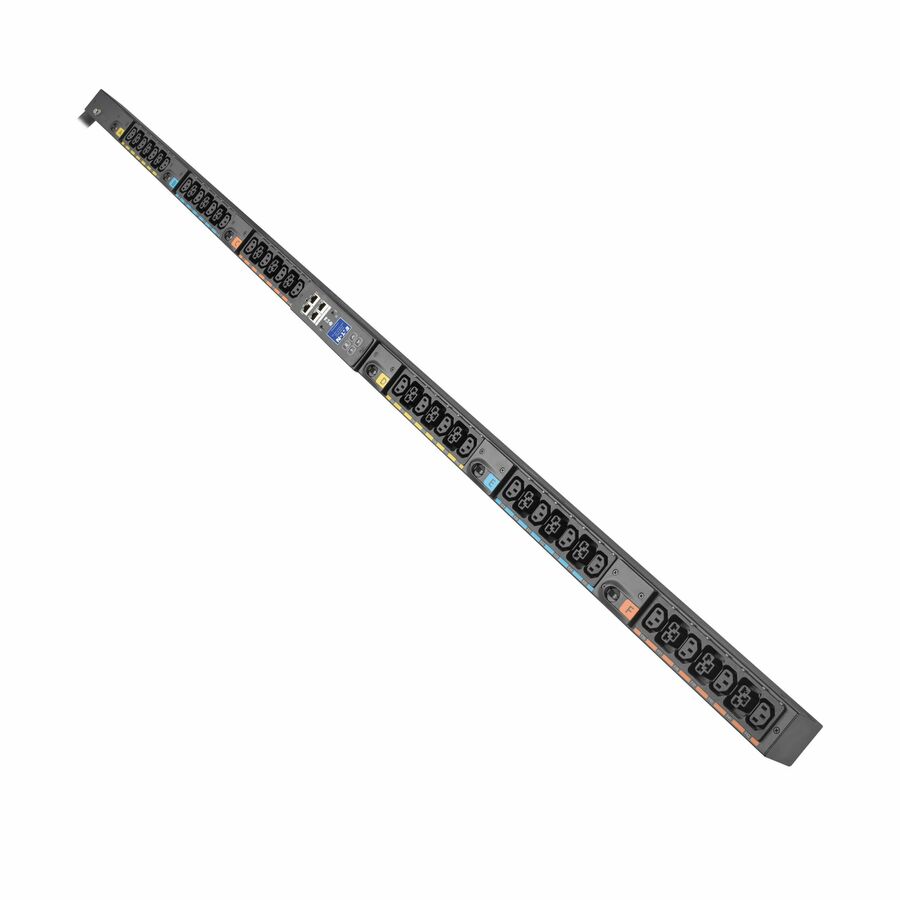
Eaton
Eaton 3-Phase Metered Input Rack PDU G4, 240/415V, 42 Outlets, 24A/32A…
EVMIG332X
A metered-input three-phase PDU at 240/415 V rated 17.3 kW, for a cabinet of accelerated compute or blades where per-phase current has to be visible rather than inferred.
415Y/240 V is a facility decision, not a PDU decision — confirm the room's distribution first.
$2,215.65*Back-orderedFAQ
Common questions
- Is 208 V single-phase or three-phase?
- Either, and it is the most common confusion in a rack build. In a building fed 208Y/120 the service itself is three-phase, and 208 V is the voltage measured across any two of its three legs. Run two legs to a cabinet and you have a 208 V single-phase circuit; run all three and you have a 208 V three-phase circuit. The outlet and the equipment cord look identical in both cases, so the voltage tells you nothing about the phase. The input plug does: a two-pole plug such as a NEMA L6-30P is single-phase, while a four- or five-pole L15-30P or L21-30P is three-phase. Confirm it from the whip and the panel schedule.
- How much more power does three-phase actually deliver?
- About 1.73 times as much at the same voltage and amperage — the square root of three, which is what the three legs peaking a third of a cycle apart buys you. Work it through with the continuous-load derate that applies to anything running three hours or more: a 30 A 208 V single-phase circuit loaded to 80 % carries 24 A, or about 5.0 kW, while the same 30 A rating in three-phase carries about 8.6 kW. At 60 A the pair is roughly 10.0 kW against 17.3 kW. Those are the figures rack-PDU datasheets publish for the same input ratings, which makes them a useful cross-check when one unit looks implausibly generous.
- Do my servers need to be three-phase?
- No, and no server is. Every power supply in the rack is a single-phase load, and a three-phase PDU does not change that — it takes the three-phase feed at its input and distributes single-phase outlet banks across the phase pairs, so each outlet presents an ordinary supply at 208 V or 120 V. That is why the equipment list rarely answers this question on its own. The reason to go three-phase is the cabinet's total draw and the number of circuits you would otherwise run to it, not any requirement on the equipment side. Do check each power supply's accepted input voltage range, which is a separate question from phase.
- At what rack density does three-phase start to make sense?
- Work from the capacity rather than a rule of thumb. A single 30 A 208 V single-phase circuit gives about 5.0 kW usable, so a rack drawing meaningfully more than that needs either a second circuit or a three-phase feed. Two single-phase circuits per rack is common and reasonable; four is where most people stop, because the whips, the breaker positions and the cable management stop being worth it. Redundancy moves the line too: if the A and B feeds each have to carry the whole rack during maintenance, each side needs the full load. Then add the refresh horizon and specify against the draw you expect to reach, not today's.
- What happens if a three-phase PDU's outlets are unbalanced?
- You lose capacity you have already paid for, and you can trip a breaker while the rack looks fine on paper. A three-phase PDU groups its outlets by phase pair, and each group usually sits behind its own internal breaker, so if most of the heavy equipment lands on one pair that breaker can open while total draw is comfortably under the rating — an outage caused by the arrangement rather than the load. The fix is planning, not hardware: spread high-draw devices across the outlet groups as the rack is populated, keep a dual-corded server's two cords on two different PDUs, and use a metered PDU so per-phase current is visible rather than inferred.
- What is a 3 phase PDU?
- A three-phase rack PDU takes a three-phase feed at its input and splits it across three internal outlet banks, each of which presents ordinary single-phase power to the equipment. The point is capacity per whip: at 208 V and 30 A it delivers about 8.6 kW against a single-phase circuit's 5.0 kW from the same breaker position. It also introduces a job single-phase does not have — spreading the load evenly across the phase pairs.
- How much more power does a 208 V circuit deliver than a 120 V one?
- About 1.73 times as much at the same current, because power is volts times amps: 24 A of usable current gives roughly 2.9 kW at 120 V and roughly 5.0 kW at 208 V. That is why dense cabinets are fed at 208 V rather than by adding more 120 V circuits — the same breaker position carries far more, and the equipment's power supplies accept both.