
Short answer
Lane count separates SFP from QSFP. SFP form factors carry one lane — 1G as SFP, 10G as SFP+, 25G as SFP28 — while QSFP is quad-lane: 40G as QSFP+ over four 10G lanes, 100G as QSFP28 over four 25G lanes. They are not interchangeable, because the cages and lane counts differ; an adapter can put one SFP module in a QSFP cage, never the reverse.
Key facts
- SFP is a single-lane form factor: 1G (SFP), 10G (SFP+) and 25G (SFP28) all run one lane in each direction.
- QSFP is four lanes in one cage: 40GBASE over 4 x 10G, 100GBASE over 4 x 25G.
- 40 and 100 Gigabit Ethernet arrived together as IEEE Std 802.3ba-2010; single-lane 25G followed as IEEE Std 802.3by-2016.
- Breakout follows from lane count: one 40G QSFP+ port splits into four 10G links, one 100G QSFP28 into four 25G links.
- Parallel short-reach QSFP optics such as 40GBASE-SR4 and 100GBASE-SR4 terminate in MPO, not the duplex LC an SFP link uses.
The difference between SFP and QSFP is not a speed grade, it is a lane count, and almost everything else follows from that one fact. An SFP module carries a single electrical lane: at 1G it is SFP, at 10G it is SFP+, at 25G it is SFP28. A QSFP module carries four — the Q is for quad — so QSFP+ is four 10G lanes making 40G, QSFP28 is four 25G lanes making 100G, and QSFP-DD doubles the lane count again for 400G. The number on the label is the product of the lane rate and the lane count, which is why 100G QSFP28 and 25G SFP28 are built from the same electrical building block.
That has three practical consequences a buyer meets immediately. The cages are different sizes and a QSFP module does not fit an SFP port or the reverse. The cabling is often different, because four parallel lanes over multimode fiber ride an MPO trunk rather than a duplex LC pair. And because the four lanes are genuinely independent, many switches can break one QSFP port into four SFP-speed links — which is the single most useful thing to know about the family, and the reason a QSFP port is worth more than its headline speed suggests.
The decision itself is usually made by the switch rather than by preference: the ports on the chassis are what they are. Where there is a real choice — specifying a new switch, planning an uplink tier, deciding how a spine will serve a row of access switches — the question to ask is whether you need one fat pipe or four separate ones, and whether the fiber plant between the two ends is duplex or parallel. Those two answers decide the form factor.
At a glance
Side by side
| Factor | SFP family | QSFP family |
|---|---|---|
| Electrical lanes | One | Four (eight on QSFP-DD) |
| Common speeds | 1G (SFP), 10G (SFP+), 25G (SFP28), 50G (SFP56) | 40G (QSFP+), 100G (QSFP28), 200G (QSFP56), 400G+ (QSFP-DD) |
| Cage compatibility | SFP cage only; not interchangeable with QSFP | QSFP cage only; a QSA-type adapter lets one SFP module run in a QSFP port |
| Typical multimode connector | Duplex LC — one transmit fiber, one receive | MPO-12 for parallel optics (SR4); duplex LC on WDM variants such as LR4 and CWDM4 |
| Breakout | Not applicable — one lane, one link | One port can commonly split into four SFP-speed links, where the switch supports it |
| Front-panel density | Higher port count per rack unit, lower bandwidth per port | Fewer ports per rack unit, far higher bandwidth per port |
| Typical power per module | Roughly 1–1.5 W for SFP+; more on long-reach optics | Roughly 3–4 W and up for QSFP28; heat and airflow become a design factor |
| Where it usually sits | Access ports, server links, edge and endpoint aggregation | Uplinks, aggregation and spine tiers, storage and GPU fabrics |
Choose SFP when
- The link serves a single endpoint — a server, an access switch, a firewall — and one lane of bandwidth is what it needs
- The fiber between the two ends is duplex LC and you would rather not pull an MPO trunk or fit cassettes
- Front-panel port count matters more than per-port bandwidth, which is the usual case at the access layer
- Power and heat budgets are tight; SFP-class optics draw a fraction of what a high-speed QSFP module does
Choose QSFP when
- The link is an uplink, an aggregation leg or a spine connection where one fat pipe beats four separate ones
- You want the option to break one port into four SFP-speed links later and buy the density back
- The fabric is a storage or GPU cluster where per-port bandwidth is the constraint the design is built around
- The plant already carries MPO trunks, or the run is new enough that parallel fiber is the sensible thing to pull
Bottom line
These are not competing choices so much as two tiers of one architecture, and most networks run both. SFP-class optics belong where a port serves one endpoint: access switches, servers, edge devices, and anywhere front-panel port count is the scarce resource. QSFP belongs where a port serves a whole downstream tier — uplinks, aggregation, spine and storage or GPU fabrics — and its breakout capability means a QSFP port is also a reserve of four SFP-speed links whenever the design needs them back. The practical rule when specifying a switch is to count the uplinks you need in QSFP and the endpoints you need in SFP, then check two things before ordering optics: that the fiber plant matches the connector the modules use, and that any breakout you are planning is supported and configurable on the specific port group.
Products for this decision
One lane
Sonnet Technologies
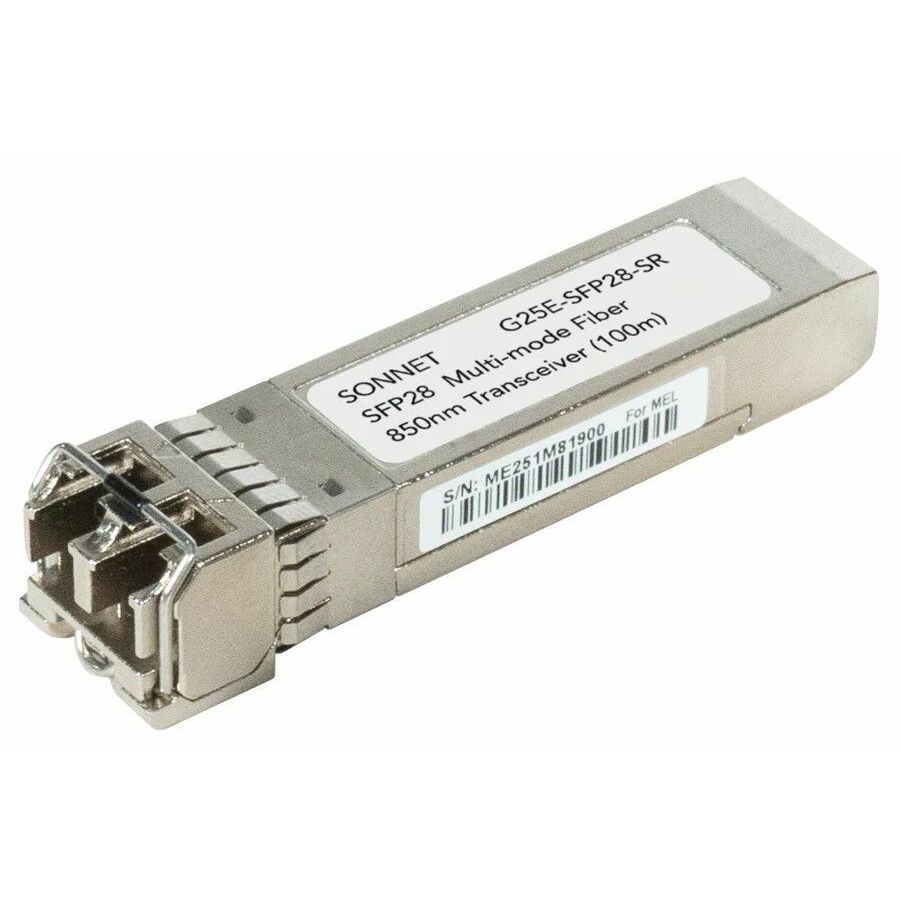
Sonnet SFP28 Transceiver (Short-Range)
G25E-SFP28-SR
An SFP28 short-range module carrying 25 Gigabit Ethernet on a single lane over multimode fiber, on the duplex LC connector an SFP plant already uses.
$67.11Back-orderedFour lanes at 10G
Axiom Memory Solutions
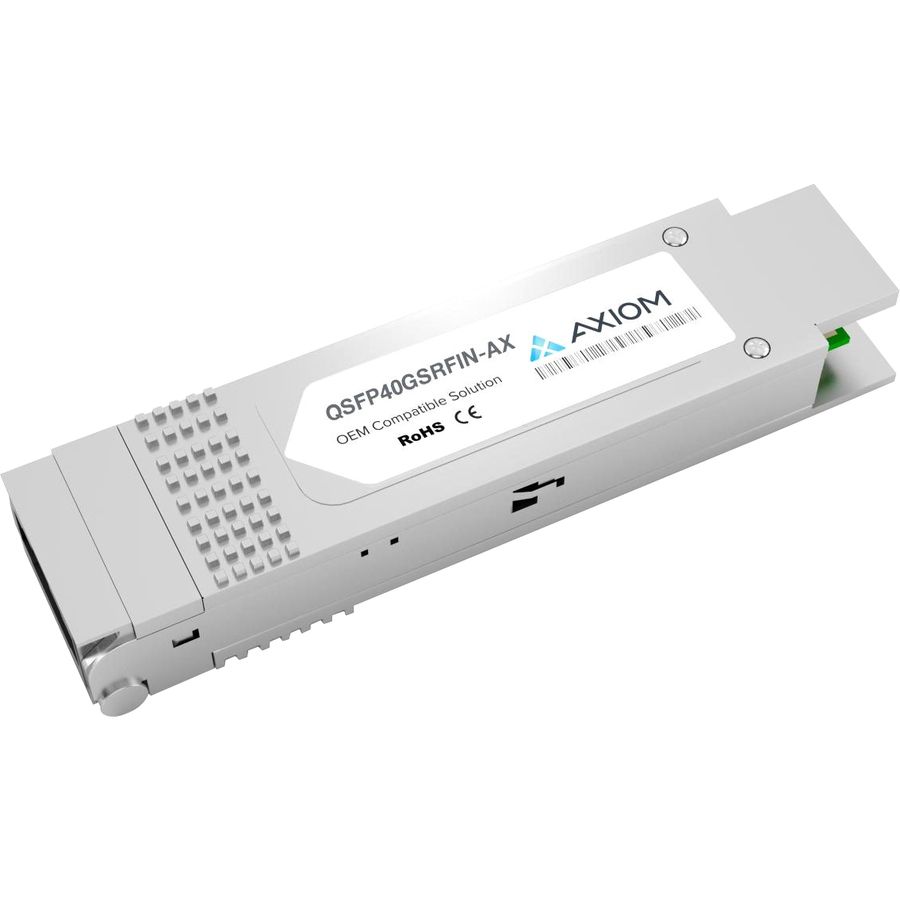
Axiom 40GBASE-SR4 QSFP+ Transceiver
QSFP40GSRFIN-AX
A 40GBASE-SR4 QSFP+ module: four 10G lanes side by side, which is also what makes a four-way breakout to 10G links possible.
SR4 is parallel optics and terminates in MPO — check the fiber plant before ordering.
$175.22In stockFour lanes at 25G
Legrand
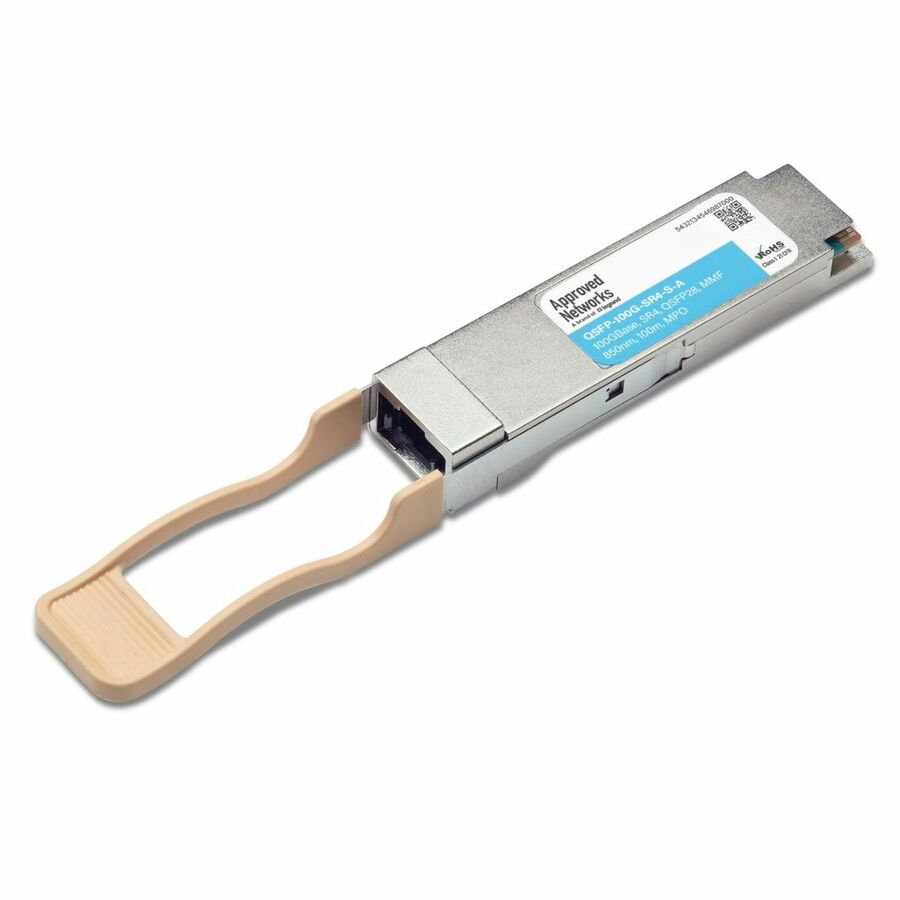
Approved Networks 100GBASE-SR4 QSFP28 MMF 850nm 100m DDM Transceiver
QSFP-100G-SR4-S-A
A 100GBASE-SR4 QSFP28 module over multimode fiber — the same quad-lane idea one generation up, and four 25G links when broken out.
$129.20Back-orderedShop it at Uniqcli
FAQ
Common questions
- Can a QSFP module go in an SFP port?
- No. The cages are physically different sizes and the electrical interfaces carry different lane counts, so neither module fits the other's port. The one adapter that exists works in the other direction: a QSA-type adapter seats in a QSFP cage and accepts a single SFP module, letting a QSFP port serve one SFP-speed link. There is no adapter that makes an SFP port carry a QSFP module, because the port has one lane and the module needs four.
- Is QSFP just four SFPs in one package?
- Electrically that is close to the truth, and it is the most useful way to think about it — four independent lanes sharing one connector, one cage and one host interface. That is exactly why breakout works: the four lanes inside a 40G QSFP+ module map onto four 10G links, and the four inside a 100G QSFP28 map onto four 25G links. What the single package adds is density and a shared power and management path, and what it costs is a bigger cage, more power and more heat per port.
- Do I need MPO fiber for QSFP?
- For parallel optics, yes. Short-reach QSFP modules such as 40GBASE-SR4 and 100GBASE-SR4 run four lanes side by side over multimode fiber and terminate in an MPO-12 connector, which a duplex LC plant will not carry without cassettes or a new trunk. WDM variants are the exception: parts such as 100GBASE-LR4 and CWDM4 multiplex the four lanes onto one pair of fibers and use a duplex LC connector, so they run on the same shape of plant an SFP link does. Read the connector on the specific part number rather than assuming from the form factor.
- Can one QSFP port be split into four SFP links?
- On most modern switches, yes — this is the breakout feature and it is one of the main reasons QSFP ports are worth having. It depends on the switch supporting breakout on that specific port group and on the port being configured for it, which frequently requires a reload and sometimes restricts which ports in a group may be split. The cabling is also different: a breakout needs a fan-out harness or breakout cable rather than a straight trunk. Confirm both against the switch documentation before ordering optics.
- Which form factor should a new switch specify?
- Usually both, in different roles. Count the endpoints the switch has to serve and buy SFP-class ports for them, then count the uplinks and buy QSFP ports for those — remembering that each QSFP port is also four SFP-speed links in reserve if the access tier grows faster than expected. The check that matters afterwards is the fiber plant: parallel optics need MPO trunks or cassettes, and discovering that after the optics arrive is what turns a clean cutover into a second maintenance window.
- What is the difference between SFP+ and QSFP+?
- SFP+ is one 10G lane; QSFP+ is four of them in one cage, which is where 40G comes from. The cages are different sizes and the host interface carries a different number of lanes, so the modules are not interchangeable. The practical consequence is that a QSFP+ port can become four 10G ports through breakout, and an SFP+ port cannot become anything else.
- Is SFP28 the same as SFP+?
- Same shape, different lane rate. SFP28 uses the SFP cage and connector but runs the lane at 25 Gb/s instead of 10, and most SFP28 ports accept an SFP+ module at 10G. The reverse is not true: an SFP+ port has no 25G serdes behind it, so an SFP28 module in it will link at best at the lower rate the port supports, if at all.