
Best 10GBASE-SR SFP+ Transceivers for 10G Switches
MSA-compliant 850 nm multimode modules coded for the switch you already own — the grid opens on OEM-coded compatibles, with the wider coding and price range in the picks below.
10GBASE-SR transceivers in stock at Uniqcli
How to choose →A curated selection with live pricing — in-stock lines first, then back-ordered lines with a typical lead time. Every line is sourced through US distribution and screened for NDAA §889 status before checkout, with TAA verified on request.
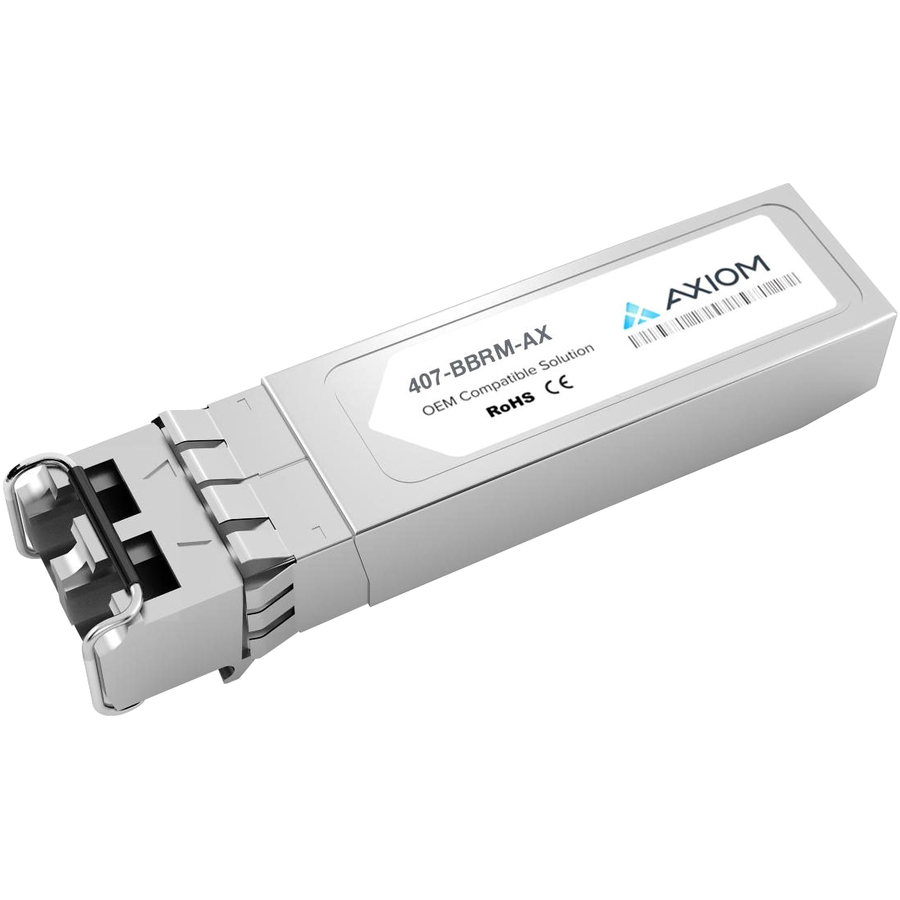
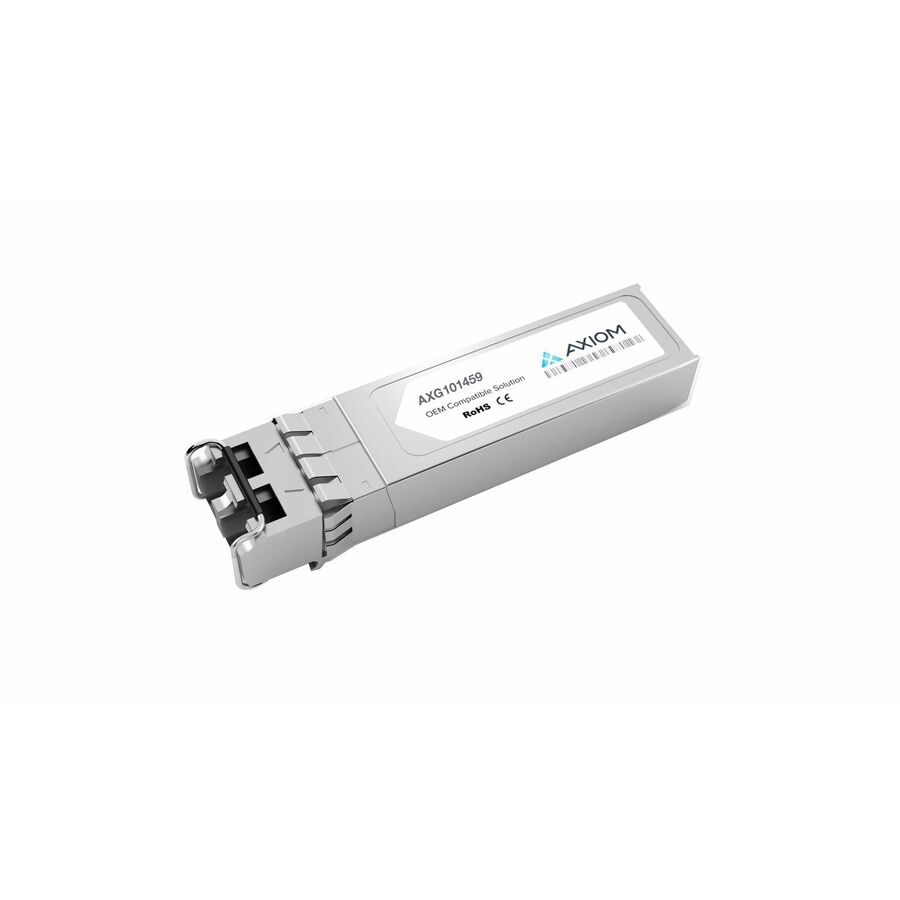
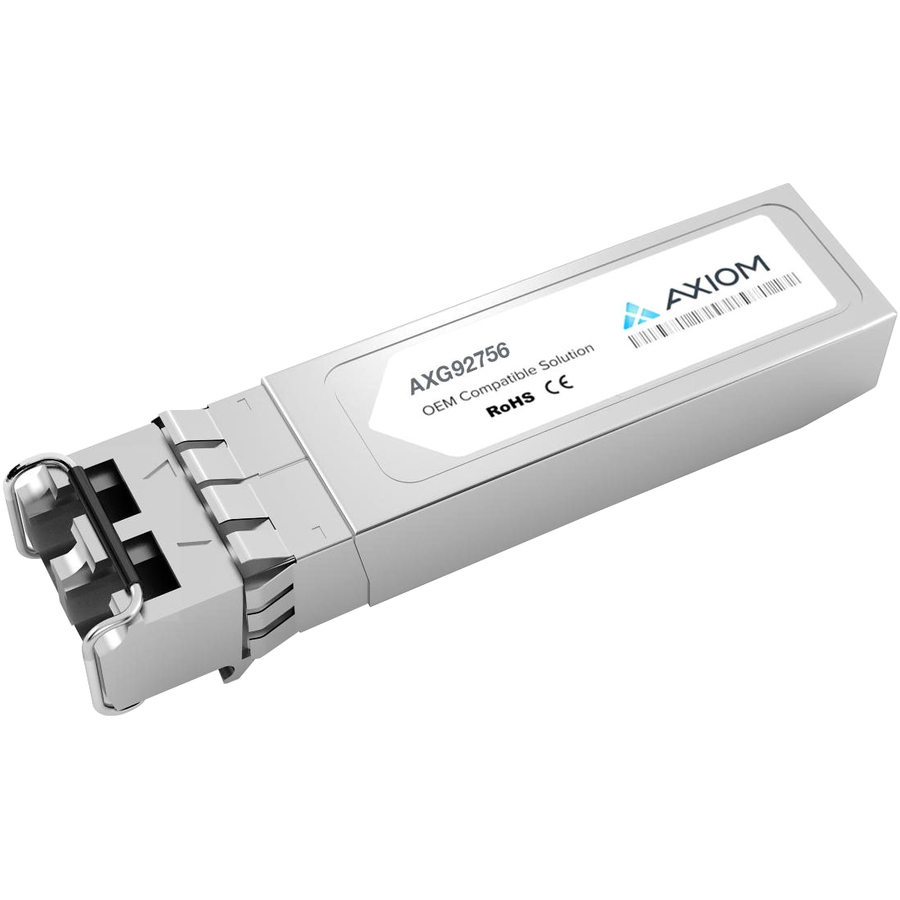
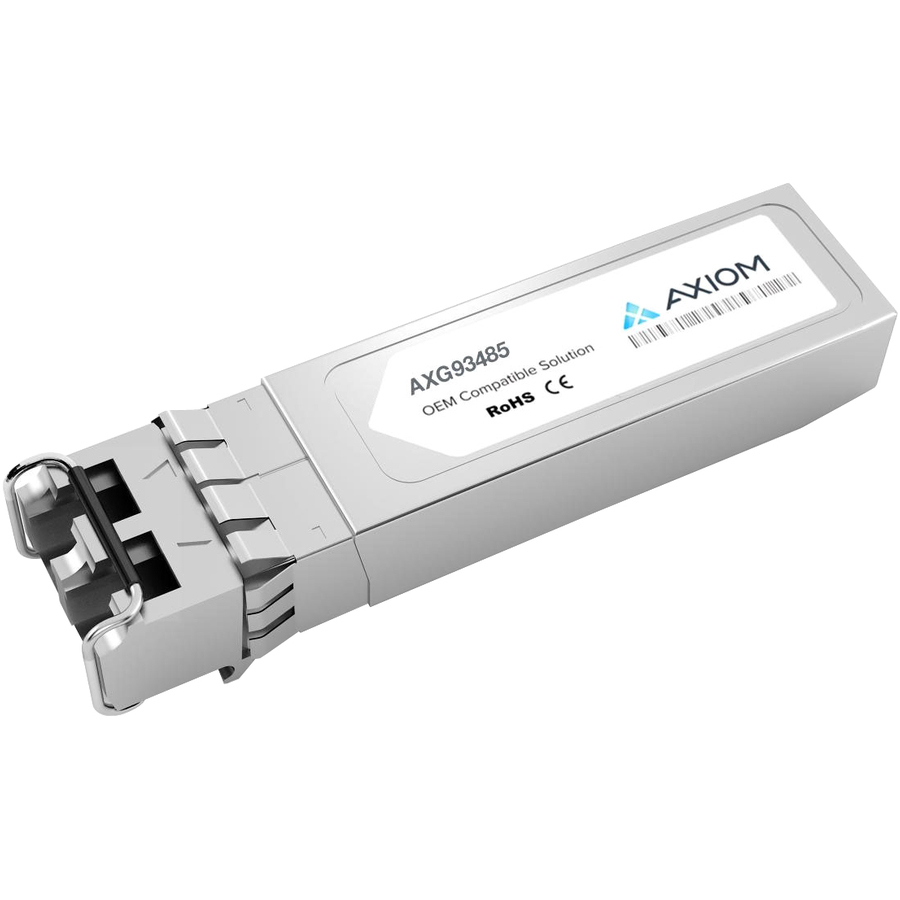
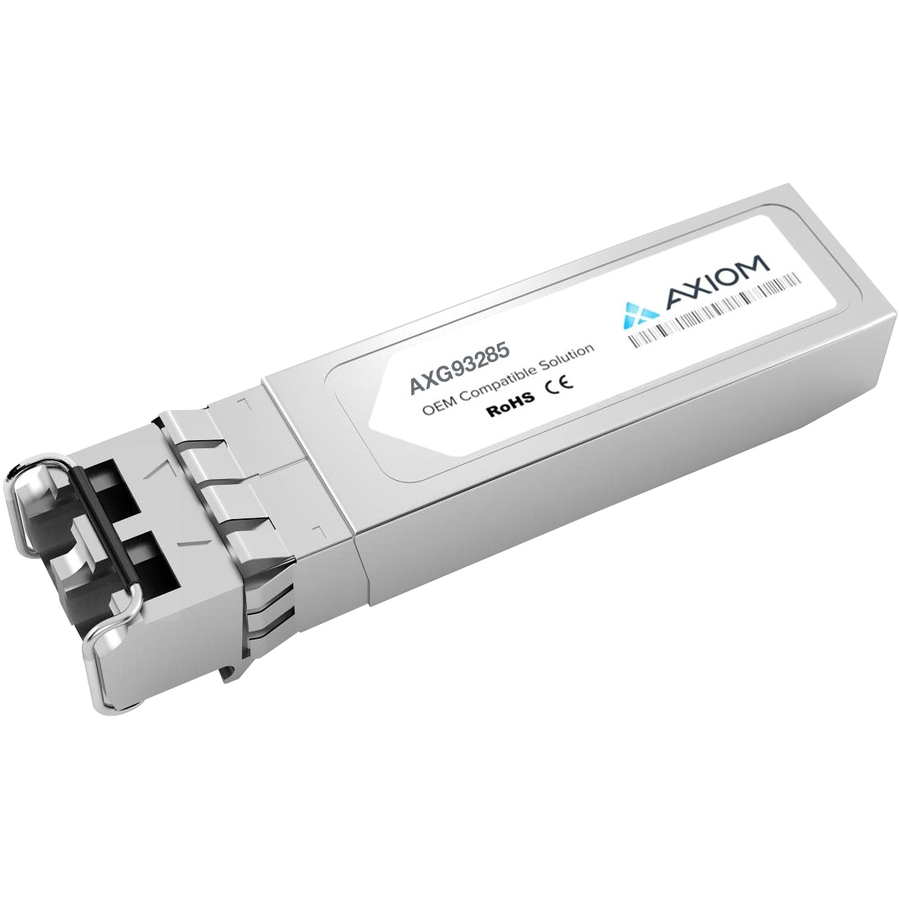
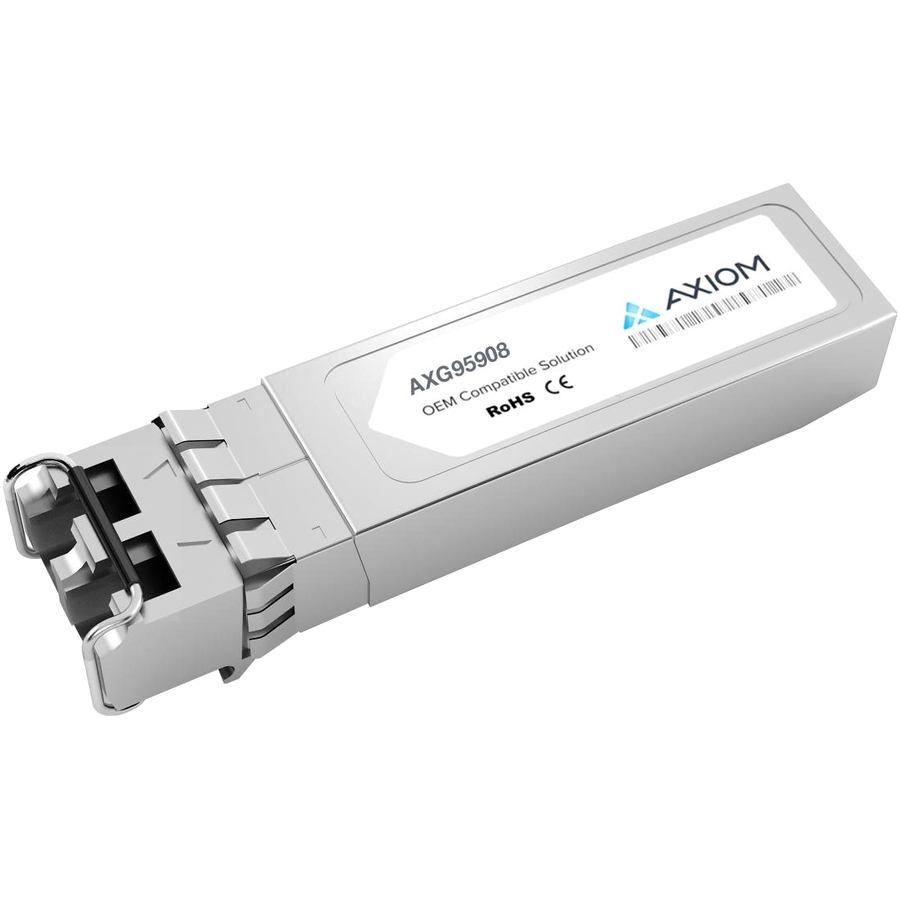
- Axiom Memory SolutionsAxiom 10GBASE-SR SFP+ Transceiver for Dell - 407-BBRM - 100% Dell Compatible 10GBASE-SR SFP+407-BBRM-AX
$62.00
$53.31
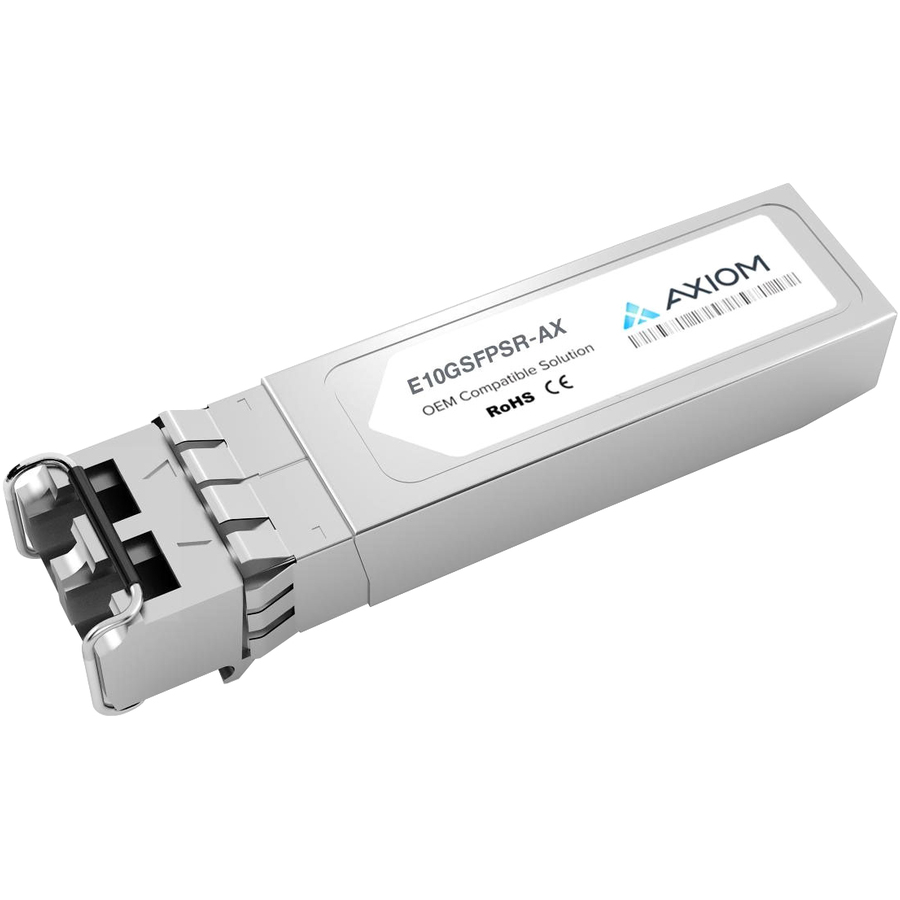
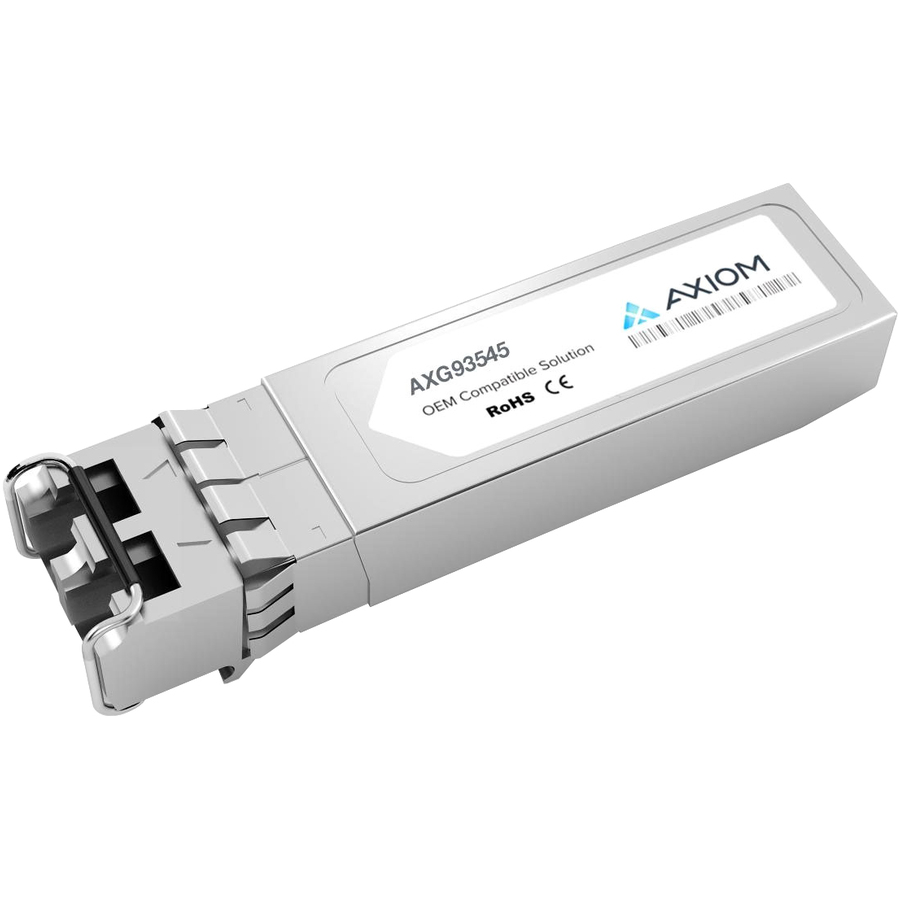
897 in stock - Axiom Memory SolutionsAxiom 10GBASE-SR SFP+ Transceiver for Intel - E10GSFPSR - 1 x 10GBase-SR10 Gbit/sE10GSFPSR-AX
$74.00
$63.96
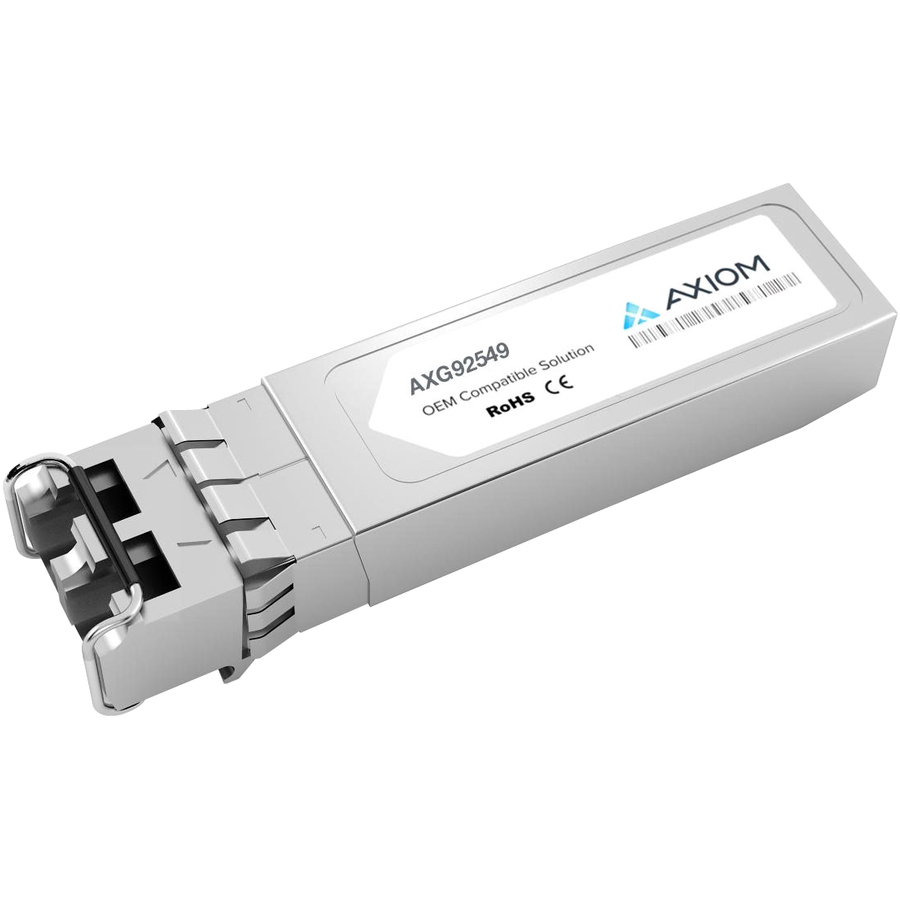
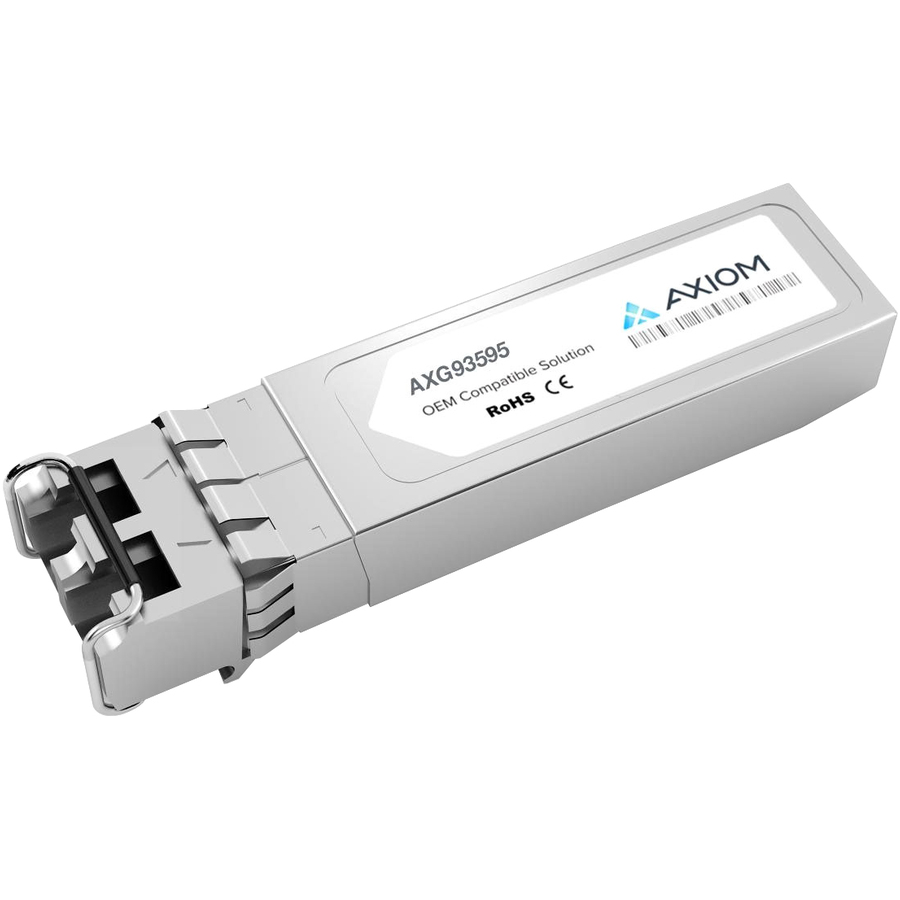
140 in stock - Axiom Memory SolutionsAxiom 10GBASE-SR SFP+ Transceiver for Dell - 330-2405 - 1 x 10GBase-SR10 Gbit/s330-2405-AX
$75.38
$65.29
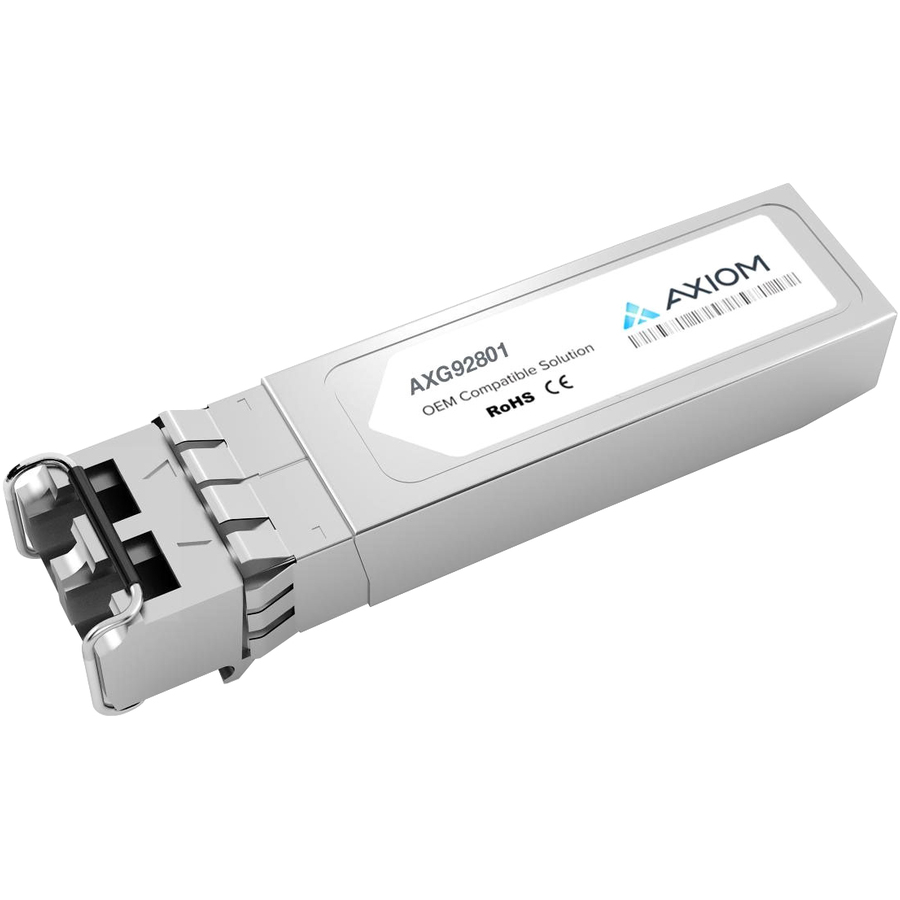
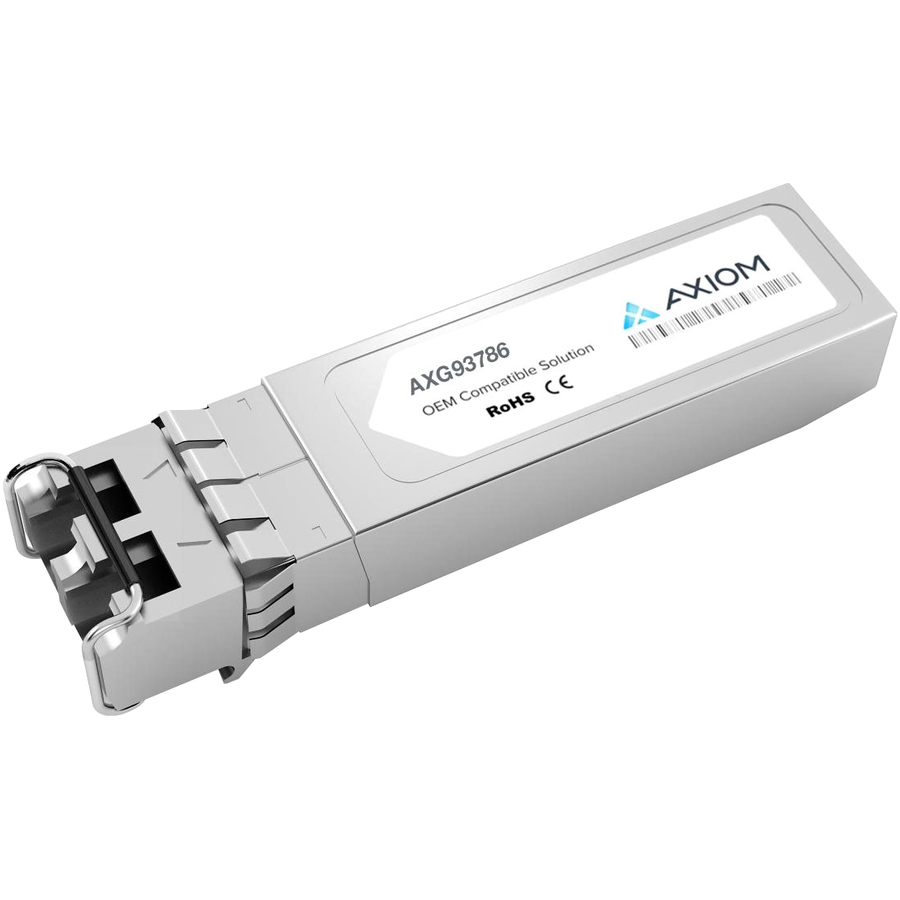
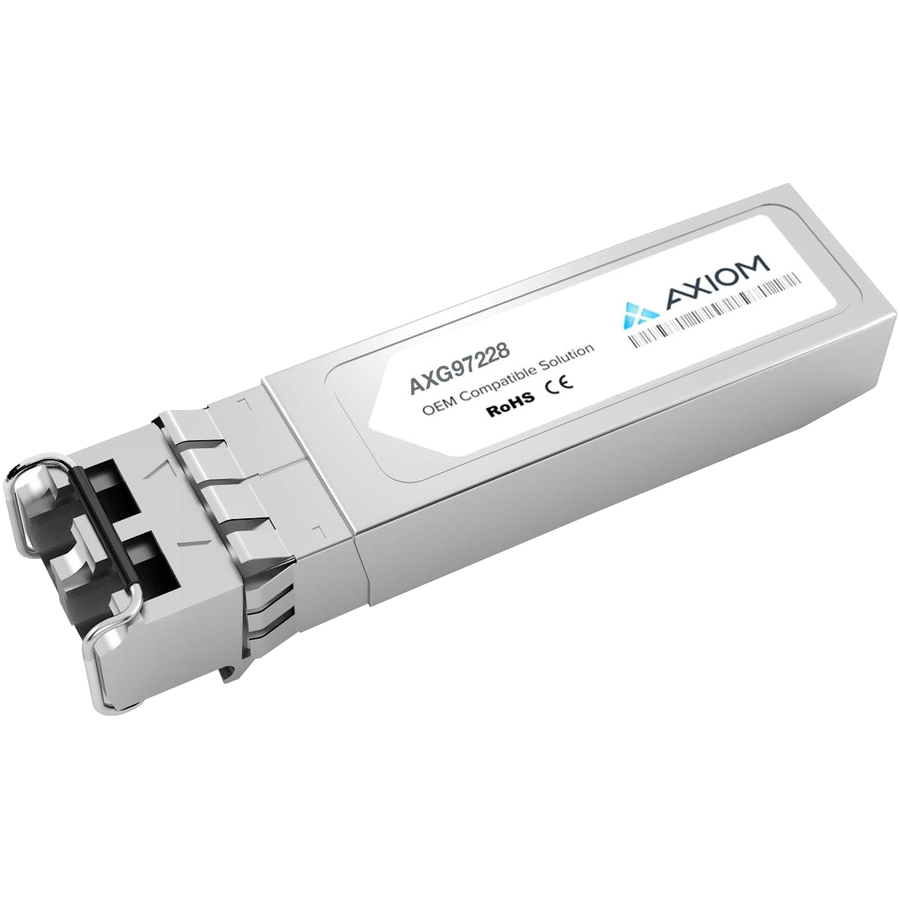
897 in stock - Axiom Memory SolutionsAxiom 10GBASE-SR SFP+ Transceiver for Dell - 407-BBEF - 100% Dell Compatible 10GBASE-SR SFP+407-BBEF-AX
$75.38
$65.29
897 in stock

Brocade-coded pick
StarTech.com
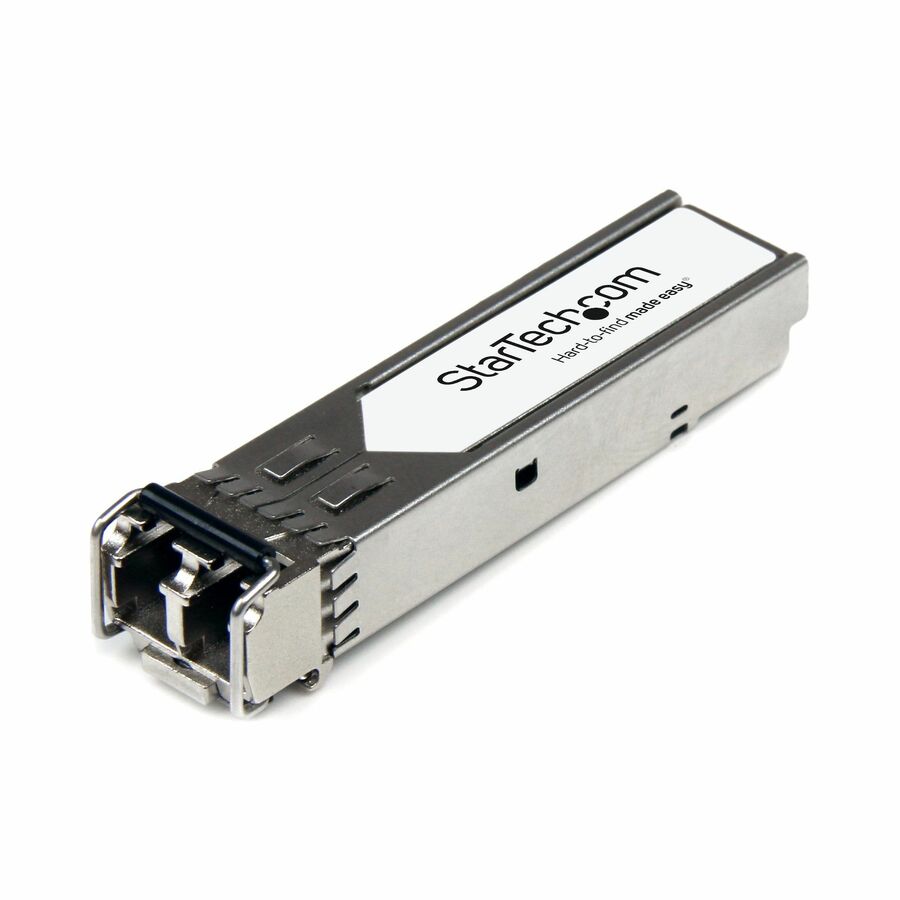
StarTech Brocade XG-SR Compatible SFP+ Module
XG-SR-ST
An 850 nm multimode SFP+ coded for Brocade's XG-SR, rated to 300 m on an LC connector with DDM reporting, hot-swappable and MSA compliant. The entry point for a Brocade or Ruckus ICX closet moving to 10G on fiber it already has.
MSA-compliant and coded to interoperate with Brocade switches — it carries the module maker's own lifetime warranty, not Brocade's.
$17.47In stockArista short-reach pick
StarTech.com
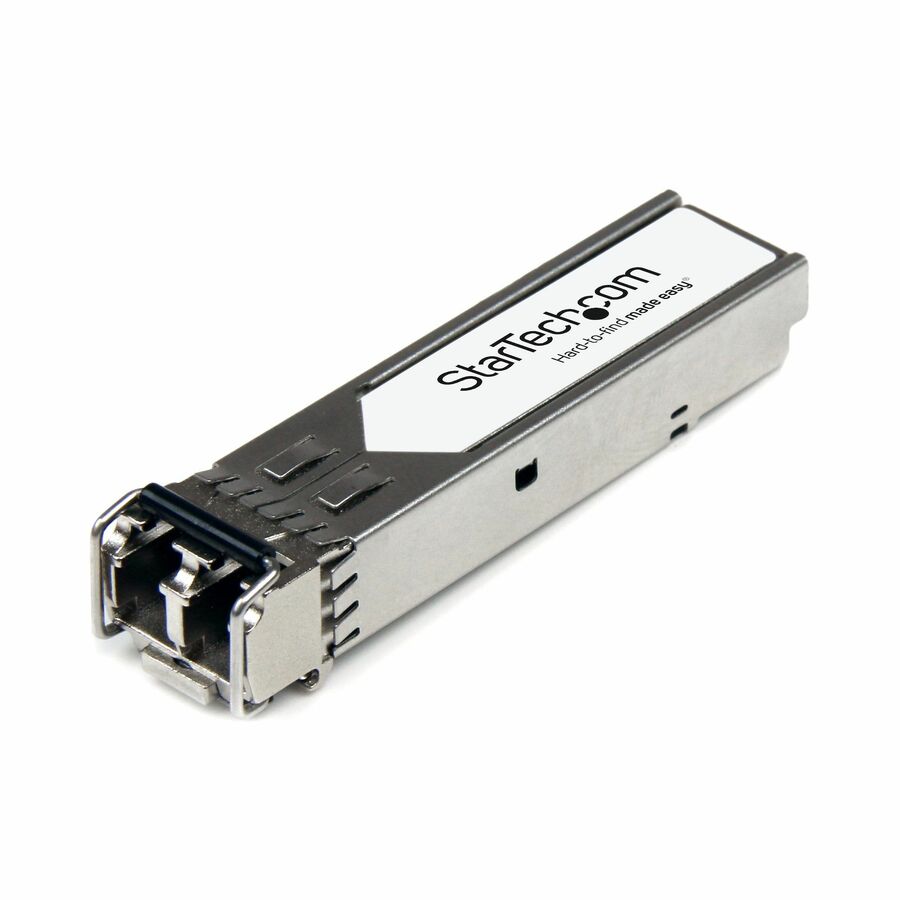
StarTech Arista Networks SFP-10G-SRL Compatible SFP+ Module
AR-SFP-10G-SRL-ST
Coded for Arista's SFP-10G-SRL, the reduced-reach variant: 850 nm multimode, LC, DDM, rated to 100 m rather than 300 m. The right part where the far end is inside the same building and the OEM part number on the port is the SRL.
SRL and SR are different part numbers with different rated distances. Match the one your switch reports rather than assuming they interchange.
$17.47In stockJuniper-coded pick
StarTech.com
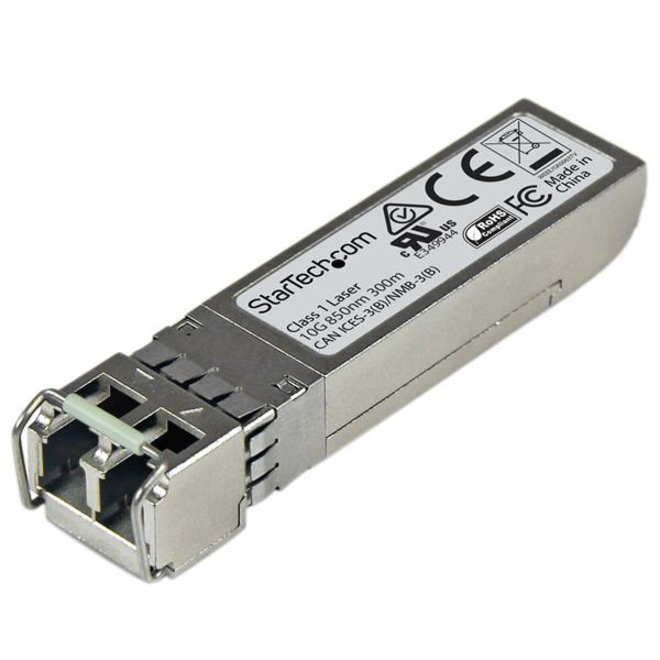
StarTech Juniper SFPP-10GE-SR Compatible SFP+ Module
SFPP10GESRST
The Juniper SFPP-10GE-SR equivalent — 850 nm multimode, LC, 300 m rated, DDM, hot-swappable and MSA compliant. Buy it for EX and QFX ports that report the SFPP-10GE-SR code.
$44.15In stockCisco-coded pick
StarTech.com
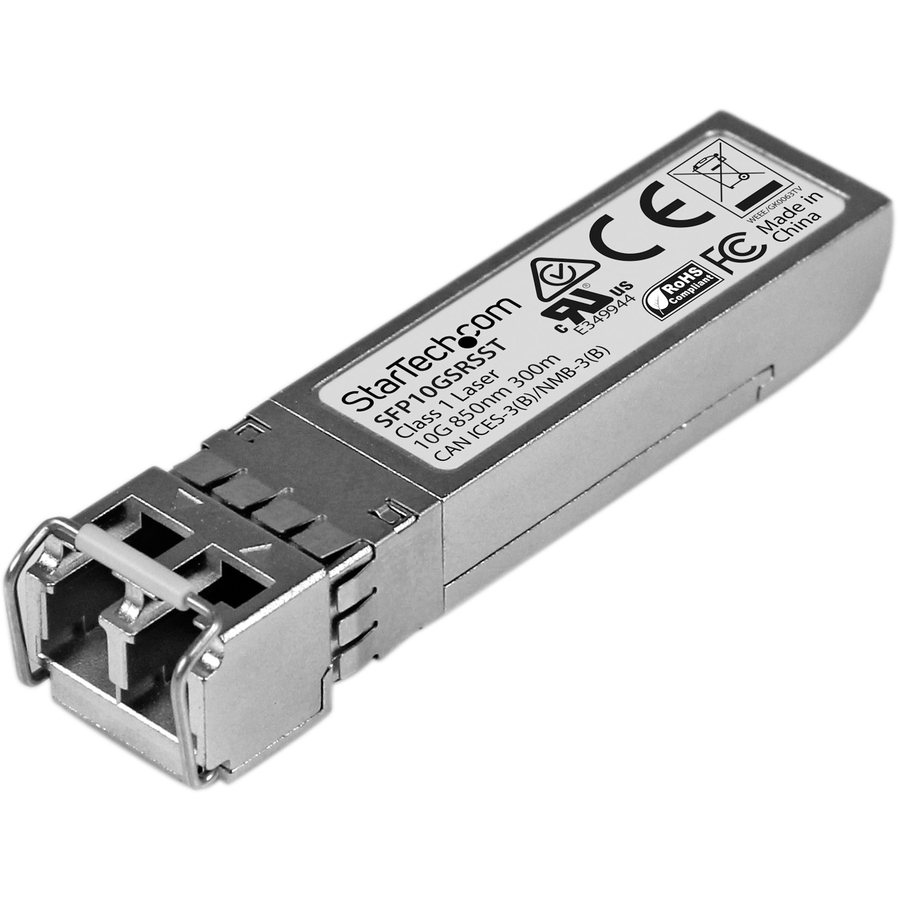
StarTech Cisco SFP-10G-SR-S Comp. SFP+ Module
SFP10GSRSST
Coded for Cisco's SFP-10G-SR-S, the most common 10G access-layer optic in the catalog: 850 nm multimode, LC, 300 m, DDM. The one to pair with a Catalyst or Nexus uplink that already runs multimode.
Cisco platforms ship with third-party optic acceptance disabled by default; enabling it is a documented command, not a modification.
$55.62In stockUbiquiti-coded pick
Axiom Memory Solutions
Axiom 10GBASE-SR SFP+ Transceiver for Ubiquiti
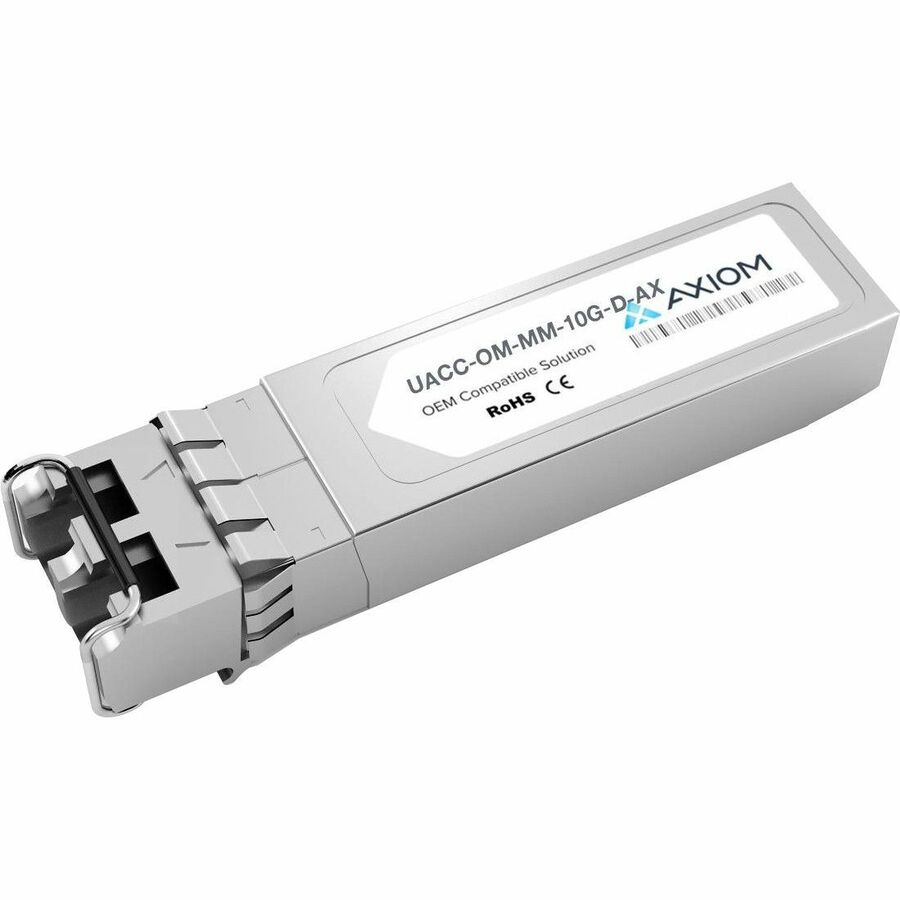
UACC-OM-MM-10G-D-AX
The Ubiquiti UACC-OM-MM-10G-D equivalent, listed at 0.30 km maximum distance over multimode LC. For a UniFi aggregation switch whose SFP+ cages are being fed from a fiber run rather than a DAC.
$43.99In stockDell-coded pick
Axiom Memory Solutions
Axiom 10GBASE-SR SFP+ Transceiver for Dell
407-BBRM-AX
Coded for Dell's 407-BBRM, which is the part number most PowerEdge and PowerSwitch 10G fiber ports call for. Same 850 nm multimode short-reach role as the rest of this list, on the Dell side of the catalog.
$53.31In stockMore optical transceivers in the Uniqcli catalog
See all 19,405 optical transceiversMore from across this category. In-stock lines lead, and a back-ordered line carries the same estimated availability its product page does — with live pricing throughout, NDAA §889 screening before checkout and TAA verified on request.
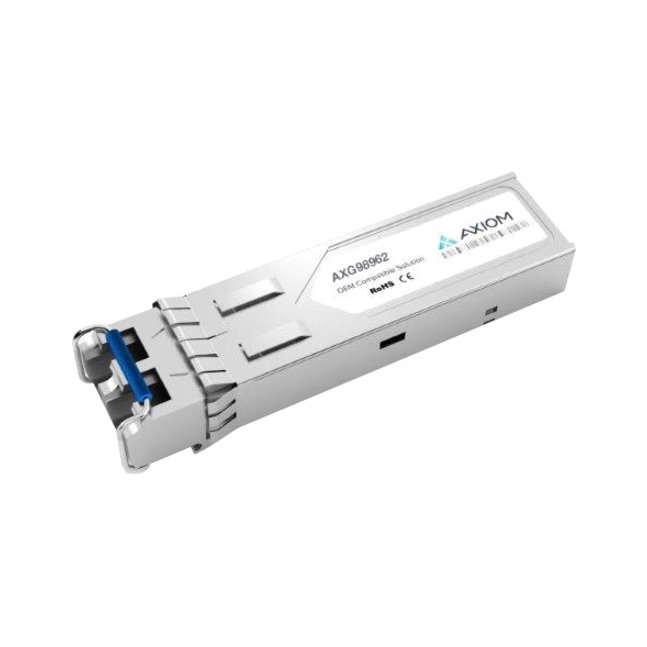
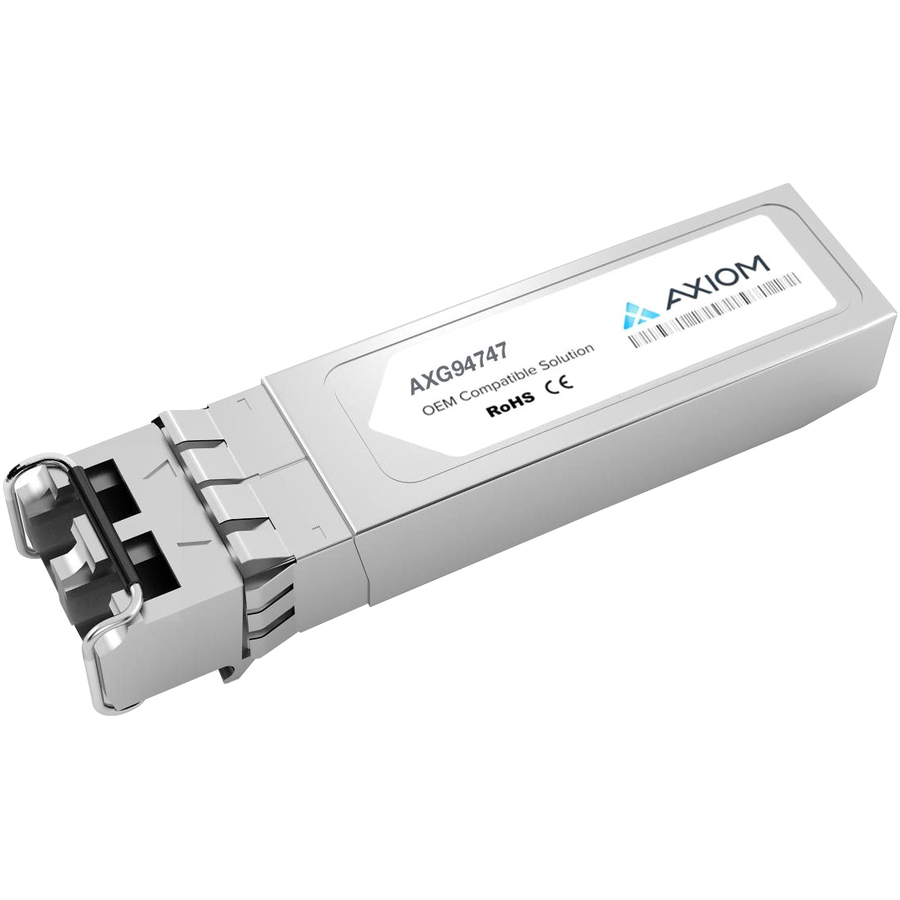
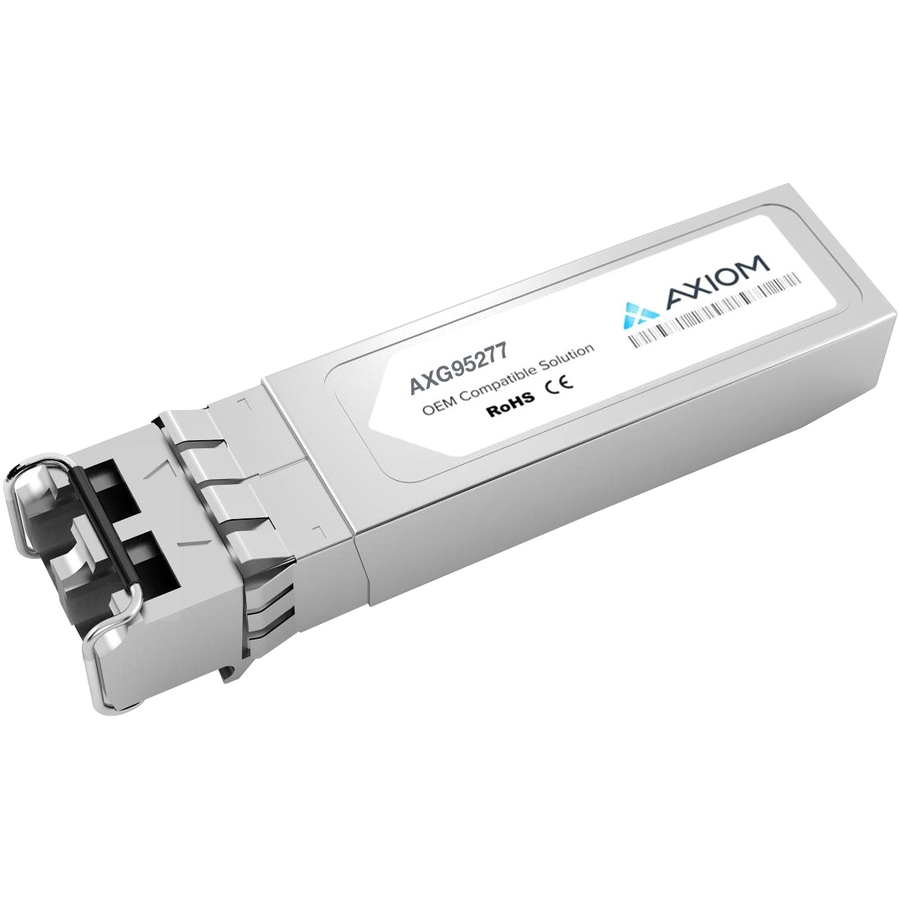
- Axiom Memory SolutionsAxiom 10GBASE-SR SFP+ Transceiver for HP - 455885-001 - TAA Compliant - 100% HP Compatible 10GBASE-SR SFP+AXG98962
$983.00
$391.31*
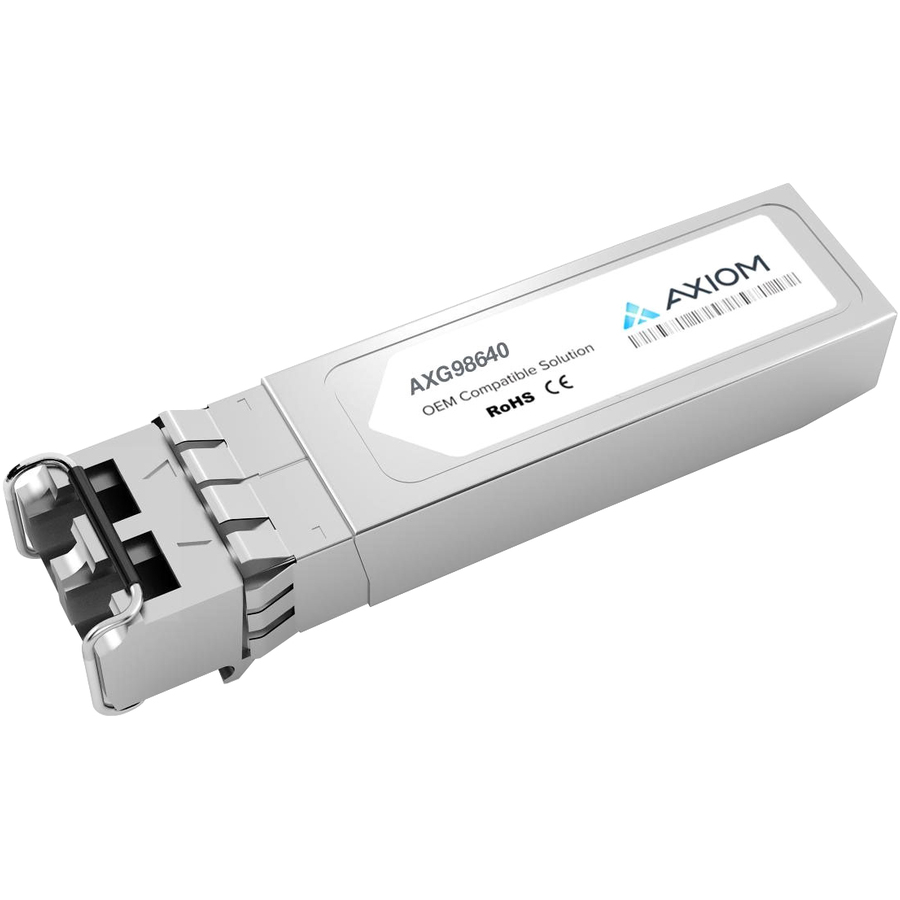
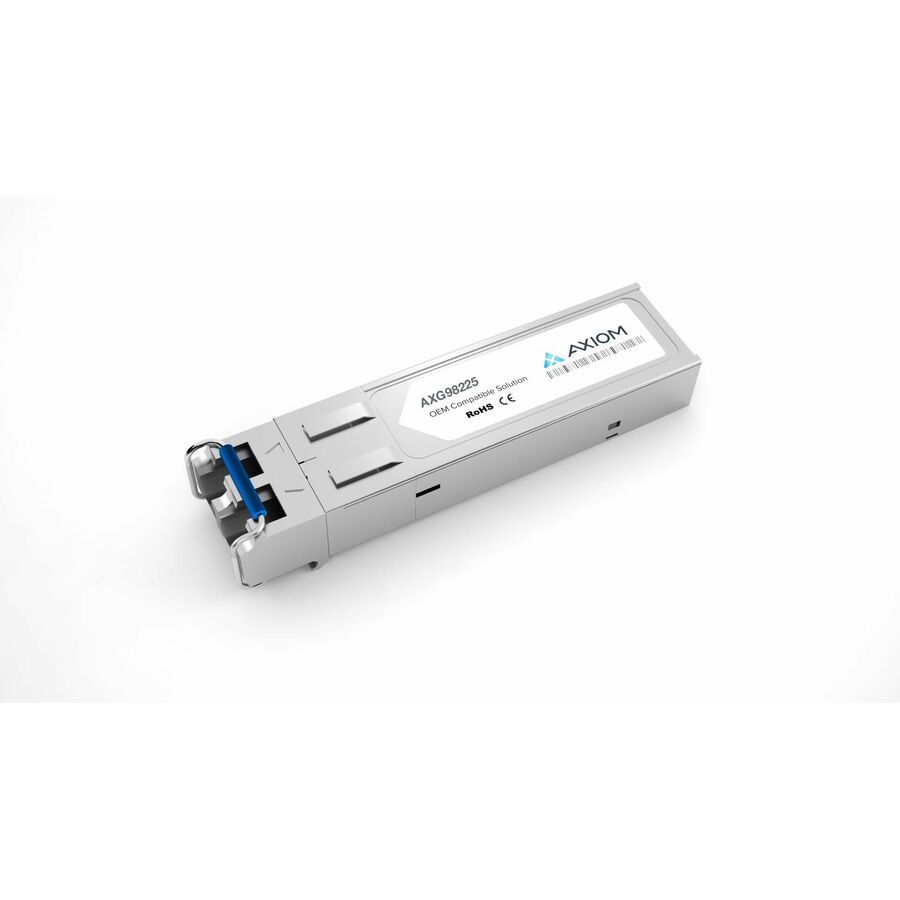
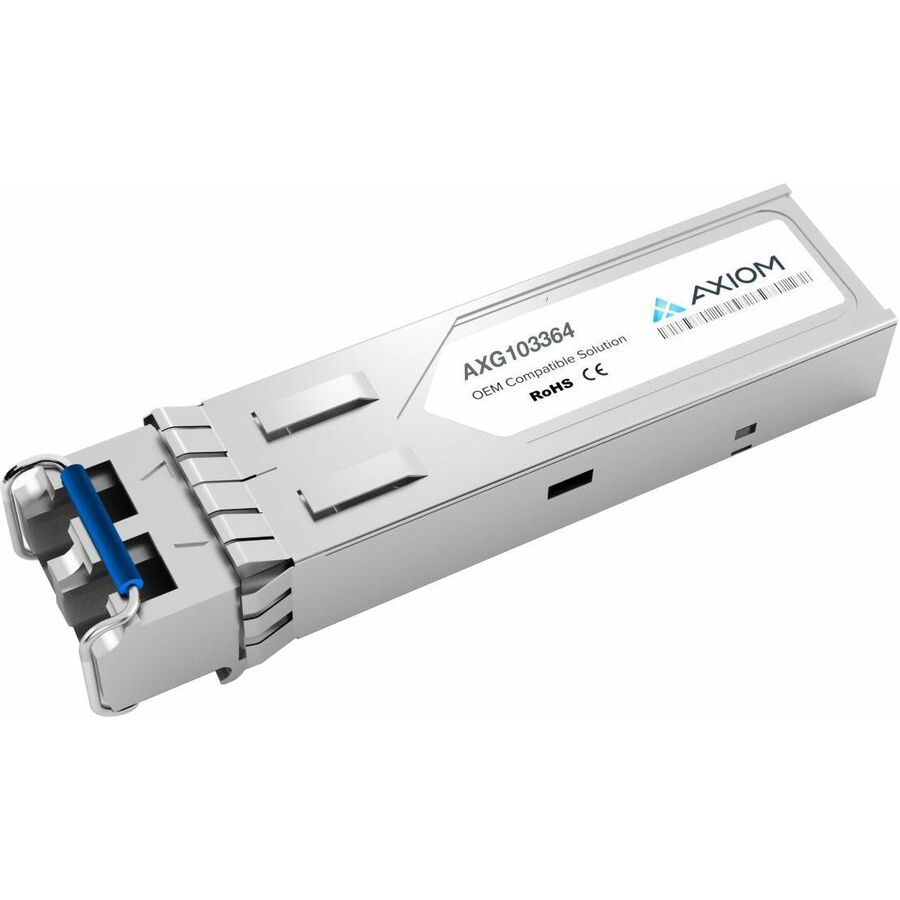
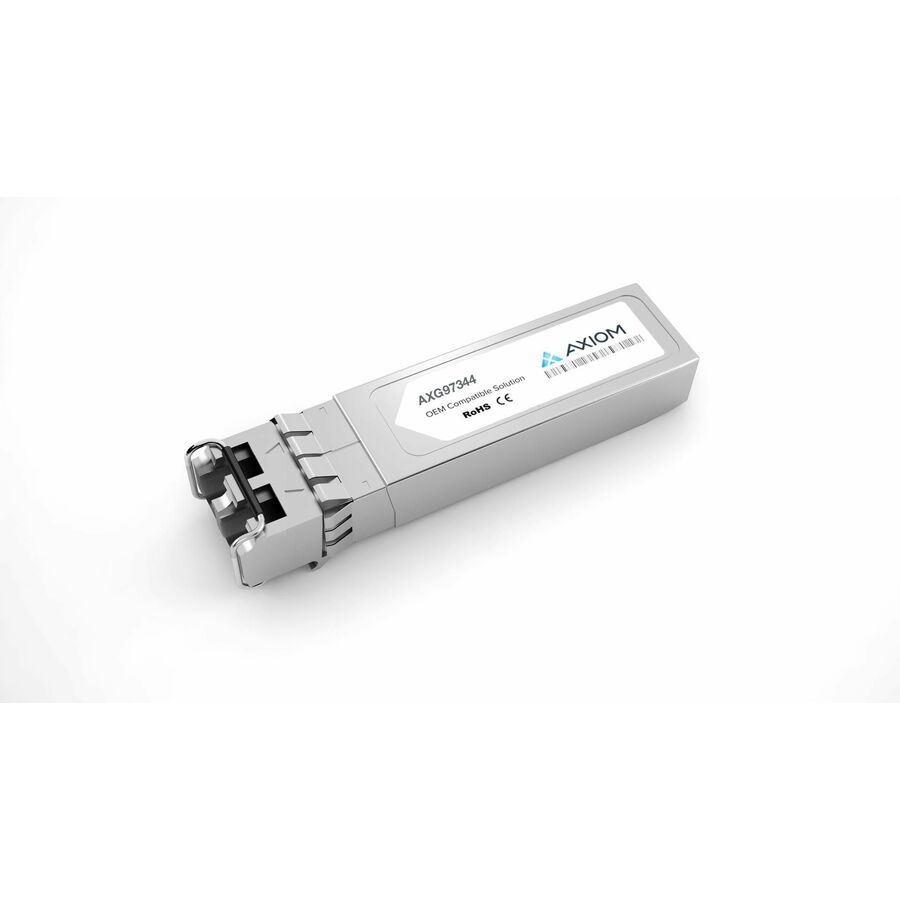
897 in stock - Axiom Memory SolutionsAxiom 10GBASE-SR SFP+ Transceiver for Allied Telesis - AT-SP10SR - TAA Compliant - For Data Networking, Optical Network - 1 x LC 10GBASE-SR Network - Optical Fiber - Multi-mode - 10 Gigabit Ethernet - 10GBase-SR0.30 km Maximum Distance - TAA CompliantAXG97344
$597.00
$237.44*
897 in stock

Need pricing on 10GBASE-SR transceivers?
Tell us where to reach you and a Uniqcli specialist will follow up by email with current pricing, availability and lead time for the quantities you need — including parts that aren’t shown on this page.
Buying for an organization or for yourself — both work. No payment up front.
10GBASE-SR is 850 nm over multimode fiber terminated LC, and its reach follows the grade of that fiber rather than the module — reduced-reach parts are rated to 100 m, full-reach parts to 300 m. What decides the purchase is the coding the switch expects, the multimode already in the ground, and whether the module reports digital optical monitoring. Price is not one of the three.
Three things decide a 10GBASE-SR purchase and the price is not one of them. The first is coding: an SFP+ module identifies itself to the switch it is plugged into, and a switch expects to see a code it recognizes. That is why a third-party module is sold as "compatible with" a specific OEM part number rather than as a generic optic, and why the part number on your switch's port report is the thing to shop with. Buy the module coded for the switch, not the module coded for the switch you wish you had.
The second is the fiber already in the ground. SR is a short-reach standard: 850 nm light over multimode fiber, terminated LC, and the distance it will actually carry depends on the grade of that fiber rather than on the module. If the run is longer than the building, SR is the wrong standard and no module fixes that — the answer is a long-reach single-mode optic, or copper if the distance is short enough. The third is diagnostics: digital optical monitoring reports transmit and receive power per module, which is the difference between finding a dirty connector in a minute and swapping three parts to find it.
One practical note on third-party optics. Several switch vendors ship with a setting that rejects modules they do not recognize, and enabling acceptance is a documented one-line command rather than a workaround — check it before the maintenance window rather than during it. A third-party module also carries the module maker's warranty, not the switch maker's, and it does not extend the switch's own support entitlement. Optics rarely arrive alone either: a 10G refresh usually carries switch licensing, patch cabling and the staging and installation labour with it, and putting all of it on one quote keeps the lead times attached to each other.
Buyer's checklist
How to choose a 10GBASE-SR SFP+ module
- Start with the OEM part number the switch expects — coding is what makes a third-party module come up as a recognized optic rather than as an unsupported one.
- Confirm the fiber is multimode and terminated LC. SR is an 850 nm multimode standard; a single-mode run needs a long-reach module instead, not a longer patch cord.
- Read the rated distance on the specific module, not on the standard. SR modules in this catalog list anywhere from 100 m to 300 m depending on the part.
- Check that the module reports DOM if you want per-optic transmit and receive power in your monitoring — it is the fastest way to find a dirty or bent link.
- Buy in pairs. An optical link needs a module at each end, and mismatched reach or coding at the far end is the most common reason a link stays down.
- Confirm your switch will accept a third-party optic, and how. Several platforms need a documented command before an unrecognized module is allowed to come up.
- Order a spare per closet rather than per switch. Optics fail one at a time and a spare in the cabinet turns a link outage into a two-minute swap.
- If the port is short-run and inside one rack, price a direct-attach copper cable against a transceiver pair before buying either.
What "compatible" actually means, and what it does not
Optical modules are built to a multi-source agreement — an industry specification that fixes the mechanical form, the electrical interface and the optical behaviour so that modules from different makers work in the same cage. That is why a third-party SR module is not an approximation of an OEM one: both are built to the same MSA, and the optical side of the link is genuinely standardized. What is not standardized is the identification data burned into the module, which is where coding comes in.
So the honest framing is narrow and worth being precise about. A compatible module is coded to present the identifier a given OEM's switch expects, and it carries the module maker's own warranty. It does not carry the switch maker's warranty, it does not extend the switch's support entitlement, and it is not an OEM part. Several switch vendors also ship with third-party optics rejected by default and require a documented command to accept them — that command is published by the vendor, but it is a change your change-control process should know about before the window opens.
Reach is a property of the fiber, not of the module
SR is defined at 850 nm over multimode fiber, and the distance a link actually carries is set mostly by the grade of glass in the wall. Older multimode plant carries an SR link a short way; the modal-bandwidth grades specified for 10G carry it considerably further. A module's rated distance is quoted against a particular grade, which is why two SR modules in the same category can list 100 m and 300 m without either being wrong. If you do not know what is in the wall, that is the thing to establish before ordering — it decides the standard, not just the part.
Past the multimode ceiling the answer changes shape rather than degree. A long-reach single-mode module is a different part on different glass, and there is no patch cord that converts one into the other. In the other direction, inside a single rack, a direct-attach copper cable removes the transceiver pair entirely and is usually cheaper for a top-of-rack to server hop. Both roads are in the catalog; the fiber plant tells you which one you are on.
Buying optics as part of a refresh rather than as spares
Optics are rarely the project. They arrive attached to a switch refresh, a closet consolidation or a new floor, and the failure mode is procurement order: the switches land on schedule and the modules that make them useful are still being quoted. Sending the switch list, the optic list and the patch cabling as one bill of materials fixes that, because everything is priced and committed against the same date and any long-lead line is visible while there is still time to substitute.
The same document is the right place for the parts of a refresh that are not hardware at all. Switch feature licensing, the network monitoring the DOM data is going to feed, and the staging, configuration and installation labour all belong on the quote with the equipment rather than on three separate ones — a closet that has switches, licences and an installer scheduled independently is a closet that gets cut over twice. Everything on this page is checked against manufacturer documentation and live catalog data; confirm the current coding and rated distance of a part number at each re-order rather than copying a previous quote forward.
FAQ
Common questions
- Will a third-party SFP+ module work in my switch?
- In the great majority of cases, yes, provided the module is coded for that platform. Optical modules are built to a multi-source agreement, so the optical and electrical sides are standardized; what differs is the identifier the module presents, which is what coding sets. Several vendors ship with unrecognized optics rejected by default and publish a command to accept them. Check that setting before the maintenance window, and confirm the module you are buying is coded for the OEM part number your switch's port report names.
- What is the difference between 10GBASE-SR and 10GBASE-LR?
- SR is short reach on multimode fiber at 850 nm; LR is long reach on single-mode fiber at 1310 nm. They are not interchangeable in either direction, because the difference is the wavelength and the glass, not just the distance rating. If the fiber between the two points is multimode, you need SR at both ends; if it is single-mode, you need LR at both ends. Establish which fiber is in the wall before choosing the module — that decision comes first and everything else follows from it.
- How far will a 10GBASE-SR link actually run?
- It depends on the grade of multimode fiber, which is why modules in this category list different rated distances for the same standard. Older multimode plant carries a 10G link a fraction of the distance the grades specified for 10G do, and a module's quoted figure is stated against a particular grade. Read the rated distance on the specific part number rather than on the standard, and if the plant grade is unknown, treat that as the first thing to confirm rather than as a detail.
- Do I need DOM or DDM on a 10G module?
- You need it if anything is going to monitor the link. Digital optical monitoring reports the module's temperature, supply voltage, bias current and transmit and receive optical power, which turns "the link is flapping" into a number you can compare against the far end. On a closet uplink that carries a floor, that is the difference between finding a dirty connector in one reading and swapping parts until the symptom moves. On a short patch inside one rack it matters much less.
- Can Uniqcli quote optical transceivers for a government or education order?
- Every line Uniqcli quotes is sourced through US distribution and screened for TAA country-of-origin and NDAA §889 status before checkout — with documentation tied to the specific part number, not a product family.
Need 10GBASE-SR transceivers pricing?
Send a bill of materials or part numbers — we confirm stock and a below-market total, with TAA verified on request. No payment up front.