
Short answer
SFP and SFP+ share the same 20-pin cage but not the same speed class: SFP runs up to 1 Gbps and SFP+ up to 10 Gbps. Compatibility flows one way — an SFP+ port normally accepts a 1G SFP and runs it at 1 Gbps, while a 1G-only port cannot drive a 10G module at all. Choose by the port's speed class first, then by the reach and cable plant the link has to cross.
Key facts
- SFP carries up to 1 Gbps as 1000BASE-X; SFP+ carries up to 10 Gbps as 10GBASE-R, in a mechanically identical cage.
- A 1G SFP runs in an SFP+ port at 1 Gbps on most switches; a 10G SFP+ module will not link in a 1G-only port.
- On multimode at 850 nm, 1000BASE-SX reaches about 550 m on OM2 while 10GBASE-SR reaches about 300 m on OM3 and 400 m on OM4.
- On single-mode, IEEE 802.3 sets 1000BASE-LX at 5 km and 1000BASE-LX10 at 10 km; 10GBASE-LR reaches 10 km and 10GBASE-ER 40 km.
- SFP28 is the 25 Gbps step in the same cage. An SFP28 port normally runs an SFP+ module at 10 Gbps; the reverse does not reach 25.
- A passive SFP+ direct-attach copper cable covers a few metres in-rack for less power and latency than a pair of optics.
SFP and SFP+ are the same size and slide into cages that look identical, which is exactly why the question comes up: if they're mechanically interchangeable, does it matter which you buy? It does. SFP is a 1 Gigabit form factor; SFP+ is its 10 Gigabit successor. The confusion is worth resolving before you order, because a mismatch between the module speed and what the switch port can actually drive is one of the most common causes of a link that simply won't come up.
In practice the decision is rarely about the transceiver in isolation — it's driven by the port it plugs into, the bandwidth the link needs to carry, and the distance and cable plant it has to cross. A 10G-capable port can usually fall back to a 1G SFP, but a 1G-only port can never run a 10G module. Once you know the port's speed class and the reach you need, the choice between SFP and SFP+ (and between copper, DAC, and optical variants within each) becomes straightforward.
At a glance
Side by side
| Factor | SFP | SFP+ |
|---|---|---|
| Maximum data rate | Up to 1 Gbps (1000BASE-X); also 100M variants | Up to 10 Gbps (10GBASE-R); runs 1G in fallback |
| Governing MSA | SFF-8074i base MSA; SFF-8472 diagnostics (DOM) | SFF-8431 (10G SFI electrical); shares SFF-8472 DOM |
| Form factor & host interface | Same 20-pin cage as SFP+; low-rate serial host interface (~1.25 Gbaud) | Identical cage, but drives a 10.3 Gbaud SFI interface the host must support |
| Slot compatibility | Works in SFP or SFP+ ports (always at 1G) | Requires a 10G-capable port; will not link in a 1G-only slot |
| Multimode fiber reach | 1000BASE-SX ~550 m on OM2 at 850 nm | 10GBASE-SR ~300 m OM3 / ~400 m OM4 at 850 nm |
| Single-mode fiber reach | 1000BASE-LX 5 km (802.3 clause 38); 1000BASE-LX10 10 km | 10GBASE-LR ~10 km; 10GBASE-ER ~40 km |
| Copper / DAC options | 1000BASE-T RJ45 to 100 m on Cat5e; low power | SFP+ DAC common in-rack (passive ~≤5 m, active longer); 10GBASE-T rare, ~30 m, high power |
| Typical power draw | Roughly 1 W or less per module | Roughly 1–1.5 W typical; more for ER/long-reach optics |
Choose SFP when
- Per-link bandwidth of 1 Gbps is sufficient — access-layer ports, edge devices, and most endpoint aggregation
- You need a long-reach 1G link and want the lower-cost, lower-power optic
- The port or equipment on one end is 1G-only, so a 10G module could never negotiate anyway
- Power, heat, and density budgets are tight and 10G would add cost with no throughput benefit
Choose SFP+ when
- The link carries server, storage, or switch-to-switch traffic that needs 10 Gbps
- Runs are short and in-rack, where an SFP+ DAC gives low cost, low power, and low latency
- You're aggregating many 1G access links into a 10G uplink or backbone
- You want headroom on a 10G-capable port that can still accept a 1G SFP later if needed
Bottom line
Match the module to the port's speed class first; reach and cable plant come second. SFP is the right, cheaper, cooler-running choice wherever 1 Gbps per link is enough; SFP+ is the choice wherever a link genuinely needs 10 Gbps, especially data-center uplinks and short DAC runs inside a rack. Let the port's speed class and the link's bandwidth and distance decide, and remember that compatibility flows only one way: a 10G port can host a 1G module, never the reverse.
Products for this decision
1G optical
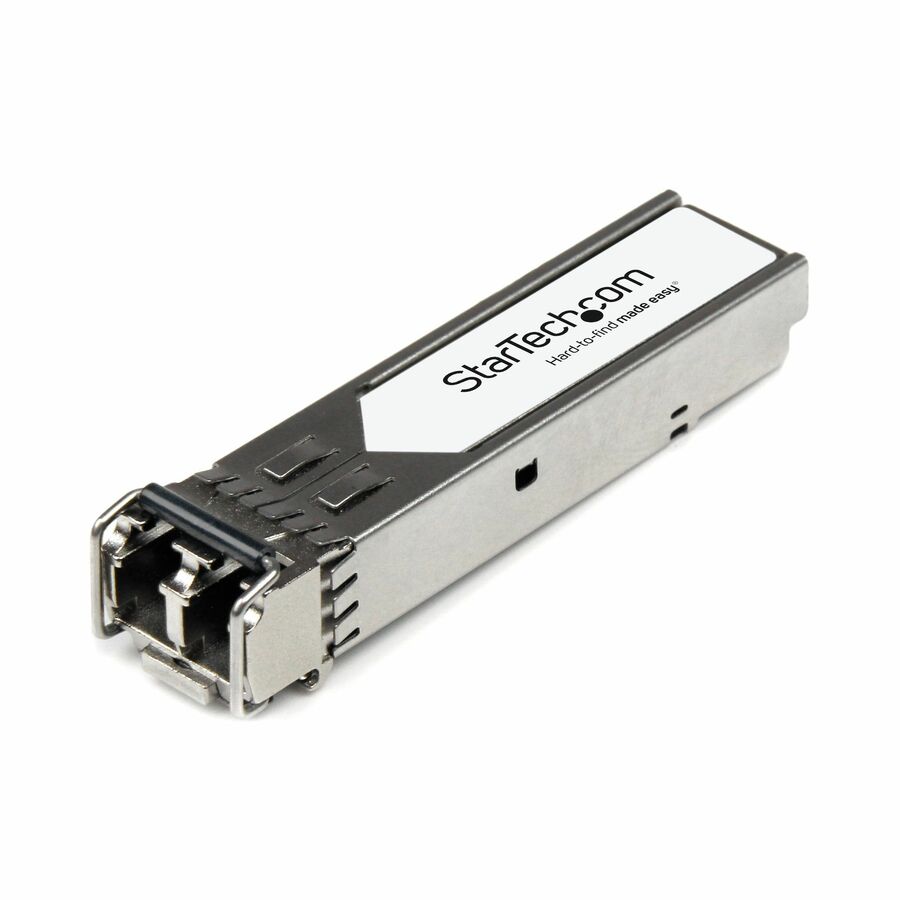
StarTech.com
StarTech Citrix EG3B0000086 Compatible SFP Module
EG3B0000086-ST
A 1000BASE-SX SFP at 850 nm with an LC connector and digital diagnostics, rated to 550 m on multimode — the ordinary 1G fibre uplink module.
$11.95In stock10G optical
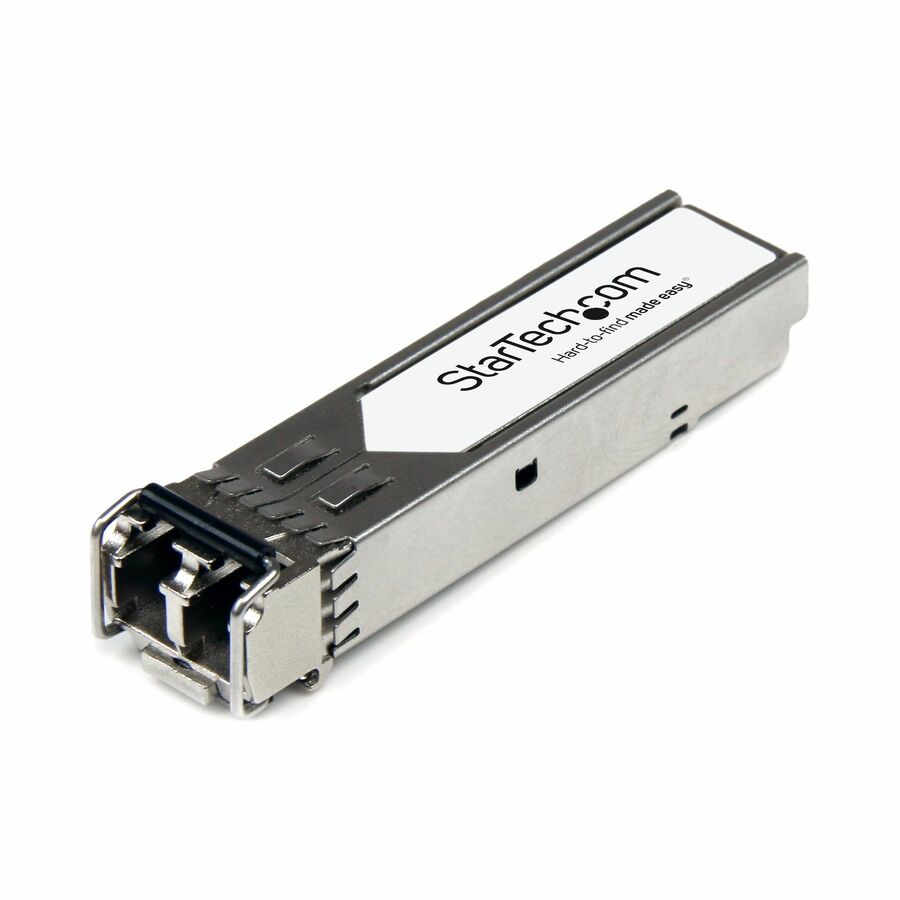
StarTech.com
StarTech Citrix EW3P0000557 Compatible SFP+ Module
EW3P0000557-ST
A 10GBASE-SR SFP+ at 850 nm rated to 300 m on multimode, for a switch-to-switch or server uplink that genuinely needs 10 Gbps.
10GBASE-SR wants OM3 or OM4 multimode; older OM1 and OM2 plant cuts the reach sharply.
$17.47In stock10G in-rack
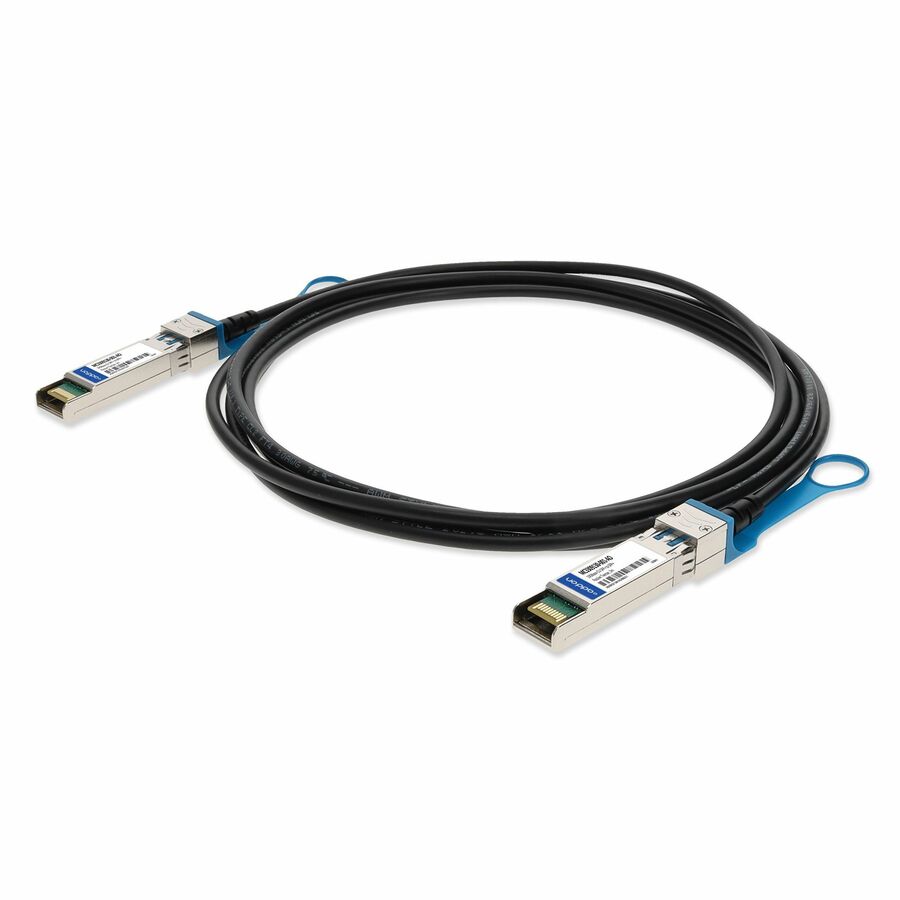
AddOn
AddOn Mellanox MC3309130-001 Compatible TAA Compliant 10GBase-CU SFP+…
MC3309130-001-AO
A one-metre passive 10GBase-CU SFP+ direct-attach twinax cable — the cheaper, cooler answer to a short run between adjacent rack units.
$27.60*In stockThe 25G step
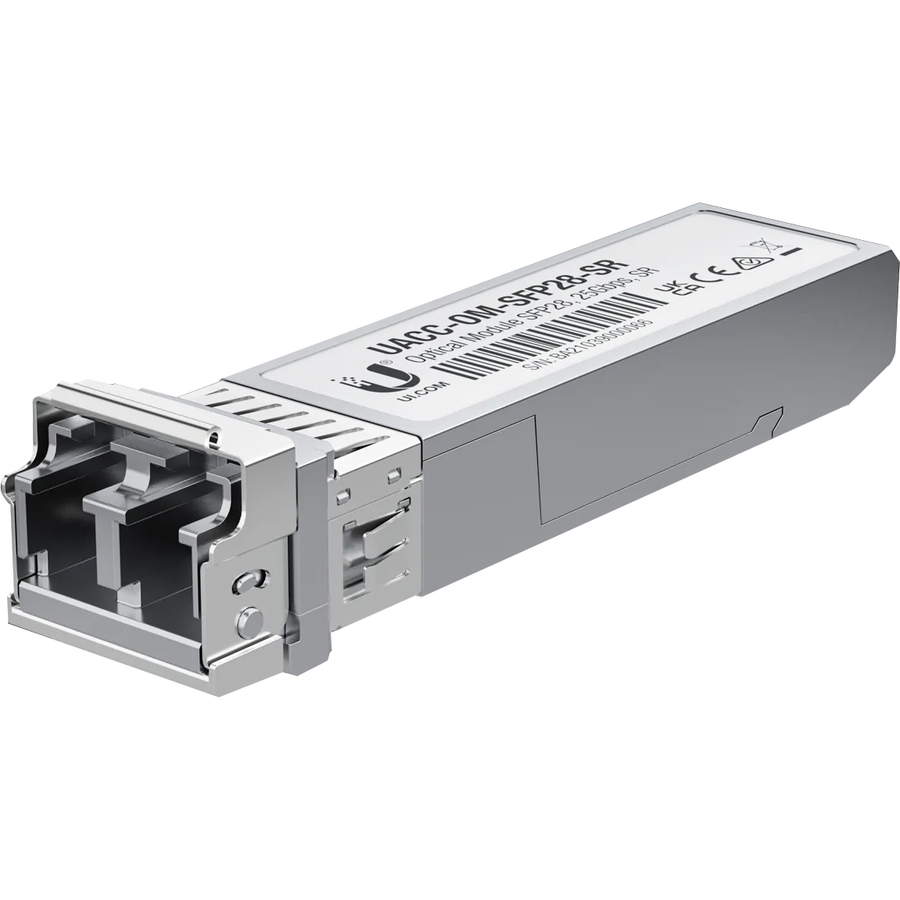
Ubiquiti
Ubiquiti 25 Gbps Multi-mode Optical Module
UACC-OM-SFP28-SR
A 25GBASE-SR SFP28 multimode module in the same cage size, for a port that has moved past 10 Gbps without changing form factor.
$56.53In stockShop it at Uniqcli
FAQ
Common questions
- Can I put an SFP+ module into an SFP (1G) port?
- No. A 1G-only port cannot drive a 10G module, so the link won't come up. The reverse works: a 1G SFP module will run in an SFP+ port at 1 Gbps, provided the switch supports that fallback — most do, but a few require the port speed to be set explicitly.
- Do SFP and SFP+ use the same fiber and connectors?
- Fiber optic variants use the same LC connectors and the same multimode or single-mode fiber types, so the cable plant is often reusable. The difference is sensitivity: 10G links are far more distance- and grade-dependent, so 10GBASE-SR wants OM3 or OM4 multimode to reach useful distances, whereas 1G tolerates older OM1/OM2.
- When should I use a DAC cable instead of optical transceivers?
- Use a direct-attach copper (DAC) cable for short in-rack or adjacent-rack runs — it's cheaper than a pair of optics, draws less power, and adds minimal latency. Passive DAC typically covers a few meters and active DAC extends that. Switch to optical when the run exceeds DAC reach or has to pass through structured cabling.
- Is 10GBASE-T copper available in SFP+?
- It exists but is uncommon. Fitting 10GBASE-T into the SFP+ power envelope limits reach to roughly 30 m and runs hot, and many switch ports don't support it. For 10G copper inside a rack, a DAC cable is usually the more practical choice; for longer 10G runs, use fiber optics.
- Is SFP+ backwards compatible with SFP?
- Yes, in the direction that matters: an SFP+ port will normally accept a 1G SFP module and run the link at 1 Gbps. Most switches negotiate that fallback automatically, though a few need the port speed set explicitly. What never works is the reverse — a 1G-only port cannot drive the 10.3 Gbaud electrical interface an SFP+ module needs, so the link simply will not come up.
- What is the difference between SFP28 and SFP+?
- Speed, in the same cage. SFP28 runs a single 25 Gbps lane; SFP+ runs 10 Gbps. An SFP28 port normally accepts an SFP+ module and runs it at 10 Gbps, but putting an SFP28 module in an SFP+ port gets you 10 Gbps at best, not 25. SFP28 is what a 100G QSFP28 port breaks out into with a four-way cable, which is why the two turn up together in switch datasheets.
Sources