
Best Active Optical Cables for Racks and Rooms
Fixed-length optical assemblies with the transceivers already attached — SFP+ and QSFP+ links inside the rack, fiber HDMI and DisplayPort across a room.
Active optical cables in stock at Uniqcli
How to choose →A curated selection with live pricing — in-stock lines first, then back-ordered lines with a typical lead time. Every line is sourced through US distribution and screened for NDAA §889 status before checkout, with TAA verified on request.
- AddOnAddOn MSA and TAA Compliant 10GBase-AOC SFP+ to SFP+ Orange Active Optical Cable (850nm, MMF, 1m) - 3.28 ft Fiber Optic Network Cable for Network Device, Transceiver - First End: 1 x SFP+ Network - Second End: 1 x SFP+ Network - 10 Gbit/s - Multi-mode - Orange - 1.0 - TAA CompliantSFP-10GB-AOC1M-OE-AO
$48.00
$44.16*
13 in stock - AddOnAddOn MSA and TAA Compliant 10GBase-AOC SFP+ to SFP+ Orange Active Optical Cable (850nm, MMF, 3m) - 9.84 ft Fiber Optic Network Cable for Network Device, Transceiver - First End: 1 x SFP+ Network - Second End: 1 x SFP+ Network - 10 Gbit/s - OFNP, Plenum - Multi-mode - Orange - 1.0 - TAA CompliantSFP-10GB-AOC3M-OE-AO
$50.00
$46.00*
1 in stock




In-rack pick
AddOn
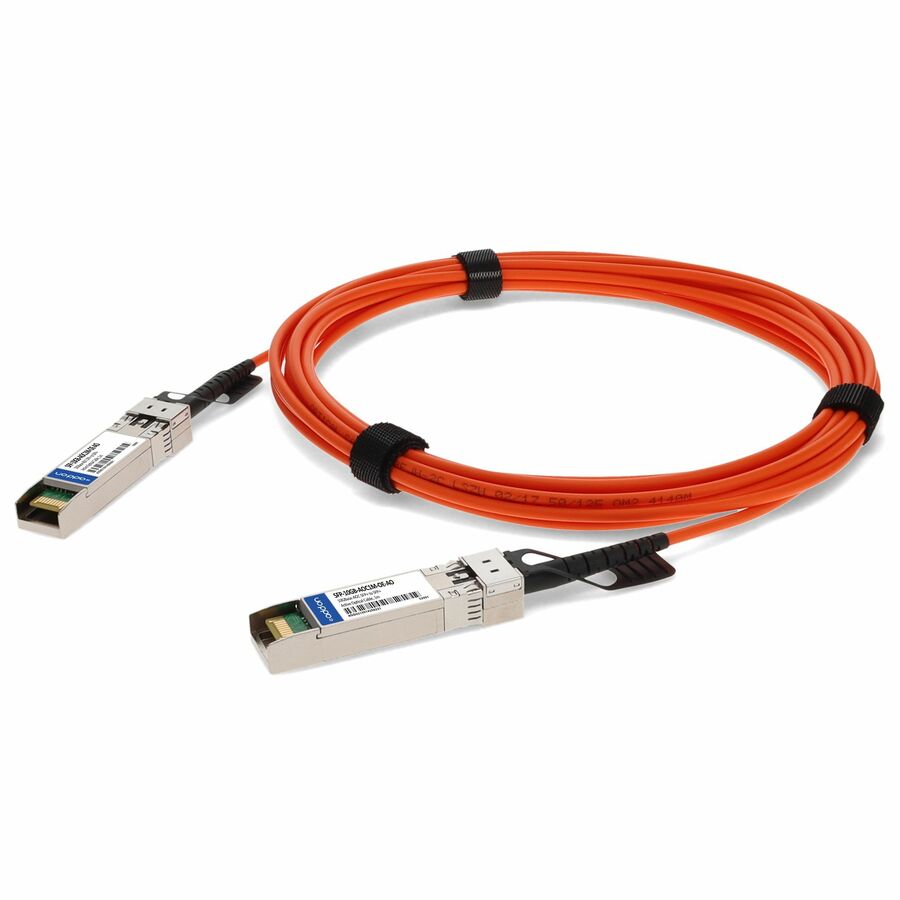
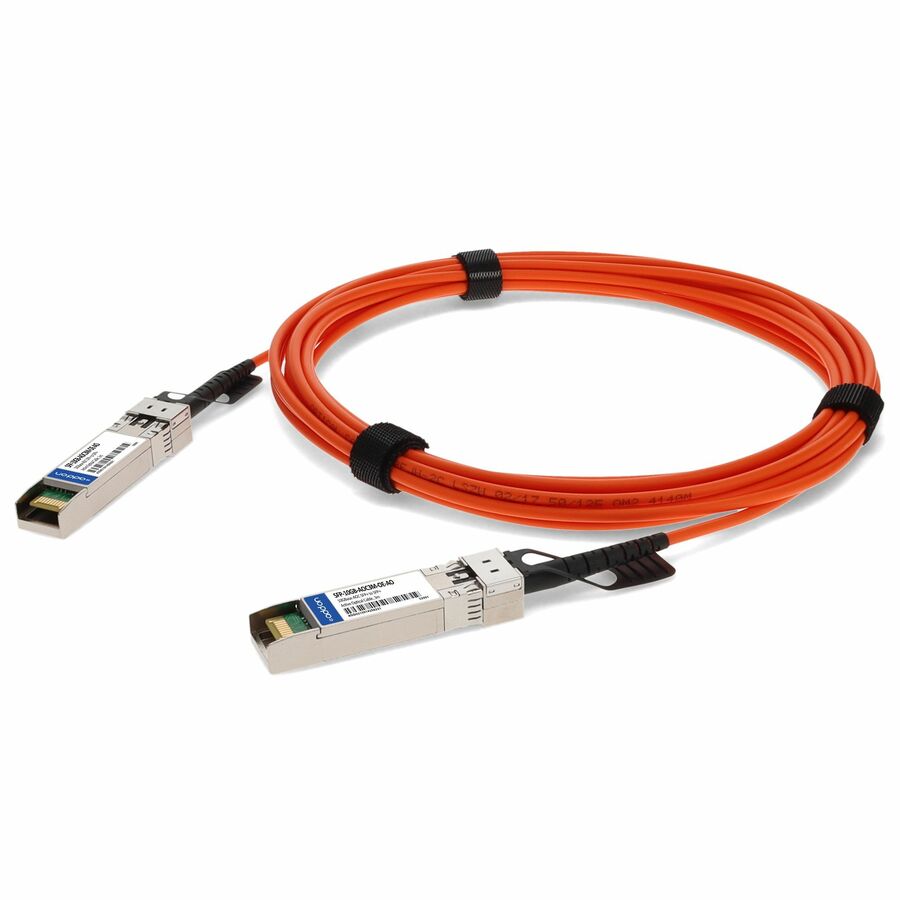
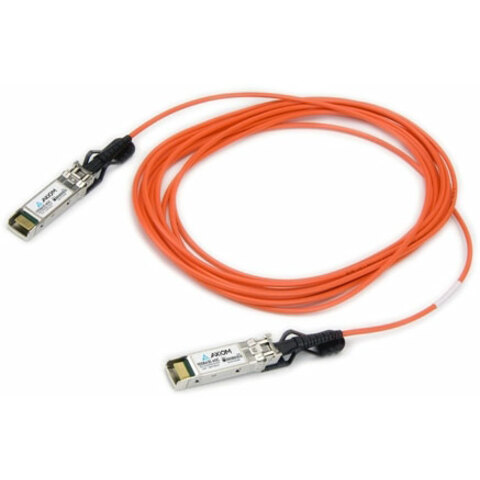
AddOn MSA and TAA Compliant 10GBase-AOC SFP+ to SFP+ Orange Active…
SFP-10GB-AOC1M-OE-AO
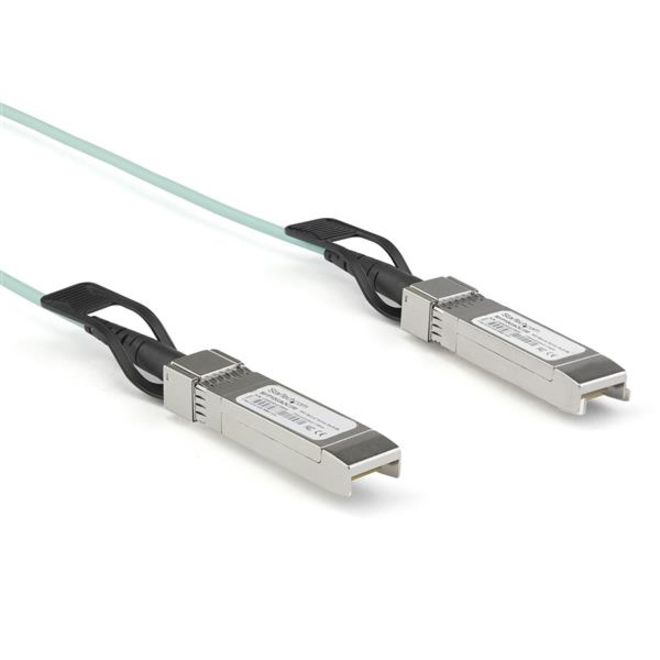
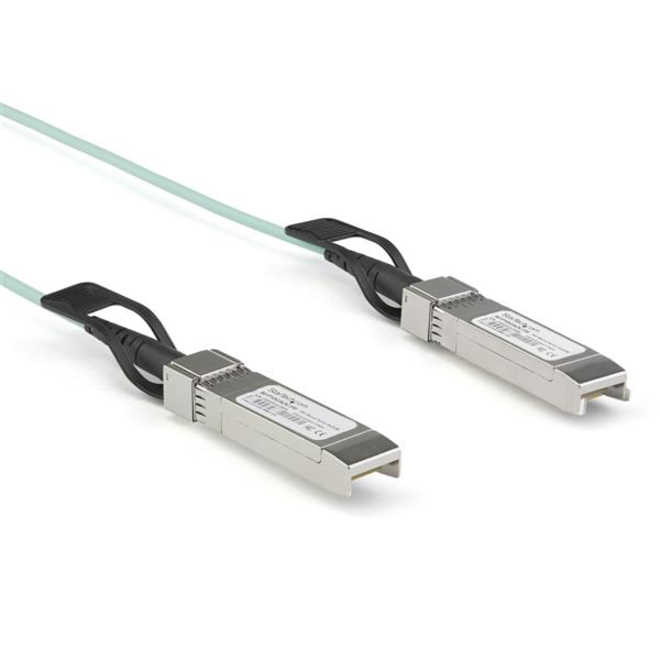
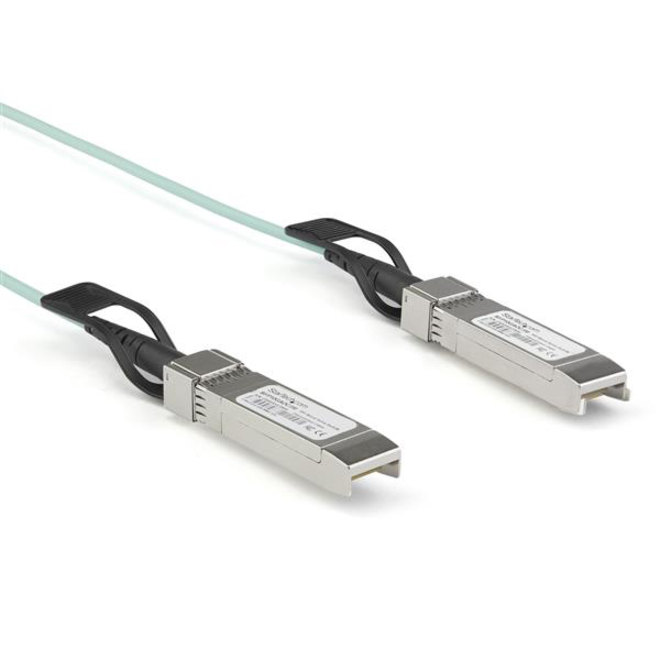
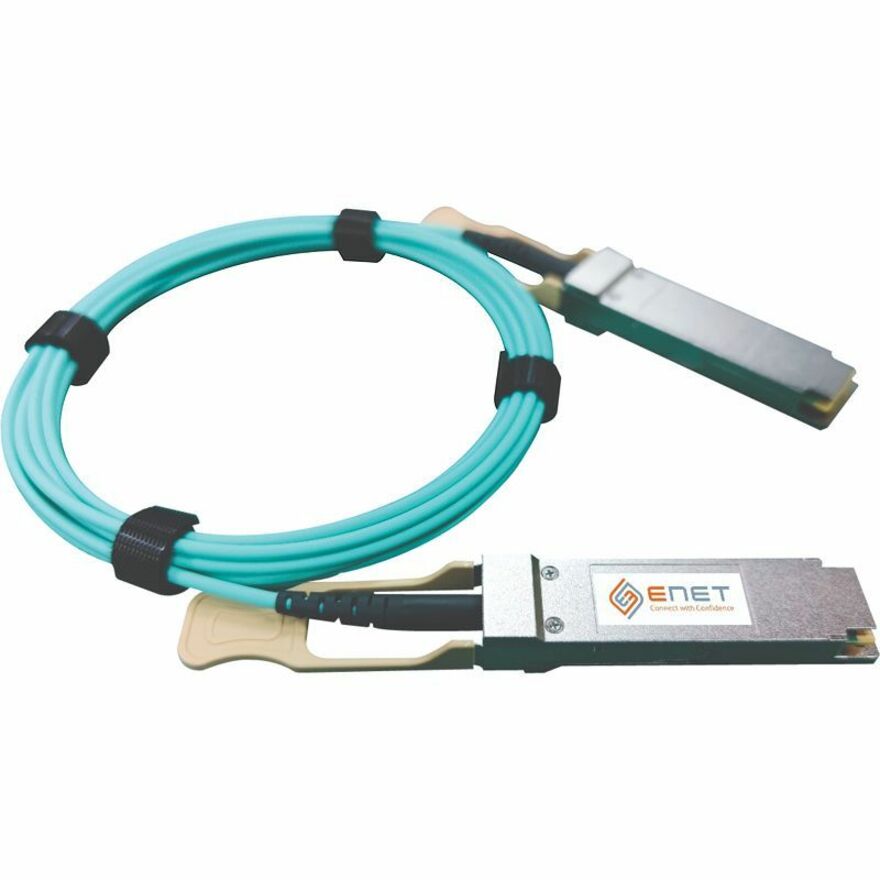
A 1 m 10GBase-AOC assembly with SFP+ ends, 850 nm over multimode, described by the manufacturer as MSA and TAA compliant. The short top-of-rack link where a transceiver pair would be three parts doing one job.
Fixed length — measure the tray route rather than the straight-line distance between the two ports.
$44.16*In stockCross-rack pick
StarTech.com
StarTech Dell EMC AOC-SFP-10G-5M Compatible 5m 10G SFP+ to SFP AOC Cable
AOCSFP10G5ME
A 5 m 10G SFP+ active optical cable coded to the Dell EMC AOC-SFP-10G-5M, for the row-to-row link that is past what twinax will carry and not worth a structured fiber run.
Coded for Dell EMC ports specifically; confirm the switch at both ends before ordering.
$39.55In stockRoom-run pick
4XEM
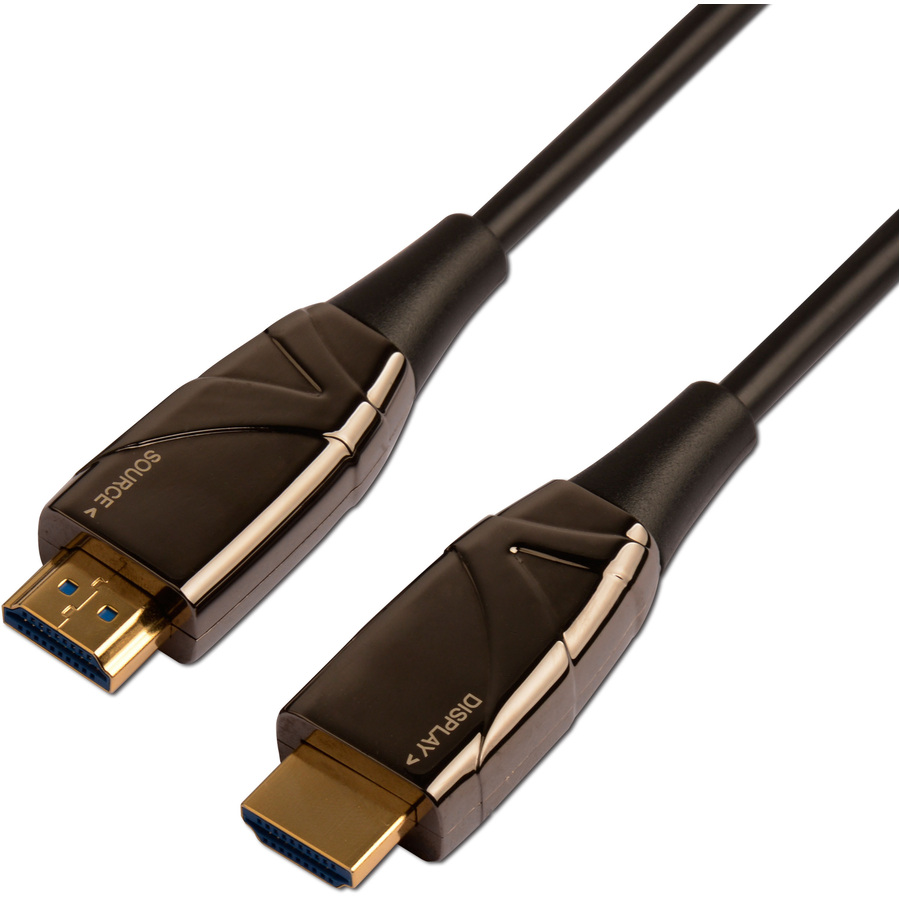
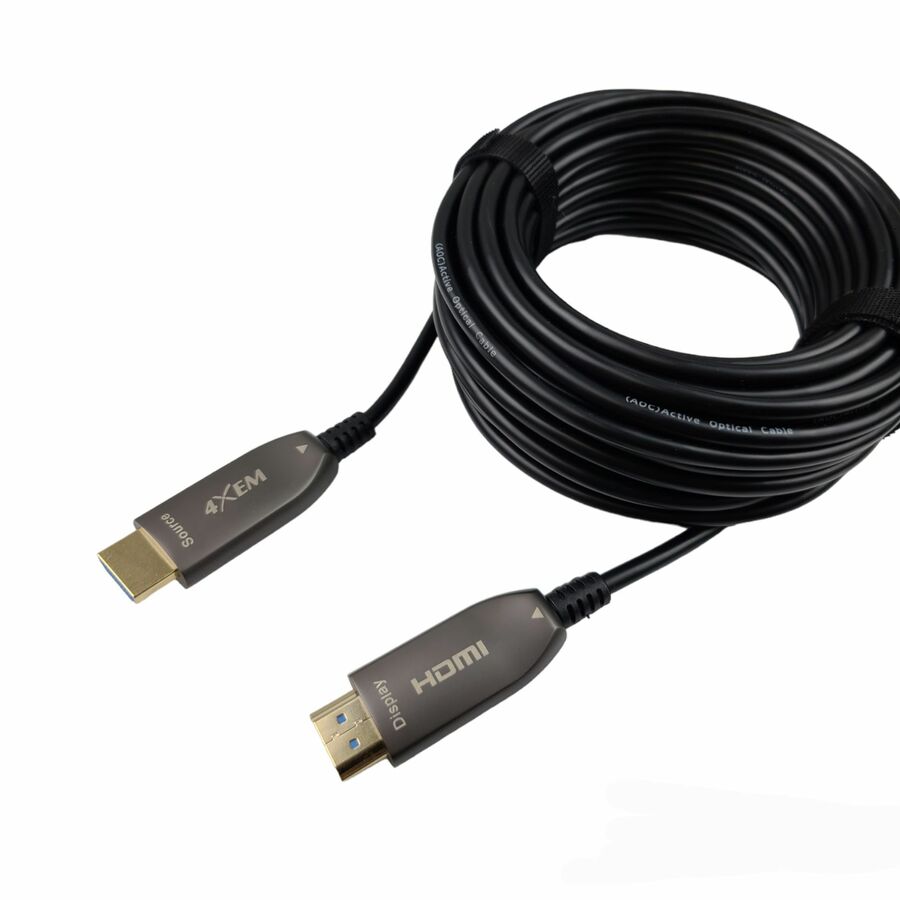
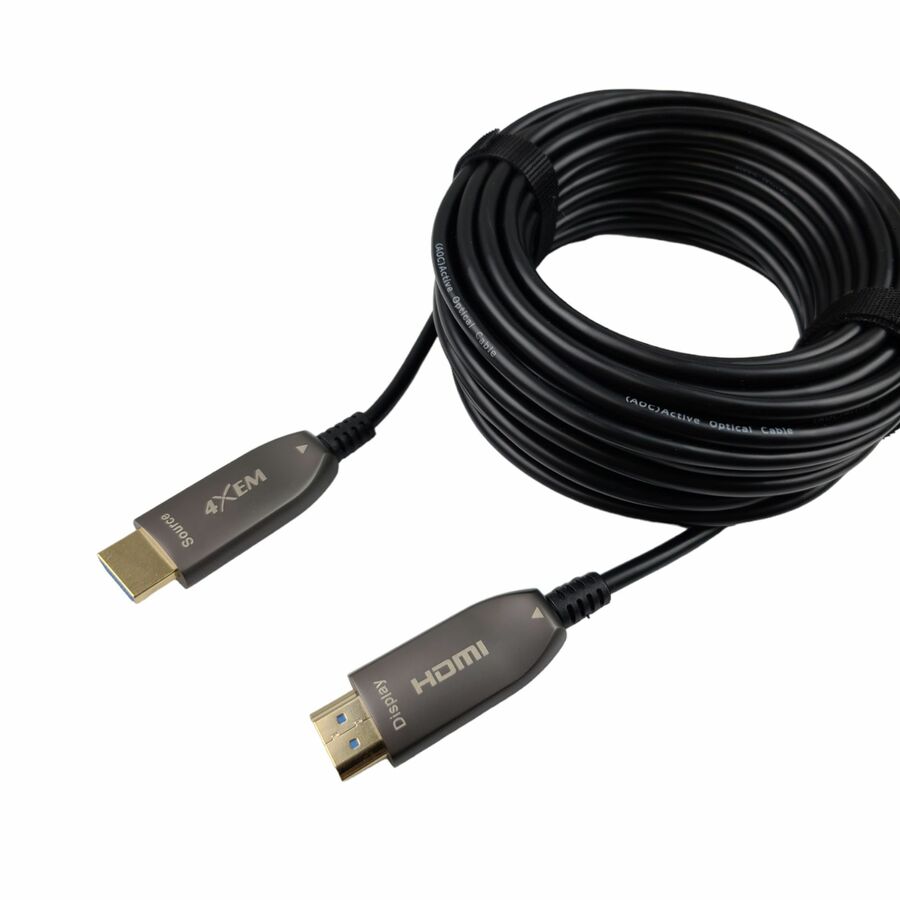
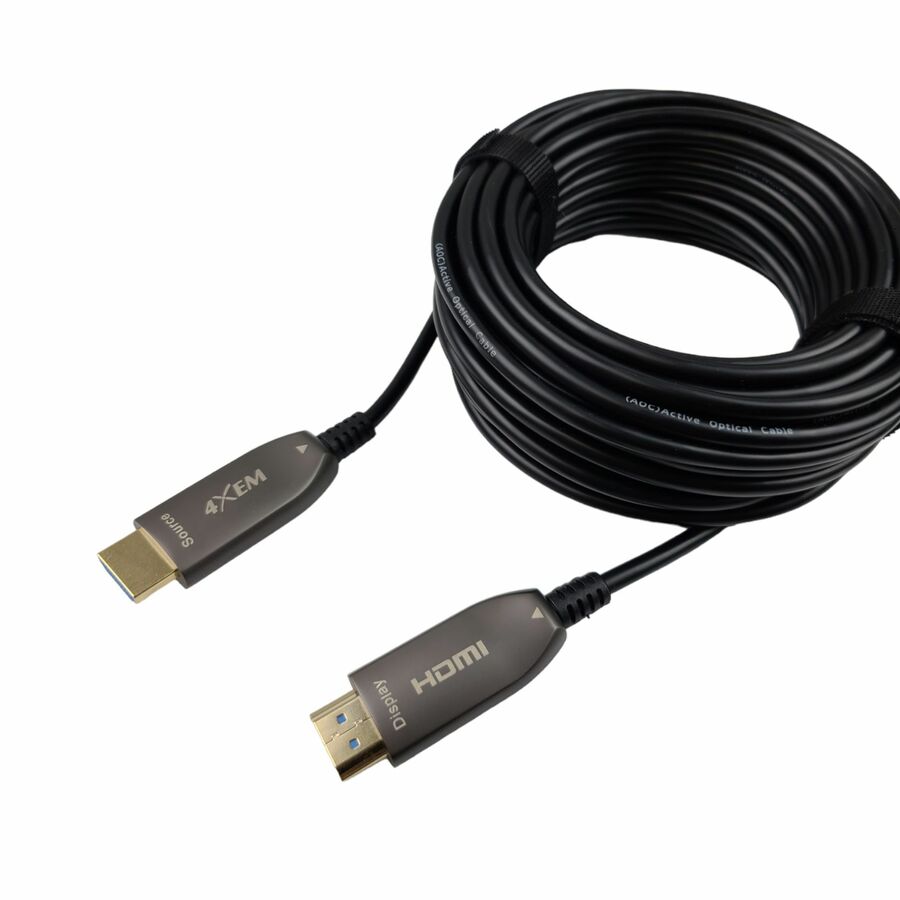
4XEM 10M 33FT Active Optical Fiber 2.0 HDMI
4XFIBERHDMI10M
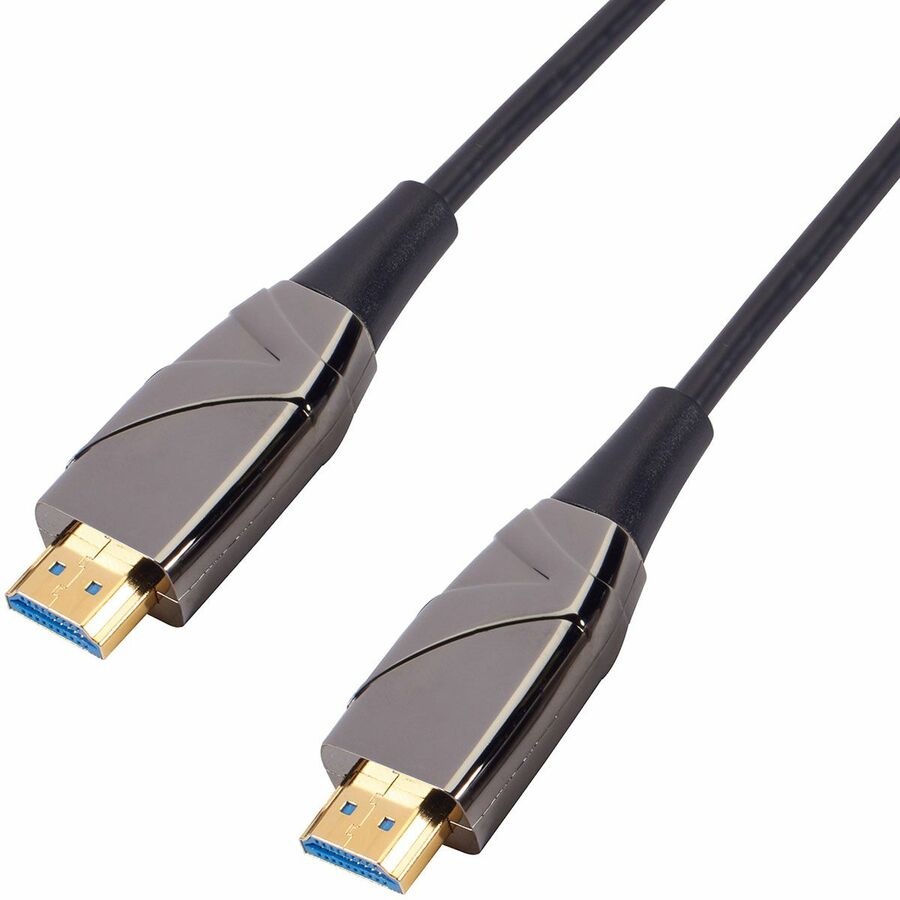
A 10 m fiber HDMI 2.0 assembly — the answer when a display ends up across the room from the source and a passive copper cable stops holding the signal. Thin enough to route through a conduit run to a ceiling projector.
Directional: the ends are marked for source and display, and a reversed installation looks exactly like a dead cable.
$58.82In stockHigher-bandwidth AV pick
4XEM
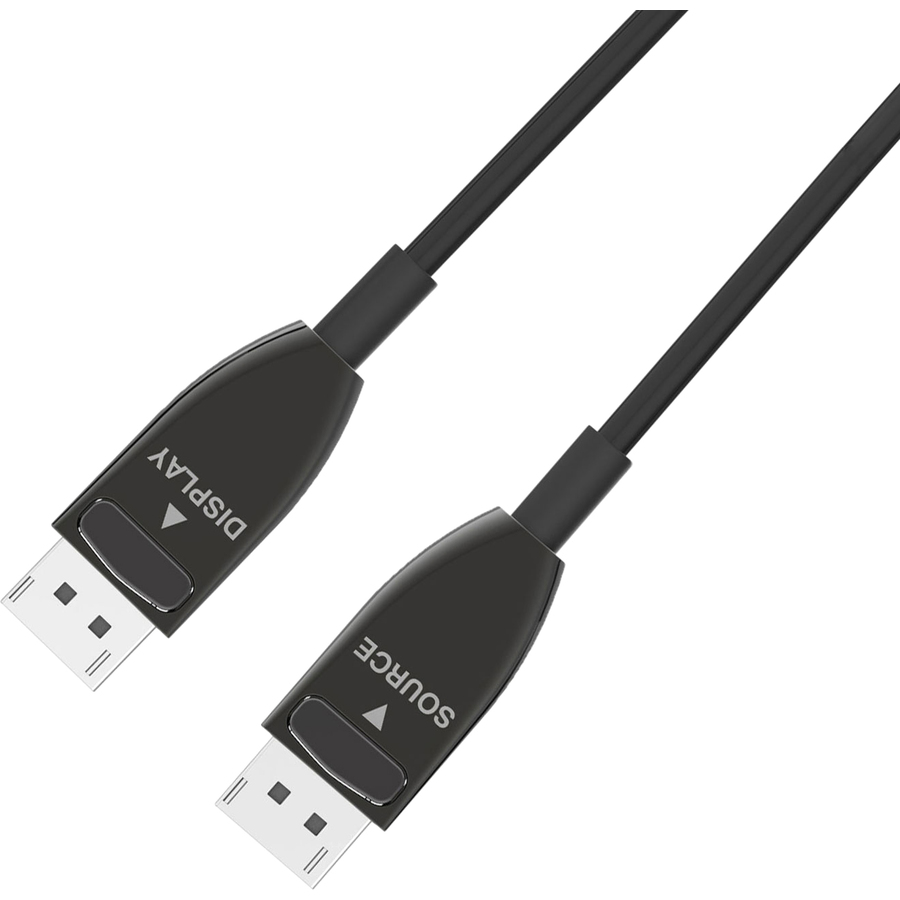
4XEM 7M 23FT Active Optical Fiber 2.1 HDMI
4XFIBERHDMI7M8K
A 7 m fiber assembly built to HDMI 2.1 rather than 2.0, for a room whose display and source are specified past what a 2.0 link carries. Same optical construction, higher bandwidth ceiling.
Both endpoints have to support the higher version for it to matter — a 2.1 cable between two 2.0 devices is a 2.0 link.
$111.93In stock40G pick
AddOn
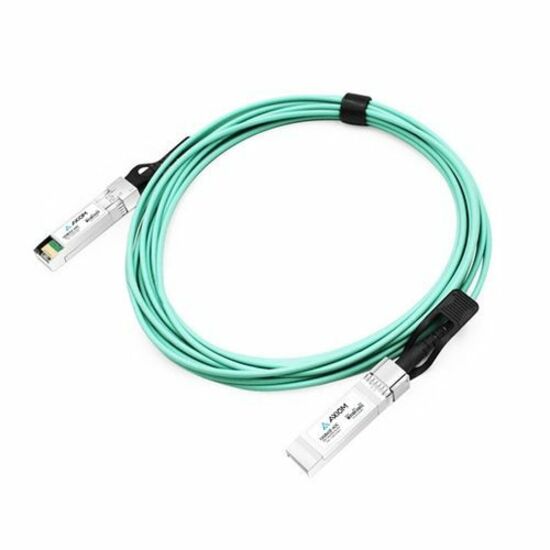
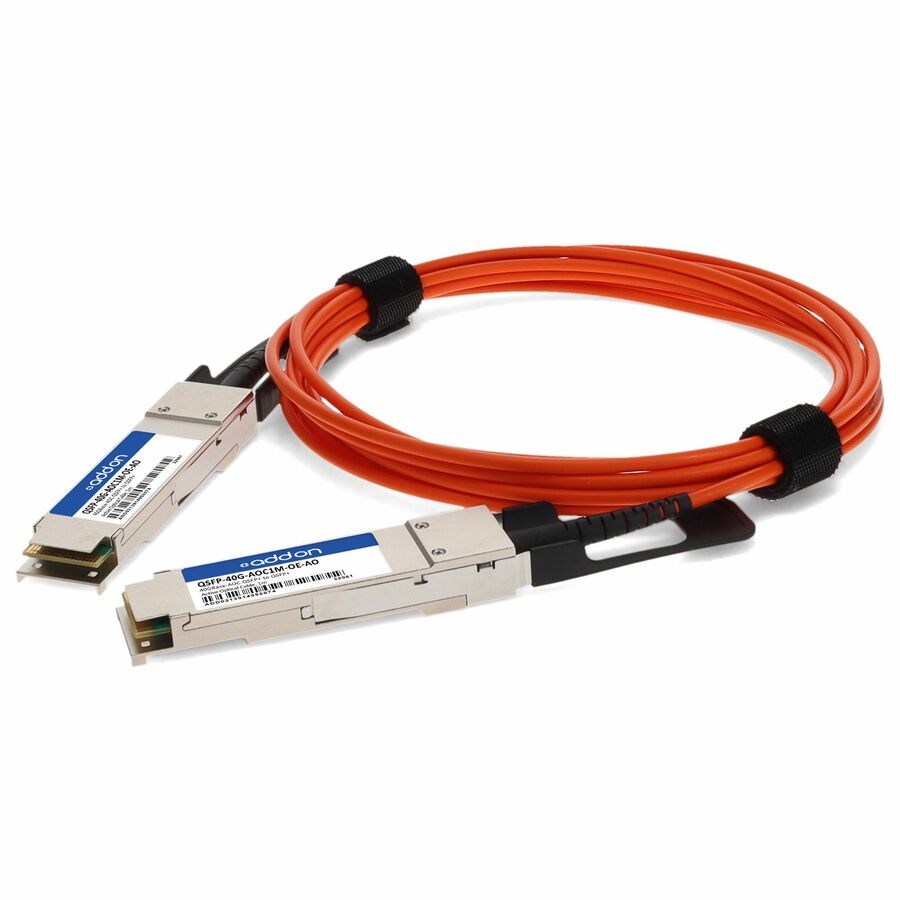
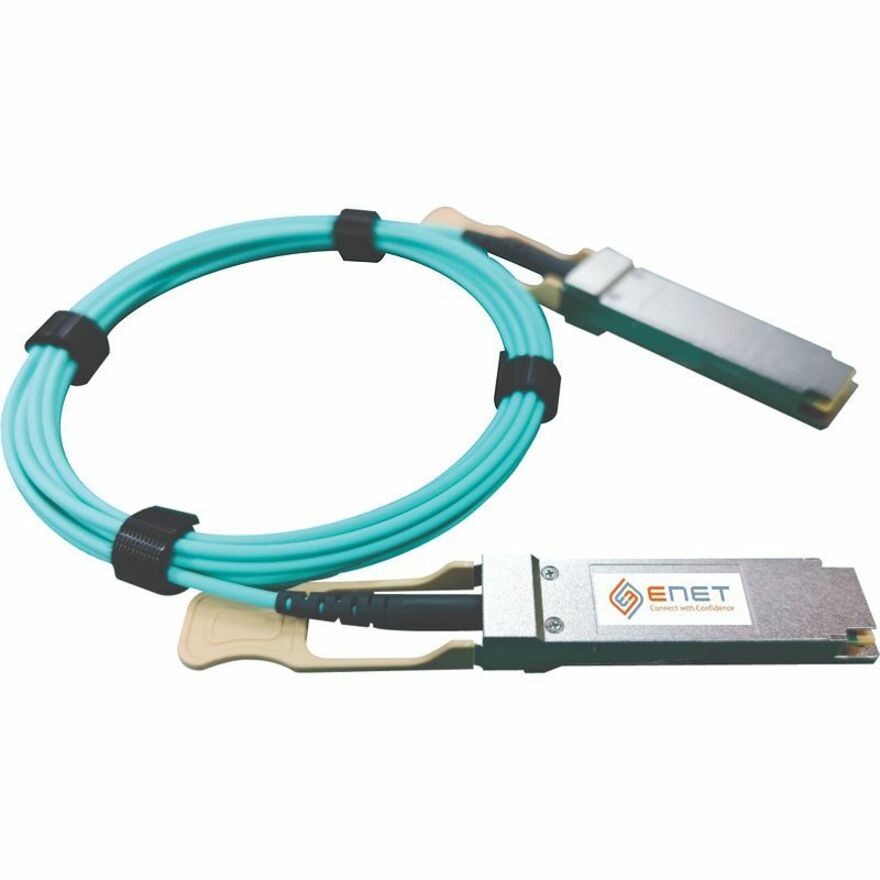
AddOn MSA and TAA Compliant 40GBase-AOC QSFP+ to QSFP+ Orange Active…
QSFP-40G-AOC1M-OE-AO
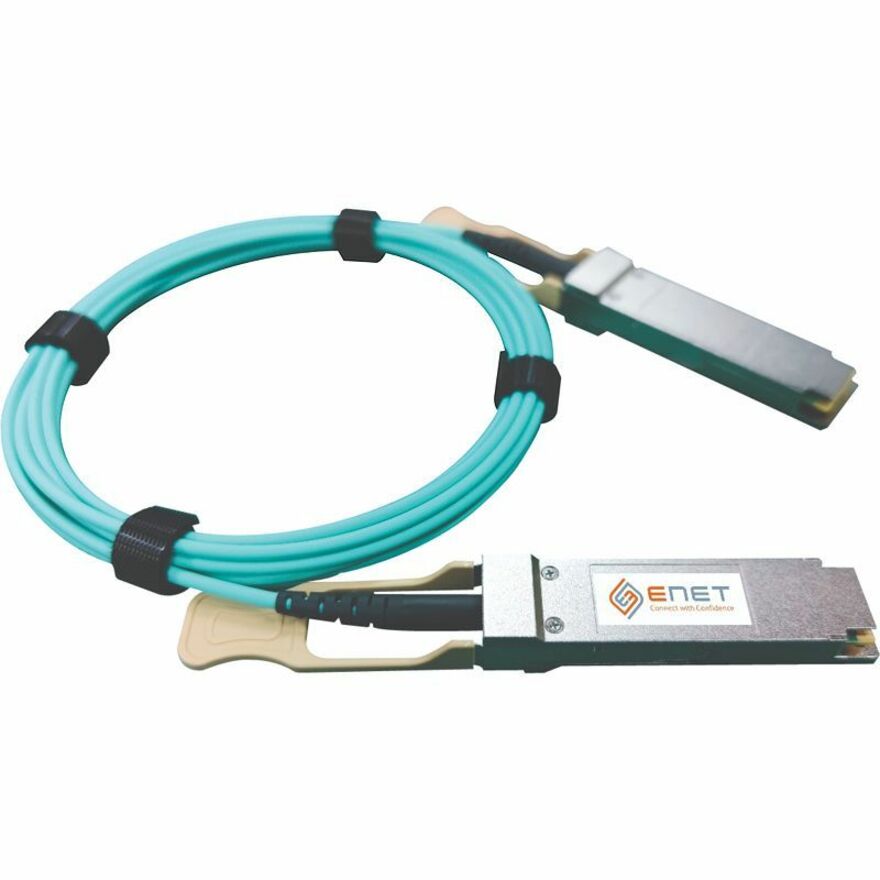
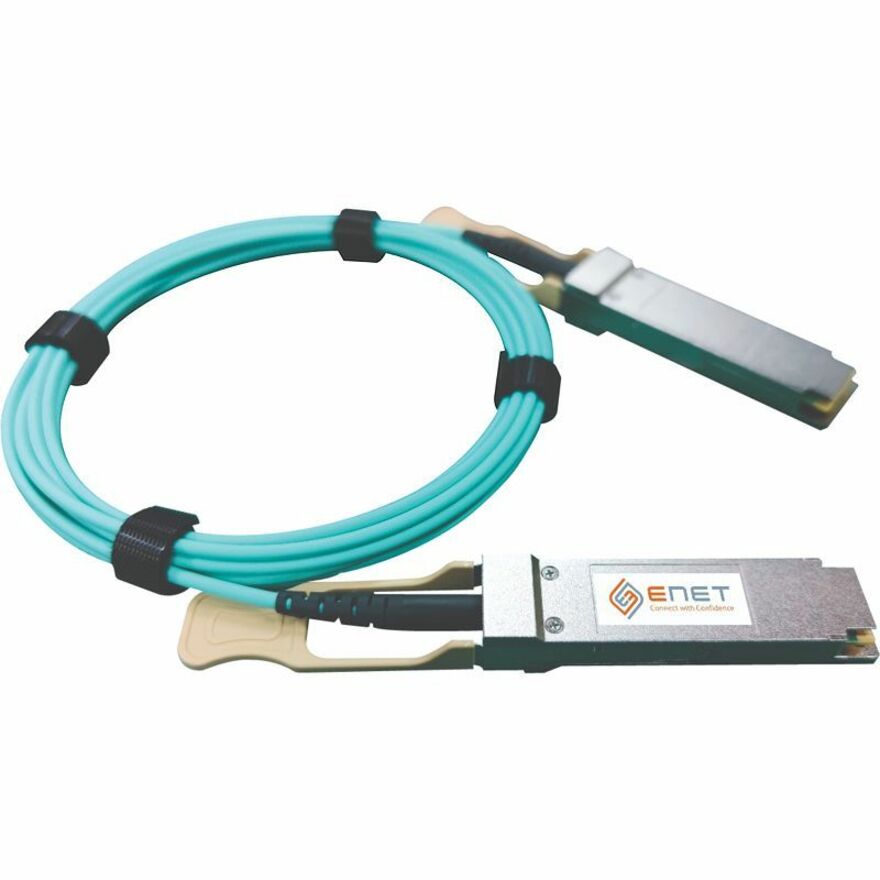
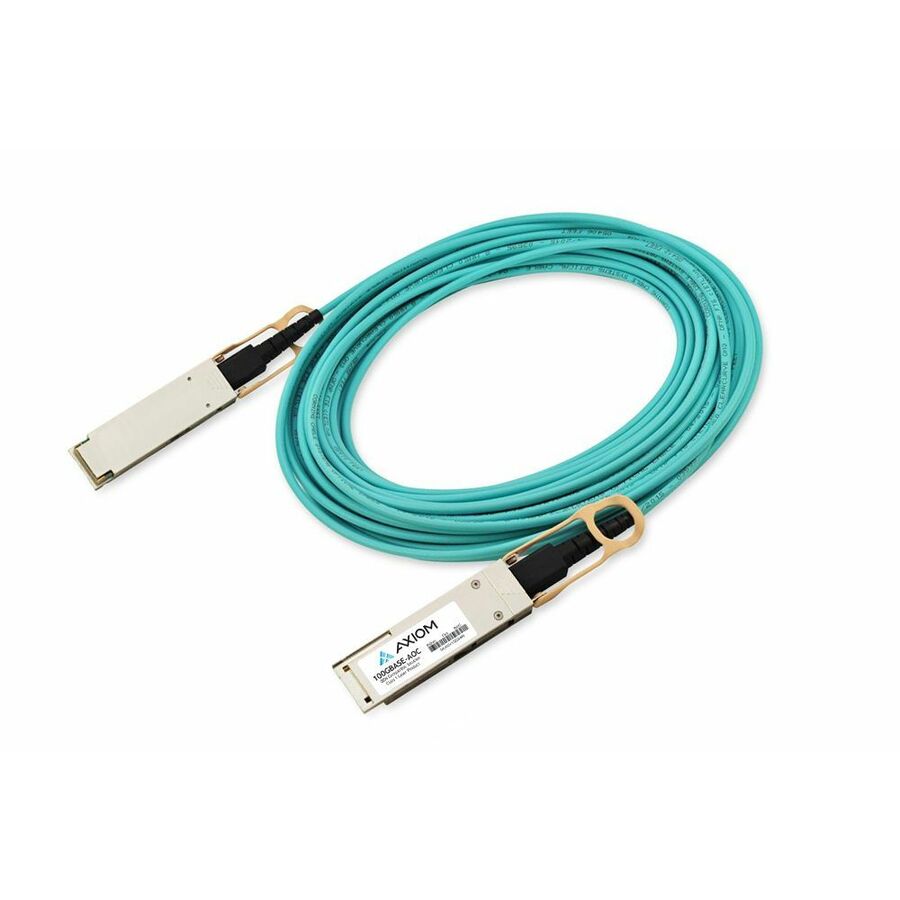
The same idea at the aggregation tier: a 1 m QSFP+ to QSFP+ active optical assembly at 850 nm over multimode, described by the manufacturer as MSA and TAA compliant, replacing two 40G modules and an MPO trunk with one part.
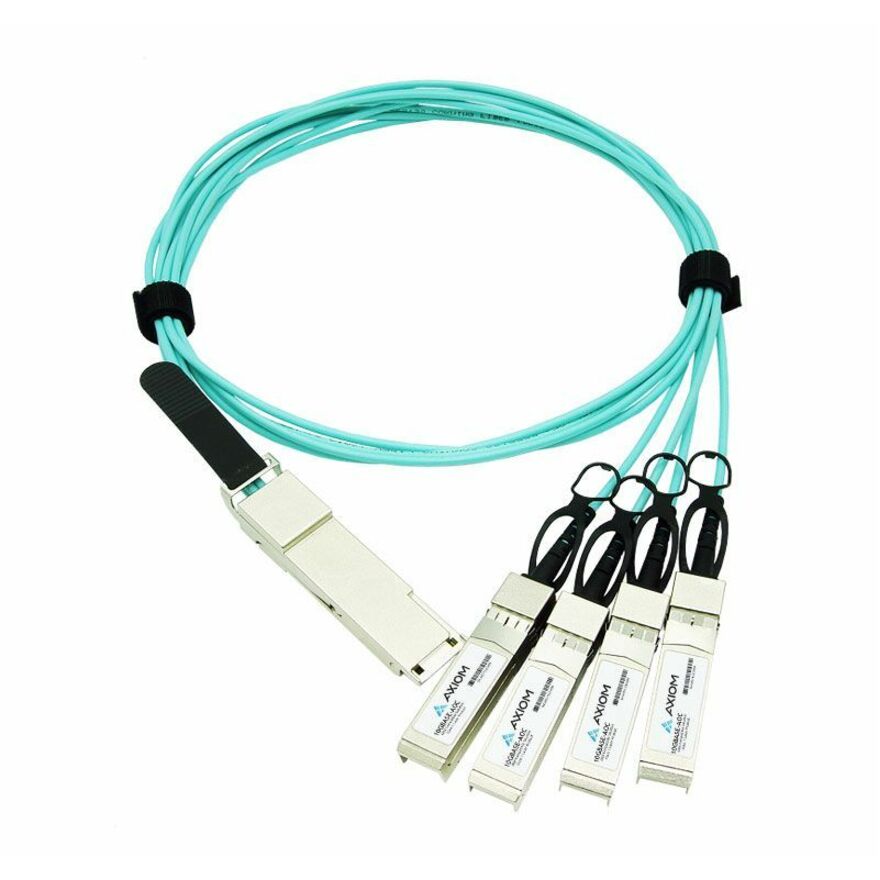
QSFP+ to QSFP+, not a breakout — a 4×10G fan-out is a different part number.
$104.88*In stockMore connector cables in the Uniqcli catalog
See all 62,108 connector cablesMore from across this category. In-stock lines lead, and a back-ordered line carries the same estimated availability its product page does — with live pricing throughout, NDAA §889 screening before checkout and TAA verified on request.
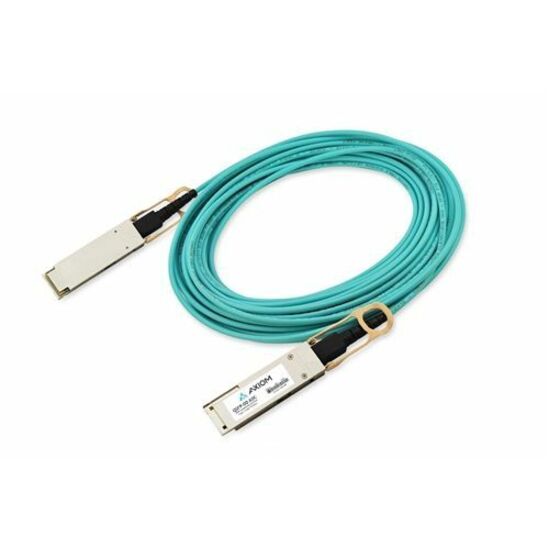
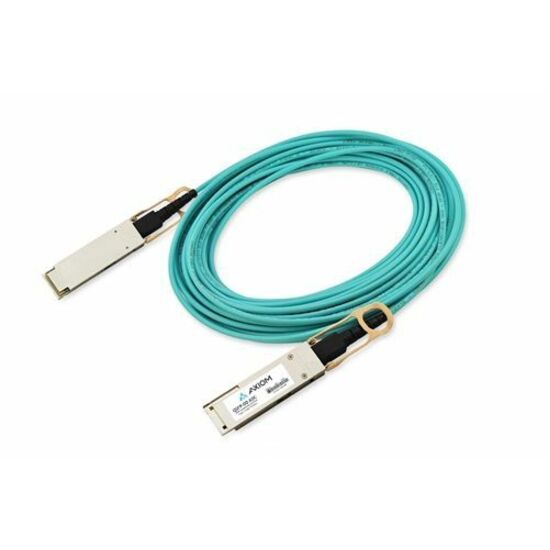
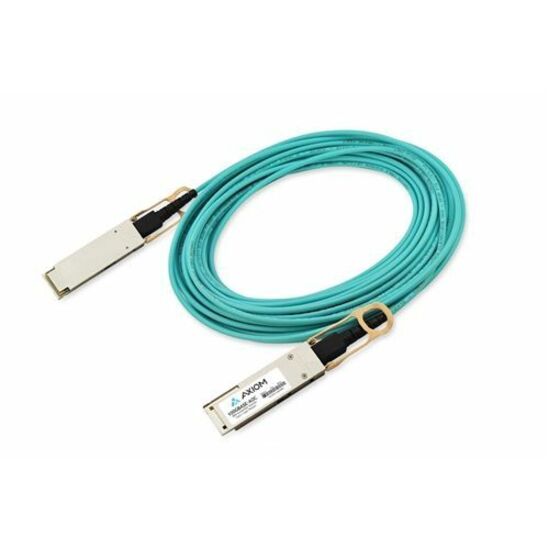
- Axiom Memory SolutionsAxiom 400GBASE-AOC QSFP-DD Active Optical Cable Cisco Compatible 5m - TAA Compliant - 16.40 ft Fiber Optic Network Cable for Network Device, Router, Switch - First End: 1 x QSFP-DD Network - Second End: 1 x QSFP-DD Network - 400 Gbit/s - TAA CompliantAXG102296
$10,890.00
$4,320.03*
1 in stock - Axiom Memory SolutionsAxiom 400GBASE-AOC QSFP-DD Active Optical Cable Cisco Compatible 3m - TAA Compliant - 9.84 ft Fiber Optic Network Cable for Network Device, Switch, Router - First End: 1 x QSFP-DD Network - Second End: 1 x QSFP-DD Network - 400 Gbit/s - TAA CompliantAXG102294
$10,123.33
$4,015.86*
1 in stock - Axiom Memory SolutionsAxiom 200GBASE-AOC QSFP56 Active Optical Cable IB HDR Mellanox Compatible 30m TAA - 98.43 ft Fiber Optic Network Cable for Network Device, Switch, Router - First End: 1 x QSFP56 Network - Second End: 1 x QSFP56 Network - 200 Gbit/s - TAA CompliantAXG103075
$4,050.00
$1,607.11*
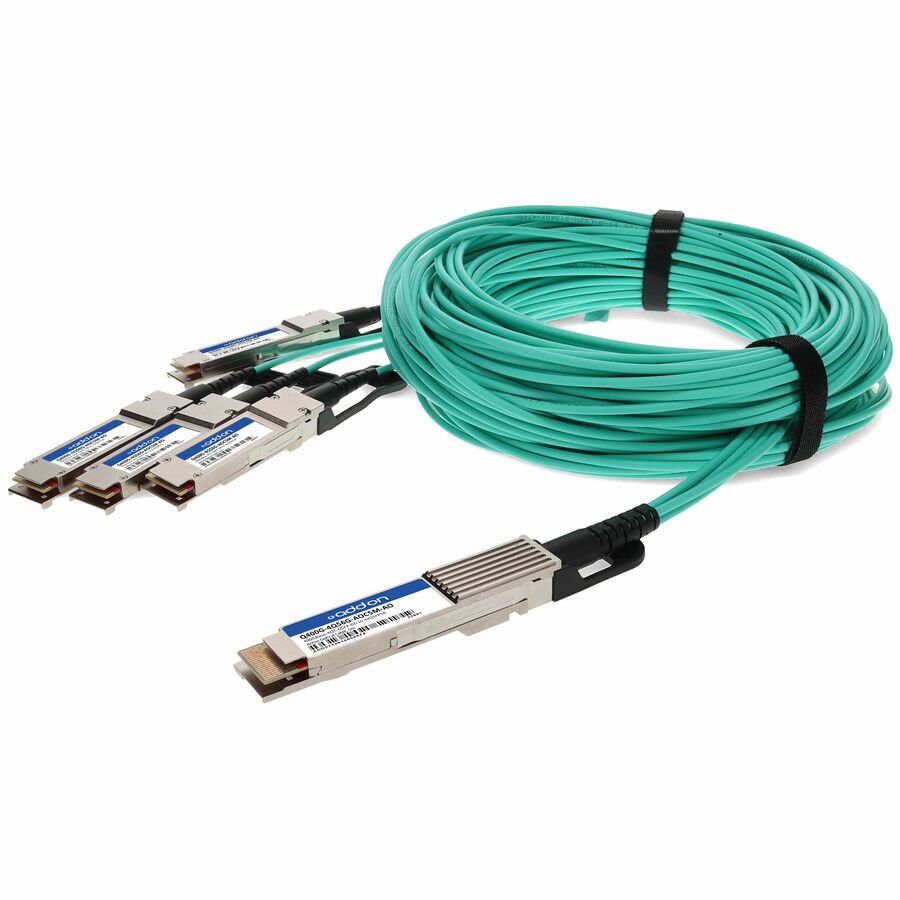
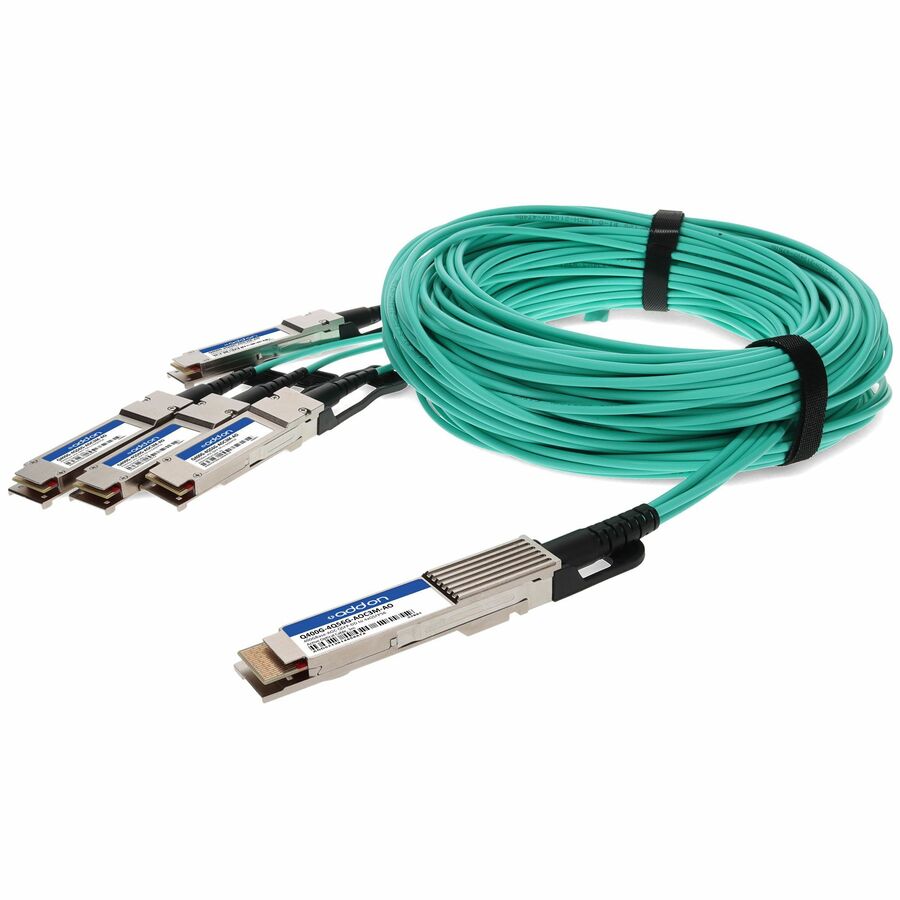
1 in stock - AddOnAddOn MSA and TAA Compliant 400GBase-AOC QSFP-DD to 4xQSFP56 PAM-4 Active Optical Cable (850nm, MMF, 5m) CMIS 3.0 - 16.40 ft Fiber Optic Network Cable for Network Device - First End: 1 x QSFP-DD Network - Male - Second End: 4 x QSFP56 Network - Male - 400 Gbit/s - LSZH - Multi-mode - 1.0 - TAA CompliantQ400G-4Q56G-AOC5M-AO
$29,900.00
$27,508.00*
9 in stock - AddOnAddOn MSA and TAA Compliant 400GBase-AOC QSFP-DD to 4xQSFP56 PAM-4 Active Optical Cable (850nm, MMF, 3m) CMIS 3.0 - 9.84 ft Fiber Optic Network Cable for Network Device - First End: 1 x QSFP-DD Network - Male - Second End: 4 x QSFP56 Network - Male - 400 Gbit/s - LSZH - Multi-mode - 1.0 - TAA CompliantQ400G-4Q56G-AOC3M-AO
$29,860.00
$27,471.20*
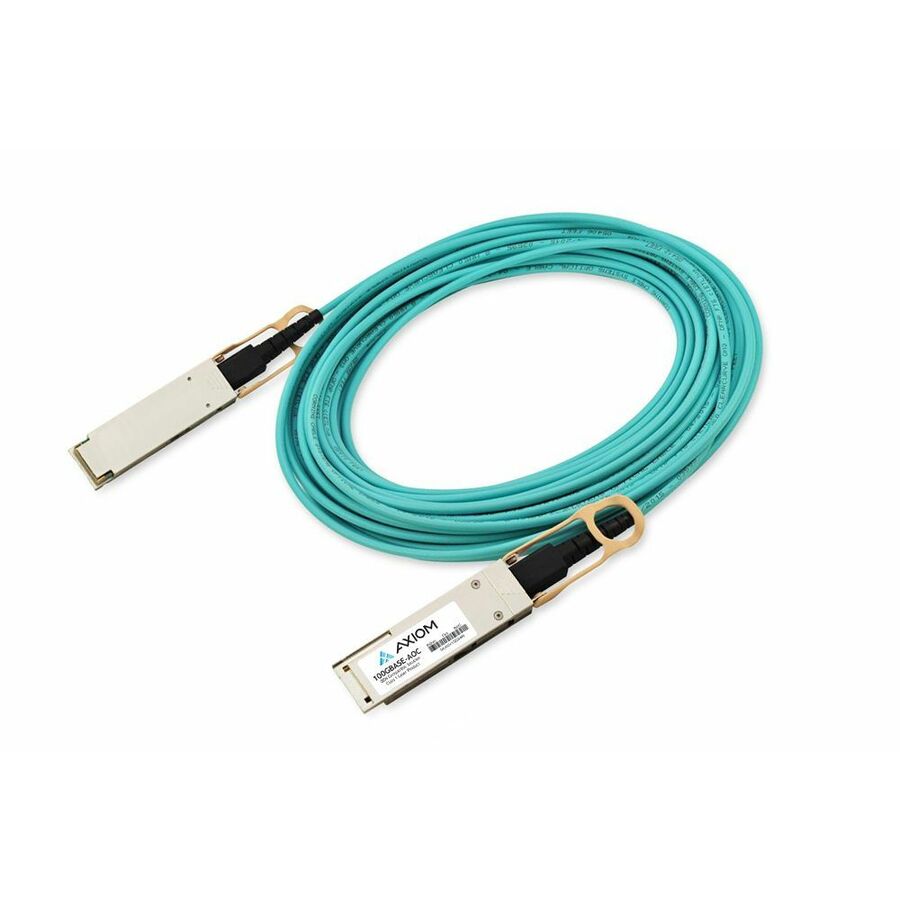
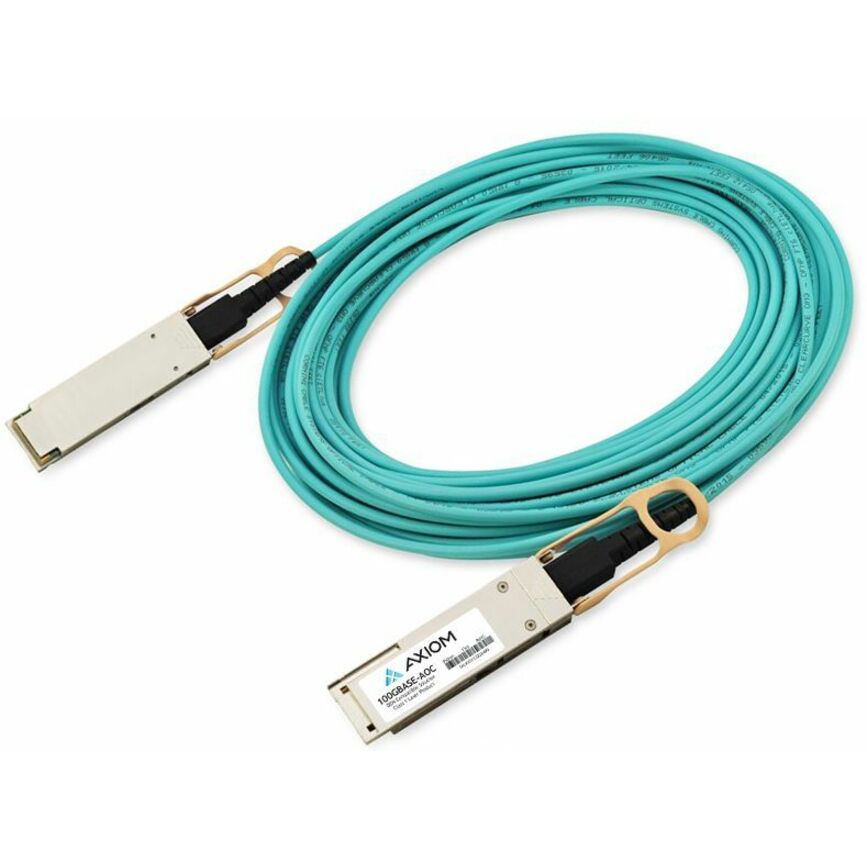
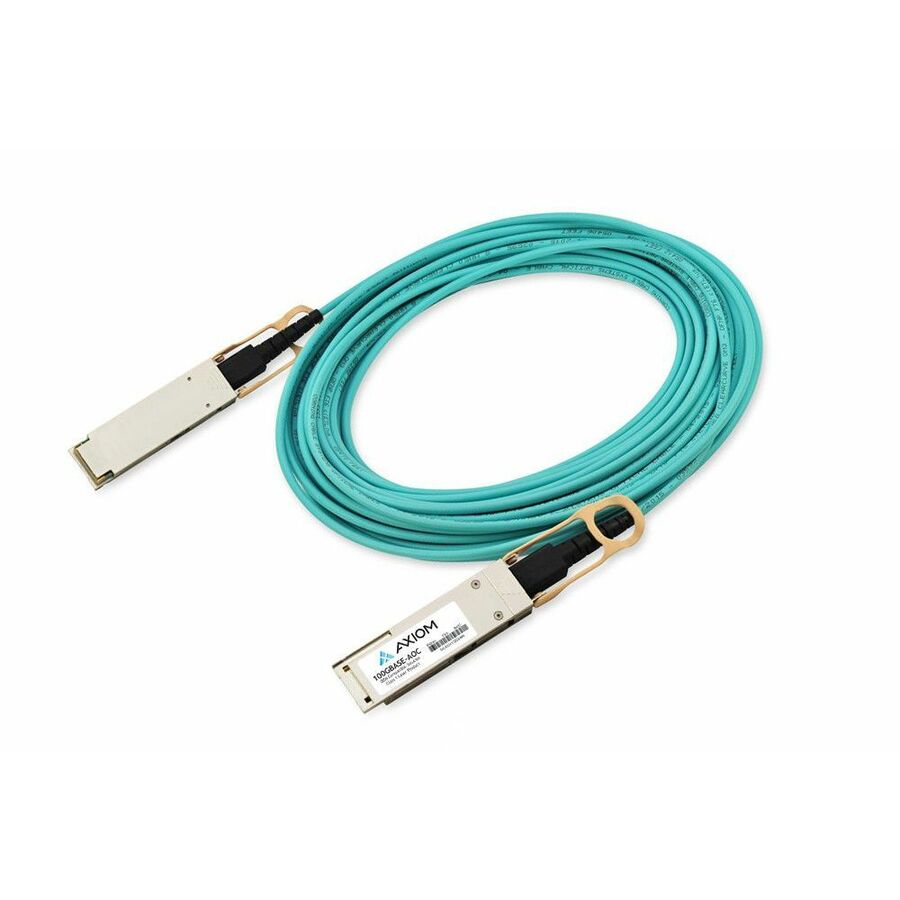
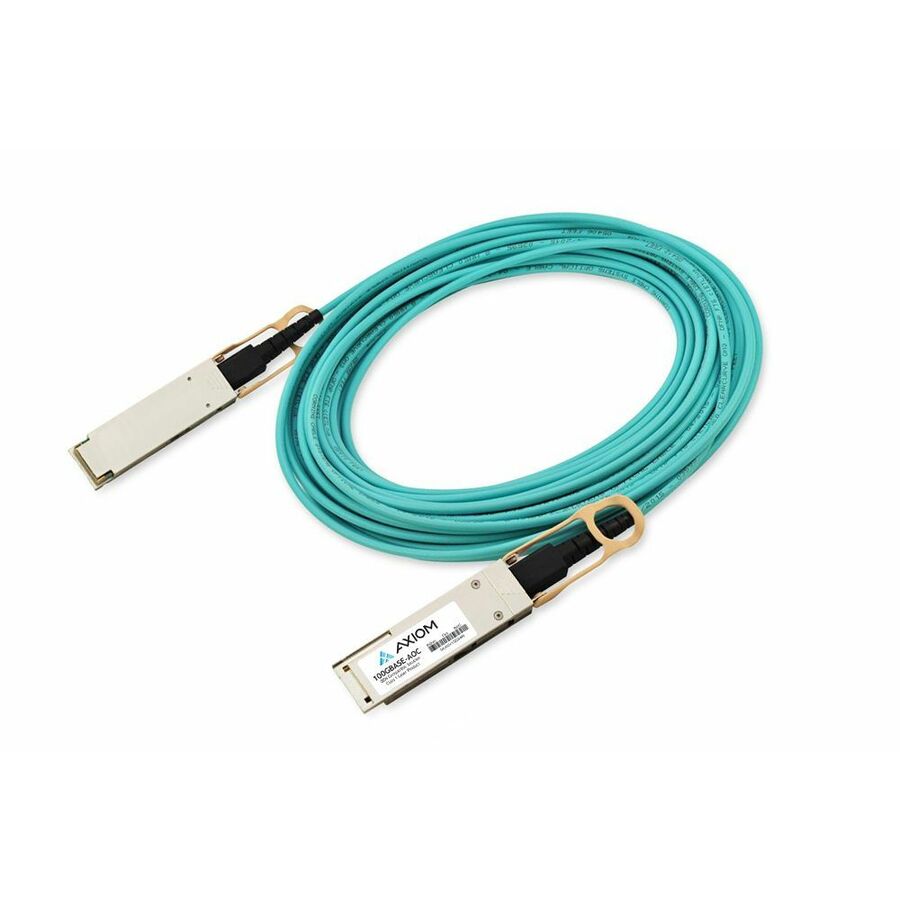
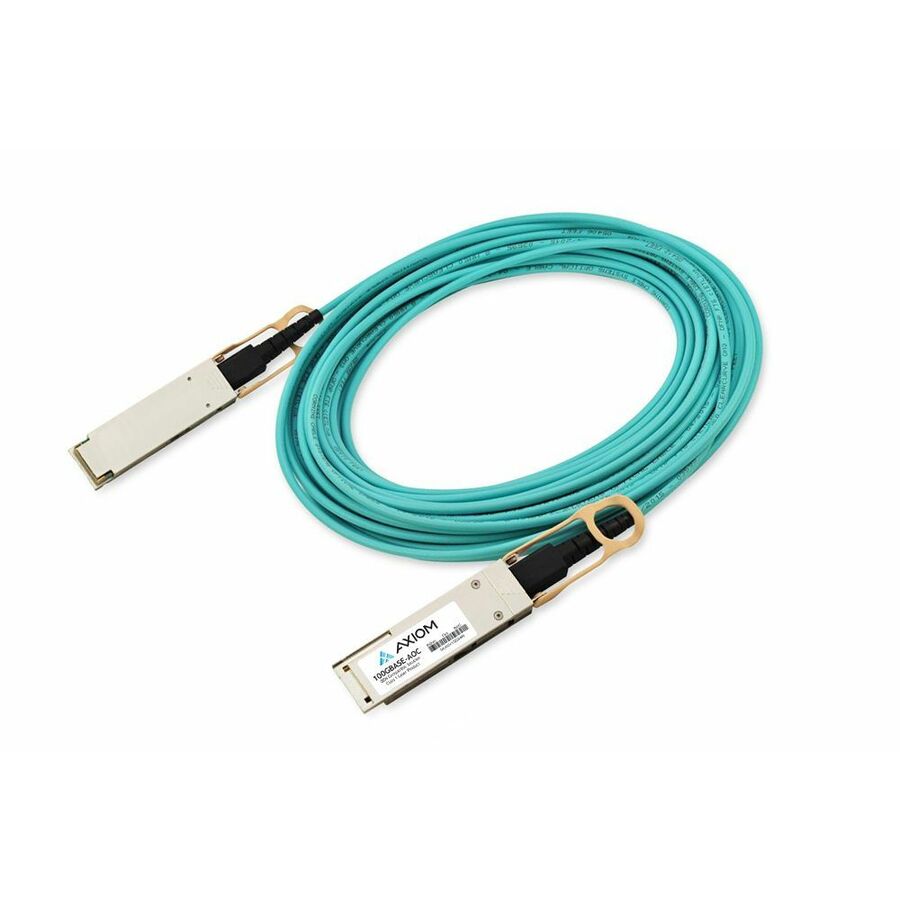
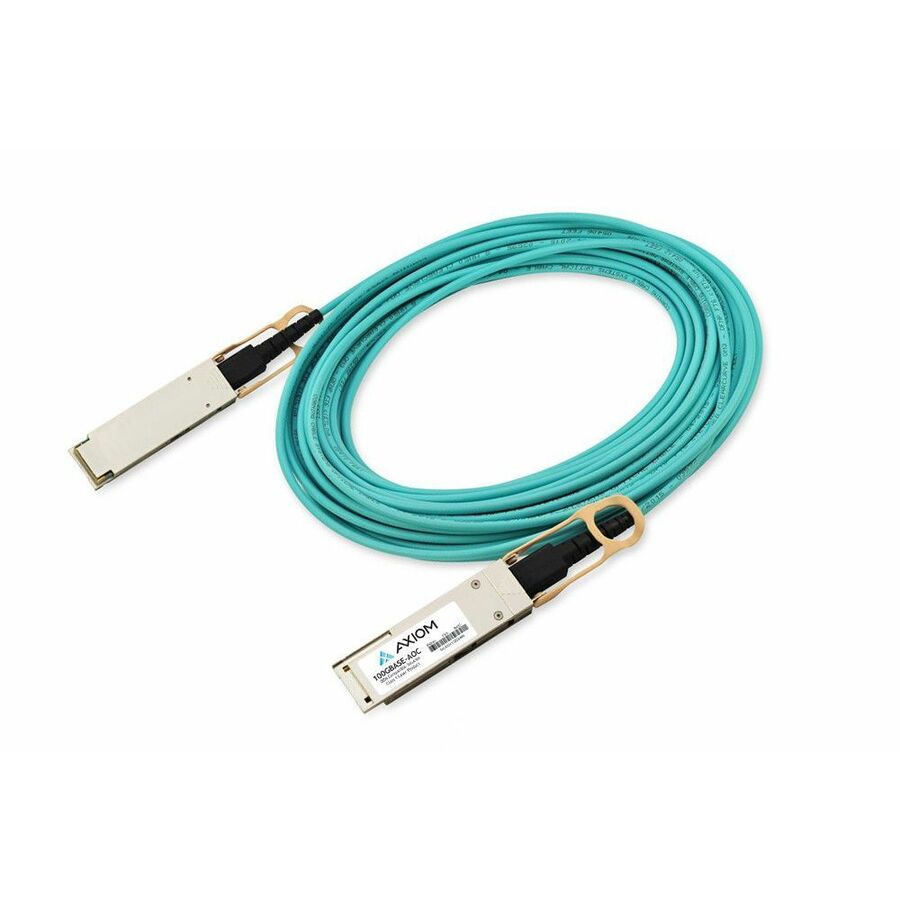
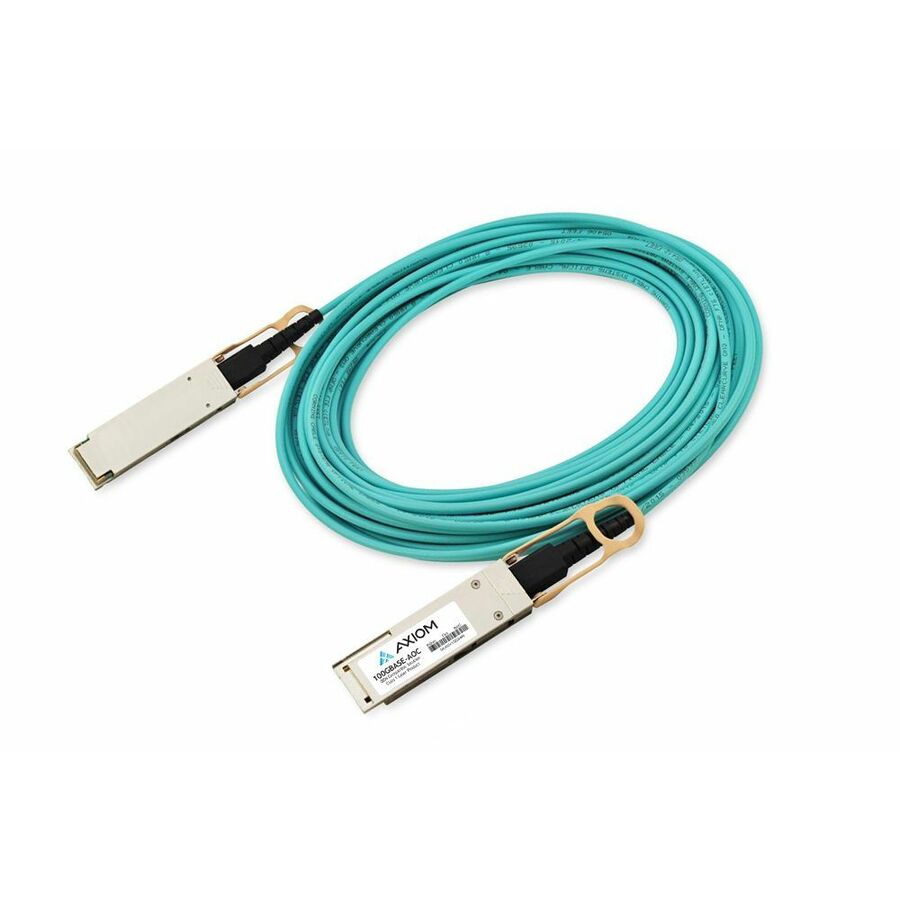
2 in stock - Axiom Memory SolutionsAxiom 100GBASE-AOC QSFP28 Active Optical Cable Juniper Compatible 15m - TAA Compliant - 9.84 ft Fiber Optic Network Cable for Network Device, Router, Switch - First End: 1 x QSFP28 Network - Second End: 1 x QSFP28 Network - 100 Gbit/s - TAA CompliantAXG98795
$3,803.33
$1,509.02*
4 in stock - Axiom Memory Solutions100GBASE-AOC QSFP28 Active Optical Cable 7m - Axiom 100GBASE-AOC QSFP28 Active Optical Cable Juniper Compatible 7mAXG99370
$2,823.33
$1,120.14*
17 in stock - Axiom Memory SolutionsAxiom 200GBASE-AOC QSFP56 Active Optical Cable 3m for Mellanox - TAA Compliant - 9.84 ft Fiber Optic Network Cable for Network Device, Router, Switch - First End: 1 x QSFP56 Network - Second End: 1 x QSFP56 Network - FT6, OFNP - TAA CompliantAXG102747
$2,603.00
$1,033.02*
1 in stock

Need pricing on active optical cables?
Tell us where to reach you and a Uniqcli specialist will follow up by email with current pricing, availability and lead time for the quantities you need — including parts that aren’t shown on this page.
Buying for an organization or for yourself — both work. No payment up front.
An active optical cable is a fiber assembly with the transceivers permanently attached at both ends, sold as one part in one fixed length. Nothing is field-terminable, so measure the run — plus tray slack, bend radius and a service loop — before anything else. It sits between direct-attach copper, which is cheap and short, and a transceiver pair on fiber.
An active optical cable is one product doing the job of three: a fiber assembly with the transceivers permanently attached at both ends, sold as a single part in a single length. Nothing is field-terminable, nothing is cleanable, and nothing is swappable — which sounds like a list of disadvantages until you price the alternative. Two transceivers plus a patch lead is three part numbers, three points of failure, three chances to get the coding wrong and a connector pair somebody has to keep clean. An AOC is one line on the purchase order that either works or is replaced whole.
That trade is why AOC sits between the two options most buyers already know. Direct-attach copper — twinax, DAC — is the cheapest way to link two ports and the shortest: it is heavy, thick, and its reach is measured in a handful of metres, which is fine top-of-rack and useless between rows. A transceiver pair with structured fiber between them is the flexible answer that reaches anywhere, and it costs three parts and a cabling plan. AOC takes the fiber reach and the thin, light, easily-routed cable, and gives up the modularity. For a link that is never going to move, that is a good deal.
This catalog carries both halves of the category, and they belong on one page because the argument is identical. On the datacentre side, SFP+ and QSFP+ AOC assemblies replace a transceiver pair between switches and servers. On the audiovisual side, fiber HDMI and DisplayPort cables are the same idea sold to a different room: optics at both ends, thin enough to pull through conduit, reaching distances passive copper stopped supporting several standards ago. If the run is a conference room rather than a rack, the second half of this list is the one to read — and the room build behind it, the displays, the mounts and the installation, is something Uniqcli quotes as one package rather than as parts.
Buyer's checklist
How to choose an active optical cable
- Measure the run before anything else, then add the slack for the tray, the bend radius and the service loop — an AOC is a fixed length and there is no field termination to fix a short one.
- Match the end type to both ports exactly: an SFP+ AOC does not seat in a QSFP+ cage, and a QSFP+ AOC is not a breakout unless the part number says so.
- Check the coding on datacentre assemblies the same way you would a transceiver — the optics at the ends carry vendor identification data, so a Dell EMC-coded cable and an uncoded one are different orders.
- On the AV side, read the version the cable is built to rather than the connector: HDMI 2.0 and HDMI 2.1 assemblies look identical and carry very different bandwidth ceilings.
- Respect directionality on fiber AV cables — the ends are marked source and display, and reversing them gives a dead link that looks like a faulty cable.
- Check whether the run passes through conduit, and confirm the connector will fit the pathway before the cable is pulled; the fiber is thin, the housing at the ends is not.
- Buy one spare per length in service. An AOC cannot be repaired or re-terminated, so the recovery plan is a replacement cable, not a replacement connector.
AOC, DAC and a transceiver pair — three ways to link two ports
Direct-attach copper is the default inside a rack and deserves to be. It is the cheapest of the three, it needs no optics, and for a top-of-rack switch talking to servers a metre below it, nothing else is justified. What it cannot do is distance or bulk: twinax is thick and stiff, it fills a cable tray fast, and its usable reach at 10G and above is short enough that a link between two rows is usually outside it.
A transceiver pair with structured fiber in between is the opposite trade. It reaches as far as the optics and the plant allow, it uses cabling that is already in the building, and every component is individually replaceable — a failed module is a module, not a cable pull. It is also three part numbers, a coding decision at each end, and a connector pair that has to stay clean, which in a busy room it does not.
AOC sits in the middle and is at its best exactly where the middle is: a link that is longer than copper will carry, shorter than a structured run is worth planning, and not going to move once it is in. You give up the ability to replace one end, and you gain a thin, light, low-loss cable with no connector hygiene to manage and one part number to reorder.
The AV half: fiber HDMI and DisplayPort
The conference-room version of this problem is the same physics with different connectors. Passive copper HDMI holds a high-bandwidth signal for a few metres and then stops, and the failure is rarely clean — it presents as intermittent handshake failures, dropouts on resolution changes, or a display that works until somebody switches sources. Once the run reaches a ceiling projector or a display on the far wall, an optical cable is the fix rather than a longer copper one.
Two details decide whether the install works. The first is version: fiber HDMI assemblies are built to HDMI 2.0 or 2.1 and look identical, so the cable has to be chosen against the resolution and refresh the room is actually specified for, not against the connector shape. The second is directionality — the optics are not symmetrical, the ends are labelled for source and display, and a cable pulled through conduit backwards is indistinguishable from a broken one until somebody swaps it end for end.
Plan the pull before the order. The fiber itself is thin and routes easily, but the housings at the ends are not, and a connector that will not pass through an existing conduit is a wall to open. Where a room standard is going into more than one space, that check plus the mounts, the displays and the installation is one scope of work — and quoting it as one package is how a multi-room rollout stops arriving in four uncoordinated shipments.
Buying and stocking fixed-length cable
Every problem with an AOC comes back to the same property: it is one part, in one length, that cannot be repaired. That makes measuring the actual route — through the tray, around the bend radius, with a service loop at each end — the single most valuable thing anyone does before ordering, and it makes buying two of a length cheaper than buying one and finding out.
It also changes what a spares pool looks like. With a transceiver pair, the spare is a module and it covers every link of that type in the building. With AOC, the spare is a cable of a specific length with specific ends, so a site that standardizes on two or three lengths is far cheaper to keep running than one where every link was measured individually. Pick the lengths deliberately, order slightly long, and coil the difference.
FAQ
Common questions
- What is an active optical cable?
- It is a fiber optic assembly with the transceivers permanently attached at both ends, sold as a single part in a fixed length. Electrically it behaves like a transceiver pair with a patch lead between them, but there is nothing to plug together, nothing to clean and nothing to replace individually. In exchange you get a thin, light cable that reaches much further than direct-attach copper and needs no connector hygiene.
- AOC or DAC — which should I use?
- Use direct-attach copper for short links inside a rack, where it is the cheapest option and its limited reach does not matter. Use an active optical cable when the link is longer than twinax will carry, when cable bulk in the tray is becoming a problem, or when the weight and stiffness of copper is a practical nuisance. Where the link needs to reach across a building, or where the ends must be individually replaceable, a transceiver pair on structured fiber is the better answer.
- Can an active optical cable be cut or re-terminated to length?
- No. The optics are bonded to the fiber at the factory and the assembly is a sealed part, so it cannot be shortened, lengthened, repaired or re-ended in the field. That is why the buying advice is to measure the real routed distance rather than the straight-line one, order with slack, and keep a spare of each length in service — the recovery plan is a whole replacement cable.
- Do fiber HDMI cables need external power?
- Most draw the small amount of power the optics need from the HDMI source itself, and some models include an optional USB lead for sources that do not supply enough. The important detail is directionality rather than power: the ends are marked for source and display, they are not interchangeable, and a cable installed backwards will simply not pass a signal. Check the product record for the specific assembly before it is pulled through a wall.
- Can Uniqcli quote the cabling with the rest of the room or rack build?
- Every line Uniqcli quotes is sourced through US distribution and screened for TAA country-of-origin and NDAA §889 status before checkout — with documentation tied to the specific part number, not a product family.
Need active optical cables pricing?
Send a bill of materials or part numbers — we confirm stock and a below-market total, with TAA verified on request. No payment up front.