
Short answer
The difference between VRLA and lithium-ion UPS batteries is service life against purchase price. Schneider Electric rates VRLA at 3 to 5 years and lithium-ion at 8 to 10 in optimal conditions, so a lead-acid string is usually replaced two or three times across one UPS's life and a lithium pack often is not. Take VRLA where the site is cool and easy to reach; take lithium where visits cost.
Key facts
- Schneider Electric puts UPS battery service life at 3 to 5 years for VRLA and 8 to 10 years for lithium-ion, in optimal operating conditions.
- Those are optimal-condition figures: service life follows ambient temperature, the quality of input power and how the UPS is used.
- Vertiv rates its own lithium-ion UPS batteries at 8 to 10 years or more, and two to three times the life of lead-acid.
- Lithium packs are smaller and lighter for the same runtime, which is what makes them the answer on a weight-limited floor or in a shallow cabinet.
- Lithium UPS batteries use an integrated battery management system that forms part of the UL listing, so lithium is a purchase decision, not a retrofit.
Almost every UPS sold today ships with valve-regulated lead-acid batteries, and almost every UPS conversation that lasts more than five minutes ends up on whether lithium-ion is worth the premium. The honest framing is that this is not a performance question — both chemistries hold up the load when the utility drops, and the transfer behaviour a buyer notices is a property of the UPS topology rather than of the cells. It is a service-life and total-cost question, with a footprint and thermal question attached.
VRLA is the incumbent for good reasons: it is inexpensive, it is available everywhere, replacement cartridges are a commodity, and disposal is a mature and well-established recycling stream. Its cost is that it is a consumable on a relatively short cycle, so a fleet of UPS units is a recurring replacement programme rather than a one-time purchase. Lithium-ion inverts that: a considerably higher purchase price against a service life that in many deployments spans the life of the UPS itself, in a package that is lighter and smaller for the same stored energy and that tolerates a warmer room. Which one wins depends almost entirely on how long the equipment will be in service and how accessible it is when the batteries need changing.
At a glance
Side by side
| Factor | VRLA (lead-acid) | Lithium-ion |
|---|---|---|
| Purchase price | Low — the default on most UPS units | Substantially higher for the same stored energy |
| Typical service life | Manufacturers commonly rate a few years, shortened by heat | Manufacturers commonly rate roughly a decade, so often one set per UPS |
| Replacement cadence | A recurring programme across the fleet's life | Frequently none before the UPS itself is retired |
| Weight and footprint | Heavier and larger for the same energy | Lighter and smaller for the same energy |
| Temperature tolerance | Life falls off sharply as ambient temperature rises | Tolerates a warmer room with less life penalty |
| Monitoring | Usually inferred from the UPS self-test | Typically includes a battery management system reporting cell state |
| Recycling and disposal | Mature, high-recovery lead recycling stream | Established but different handling, transport and disposal rules |
| Best fit | Accessible sites, short refresh cycles, cost-led buys | Long-lived installations, weight-limited or hard-to-reach sites |
Choose VRLA when
- The purchase is cost-led and the site is easy to reach when the cartridges need changing
- The UPS itself will be replaced on a relatively short cycle, so a longer battery life would be stranded
- The room is temperature-controlled, which is what protects lead-acid service life more than anything else
- You want a commodity replacement part with several sources and predictable availability
- The floor loading and the space are not constrained, so weight and footprint cost you nothing
Choose lithium-ion when
- The installation is meant to last, and one battery set for the life of the UPS removes a whole replacement programme
- The site is hard to reach — a remote closet, a tower, a secured area — so every avoided visit is worth real money
- Floor loading or physical space is constrained and the weight and footprint difference matters
- The environment runs warm and lead-acid life would be eroded by ambient temperature
- You want cell-level state reporting from a battery management system rather than a periodic self-test result
Bottom line
Compare them over the life of the installation rather than at purchase. A VRLA UPS is cheaper on day one and carries a recurring replacement programme, with labour and a service window attached to each cycle; a lithium-ion UPS costs more once and in many deployments never needs that programme at all. That arithmetic favours lithium wherever the equipment will be in service for a long time, wherever the site is expensive to visit, and wherever weight, space or ambient temperature is a real constraint. It favours VRLA where the site is accessible, the room is cool, the refresh cycle is short and the budget is capital-constrained today. The one thing not to do is decide on sticker price alone across a fleet, because the fleet is exactly where the replacement cadence compounds into a number nobody budgeted for.
Products for this decision
VRLA cartridge
PANDUIT
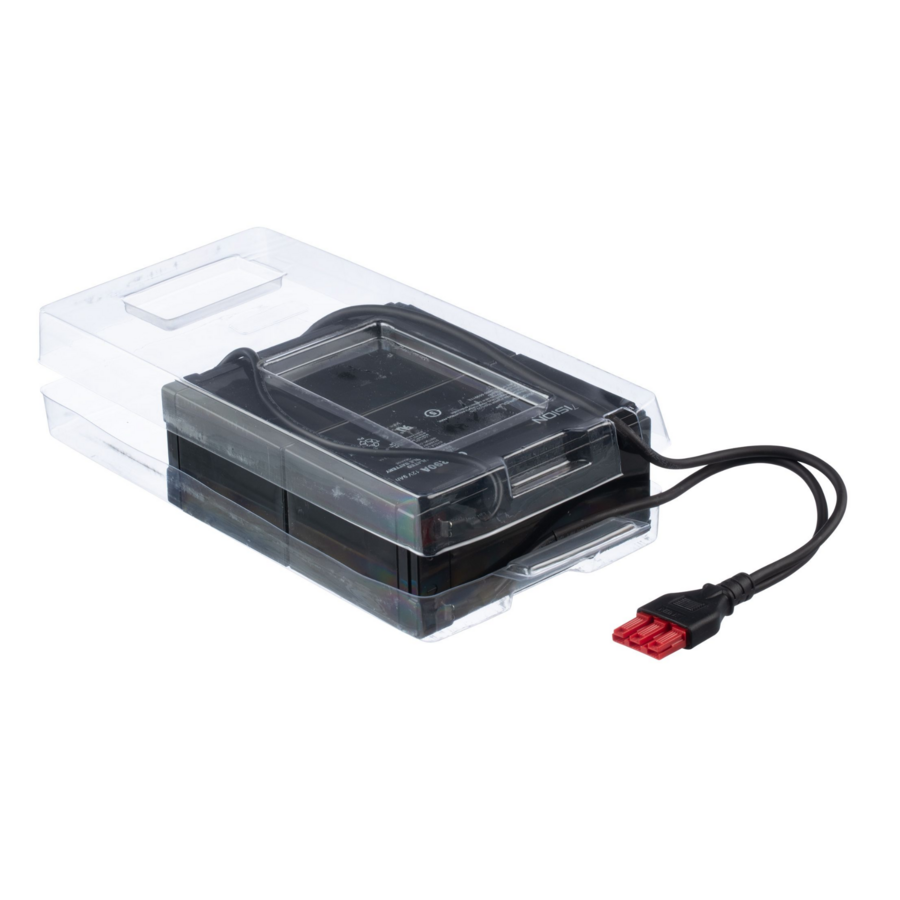
Panduit SmartZone Battery Cartridge 1kVA VRLA
UVD024
A 24 V valve-regulated lead-acid cartridge for a 1 kVA UPS — the incumbent chemistry, and a consumable you plan to change more than once.
$383.63Back-orderedLithium cartridge, same rating
PANDUIT
Panduit 24V LFP Lithium Cartridge 1kVA Lithium UPS
ULC024
The lithium-iron-phosphate cartridge at the same 24 V and 1 kVA rating — the like-for-like comparison, and the one worth pricing over ten years rather than one.
A lithium cartridge is supported only where the UPS manufacturer offers it for that model; it is not a substitution.
$1,124.19Back-orderedLithium from the start
Vertiv
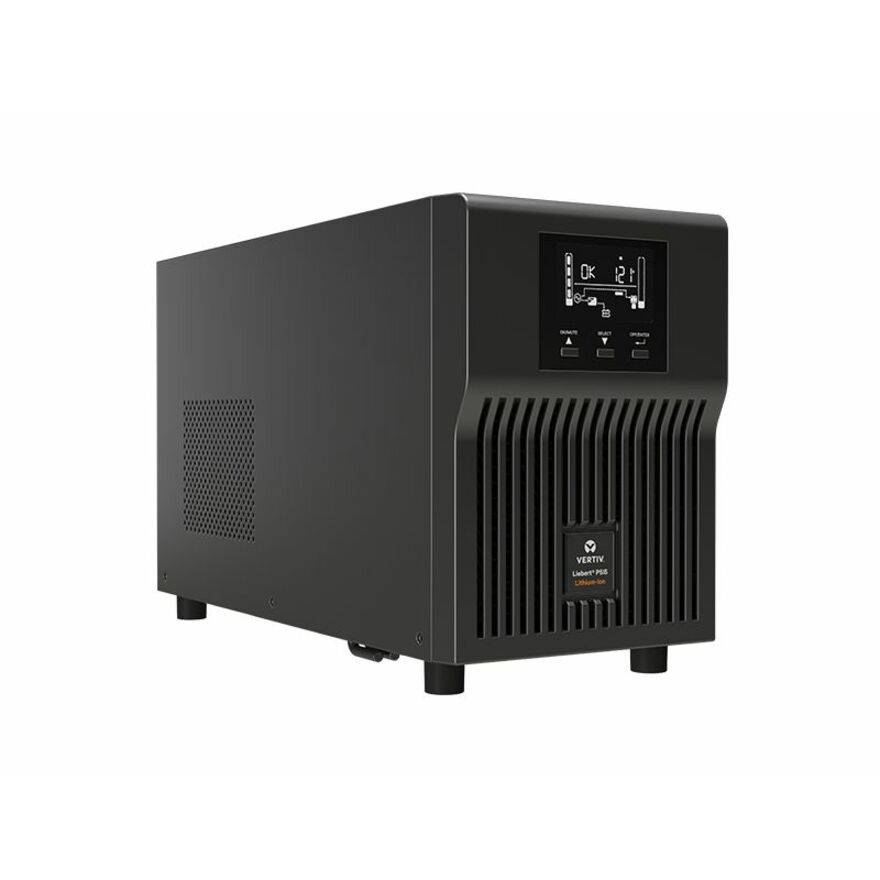
Vertiv Liebert PSI5 Lithium-Ion UPS 1500VA/1350W 120V AVR Mini Tower
PSI5-1500MT120LI
A 1500 VA line-interactive UPS built around lithium-ion, remote-management capable — the cleaner road when the chemistry is decided at purchase.
$1,304.54Back-orderedFAQ
Common questions
- How long do UPS batteries actually last?
- Less than the design figure, usually, because the design figure assumes a cool room. Manufacturers rate lead-acid strings for a few years and lithium-ion for roughly a decade, but ambient temperature is the dominant variable for lead-acid: a closet that runs warm shortens the string materially, and a UPS mounted in a sealed cabinet with no airflow is the classic case. Treat the rating as a planning number, monitor the runtime the unit actually delivers on self-test, and budget the replacement rather than waiting for it.
- Is lithium-ion worth the premium in a wiring closet?
- It depends on how often somebody goes there. In an accessible closet on a short refresh cycle, lead-acid usually wins on cost. In a closet that is a drive away, behind a badge reader, up a tower or inside a secured area, the avoided visits change the arithmetic quickly, because the cost of a battery replacement is the labour and the service window as much as the cartridge. The other tie-breakers are floor loading, physical space and a room that runs warm, all of which push toward lithium.
- Can I put lithium-ion batteries in a UPS designed for lead-acid?
- Not as a substitution. The two chemistries charge differently and lithium packs expect to communicate with the UPS through a battery management system, so a lithium pack is supported where the UPS manufacturer offers it for that model and not otherwise. Fitting a pack a unit was not designed for is a safety and warranty problem rather than a cost saving. If lithium is the goal, it is a UPS selection decision made at purchase, not a retrofit made at the first battery replacement.
- How do I know when a UPS battery needs replacing?
- Watch the runtime the unit reports rather than waiting for a failure indicator. Capacity fades gradually, so a string that once held the load for fifteen minutes may be down to three long before anything declares itself faulty — and the moment that shortfall matters is during an outage, which is the worst time to discover it. Record the self-test runtime periodically, note the install date on the unit, and treat both the age and the trend as the trigger rather than a warning light.
- What is the service life of a VRLA UPS battery?
- Schneider Electric rates VRLA at 3 to 5 years and lithium-ion at 8 to 10, both in optimal operating conditions, and names ambient temperature, input power quality and the application as the variables that move it. Heat is the dominant one for lead-acid, so a warm closet or a sealed cabinet with no airflow will land at the short end of that band rather than the long one.
- Does lithium-ion cost less than VRLA over the life of a UPS?
- Often, but the arithmetic is site-specific and the honest answer is to run it for your own installation. The inputs are the number of replacement cycles a lead-acid string would need across the UPS's service life, the labour and service window each of those costs, and whether the site is easy to reach. Manufacturers publish lifetime-savings figures for their own products; treat those as the vendor's assumptions rather than a general result, and check them against your own replacement cadence.