
Short answer
The main difference between a line-interactive and an online double-conversion UPS is the normal power path: line-interactive feeds the load from conditioned utility power and transfers to its inverter when input leaves range, while an online UPS runs the load through its inverter, so an outage involves no transfer. Line-interactive suits general IT on stable power; online suits a VFI load.
Key facts
- IEC 62040-3 specifies UPS performance and test requirements, and its classification coding is where a datasheet's VFI or VI marking comes from.
- VFI means the output is independent of input voltage and frequency variation; VI means it is independent of voltage variation but follows input frequency.
- An online double-conversion UPS carries the load on its inverter in normal mode, so a normal loss of utility involves no utility-to-inverter transfer at all.
- A line-interactive UPS corrects supported voltage variation with automatic voltage regulation; its transfer to the inverter is nonzero and model-specific.
- Continuous conversion costs efficiency and adds heat, and an online UPS's bypass, eco-mode and fault transitions behave differently from its normal path.
- Topology does not set runtime. Battery configuration, connected watts, age, temperature and controls do.
A line-interactive UPS normally supplies the load from utility power while automatic voltage regulation corrects supported voltage variation; it transfers to its inverter and battery when input leaves the allowed range. An online double-conversion UPS normally supplies the load through its inverter continuously. Choose between them from the load’s tolerance, measured input conditions, required output behavior, bypass design, efficiency, heat, maintenance, and exact model — not a blanket ranking.
At a glance
Side by side
| Factor | Line-interactive UPS | Online double-conversion UPS |
|---|---|---|
| IEC input dependency | Commonly VI, voltage independent | Commonly VFI, voltage and frequency independent |
| Normal path | Utility path with regulation/filtering according to design | AC-to-DC-to-AC conversion; inverter supplies load |
| Ordinary outage event | Transfers load to inverter/battery | DC source changes while inverter remains the normal output source |
| Transfer time | Nonzero and model-specific | No normal utility-to-battery transfer; bypass/fault transitions still require review |
| Voltage behavior | AVR can correct supported variation without battery | Output regulated through conversion within specification |
| Frequency behavior | Normally follows acceptable input | Output can be independent within the UPS operating design |
| Efficiency/heat | Often less conversion in normal mode | Continuous conversion adds losses; exact curves matter |
| Bypass | Design varies | Static/maintenance bypass common at larger sizes; exact architecture varies |
| Typical fit | General IT on reasonably stable power | Loads requiring VFI behavior, continuous regeneration, or no normal battery transfer |
Line-interactive vs online at a glance
This comparison does not assign universal transfer times, efficiencies, power ranges, or workload categories. Product implementations overlap. Use the current IEC classification, data sheet, operating manual, and test results.
Key takeaways
- Line-interactive has a nonzero transfer to battery. Whether that matters depends on the documented transfer and the connected load’s tested tolerance.
- Online double-conversion avoids a utility-to-inverter transfer during a normal outage because the inverter is already carrying the load, but bypass and fault transitions can behave differently.
- Online conversion can regulate output voltage and frequency within its design; it also creates conversion loss and heat that vary by model and load.
- Topology does not determine runtime. Battery configuration, connected watts, age, temperature, and controls do.
- Generator compatibility, waveform, overload, bypass, eco mode, management, batteries, service, and failure behavior all require exact-model review.
How line-interactive power flows
In normal operation, the load remains connected to the incoming AC path through the UPS's regulation and filtering arrangement. An automatic voltage regulator can boost or trim supported voltage variation without discharging the battery. If input moves outside the accepted window or disappears, a transfer device connects the inverter path and the battery supplies stored energy.
The benefit is that ordinary power reaches the load with less continuous conversion. That can reduce loss, heat, fan operation, and operating cost. AVR can ride through common sags or swells without consuming battery cycles.
The tradeoff is dependence on acceptable incoming frequency and a nonzero transfer when the inverter must take over. The size and shape of that transition are model-specific. A server power supply may ride through it; a sensitive instrument or unusual power supply may not. Procurement should compare the UPS transfer specification with the equipment manufacturer's input requirement and then test the pair.
"Line-interactive" also does not guarantee a pure sine-wave output on battery. Many current business models provide one, while other products use a stepped approximation. Confirm normal and battery-mode waveform, voltage regulation, harmonic data, crest factor, and supported load type for the candidate.
How online double conversion flows
In normal VFI operation, the rectifier converts incoming AC to DC. The DC bus supplies the inverter, which creates AC output for the load, while the charger manages stored energy according to the design. When utility input fails, the battery continues supplying the DC bus. The inverter was already carrying the output, so the normal outage does not require a transfer from utility power to a newly started inverter.
This path can isolate the output from input-voltage and input-frequency variation within the UPS specification. It is useful where the service requires controlled output despite unstable input or where the load cannot tolerate the line-interactive unit's documented transfer.
Double conversion is not magic isolation from every event. An overload, inverter fault, overtemperature, maintenance action, eco mode, or other condition may place the load on bypass or remove it. Bypass often exposes the load more directly to the input and has its own voltage/frequency acceptance window. Read the operating-mode and transfer diagrams.
Some systems include galvanic isolation through a transformer and others do not. Do not infer galvanic isolation from "online." Grounding, neutral, transformer, and fault behavior require the exact electrical design.
IEC VFD, VI, and VFI language
IEC 62040-3 defines performance and test requirements for UPS systems and classifies output dependency. ENERGY STAR uses the same VFD, VI, and VFI categories in its UPS efficiency criteria.
- VFD: output voltage and frequency depend on the input during normal mode; commonly associated with standby/offline designs.
- VI: output voltage is controlled within the UPS behavior while output frequency depends on input; commonly associated with line-interactive.
- VFI: output voltage and frequency are independent of input within the operating specification; commonly associated with online double-conversion.
These are functional classifications, not a good/better/best scale. The full IEC performance code contains more detail than the three-letter input-dependency class. Ask for the current declared classification and test basis.
Transfer time and load tolerance
Avoid two shortcuts: "a few milliseconds never matter" and "online has zero transfer under all conditions."
For line-interactive, obtain the maximum transfer specification and the conditions under which it applies. Determine the connected power supply's hold-up behavior and input tolerance from its manufacturer. Active power-factor-correction, loading, age, and input waveform can affect real behavior. Test the exact load at its planned state.
For online, ordinary loss of input does not transfer the output away from the inverter. However, document:
- Transfer to and from static bypass
- Bypass availability and input window
- Overload duration and response
- Inverter fault behavior
- Eco or high-efficiency mode path
- Maintenance-bypass operation
- Restart after battery depletion
- Manual and automatic return settings
The service may tolerate a brief controlled transfer but not an unexpected drop. State the actual requirement rather than procuring "zero transfer" as an unqualified phrase.
Voltage and frequency conditions
Line-interactive AVR can correct defined voltage variation without using battery power. Beyond its regulation window, the UPS may transfer to battery. If a site frequently crosses that window, batteries can cycle more often and runtime may be unavailable when a true outage arrives. Check event logs and measured input before choosing.
Online VFI operation regenerates output and can accept a wider or differently shaped input window depending on the model and load. It can be useful with unstable frequency or generator input, but compatibility is not automatic. The rectifier presents a load to the generator; input current distortion, step load, frequency slew, recharge settings, and generator size affect the system.
Ask the UPS and generator manufacturers for a supported design. Test generator start, voltage/frequency stabilization, transfer, UPS acceptance, battery recharge, load steps, and return to utility. A UPS can stay on battery even while the generator is running if the generator output remains outside its accepted range.
Efficiency, heat, and operating mode
Every conversion has loss. In a line-interactive normal path, conversion work is generally lower. In online double-conversion mode, the rectifier and inverter operate continuously. Modern designs can be efficient, but the correct comparison uses certified or vendor curves at the planned load and mode.
ENERGY STAR calculates weighted average efficiency from multiple load points because a UPS does not have one efficiency at every loading level. Redundant or oversized systems may operate at low load, where fixed losses are a larger share.
Calculate planning loss this way using the current efficiency at the relevant load:
- UPS input kW = UPS output kW ÷ efficiency
- UPS loss kW = input kW − output kW
For annual energy comparison:
- Annual loss energy (kWh) = UPS loss kW × operating hours in that mode
This captures the UPS electrical loss, not the cooling energy needed to remove the resulting heat. Facilities can model that separately with the actual cooling system.
Eco or high-efficiency modes can place an online UPS on a less-converted path. That can reduce loss but changes the power-conditioning and transfer behavior that justified VFI operation. Evaluate and label each operating mode; do not compare one model's eco efficiency with another's double-conversion efficiency as though the output behavior were identical.
Runtime and battery behavior
Topology alone does not determine minutes. Runtime comes from the exact connected watts, UPS and inverter design, battery chemistry and configuration, age, temperature, charge, cutoff, and external battery modules.
Use the manufacturer's runtime curve at the planned load for each candidate. Confirm whether the curve represents new batteries and which mode and external packs are assumed. Model load shedding and the sequence after an outage.
Continuous conversion can change system heat and battery charging behavior, but it does not mean an online unit automatically has more battery. A smaller line-interactive unit can have longer runtime than an online unit if its battery and load relationship differs.
Test the deployed runtime through a safe, supervised method. Record battery and ambient conditions. The critical test may be successful graceful shutdown rather than maximum time until cutoff.
Bypass and maintainability
Bypass can preserve power to a load while the inverter is overloaded, faulted, or serviced. It can also remove the conditioning provided by double conversion. Understand the normal, static-bypass, maintenance-bypass, and service paths.
Ask:
- Is bypass internal, external, or both?
- Is it automatic, manual, or controlled by a service procedure?
- What input conditions make bypass available?
- What load does it support, and for how long under overload?
- Does maintenance bypass isolate the UPS safely for service?
- What monitoring remains active?
- What happens if bypass input is unacceptable?
- Does a return from bypass require a transfer?
A bypass switch is safety-critical electrical equipment. Use listed, supported components and qualified personnel. Test the procedure before an emergency, with application owners and an approved rollback.
Output waveform and load type
Modern IT power supplies often use active power-factor correction. Confirm the UPS output waveform and load compatibility in both normal and battery modes. A line-interactive product with a stepped battery waveform can be unsuitable for a load whose manufacturer requires sine output. An online product normally produces a controlled sine output, but limits and distortion still need specification review.
Motors, transformers, imaging equipment, lab instruments, medical devices, and high-inrush loads require specialized review. Do not select a topology from the IT guidance in this draft. Obtain load-manufacturer requirements and have the electrical engineer evaluate inrush, crest factor, waveform, leakage, grounding, and applicable safety standards.
PoE switches deserve configuration-aware sizing. Their draw includes the switch and powered devices, and endpoint startup or environmental features can change demand. Model the actual PoE budget and shutdown priorities.
Compare total cost and room impact
Acquisition price is one line. Include:
- Input circuit, receptacle, hardwire, and installation
- Rack or floor space, rails, weight, and service clearance
- Battery modules, cabinets, monitoring, and sensors
- Network card and software licenses
- Maintenance bypass and distribution
- Heat removal and operating energy
- Battery and fan replacement where applicable
- Service coverage, spares, and technician access
- Disposal and end-of-life handling
- Downtime exposure during maintenance or failure
Online systems may generate more continuous heat at a comparable output load, but exact losses can differ enough that product curves are necessary. Line-interactive systems can be operationally simpler for a small closet, while an online design can prevent disturbances whose cost dominates its energy premium. Cost the requirement, not the label.
Noise can matter outside a dedicated equipment room. Fans may run continuously or change with load, temperature, and mode. Verify declared acoustic data and test in the destination environment. Battery and electronics temperature also affect service life.
Workload fit
Pilot and acceptance test
Use the exact UPS, batteries, network card, firmware, output mode, and candidate load. Establish the measured input conditions and load watts/VA first.
Test, through an approved procedure:
- Normal operation at representative load
- Supported input-voltage variation or recorded events
- Loss of utility and return
- Alarm and management delivery
- Planned load shedding and shutdown
- Runtime at the approved test point
- Overload or bypass only where safely specified
- Generator transfer and return where applicable
- Redundant feed or component failure state
- Restart behavior after battery depletion
Record transfer results at the load, not only the UPS event log. Save voltage, load, battery, mode, firmware, temperature, alarms, application behavior, and recovery. If the connected system resets, determine whether the cause is UPS transfer, waveform, overload, cabling, input circuit, power supply, or configuration before changing topology.
Buyer checklist
- State the protected service, outage objective, and required output behavior.
- Measure input disturbances and connected watts/VA.
- Obtain the load power-supply tolerance and waveform requirements.
- Compare IEC class, normal path, transfer, AVR, input window, and frequency behavior.
- Review static and maintenance bypass plus overload/fault response.
- Compare efficiency curves at the planned load and operating mode.
- Calculate UPS heat and facility energy impact.
- Validate runtime from exact curves and battery configuration.
- Test generator interaction where applicable.
- Check input circuit, outlets, rack, weight, noise, cooling, and service access.
- Price management, licenses, batteries, maintenance, bypass, and installation.
- Perform and retain an acceptance test and shutdown result.
Common mistakes
Calling online zero-transfer without qualification. Normal battery operation and bypass/fault transitions are different.
Assuming line-interactive is unsafe for servers. Compare the exact transfer and waveform with the tested load rather than the category alone.
Using one efficiency number. Load and operating mode change loss.
Expecting topology to create runtime. Battery and load determine it.
Ignoring bypass. It can be essential for continuity while changing the output dependency and maintenance risk.
Assuming generator compatibility. Validate source and UPS as a system.
Line-interactive is a strong candidate when
- utility power is measured as generally stable;
- supported IT loads tolerate the documented transfer and waveform;
- voltage sags/swells within AVR range are the main recurring issue;
- efficiency, low heat, acoustics, space, and purchase cost matter;
- the use case is a network closet, edge rack, small server environment, or workstation with tested compatibility;
- operations can monitor batteries and test shutdown.
Online double-conversion is a strong candidate when
- the load requires VFI output behavior or no normal utility-to-battery transfer;
- input voltage or frequency is unstable and continuous regeneration is required;
- the site uses a generator arrangement validated with the selected UPS;
- bypass, redundancy, and maintainability are part of a critical-power architecture;
- the operational value of tighter conditioning exceeds conversion loss and heat;
- the exact load and safety context are approved by its manufacturer and facilities team.
- These lists do not classify medical, life-safety, industrial, or laboratory loads. Those must follow applicable design standards and manufacturer instructions.
Bottom line
Line-interactive and online describe normal-mode power paths. IEC 62040-3 performance classification and the exact product documentation are the stronger procurement evidence.
Products for this decision
Line-interactive
Eaton
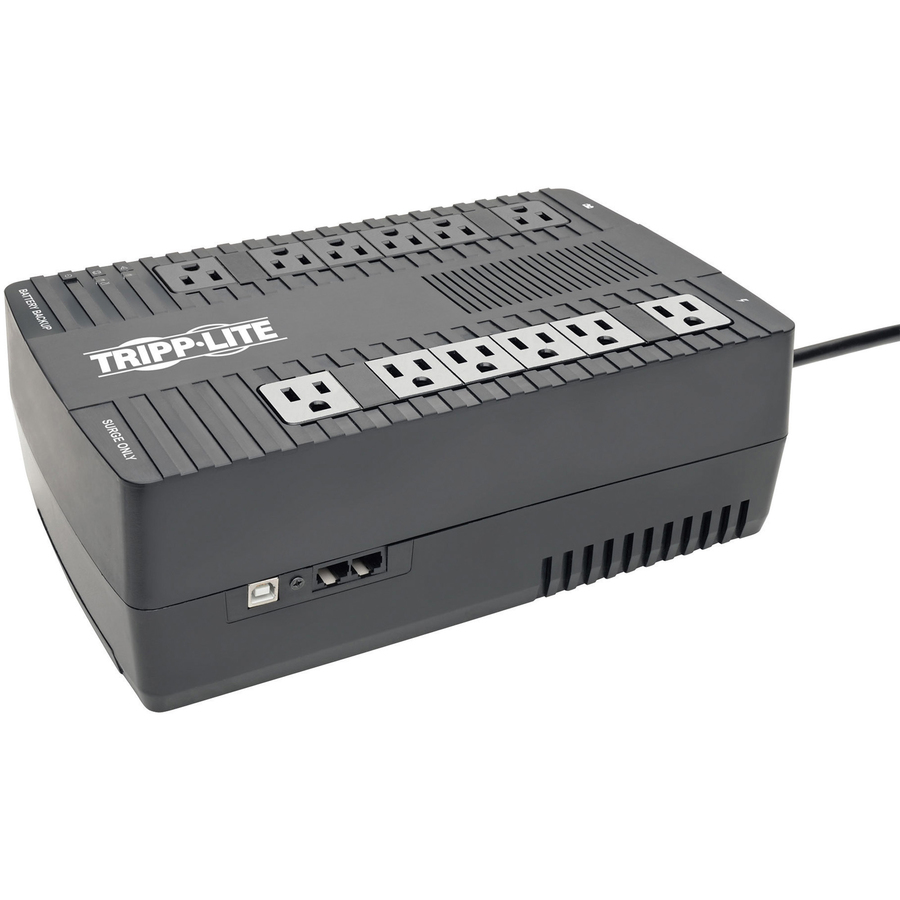
Tripp Lite by Eaton UPS 750VA 450W Line-Interactive UPS
AVR750U
A 750VA / 450W line-interactive UPS with automatic voltage regulation and twelve outlets — the ordinary desk or small-rack fit on reasonably stable power.
$207.52In stockLine-interactive, smaller
Eaton
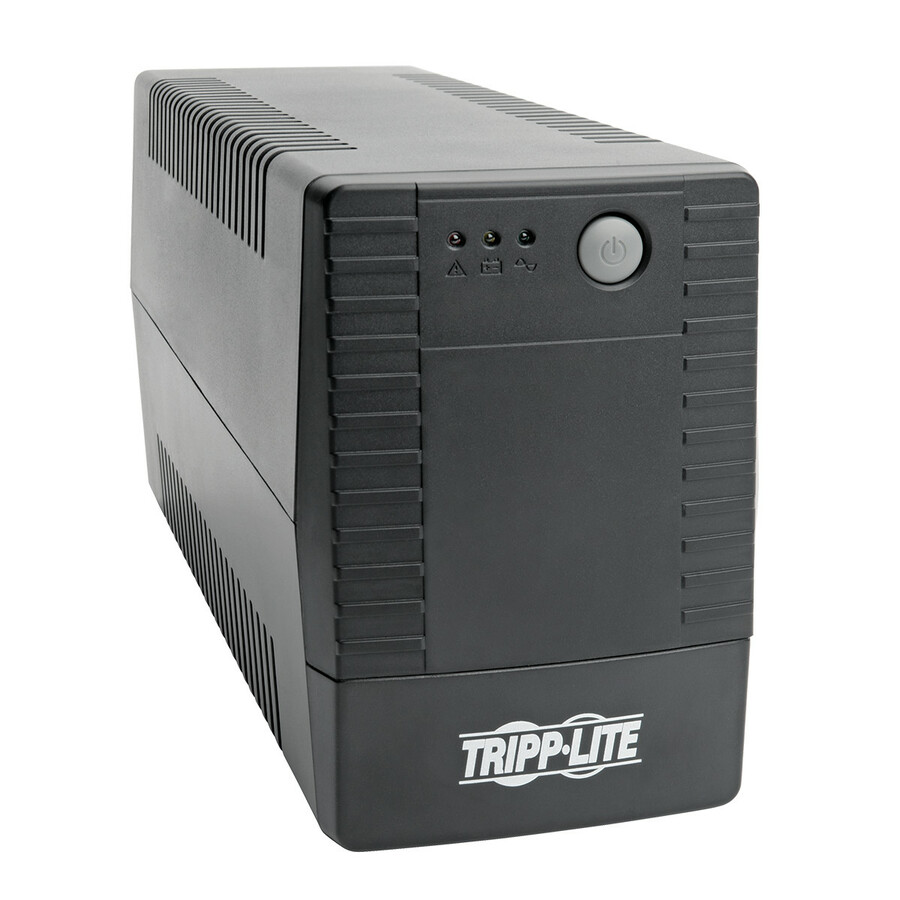
Eaton Tripp Lite Series 450VA 240W Line-Interactive UPS with 4 Outlets
VS450T
A 450VA / 240W line-interactive tower with AVR and four outlets, for a single workstation or an appliance that only needs a clean shutdown window.
$134.32Back-orderedOnline double conversion
Vertiv
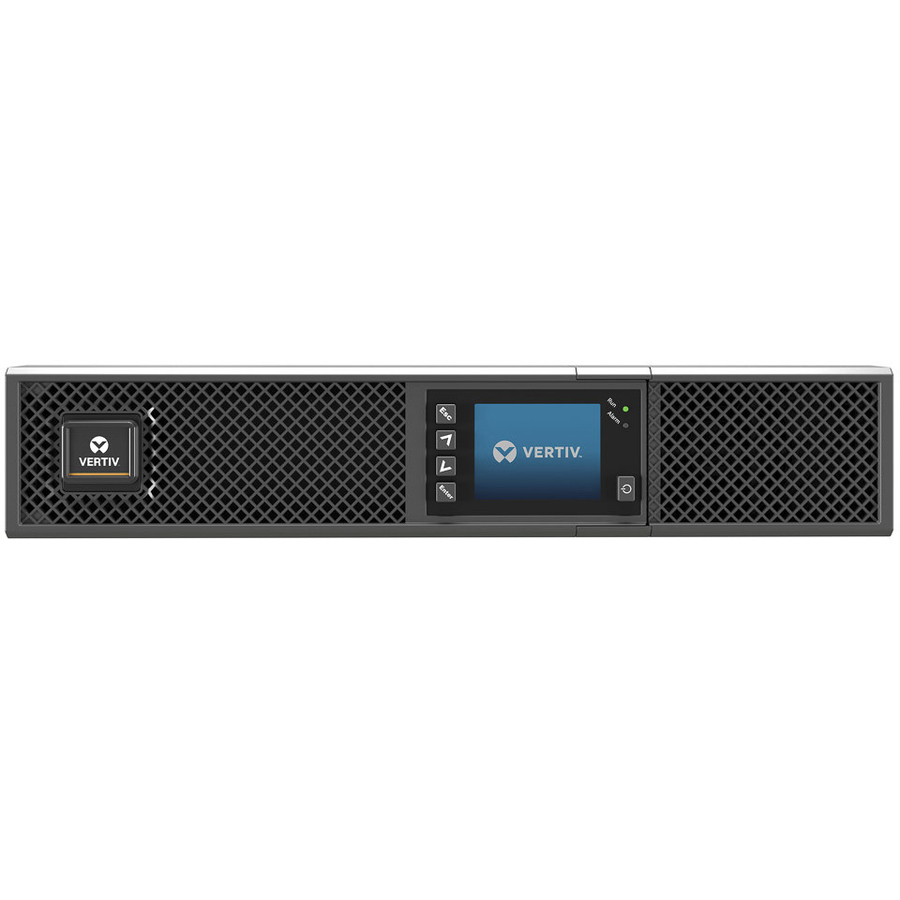
Vertiv Liebert GXT5 UPS
GXT5-1000LVRT2UXL
A 1000VA / 1000W online double-conversion UPS in a 2U rack or tower chassis, for a load that needs the inverter to be the normal power path.
Confirm the model's own bypass and eco-mode behaviour against the load — those transitions are not the normal path.
$1,467.35In stockShop it at Uniqcli
FAQ
Common questions
- Is an online UPS always better than line-interactive?
- No. Online VFI operation provides continuous conversion and no normal utility-to-battery transfer, but adds cost, loss, heat, and complexity. Line-interactive can fit stable-power environments when the load tolerates its documented transfer and waveform.
- Does an online UPS have zero transfer time?
- For a normal loss of utility in double-conversion mode, the inverter is already supplying the load, so there is no utility-to-inverter transfer. Transfers involving bypass, eco mode, overload, fault, or maintenance can behave differently.
- Does line-interactive UPS runtime differ from online runtime?
- Topology does not establish runtime. Compare exact load curves, battery configurations, age assumptions, temperature, and operating modes. Either topology can have longer runtime in a particular product configuration.
- Is online UPS better for a generator?
- It can regulate output while accepting a compatible source, but the generator and UPS still require joint validation. Capacity, waveform, voltage/frequency stability, load steps, rectifier behavior, and recharge settings affect acceptance.
- Does eco mode preserve online protection?
- It changes the normal power path to gain efficiency, so it may not provide the same continuous VFI behavior as double-conversion mode. Review the exact product’s eco-mode transfer and conditioning specifications.
- What is line-interactive in UPS?
- Line-interactive describes a UPS whose normal power path is conditioned utility power. An autotransformer or equivalent automatic voltage regulation corrects supported over- and under-voltage without drawing on the battery, and the unit transfers the load to its inverter and battery only when input leaves the allowed range. Under IEC 62040-3 classification coding that behaviour is commonly marked VI: independent of voltage variation, following input frequency.
- What is the difference between line-interactive and standby UPS?
- Voltage regulation. A standby (offline) UPS passes utility power through and switches to battery when input falls outside range, so every voltage excursion it cannot ride through costs battery cycles. A line-interactive unit adds automatic voltage regulation, correcting supported variation without going to battery at all. Both transfer to the inverter for a real outage; the line-interactive unit simply has to do it less often.
- What are the three types of UPS?
- Standby (also called offline), line-interactive, and online double-conversion. They differ in the normal power path: standby passes utility through, line-interactive conditions it through voltage regulation, and online runs the load off its inverter continuously. IEC 62040-3's classification coding maps to the same three behaviours as VFD, VI and VFI.
- Which is better, online or offline UPS?
- Neither in general — they answer different requirements. Online double-conversion gives voltage- and frequency-independent output with no utility-to-inverter transfer in a normal outage, at the cost of continuous conversion loss, heat and price. Offline and line-interactive units are cheaper and more efficient in normal mode and are appropriate where the load tolerates the documented transfer. Decide from the load's tested tolerance and the measured input conditions, not the topology name.
Sources