
Short answer
Watts is the real power the equipment consumes; VA is the apparent power the supply has to deliver. Watts equal VA multiplied by power factor, so a 1500 VA UPS at a power factor of 0.9 supports about 1350 W, while another 1500 VA unit at 0.6 supports only 900 W. Multiply kVA by 1,000 first, size against the watt figure, and confirm the VA figure covers it.
Key facts
- Watts equal VA multiplied by power factor, so the watt rating of a UPS is always equal to or smaller than its VA rating.
- A 1500 VA unit rated 900 W has a power factor of 0.6; a 1500 VA unit rated 1350 W has a power factor of 0.9.
- ENERGY STAR requires voltage-independent and voltage-and-frequency-independent UPS products to meet a minimum power factor of 90 percent.
- Convert first: multiply kVA by 1,000 to get VA and kW by 1,000 to get watts, before comparing anything.
- Size the connected load against the watt rating; the VA rating governs the current drawn from the branch circuit feeding the UPS.
- Runtime charts are quoted against connected watts, so runtime falls as the watt load rises even when VA headroom remains.
Every UPS is sold on two numbers and most people only read the first. VA is apparent power — volts multiplied by amps, the load the supply and its wiring have to carry. Watts is real power — the energy actually converted into work and heat. The two are linked by the power factor of the unit, and watts is always the smaller of the pair, which is why a UPS advertised at 1500 VA does not support 1500 W of servers.
The gap between them is not a rounding error. A small standby unit rated 1500 VA may be rated 900 W, a power factor of 0.6; a line-interactive rack unit rated 1500 VA may be rated 1350 W, a power factor of 0.9. Same headline number, half again as much usable load. ENERGY STAR requires voltage-independent and voltage-and-frequency-independent products to meet a minimum power factor of 90 percent, which is why the better-specified units cluster at the top of that range.
The practical method is to size against watts and then confirm VA. Add up the nameplate watts of everything that will be plugged in, add headroom for the equipment you know is coming, and then check the model's watt rating — not its VA rating — covers the total. Runtime is a separate question again, and it falls as the connected watts rise.
At a glance
Side by side
| Factor | Volt-amps (VA) | Watts (W) |
|---|---|---|
| What it measures | Apparent power — volts multiplied by amps drawn from the supply | Real power — the energy actually converted to work and heat |
| Relationship | VA multiplied by power factor gives watts | Watts divided by power factor gives VA |
| Which is larger | Always equal to or larger than the watt figure | Always equal to or smaller than the VA figure |
| Worked example | 1500 VA at a power factor of 0.6 supports 900 W | 1350 W on a 1500 VA unit means a power factor of 0.9 |
| kVA and kW | Multiply kVA by 1,000 to get VA | Multiply kW by 1,000 to get watts |
| What it constrains | Current the inverter, wiring and breaker have to carry | Energy the inverter and battery can actually deliver |
| Where it appears | Usually the larger, more prominent number in the model name | Usually printed second, and it is the harder limit for IT loads |
| What to size against | Confirm it covers the load after the watt figure does | Add the nameplate watts of the connected load, then add headroom |
Read the VA figure when
- You are sizing the branch circuit, breaker or receptacle the UPS itself plugs into
- You are checking that a rack's total apparent load fits the feed available to the row
- A specification or a tender is written in kVA and has to be converted before anything else happens
- You are comparing two models whose watt ratings are not published side by side
Read the watt figure when
- You are adding up the load that will actually be plugged into the unit
- You are estimating heat rejected into the room, which follows watts and not VA
- You are reading a runtime chart, because runtime is quoted against connected watts
- You are deciding whether a UPS can carry the next server or switch you already know is coming
Bottom line
Size against watts, then sanity-check VA. The watt rating is what limits the equipment you can connect, and it is the figure most closely tied to runtime and to the heat the unit puts into the room; the VA rating governs the current the UPS draws and therefore the circuit feeding it. Because power factor varies widely between product classes, two units advertised at the same VA can differ by hundreds of watts of usable capacity — so a model with a published power factor near 0.9 buys real headroom over one near 0.6 at the same headline number. Read both figures off the datasheet, do the arithmetic once, and leave room for the load you have not bought yet.
Products for this decision
Power factor 0.9
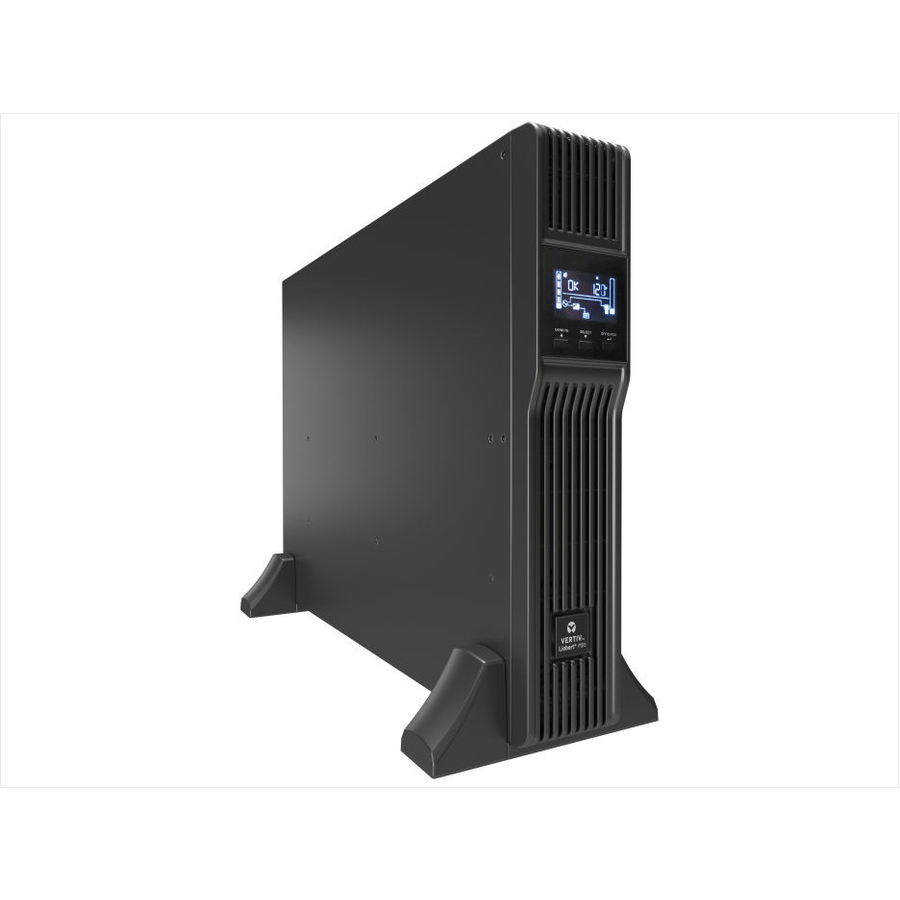
Vertiv
Vertiv Liebert PSI5 UPS
PSI5-1500RT120
A 1500 VA / 1350 W line-interactive tower-rack UPS whose datasheet prints the power factor on the label — the arithmetic on this page, in one product.
$1,140.82Back-orderedThe same VA, fewer watts
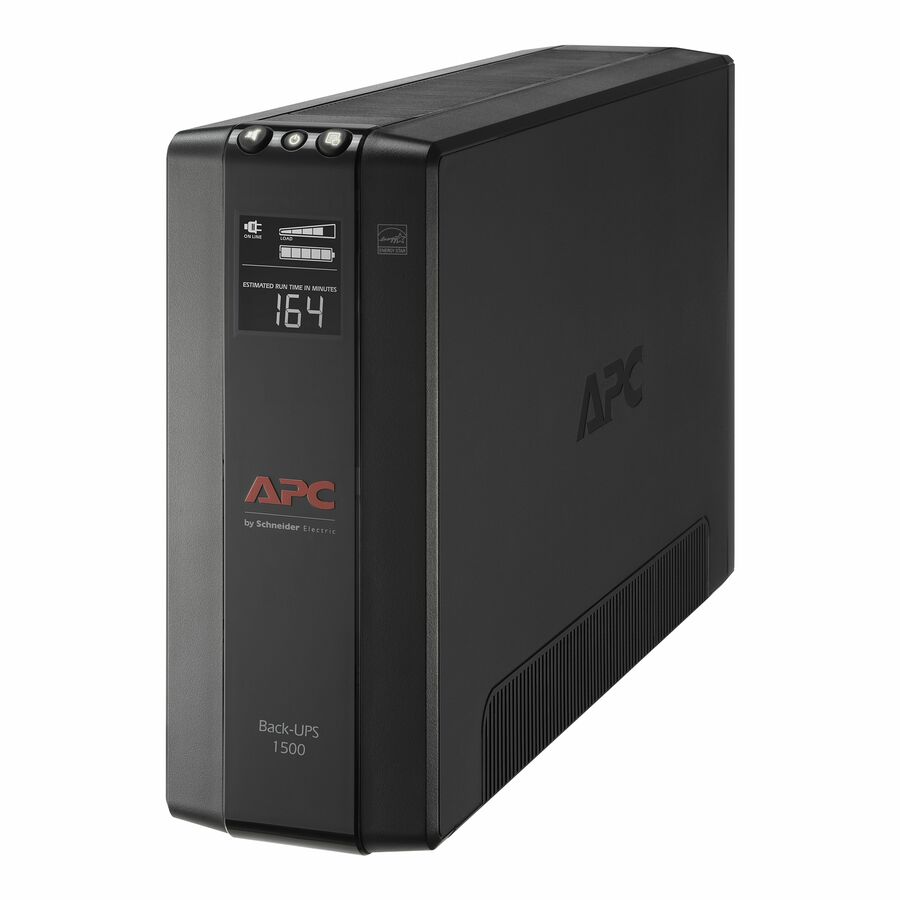
Schneider Electric
APC Back-UPS Pro, 1500VA/900W,Tower, 120V, 10 NEMA 5-15R outlets, AVR…
BX1500M
A 1500 VA / 900 W tower unit with AVR and ten outlets, which is what a power factor of 0.6 looks like at the same headline rating.
$316.84In stockRack, 2U
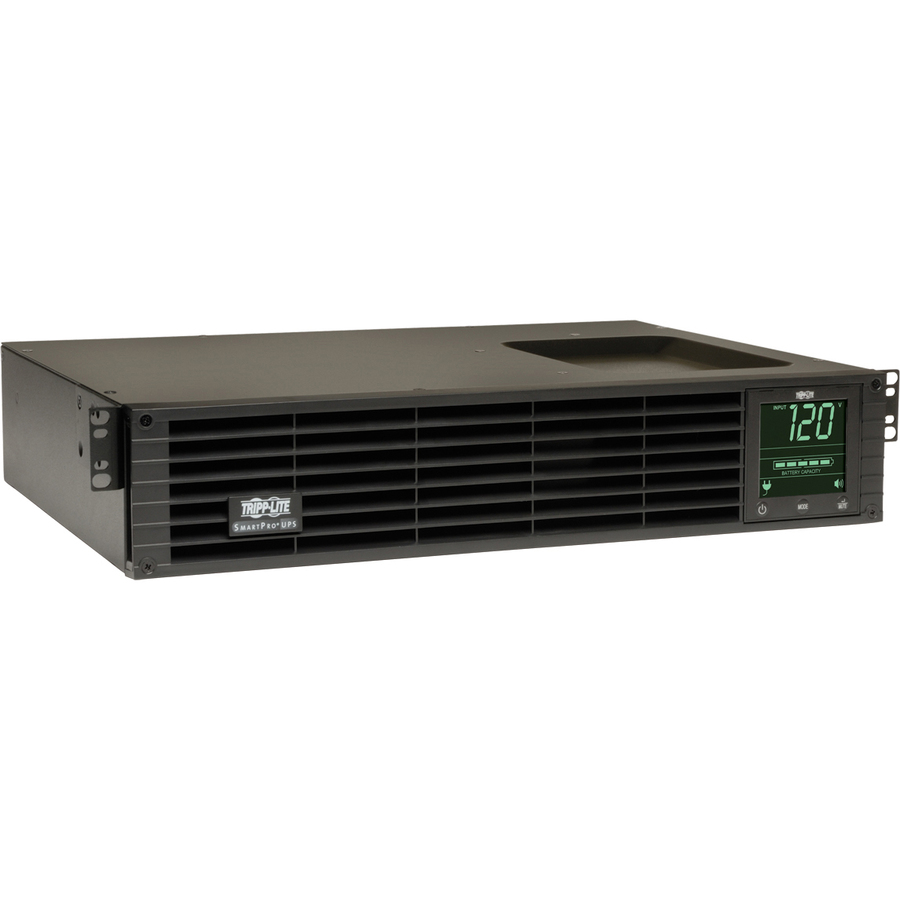
Eaton
Tripp Lite by Eaton UPS SmartPro 1500VA 1350W 120V Line-Interactive…
SMART1500RM2U
A 1500 VA / 1350 W line-interactive sine-wave UPS in a 2U rack or tower chassis with a network card option, for a closet that has to be monitored remotely.
Confirm the outlet type and count against the equipment you intend to connect.
$1,449.15In stockFAQ
Common questions
- How do I convert VA to watts?
- Multiply the VA figure by the power factor of the unit. A 1500 VA UPS at a power factor of 0.9 supports about 1350 W; the same 1500 VA at 0.6 supports 900 W. The power factor is published on the datasheet, and where it is not, the manufacturer's own watt rating for the model is the number to use.
- How do I convert kVA to watts?
- Multiply kVA by 1,000 to get VA, then multiply by the power factor. A 3 kVA unit is 3,000 VA, and at a power factor of 0.9 that is about 2,700 W. Doing the kVA conversion first avoids the most common sizing mistake, which is comparing a kVA figure against a watt total.
- Why is the watt rating lower than the VA rating?
- Because VA is apparent power and watts is real power, and the ratio between them is the power factor, which is never greater than one. Only a perfectly resistive load would draw watts equal to VA. For a UPS, the published watt rating is the ceiling on the equipment you can connect.
- Should I size a UPS on VA or watts?
- Size on watts and check VA afterwards. Add the nameplate watts of everything that will be plugged in, add headroom for equipment you know is coming, and confirm the model's watt rating covers the total. Then confirm the VA rating and the branch circuit feeding the UPS can carry the current.
- What is a good power factor for a UPS?
- Higher is better, because it means more usable watts for the same VA. ENERGY STAR sets a minimum power factor of 90 percent for voltage-independent and voltage-and-frequency-independent products, so units meeting that requirement give you noticeably more capacity than an older unit near 0.6 at the same headline VA.
Sources