
Best C19 Power Cords for High-Draw Rack Equipment
The 16 A and 20 A side of rack power — C19 to C20 jumpers, NEMA 5-15P/5-20P/6-15P and twist-lock L6-20P wall cords, and C19 to C14 adapters, read by gauge, amperage, length and colour.
C19 power cords in stock at Uniqcli
How to choose →A curated selection with live pricing — in-stock lines first, then back-ordered lines with a typical lead time. Every line is sourced through US distribution and screened for NDAA §889 status before checkout, with TAA verified on request.
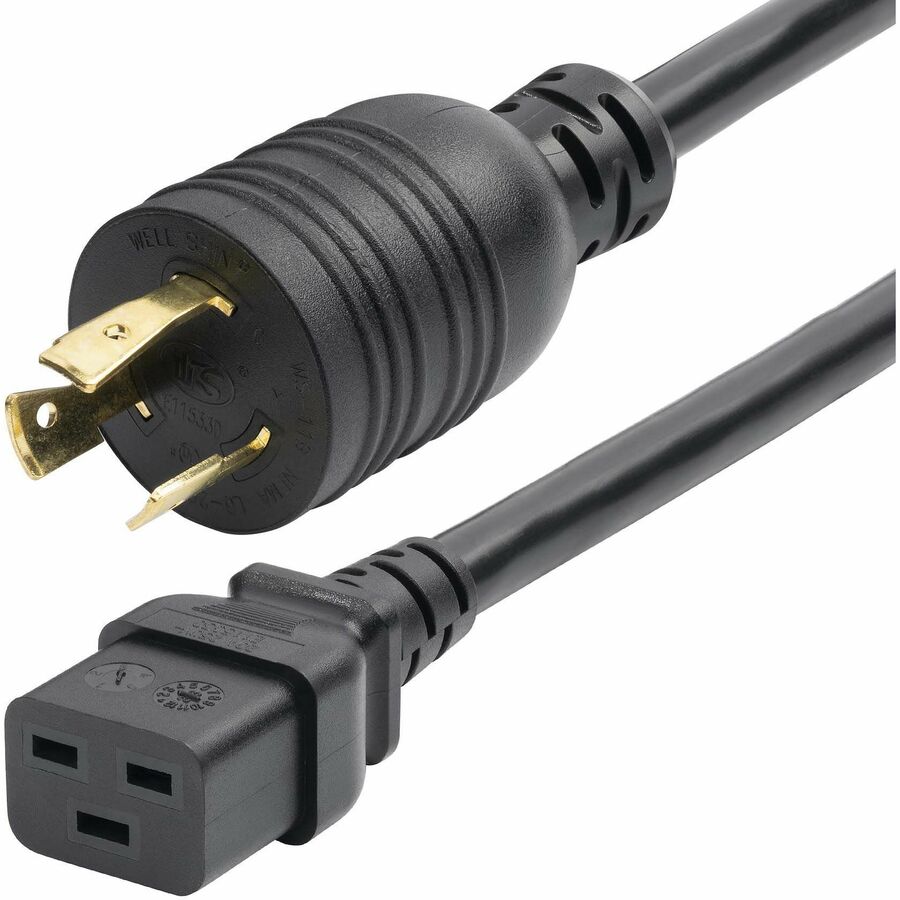
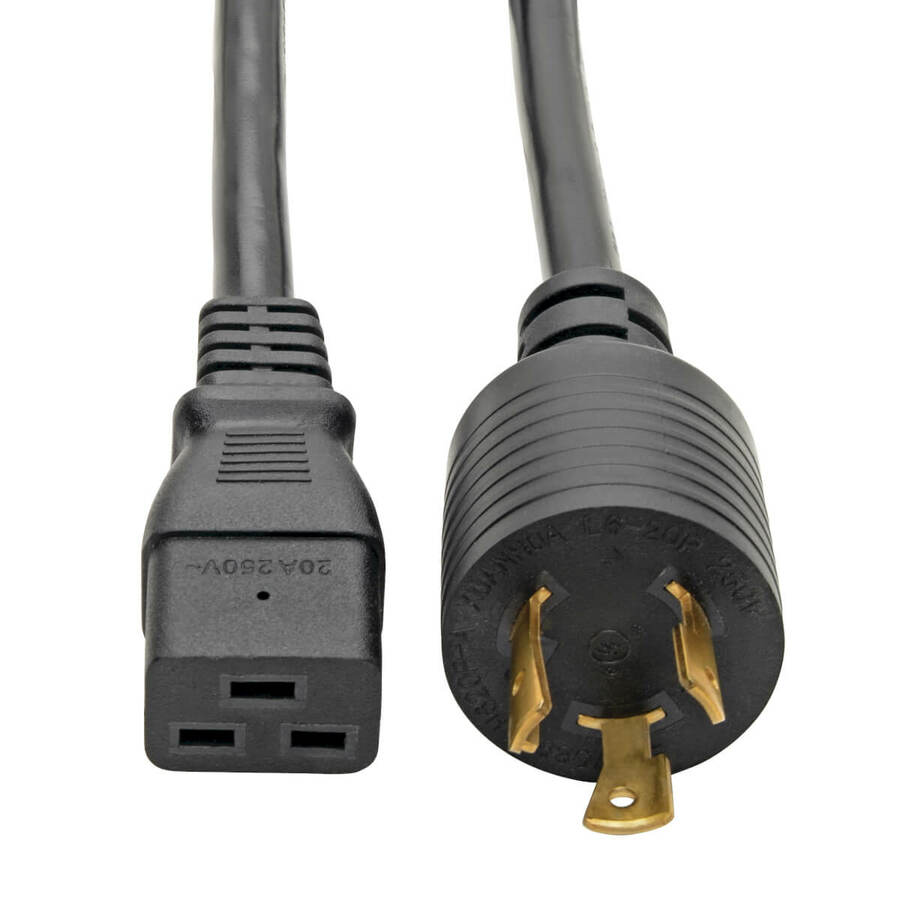
- StarTech.comStarTech 6ft (1.8m) Heavy Duty Power Cord, Twist-Lock NEMA L6-20P to IEC 60320 C19, 20A 250V, 12AWG, UL Listed, TAA - 6ft Heavy Duty Power Cord with NEMA L6-20P to IEC C19 connectors; 250V at 20A; UL Listed; Color: Black; 100% Copper Wire; Fire Rating: VW-1; 12AWG; Jacket Rating: SJT; Temp Range -4 to 221°F; Cable O.D.: 0.44in; TAA CompliantZA16-2600-POWER-CORD
$17.41
$16.02*
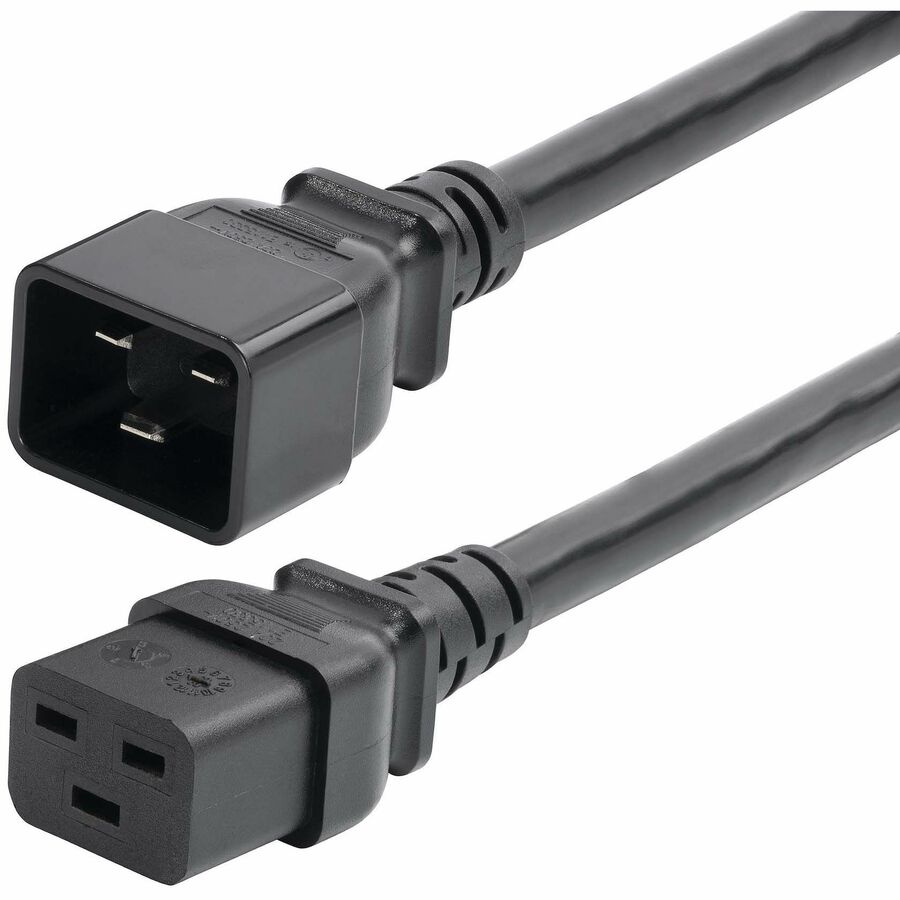
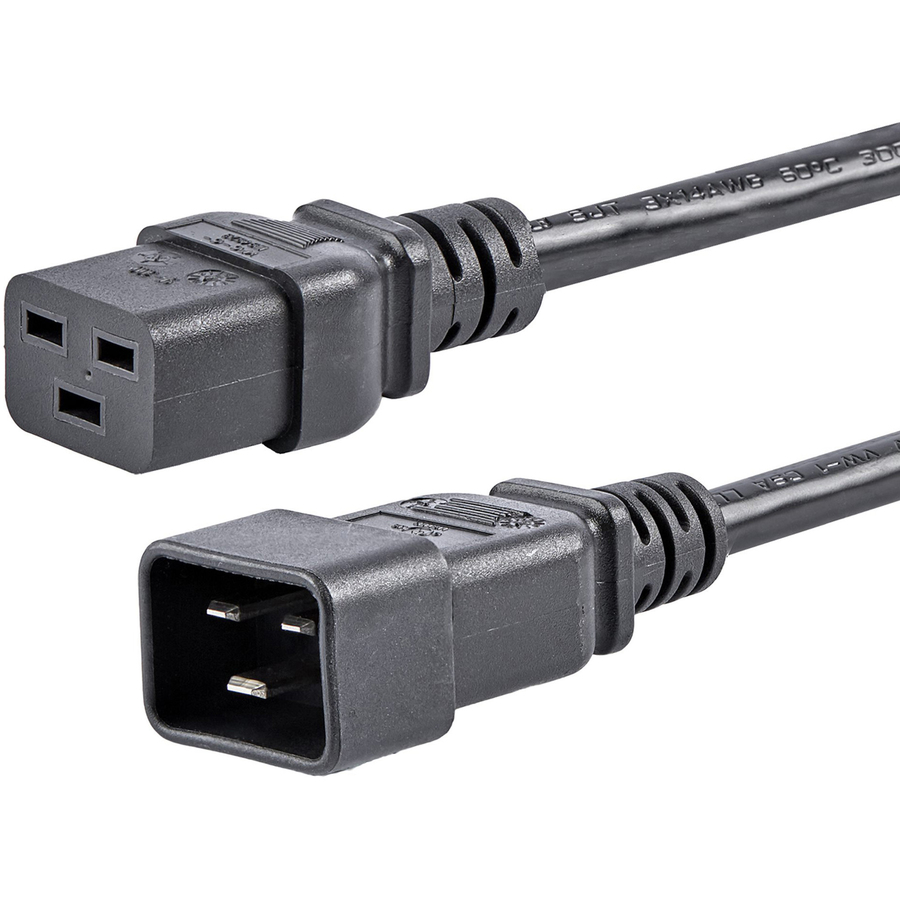
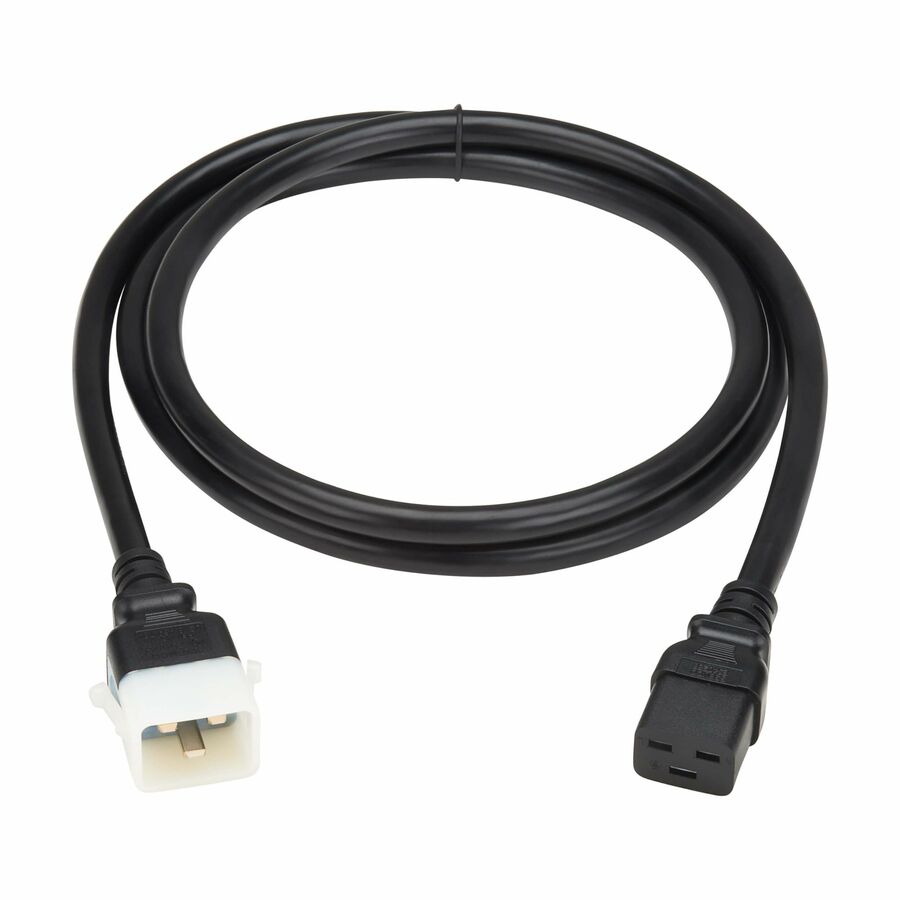
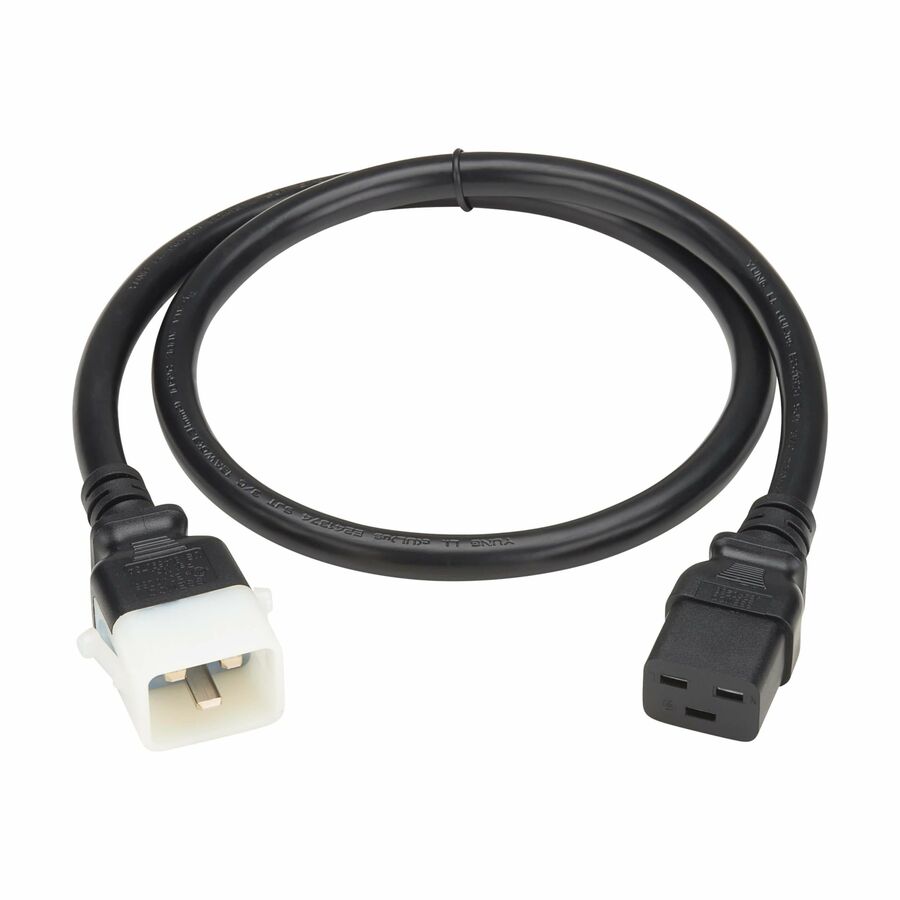
378 in stock - StarTech.comStarTech 2ft (60cm) Heavy Duty Extension Cord, IEC 60320 C19 to C20 Black Extension Cord, 20A 250V, 12AWG, UL Listed, TAA - 2ft heavy duty power cord with IEC 60320 C19 to C20 connectors; 250V at 20A; UL Listed; Wire: 100% Copper; Fire Rating: VW-1; 12AWG; Jacket Rating: SJT; Temp Range: -4 to 221°F; Cable O.D.: 0.44in; TAA CompliantBA16-2200-POWER-CORD
$18.44
$16.96*
436 in stock



Top pick
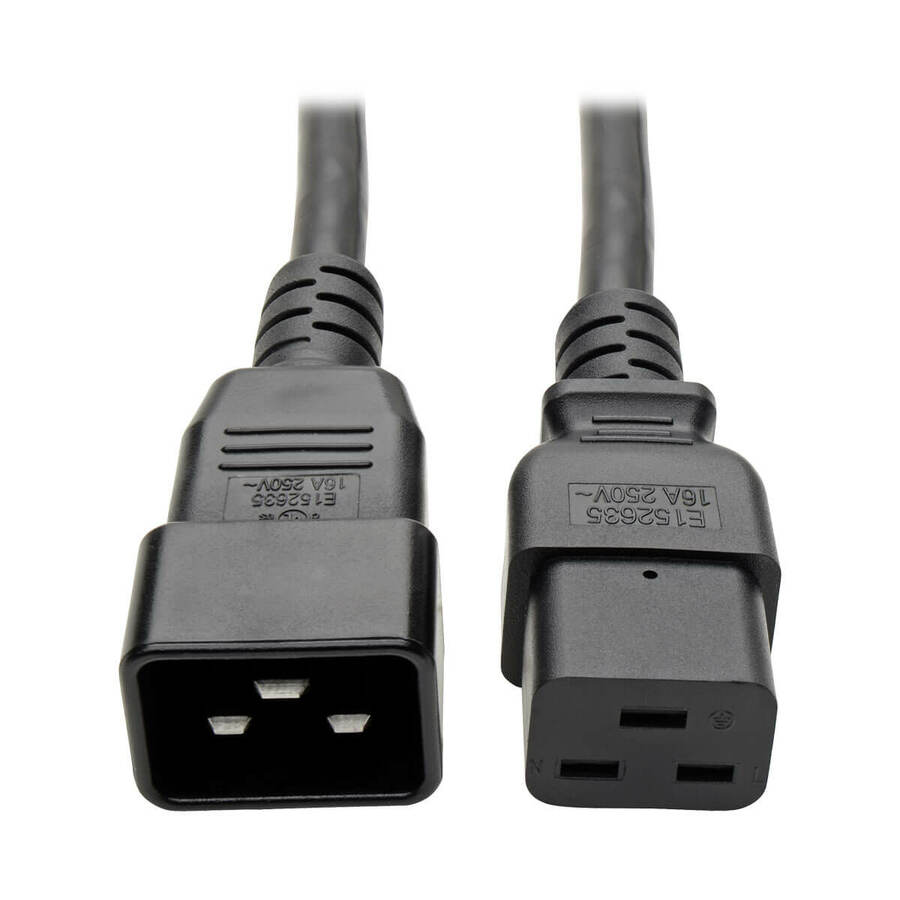
Eaton
Tripp Lite by Eaton Power Extension Cord C19 to C20
P036-006
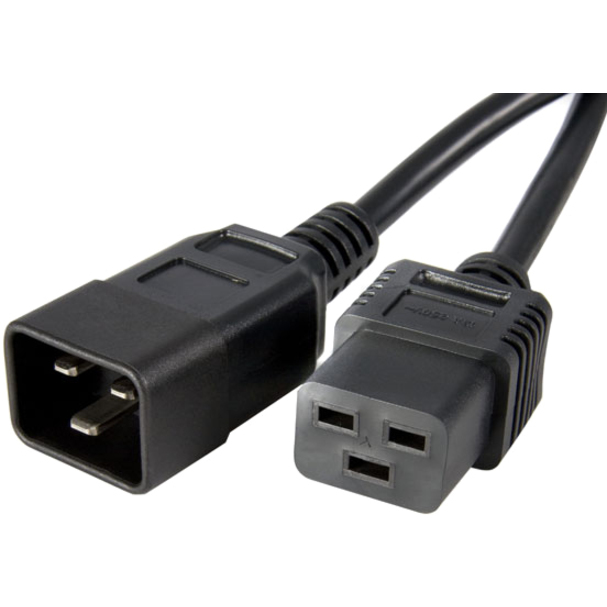
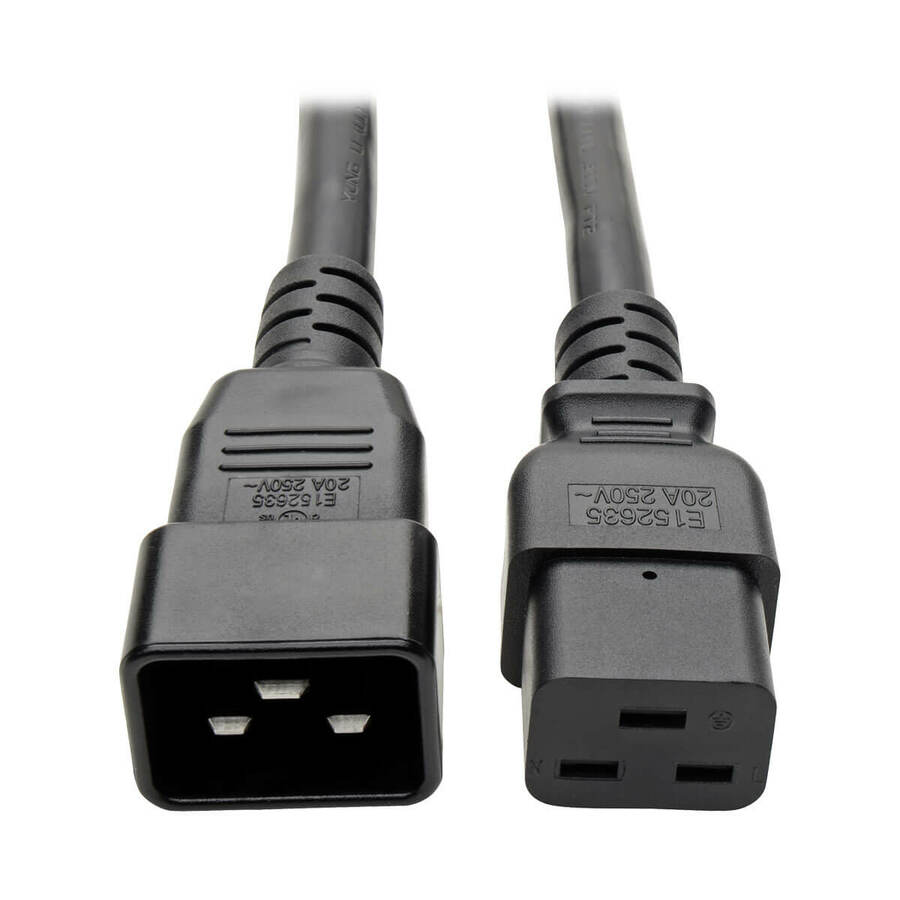
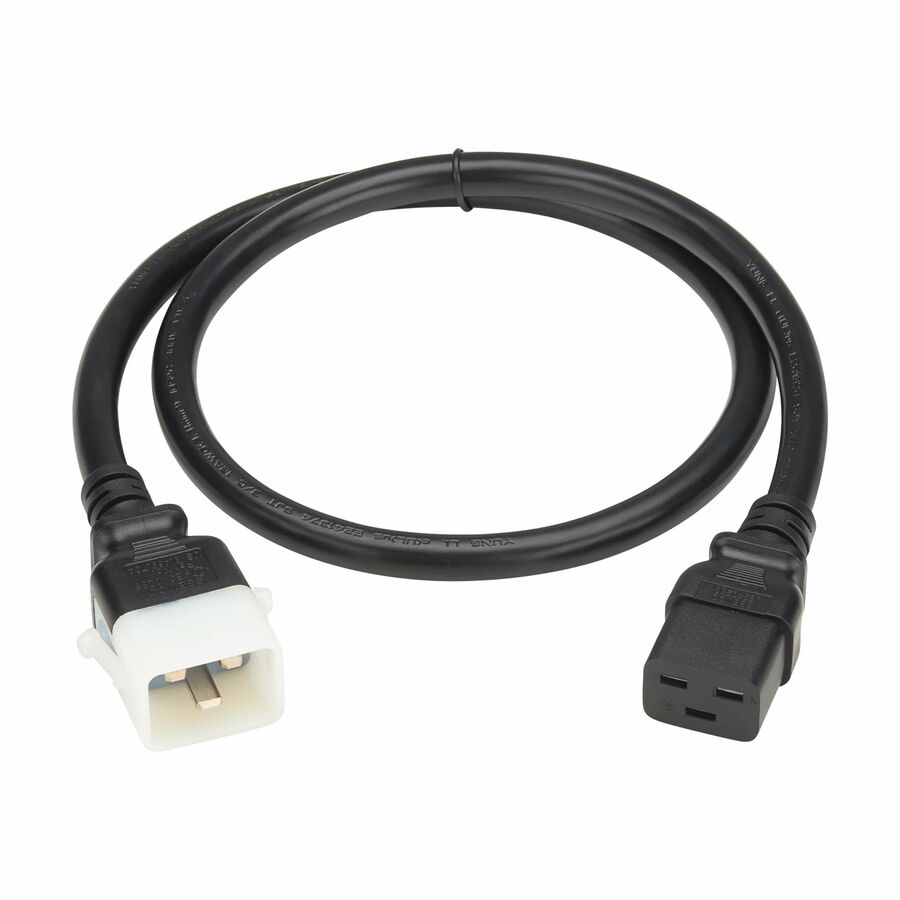
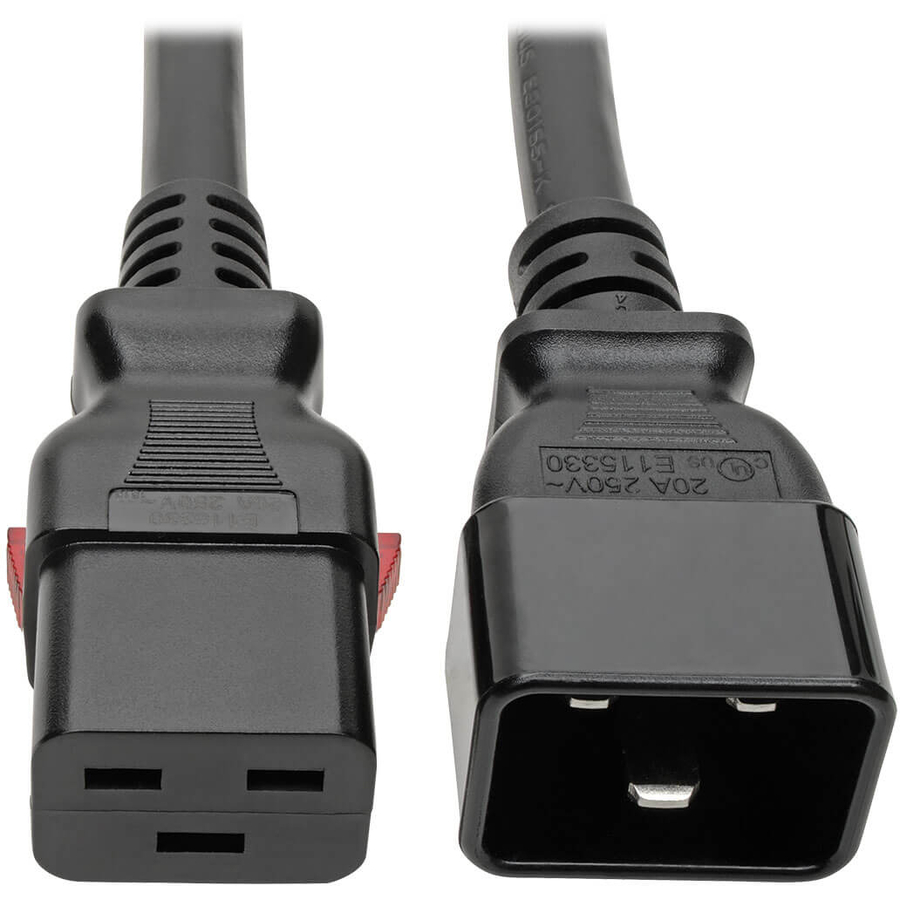
The default high-draw jumper: C19 to C20, 20 A at 250 V in heavy-duty 12 AWG, six feet. This is the cord that feeds a blade chassis, a large server or a high-capacity PDU from a rack UPS, and six feet is the length that reaches across most cabinets without leaving a coil behind the rails. Buy a few spares with the rack.
$44.71In stockLocking wall feed
StarTech.com
StarTech 6ft (1.8m) Heavy Duty Power Cord, Twist-Lock NEMA L6-20P…
ZA16-2600-POWER-CORD
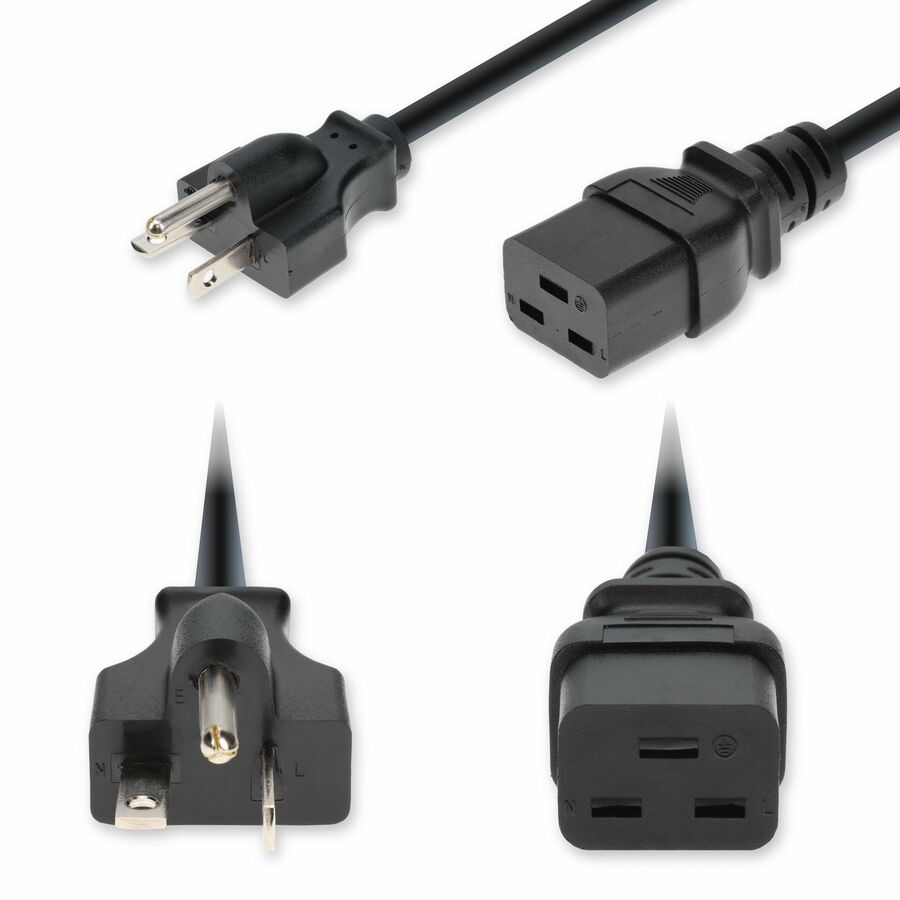
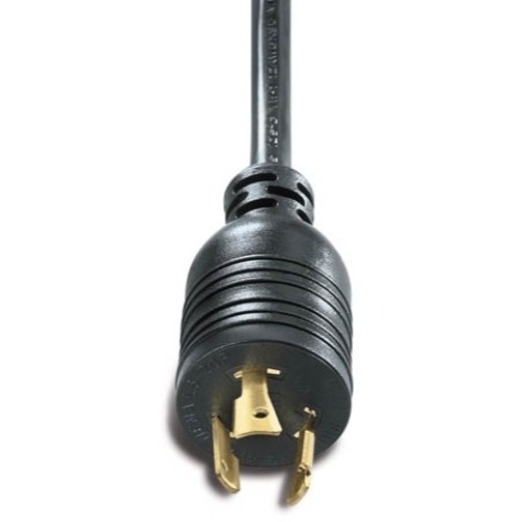
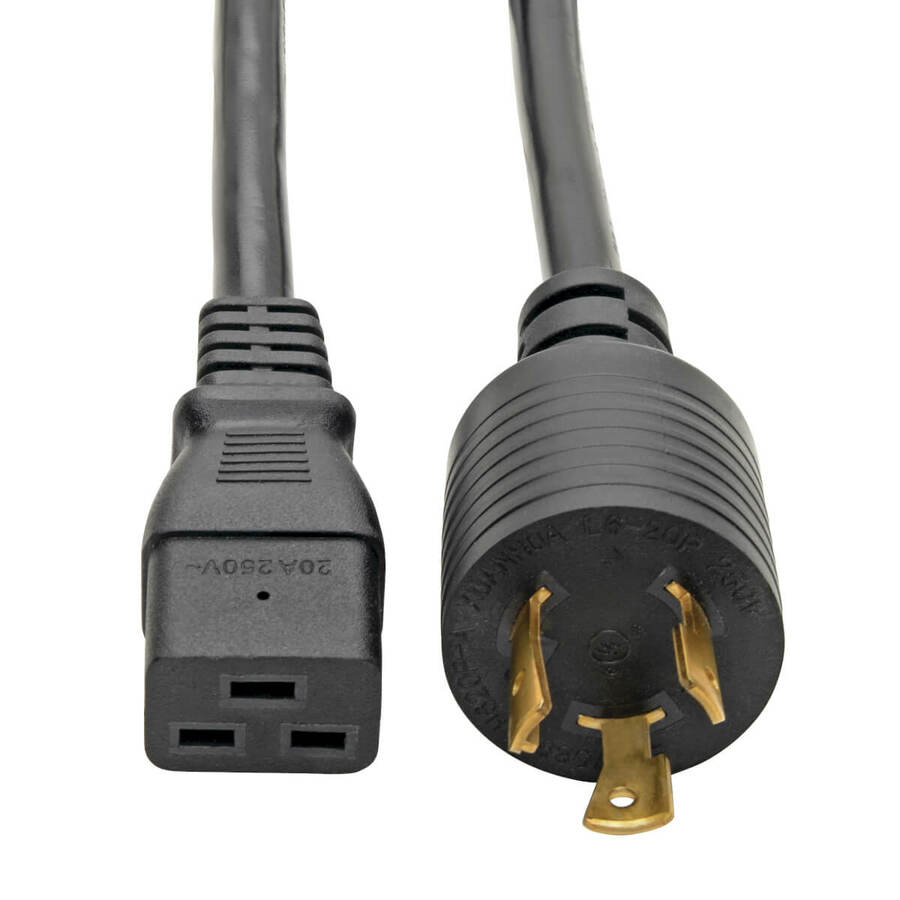
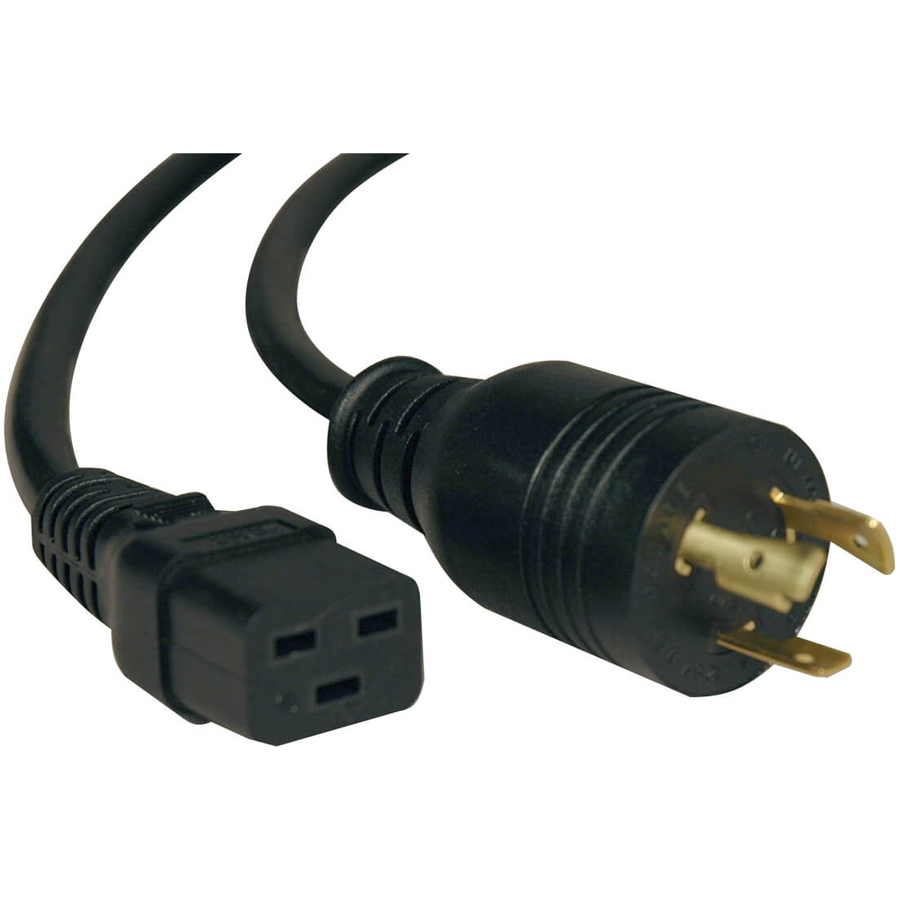
Twist-lock NEMA L6-20P to C19, 20 A at 250 V in 12 AWG, six feet, UL listed with an SJT jacket. The one to specify when the C19 device is fed from a locking wall receptacle rather than a PDU — the plug rotates in and stays put, which is the point in a cabinet that gets worked in.
Our catalog data records this part number as TAA compliant. We confirm the screening result against this exact part number on the quote rather than restating it as our own certification.
$16.02*In stockFor dual-fed racks
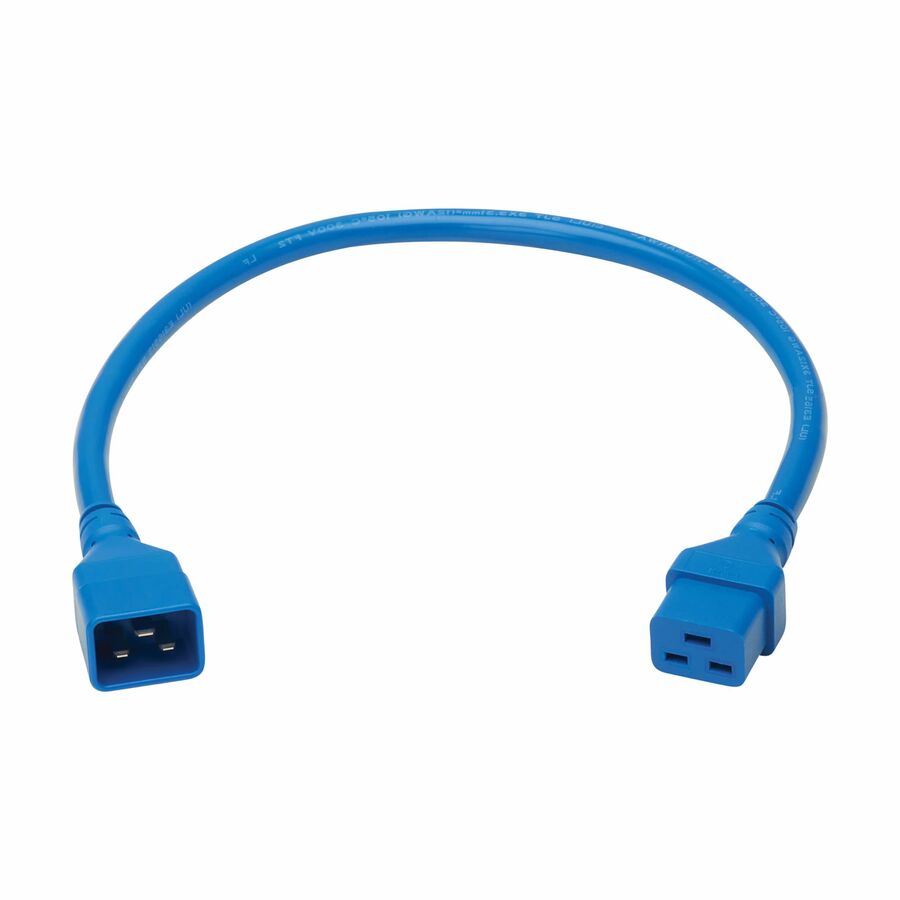
Eaton
Eaton Tripp Lite Series Power Extension Cord, C20 to C19 - 2 ft
P036-002-ABL
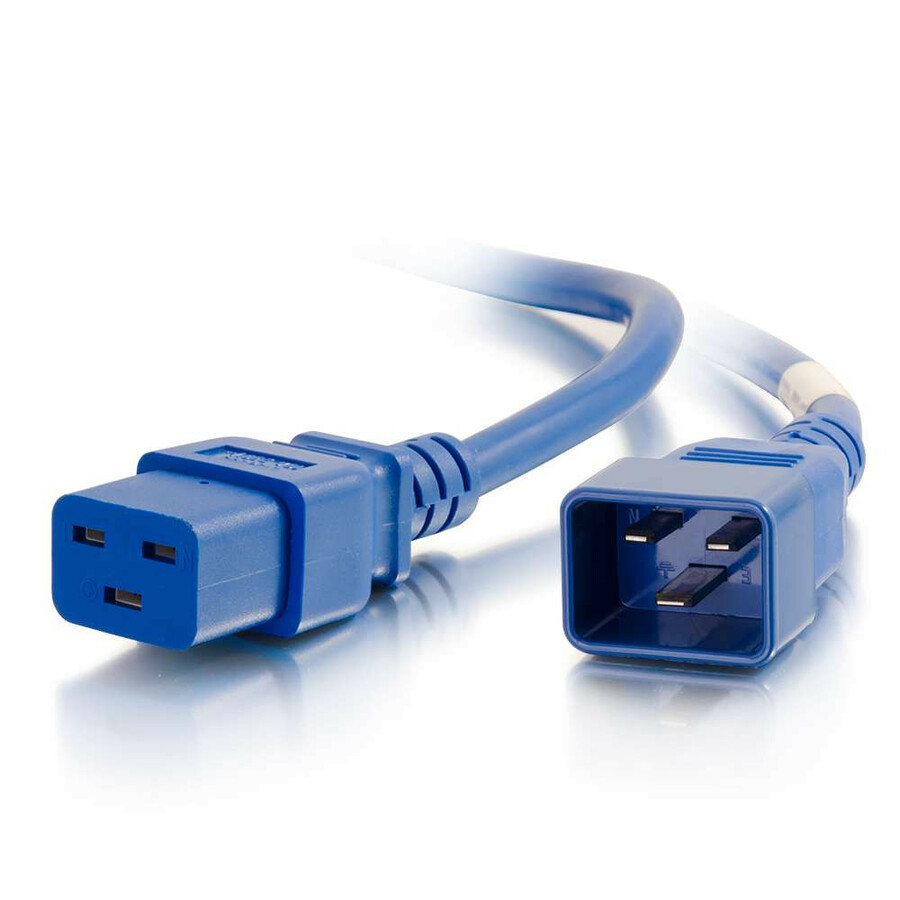
A two-foot C20 to C19 jumper in 12 AWG at 20 A, in blue. Two feet is the right length between a PDU outlet and the device beside it, and the colour is the useful part: assign one colour per feed across the cabinet and the A/B power path becomes readable at a glance instead of traceable by hand. Matching colours exist for the other feed.
$35.13In stockC19 device, C13 PDU
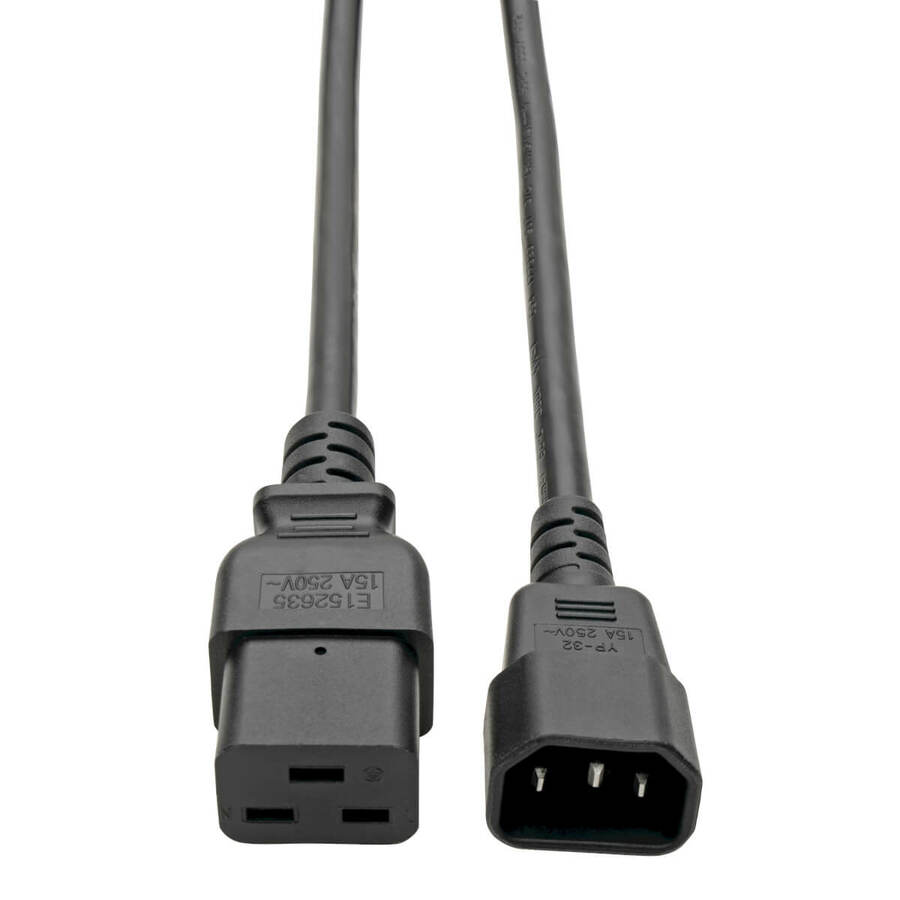
Eaton
Tripp Lite by Eaton Power Cord C19 to C14
P047-006
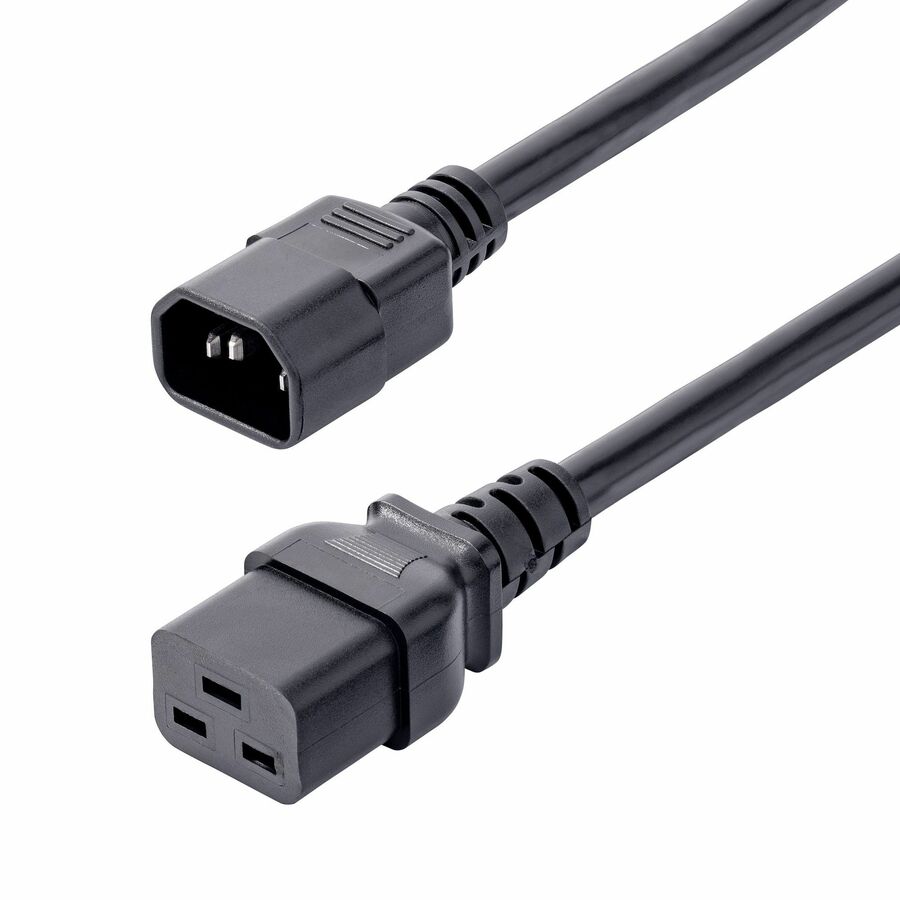
C19 to C14, 15 A at 250 V in 14 AWG, six feet — the cord for a C20-inlet device when the PDU has no C19 outlets left. Treat it as a derating rather than a conversion: it is rated to 15 A, so the load behind it has to live inside that, and a chassis that genuinely wants 20 A needs a real C19 outlet.
$53.54In stockMore power cords in the Uniqcli catalog
See all 3,839 power cordsMore from across this category. In-stock lines lead, and a back-ordered line carries the same estimated availability its product page does — with live pricing throughout, NDAA §889 screening before checkout and TAA verified on request.
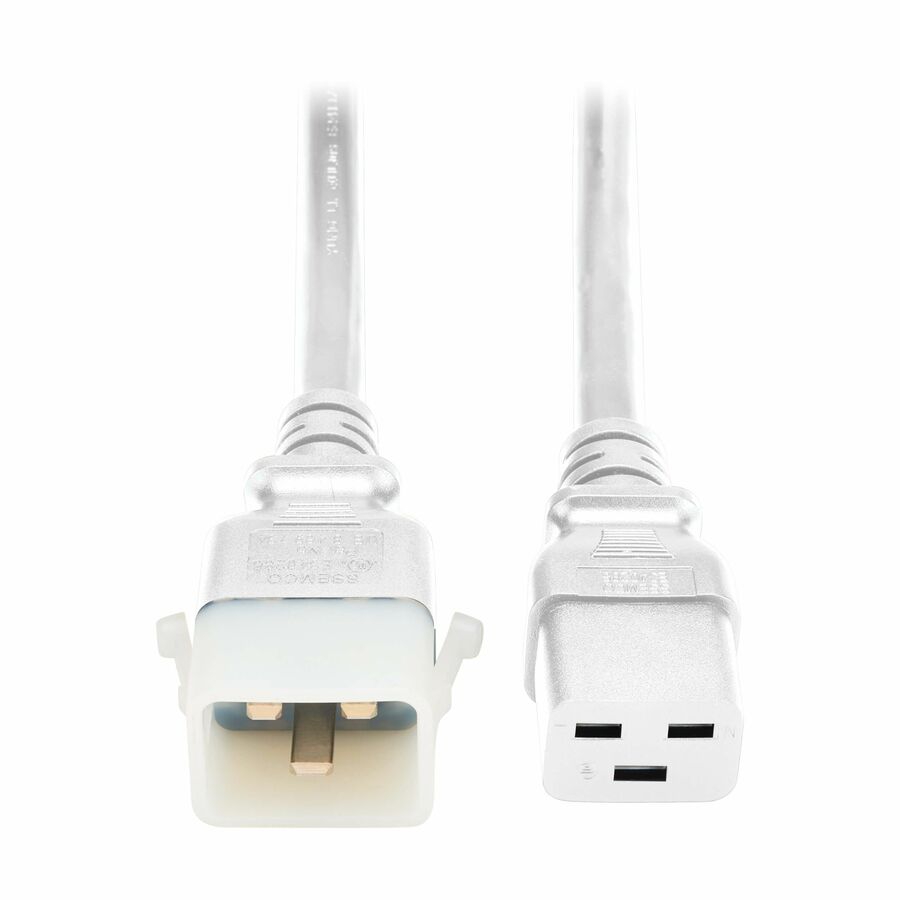
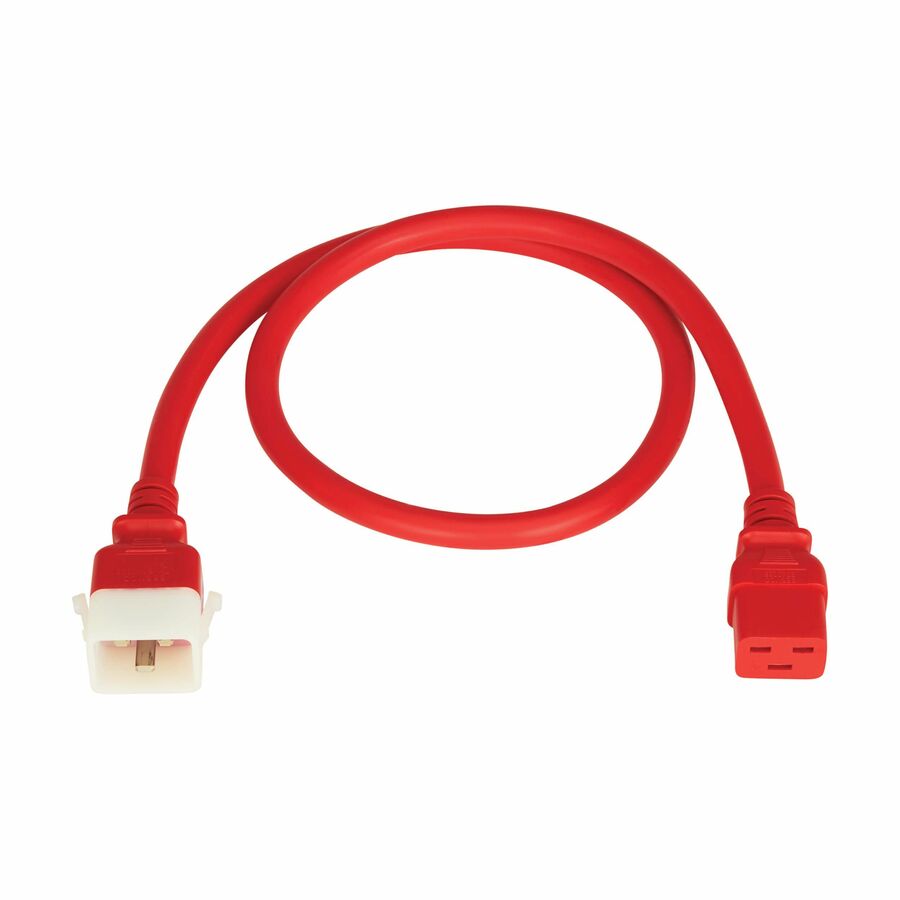
- EatonTripp Lite series P036-E06-ARD-6 Standard Power Cord - For Blade Server, Network Switch, Server, Router, Network Device, UPS, PDU, Computer, Monitor, HDTV, Printer, ... - 12 Gauge - 250 V AC / 20 A - Red - 6 ft Cord Length - IEC 60320 C20 / IEC 60320 C19 - North America - Heavy Duty, P-Lock - 6 PackP036-E06-ARD-6
$919.80
$846.22
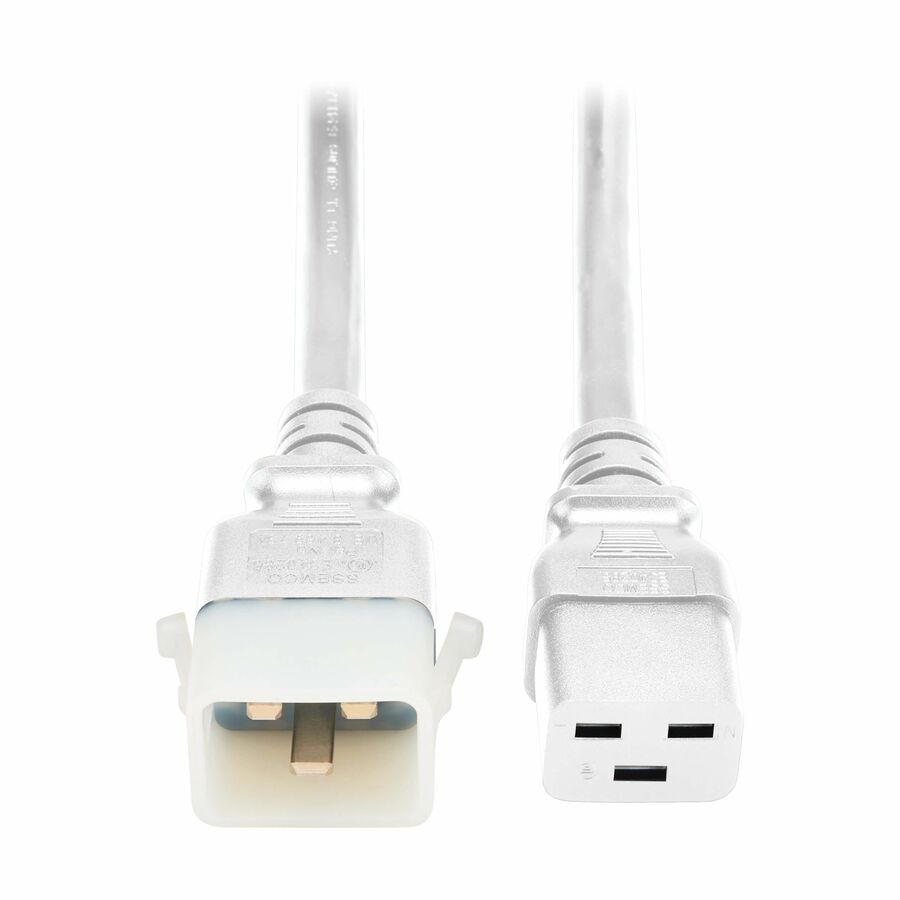
87 in stock - EatonTripp Lite series P036-E06-AWH-6 Standard Power Cord - For Blade Server, Network Switch, Server, Router, Network Device, UPS, PDU, Computer, Monitor, HDTV, Printer, ... - 12 Gauge - 250 V AC / 20 A - White - 6 ft Cord Length - IEC 60320 C20 / IEC 60320 C19 - North America - Heavy Duty, P-Lock - 6 PackP036-E06-AWH-6
$919.80
$846.22
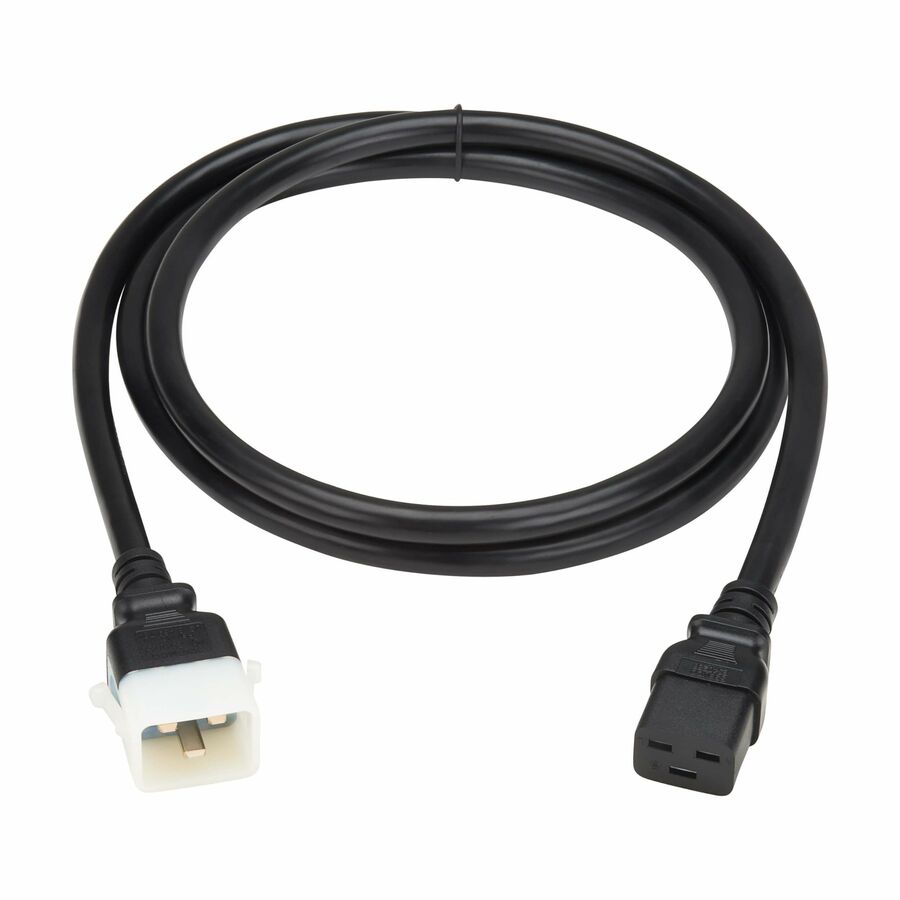
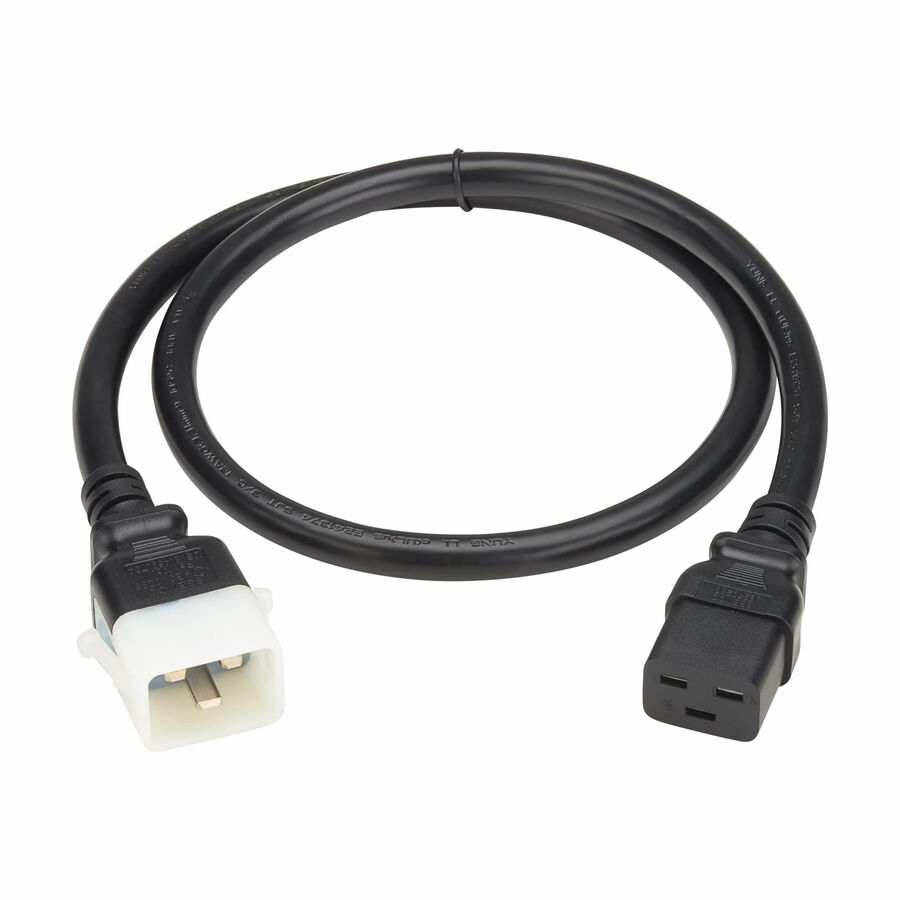
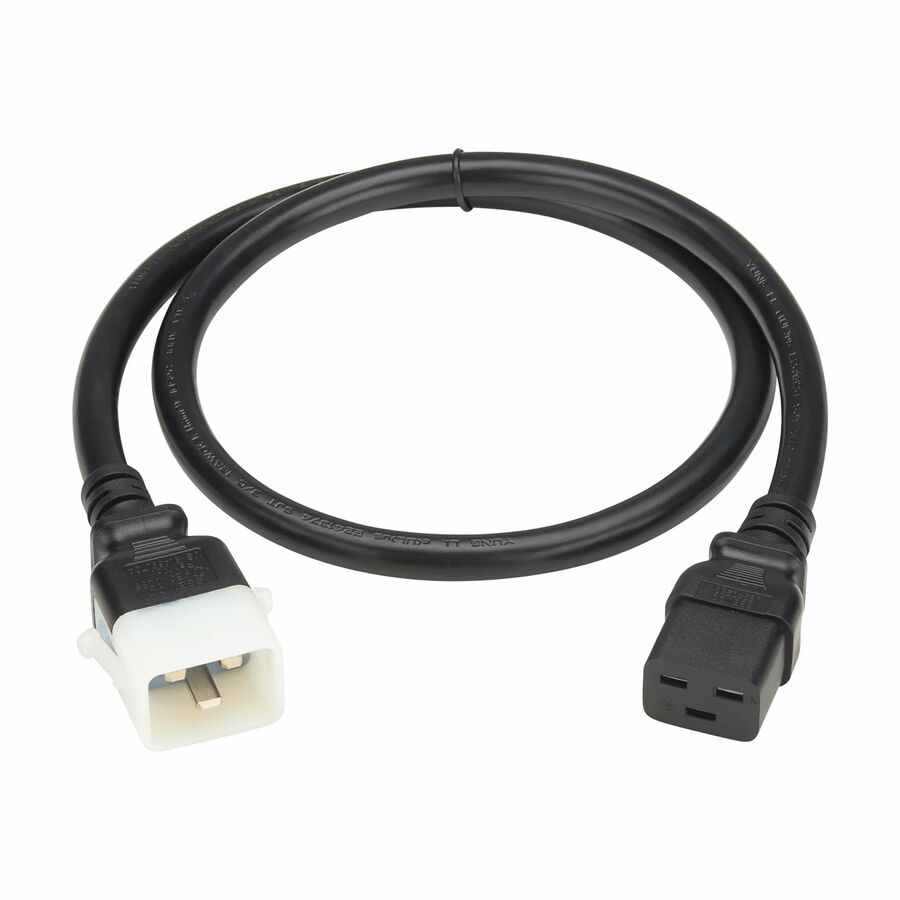
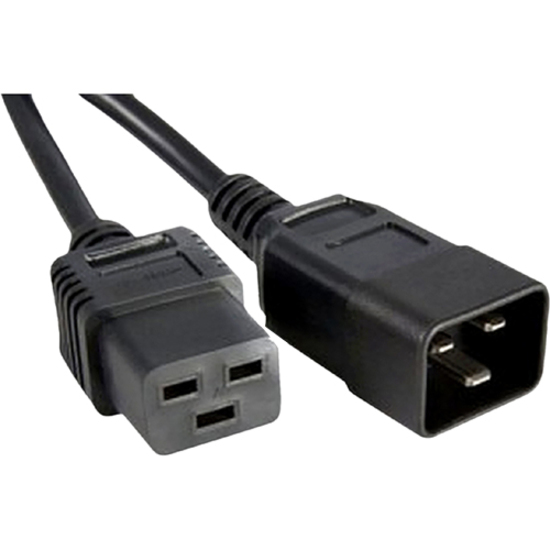
110 in stock - EatonTripp Lite series P036-E06-6 Standard Power Cord - For Blade Server, Network Switch, Server, Router, Network Device, UPS, PDU, Computer, Monitor, HDTV, Printer, ... - 12 Gauge - 250 V AC / 20 A - Black - 6 ft Cord Length - IEC 60320 C20 / IEC 60320 C19 - North America - Heavy Duty, P-LockP036-E06-6
$919.80
$846.22
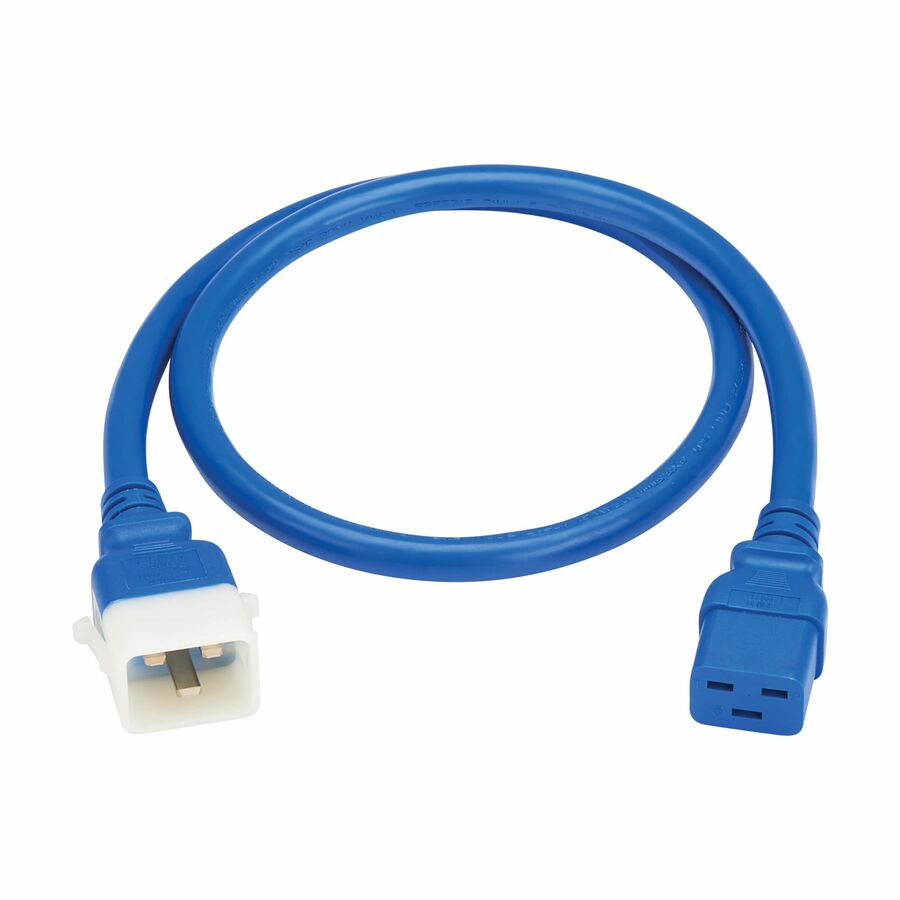
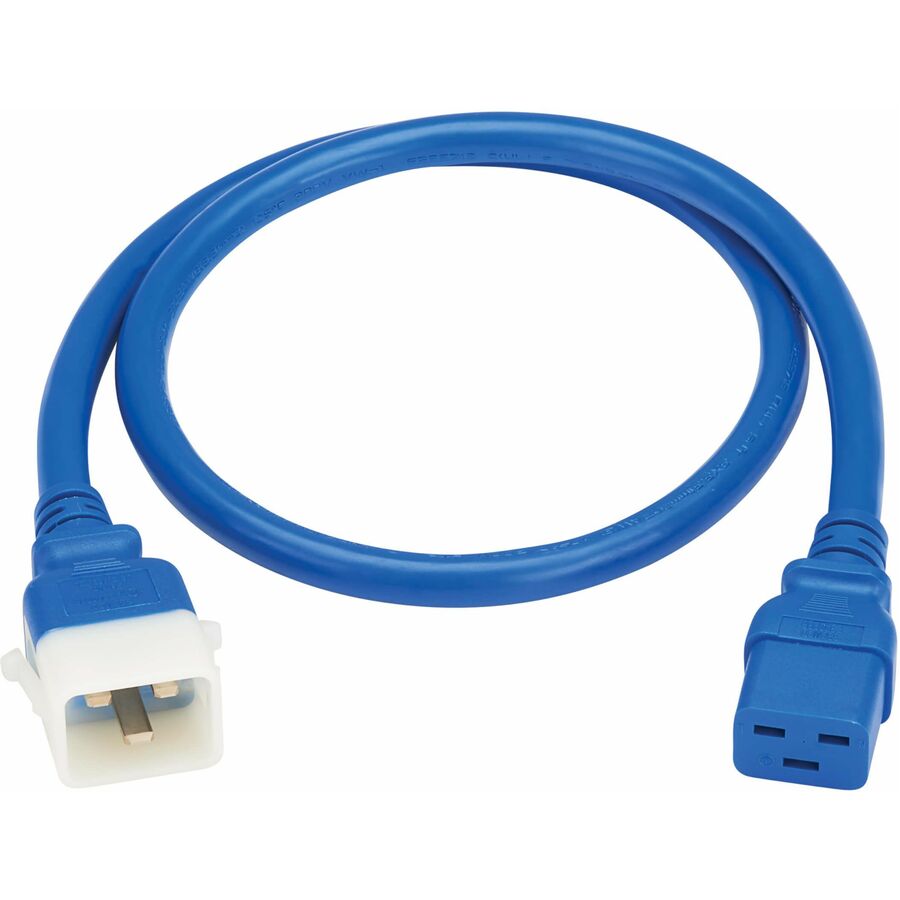
110 in stock - EatonTripp Lite series P036-E06-ABL-6 Standard Power Cord - For Blade Server, Network Switch, Server, Router, Network Device, UPS, PDU, Computer, Monitor, HDTV, Printer, ... - 12 Gauge - 250 V AC / 20 A - Blue - 6 ft Cord Length - IEC 60320 C20 / IEC 60320 C19 - North America - Heavy Duty, P-Lock - 6 PackP036-E06-ABL-6
$919.80
$846.22
84 in stock - EatonTripp Lite series P036-E04-AWH-6 Standard Power Cord - For Blade Server, Network Switch, Server, Router, Network Device, UPS, PDU, Computer, Monitor, HDTV, Printer, ... - 12 Gauge - 250 V AC / 20 A - White - 4 ft Cord Length - IEC 60320 C20 / IEC 60320 C19 - North America - Heavy Duty, P-Lock - 6 PackP036-E04-AWH-6
$744.60
$685.03
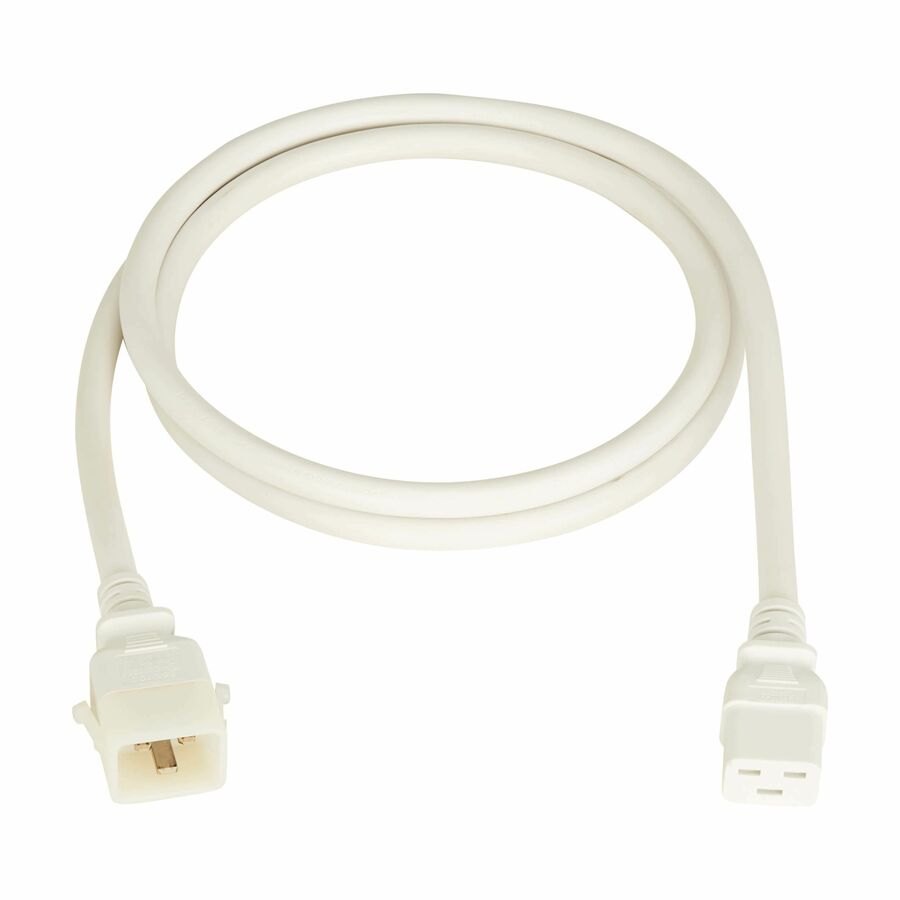
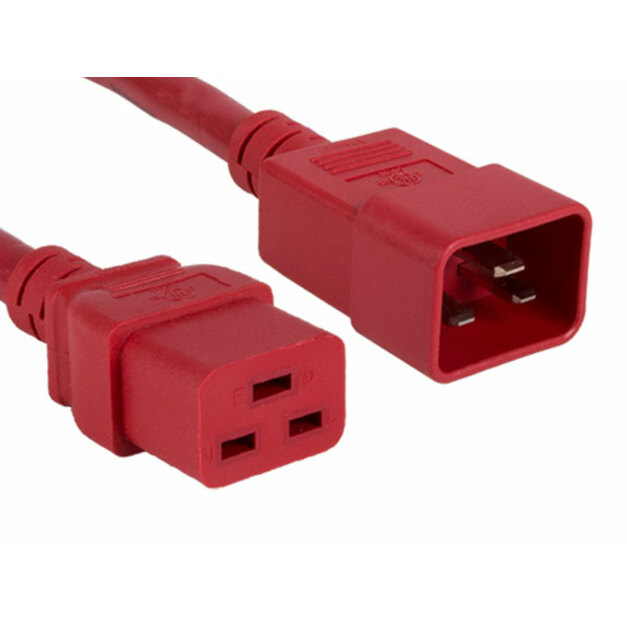
95 in stock - EatonEaton Tripp Lite Series PDU Power Cords, C19 to P-Lock C20 - Heavy-Duty, 20A, 250V, 12 AWG, 3 ft. (0.9 m), Red, 6 Pack - For Computer, Monitor, HDTV, PDU, Printer, Server, Tablet, UPS, Network Switch, Blade Server - 12 Gauge - 250 V AC / 20 A - Red - 3 ft Cord Length - IEC 60320 C19 / IEC 60320 C20 - North America - P-Lock, Heavy Duty - 6 PackP036-E03-ARD-6
$569.40
$523.85
82 in stock - EatonEaton Tripp Lite Series PDU Power Cords, C19 to P-Lock C20 - Heavy-Duty, 20A, 250V, 12 AWG, 3 ft. (0.9 m), White, 6 Pack - For Computer, Monitor, HDTV, PDU, Printer, Server, Tablet, UPS, Network Switch, Blade Server - 12 Gauge - 250 V AC / 20 A - White - 3 ft Cord Length - IEC 60320 C19 / IEC 60320 C20 - North America - P-Lock, Heavy Duty - 6 PackP036-E03-AWH-6
$569.40
$523.85
100 in stock - NSI IndustriesENET Standard Power Cord - 15 A - 6 ft Cord Length - IEC 60320 C19 / IEC 60320 C20C19C20-5F-ENC
$68.00
$35.92
3 in stock - NSI IndustriesENET C19 to C20 3ft Red Power Cord Extension 250V 12 AWG 20A NEMA IEC-320 C19 to IEC-320 C20 Red 3' - Lifetime WarrantyC19C20-RD-3F-ENC
$56.00
$31.55
12 in stock - EatonTripp Lite series P036-E06 Standard Power Cord - For Blade Server, Network Switch, Server, Router, Network Device, UPS, PDU, Computer, Monitor, HDTV, Printer, ... - 12 Gauge - 250 V AC / 20 A - Black - 6 ft Cord Length - IEC 60320 C20 / IEC 60320 C19 - North America - Heavy Duty, P-LockP036-E06
$169.73
$156.15
108 in stock
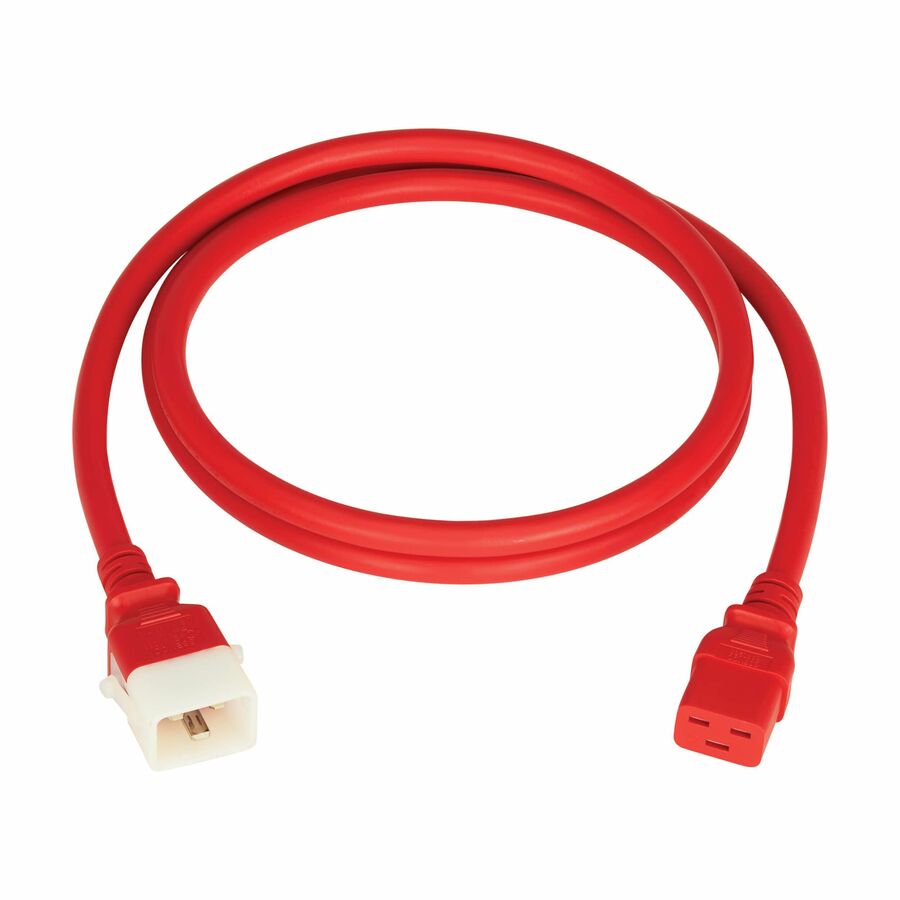



Need pricing on C19 power cords?
Tell us where to reach you and a Uniqcli specialist will follow up by email with current pricing, availability and lead time for the quantities you need — including parts that aren’t shown on this page.
Buying for an organization or for yourself — both work. No payment up front.
C19 and C20 are the 16 A international, 20 A North American connectors in IEC 60320 — the larger, squarer pair that feeds blade chassis, large servers and rack UPS outputs. Gauge is what carries the current: a 20 A cord is 12 AWG, a 15 A cord is 14 AWG, and the 30 A twist-lock cords step up to 10 AWG. Buy the shortest length that reaches.
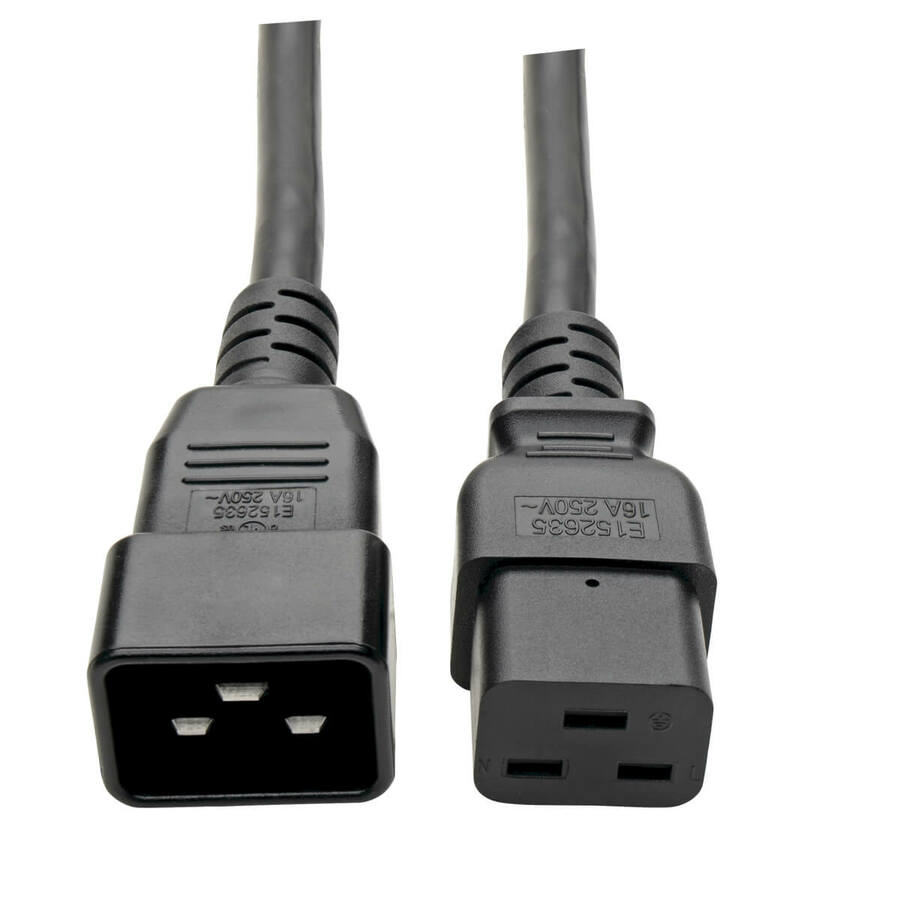
C19 is where rack power stops being a commodity. The IEC 60320 numbering is the same scheme as the familiar C13/C14 pair — even numbers are the inlets on equipment, odd numbers are the connectors on cords — but this family is built for a heavier draw: C19 and C20 are the 16 A international, 20 A North American connectors, physically larger and squarer than a C13, and they turn up on blade chassis, large servers, high-capacity PDUs and the output side of most rack UPS units. If a device has a rectangular inlet that a normal server cord will not enter, it is a C20, and the cord that feeds it terminates in a C19.
The workhorse of the range is the jumper: C20 on the PDU or UPS end, C19 on the device end, in the shortest length that reaches. Two ratings decide it. A 20 A cord is 12 AWG, a 15 A cord is 14 AWG, and the 30 A twist-lock cords in this range step up to 10 AWG — the difference is not cosmetic, because the gauge is what carries the current without heating, so the cord has to be rated for the circuit and the load rather than merely fitting the sockets. Length matters for a reason that is not about reach at all: a cabinet full of six-foot cords where two-foot cords would do is a cabinet with a heat problem behind the rails, and short jumpers are the cheapest airflow improvement most racks will ever get.
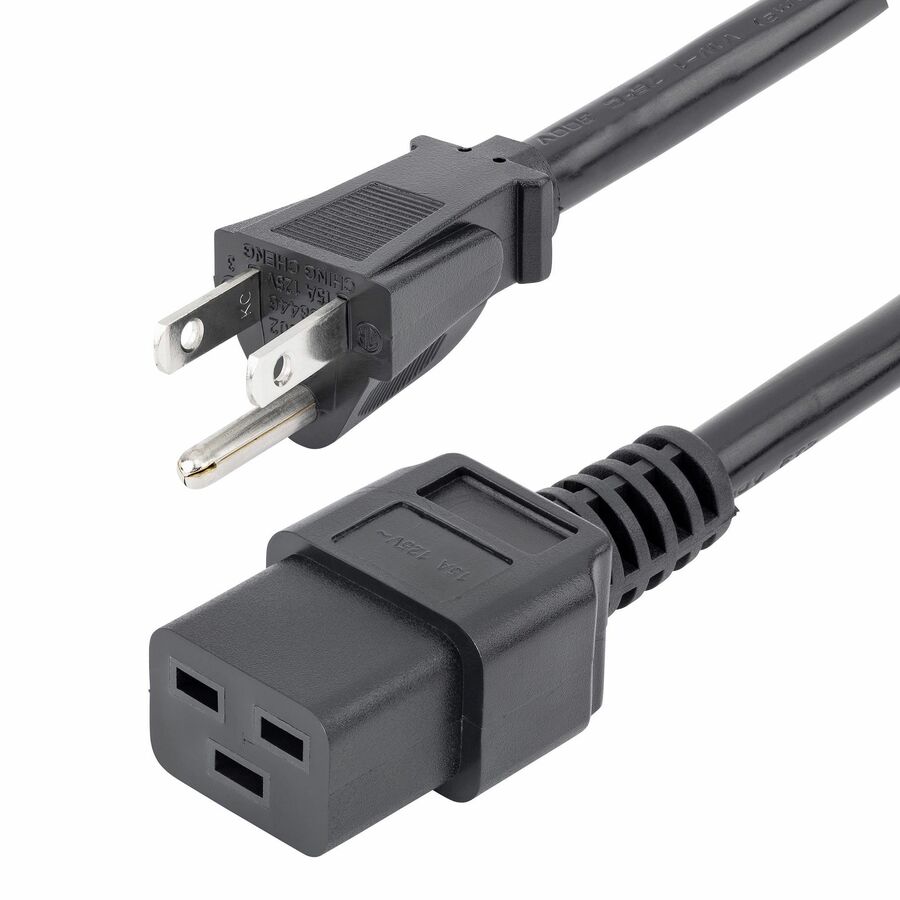
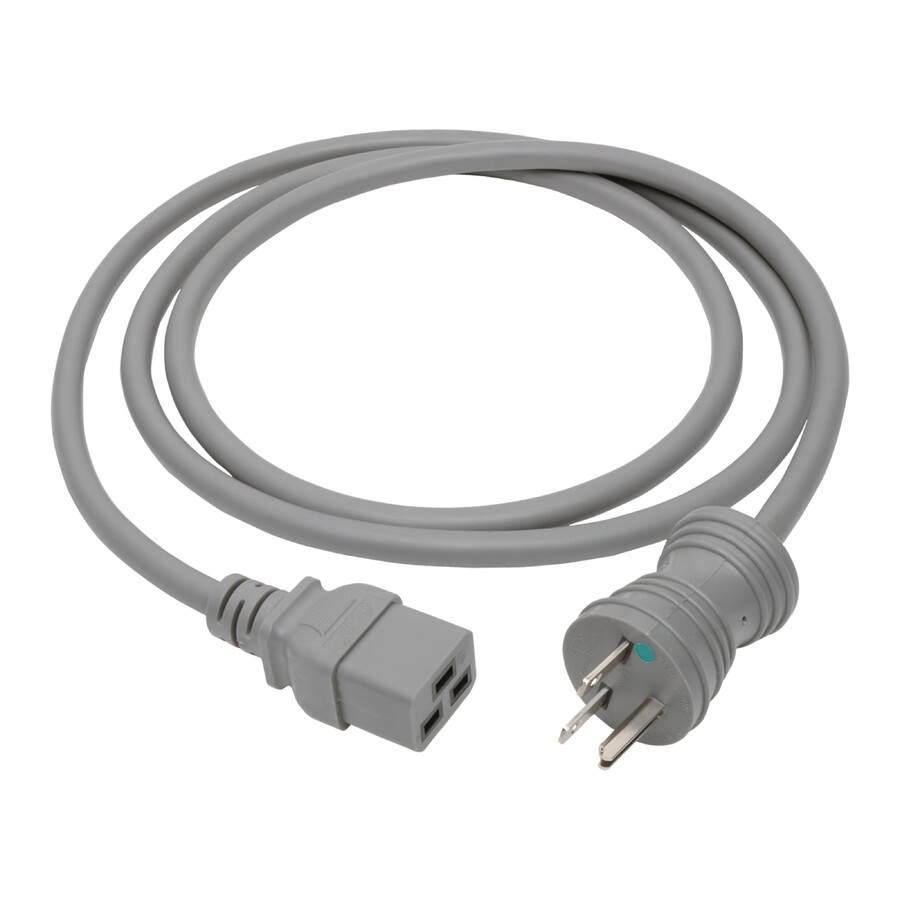
Everything else in this range is about the far end. Where the C19 has to be fed from the wall rather than from a PDU, the other end is a NEMA plug — 5-15P and 5-20P for 125 V, 6-15P for 250 V — or a twist-lock L6-20P or L5-20P where the receptacle locks and the connection cannot be allowed to vibrate loose. There are hospital-grade green-dot options for patient-care areas, and there are C19-to-C14 cords, which fit a C20-inlet device into a C13 outlet at the lower rating the smaller connector allows. Cordage is a natural line on a larger quote: a rack build normally carries the PDUs, the UPS, the cable management and the install labour alongside it, and the power monitoring and shutdown software licences with them.
Buyer's checklist
How to choose a C19 power cord
- Identify the device inlet first. A large rectangular inlet is a C20 and needs a C19 on the cord; a smaller one is a C14 and belongs on the C13 side of the range, which is a different page and a different rating.
- Match the amperage and gauge to the circuit and the load: 20 A cords are 12 AWG, 15 A cords are 14 AWG, and the 30 A twist-lock cords step up to 10 AWG. A cord that fits both sockets but is under-rated for the draw is the failure mode this family exists to prevent.
- Buy the shortest length that reaches. Excess cordage behind the rails is an airflow and serviceability problem, and short jumpers are the cheapest thermal fix in a dense cabinet.
- Decide the far end deliberately: C20 for a PDU or UPS outlet, a NEMA straight-blade plug for a wall receptacle, or a twist-lock L6-20P or L5-20P where the connection must not be able to vibrate out.
- Use colour-coded cords anywhere the rack is dual-fed. Assigning one colour per feed is the fastest way to see which power path a device is on, and it is worth the small premium over black every time.
- Check voltage as well as current — 250 V and 125 V cords in this family look similar and carry different NEMA plugs. Read the plug type on the listing rather than the picture.
Jumpers, wall cords and adapters
Inside a cabinet, almost every C19 cord is a jumper: C20 at the PDU or UPS, C19 at the device, and the only open questions are length, gauge and colour. Outside the cabinet it becomes a wall cord, with a NEMA plug on the far end sized to the receptacle in front of you — 5-15P for a standard 125 V outlet, 5-20P where the circuit is 20 A, 6-15P for 250 V, and the twist-lock L6-20P and L5-20P where the plug has to lock. Twist-lock is not a luxury in a rack: it is what stops a cord backing out of a receptacle under the weight and vibration of a cabinet that gets worked in.
The third shape is the adapter, and it needs the most care. A C19-to-C14 cord puts a C19 on the device and a C14 plug on the other end, which lets a C20-inlet device draw from a C13 outlet on an existing PDU. That is genuinely useful when the PDU in the rack has no C19 outlets left, but it is a derating, not a conversion — the cords of that shape in this range are rated 15 A at 250 V in 14 AWG, so the device behind one has to live within that, and a chassis that actually wants 20 A needs a real C19 outlet rather than an adapter. Hospital-grade green-dot cords are the other specialist shape, for patient-care areas where the receptacle and the plug both have to meet the grounding and retention requirements.
Colour, length and the dual-fed rack
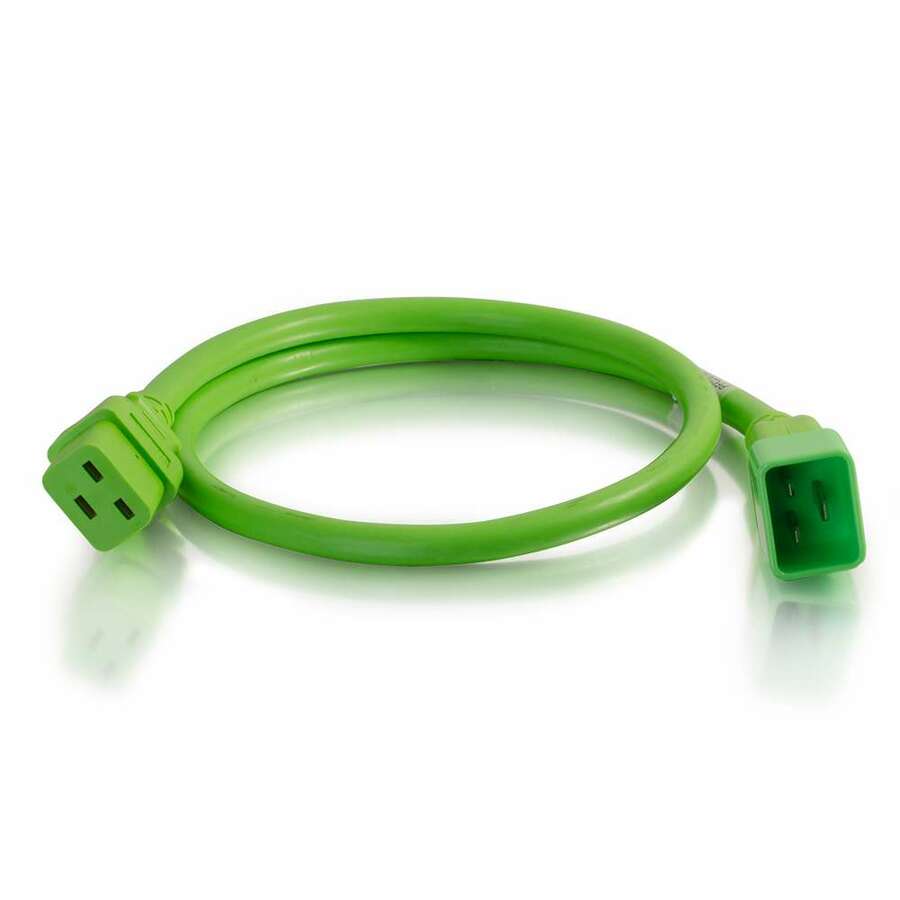
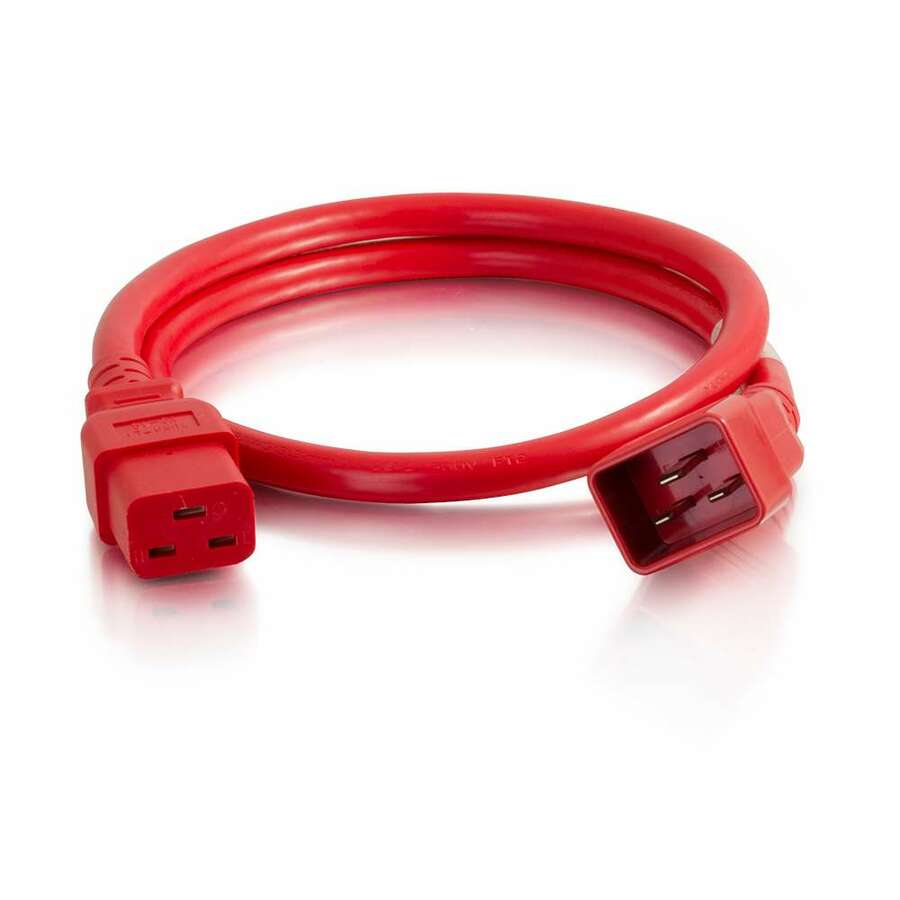
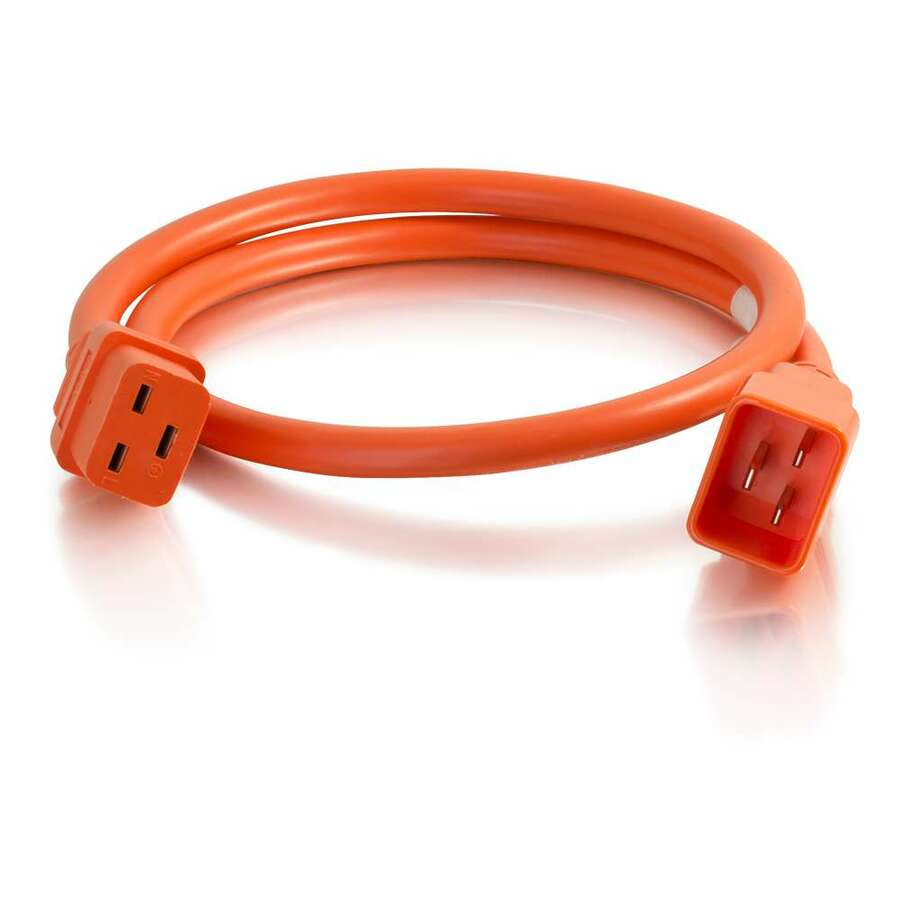
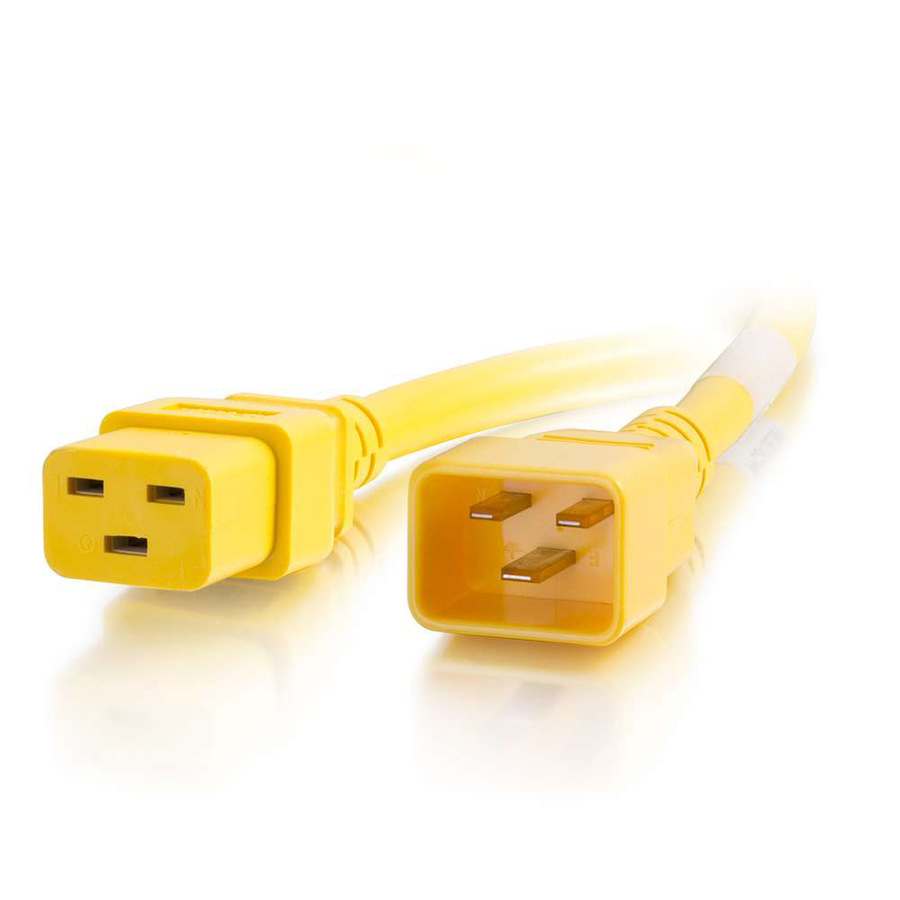
A dual-fed cabinet is only as resilient as an engineer's ability to see which feed is which at two in the morning. The cheapest way to make that visible is colour: one colour for the A feed and another for the B feed, applied consistently from the PDU outlet to the device inlet. Several cords in this range ship in blue, red, orange, green and yellow alongside black, at a small premium over the plain version, and standardising the scheme at build time costs nothing compared with tracing a mis-fed device later. Write the scheme into the rack elevation so the next person inherits it rather than guessing it.
Length discipline pays the same kind of dividend. Cords are sold here from one and two feet up through six, ten and fourteen, and the temptation is to order one length for everything. That is how a cabinet ends up with coils behind the rails blocking the exhaust path and hiding the rear of the equipment. Measure the runs, order two or three lengths, and keep a small stock of the shortest jumper — it is the part that gets consumed fastest in a rack that is actually maintained.
Ratings, documentation and compliance screening
The ratings printed on a cord are the specification, and they are worth reading rather than inferring. Amperage, voltage, gauge and jacket type all appear in the product data on these listings: 20 A 250 V in 12 AWG for the heavy jumpers, 15 A 250 V in 14 AWG for the lighter ones, SJT jacketing on the industrial-grade cords, and UL listing where the manufacturer states it. In a rack, those numbers are what a load calculation is built from, so they belong in the build documentation rather than in someone's memory. Cordage is also the cheapest place to be generous with spares — a missing jumper stalls an install, and the part costs less than the hour spent finding one.
Several cords in this range carry a TAA marking in the manufacturer's own product data — our catalog data records the StarTech twist-lock cord below as TAA compliant, for example. Uniqcli does not restate that as a certification of its own. Every line is sourced through US distribution and screened for TAA country-of-origin and NDAA Section 889 status before checkout, with documentation tied to the specific part number rather than to a product family. Send the part numbers with the requirement and we will confirm sourcing before you commit — cordage is usually the line nobody screens until an audit asks about it.
FAQ
Common questions
- What is the difference between a C19 and a C13 power cord?
- Current rating and physical size. C13/C14 is the familiar 10 A international, 15 A North American pair used by most servers, switches and power supplies. C19/C20 is the heavier family — 16 A international, 20 A North American — with a larger, squarer connector, used by blade chassis, large servers, high-capacity PDUs and the output side of most rack UPS units. They do not interchange, which is deliberate: the connector itself is what prevents a high-draw device being fed by a cord that cannot carry it.
- Do I need a 12 AWG or a 14 AWG C19 cord?
- Match the gauge to the rating you need to carry. In this range 20 A cords are 12 AWG and 15 A cords are 14 AWG, and the gauge is what moves the current without heating — so the cord has to suit the circuit and the load, not merely fit the two sockets. If the device or the PDU outlet is rated 20 A, buy the 12 AWG cord. If both ends and the load sit comfortably inside 15 A, the 14 AWG cord is lighter, easier to dress and cheaper.
- Can I plug a C19 device into a C13 PDU outlet?
- Only through a C19-to-C14 cord, and only within the lower rating. That cord puts a C19 on the device and a C14 plug into the C13 outlet, which is useful when a rack PDU has no C19 outlets left — but it derates the connection to what the smaller connector and the cord allow, which for the cords here is 15 A at 250 V in 14 AWG. A chassis that genuinely draws 20 A needs a real C19 outlet on the PDU, not an adapter. If you are unsure, send the device model and the PDU part number and we will check the fit.
- When should I use a twist-lock L6-20P cord instead of a straight plug?
- Whenever the connection cannot be allowed to work loose. A twist-lock L6-20P plug rotates into a matching 250 V 20 A receptacle and stays there, which matters in a rack that gets worked in, on a raised floor, or anywhere vibration and cable weight act on the plug. Straight-blade NEMA plugs are fine for a fixed wall outlet feeding equipment nobody disturbs. Check what receptacle the site actually presents before ordering — the plug has to match the outlet, not the preference.
Need C19 power cords pricing?
Send a bill of materials or part numbers — we confirm stock and a below-market total, with TAA verified on request. No payment up front.