
AI Customer Service That Actually Resolves Cases
A buyer's guide to the less glamorous work behind a useful AI support agent: trusted answers, permissioned actions, human handoffs and a scorecard that counts the whole case.
By Uniqcli Team · · 13 min read

Key takeaways
- Count a case as resolved only after the promised task is completed and the customer has not had to reopen it within a defined window.
- Give the AI approved knowledge and limited action permissions; do not let a confident answer stand in for a verified transaction.
- Make a human path visible, and pass the conversation, customer context and attempted steps to the person who takes over.
- Compare pilot results by issue type, including repeat contacts, wrong answers, transfer failures and cost per verified resolution.
- Quote the integrations, quality review, agent equipment and ongoing ownership along with any AI subscription.
On this page
A customer messages support because a network switch died on Friday afternoon. They have a serial number and an open service ticket. The new AI assistant replies in seconds, recites the warranty policy and says a replacement will arrive tomorrow. The answer sounds excellent until the buyer learns that the serial number was never checked, the item is back-ordered and the shipping team does not dispatch on Saturday.
The failure is not that the assistant was slow or impolite. It answered the wrong question. The customer needed a reliable path to a working switch. The assistant gave them a plausible sentence and left the operational work undone.
That distinction matters when a contact center, service desk or sales operations team shops for AI. A demonstration can show a graceful conversation in ten minutes. A real service case crosses identity checks, knowledge ownership, inventory, order systems, staff schedules and exception handling. The purchase decision should cover that whole path.
Start with a real service case, not a chatbot demo
Write down the last ten reasons customers contacted you. Include the ones people dread: a late order, a billing dispute, a failed device, a locked account, a request to change an address and a product that does not behave as the documentation says. Then follow one case from the first message to its actual end. Who confirms identity? Which system has the current status? Who can authorize an exception? What happens after business hours?
The switch replacement example gives a useful test. The assistant may explain the standard warranty and collect a serial number. It can perhaps retrieve a service entitlement if the customer is authenticated and the integration is approved. It should not promise a shipment until the inventory and order systems confirm a replacement path. If the part is unavailable, the customer should reach someone who can choose an approved equivalent or set a truthful delivery expectation.
Gartner's August 2026 report on a survey of 3,566 B2B and B2C customers found that 87% considered access to a human agent essential when a company uses generative AI for customer service. That result does not mean every customer wants to call an agent for every question. It does mean a design that hides the human option is a poor bet, especially for the unusual cases that make service matter.
Ask vendors to demonstrate the messy case, not the easy FAQ. Interrupt the flow, use an old part number, ask for an action the assistant is not authorized to take and request a person halfway through. A product that handles those interruptions well is more valuable than one that simply produces polished answers.
Decide what the assistant may answer, do and escalate
An answer and an action carry different risk. Explaining a return window from a current policy page is not the same as issuing a refund. Finding a product manual is not the same as changing a customer's account. Draw that line before a pilot starts. Otherwise the team discovers it after the assistant has already made a promise it cannot honor.
Start with three buckets. The first contains low-risk, repeatable explanations from an approved source: store hours, support channels, public compatibility documents or the status of an already authenticated ticket. The second contains actions that require a verified identity and a transaction record: opening a case, updating contact information or requesting a return. The third belongs with a person or a separately reviewed workflow: disputed charges, suspected fraud, safety issues, contractual exceptions and a request where the supporting data is missing.
The buckets should be specific to the organization. A healthcare scheduling team and an IT reseller do not have the same permissions or obligations. For each use case, record the source system, permitted action, approval condition, failure path and owner who can change the rule. If the answer depends on live price, stock or delivery, the assistant must consult a live source and describe uncertainty accurately. A cached product description is not a shipping commitment.
The Consumer Financial Protection Bureau's research on financial-service chatbots is a useful caution from one regulated sector. It documents customer harm when a bot gives circular answers or blocks access to live help. The lesson for a buyer outside banking is operational: identify the cases where a wrong or stalled answer costs more than an agent transfer, and make those cases easy to escalate.
Give the AI a source of truth someone owns
Teams often say the AI will use their knowledge base. Ask which one. The public website may have a general policy. A product specialist may keep the current exception in a spreadsheet. The CRM may show the customer's contract tier. The warehouse system may be the only source that knows whether the part can ship. An assistant that sees only one of these can sound informed while being wrong.
Make a small source map before connecting data. For every answer the pilot is allowed to give, name the authoritative system, its update cadence and the person responsible for correcting it. Keep old policies out of retrieval. Mark drafts and superseded manuals clearly. Where a customer-specific answer is required, authenticate the customer before retrieving the account record. Where an action is required, use a narrow API permission that can do the intended task and no more.
This is also where a human support agent benefits. A useful handoff should show the customer identity checks completed, the cited knowledge item and version, the relevant account or order number, what the assistant tried and why it stopped. The human should not have to hunt through a long transcript to discover that the assistant already attempted the same failed step twice.
Google Cloud's contact-center documentation shows how virtual-to-human transfer can carry conversation history, escalation reason and fallback routing. That is a platform example, not a promise that every product behaves this way. During procurement, ask each provider to show the exact fields passed to the human desktop and what happens if the destination queue or direct transfer fails.
Knowledge is not a one-time migration. Products, policies and forms change. Set a process for retiring stale pages, approving new answers, sampling live interactions and feeding corrections back to the source. NIST's AI Risk Management Framework calls for testing before deployment and regular measurement while an AI system is operating. A launch date without an owner for the next update is an incomplete plan.
Design the handoff before the first automated answer
The words “talk to a person” should lead somewhere real. A customer may need an agent because the issue is sensitive, the bot is uncertain, the transaction failed, the customer asked twice, or the customer simply wants one. Define those triggers and the working hours for each channel. A transfer after hours can offer a callback or a clear ticket with an expected response, but it should not pretend a live agent is waiting.
For voice, test whether the agent receives the caller's verified identity, contact reason and conversation summary before saying hello. For chat, test whether the customer can see that a transfer is happening and whether the human receives the same history. For email and portal cases, test whether a ticket is created once rather than copied into two systems with different statuses. These are not cosmetic details. They determine whether the customer has to repeat the story.
Put a failure path behind every transfer. Google's documentation describes fallback queues when a direct transfer cannot reach its intended agent. Your own design may differ, but the test should be the same: intentionally make the first transfer fail and see whether the customer still reaches a staffed destination or receives an honest callback path. Record that as a pilot result, not as a promise on a slide.
Human agents need authority to correct the AI's answer. If the assistant quoted an outdated warranty term, the agent should be able to identify the source and request a change. If the AI created a draft order with the wrong part, the agent should be able to stop it. An escalation queue without a correction loop merely gives a person the job of apologizing for the same mistake repeatedly.
Accessibility belongs in this test. A chat widget that cannot be reached with a keyboard or does not announce “transferring” to a screen reader has failed some customers before they ask their first question. The W3C's WCAG 2.2 guidance covers accessible controls and status messages. Include those behaviors in the pilot rather than assuming the vendor's general accessibility statement covers your configured flow.
Measure the whole case, not just the first contact
“Contained by AI” is often reported as a win, but it means only that the interaction did not transfer to a human in that moment. The customer may leave, try another channel or return tomorrow. A credible scorecard needs a denominator and a follow-up window. NIST's AI Risk Management Framework asks organizations to choose metrics suited to the risks and to monitor systems in operation. For this pilot, treat self-service resolution, containment, escalation, abandonment and repeat contacts as different measures.
Define verified resolution in language a service manager can audit. One workable definition is: the requested task is complete in the system of record, the customer received the right confirmation and there is no repeat contact about the same issue within seven days. Seven days is an example, not an industry standard; a warranty claim may need a longer window than a password reset. Report the count by issue type and channel so a high volume of easy questions does not hide failures in expensive cases.
Here is a fictional scorecard to make the arithmetic visible. Suppose 1,000 pilot conversations start with AI. Six hundred end without a human transfer. Of those 600, 120 customers contact support again about the same issue within the chosen window. Among the remaining 480, another 40 never completed the requested transaction. Calling all 600 “resolved” would overstate the pilot. Under this simple definition, 440 are candidates for verified resolution before quality review checks whether the answers were correct. The point is not that 440 is a target. It is that the team must decide what evidence turns a conversation into a closed case.
Track the cost of that outcome. Add platform fees, model usage, integration work, knowledge maintenance, human review and agent time; divide by verified resolved cases over the same period. Keep one-time setup separate from recurring operation so the comparison is understandable. Put the cost beside customer outcomes, not in place of them. A cheaper contact that produces a repeat call can cost more than a well-handled transfer.
The quality sample should include wrong answers, unsupported promises, requests for prohibited actions, failed transfers and customers who drop out. NIST recommends documented test sets, operational monitoring and feedback channels for affected users. Review a sample with support staff and subject specialists who did not build the assistant. A model score alone cannot tell you whether a return was actually processed or a replacement arrived.
Run a pilot that can fail honestly
Choose one or two issue types where the source data is reliable and the outcome is observable. A support team might start with order-status questions and basic troubleshooting while keeping disputes and urgent failures with staff. Record a baseline before the AI pilot: contact volume, repeat contacts, resolution time, wait time, quality defects and the staff hours spent on that issue. Without a baseline, a vendor's improvement percentage has no useful reference.
Build a test set from anonymized real cases. Include ordinary wording, misspelled part numbers, missing information, an angry customer, a customer who changes the question and a request just outside the assistant's permission. Add an outage case: what happens when CRM, inventory or the AI service is unavailable? Run those cases again after a knowledge update. Review both the AI transcript and the final case record.
Set a release gate before the test begins. It might require accurate policy answers, no unauthorized transactions, successful transfer to an agent or callback route, accessible controls and a measurable improvement in verified resolution without a rise in repeat contacts. The numbers should be set by the buyer's risk and baseline; there is no honest universal percentage. Document who can pause the pilot if an error pattern appears and how affected customers are contacted.
Keep a human control group or a phased rollout when practical. If AI receives only the easiest questions while people handle every hard case, a blended cost or satisfaction comparison is misleading. Compare like with like, and note where a case crossed channels. The best result might be a smaller scope than the vendor proposed. A reliable assistant for five well-defined tasks is a better purchase than an unreliable front door for every customer issue.
Include the agent workspace in the buying plan
The AI service may live in a cloud platform, but people still take the escalations. Their workstations, headsets, call quality and network access affect the experience a customer has after the transfer. If agents work from multiple locations, ask IT to test voice quality and connection failover as part of the same pilot. If the deployment uses a local AI model or private inference service, scope that compute separately from the contact-center endpoints; a headset is not an AI processor.
Uniqcli lists business headsets such as Jabra Evolve2 65 and Logitech Zone Wireless 2. These are examples for an agent workspace, not a claim that they certify a particular contact-center platform. Check the connector, softphone compatibility, microphone performance and comfort with the actual application and shift length. For a larger room, check whether the wired or wireless choice behaves well with the site's density and support policy.
Agent headsets in the Uniqcli catalog
Jabra
Jabra Evolve2 65 Headset
$297.30In stockLogitech
Logitech Zone Wireless 2 Headset
$278.97In stock
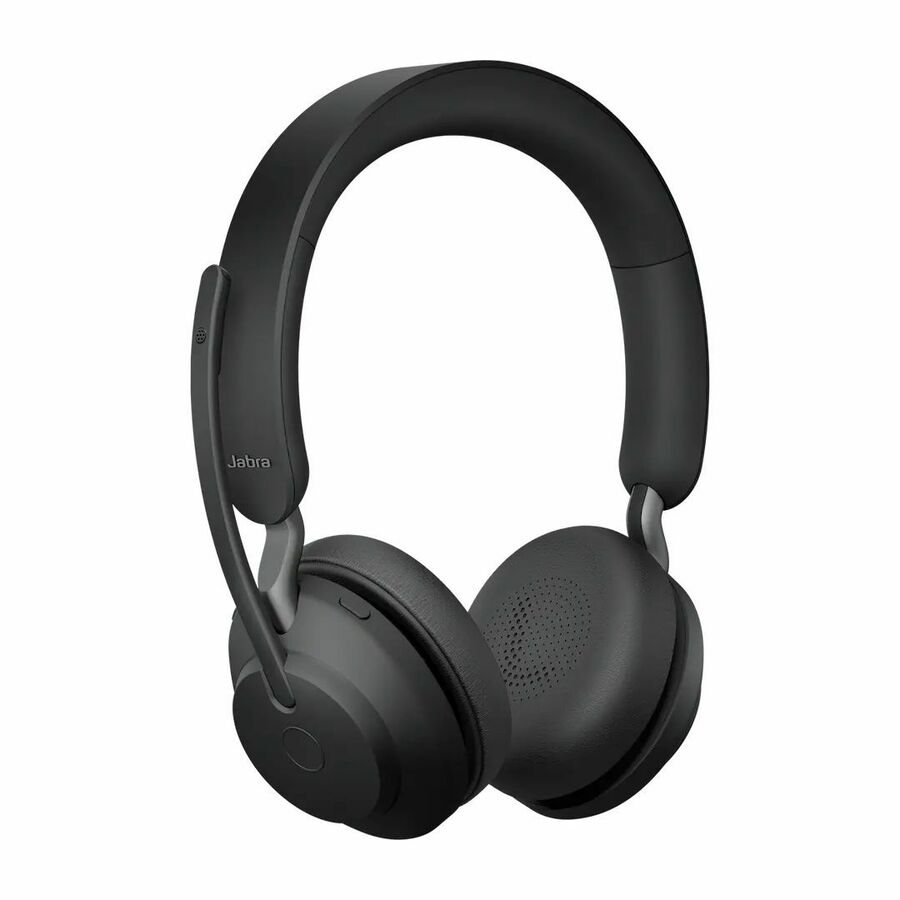
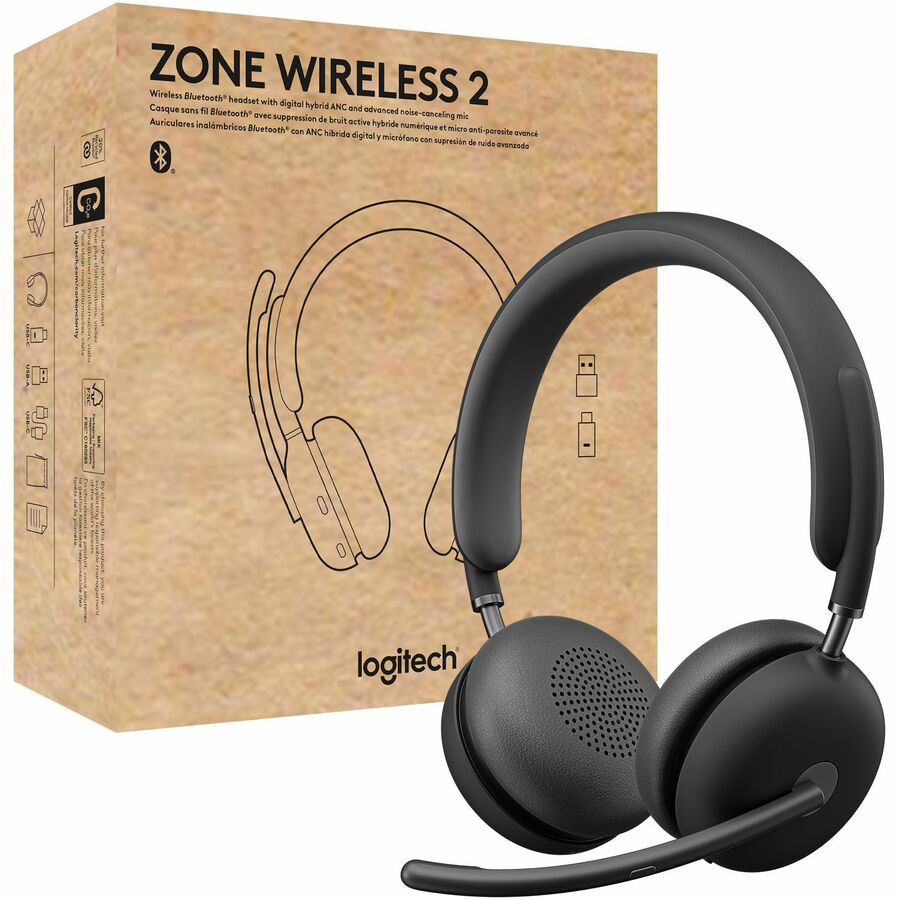
Confirm the selected headset, USB or wireless connection, softphone certification and user fit for the contact-center platform before ordering.
The commercial quote should name what is included beyond licenses: CRM and ticket integrations, identity work, knowledge cleanup, quality review, agent training, support, endpoint equipment and ongoing change control. If the buyer has an on-prem inference requirement, specify the workload and data boundary before choosing servers or GPUs. If the chosen service supplies inference in its own cloud, the buyer does not need a server solely to run that model.
Ask for a complete acceptance plan
Send vendors three representative cases, the permitted actions and the systems that hold the answers. Ask them to show the customer screen, agent desktop and audit trail, not only an AI chat window. Require a sample export of metrics with definitions. Ask what the service does when knowledge is missing, an API times out or an agent queue is closed.
The statement of work should identify who owns each integration, who edits approved knowledge, who samples errors, who responds to incidents and what a successful pilot looks like. It should include an exit path: how transcripts, cases and knowledge can be exported if the platform changes. That is a more useful comparison than a per-conversation rate presented without operating costs.
Scope the service around a real case
Bring two customer issues, the systems that hold the answers and the team that takes escalations. We can help identify the supporting endpoints and infrastructure to include in a complete quote.
FAQ
When should a customer-service AI hand off to a person?
Offer a visible human option throughout the flow. Trigger a handoff when the customer asks, the assistant lacks a verified answer, an action exceeds its permission, a transaction fails, or the case has a sensitive or urgent exception. Set a fallback route for closed queues and failed transfers. Test the route with real staffing hours; a button that leads nowhere is not a handoff.
Does a high containment rate mean the AI is resolving cases?
No. Containment only says the interaction did not transfer at that moment. Confirm that the requested task completed in the system of record, check whether the customer returned about the same issue and review answer quality. Report those outcomes by case type and channel. A pilot can contain many easy questions while failing the cases that cost customers the most time.
What information should the human agent receive after a transfer?
The agent should receive the contact reason, conversation history, identity checks already completed, relevant account or order reference, the approved knowledge used, actions attempted and the reason for escalation. Pass only information the agent is authorized to see. The test is simple: the customer should not need to repeat a serial number or a failed troubleshooting step that the assistant already recorded.
Do we need an on-premises GPU server for customer-service AI?
Not necessarily. A hosted contact-center platform may supply the model and inference infrastructure. Local compute becomes a separate design choice if the organization needs a private model, specific data handling, low-latency local integration or resilience that a hosted service cannot meet. Decide after mapping the workload and security boundary. Do not buy a GPU solely because a vendor's demo mentions AI.
What should a vendor prove before a wider rollout?
Require a pilot using your anonymized cases and your approved data. Verify completed transactions, correct citations or source records, human handoff with context, failure behavior during outages, accessible customer controls and an exportable scorecard. Agree on the resolution and repeat-contact windows before testing. The team that will operate the service should sign off on the result, not only the team that purchased it.
Sources
- 1.Gartner 2026 customer-service surveygartner.com— Survey size, date and human-agent preference.
- 2.Google Cloud virtual-to-human transfer documentationdocs.cloud.google.com— Conversation context and transfer fallback example.
- 3.NIST AI Risk Management Framework coreairc.nist.gov— Testing, measurement, monitoring and user feedback.
- 4.Consumer Financial Protection Bureau chatbot researchconsumerfinance.gov— Financial-sector evidence about stalled assistance and blocked human access.
- 5.W3C Web Content Accessibility Guidelines 2.2w3.org— Accessible controls and status messages.
- 6.Google Cloud virtual-agent overviewdocs.cloud.google.com— Customer option to skip to a human and agent context example.
Sources reviewed October 25, 2026. The support examples and pilot calculations are illustrative; set thresholds from the buyer's own baseline and risk.