
Backup transfer and recovery-stage window
Compare payload, sustained bottlenecks and additional stages with an explicit time window.
Storage
Backup transfer and recovery-stage window
Compare payload, sustained bottlenecks and additional stages with an explicit time window.
Example inputs · Replace these with your measurements to build your plan.
Method, example and sources
- Convert the entered usable link share from Mbps to decimal MB/s.
- Take the slowest entered network, source-read and target-write stage.
- Apply only the explicitly declared reduction to the modeled transfer payload.
- Add separate sequential staging or validation time and compare with the available window.
Worked example. A 1,000 GB payload across an effective 100 MB/s bottleneck needs about 2.78 hours before any extra stages. Faster headline ports cannot remove a slower storage bottleneck.
Your planning result
The entered transfer scenario fits the window
The slowest sustained stage controls this simple sequential transfer model.
- Effective network rate
- 87.5MB/s
- Limiting transfer rate
- 87.5MB/s
- Transfer payload
- 1,000GB
- Transfer time
- 3.1746hours
- Total with fixed stages
- 3.3413hours
- Window remaining
- 0.6587hours
- Transfer3.17 hours
- Other sequential stages0.17 hours
- Decimal GB and MB are used. The same transfer reduction is assumed applicable before this modeled bottleneck; source processing and changed-byte discovery can add time.
- This estimate does not prove backup recoverability or full recovery time. Encryption, dedupe, contention, restore retrieval and application validation need measured scenarios.
From the catalog
Storage Arrays & Servers
Explore related listings, then confirm the exact model requirements against your plan. These listings are not an automatic compatibility or capacity verdict.
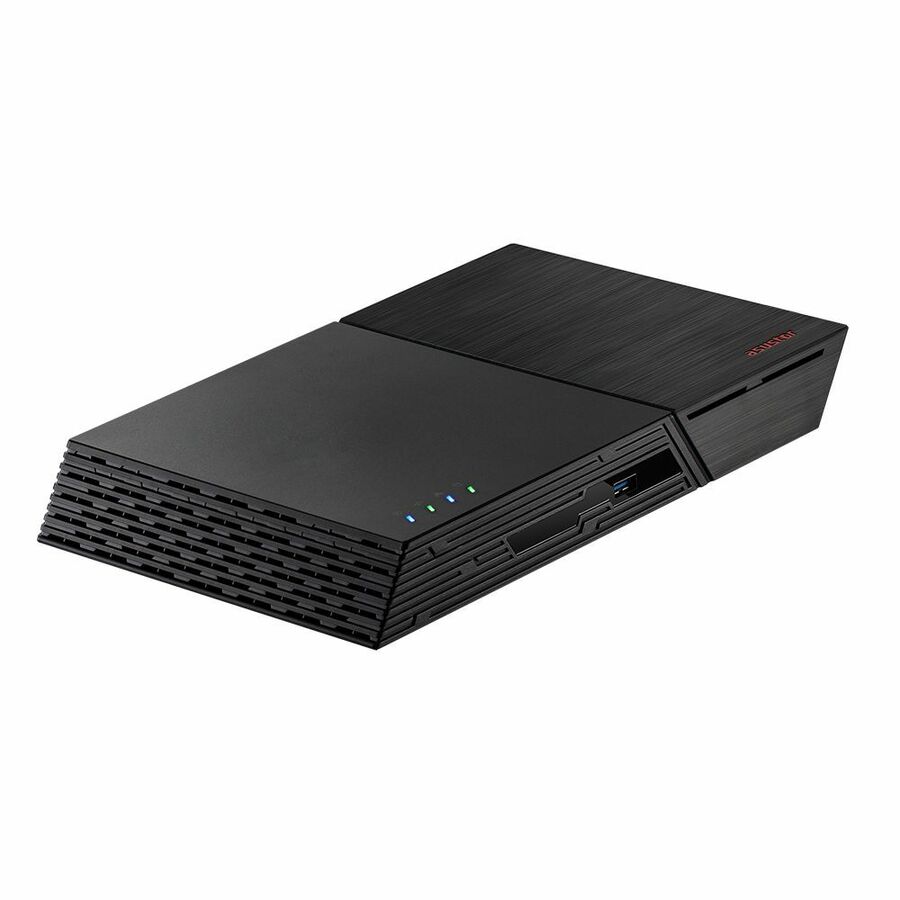
- ASUSTORAsustor AS5402T, 2 Bay NAS, Intel Quad-Core 2.0GHz CPU, 4X M.2 NVMe SSD Slots, 2x2.5GbE Ports, 4GB DDR4 RAM, for Gaming and Live Stream, Network Attached Storage(Diskless) - The Best NAS 4 Flash Hard Drives + Flash SSDs = The best of both worldsAS5402T
$479.50
Back-orderedBack-ordered — estimated OEM lead time 3–8 weeks (Dec 3, 2026 – Jan 7, 2027 if ordered today).
- ASUSTORAsustor FLASHSTOR 6 Gen2 FS6806X, 6 Bay All M.2 SSD NAS Storage, AMD Ryzen Quad Core 2.3GHz, 8GB RAM DDR5, 6 M.2 SSD Slots, 10GbE Port, USB4 Type-C, Network Attached Storage (Diskless) - Speeds keep Risin' and RyzenFS6806X
$1,209.66
Back-orderedBack-ordered — estimated OEM lead time 3–8 weeks (Dec 3, 2026 – Jan 7, 2027 if ordered today).
- ASUSTORAsustor Lockerstor 10 AS6510T - 10 Bay NAS, 2.1GHz Quad-Core, 2 M.2 NVMe SSD Slot, 10GbE Port, 2.5GbE Port, 8GB RAM DDR4, Enterprise Network Attached Storage (Diskless) - Shift into overdrive with dual Intel 10GbE, M.2 SSD Cache and 2.5GbE!AS6510T
$1,555.18
Back-orderedBack-ordered — estimated OEM lead time 3–8 weeks (Dec 3, 2026 – Jan 7, 2027 if ordered today).
- ASUSTORAsustor Lockerstor 10 Gen3 AS6810T 10 Bay NAS, AMD Ryzen Quad-Core 2.3 GHz, 16GB RAM ECC DDR5, 4 M.2 NVMe Slots, Dual 5GbE and Dual 10GbE Port, USB4 Type-C, Network Attached Storage (Diskless) - Ryzen up to the challenge!AS6810T
$2,562.51
Back-orderedBack-ordered — estimated OEM lead time 3–8 weeks (Dec 3, 2026 – Jan 7, 2027 if ordered today).
- ASUSTORAsustor Lockerstor 10 Pro| AS7110T | Enterprise Network Attached Storage | 3.4GHz Quad-Core, One 10GbE Port, Three 2.5GbE Ports, Two M.2 Slots for NVMe SSD Cache, 8GB RAM DDR4 (10 Bay Diskless NAS) - Full Xeon Speed Ahead! Extremely efficient and stable - Your next enterprise virtualization and storage solutionAS7110T
$2,772.77
Back-orderedBack-ordered — estimated OEM lead time 3–8 weeks (Dec 3, 2026 – Jan 7, 2027 if ordered today).




Use sustained rates for a useful scenario
The network, source and target can each limit a transfer. Enter measured sustained rates for the relevant workload when available; headline interface speed is only a scenario input. The chosen link share makes network overhead and contention assumptions visible. Decimal GB, MB and Mbps are labeled so a bytes-versus-bits mistake does not silently make the window eight times too optimistic.
Transfer time is not full recovery time
The simple model assumes the declared reduction applies before the modeled bottleneck. Discovery, source processing, encryption, cloud retrieval and application behavior can add stages or use different rates. Keep staging and validation time explicit, and do not add overlapping stages as though they were sequential. A backup that fits an arithmetic window is not proof of recoverability; use measured restore tests and application checks.
Worked example
A 1,000 GB payload across an effective 100 MB/s bottleneck needs about 2.78 hours before any extra stages. Faster headline ports cannot remove a slower storage bottleneck.