

FAA Ground Stop: Who Was Overseeing L3Harris?
The FAA is investigating sites in Arkansas and Texas after its nationwide ground stop. The case asks why routine contractor work could ripple across the country and who controlled that risk.
By Uniqcli Team · · 6 min read
Key takeaways
- The FAA's November 15 update identified two sites under investigation; the root cause remained unresolved, leaving accountability questions for L3Harris and the agency.
- An earlier inspector general review documented contractor errors and FAA oversight weaknesses. Those historical findings do not establish the cause of this outage.
- Contractor oversight should produce evidence of testing, approvals, fault containment, recovery authority and verified corrective actions.
On this page
A maintenance job at a remote government facility should not become a national transportation crisis. Yet the government's preliminary account of the November 13 FAA outage describes network instability involving two remote sites after contractor maintenance. That is an accountability question for L3Harris and the agency overseeing its work.
When the consequences reach airports across the country, the public deserves to know who approved the risk, who verified the safeguards, and who had authority to stop the work before the disruption spread.
How a local job became a national disruption
In its November 15 update, the FAA identified two potential sources of excessive network traffic: a radio communications site in El Dorado, Arkansas, and a radar site in Amarillo, Texas. L3Harris had been deploying a router at El Dorado. The FAA said isolating both sites stabilized the network; the root cause remained under investigation.
The FAA also said it disabled the relevant functionality on approximately 60 similar routers as a precaution. That is a containment measure, not a published finding of the initiating fault.
DOT said the equipment and installation process were under review at L3Harris's laboratory with FAA staff. Duffy said equipment replaced in Amarillo about three weeks earlier also began flooding the network when the El Dorado router was activated.
In the November 14 briefing, FAA Administrator Bryan Bedford distinguished the routine maintenance from the separate Peraton–FAA modernization program.
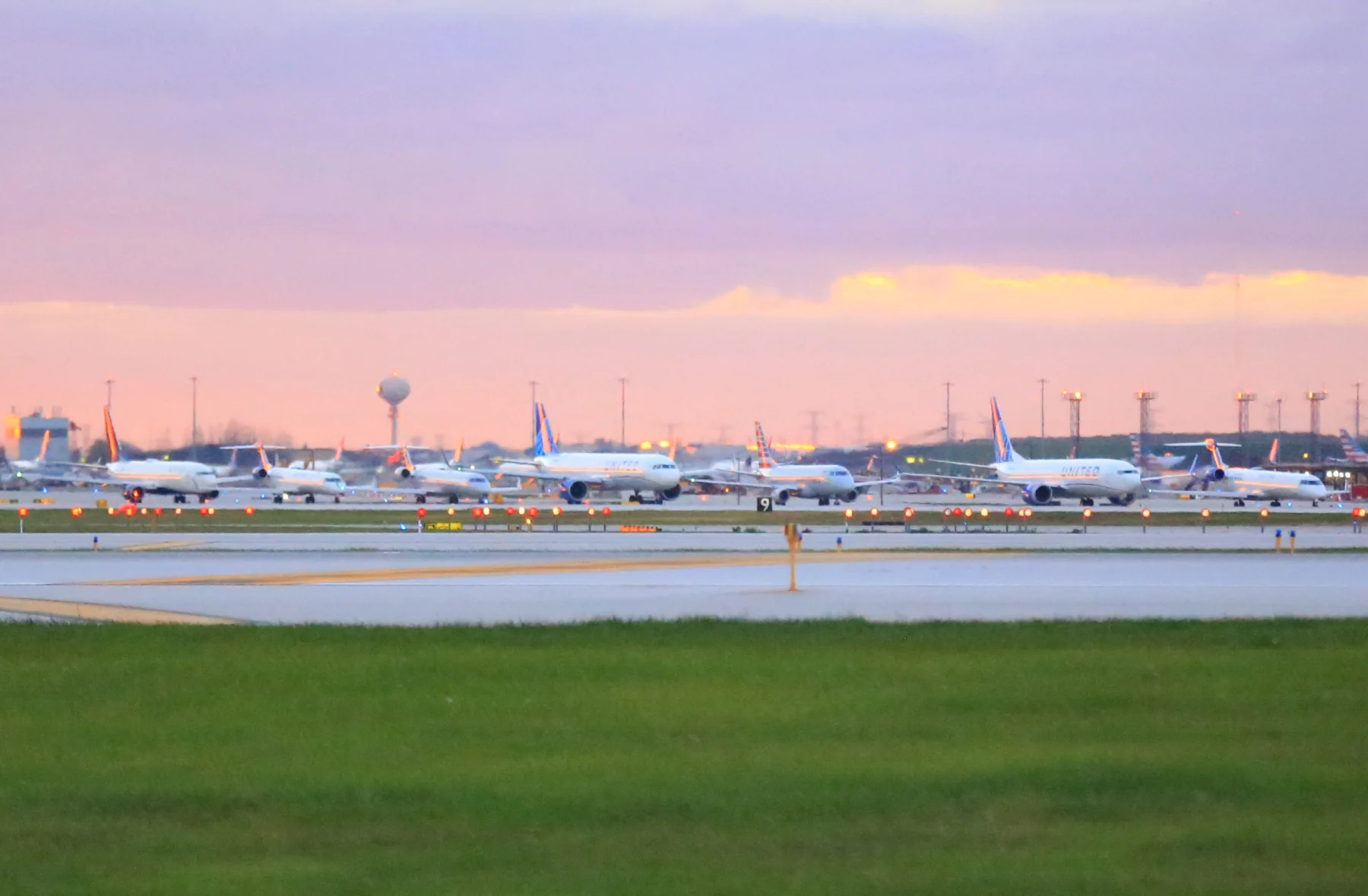
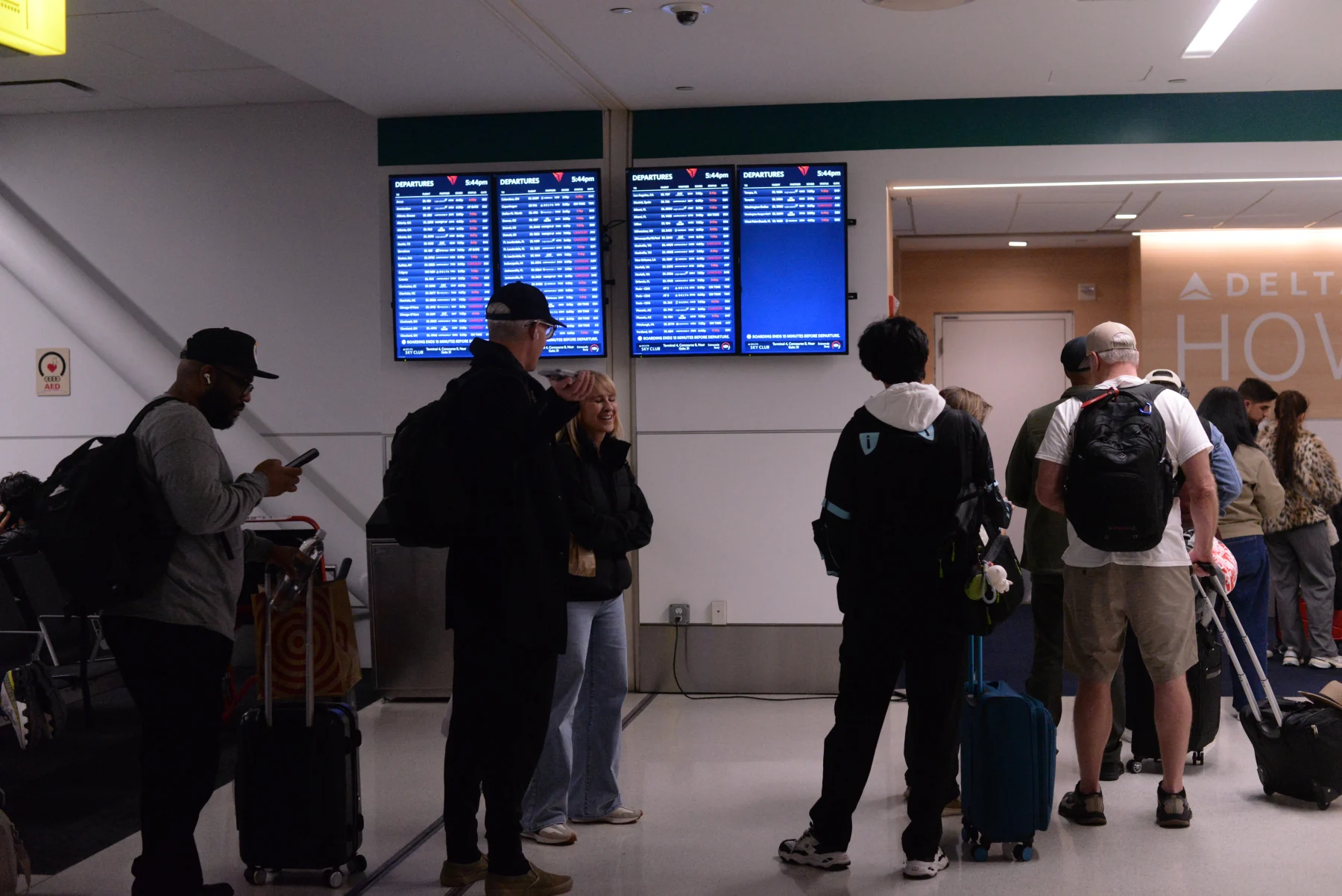
The FAA responded with a nationwide ground stop lasting roughly four and a half hours. This held departures while controllers and pilots continued bringing airborne aircraft in safely. It was a precaution against unstable systems; the FAA had not lost all radar or telecommunications capability.
The oversight question concerns the conditions that made that nationwide intervention necessary. A local maintenance fault and a national service disruption are different problems. An investigation must explain both the initiating fault and how its effects traveled so far.
The FAA has faced this oversight question before
In June 2010, the DOT inspector general reported on a November 2009 FAA Telecommunications Infrastructure outage. It found that contractor configuration and procedural errors blocked about 75% of network traffic and delayed service restoration for five hours. It also found that FAA oversight could have been more effective and proactive. The report acknowledged corrective actions by the agency and contractor.
That earlier finding does not establish what failed in 2026. It does establish that contractor oversight of this critical network has been a documented concern before. The reasonable demand now is evidence of how those lessons informed the controls used on November 13.
Contractor responsibility and government responsibility
L3Harris should explain the equipment, testing, operating decisions, and recovery actions within its control. The FAA should explain how it assessed the work, verified readiness, monitored performance, and decided whether the potential consequences were acceptable. Those responsibilities need to be traced through the actual contract and approval records.
The danger of poorly supervised contracting is that each organization can describe its own assignment while no one demonstrates that the complete service remains protected. Establishing whether that happened here requires the investigation. Calling the work routine does not answer who controlled its national consequences.
The FAA's broader management problems also deserve scrutiny. In September 2026, GAO found weaknesses in cost and schedule planning for its modernization program. That review concerned the broader program, not this maintenance job, but it reinforces the need to judge government oversight by documented execution.
Published safeguards need evidence behind them
In May, L3Harris described parallel testing, coordinated low-traffic cutovers, and backup systems as part of its upgrade approach. The company should identify which safeguards applied to this job and show how they performed. Its earlier description does not establish whether any procedure was followed or bypassed on November 13.
L3Harris said on November 14 that it was supporting the investigation, acknowledged the disruption, and reported completing more than 70% of the planned communications conversion. That response leaves the central accountability questions open.
What accountability should produce
A credible public incident report should establish:
- Who approved the work: the responsibilities of the contractor and FAA officials, including the evidence used to accept the risk.
- Why the disruption spread: the intended limits on a local fault and the reasons those limits did not preserve normal operations.
- How recovery was managed: when problems were detected, who could stop or reverse the change, and why restoration took as long as it did.
- Who owns the corrections: named responsible organizations, deadlines, independent verification, and any contractual consequences supported by the findings.
Contracting out critical operations puts public services in the hands of private operators while leaving passengers and businesses exposed to the consequences of failure. Effective oversight must make responsibility visible before the next maintenance window. The FAA and L3Harris owe the public a clear account of who owned the risk, what failed, and how the correction will be verified.
Frequently asked questions
Has the investigation established that L3Harris was negligent?
As of the FAA's November 15 update, the root cause remained under investigation. The accountability questions in this article concern what L3Harris and the FAA must demonstrate; they are not a finding of negligence.
Did the ground stop halt aircraft already in flight?
The nationwide ground stop held departures. Controllers and pilots continued bringing airborne aircraft in safely while the FAA addressed instability in communications and radar feeds.
What should agencies require before approving contractor maintenance?
Require a named approval owner, tests appropriate to the operating environment, a plan for containing faults, clear authority to stop or reverse a change, and evidence that recovery works. The acceptance record should cover the complete service and the responsibilities of each organization.
Ready to price this configuration?
Send the part numbers and we will quote them.
Sources
- 1.U.S. Department of Transportation Office of Inspector General — Letter to Chairmen Oberstar and Costello Regarding the 2009 FAA Telecommunications Infrastructure Outage (2010-06-17)www1.oig.dot.gov
- 2.Federal Aviation Administration — ATCSCC Advisory 111 (2026-11-13)fly.faa.gov
- 3.Federal Aviation Administration — ATCSCC Advisory 005 (2026-11-14 UTC / 2026-11-13 Eastern)fly.faa.gov
- 4.U.S. Department of Transportation — Duffy Announces Lifting of Nationwide Ground Stop (2026-11-13)transportation.gov
- 5.U.S. Department of Transportation — Duffy Provides Update on Restoration of Airspace (2026-11-14)transportation.gov
- 6.L3Harris — L3Harris Reaches Over 50% in FAA Telecommunications Modernization (2026-05-11)l3harris.com
- 7.L3Harris — L3Harris Statement on the Nov. 13 Ground Stop (2026-11-14)l3harris.com
- 8.U.S. Government Accountability Office — GAO-26-107992 Air Traffic Control Systems (2026-09-14)files.gao.gov
- 9.Federal Aviation Administration — Nationwide Ground Stop: Questions and Answers (2026-11-15)faa.gov
- 10.U.S. Department of Transportation — Sunday Airspace Update and Ongoing Investigation (2026-11-15)transportation.gov
Reporting reflects official statements through November 15, 2026. The initiating fault remains under investigation. Historical inspector general findings concern the November 2009 outage and do not establish the cause of the November 2026 incident.
Photo credits
- 1.Cover — Yanxu Liu (Spelg33), aircraft at Chicago O’Hare during the November 13, 2026 ground stop; Wikimedia Commons, CC0 1.0commons.wikimedia.org
- 2.Cover license — CC0 1.0 Universal public-domain dedicationcreativecommons.org
- 3.JFK — Sashimi-b, JFK during the 2026 FAA ground stop; Wikimedia Commons, CC BY-SA 4.0; resized and encoded as WebPcommons.wikimedia.org
- 4.JFK license — Creative Commons Attribution-ShareAlike 4.0 Internationalcreativecommons.org
- 5.Washington center file photo — Federal Aviation Administration, AirTraffic-8; Wikimedia Commons, public domain in the United Statescommons.wikimedia.org
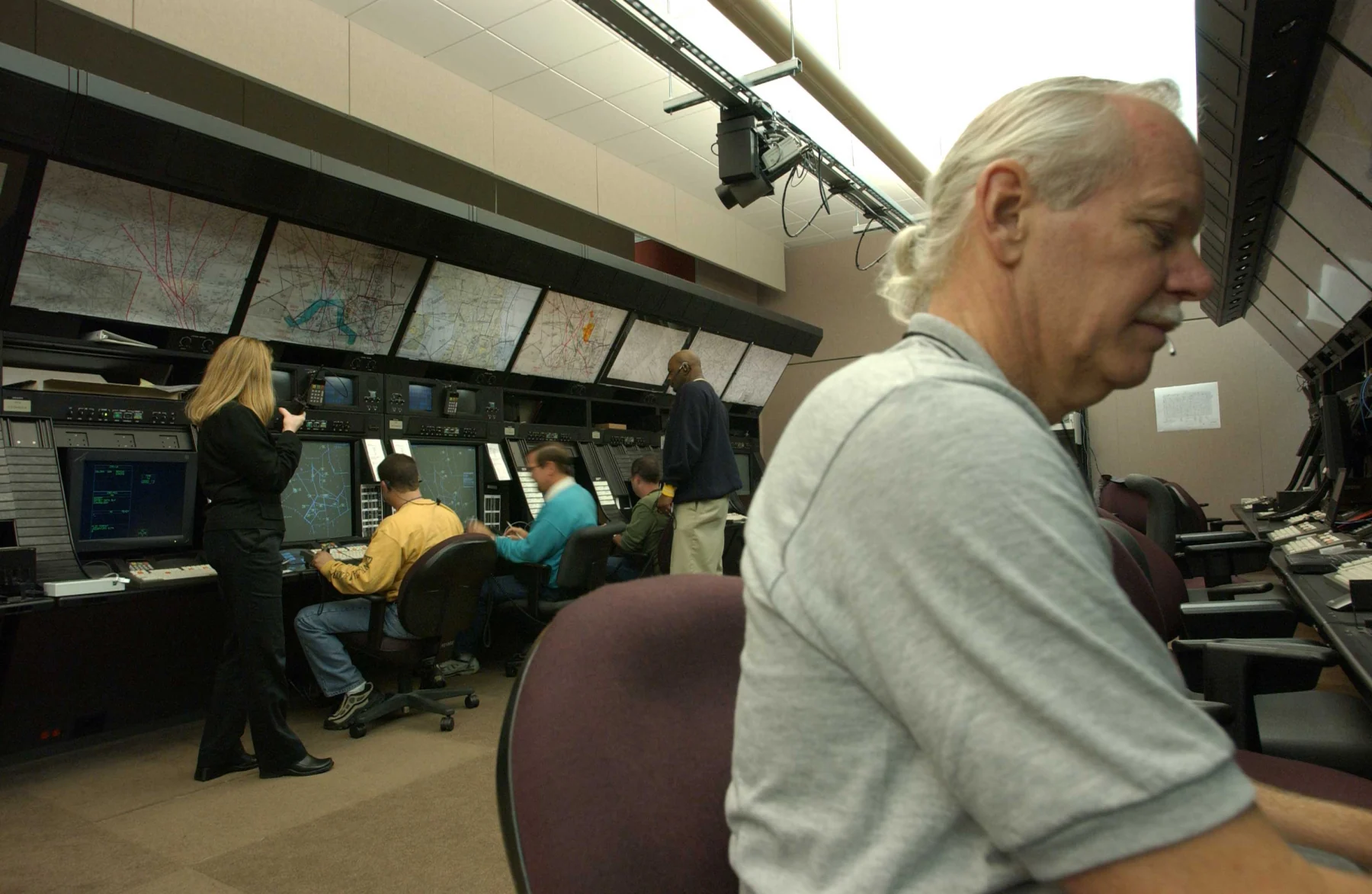
The O’Hare and JFK photographs document the November 13 ground stop. The Washington control-center photograph is archival context. Images were resized and encoded as WebP for page speed, with no editorial alterations. The respective photo licenses remain linked above.