
Network & data center services
Fiber Optic Cabling and Installation
Fiber is a distance decision, an optics decision and a testing decision before it is a cable decision.
We quote the trunks, the enclosures and cassettes, the pigtails and patch cords, and the transceivers at both ends as one bill of materials — with the loss budget and the polarity method settled before anything is ordered.
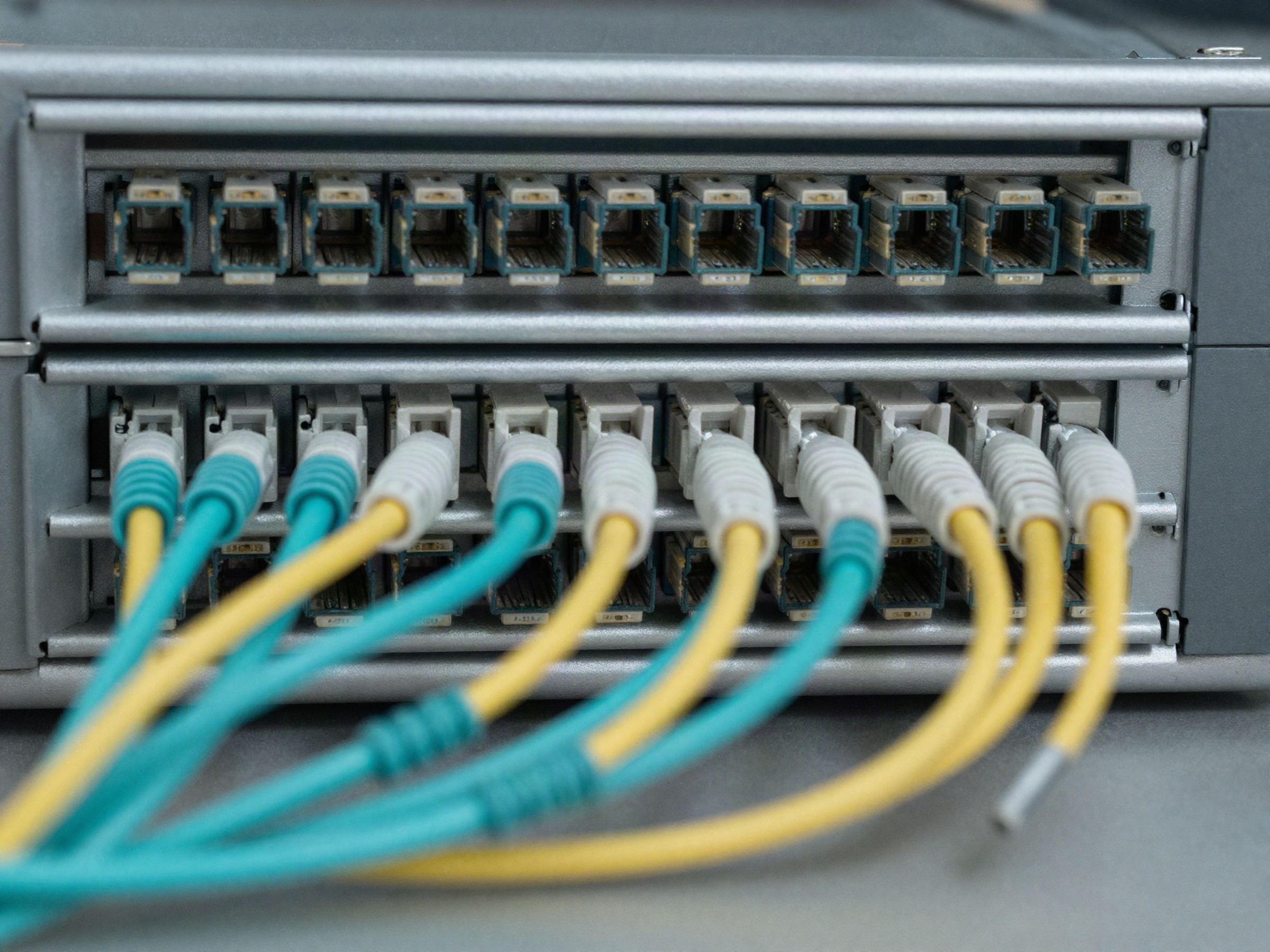
- Scope
- Trunks · enclosures · cassettes · pigtails · patch cords
- Design order
- Distance and lane rate first, fiber grade second
- Settled before ordering
- Loss budget, polarity method, connector count
- Boundary
- We supply and coordinate — we light nothing and lease nothing
Tell us the project — Fiber optic cabling
Tell us where to reach you and a Uniqcli specialist follows up by email to scope the work with you — what has to be covered, how many sites or buildings, and what already exists — then comes back with a quoted bill of materials across the equipment, the software licensing and the deployment work.
Priced against your own site rather than a package tier, sourced through US distribution and screened line by line. We specify, supply, stage and integrate; internet access is scoped separately from the equipment on this page, and operating the network stays with your team or the provider you contract.
The first number is our real one, not an opening one.
Tell us the scope and we come back with the best price we can do on it.
- Supporting federal, state & local purchasers
- GPC & P-Card accepted
- TAA & NDAA-889 screening before every quote
Live prices from our catalog right now — a starting point, not the project price. Your quote is scoped to the site and includes the licensing and services the job needs.
The fiber is the cheap part of a fiber project
Fiber projects rarely go over budget on the glass. They go over on everything either side of it. A trunk is straightforward to price; what is not straightforward is the enclosure and cassette count that trunk implies, the pigtails and splice trays if it is field-terminated, the patch cords in the right connector type and the right polarity at both ends, and the transceivers — which across a dense link count can quietly exceed the cost of the cable plant they serve.
Continue readingShow less
Behind all of that sits the decision nobody wants to re-open: which fiber grade goes into the riser or the ground, given that pulling it a second time is the expensive outcome. We scope in that order — distance, the lane rate today and the lane rate the link has to survive, loss budget, connector count — and quote the trunks, the terminations, the enclosures and the optics as one document rather than as four purchases that have to reconcile later.
What a fiber quote has to contain
Fiber is the category where a partial bill of materials looks complete. These four groups are priced together because leaving any one of them out stops the link from coming up.
Trunks, riser and outside-plant cable
Strand count sized against growth rather than day-one links, because the second pull is where the money goes. Jacket, armor and rating chosen for the pathway the cable actually takes — indoor riser, plenum, or outside plant with the entrance and transition requirements that follow it into the building.
Continue readingShow less
Pre-terminated and field-terminated are priced as genuine alternatives wherever the pathway and the pull tension allow either.
Enclosures, cassettes and splice trays
Rack-mount and wall-mount enclosures, MPO cassettes, adapter panels, splice trays and sleeves. This is the group routinely under-ordered, because it scales with link count and termination style rather than with cable length — a short trunk feeding a dense cross-connect needs far more of it than a long trunk feeding two links does.
Pigtails, patch cords and polarity
Connector type at each end, simplex or duplex, and a polarity method chosen once and written down. Polarity is a common reason a freshly installed trunk does not link on the first attempt, and it is entirely avoidable on paper — the method decides which cords and cassettes are ordered, so it belongs in the bill of materials rather than in a conversation on install day.
Transceivers at both ends
The optic sets the reach, and on a link-dense design it often sets the cost. Each module is matched to the host platform, the wavelength and the distance so the link comes up the first time rather than after a swap.
Continue readingShow less
Where a host platform has coding requirements, that is a sourcing detail we work out before the quote rather than after delivery.
Send the spans, get the whole plant priced
Go to the formOS2 or OM4, the honest version
The inherited assumption is that multimode is the cheaper answer. That was reliably true when the optics gap was wide and the runs were short, and inside a single data hall it is often still true. What has changed is that multimode reach falls away sharply as the lane rate climbs — the same OM4 trunk that comfortably carried an earlier generation across a campus building may not carry the current one over the same span. Discovering that after the trunk is in the riser is the expensive way to learn it, which is why the question we ask is not what the link runs today but what it has to survive.
Continue readingShow less
Singlemode removes the distance question almost entirely and moves the cost into the transceivers. That is a meaningful trade in one direction: the optics are a line you can re-buy later, and the fiber in the wall is the line you cannot. For campus backbone and anything crossing between buildings, that usually points at OS2. Inside a row, or between adjacent racks, it usually points the other way. The arithmetic is genuinely per project — link count, distances, the platforms at each end — and it is worth doing rather than inheriting from the last build.
The loss budget is what makes the design checkable. Every mated pair and every splice costs decibels, so the budget is a counting exercise — length, mated pairs, splices — and it decides whether a cassette-based MPO architecture or a direct-terminated one is the right answer for a given link. We write the budget down beside the bill of materials so the design can be argued with before it is bought, rather than defended after a link comes up marginal.
Three places a fiber quote comes from
Naming a manufacturer describes the lines we quote, not a Uniqcli partnership, authorization or endorsement. Availability is stated per line and the quote says which lines are priced today.
Campus and building backbone
Between-building spans where pathway, entrance facilities and the grounding of armored cable matter as much as the strand count. Strand counts are sized for the buildings that are coming, not only the ones that are there, because incremental fiber between buildings is rarely incremental in cost.
Data center and equipment room
MPO trunks, structured row cabling and cassette-based cross-connects, specified so the next lane-rate change is a cassette and optics swap rather than a re-pull.
Continue readingShow less
This is where polarity discipline and consistent connector types pay for themselves repeatedly.
Lines we quote
Panduit, Leviton, Tripp Lite, C2G and Black Box carry live-priced connectivity rows across enclosures, cassettes, cords and assemblies. Bulk outside-plant reels, custom-length pre-terminated trunks and splice consumables are sourced on request through authorized US distribution rather than listed with a shelf price.
What's included in a fiber plant quote
Fiber is the category where a partial bill of materials looks complete — so the loss budget and the polarity method are settled before anything is ordered.
- Trunks, riser and outside-plant cable with the strand count sized against growth rather than day-one links
- Enclosures, cassettes, adapter panels, splice trays and sleeves, rack-mount or wall-mount
- Pigtails and patch cords with the connector type named at each end, and a polarity method chosen once and written down
- Transceivers at both ends — the optic sets the reach, and on a link-dense design it often sets the cost
- Labeling and as-built records in the same deliverable, wherever installation and certification are in the project scope
From a span to a screened order
A one-line diagram and a set of distances is enough to start. Everything after that is arithmetic we would rather do before the order than after the pull.
- Send the spans — building-to-building distances, riser paths, or a one-line diagram with the link counts on it
- We work the loss budget and the connector count with you; the fiber grade follows from that rather than from habit
- Trunks, enclosures, cassettes, pigtails, patch cords and optics come back as one bill of materials, availability per line
- Pre-terminated and field-terminated are priced both ways wherever the pathway and pull tension allow either
- Where the scope includes installation, splicing and certification, that work is coordinated against your site schedule
- TAA (FAR 52.225-5) and NDAA §889 screening is performed on every line before the quote goes out, with alternates for anything that does not clear
An untested plant is a liability with a warranty on it
Certification is what turns a fiber installation into an asset somebody can defend. Tier 1 testing measures insertion loss and length on every link and is the baseline any plant should have; Tier 2 adds an OTDR trace, which is what tells you where a problem is rather than only that one exists. On a backbone, a campus span or anything buried, the OTDR trace is the record that saves a day of fault isolation years later, and it costs a fraction of what that day costs.
Continue readingShow less
Labeling and as-built records belong in the same deliverable. A trunk with legible identifiers at both ends and a drawing that matches what is in the wall is the difference between a moves-adds-changes ticket and an investigation. Where installation and certification are in the project scope, those records come with it. Where we are supplying materials only, the testing belongs to whoever performs the install — write it into their scope explicitly rather than assuming it, because that assumption is one of the most common gaps we see in a handover.
Price the span, not just the cable
Send the distances and the link counts, or a one-line diagram, and the trunks, enclosures, terminations and optics come back as readable lines with the loss budget written down beside them. A structured parts list is quicker to price than a description, so if you already have one, send that.
What we are not
This page is fiber PLANT, not fiber service. We do not light fiber, lease capacity or operate a span after handover, we hold no routes of our own, and we make no uptime or restoration-time commitment on anything we supply. Dark fiber between buildings on ground you control is a plant we can specify, source and coordinate the installation of; a span crossing a public right of way is a construction and permitting exercise with a different set of parties, and the honest answer there is to tell you so early.
Continue readingShow less
We are also not a local contractor bidding hourly labor. Pulling, splicing, permits, inspection and code compliance stay with the licensed trades performing the work and with the authority having jurisdiction. Where installation and certification are inside a quoted project, they are coordinated against your schedule as part of that project — the equipment, the licensing and the integration work that put a plant into service is what we supply, handed over with documentation.
The scopes fiber usually arrives with
Fiber is almost never a standalone purchase. These are the adjacent lanes most often quoted on the same project.
Fiber optic cabling questions
Should we run singlemode or multimode?
Ask what the link has to carry in five years rather than what it carries now. Multimode reach shortens as lane rates rise, so a span that is comfortable today can become the constraint on the next upgrade, and re-pulling is the expensive outcome. Singlemode removes most of the distance question and moves cost into the optics, which you can re-buy later. Campus and between-building spans usually point at OS2; short in-row links often still favor multimode. Send the distances and link counts and we will show the arithmetic both ways.
Pre-terminated trunks or field termination?
Pre-terminated wins on schedule and on consistency — the terminations are made and tested in a factory rather than in a ceiling — and it is usually the right answer where the pathway is clean and the lengths are known. Field termination wins where lengths are uncertain, where pull tension or a tight pathway makes a connectorized end impractical, or where the run has to be spliced into existing plant. We price both wherever both are viable rather than defaulting to one.
Do you supply the transceivers as well as the cable?
Yes, and they belong on the same quote — the reach of a link is set by the optic, not by the fiber alone. Modules are matched to the host platform, the wavelength and the distance so the link comes up on the first attempt, and where a platform has coding requirements that gets settled before the quote rather than after delivery.
Do you provide certified test results?
Where installation and certification are in the project scope, yes: Tier 1 insertion loss and length on every link, Tier 2 OTDR traces where the span warrants it, plus labeling and as-built records. Where we are supplying materials only, certification belongs to whoever performs the install and should be written into their scope explicitly. Either way, the test records are what make the plant defensible for warranty and for the faults that surface years later.
How do we pay — can we use a purchase card?
GPC and P-Card are accepted up to your cardholder threshold, and purchase orders otherwise. On a cabling project many buyers split the two: materials on one order and any installation scope on another, which keeps receiving and reconciliation clean and lets the materials move while the labor scope is still being finalized. The final total is confirmed before you commit either way.
Is fiber hardware TAA and §889 screened?
Yes, and on a fiber bill of materials the optics deserve the attention. Trunks, cassettes, enclosures and cords are passive plant, screened per part number like any other. The transceivers are the electronic lines, and a coded-for-OEM optic is built by a maker other than the switch vendor whose code it answers to — so the manufacturer that matters for screening is not always the name printed on the port it plugs into. We record manufacturer-stated country of origin per line, check each maker with its parent and affiliates against the NDAA §889 covered-entity list, and name alternates for anything that does not clear.
The solutions atlas
Every solution, by technology area and by customer.
By technology
By customer
- TAA & NDAA-889 Compliance Screening
- CMMC & CUI Solutions
- Federal & DoD
- State, Local & Education
- Healthcare
- Enterprise
- Rapid Procurement & GPC Buys
- Multi-Vendor Integration Projects
- eProcurement & Custom Catalogs
- FISMA Modernization
- CJIS-Compliant Justice Cloud & Local AI
- Federal Storage Modernization
- Government ERP & Business Systems Infrastructure
- Managed Procurement
- Secure AV & Conferencing
- Fiber Network Infrastructure
- Satellite & Resilient Connectivity
- Wavelength & Optical Transport
- Decentralized Data Centers
- Data Center Design & Build
Send the spans, get the whole plant priced
Distances, link counts or a one-line diagram is enough to start. Trunks, enclosures, cassettes, terminations and optics come back on one quote, with the loss budget beside them and every line screened before it goes out.