
Physical security
Commercial Video Surveillance Systems
A surveillance system is a coverage problem, a bandwidth problem and a retention problem before it is a camera problem.
- Coverage and retention first — camera count comes last
- Cameras · PoE switching · recording capacity · VMS licensing
- Quoted as one package against your own site
We scope the cameras, the switching that powers them, the storage that keeps the footage and the licensing that ties it together — quoted as one package against your own site.
- Scope
- Cameras · PoE switching · recording capacity · VMS licensing
- Design order
- Coverage and retention first — camera count comes last
- Lines
- Hanwha Wisenet and comparable commercial lines, quoted
- Boundary
- We supply and integrate — no monitoring or detection outcome claimed
Get an estimate — Video surveillance
Tell us where to reach you and a Uniqcli specialist follows up by email to scope the site with you — what has to be covered or controlled, what already exists, and the requirements behind it — then comes back with a quote across the equipment, the software licensing and the integration work.
Priced against your own site, not a package tier — the lines here are quoted through our distribution network rather than listed with a shelf price. We supply and integrate; monitoring, alarm response and video review stay with your organization or the provider you contract.
The first number is our real one, not an opening one.
Tell us the scope and we come back with the best price we can do on it.
- Supporting federal, state & local purchasers
- GPC & P-Card accepted
- TAA & NDAA-889 screening before every quote
Live prices from our catalog right now — a starting point, not the project price. Your quote is scoped to the site and includes the licensing and services the job needs.
Camera count is the last decision, not the first
Almost every surveillance quote that goes wrong went wrong at the same moment: somebody counted cameras before anybody wrote down what had to be seen and for how long. The count follows from the coverage — from the openings, the aisles and the yard positions that actually need a view, the lighting they have at three in the morning, and the number of days of footage somebody will one day have to go back through.
Continue readingShow less
Change the retention period from fourteen days to ninety and the camera list does not move at all while the storage line triples. We scope in that order: what has to be covered, how long it has to be kept, what the network has to carry, and only then which cameras answer it. Hanwha Wisenet is one of the commercial lines we quote against that scope, available through our distribution network alongside comparable lines, with the switching, storage and licensing quoted on the same order.
Where coverage is won and lost in a distribution building
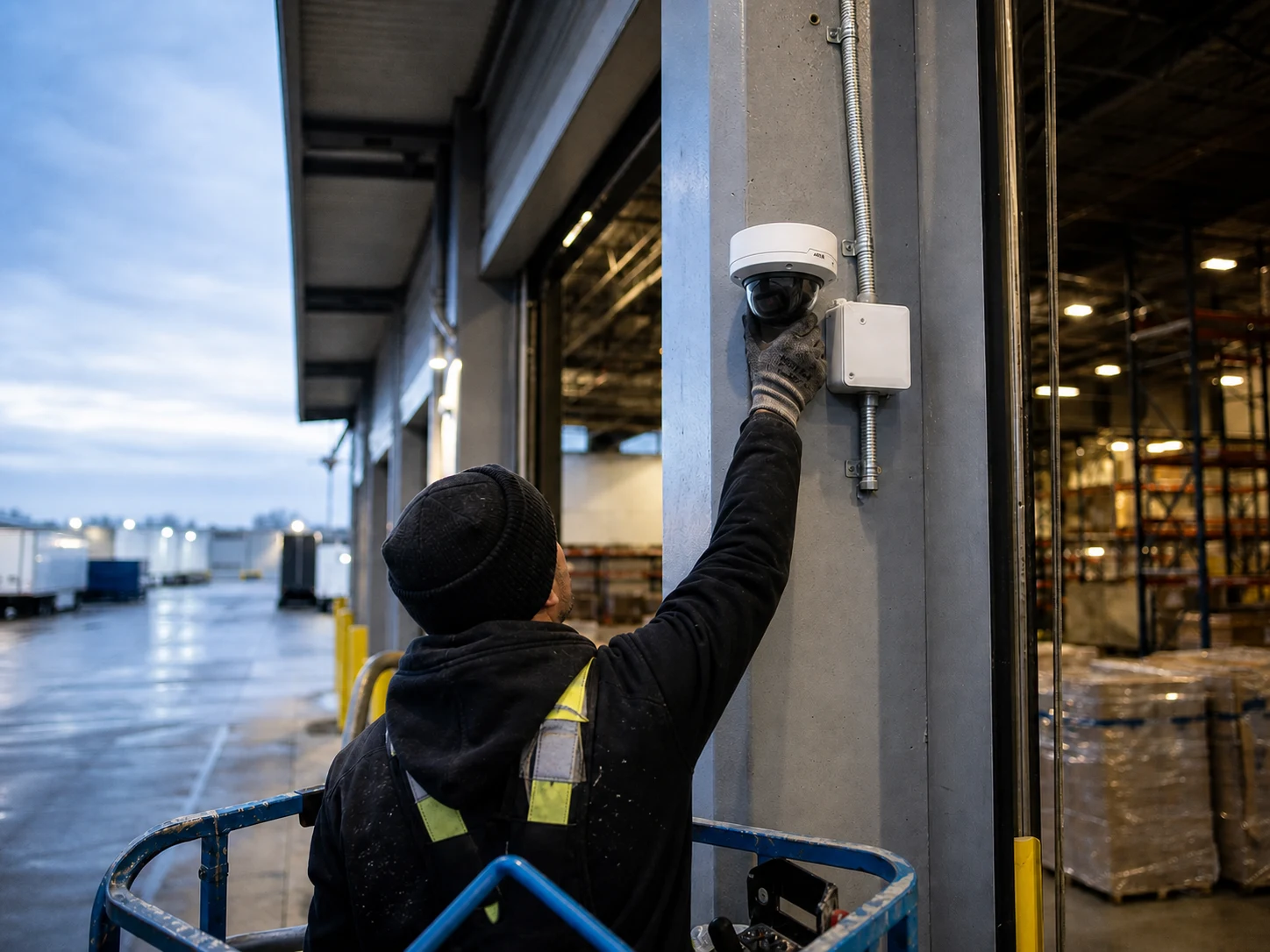
A warehouse is four different camera problems in one shell, and pricing it as one is how a system ends up with excellent coverage of the parking lot and none of the pick face.
Continue readingShow less
Naming a manufacturer describes the lines we quote, not a Uniqcli partnership, authorization or endorsement.
Dock doors and receiving
The highest-value coverage in the building and the hardest lighting in it: a door that is a black rectangle at night and a blown-out white one at noon, with a trailer reversing into it.
Continue readingShow less
This is where wide dynamic range stops being a spec-sheet line and starts being the difference between a usable clip and a silhouette. Coverage is normally specified per door position rather than per bay, with the reading distance for a trailer number or a pallet label written down before optics are chosen.
Racking aisles and pick faces
Long, narrow, artificially lit and full of moving equipment. Aisle runs are a focal-length exercise — how far down the aisle the camera has to resolve a person or a carton label decides the lens before it decides the sensor — and the mounting height is usually set by the racking, not by preference.
Continue readingShow less
Where the aisle layout changes seasonally, a position that survives a re-slot is worth more than one with a marginally better view today.
Yard, gates and trailer parking
Outdoor positions inherit an entirely separate cost structure: a hardened enclosure, surge protection and grounding, and power that frequently is not there.
Continue readingShow less
That last one is the constraint that cannot be worked around cheaply, which is why yard coverage is designed around fewer, better positions rather than more of them. Where a trench is not viable, a surveyed wireless link is usually what makes the position affordable at all.
Staging, returns and high-value cage
The areas where inventory shrinkage investigations actually end up. These need coverage that resolves hands and labels rather than bodies and shapes, which normally means tighter positions at shorter range rather than another wide view from the ceiling.
Continue readingShow less
Retention here is often set longer than the rest of the building because a discrepancy surfaces on a cycle count weeks after the event.
Send the site, get a real number
Go to the formBuildings, entrances and the ground between them
Outside the four walls of a distribution building the problem changes shape. A campus is a set of buildings with different construction eras, different pathways and — almost always — a mix of surveillance equipment installed by whoever held the contract at the time. The useful question is rarely "what replaces all of this" but "what has to be replaced first, and what can keep serving until it fails". We survey what is there, identify the positions where coverage is genuinely absent rather than merely old, and phase the rest against a refresh cycle you can actually fund.
Continue readingShow less
Entrances, lobbies and corridors are the positions most often over-specified and most often under-lit. A lobby camera that has to resolve a face at the door needs a different lens and a different mounting position than one recording that somebody passed through, and the two requirements are frequently written into the same line item. Getting that distinction on paper before the quote is the single cheapest thing a scoping conversation produces.
Between buildings, the design order is the one that governs every outdoor project: power to each position, then the path back to the recording point, then the capacity to keep what arrives. Where a campus already runs a structured cabling plant, extending it is usually cheaper than any wireless alternative; where it does not, a surveyed point-to-point link often is. Both are quoted here rather than left as an installer's surprise.
The half of the system that renews every year
Video management is bought twice — once as the recorder and once, every year after, as the channel licences and support that keep it supported. Software is sourced through US distribution rather than held on a shelf, so stock language does not apply to it; what matters is the channel or door count, the term and the co-termination date against the renewals you already carry.
Channel licensing
Nearly every video management platform licences per camera channel, in bands, with a separate line for the tiers that add analytics, failover recording or multi-site federation.
Continue readingShow less
Adding twelve cameras in year two frequently crosses a band boundary and costs more than the twelve cameras did. We quote the licence against the channel count you are actually planning for, not the one you have today.
Recording servers and storage
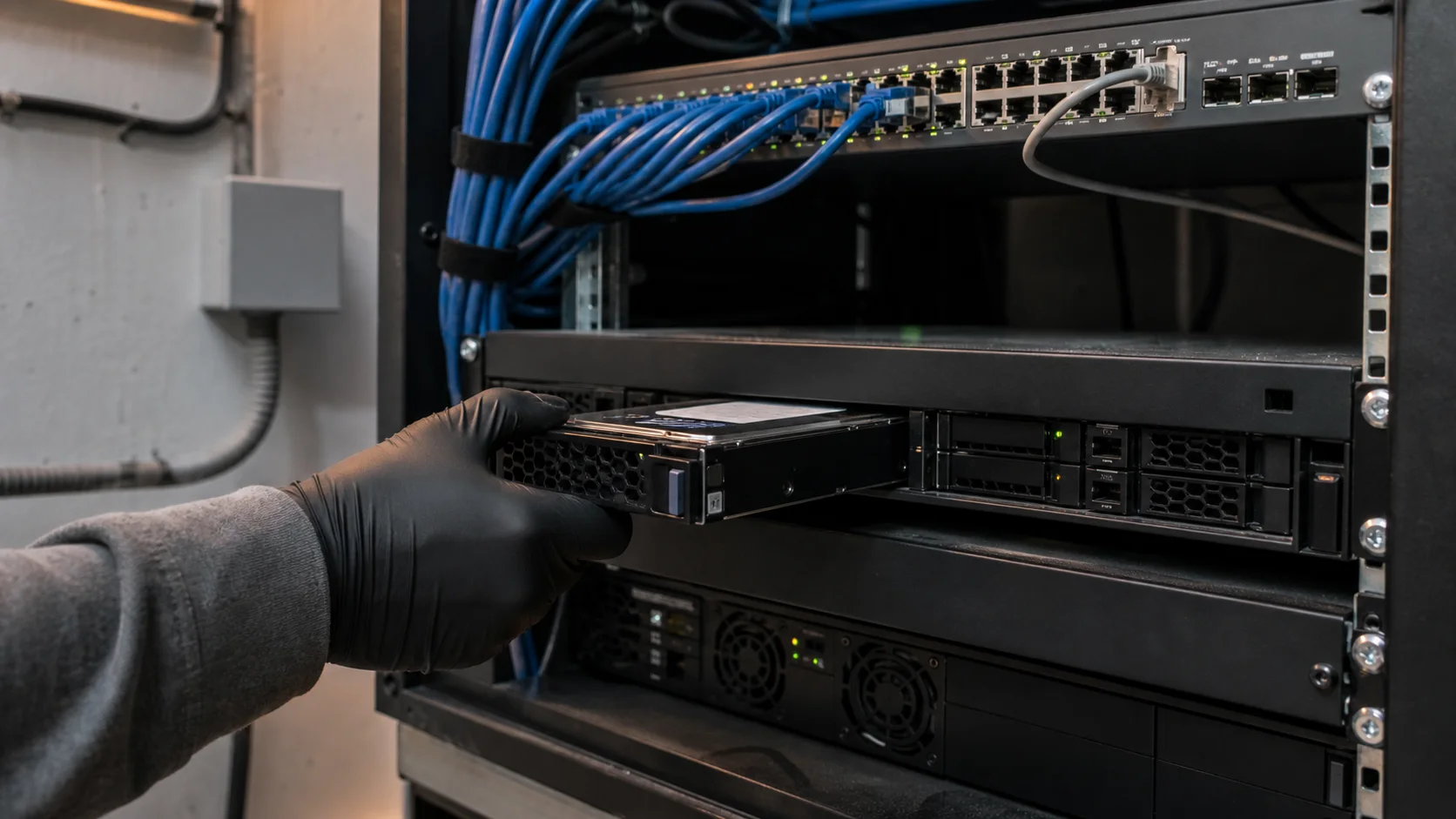
Retention is arithmetic: channel count multiplied by bitrate multiplied by days, plus headroom for the phase-two positions everybody adds. Surveillance-class drives exist because consumer drives are not specified for continuous sequential write, and the difference shows up as failures in year three rather than day one.
Continue readingShow less
Sized with the growth in it, because a retention shortfall is discovered at exactly the wrong moment.
Support, firmware and the refresh line
Cameras are network endpoints with firmware, and a fleet that nobody updates becomes an exposure rather than an asset. The annual line covers platform support and the maintenance window that keeps firmware current; the refresh line covers the positions that reach end of support first.
Continue readingShow less
Both are quoted as their own lines rather than buried in a system price.
What's included in a video surveillance package
One consolidated quote, with equipment, licensing and the integration work costed as separate readable lines — nothing below is assumed to already exist.
- Cameras specified per position — what has to be seen, at what distance, and in the lighting the site actually has at three in the morning
- PoE switching and the power to each position, including the outdoor positions where power is the constraint that cannot be worked around cheaply
- Recording servers and surveillance-class storage sized from channel count, bitrate and retention days, with headroom for the phase-two positions
- VMS channel licensing quoted against the channel count you are planning for rather than the one you have today, with the renewal named
- Platform support, the firmware maintenance window and the refresh line — each quoted as its own line rather than buried in a system price
- The integration work that puts equipment and licensing into service, handed over with documentation
- Hardware, software licensing and the services that put both into service, sourced through our distribution network on one document
From a walk-through to a screened order
There is no shelf price on a surveillance system, and any supplier quoting one from a floor plan is guessing at the parts that cost the money. Camera, reader, credential and panel lines are quoted through our distribution network rather than listed with a shelf price, because what a system costs depends on the door count, the sightlines, the retention period and the labor — none of which a product page knows.
Continue readingShow less
A written quote is the only number that binds.
- Send the site — a floor plan, a door and aisle list, a camera schedule or the retention policy you have to meet
- A Uniqcli specialist scopes the coverage with you: what has to be seen, at what distance, and for how long it is kept
- Camera, switching, storage and licensing lines are sourced through our distribution network and priced against that scope
- One consolidated quote comes back — equipment, licensing and the integration work costed as separate, readable lines
- TAA and NDAA §889 screening is performed on every line before the quote goes out; anything that fails is flagged with alternates
- GPC / P-Card accepted up to your cardholder threshold; purchase orders otherwise, with stock and final total confirmed before you commit
Video surveillance is where §889 actually bites
Of every category a public-sector or federally-funded buyer purchases, video surveillance is the one where the NDAA §889 covered-equipment prohibition is most likely to be triggered — and most likely to be triggered invisibly. Section 889(a)(1)(A) names Hytera, Hangzhou Hikvision and Dahua for public-safety and security video surveillance, together with their subsidiaries and affiliates, and the test reaches the technology doing the work inside a system rather than the badge on the outside. A rebadged module from a covered maker is in scope even when the label is not, and the prohibition has no low-dollar exemption — it reaches at or below the micro-purchase level.
Continue readingShow less
That is why screening on this surface is per line and performed before a quote leaves, not after an award is questioned. The manufacturer-stated country of origin is recorded rather than inferred, and the maker with its parent and affiliates is checked against the covered list. Where a line does not clear, it is flagged with alternates in the same category rather than quietly quoted. The determination on your award stays with your contracting officer; the diligence behind it is ours to run.
Size the system before you scope the cameras
Tell us the site and we will scope it with you. If you are still assembling a budget line, start with the counts you already have. The package estimator takes a camera count or a controlled-door count and returns a budgetary planning band — one-time for the camera hardware, per year for the controlled doors, listed separately rather than added together.
Continue readingShow less
Licensing, installation and the site scope are named beside the band rather than folded into it. Anything the builder returns is a budgetary planning figure — not a quote, not an offer, and not a price we are bound by.
What a camera package does not do
No equipment package produces security, detection reliability or an incident outcome, and we do not write it as though it does. Coverage is a design property — it depends on positions, sightlines, lighting and what the site is actually trying to see — and it is verified by testing on the ground rather than asserted on a quote.
Continue readingShow less
We do not operate the system after handover. Monitoring, alarm response, guard force, video review, credential issuance and the security program around all of them stay with your organization or the provider you contract. What we supply is the equipment, the licensing and the integration work that puts both into service, handed over with documentation.
The systems either side of the cameras
Surveillance rarely arrives on its own. These are the adjacent lanes most often scoped on the same order — and the package page that quotes them together.
Video surveillance procurement questions
Why is there no price on your camera pages?
Because the camera is rarely the largest line. What a surveillance system costs is set by the number of positions, the cabling and power each one needs, the retention period behind them and the labor to install and commission the lot — none of which a product page knows. Camera, switching and licensing lines are quoted through our distribution network against your own site, so what you get back is a figure that survives contact with the building.
Do you sell Hanwha Wisenet cameras?
Hanwha Wisenet is one of the commercial camera lines we quote, available through our distribution network alongside comparable lines. It is a quote-lane product rather than a shelf item, so the way to price it is to send the scope and get a written quote back. We are not describing a manufacturer partnership, authorization or endorsement — only the lines we can source and quote.
How many days of footage should we plan to keep?
That is a policy question before it is a storage question, and it is worth answering explicitly because it drives the largest variable line in the quote. Retention is usually set by an internal policy, an insurer's requirement or a regulator's, and it often differs by area — a high-value cage or a returns desk is commonly kept longer than a corridor. Tell us the periods you have to meet and the storage is sized against them, with headroom for the positions that get added later.
Can you work with the cameras we already have?
Usually, and it is normally the cheaper path. Most commercial platforms speak a common streaming profile, so a mixed fleet can often be brought under one management layer while the positions that have genuinely failed are replaced first. What we will tell you honestly is where a legacy device is out of firmware support, because an unsupported network camera is an exposure rather than an asset.
Do you monitor the cameras or respond to alarms?
No. Uniqcli specifies, sources, integrates and hands over. Monitoring, video review, alarm response and the security program around them stay with your organization or the provider you contract. We do not operate a monitoring centre and hold no credentials on your system after handover.
Do surveillance orders get TAA and §889 screened?
Every line, before it is quoted. Manufacturer-stated country of origin is recorded per line and the maker, its parent and its affiliates are checked against the §889 covered-entity list — which matters more here than in almost any other category, because video surveillance is exactly where covered equipment turns up, including inside rebadged hardware. Anything that does not clear is flagged with alternates before you see a total.
The solutions atlas
Every solution, by technology area and by customer.
By technology
By customer
- TAA & NDAA-889 Compliance Screening
- CMMC & CUI Solutions
- Federal & DoD
- State, Local & Education
- Healthcare
- Enterprise
- Rapid Procurement & GPC Buys
- Multi-Vendor Integration Projects
- eProcurement & Custom Catalogs
- FISMA Modernization
- CJIS-Compliant Justice Cloud & Local AI
- Federal Storage Modernization
- Government ERP & Business Systems Infrastructure
- Managed Procurement
- Secure AV & Conferencing
- Fiber Network Infrastructure
- Satellite & Resilient Connectivity
- Wavelength & Optical Transport
- Decentralized Data Centers
- Data Center Design & Build
Send the site, get a real number
A floor plan, a door and aisle list, or just the retention policy you have to meet is enough to start. One consolidated quote comes back with cameras, switching, storage, licensing and the integration work as readable lines. TAA (FAR 52.225-5) and NDAA §889 screening is performed on every line, before the quote goes out.