
Physical security
Commercial Intrusion Detection Systems
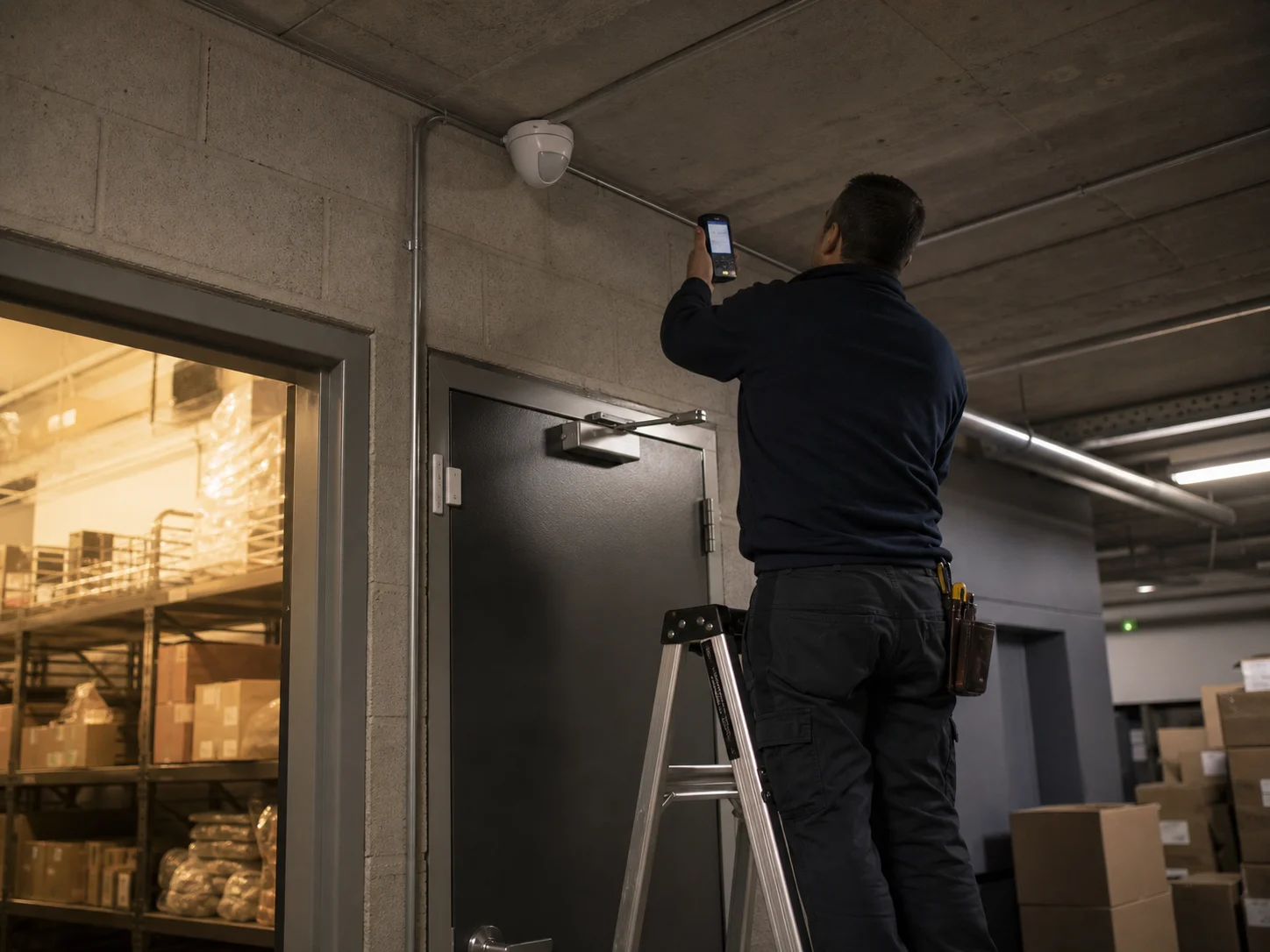
Commercial intrusion is designed per building and quoted per project — the panel and its communication path, the detection devices that suit the space, the zoning that keeps false alarms down, and the integration with whoever monitors it.
There is no standard package, so we do not sell one.
- Scope
- Panels · motion · glass-break · contacts · communication path
- Design driver
- The building's construction, occupancy and false-alarm history
- Sourcing
- Leading commercial lines, quoted through our distribution network
- Boundary
- We do not monitor — central-station service stays with your provider
Get an estimate — Intrusion detection
Tell us where to reach you and a Uniqcli specialist follows up by email to scope the site with you — what has to be covered or controlled, what already exists, and the requirements behind it — then comes back with a quote across the equipment, the software licensing and the integration work.
Priced against your own site, not a package tier — the lines here are quoted through our distribution network rather than listed with a shelf price. We supply and integrate; monitoring, alarm response and video review stay with your organization or the provider you contract.
The first number is our real one, not an opening one.
Tell us the scope and we come back with the best price we can do on it.
- Supporting federal, state & local purchasers
- GPC & P-Card accepted
- TAA & NDAA-889 screening before every quote
There is no catalog answer to "what alarm do we need"
Intrusion detection resists the standard package harder than any other physical-security category, because the design is set almost entirely by the building. A 1970s masonry warehouse with steel roll-up doors and a night crew is a different problem from an open-plan office suite on the fourth floor of a shared building, and both are different again from a single-storey clinic with a glazed frontage on a street.
Continue readingShow less
Device selection, zoning, entry and exit routing and the communication path all follow from that — and the thing that decides whether the system is used at all a year later is whether it produces false alarms. So intrusion is designed and quoted per project. We survey what has to be protected, specify the panel, the devices and the zoning against the building, source the lines through our distribution network, and integrate with whoever monitors it.

The parts of a commercial intrusion system
Leading commercial lines are quoted through our distribution network and specified against the building rather than against a package tier. Naming a manufacturer describes the lines we quote, not a Uniqcli partnership, authorization or endorsement.
Control panel and expansion
The panel decides how many zones the system can grow into, how partitions map onto the way the building is actually occupied, and how the whole thing is armed at the end of a shift.
Continue readingShow less
Commercial panels earn their cost in partitioning — a warehouse that arms while the office is still working needs the areas to be independently controllable, and retrofitting that later usually means replacing the panel.
Communication path and supervision
An alarm that cannot report is not an alarm. Modern commercial installations pair a primary IP path with a cellular backup and expect the path itself to be supervised, so a cut line or a failed radio is a fault rather than a silence.
Continue readingShow less
Where a monitoring agreement or an insurer specifies a supervision standard, the path is specified to it and the requirement is written into the quote.
Motion, glass-break and contacts
Device selection is where false alarms are won or lost. Passive infrared, dual-technology and pet-immune motion detectors each fail differently in a space with overhead heaters, roll-up doors or moving racking; acoustic glass-break sensors need the right coverage pattern for the glazing type and the room's acoustics; and door and window contacts are still the most reliable device in the system.
Continue readingShow less
The point of a survey is to put the right device in each space rather than the same one everywhere.
Keypads, arming and duress
How the system is armed decides whether it is armed. Keypad placement against the actual entry and exit routes, realistic entry delays, and — where the risk calls for it — duress codes and a documented response procedure.
Continue readingShow less
Where the site also runs access control, arming can normally be tied to a credential rather than a code, which is one of the more useful integrations available.
Scope an intrusion project
Go to the formWhat's included in an intrusion detection project
Specified against the building rather than against a package tier — there is no standard package, so we do not sell one.
- A control panel sized for the zones the system has to grow into and the partitions the building is actually occupied in
- A primary IP path with cellular backup, supervised so a cut line or a failed radio is a fault rather than a silence
- Motion, glass-break and contact devices chosen per space rather than the same one everywhere
- Keypads placed against the actual entry and exit routes, realistic entry delays, and duress codes where the risk calls for it
- Integration with the monitoring provider you use or choose — path supervision, signal formats, and the zone and account information the station needs
- Commissioning with every zone walk-tested and labelled before the system is relied on
- Hardware, any licensing and the installation and commissioning work as readable lines on one quote
- TAA (FAR 52.225-5) and NDAA §889 screening on every line before the quote goes out
Integration with your monitoring provider — not a service we run
Uniqcli does not operate a central monitoring station, does not hold a monitoring licence and does not respond to alarms. That is a stated boundary, not a soft one. What we do is design and supply the system and integrate it with the monitoring relationship you already have or intend to sign: the communication path and its supervision, the account and zone information the central station needs, the signal formats the panel reports in, and the commissioning and walk-test that proves each zone reports as labelled before the system is relied on.
Continue readingShow less
Where a site is choosing a monitoring provider for the first time, the technical requirements are worth settling before the commercial ones, because they constrain the panel choice. Supervision interval, path redundancy, the reporting format the station accepts and whether video verification is expected all affect what has to be installed. We will set those requirements out plainly so the monitoring conversation is an informed one — and the agreement itself stays between you and the provider.
The same boundary applies to the guard force, the response procedure and the local ordinance that governs false-alarm penalties in your jurisdiction. Those are yours. Designing the system so it does not generate the alarms in the first place is the part we can genuinely help with, and it is mostly a device-selection and zoning exercise done during the survey.
From a walk-through to a commissioned system
Nothing here is a shelf item, because nothing here is specified without seeing the building. Camera, reader, credential and panel lines are quoted through our distribution network rather than listed with a shelf price, because what a system costs depends on the door count, the sightlines, the retention period and the labor — none of which a product page knows.
Continue readingShow less
A written quote is the only number that binds.
- Send the building — a floor plan, the occupancy pattern, and what has to be protected after hours
- A Uniqcli specialist works through the spaces: construction, glazing, openings, shift pattern and any false-alarm history
- Panel, devices, keypads and communication path are specified against the building and sourced through our distribution network
- One consolidated quote comes back with hardware, any licensing and the installation and commissioning work as readable lines
- Zones are walk-tested and labelled at commissioning, and the account details your monitoring provider needs are handed over documented
- GPC / P-Card accepted up to your cardholder threshold; purchase orders otherwise. TAA (FAR 52.225-5) and NDAA §889 screening is performed on every line, before the quote goes out.
Scope it against the building
Send the floor plan and what has to be protected after hours. If you are still assembling a budget line, the builder will help you size it — with one deliberate limit. Intrusion is counted by protected zone for scoping only and returns no figure, because detection design is a building-by-building exercise rather than a multiplication.
Continue readingShow less
The package estimator takes a camera count or a controlled-door count and returns a budgetary planning band — one-time for the camera hardware, per year for the controlled doors, listed separately rather than added together. Anything the builder returns is a budgetary planning figure — not a quote, not an offer, and not a price we are bound by.
What we will not claim
No intrusion system prevents a break-in, and no supplier can promise a detection rate for one. Detection is a design property that depends on device placement, the construction of the building, how the system is armed and how quickly somebody responds — and it is verified by walk-testing on the ground rather than asserted on a quote. Where a requirement asks for a performance figure, that belongs to the device manufacturer's own documented specifications.
Continue readingShow less
We also make no claim about what an insurer will accept, what a local ordinance requires or what a monitoring agreement will cover. Those are determinations for your insurer, your jurisdiction and your provider. We will design to a written requirement when you give us one.
We do not operate the system after handover. Monitoring, alarm response, guard force, video review, credential issuance and the security program around all of them stay with your organization or the provider you contract. What we supply is the equipment, the licensing and the integration work that puts both into service, handed over with documentation.
The systems intrusion usually arrives with
Alarms, doors, cameras and the network under all three are normally scoped together rather than in sequence.
Intrusion detection questions
Why can't you quote an alarm system from a price list?
Because the device count and the device types are set by the building, and two buildings with the same square footage routinely need different systems. Construction, glazing, roll-up doors, overhead heating, shift patterns and the way the space is occupied after hours all change what has to be installed and where. A quote produced without that information is a guess, and the place it usually goes wrong is false alarms.
Which brands do you supply?
Leading commercial intrusion lines, sourced through our distribution network and specified against the building rather than chosen in advance. We name the manufacturer on the quote once the design is settled — naming one here would describe a preference we do not have, and it would not be a partnership or authorization claim in any case.
Do you monitor the system?
No. Uniqcli does not operate a central monitoring station, does not hold a monitoring licence and does not respond to alarms. We design and supply the system and integrate it with the monitoring provider you use or choose — the communication path, its supervision, the zone and account information the station needs, and the commissioning walk-test that proves each zone reports as labelled.
Can the alarm be armed from our access control system?
Often, and it is one of the more useful integrations available — arming on the last credential out removes the most common reason a system stops being armed at all. Whether it is possible depends on the panel and the access platform in play, so it is a question to settle during design rather than after installation. Where both are being bought together, we scope them on the same order.
How do we keep false alarms down?
Mostly by device selection and zoning done properly during the survey — putting the right detector in each space rather than the same one everywhere, setting realistic entry and exit delays, and partitioning so areas that stay occupied do not have to be disarmed wholesale. Local ordinances and their penalties differ by jurisdiction and are yours to comply with; designing the system so it does not generate the alarms is the part we can help with.
The solutions atlas
Every solution, by technology area and by customer.
By technology
By customer
- TAA & NDAA-889 Compliance Screening
- CMMC & CUI Solutions
- Federal & DoD
- State, Local & Education
- Healthcare
- Enterprise
- Rapid Procurement & GPC Buys
- Multi-Vendor Integration Projects
- eProcurement & Custom Catalogs
- FISMA Modernization
- CJIS-Compliant Justice Cloud & Local AI
- Federal Storage Modernization
- Government ERP & Business Systems Infrastructure
- Managed Procurement
- Secure AV & Conferencing
- Fiber Network Infrastructure
- Satellite & Resilient Connectivity
- Wavelength & Optical Transport
- Decentralized Data Centers
- Data Center Design & Build
Scope an intrusion project
Send the floor plan and what has to be protected after hours. One consolidated quote comes back with the panel, the devices, the communication path and the installation and commissioning work as readable lines. TAA (FAR 52.225-5) and NDAA §889 screening is performed on every line, before the quote goes out.