
Physical security
Access Control Systems for Commercial Facilities
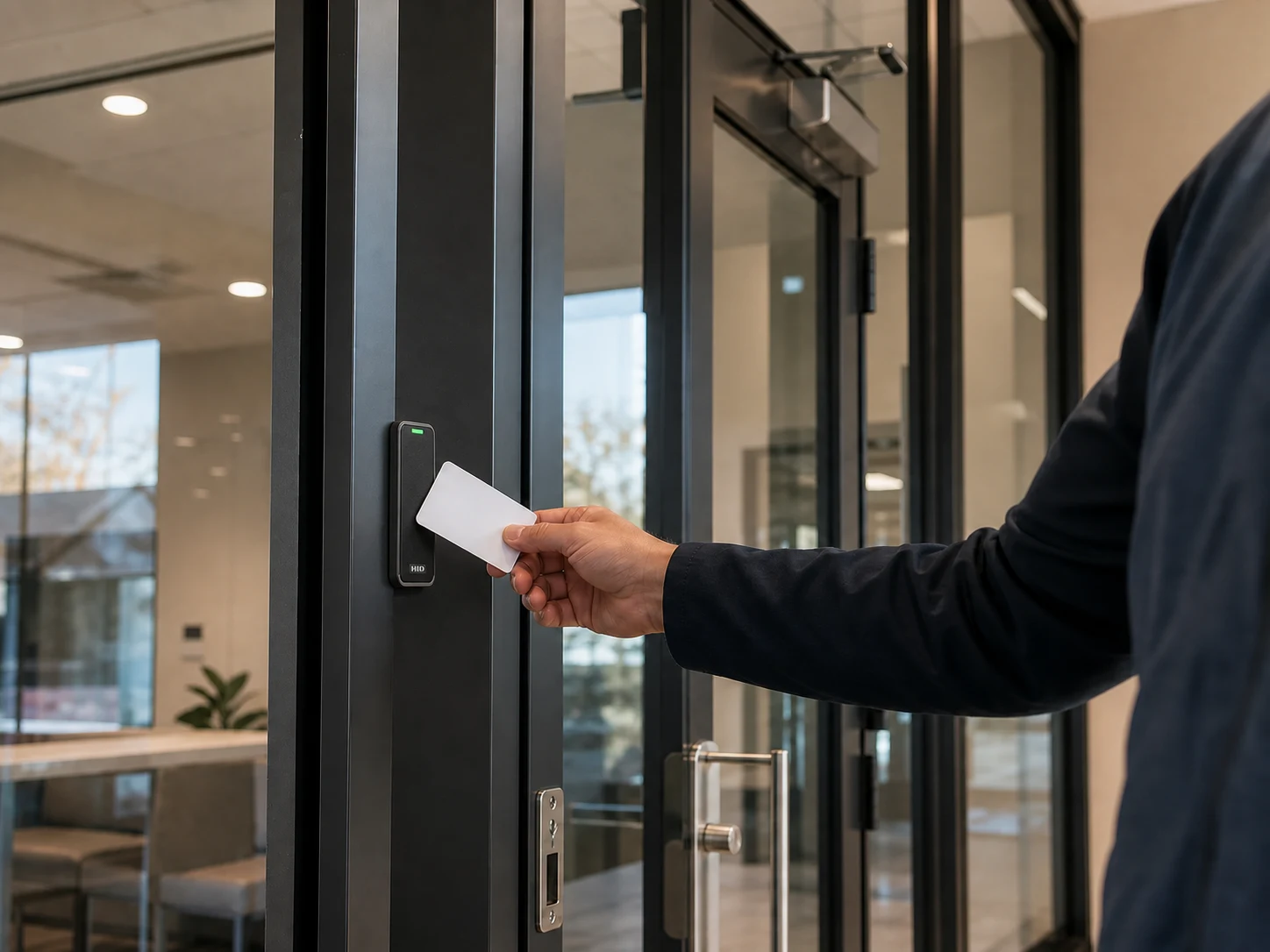
Access control is budgeted per controlled door, not per reader — the opening, its lock and request-to-exit hardware, the controller port it lands on, the cabling that reaches it and the software licence that lets the head-end see it.
- Budgeted per controlled door, not per reader
- Readers · credentials · controllers · locks · management software
- Quoted per door, against the openings you actually control
We quote all five, per door, against the openings you actually control.
- Unit of scope
- The controlled door — not the reader, not the panel
- Scope
- Readers · credentials · controllers · locks · management software
- Lines
- HID and comparable commercial lines, quoted through distribution
- Boundary
- We specify, supply and integrate — credential issuance stays yours
Get an estimate — Access control
Tell us where to reach you and a Uniqcli specialist follows up by email to scope the site with you — what has to be covered or controlled, what already exists, and the requirements behind it — then comes back with a quote across the equipment, the software licensing and the integration work.
Priced against your own site, not a package tier — the lines here are quoted through our distribution network rather than listed with a shelf price. We supply and integrate; monitoring, alarm response and video review stay with your organization or the provider you contract.
The first number is our real one, not an opening one.
Tell us the scope and we come back with the best price we can do on it.
- Supporting federal, state & local purchasers
- GPC & P-Card accepted
- TAA & NDAA-889 screening before every quote
Live prices from our catalog right now — a starting point, not the project price. Your quote is scoped to the site and includes the licensing and services the job needs.
The unit that survives a five-year plan is the door
Access control quotes are usually assembled from a reader count, which is why they are usually wrong. A reader is a fraction of what it takes to control an opening: the lock and its fail-safe or fail-secure behaviour, the request-to-exit device, the door position switch, the power supply and its battery, the controller port the opening lands on, the cabling that reaches it, and the software licence that lets the head-end see it at all.
Continue readingShow less
Count doors and the budget holds its shape; count readers and it moves every time somebody remembers a fire-rated opening or a gate. HID is one of the commercial reader and credential lines we quote, available through our distribution network alongside comparable lines — but the number that matters is how many openings you control, and we scope that first.
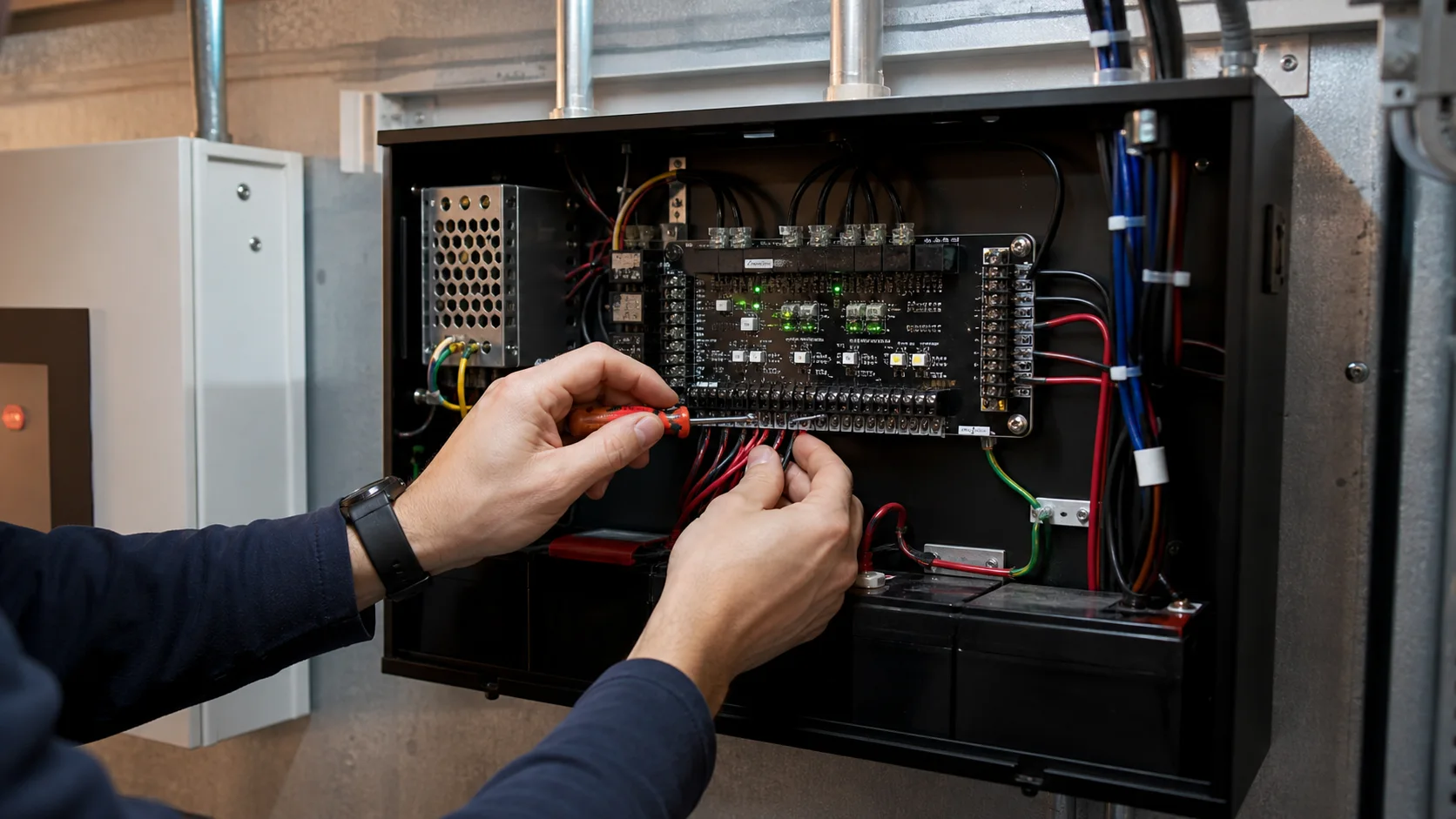
The four things behind every controlled opening
Specified per opening against a door schedule, then quoted as one order with the integration work costed alongside the hardware. Naming a manufacturer describes the lines we quote, not a Uniqcli partnership, authorization or endorsement.
Readers
The device at the door, chosen against the credential technology the site is standardizing on and the environment it has to survive — interior wall, exterior gate, mullion, or a keypad-and-card combination where a second factor is required at specific openings.
Continue readingShow less
HID carries a deep commercial reader range and is one of the lines we quote; comparable lines are quoted the same way. Reader choice is downstream of the credential decision, not upstream of it.
Credentials — iCLASS and Seos
The card, fob or phone somebody actually presents. iCLASS and Seos are HID product lines we quote, and the credential decision is the one with the longest tail: it sets the reader, it sets the enrollment workflow, and it is the hardest thing to change later because every badge in circulation has to be reissued.
Continue readingShow less
Mobile credentials shift part of that cost from cards to a per-user subscription line — worth costing both ways before committing.
Controllers and panels
The field hardware that decides whether the door opens, keeps working when the network does not, and holds the local event record. Port count per panel is the practical constraint on how doors group across a building, and it is where a plan for eighteen openings quietly becomes hardware for twenty-four.
Continue readingShow less
Open-controller architectures are worth specifying deliberately, because they keep the platform above them replaceable.
Management software and licensing
The head-end that holds identities, schedules and the audit trail. Almost every platform licences per door or per reader in bands, with separate lines for the tiers that add multi-site federation, visitor management or mobile credential issuance, plus an annual support line.
Continue readingShow less
Software is sourced through US distribution rather than held on a shelf, so stock language does not apply to it; what matters is the channel or door count, the term and the co-termination date against the renewals you already carry.
Send the door schedule
Go to the formWhat's included in an access control package
The opening is the unit of scope — every line below is counted against the door schedule rather than against the building.
- The lock and its fail-safe or fail-secure behaviour, the request-to-exit device and the door position switch, per opening
- The power supply and its battery, the controller port the opening lands on, and the cabling that reaches it
- Readers chosen against the credential technology the site is standardizing on and the environment they have to survive
- Credentials — card, fob or phone — costed both ways, because mobile shifts part of the cost from card stock to a per-user subscription line
- Management software licensed per door or per reader, with the annual support line and the renewal date named rather than implied
- The head-end and the enrollment station, counted once rather than per door
- Where a platform is already in place, the migration path phased so no door loses a working reader
- Hardware, software licensing and the integration work on one document, TAA (FAR 52.225-5) and NDAA §889 screened per line before it goes out
Per controlled door, per year — the shape of the number
Most deployments end up budgeting the same way, whatever platform they land on: a one-time figure per controlled door for the hardware and the labor to install and commission it, plus a recurring annual figure per door for the software licence, support and the share of the credential program that renews. Multiply each by the number of openings you actually control, add the head-end and the enrollment station once rather than per door, and you have the shape of a five-year line — before anybody has chosen a manufacturer.
Continue readingShow less
What moves that per-door figure is almost never the reader. It is whether the opening already has power and a pathway or needs both pulled, whether the door hardware is being replaced or reused, whether the opening is fire-rated or an exterior gate with its own environmental and surge requirements, and whether the site is on a card program or a mobile one. Two buildings with identical door counts can differ substantially on all four, which is why a per-door figure quoted without a survey is a guess dressed as a number.
The recurring half deserves the same attention as the capital half and rarely gets it. Licence bands step, support renews, and credential stock is consumed at whatever rate the site actually issues and loses badges. A plan that budgets the install and not the anniversary is the plan that gets a surprise in year two.
Budgetary estimate — put your own door count in
Put your own door count in before a design exists. The package estimator takes a camera count or a controlled-door count and returns a budgetary planning band — one-time for the camera hardware, per year for the controlled doors, listed separately rather than added together.
Continue readingShow less
Readers, credentials and the installation scope are named beside it rather than folded in. Anything the builder returns is a budgetary planning figure — not a quote, not an offer, and not a price we are bound by. When you want a number you can hold us to, send the door schedule and we will quote it.
From a door schedule to a screened order
Access hardware is quoted, not carted, for the same reason a door is not a product: the opening decides the line. Camera, reader, credential and panel lines are quoted through our distribution network rather than listed with a shelf price, because what a system costs depends on the door count, the sightlines, the retention period and the labor — none of which a product page knows.
Continue readingShow less
A written quote is the only number that binds.
- Send a door schedule, a floor plan with the controlled openings marked, or simply the count and the buildings
- A Uniqcli specialist works through the openings with you — lock function, egress, credential technology and what already exists
- Reader, credential, controller, lock and software lines are sourced through our distribution network and priced per opening
- One consolidated quote comes back with hardware, licensing and the integration work as separate, readable lines
- Where a platform is already in place we quote the migration path rather than a rip-out, phased so no door loses a working reader
- GPC / P-Card accepted up to your cardholder threshold; purchase orders otherwise. TAA (FAR 52.225-5) and NDAA §889 screening is performed on every line, before the quote goes out.
What stays yours to run
Identity proofing, credential issuance and revocation, the schedules that decide who passes which door and when, and the response when an alarm fires are all operational commitments, not purchases. A badge office is a process with people in it. What a supplier can do is specify the openings correctly, source the hardware and licensing, integrate the platform and hand it over documented — and say plainly where the boundary is.
Continue readingShow less
We also do not hold a physical-access certification or an installation accreditation, and no purchase confers one. Where a program has its own acceptance requirements, acceptance attaches to the deployment and to the organization operating it, never to a shelf product or to its supplier.
We do not operate the system after handover. Monitoring, alarm response, guard force, video review, credential issuance and the security program around all of them stay with your organization or the provider you contract. What we supply is the equipment, the licensing and the integration work that puts both into service, handed over with documentation.
Where access control connects
Doors are rarely scoped alone — these are the lanes most often quoted on the same order, plus the platform practice above them.
Access control procurement questions
Why do you quote per door instead of per reader?
Because the reader is the cheapest part of controlling an opening. A door needs a lock with the right fail-safe or fail-secure behaviour, a request-to-exit device, a position switch, a power supply, a controller port, cabling that reaches it and a software licence that lets the head-end see it. Budgeting per reader consistently produces a number that is too low by the time the door schedule is finished; budgeting per controlled door holds up.
Are you an HID partner or authorized dealer?
No, and we will not describe ourselves that way. HID readers and the iCLASS and Seos credential lines are products we quote through our distribution network, alongside comparable commercial lines. Naming a manufacturer here describes what we can source and quote — it is not a partnership, authorization or endorsement claim.
Should we choose cards or mobile credentials?
Cost both before committing, because the two shift money to different places. Card programs carry credential stock, a printer and an enrollment desk, and a reissue event whenever the technology changes. Mobile credentials move part of that to a per-user subscription and remove the card stock, but they add a device-enrollment workflow and a dependency on the phones your people actually carry. Many sites run both, with cards for contractors and visitors and mobile for staff.
Can you integrate with the access platform we already have?
Usually. Where a head-end is already in place, the useful question is which openings genuinely need new hardware and which panels can keep serving until they fail — and the migration is phased so there is never a window where a door is left without a working reader. Where the existing platform is proprietary and the panels are the lock-in, we will say so, and quote the open-controller path as the alternative.
Do you issue badges or manage the system for us?
No. We specify the openings, source the hardware and licensing, integrate the platform and hand it over documented. Enrollment, issuance, revocation, schedule administration and alarm response stay with your badge office or the provider you contract, and we hold no credentials on your system after handover.
How do we buy — card, purchase order or terms?
GPC / P-Card is accepted up to your cardholder threshold and standard purchase orders otherwise, with stock and the final total confirmed before you commit. Net terms are set up against your account through a credit review rather than assumed at checkout. Quotes, orders and approvals all live in your buyer portal.
The solutions atlas
Every solution, by technology area and by customer.
By technology
By customer
- TAA & NDAA-889 Compliance Screening
- CMMC & CUI Solutions
- Federal & DoD
- State, Local & Education
- Healthcare
- Enterprise
- Rapid Procurement & GPC Buys
- Multi-Vendor Integration Projects
- eProcurement & Custom Catalogs
- FISMA Modernization
- CJIS-Compliant Justice Cloud & Local AI
- Federal Storage Modernization
- Government ERP & Business Systems Infrastructure
- Managed Procurement
- Secure AV & Conferencing
- Fiber Network Infrastructure
- Satellite & Resilient Connectivity
- Wavelength & Optical Transport
- Decentralized Data Centers
- Data Center Design & Build
Send the door schedule
A door count and a floor plan are enough to start. One consolidated quote comes back with readers, credentials, controllers, locks, licensing and the integration work as readable per-opening lines. TAA (FAR 52.225-5) and NDAA §889 screening is performed on every line, before the quote goes out.