
Solutions
Medical Imaging Storage
Imaging archives grow faster than budgets and never shrink. We size the primary and archive tiers against real study volume and quote the refresh path alongside the initial buy.
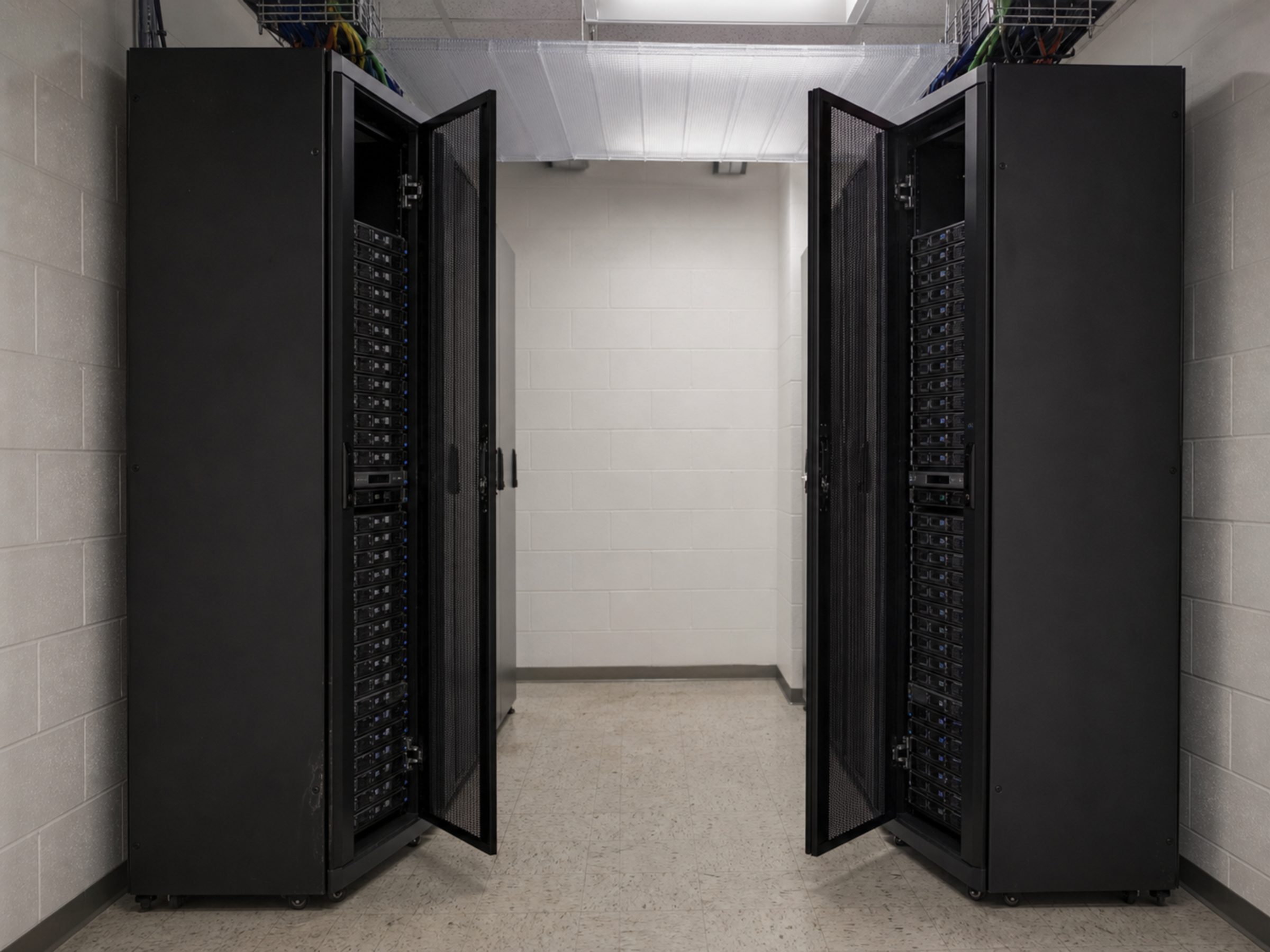
- Scope
- Primary, archive and backup tiers under PACS or a VNA
- Sizing input
- Study volume by modality, compression policy and retention
- Software
- PACS and imaging applications are sourced on request
- Boundary
- Infrastructure only — no diagnostic or clinical claim
The archive only ever gets bigger
Imaging is the one data set in a health system that grows in every direction at once: more studies, more slices per study, higher bit depth, longer retention obligations, and almost nothing ever deleted. A tomography protocol change or a new modality can add more capacity demand in a year than the previous five combined. Sizing that against last year's consumption is how imaging storage projects end up back in front of the capital committee eighteen months early. We size the tiers against study volume by modality and against the retention schedule you actually operate under, and we quote the refresh and expansion path at the same time as the initial buy.
How imaging storage is actually structured
The primary tier holds the studies radiologists are reading now and the priors the reading workflow pulls automatically. It is performance-sensitive because retrieval latency is felt directly at the workstation, and it is the smallest tier by capacity. Sizing it means understanding the reading pattern — how far back priors are fetched, and how aggressively the system pre-fetches — rather than just counting studies.
The archive tier holds everything else inside the retention window, which is the overwhelming majority of the data. Cost per usable terabyte dominates here, along with the practical question of how long a retrieval takes when a study is requested from the archive rather than the primary tier. That retrieval expectation should be stated explicitly at design time, because it is the difference between an archive and a hole data goes into.
Backup is a third and separate requirement, and it is the one most often assumed rather than specified. Replication between two arrays protects against hardware failure but not against deletion, corruption or ransomware propagating to both copies. A genuine backup copy, ideally with immutability inside its retention window, is a distinct line item. And underneath all three sits the growth question: capacity headroom, a compatible expansion path, and a planned migration, because the storage hardware cycle is shorter than the retention obligation on the data it holds.
The infrastructure under the imaging estate
Sized from study volume by modality and quoted with expansion and refresh alongside. Naming a manufacturer describes the market, not a Uniqcli partnership or endorsement.
Primary and archive arrays
Capacity for the active reading window and for the retention archive behind it. Nexsan carries a deep priced array line on our catalog, and Western Digital carries priced drive rows across the capacity tiers. Sized against modality mix and prior-fetch behavior rather than against a flat per-study average, which consistently under-counts.
Performance media and expansion
Solid-state capacity for the primary tier and the reading cache, plus the expansion shelves and media that carry growth without a forklift replacement. Micron carries priced rows across the memory and solid-state lines on our catalog. Quoted with headroom, because the cheapest capacity is the capacity you bought before you needed it.
Backup and long-term retention
A real backup copy rather than a second replica, with immutability inside the retention window where the risk assessment calls for it. Cohesity carries a very deep priced line across backup and data management on our catalog, with Quantum priced in the archive and tape categories. Specified with the restore expectation stated, not implied.
What stays with the health system
This is infrastructure work and nothing else. We make no diagnostic or clinical claim, and nothing we supply affects image quality, interpretation or care. The PACS, the vendor-neutral archive and the imaging applications above the storage do not carry priced rows in our catalog; where a project needs them they are sourced on request through US distribution against the publisher's terms, and we will say so rather than implying shelf availability.
Retention schedules for imaging are set by state law, accreditation requirements and organizational policy, and they vary — particularly for paediatric studies, where the clock frequently runs from majority rather than from the study date. We size against the schedule you provide and will show what a change to it costs in capacity. Determining the schedule, and everything about how protected health information is governed, stays inside the health system and its compliance function.
Imaging storage questions
How do you size imaging storage?
From study volume broken out by modality, since a plain radiograph and a multi-phase tomography study differ by orders of magnitude, multiplied by the retention schedule and adjusted for your compression policy and growth rate. A flat per-study average consistently under-counts because the modality mix shifts toward the larger studies over time. Send the modality breakdown and the retention schedule and we will size it and show the arithmetic.
Is replication the same as backup?
No, and treating it as one is the most common gap we find. Replication protects against the failure of one array; it does not protect against deletion, corruption or ransomware, all of which propagate to the replica. A genuine backup copy — ideally with immutability inside its retention window — is a separate requirement and should be a separate line on the quote.
Do you supply the PACS or the VNA?
No. Those applications do not carry priced rows in our catalog. Where a project requires them, they are sourced on request through US distribution against the publisher's terms. We size, supply and integrate the storage infrastructure underneath, quoted against the application vendor's documented requirements.
How long should we plan before the next expansion?
Long enough that the expansion is a budgeted purchase rather than an emergency, which in practice means sizing with headroom past your projected growth and confirming that the expansion path does not require replacing what you just bought. We quote the expansion and refresh path with the initial system for that reason.
Imaging background and the storage under it
The solutions atlas
Every solution, by technology area and by customer.
By technology
By customer
- TAA & NDAA-889 Compliance Screening
- CMMC & CUI Solutions
- Federal & DoD
- State, Local & Education
- Healthcare
- Enterprise
- Rapid Procurement & GPC Buys
- Multi-Vendor Integration Projects
- eProcurement & Custom Catalogs
- FISMA Modernization
- CJIS-Compliant Justice Cloud & Local AI
- Federal Storage Modernization
- Government ERP & Business Systems Infrastructure
- Managed Procurement
- Secure AV & Conferencing
- Fiber Network Infrastructure
- Satellite & Resilient Connectivity
- Wavelength & Optical Transport
- Decentralized Data Centers
- Data Center Design & Build
Size it against the modality mix
Send study volume by modality, your compression policy and the retention schedule you operate under. A Uniqcli specialist returns a sized design across primary, archive and backup tiers with the expansion path priced alongside. TAA (FAR 52.225-5) and NDAA §889 screening performed on every line before the quote goes out.