
Cybersecurity
Immutable Backup Storage
An immutable target is the one control that survives a compromised backup administrator. We size, quote, rack and hand over the appliance or array with the retention lock already set against your backup software.
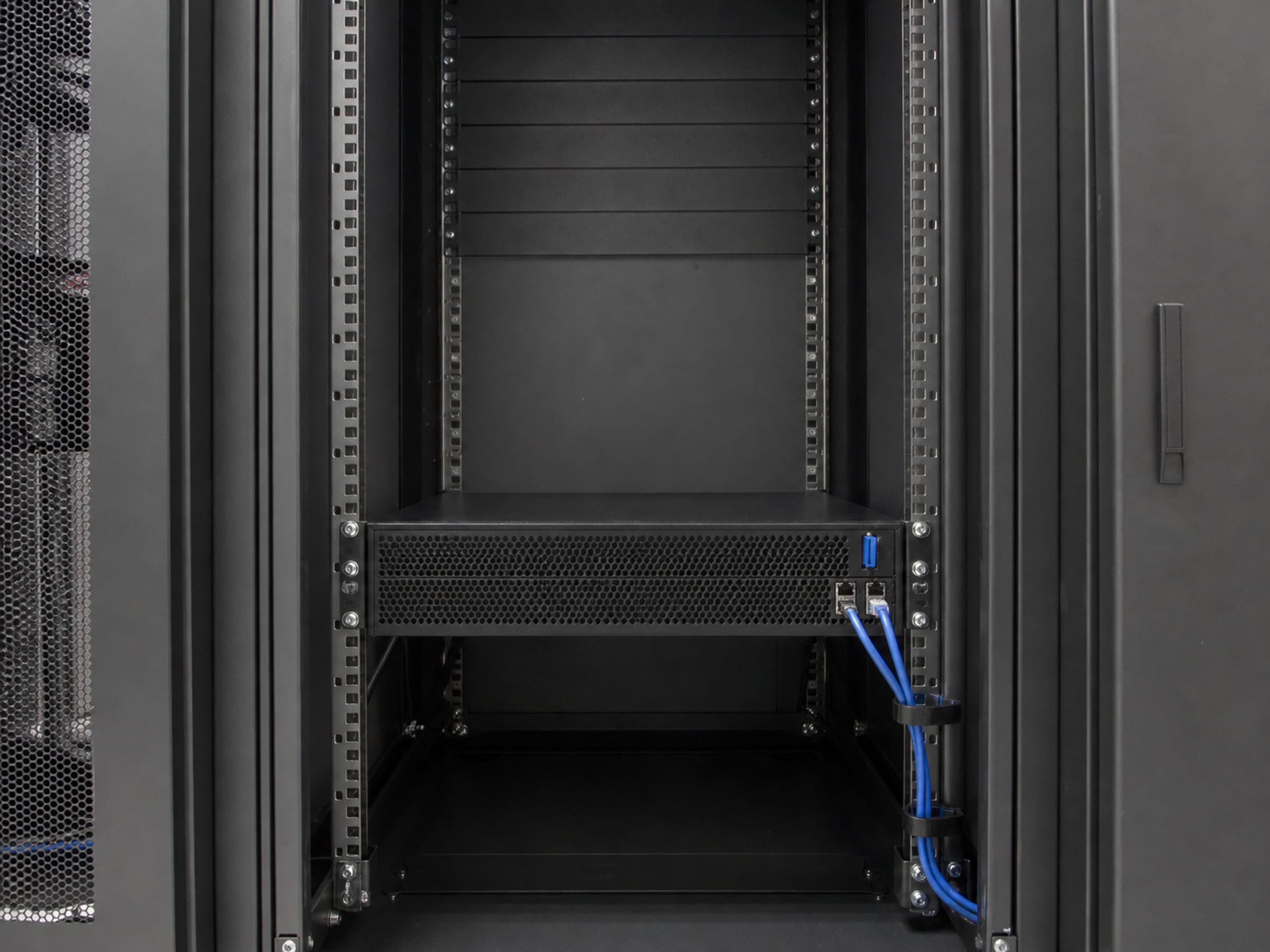
- Category
- Retention-locked targets and arrays that a credential cannot erase
- What we quote
- Appliances, arrays and tape, sized against retention and restore speed
- Handover
- Racked, firmware-baselined and retention-locked to your backup software
The control that assumes your administrator account is already lost
Every other backup control assumes the operator is trustworthy and the credentials are intact. Immutability is the one that does not. A retention lock enforced by the storage system means a write cannot be modified or deleted until its clock expires — not by the backup software, not by the storage administrator, not by an attacker holding both sets of credentials. That single property is what separates a recoverable event from a rebuild, and it is bought as hardware and firmware rather than as a policy setting. We size the target against two numbers most quotes only consider one of — capacity from the retention schedule, throughput from the recovery-time objective — and hand it over racked, baselined and locked against the backup software it will actually serve.
Targets, arrays and long-horizon media
Priced lines from the hub catalog. The right shape depends on the backup software already in place, so the pairing matters more than the specification sheet. Naming a manufacturer describes the market, not a Uniqcli partnership or endorsement.
Object First
A purpose-built immutable target for Veeam environments — deliberately not a general-purpose array, and quoted only where the design pairs it with the software it was built for. Sized against restore throughput as well as usable capacity.
Cohesity and Veritas appliances
Cohesity is our deepest priced line here and the usual answer where a program consolidates backup, archive and recovery onto one platform with retention enforced by the system rather than the job. Veritas appliances suit an existing estate whose target should speak the same management language as the software already in place.
Nexsan arrays and Quantum tape
Dense capacity for the tier that grows and is rarely read, sized against the retention schedule rather than today's footprint — and, where a copy has to be genuinely offline, tape, which remains the cheapest way to hold a decade of retention outside any network path.
Racked and locked before handover
Rack integration, firmware baselining, retention-lock configuration against your backup software and cabling scoped on the same order — so the first job the appliance receives is a real one.
What we need to size a target properly
- Protected front-end capacity today, and the growth rate you are planning for
- Retention schedule — daily, weekly, monthly and any long-horizon copies
- Daily change rate, which drives incremental volume more than total size does
- The recovery-time objective the target has to satisfy, not just the backup window
- Which backup software will write to it, and which lock mode that software supports
- Rack space, power and network path available at the site that will hold it
Immutable storage questions
What makes backup storage immutable?
A retention lock enforced by the storage system rather than the backup application: once written, a block or object cannot be modified or deleted until its retention clock expires, and no administrative credential can shorten it. The important detail is where the lock is enforced — a software-only setting can be reversed by whoever holds the software's credentials.
Is immutable storage the same as air-gapped?
No. Immutable storage is reachable on the network but cannot be altered; air-gapped media is unreachable entirely. They defend against overlapping but different failures, and many programs run both — an immutable target for fast restore, and tape or removable media for the long-horizon copy.
Which backup software works with these targets?
That pairing is the first question, not the last. Object First is purpose-built for Veeam; Cohesity and Veritas appliances are strongest with their own software; arrays like Nexsan are more general. Tell us what writes the backups and we quote a target that speaks its lock semantics rather than one that merely stores its files.
Do you configure the retention lock before delivery?
Yes, where the design specifies it. Retention-lock configuration against your backup software, firmware baselining and rack integration are scoped on the same order, so the appliance arrives ready to receive its first job.
The solutions atlas
Every solution, by technology area and by customer.
By technology
By customer
- TAA & NDAA-889 Compliance Screening
- CMMC & CUI Solutions
- Federal & DoD
- State, Local & Education
- Healthcare
- Enterprise
- Rapid Procurement & GPC Buys
- Multi-Vendor Integration Projects
- eProcurement & Custom Catalogs
- FISMA Modernization
- CJIS-Compliant Justice Cloud & Local AI
- Federal Storage Modernization
- Government ERP & Business Systems Infrastructure
- Managed Procurement
- Secure AV & Conferencing
- Fiber Network Infrastructure
- Satellite & Resilient Connectivity
- Wavelength & Optical Transport
- Decentralized Data Centers
- Data Center Design & Build
Size an immutable target
Send the protected capacity, the retention schedule, the recovery-time objective and the backup software that will write to it. We return a sized target with the lock configuration and rack integration priced alongside it.