
Cybersecurity
Email Archiving & Retention
Records obligations outlive mailboxes, and outlive staff. We quote the archiving license and the storage tier it writes to — and custody of the archive stays with the agency that owns the records.
- Category
- Long-horizon mail retention, search and legal-hold capability
- What we quote
- Archive subscriptions and the on-premises capacity behind them
- Boundary
- Custody of the archive and the retention schedule remain the agency's
A mailbox is not a record system, and deletion is not a retention policy
Public-sector records obligations run in decades; mailbox quotas run in gigabytes, and staff turnover runs faster than either. An archive exists to break that dependency — mail is captured on the way through, indexed, held for the schedule the records officer set, and produced on demand without depending on whether the original account still exists. The buying decision has two halves that are usually quoted by two different people: the archive subscription, priced per mailbox or per volume, and the storage it lands on, which is a capacity and durability decision with a very different cost curve. We quote both together, and we are explicit that custody of the resulting archive belongs to the agency, not to us and not to a supplier who might be replaced at the next recompete.
Archive licensing and the capacity underneath it
Named lines are the ones the hub catalog genuinely prices; dedicated archiving specialists are sourced on request through US distribution rather than named here. Naming a manufacturer describes the market, not a Uniqcli partnership or endorsement.
Proofpoint archive lines
Archiving and retention licensing alongside the mail protection estate, quoted per user against your term. Buying both from one vendor keeps the capture path simple, which matters more for a records system than it does for a filter.
Barracuda
Archiving and message-retention lines with priced rows across the range, including appliance form factors where the design keeps the archive inside the boundary. Frequently paired with the same vendor's backup line.
The storage it writes to
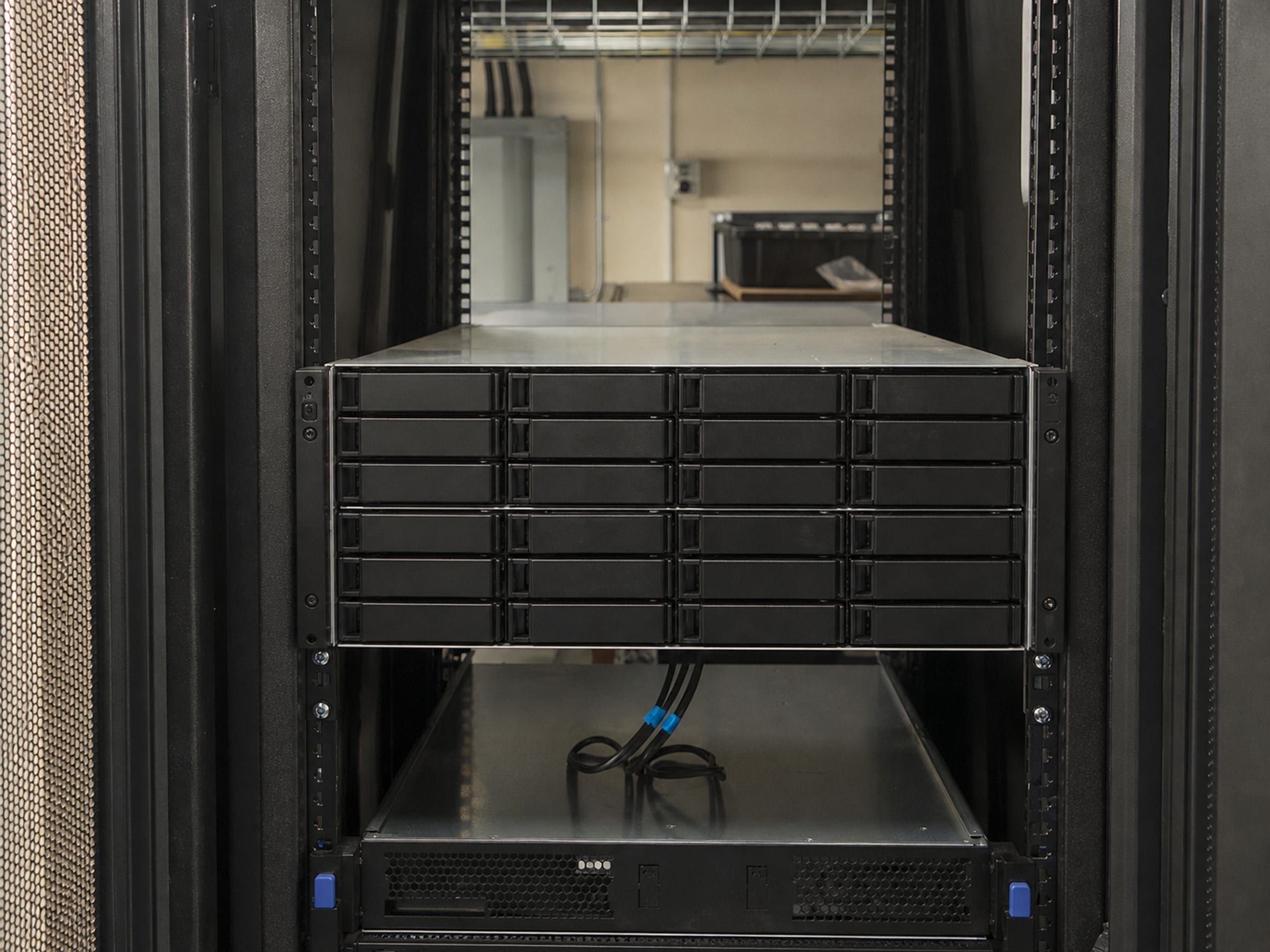
An archive is a growing, rarely-deleted dataset, which is a different storage profile from a live mail store. Nexsan arrays and Cohesity platforms are both priced lines in our catalog, sized against your retention schedule and expected growth rather than today's volume.
Everything else, sourced on request
The dedicated archiving market is larger than what we hold priced rows for. Where your standard sits outside the lines above, it is quoted and sourced on request through US distribution — we would rather say that than imply a shelf we do not have.
What stays yours to decide
The retention schedule is a records-management determination made by your agency under its own authority — how long each category is held, what triggers disposition, and what a legal hold suspends. No supplier can make that call, and a product that ships with a default schedule has made an assumption, not a decision.
Operating the archive is likewise yours: running searches, responding to discovery, certifying productions. What we supply is the license, the capacity it writes to and the integration work to get capture running. We do not operate the platform after handover. The console, the policy, the tuning and the response process stay with your team or the MSP you have chosen; what we supply is the license, the hardware it runs on and the integration work that puts both into service.
Archiving questions
Is a backup the same as an archive?
No, and treating one as the other is a common and expensive mistake. A backup exists to restore a system to a recent point; an archive exists to produce a specific record years later, indexed and searchable, with its retention state intact. They have different cost curves, different retention windows and different failure modes — most programs end up buying both.
How is email archiving priced?
Usually per mailbox per year, sometimes with a storage component or a volume band above an included allowance. On-premises designs shift more of the cost into capacity, which is why we quote the storage tier alongside the license rather than leaving it to be discovered in year two.
Can the archive stay inside our boundary?
Yes, where the product supports an on-premises or appliance deployment. That choice moves the storage sizing onto your side of the quote and makes capacity planning part of the buy — which is why the arrays and platforms above are quoted with it.
The solutions atlas
Every solution, by technology area and by customer.
By technology
By customer
- TAA & NDAA-889 Compliance Screening
- CMMC & CUI Solutions
- Federal & DoD
- State, Local & Education
- Healthcare
- Enterprise
- Rapid Procurement & GPC Buys
- Multi-Vendor Integration Projects
- eProcurement & Custom Catalogs
- FISMA Modernization
- CJIS-Compliant Justice Cloud & Local AI
- Federal Storage Modernization
- Government ERP & Business Systems Infrastructure
- Managed Procurement
- Secure AV & Conferencing
- Fiber Network Infrastructure
- Satellite & Resilient Connectivity
- Wavelength & Optical Transport
- Decentralized Data Centers
- Data Center Design & Build
Quote an archive against your retention schedule
Send the mailbox count, the retention window your records officer works to and whether the archive has to stay inside your boundary. We return one quote covering the license and the capacity it writes to.