
Cybersecurity
Cyber Range Infrastructure
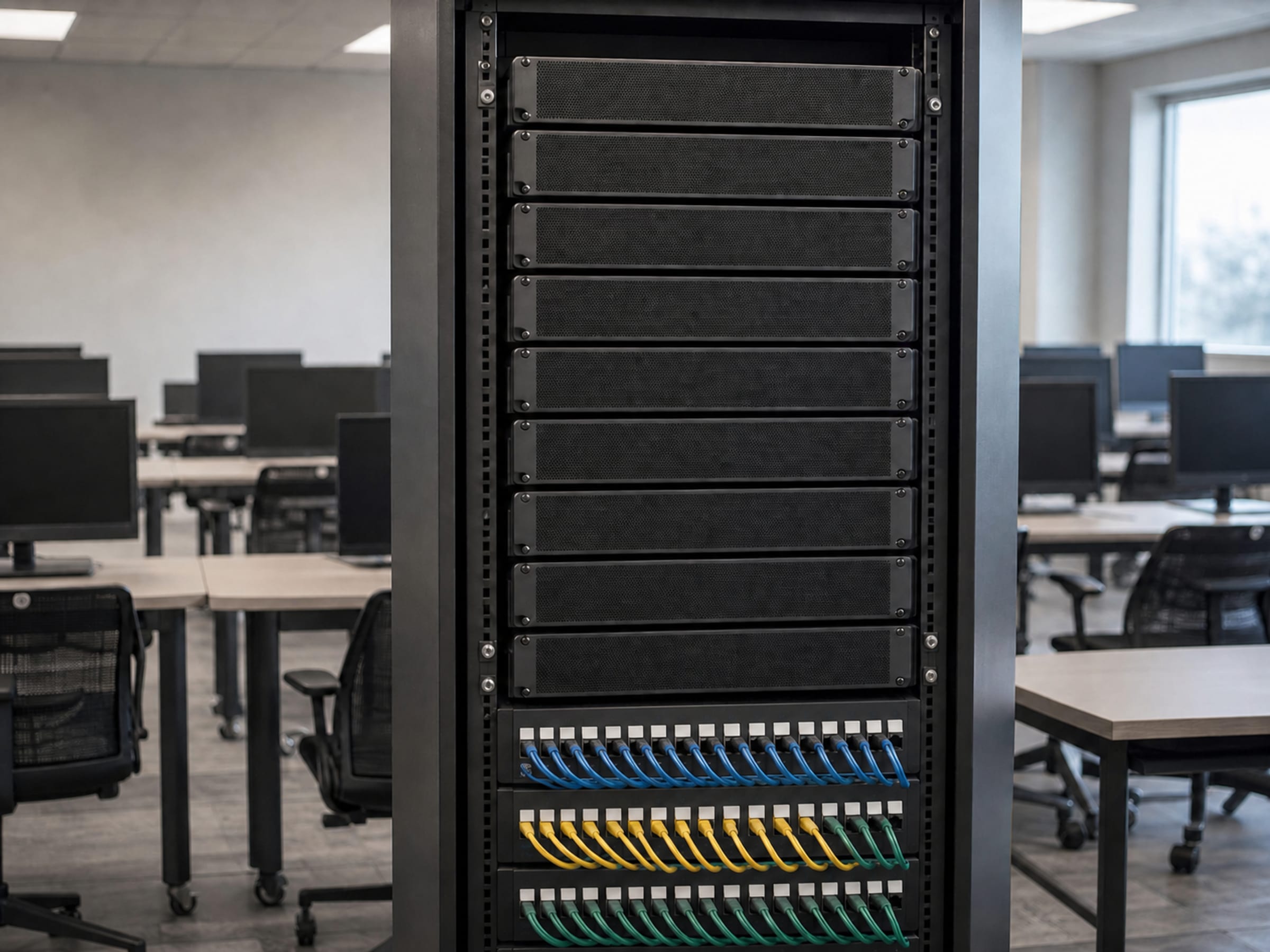
A range is a small isolated data center. We quote and build it — hypervisor hosts, isolated switching, snapshot storage, student endpoints — while the curriculum and the exercises stay with the training organization.
- Category
- Isolated compute, network and storage for training and exercise environments
- What we quote
- Hosts, switching, storage, student endpoints and OS subscriptions
- Sizing
- By concurrent students and per-student environment footprint
- Boundary
- The curriculum, the scenarios and the instruction stay with your program
Sized by concurrent students, isolated by design
A cyber range looks like a training program and buys like a data center. Each student needs an environment — commonly several virtual machines, a network between them, and a target estate to work against — and every one of those environments has to be created, snapshotted, reset between cohorts and destroyed cleanly. That drives three numbers: memory per host, which is almost always the binding constraint before cores are; storage input-output, because thirty students resetting at once is a burst nobody sizes for; and isolation, which has to be genuine rather than a VLAN and a promise, since range traffic is by design the sort of traffic that should never touch a production network. We quote and build that infrastructure. What runs on it — the curriculum, the scenarios, the assessment — belongs to the training organization.
Where a range build usually goes wrong
Memory first. Range environments are memory-heavy and processor-light: a dozen small virtual machines per student consume RAM far faster than they consume cores, and a host specified on core count runs out of memory with half its processors idle. Size against per-student footprint multiplied by peak concurrency, then add the infrastructure virtual machines the range itself needs.
Storage second, and specifically the burst. Deploying or resetting thirty environments simultaneously at the start of a session is the heaviest input-output event the range will ever see, and a target sized for steady-state comfortably fails it. Snapshot and clone behavior matters as much as raw capacity, because that is what a reset actually exercises.
Isolation third. The range network should not be reachable from production, and the management path into it should be deliberate and narrow. Separate physical switching is the cleanest answer and is usually affordable at range scale; where it must share infrastructure, that is a design decision to make explicitly rather than by default.
The infrastructure a range actually consumes
Priced lines from the hub catalog. The range platform software itself is sourced on request through US distribution — we hold no priced inventory in that market. Naming a manufacturer describes the market, not a Uniqcli partnership or endorsement.
Hypervisor hosts
Lenovo server and workstation lines specified memory-first against per-student footprint and peak concurrency, not core-first. Quoted with the memory configuration that leaves headroom for the next cohort size.
Isolated switching
Allied Telesis managed switching for a range network that is genuinely separate from production, with the port density the host and student counts require. Staged, firmware-baselined and labeled before delivery.
Snapshot and clone storage
Nexsan arrays sized against the reset burst rather than steady-state capacity — the input-output event when a whole cohort redeploys at once is what the target has to survive.
Subscriptions and student positions
Red Hat and SUSE subscriptions for the hosts and guest estate, and Citrix licensing where the design delivers student desktops rather than issuing hardware. Where students do work on issued machines, those are imaged to the course build, asset-tagged and re-imaged between cohorts through the same integration lane.
What we do not supply
We do not write curricula, author scenarios, run exercises or instruct. Those are the training organization's, and they are the entire value of a range — the infrastructure is the cheap part of the problem, however it looks on the invoice.
The range orchestration platforms themselves are not lines we hold priced. Where your program has selected one, we source it on request through US distribution and size the infrastructure to its published requirements rather than to a guess.
Cyber range questions
How do you size a range?
By peak concurrent students multiplied by the per-student environment footprint, plus the range's own infrastructure virtual machines. Memory is nearly always the binding constraint before processor cores are, and storage is sized against the redeploy burst at the start of a session rather than steady-state use.
Does a range need its own physical network?
It needs genuine isolation, and separate physical switching is the cleanest way to get it — at range scale it is usually affordable. Sharing infrastructure with production is possible but should be an explicit design decision with a documented management path, not something that happens by default.
Do you provide the range software or the training?
Neither. The orchestration platform is sourced on request through US distribution against the product you name, and the curriculum, scenarios and instruction belong to the training organization. What we supply and build is the compute, network, storage and endpoint infrastructure underneath.
The solutions atlas
Every solution, by technology area and by customer.
By technology
By customer
- TAA & NDAA-889 Compliance Screening
- CMMC & CUI Solutions
- Federal & DoD
- State, Local & Education
- Healthcare
- Enterprise
- Rapid Procurement & GPC Buys
- Multi-Vendor Integration Projects
- eProcurement & Custom Catalogs
- FISMA Modernization
- CJIS-Compliant Justice Cloud & Local AI
- Federal Storage Modernization
- Government ERP & Business Systems Infrastructure
- Managed Procurement
- Secure AV & Conferencing
- Fiber Network Infrastructure
- Satellite & Resilient Connectivity
- Wavelength & Optical Transport
- Decentralized Data Centers
- Data Center Design & Build
Size a range against your cohort
Send peak concurrent students, the per-student environment footprint and whether students work remotely or on issued machines. We return a sized build covering hosts, switching, storage, subscriptions and endpoints.