
Business connectivity
Business Satellite & Backup Internet
Two situations lead here: a site where terrestrial service does not reach, and a site where one circuit is the only thing standing between the business and a quiet afternoon.
We scope satellite, fixed wireless and cellular failover as one resilience menu, per location, with the trade-offs of each named rather than glossed.
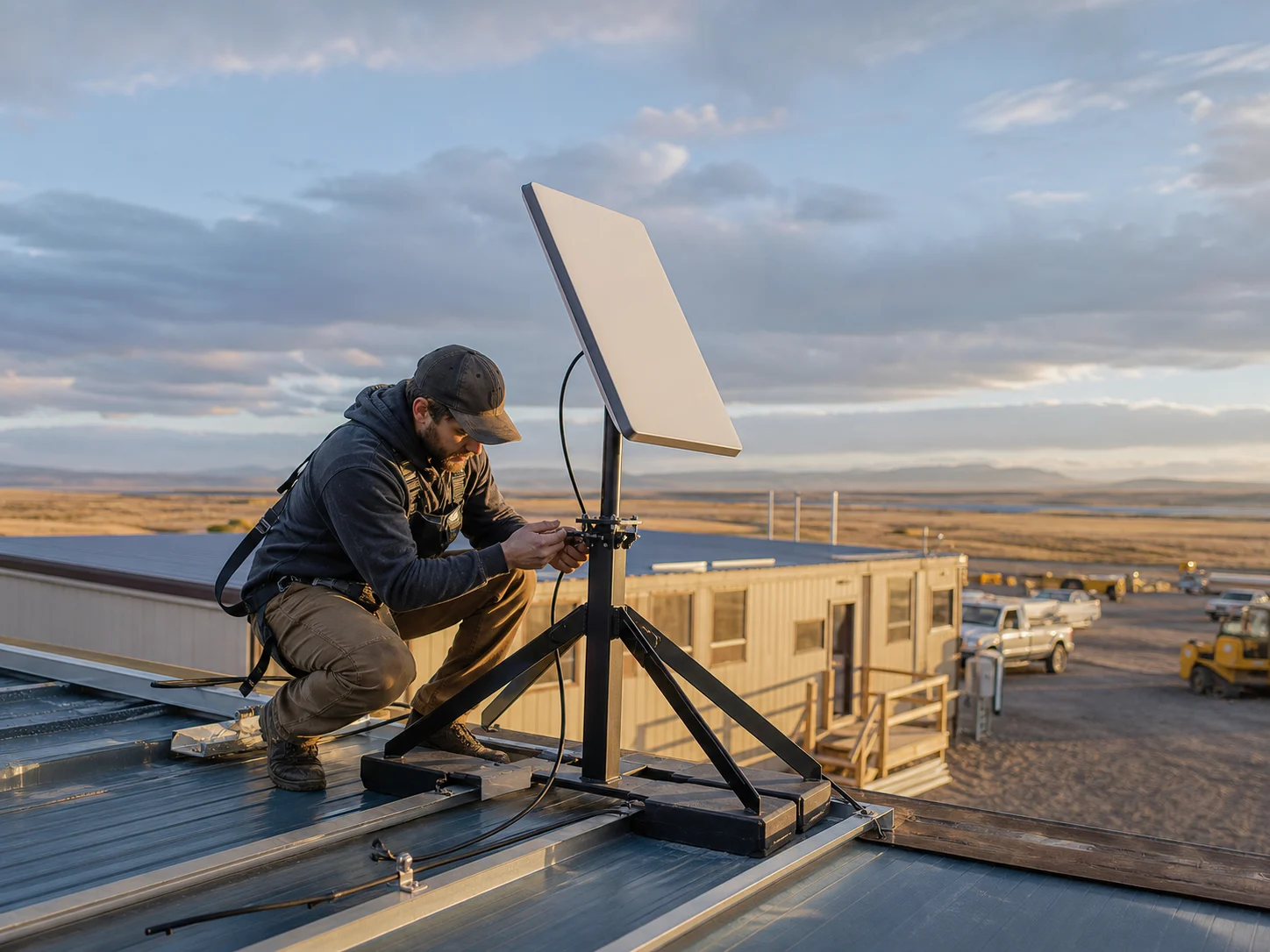
- Where it fits
- Primary access where nothing else reaches; a second path everywhere else
- Options scoped
- Satellite · fixed wireless · cellular LTE and 5G failover
- Unit of scope
- The site — coverage, mounting and power are all per location
- Boundary
- We scope, procure and coordinate turn-up; the provider operates the service
Get a quote
Satellite & backup internet
Tell us where to reach you and a Uniqcli specialist follows up by email to scope the locations with you, then comes back with a written quote. Serviceability and the final figure are confirmed per location.
The first number is our real one, not an opening one.
Tell us the scope and we come back with the best price we can do on it.
- Supporting federal, state & local purchasers
- GPC & P-Card accepted
- TAA & NDAA-889 screening before every quote
The only path, or the second one
Satellite and wireless services answer two different questions that happen to share a product set. The first is coverage: a yard, a site office, a remote clinic, a pumping station or a construction trailer where no carrier will build fiber for one customer, and where the choice is not between good and better but between something and nothing.
Continue readingShow less
The second is resilience: a perfectly well-served building with exactly one circuit, where the honest risk is not that the provider is bad but that a single backhoe outranks every piece of redundant hardware in the rack. The same three options — satellite, fixed wireless, and cellular — answer both, and which one fits is a per-site conversation rather than a policy. The starting rate we advertise belongs to dedicated internet access on a wireline circuit, and it does not describe a satellite or wireless service. Everything outside the starting rates above is sized rather than priced on a web page: the figure that binds is a written quote against your own addresses, terms and equipment list.
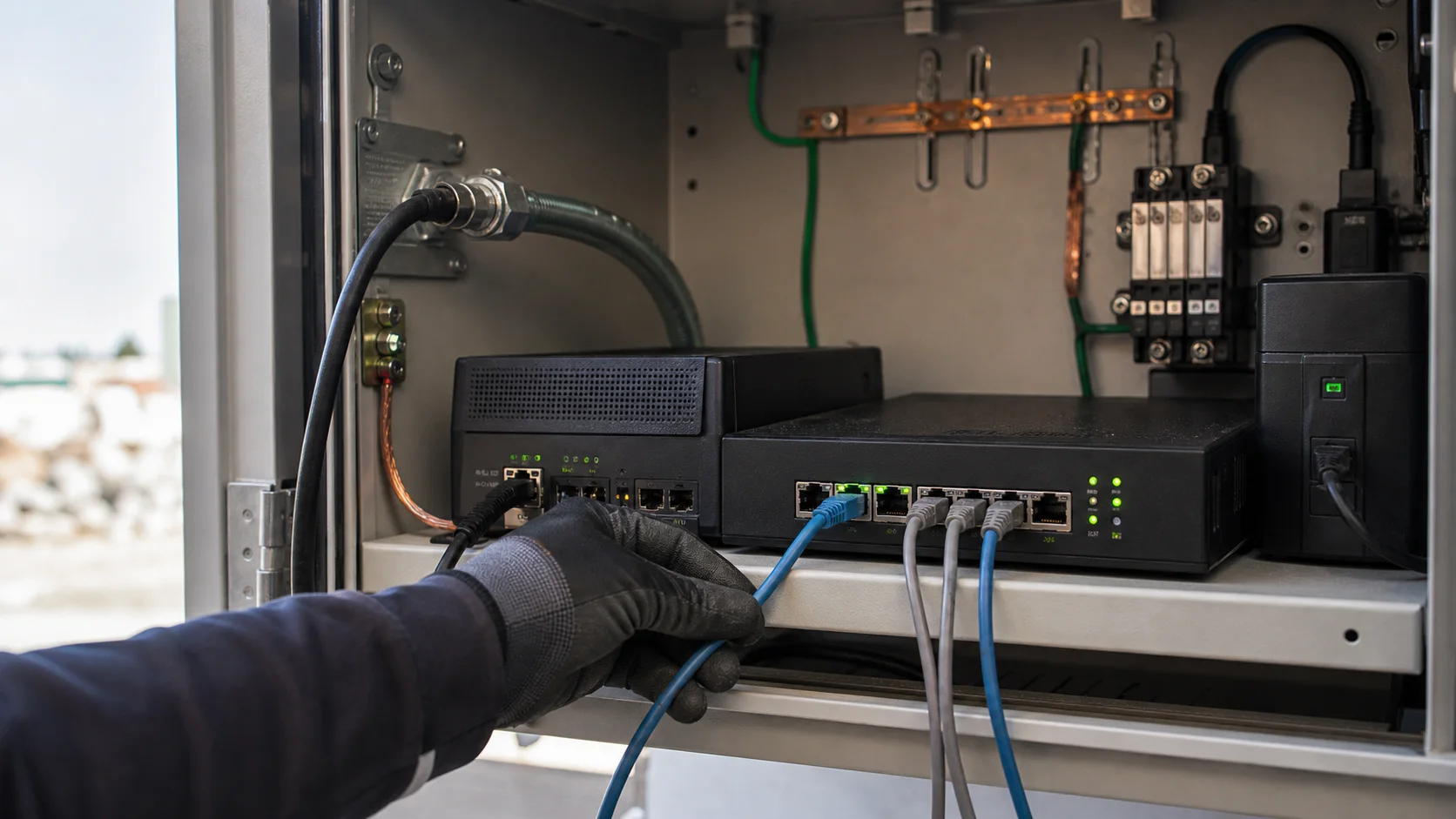
Three ways to reach a site nobody built fiber to
Each has a shape it is good at and a limit worth knowing before you sign, and we will name both. Circuits are provisioned through our carrier network relationships and quoted per location; equipment is sourced through our distribution network.
Continue readingShow less
Naming a service type describes what we quote, not a partnership with any provider.
Satellite, where terrestrial does not reach
Modern business satellite service is a genuine working connection rather than a last resort, and for remote sites it is frequently the only option that exists.
Continue readingShow less
What it is not is indistinguishable from fiber: latency is set by physics rather than by the provider, heavy weather and an obstructed view of the sky both matter, and throughput can vary with how busy the service is over your area. For browsing, email, cloud applications and most business software those characteristics are entirely liveable. For real-time voice, they are worth testing before you commit a site to it.
Fixed wireless, the middle option people forget
Where a provider has a tower or rooftop within line of sight, fixed wireless can deliver a substantial business-grade rate without a fiber build, and it often turns up as the fastest path to a working circuit at a site that would otherwise wait months for construction.
Continue readingShow less
The constraints are physical and checkable: line of sight, a mounting position, roof access and building permission. It is also genuinely diverse from a wireline path, which makes it a strong second circuit rather than only a stopgap.
Cellular LTE and 5G as the failover most sites qualify for
Almost every location already has usable cellular coverage, which makes a cellular failover path the lowest-friction resilience most businesses can buy — no construction, no line of sight, and a medium that is genuinely independent of the wireline circuit it backs up.
Continue readingShow less
The scoping questions are honest ones: which network actually performs at that address, what the data allowance is and what your site consumes in an outage, and whether the applications that must keep running will fit inside a degraded rate.
Failover is a design, not a device
The part that disappoints people is rarely the backup circuit; it is the cutover. What switches, how quickly it notices, whether sessions survive, what happens to a public-facing address, whether hosted voice reconnects and whether the VPN comes back without a human are all design questions answered by the edge equipment and its configuration.
Continue readingShow less
We scope that with the circuits rather than after them, and the routers and edge hardware are quoted through our distribution network. TAA (FAR 52.225-5) and NDAA §889 screening is performed on every hardware line, before the quote goes out.
Scope a backup path
Go to the formWhat we'll ask at quote
Remote and backup sites are the ones where a generic answer goes wrong most often, so the questions are deliberately physical. Photographs of the site help more than you would expect.
- The location of every site — a street address where one exists, and coordinates where one genuinely does not
- What is installed there today, if anything, and whether the site currently goes without service during an outage
- What must keep working when the primary path is down: point of sale, voice, a specific application, card processing, or simply email and cloud access
- The degraded rate you can actually live with, since a backup path sized for normal operation and one sized to keep the business running are different purchases
- The physical situation: mounting positions, roof or ground access, sky view and obstructions, power at the mount point, and who is permitted to work on the building
- Whether the site needs a static address or hosts anything reachable from outside, because that changes what a failover path has to preserve
- Whether cutover should be automatic and unattended, or whether a manual switch is acceptable at that site
- Who owns and installs the hardware, your target dates, and whether edge routing equipment is in scope for the same quote
What satellite is good at, and where it is not the answer
The latency of a satellite link is a property of distance and the speed of light, not a provider shortcoming, and no amount of shopping around changes it — lower orbits improve it substantially over older services, but it remains higher than a terrestrial circuit to the same place. In practice that is invisible for cloud applications, email, file work, most business software and video streaming. It shows up in real-time voice, in remote desktop where the user is sensitive to it, and in applications that were written assuming a local server. Those are exactly the workloads worth testing at a specific site before an entire operation is committed to the path.
Continue readingShow less
The second honest limit is variability. Weather, an obstructed view of the sky and how heavily the service is used over your particular area all affect what you get on a given afternoon, in a way a committed wireline circuit does not. This is manageable and mostly undramatic, but it argues for one specific design decision: where satellite is the primary path at a site that matters, the applications running over it should degrade gracefully rather than fail, and the site should know what its fallback is.
For resilience buyers the rule worth following is that the second path should use a different medium and, where possible, a different provider. Two circuits from one provider into one building often share a conduit, a route or an upstream, so the failure that takes one usually takes both — which is the outcome the second circuit was bought to prevent. Satellite, fixed wireless and cellular are each genuinely independent of the wireline path, which is precisely what makes them useful here even at sites with excellent primary service.
What the primary path usually is
A backup path is scoped against the circuit it protects, so these are the lanes most often quoted in the same conversation.
Satellite and failover questions
How do you deliver satellite and wireless service — and which provider is it?
Circuits are provisioned through our carrier network relationships and quoted per location; equipment is sourced through our distribution network. Naming a service type describes what we quote, not a partnership with any provider. We do not name a provider on a web page, in either direction, because what is actually available and sensible at a specific site depends on that site — and a page that advertises one operator tends to sell that operator rather than the right answer. Send the locations and you get the options that genuinely serve them, with the trade-offs of each named. Assess, design, procure, support: we scope the requirement with you, design against it, source the circuits and equipment, and stay the single point of contact through turn-up and afterwards.
Can satellite be our primary internet service?
At many sites, yes — and at remote ones it is often the only service that exists, which makes the question academic. What we will do before you commit a site to it is walk through what runs there. Cloud applications, email, file work and most business software are comfortable over a modern satellite link. Real-time voice and latency-sensitive remote desktop are the workloads worth testing first. If a site turns out to need one of those and a terrestrial option exists, we will say so rather than sell the easier install.
How fast can you get a quote back?
How quickly a quote comes back depends on how many addresses have to be checked and which carriers serve them; a single site is usually straightforward, and a multi-site scope moves at the pace of the slowest address. We tell you where each location stands rather than holding the whole quote for the last one.
Will failover happen automatically?
Only if it is designed to. The backup circuit is the easy half; the half that decides whether an outage is a non-event is the edge equipment and its configuration — what detects the failure, how quickly, whether existing sessions survive, what happens to a public address, and whether hosted voice and VPN tunnels re-establish without someone driving to the site. We scope that alongside the circuit, and we would rather tell you a site needs a different edge device than hand over a backup path that nobody notices has failed.
Is satellite worth having as backup at a site with good fiber?
Frequently, yes, and the reason is independence rather than speed. A second wireline circuit into the same building often shares a conduit, a route or an upstream with the first, so the event that takes one takes both. A satellite, fixed wireless or cellular path fails for completely different reasons, which is the whole point of a second path. The right way to size it is against what must keep working during an outage rather than against the primary circuit's rate.
Do you supply the hardware, and where does it come from?
Yes where it is in scope — terminals, mounts, routers and the edge equipment that makes failover behave — quoted through our distribution network against the design rather than listed with a shelf price. TAA (FAR 52.225-5) and NDAA §889 screening is performed on every hardware line, before the quote goes out. Service commitments are backed by the underlying carrier's published service terms, which are provided with your quote rather than summarized here.
Send the sites, including the difficult ones
Remote locations, sites with one circuit, or a whole estate that needs a resilience story — all three start the same way. We scope what genuinely reaches each site and come back with written options, with the limits of each path named rather than buried.
Continue readingShow less
Everything outside the starting rates above is sized rather than priced on a web page: the figure that binds is a written quote against your own addresses, terms and equipment list.
The solutions atlas
Every solution, by technology area and by customer.
By technology
By customer
- TAA & NDAA-889 Compliance Screening
- CMMC & CUI Solutions
- Federal & DoD
- State, Local & Education
- Healthcare
- Enterprise
- Rapid Procurement & GPC Buys
- Multi-Vendor Integration Projects
- eProcurement & Custom Catalogs
- FISMA Modernization
- CJIS-Compliant Justice Cloud & Local AI
- Federal Storage Modernization
- Government ERP & Business Systems Infrastructure
- Managed Procurement
- Secure AV & Conferencing
- Fiber Network Infrastructure
- Satellite & Resilient Connectivity
- Wavelength & Optical Transport
- Decentralized Data Centers
- Data Center Design & Build
Scope a backup path
Send the locations and what has to keep working when the primary circuit is down. You get written options per site — satellite, fixed wireless or cellular — with the cutover design and the edge equipment in the same quote. Service commitments are backed by the underlying carrier's published service terms, which are provided with your quote rather than summarized here.