
Solutions
Air-Gapped Network Infrastructure
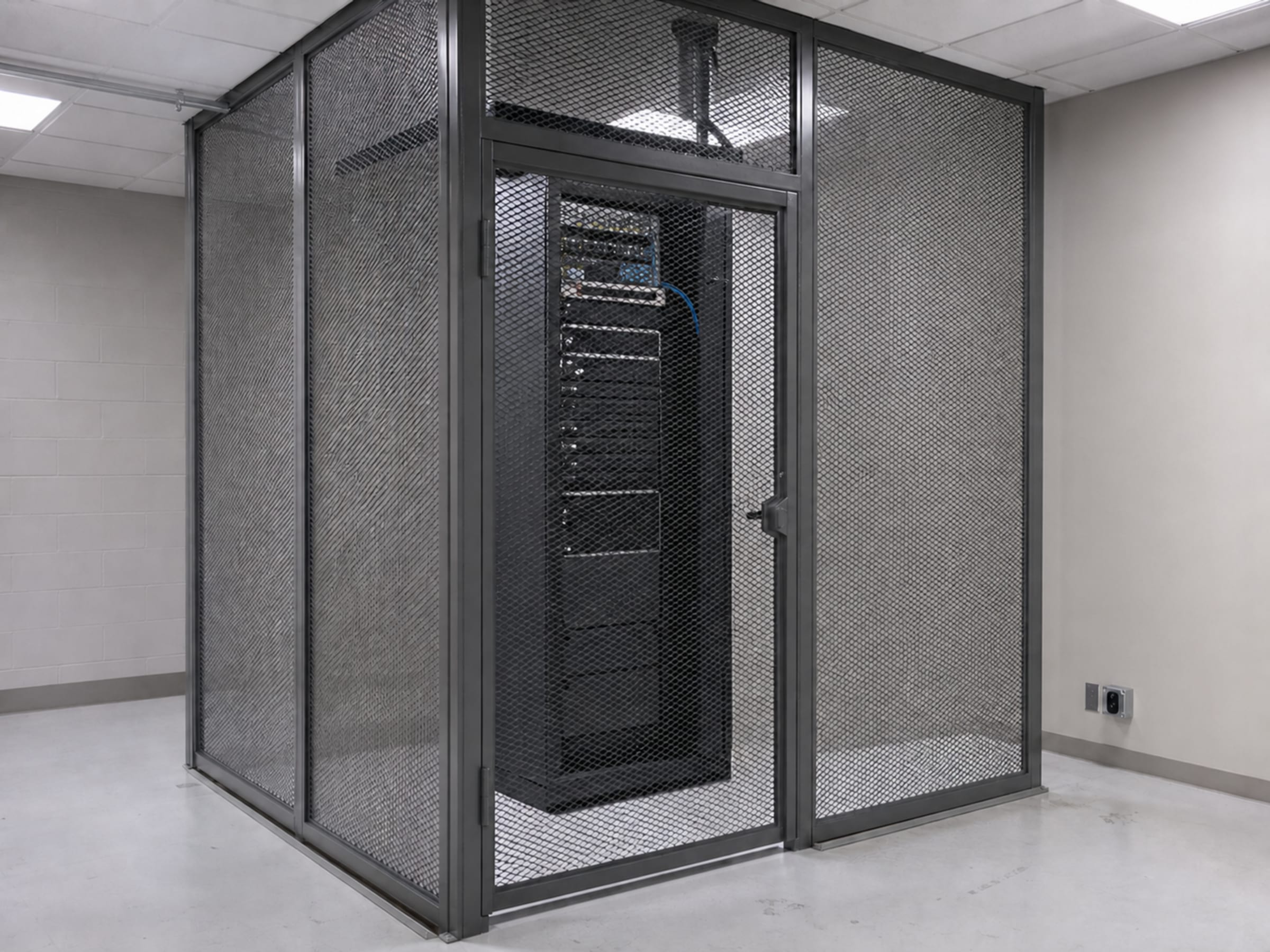
Physical separation means duplicated everything — switching, cabling, racks, KVM and color-coded patch fields. We build both sides to a documented, labeled standard so the separation survives the next technician, the next move and the next audit.
- Scope
- Physically separated network builds and isolated enclaves
- Quoted
- Duplicated switching, color-coded plant, racks, secure KVM, labeling
- Screening
- TAA (FAR 52.225-5) and NDAA §889, every line
- Boundary
- No accreditation outcome — the separation is yours to maintain
Separation is a discipline that has to survive the people who come later
An air gap is easy to build and easy to erode. The build is duplication: two switching estates, two cable plants, two patch fields, two power paths where the design calls for it. The erosion is human and gradual — an unlabeled patch cord moved during a busy week, a technician who reaches for the nearest port, a spare switch borrowed from the wrong stack. Which is why the real deliverable is not the equipment but the convention around it: color that means something, labeling that survives a re-terminate, patch fields that are physically separated rather than merely logically distinct, and documentation that makes the wrong action obviously wrong.
What we build to, unless you have your own standard
- Color-coded patch cords and panel labeling consistent across every closet
- Physically separated patch fields — separate panels, separate management, ideally separate racks
- Distinct switch models or clearly marked chassis per side, so a swap cannot be casual
- Port-level labeling that survives re-termination, not adhesive that lifts in a year
- Documented rack elevations per side, delivered with the equipment rather than promised
- Secure KVM where one operator has to work across separated systems from one desk
Two of everything, documented once
Every line is screened for TAA and §889 — this is the cluster where that screening most often decides the purchase.
Duplicated switching
Allied Telesis and Netgear carry priced managed switching for both sides of the build. Where the sides use distinct models or clearly distinguished chassis, a casual swap between them becomes visibly wrong rather than merely incorrect.
Color-coded plant and patch fields
Panduit and Legrand carry deep priced inventory across patch panels, cable management and color-coded cordage. The color convention is the control most likely to hold when nobody is watching.
Racks, separation and physical security
Separate racks or lockable sections per side, blanking, and the physical security hardware that makes access a deliberate act. Quoted with elevations per side rather than a single rack diagram.
Secure KVM for one desk, two systems
Where an operator works across separated systems, NIAP Peripheral Sharing Device secure KVM is the ordinary route. Black Box carries priced KVM inventory; we state what a given model's listing says rather than generalising across a line.
What stays yours to run
We supply and integrate equipment. We do not accredit systems, make an authorization determination, or claim that a build meets any classification, control or accreditation requirement. Those judgements belong to your security authority, your assessor and the framework your program runs under. Buying separated infrastructure is a step toward a control; it is never the control itself.
Cross-domain solutions and data diodes are the clearest case of that boundary. Those products do not carry priced rows in our catalog and are sourced on request through US distribution, quoted with honest lead times — and their selection and accreditation belong entirely to your security architecture, not to a reseller.
The other durable truth about air gaps is that they erode through procedure rather than through equipment. What we can contribute is a build whose conventions make the wrong action visible: color that means something, labels that last, and documentation delivered with the hardware. Maintaining that discipline is yours.
Isolated network questions
Does buying separated infrastructure make us compliant?
No purchase does. Physical separation supports controls in whichever framework your program follows, but compliance is a determination made about your organization and system by your assessor or security authority. We supply and integrate the capability behind the control — never a certification, accreditation or outcome we hold.
Can you supply data diodes or cross-domain solutions?
They are sourced on request through US distribution rather than priced in our catalog, and quoted with honest lead times. Selection and accreditation of those products belong to your security architecture and your authority — a reseller recommending one on a web page would be overstepping.
How do you keep the two sides from being confused on site?
Conventions that make the wrong action visible: color-coded cordage, physically separated patch fields, port-level labeling that survives re-termination, distinct or clearly marked chassis per side, and rack elevations delivered with the equipment. We build to your standard if you have one, and to a documented one if you do not.
Is secure KVM enough for an operator working across both sides?
NIAP Peripheral Sharing Device secure KVM is the ordinary route for sharing one desk across separated systems, and we state what a specific model's listing says rather than generalising across a brand. Whether it satisfies your particular requirement is a question for your security authority.
Isolation background and the hardware it demands
The solutions atlas
Every solution, by technology area and by customer.
By technology
By customer
- TAA & NDAA-889 Compliance Screening
- CMMC & CUI Solutions
- Federal & DoD
- State, Local & Education
- Healthcare
- Enterprise
- Rapid Procurement & GPC Buys
- Multi-Vendor Integration Projects
- eProcurement & Custom Catalogs
- FISMA Modernization
- CJIS-Compliant Justice Cloud & Local AI
- Federal Storage Modernization
- Government ERP & Business Systems Infrastructure
- Managed Procurement
- Secure AV & Conferencing
- Fiber Network Infrastructure
- Satellite & Resilient Connectivity
- Wavelength & Optical Transport
- Decentralized Data Centers
- Data Center Design & Build
Send the build and your separation standard
Give us the closets, the two sides and whatever convention your program already uses. The quote comes back as duplicated switching, color-coded plant, racks and KVM with elevations per side — screened per line, with no accreditation claim attached.