
Solutions
Video Surveillance Storage
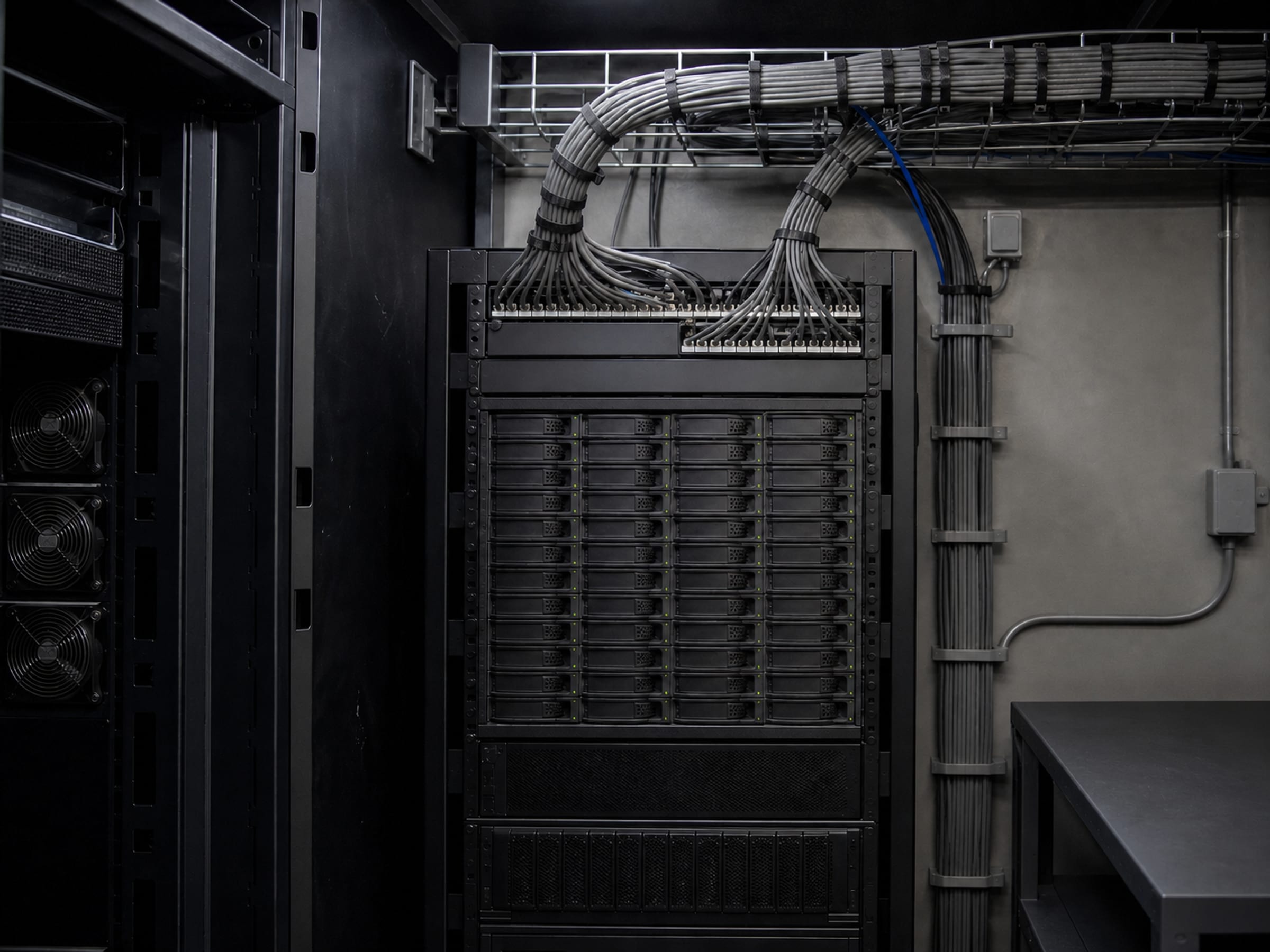
Retention days times camera count is a storage purchase, not a camera one. We size the array or recorder against real bitrate and hand it over racked, with the retention policy configured to what you specify.
- Sized on
- Bitrate × camera count × retention days
- Drives
- Surveillance-rated, populated and configured before shipping
- Cameras
- Sourced through our physical-security storefront
- Boundary
- Retention policy and access rules stay yours to set
The camera count is a small number; the retention requirement is the whole budget
Surveillance projects are specified in cameras and paid for in terabytes. Thirty days of retention at a realistic bitrate across a mid-sized site produces a storage requirement that dwarfs the camera line, and it scales linearly with every additional day the policy asks for. Sizing it from a headline capacity figure or a vendor calculator's optimistic default is how a system quietly starts overwriting footage a week before anyone expects. We size against real bitrate, state the assumptions on the quote, and deliver the array or recorder racked with drives populated and configured to the retention you specify.
Four inputs, and the one everybody guesses
Bitrate is the input that decides everything and the one most often taken from a datasheet's best case. Resolution, frame rate, codec and — above all — scene complexity move it enormously: a fixed camera watching an empty corridor and one watching a busy loading dock at the same settings can differ by a factor of three or more in what they actually write.
Camera count and retention days are the easy two, but retention deserves a question rather than an assumption: whether the requirement is thirty days for everything, or thirty days for most cameras and ninety for a handful at controlled points. Tiering the retention is often the difference between a straightforward purchase and an unaffordable one.
The fourth is what happens on failure. A surveillance array that loses a drive should keep recording, which means RAID level and hot-spare count are part of the capacity arithmetic rather than an afterthought — and they are why usable capacity is always meaningfully less than the sum of the drives.
The storage half, in depth
Verified priced lines. Camera and access-control hardware is routed rather than claimed here. Naming a manufacturer describes the market, not a Uniqcli partnership or endorsement.
Arrays and expansion
Nexsan arrays and drive cabinets where the retention requirement has outgrown a recorder, sized against usable capacity after RAID and hot spares rather than against raw drive totals.
Surveillance-rated drives
Western Digital and Seagate drives in surveillance-rated classes — continuous-write workloads are not what a desktop drive is built for, and the failure pattern shows up eighteen months in, not on day one.
Recorders and appliances
Promise and QNAP surveillance and storage appliances for sites where a full array is not warranted, quoted with drives populated, RAID configured and the unit labeled before it ships.
Cameras, policy and access
Camera hardware, access control and the physical-security estate around it are carried on our dedicated physical-security storefront at security.getuniqcli.com rather than on this catalog. If your project spans both, we will quote the storage here and route the camera side there rather than pretend to inventory we do not hold.
The retention policy itself is yours. How long footage is kept, who may view it, how exports are handled and what the legal-hold process looks like are decisions your organization makes and documents. We configure the array to the retention figure you give us; we do not advise on the policy behind it and we make no compliance promise about it.
Surveillance storage questions
How much storage do we need for thirty days?
It depends on bitrate far more than on camera count. Send the camera models, resolution, frame rate, codec and a description of what each scene looks like, and we will size it with the assumptions written on the quote so you can challenge any of them.
Do you sell the cameras too?
Cameras and access control are carried on our physical-security storefront rather than this catalog. We quote the storage here and point you there for the camera side — the two can still be planned as one project.
Can the array arrive configured?
Yes. Drives populated, RAID level and hot spares configured to your specification, labeled and racked to your elevation. What we configure is what you specify — the retention policy and the access rules are yours to define.
The solutions atlas
Every solution, by technology area and by customer.
By technology
By customer
- TAA & NDAA-889 Compliance Screening
- CMMC & CUI Solutions
- Federal & DoD
- State, Local & Education
- Healthcare
- Enterprise
- Rapid Procurement & GPC Buys
- Multi-Vendor Integration Projects
- eProcurement & Custom Catalogs
- FISMA Modernization
- CJIS-Compliant Justice Cloud & Local AI
- Federal Storage Modernization
- Government ERP & Business Systems Infrastructure
- Managed Procurement
- Secure AV & Conferencing
- Fiber Network Infrastructure
- Satellite & Resilient Connectivity
- Wavelength & Optical Transport
- Decentralized Data Centers
- Data Center Design & Build
Send the camera list and the retention requirement
We size the storage against real bitrate, state every assumption, and deliver it racked with drives populated and RAID configured.