
Best Supermicro Motherboards for Servers and Appliances
Supermicro server, workstation, embedded and desktop motherboards — selected by CPU socket, chipset, form factor, memory support and onboard networking.
Supermicro motherboards at Uniqcli
How to choose →A curated selection with live pricing and honest availability — everything below is currently back-ordered, and we quote a dated lead time on request. Every line is sourced through US distribution and screened for NDAA §889 status before checkout, with TAA verified on request.
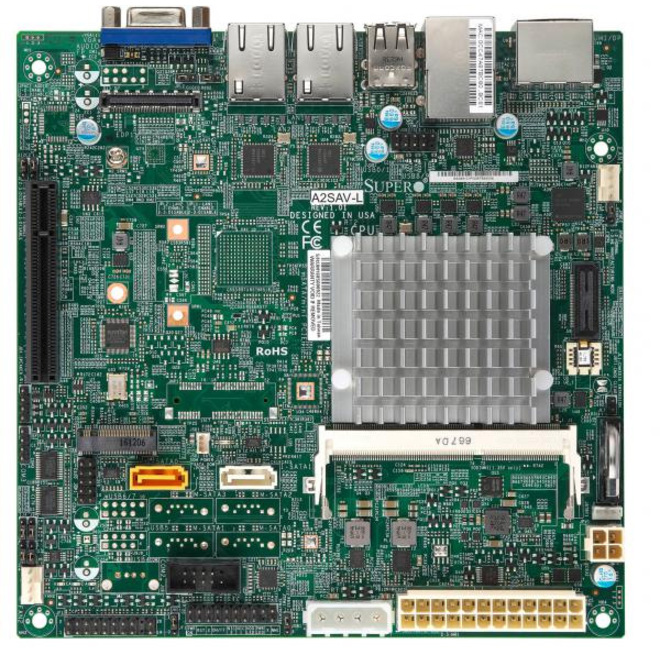
- SupermicroSupermicro A2SAP-L Server Motherboard - Intel Chipset - Socket BGA-1296 - Pico ITX - Atom x5-E3930 - 8 GB DDR3L SDRAM Maximum RAM - SODIMM - 1 x Memory Slots - Gigabit Ethernet - HDMI - 1 x SATA InterfacesMBD-A2SAP-L-O
$224.50
Back-orderedBack-ordered — estimated OEM lead time 3–8 weeks (Nov 10 – Dec 15 if ordered today).
- SupermicroSupermicro A2SAV-2C-L Server Motherboard - Intel Chipset - Socket BGA-1296 - Mini ITX - Atom x5-E3930 - 8 GB DDR3L SDRAM Maximum RAM - DDR3-1866/PC3-15000 - SODIMM - 1 x Memory Slots - Gigabit Ethernet - HDMI - DisplayPort - 2 x SATA InterfacesMBD-A2SAV-2C-L-O
$228.55
Back-orderedBack-ordered — estimated OEM lead time 3–8 weeks (Nov 10 – Dec 15 if ordered today).
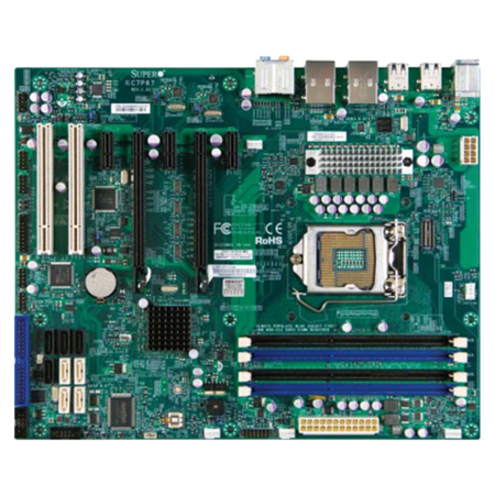
- SupermicroSupermicro C7C242-CB-M Desktop Motherboard - Intel C242 Chipset - Socket H4 LGA-1151 - Micro ATX - 64 GB DDR4 SDRAM Maximum RAM - DIMM, UDIMM, RDIMM, LRDIMM - 4 x Memory Slots - Gigabit Ethernet - 6 x SATA InterfacesMBD-C7C242-CB-M-O
$233.96
Back-orderedBack-ordered — estimated OEM lead time 3–8 weeks (Nov 10 – Dec 15 if ordered today).
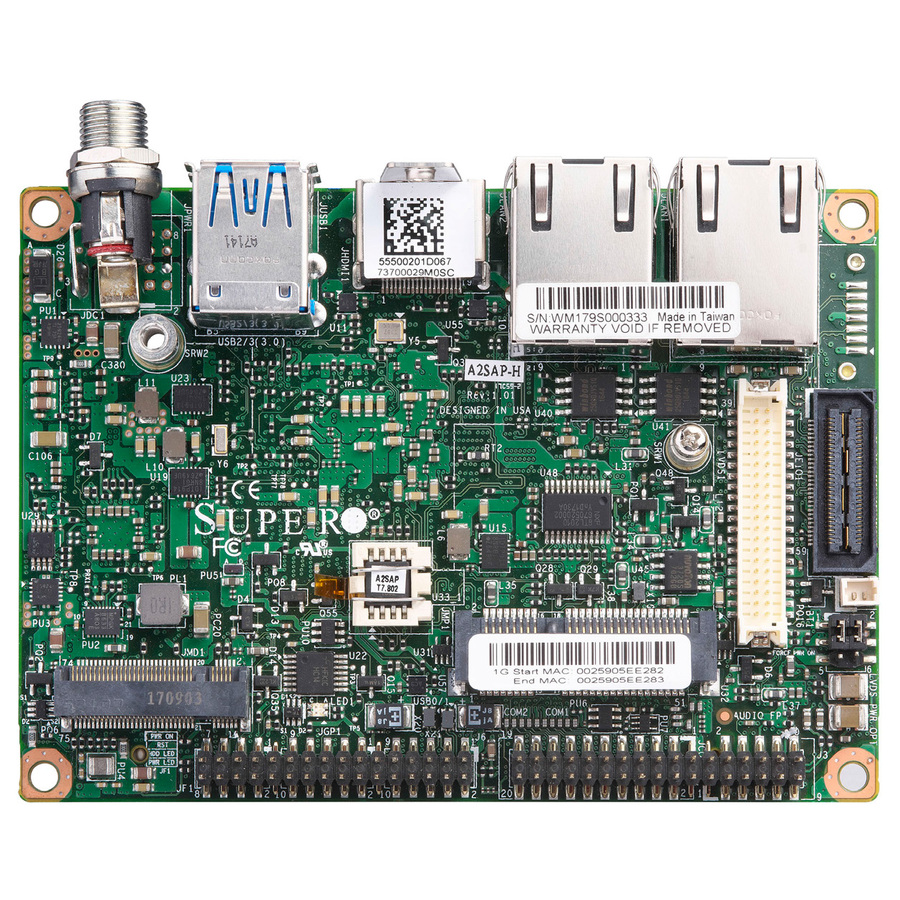
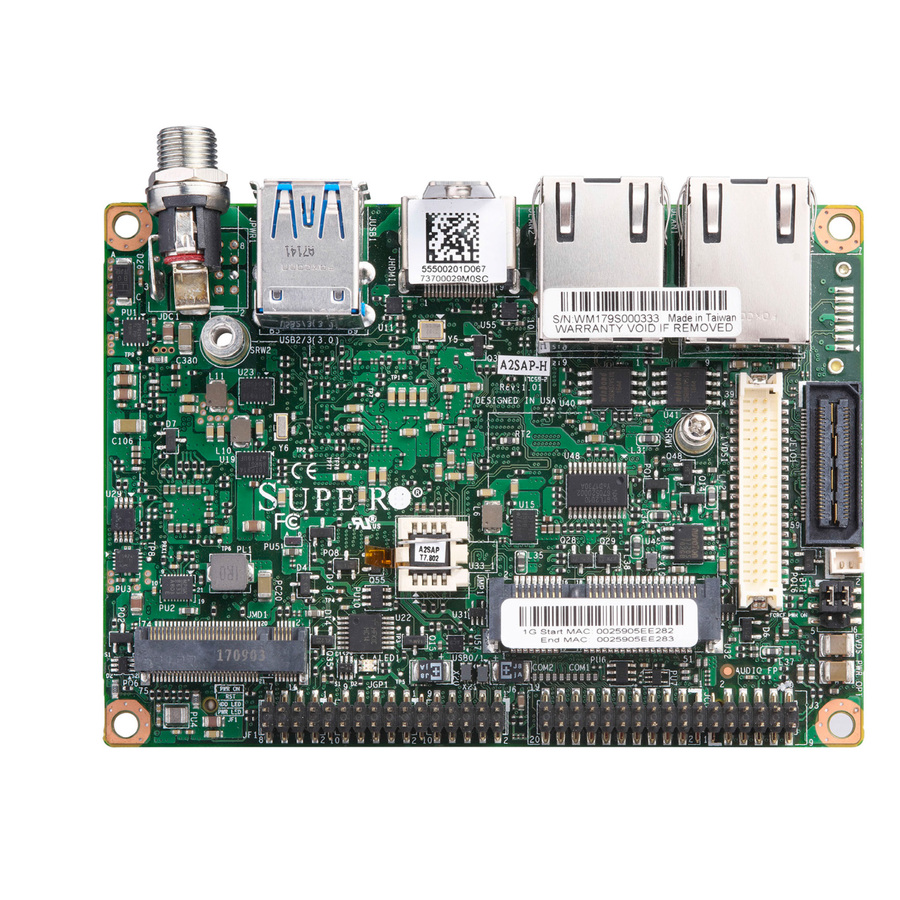
- SupermicroSupermicro A2SAP-H Server Motherboard - Intel Chipset - Socket BGA-1296 - Pico ITX - Atom x5-E3940 - 8 GB DDR3L SDRAM Maximum RAM - SODIMM - 1 x Memory Slots - Gigabit Ethernet - HDMIMBD-A2SAP-H-O
$239.38
Back-orderedBack-ordered — estimated OEM lead time 3–8 weeks (Nov 10 – Dec 15 if ordered today).
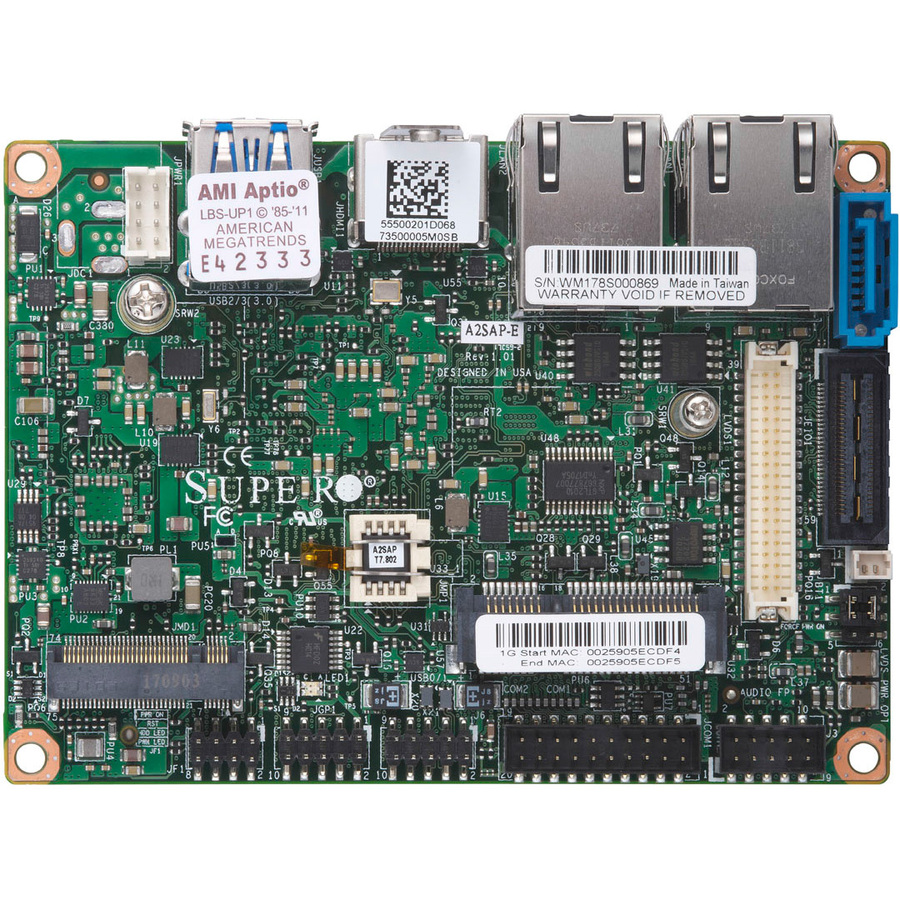
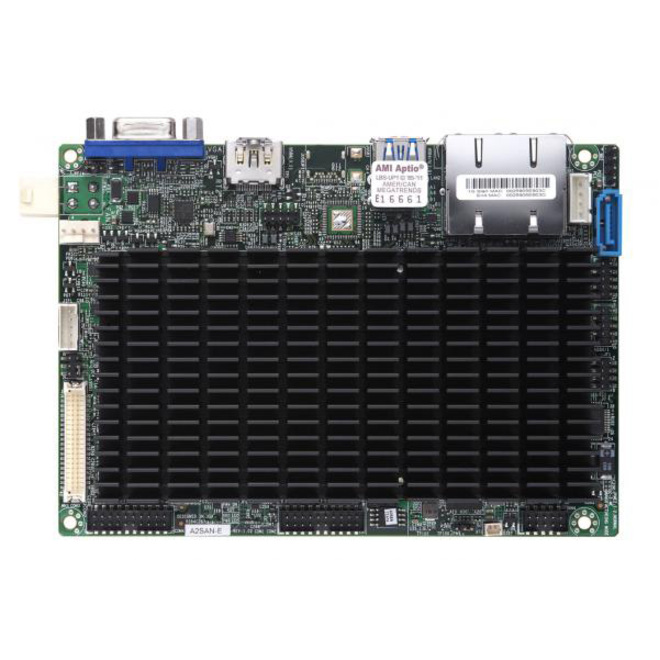
- SupermicroSupermicro A2SAP-E Server Motherboard - Intel Chipset - Socket BGA-1296 - Pico ITX - Atom x5-E3940 - 8 GB DDR3L SDRAM Maximum RAM - SODIMM - 1 x Memory Slots - Gigabit Ethernet - HDMIMBD-A2SAP-E-O
$242.08
Back-orderedBack-ordered — estimated OEM lead time 3–8 weeks (Nov 10 – Dec 15 if ordered today).
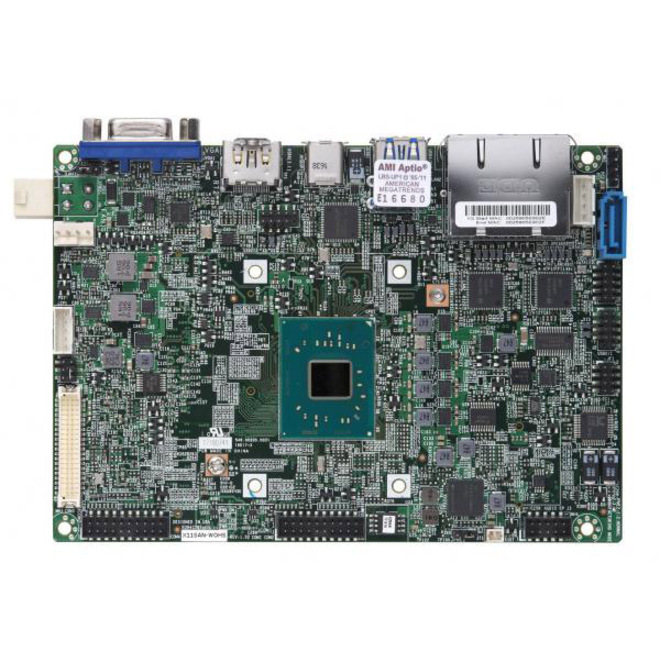
- SupermicroSupermicro A2SAN-L-WOHS Server Motherboard - Intel Chipset - Socket BGA-1296 - 3.5" SBC - Atom x5-E3930 - 8 GB DDR3L SDRAM Maximum RAM - SODIMM - 1 x Memory Slots - Gigabit Ethernet - HDMI - 1 x SATA InterfacesMBD-A2SAN-L-WOHS-O
$244.78
Back-orderedBack-ordered — estimated OEM lead time 3–8 weeks (Nov 10 – Dec 15 if ordered today).
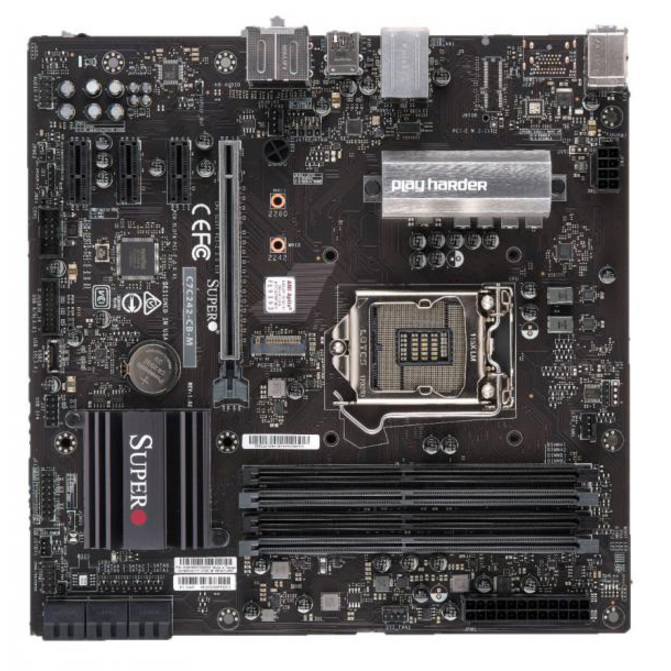
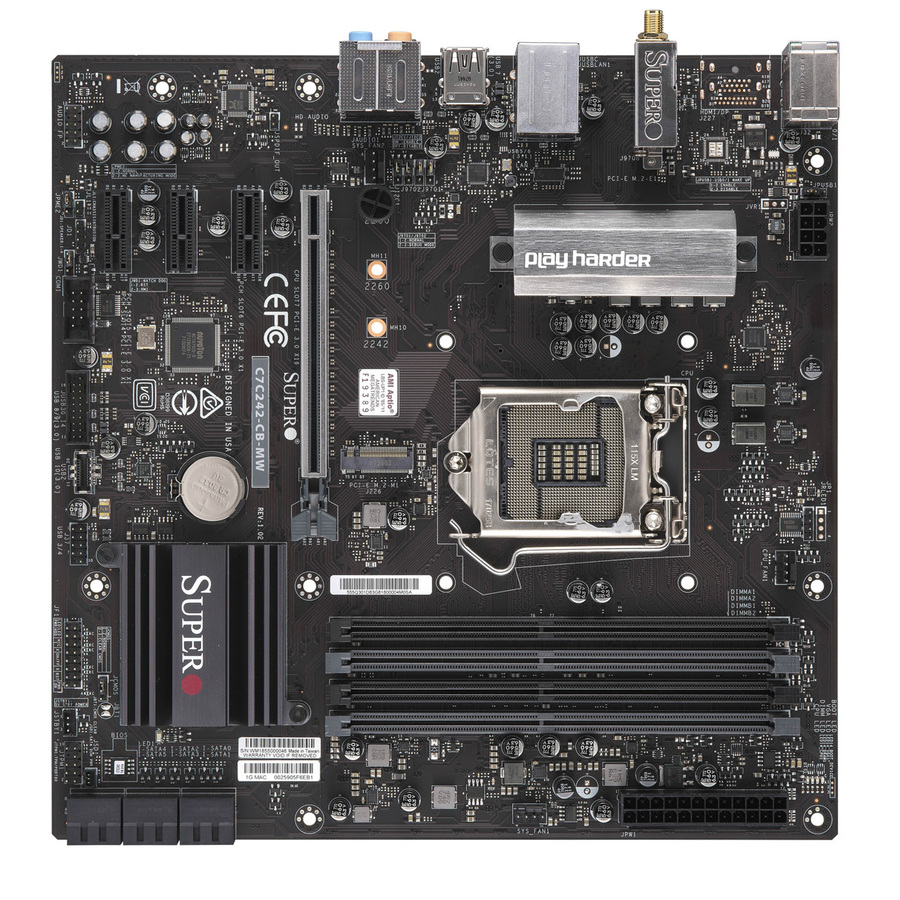
- SupermicroSupermicro C7C242-CB-MW Desktop Motherboard - Intel C242 Chipset - Socket H4 LGA-1151 - Micro ATX - 64 GB DDR4 SDRAM Maximum RAM - DIMM, UDIMM, RDIMM, LRDIMM - 4 x Memory Slots - Gigabit Ethernet - 6 x SATA InterfacesMBD-C7C242-CB-MW-O
$248.84
Back-orderedBack-ordered — estimated OEM lead time 3–8 weeks (Nov 10 – Dec 15 if ordered today).
- SupermicroSupermicro A2SAN-E-WOHS Server Motherboard - Intel Chipset - Socket BGA-1296 - 3.5" SBC - Atom x5-E3940 - 8 GB DDR3L SDRAM Maximum RAM - SODIMM - 1 x Memory Slots - Gigabit Ethernet - HDMI - 1 x SATA InterfacesMBD-A2SAN-E-WOHS-O
$266.42
Back-orderedBack-ordered — estimated OEM lead time 3–8 weeks (Nov 10 – Dec 15 if ordered today).
- SupermicroSupermicro A2SAN-E Server Motherboard - Intel Chipset - Socket BGA-1296 - 3.5" SBC - Atom x5-E3940 - 8 GB DDR3L SDRAM Maximum RAM - SODIMM - 1 x Memory Slots - Gigabit Ethernet - HDMI - 1 x SATA InterfacesMBD-A2SAN-E-O
$275.89
Back-orderedBack-ordered — estimated OEM lead time 3–8 weeks (Nov 10 – Dec 15 if ordered today).
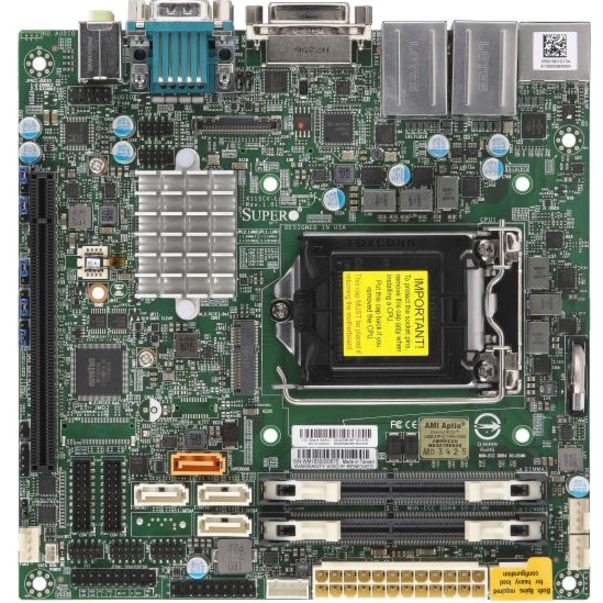
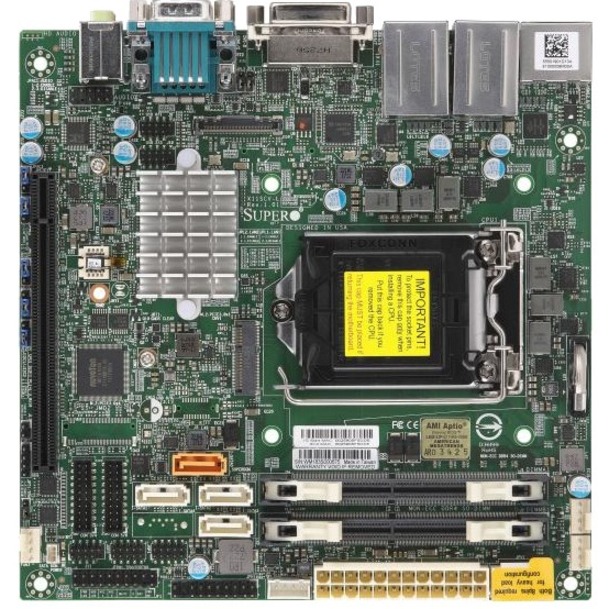
- SupermicroSupermicro X11SCV-L Desktop Motherboard - Intel H310 Chipset - Socket H4 LGA-1151 - Mini ITX - 32 GB DDR4 SDRAM Maximum RAM - SODIMM - 2 x Memory Slots - Gigabit Ethernet - HDMI - DisplayPort - 4 x SATA InterfacesMBD-X11SCV-L-B
$275.89
Back-orderedBack-ordered — estimated OEM lead time 3–8 weeks (Nov 10 – Dec 15 if ordered today).
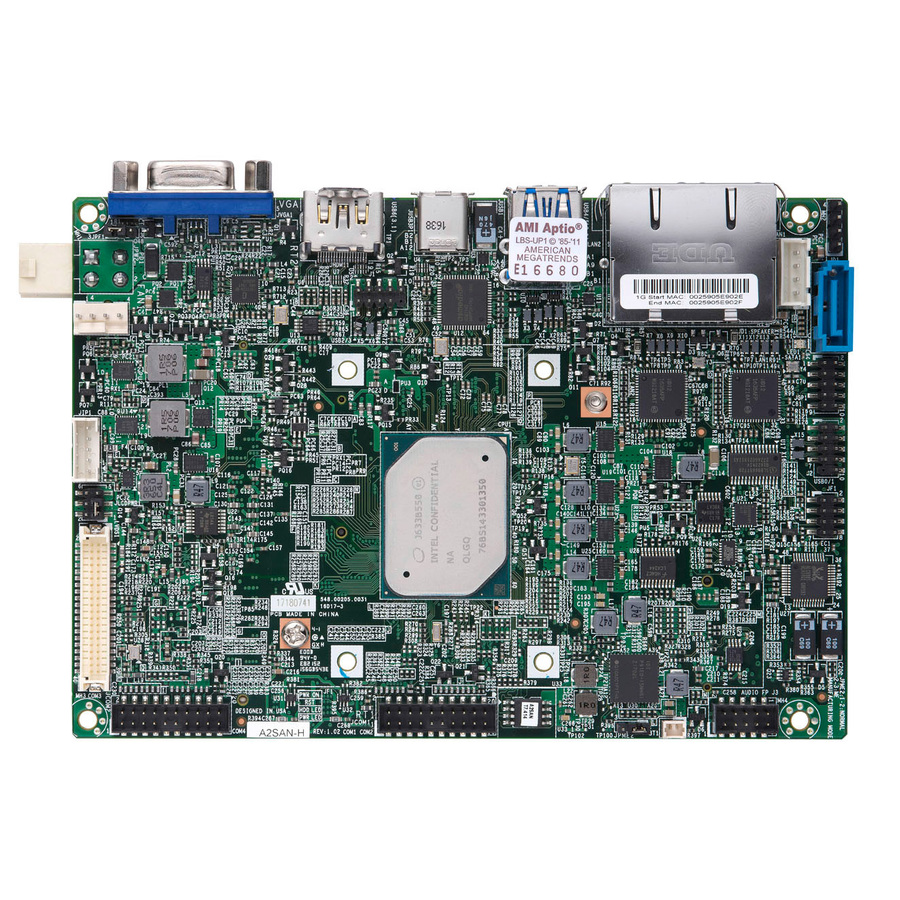
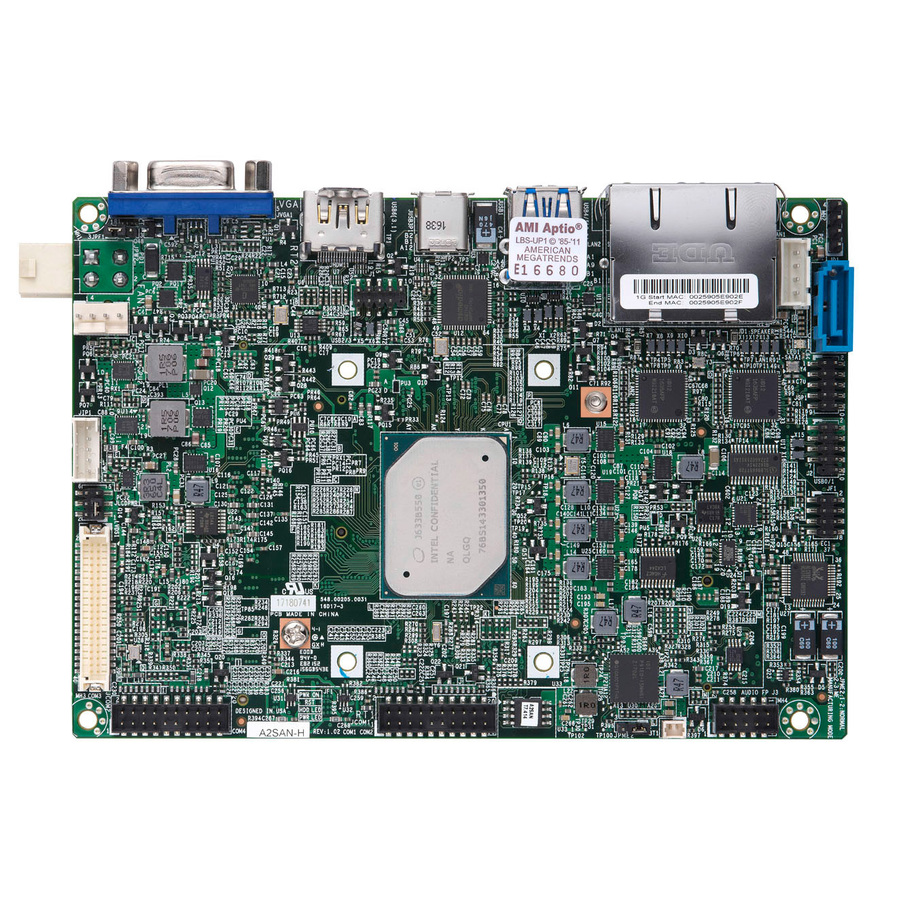
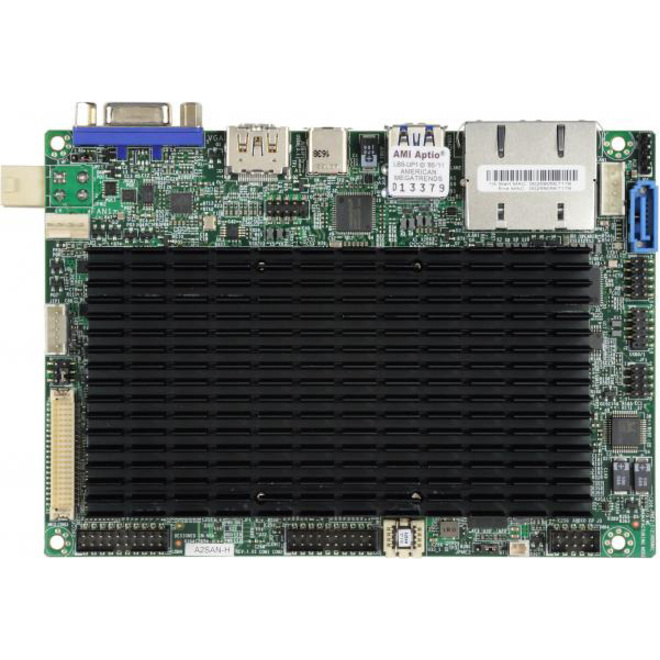
- SupermicroSupermicro A2SAN-H Server Motherboard - Intel Chipset - Socket BGA-1296 - 3.5" SBC - Atom x5-E3940 - 8 GB DDR3L SDRAM Maximum RAM - SODIMM - 1 x Memory Slots - Gigabit Ethernet - HDMI - 1 x SATA InterfacesMBD-A2SAN-H-O
$278.60
Back-orderedBack-ordered — estimated OEM lead time 3–8 weeks (Nov 10 – Dec 15 if ordered today).
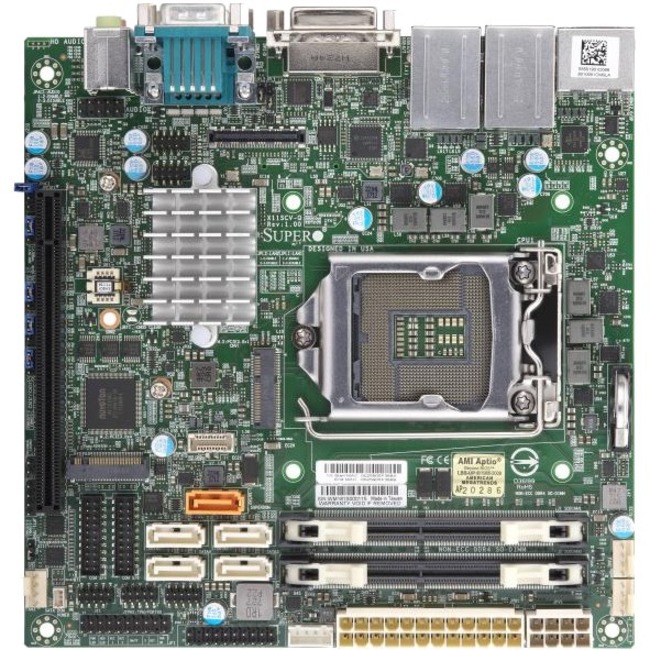
- SupermicroSupermicro X11SCV-L Desktop Motherboard - Intel H310 Chipset - Socket H4 LGA-1151 - Mini ITX - 32 GB DDR4 SDRAM Maximum RAM - SODIMM - 2 x Memory Slots - Gigabit Ethernet - HDMI - DisplayPort - 4 x SATA InterfacesMBD-X11SCV-L-O
$282.65
Back-orderedBack-ordered — estimated OEM lead time 3–8 weeks (Nov 10 – Dec 15 if ordered today).
Back-ordered — estimated OEM lead time 3–8 weeks (Nov 10 – Dec 15 if ordered today).
- SupermicroSupermicro X11SAN-WOHS Desktop Motherboard - Intel Chipset - Socket BGA-1296 - 3.5" SBC - Pentium N4200 - 8 GB DDR3L SDRAM Maximum RAM - DDR3L-1866/PC3-14900 - SODIMM - 1 x Memory Slots - Gigabit Ethernet - HDMI - 1 x SATA InterfacesMBD-X11SAN-WOHS-O
$301.58
Back-orderedBack-ordered — estimated OEM lead time 3–8 weeks (Nov 10 – Dec 15 if ordered today).
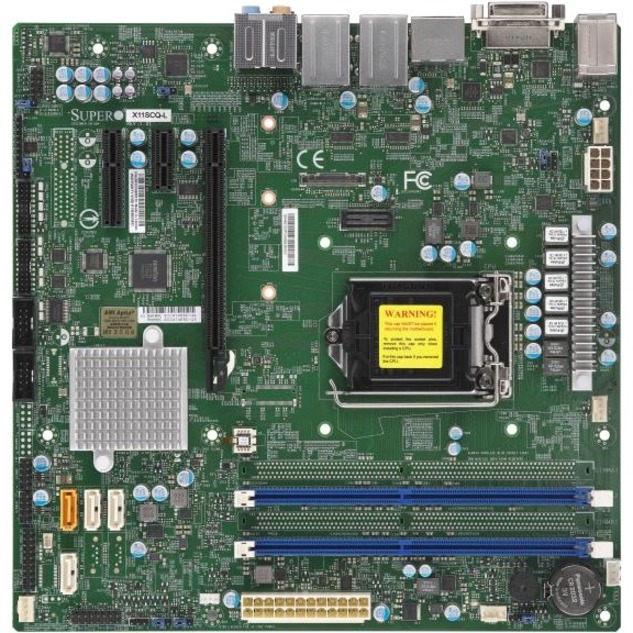
- SupermicroSupermicro X11SCQ-L Workstation Motherboard - Intel H310 Chipset - Socket H4 LGA-1151 - Micro ATX - 32 GB DDR4 SDRAM Maximum RAM - DIMM, UDIMM - 2 x Memory Slots - Gigabit Ethernet - HDMI - DisplayPort - 4 x SATA InterfacesMBD-X11SCQ-L-O
$307.00
Back-orderedBack-ordered — estimated OEM lead time 3–8 weeks (Nov 10 – Dec 15 if ordered today).
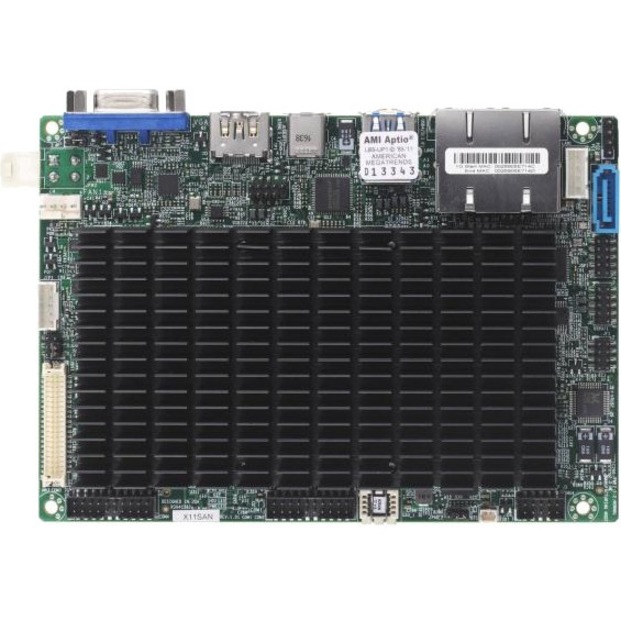
- SupermicroSupermicro X11SAN Server Motherboard - Intel Chipset - Socket BGA-1296 - Pentium N4200 - 8 GB DDR3 SDRAM, DDR3L SDRAM Maximum RAM - SODIMM - 1 x Memory Slots - Gigabit Ethernet - HDMI - 1 x SATA InterfacesMBD-X11SAN-O
$311.05
Back-orderedBack-ordered — estimated OEM lead time 3–8 weeks (Nov 10 – Dec 15 if ordered today).
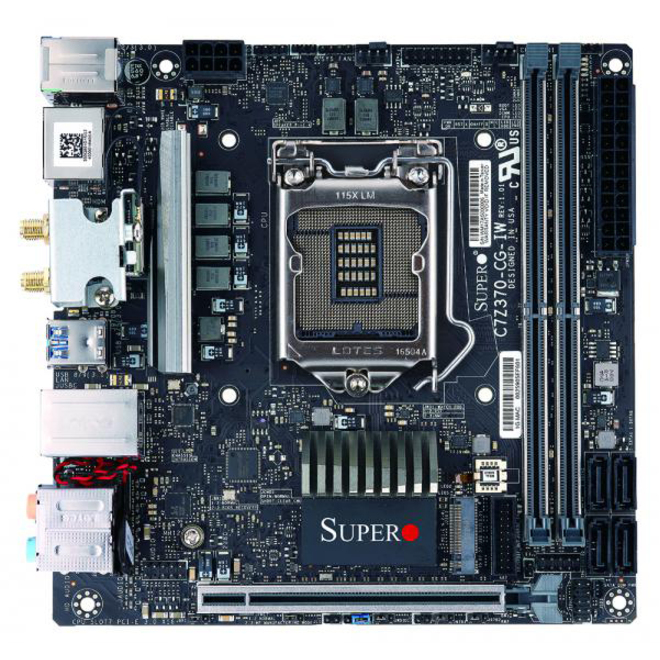
- SupermicroSupermicro C7Z370-CG-IW Desktop Motherboard - Intel Z370 Chipset - Socket H4 LGA-1151 - Mini ITX - Core i7 Processor Supported - 32 GB DDR4 SDRAM Maximum RAM - UDIMM, DIMM - 2 x Memory Slots - Gigabit Ethernet - HDMI - DisplayPort - 4 x SATA InterfacesMBD-C7Z370-CG-IW-O
$319.16
Back-orderedBack-ordered — estimated OEM lead time 3–8 weeks (Nov 10 – Dec 15 if ordered today).
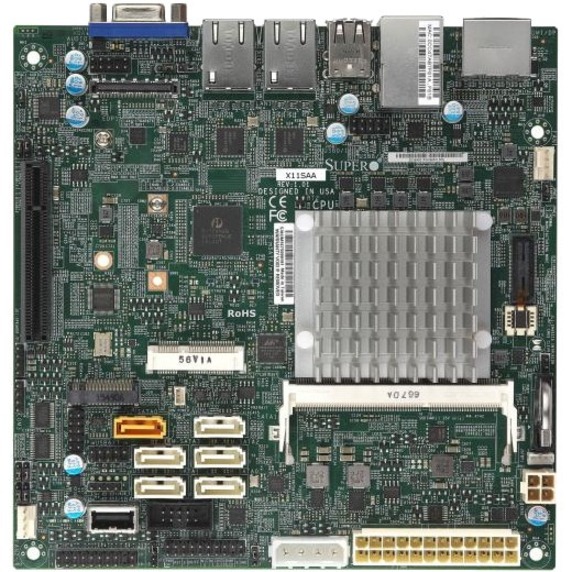
- SupermicroSupermicro X11SAA Server Motherboard - Intel Chipset - Socket BGA-1296 - Mini ITX - Pentium N4200 - 8 GB DDR3 SDRAM, DDR3L SDRAM Maximum RAM - SODIMM - 1 x Memory Slots - Gigabit Ethernet - HDMI - DisplayPort - 4 x SATA InterfacesMBD-X11SAA-O
$323.23
Back-orderedBack-ordered — estimated OEM lead time 3–8 weeks (Nov 10 – Dec 15 if ordered today).
- SupermicroSupermicro X11SCV-Q Desktop Motherboard - Intel Q370 Chipset - Socket H4 LGA-1151 - Mini ITX - 32 GB DDR4 SDRAM Maximum RAM - SODIMM - 2 x Memory Slots - Gigabit Ethernet - HDMI - DisplayPort - 5 x SATA InterfacesMBD-X11SCV-Q-B
$329.99
Back-orderedBack-ordered — estimated OEM lead time 3–8 weeks (Nov 10 – Dec 15 if ordered today).
- SupermicroSupermicro A1SRM-2558F Server Motherboard - Intel Chipset - Socket BGA-1283 - Micro ATX - Atom C2558 - 64 GB DDR3 SDRAM Maximum RAM - 4 x Memory Slots - Gigabit Ethernet - 6 x SATA InterfacesMBD-A1SRM-2558F-O
$344.28
Back-orderedBack-ordered — estimated OEM lead time 3–8 weeks (Nov 10 – Dec 15 if ordered today).
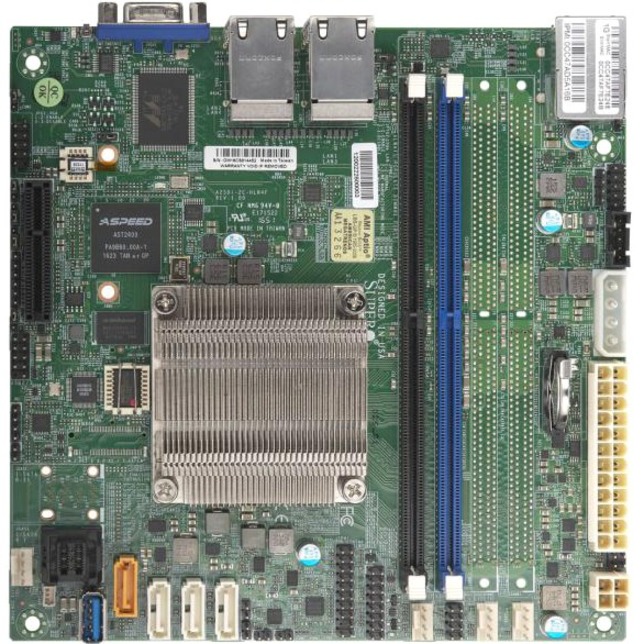
- SupermicroSupermicro A2SDI-2C-HLN4F Server Motherboard - Intel Chipset - Socket BGA-1310 - Mini ITX - Atom C3338 - 128 GB DDR4 SDRAM Maximum RAM - DIMM, UDIMM - 2 x Memory Slots - Gigabit Ethernet - 8 x SATA InterfacesMBD-A2SDI-2C-HLN4F-O
$344.28
Back-orderedBack-ordered — estimated OEM lead time 3–8 weeks (Nov 10 – Dec 15 if ordered today).
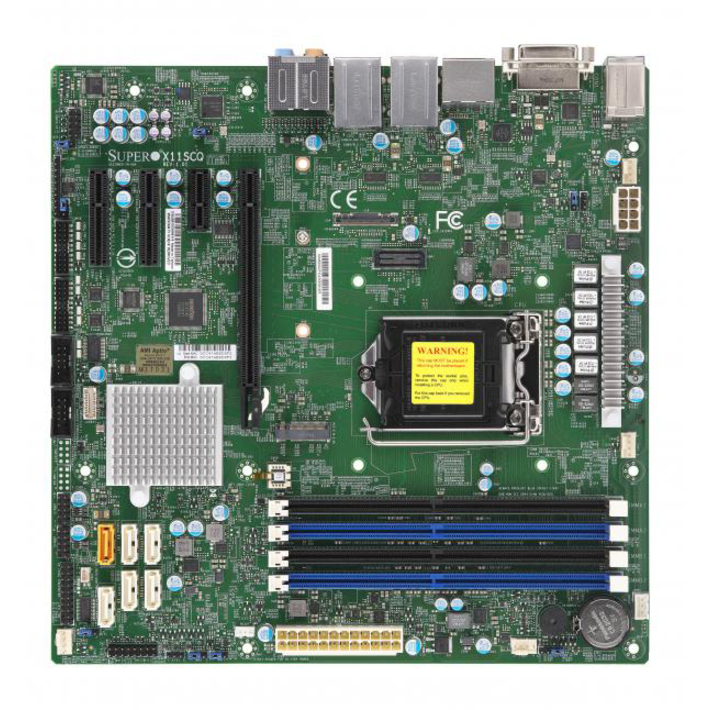
- SupermicroSupermicro X11SCQ Desktop Motherboard - Intel Q370 Chipset - Socket H4 LGA-1151 - Micro ATX - 64 GB DDR4 SDRAM Maximum RAM - DIMM, UDIMM - 4 x Memory Slots - Gigabit Ethernet - HDMI - DisplayPort - 6 x SATA InterfacesMBD-X11SCQ-O
$368.59
Back-orderedBack-ordered — estimated OEM lead time 3–8 weeks (Nov 10 – Dec 15 if ordered today).
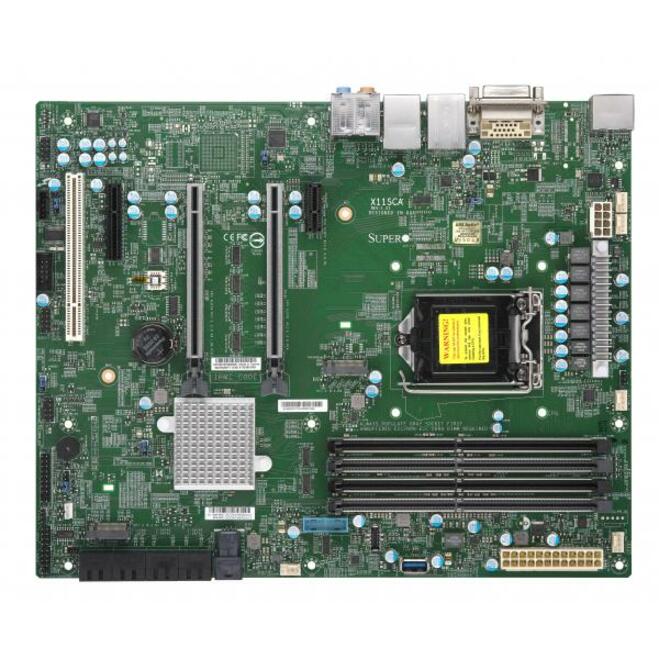
- SupermicroSupermicro X11SCA Workstation Motherboard - Intel C246 Chipset - Socket H4 LGA-1151 - ATX - 64 GB DDR4 SDRAM Maximum RAM - DIMM, UDIMM - 4 x Memory Slots - Gigabit Ethernet - HDMI - DisplayPort - 8 x SATA InterfacesMBD-X11SCA-O
$377.22
Back-orderedBack-ordered — estimated OEM lead time 3–8 weeks (Nov 10 – Dec 15 if ordered today).
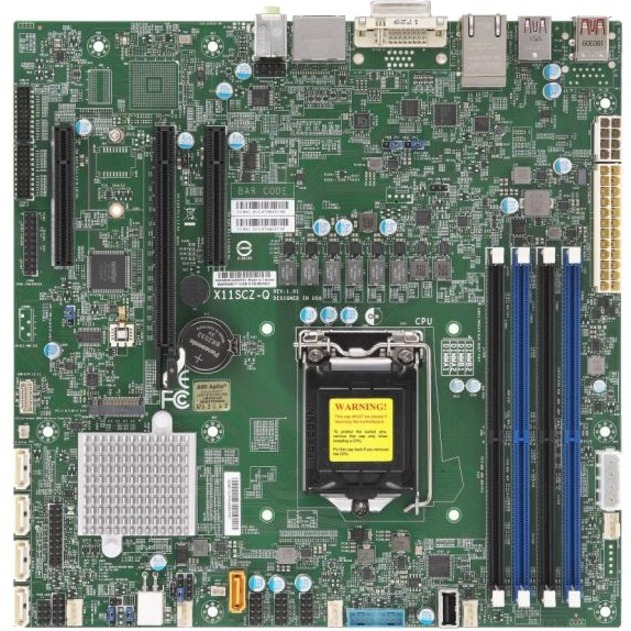
- SupermicroSupermicro X11SCZ-Q Desktop Motherboard - Intel Q370 Chipset - Socket H4 LGA-1151 - Micro ATX - 64 GB DDR4 SDRAM Maximum RAM - DIMM, UDIMM - 4 x Memory Slots - Gigabit Ethernet - DisplayPort - 5 x SATA InterfacesMBD-X11SCZ-Q-B
$396.95
Back-orderedBack-ordered — estimated OEM lead time 3–8 weeks (Nov 10 – Dec 15 if ordered today).

EPYC SP3, 10GbE
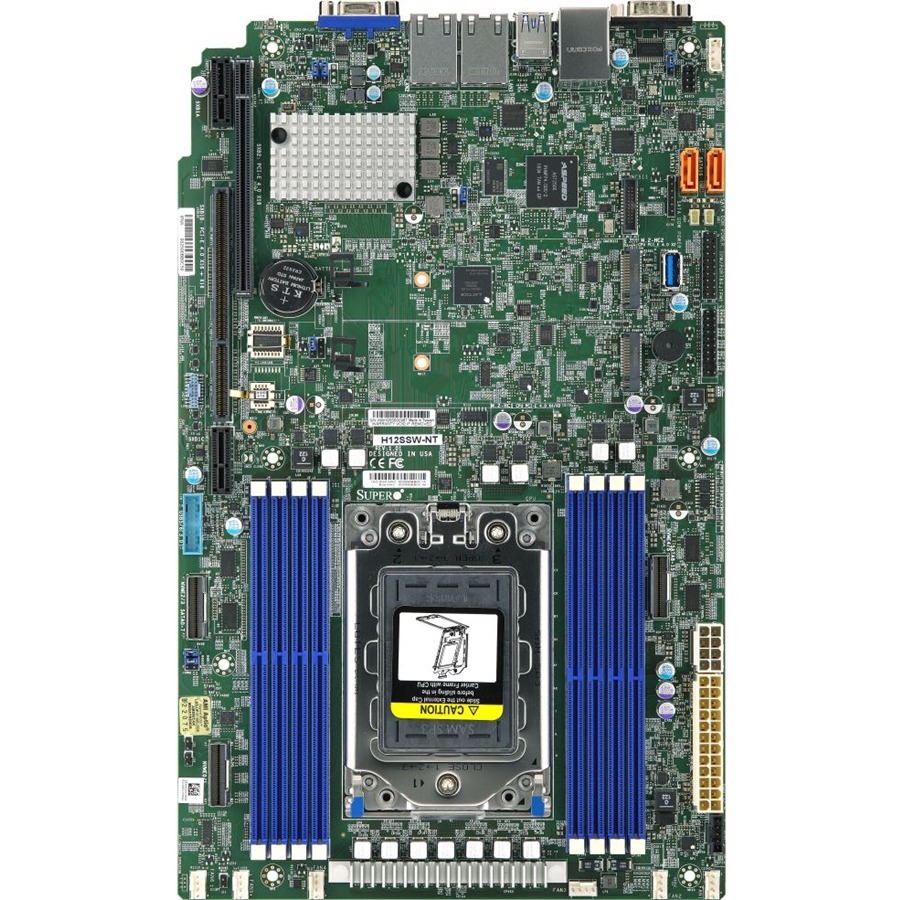
Supermicro
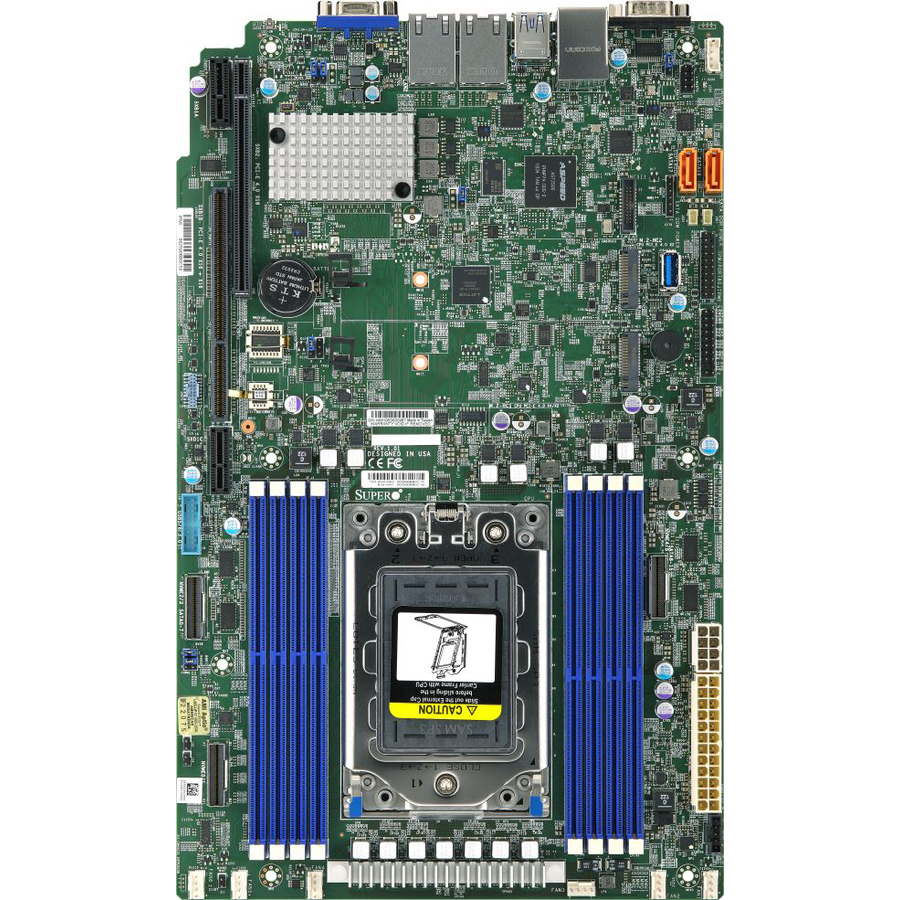
Supermicro H12SSW-NT Server Motherboard
MBD-H12SSW-NT-O
A Supermicro H12SSW-NT server motherboard on Socket SP3 — a single-socket AMD EPYC board with onboard 10GbE for a dense many-core server node.
$694.38Back-orderedEPYC SP3 server
Supermicro
Supermicro H11SSL-i Server Motherboard
MBD-H11SSL-I-O
A Supermicro H11SSL-i server motherboard on Socket SP3 — a single-socket AMD EPYC board for a mainstream storage or compute server.
$546.91Back-orderedEPYC SP3, video
Supermicro
Supermicro H11SSL-C Server Motherboard
MBD-H11SSL-C-O
A Supermicro H11SSL-C server motherboard on Socket SP3 — an AMD EPYC board with onboard graphics for a headless-managed server build.
$711.87Back-orderedXeon Scalable 10GbE
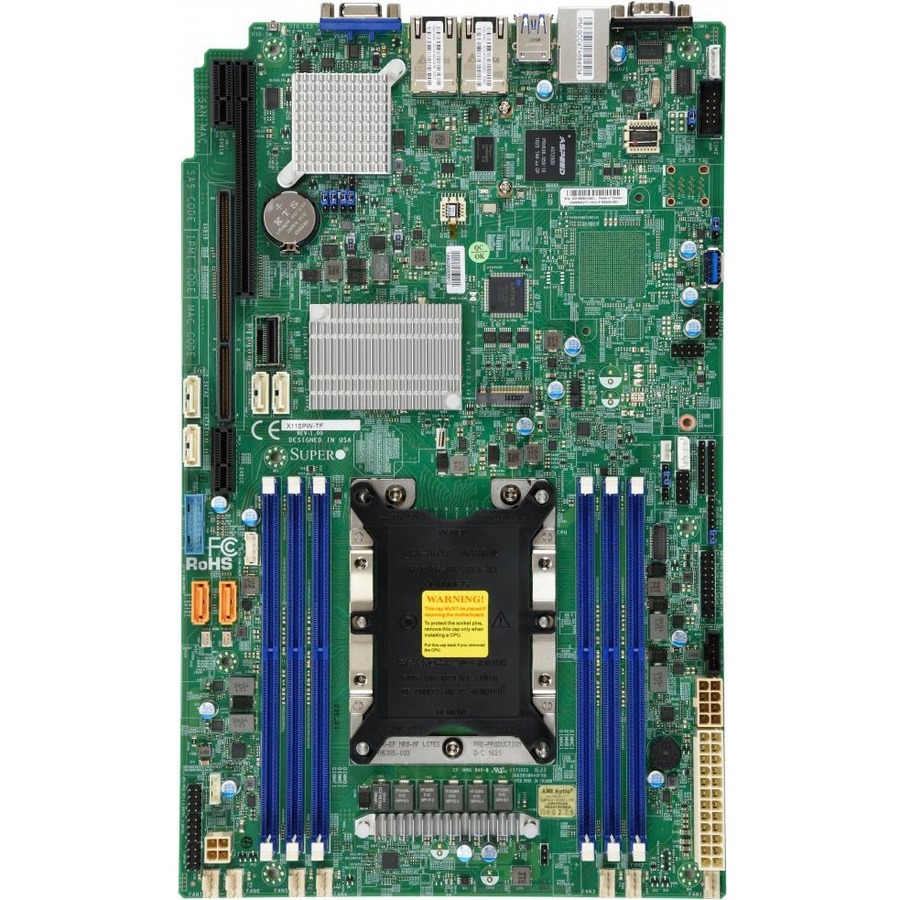
Supermicro
Supermicro X11SPW-TF Server Motherboard
MBD-X11SPW-TF-O
A Supermicro X11SPW-TF server motherboard on Intel C622 — a single-socket Xeon Scalable board with onboard 10GbE for a virtualization or storage host.
$637.85Back-orderedXeon Scalable GPU
Supermicro
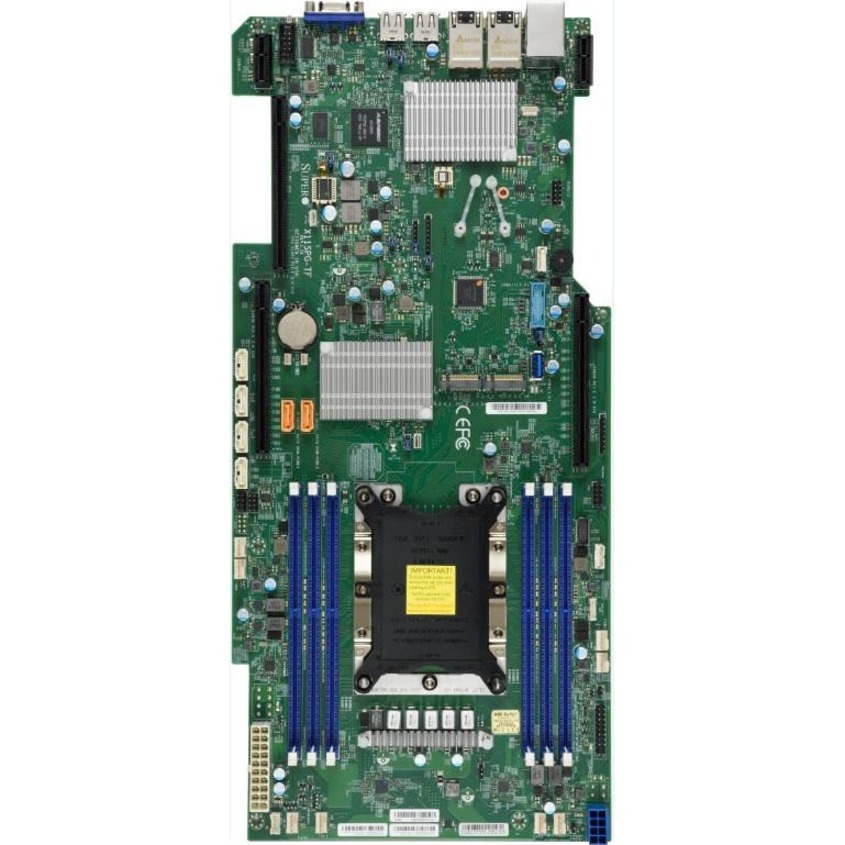
Supermicro X11SPG-TF Server Motherboard
MBD-X11SPG-TF-O
A Supermicro X11SPG-TF server motherboard on Intel C621 — a Xeon Scalable board with the PCIe layout for GPU or accelerator cards.
$732.55Back-orderedXeon Scalable, C622
Supermicro
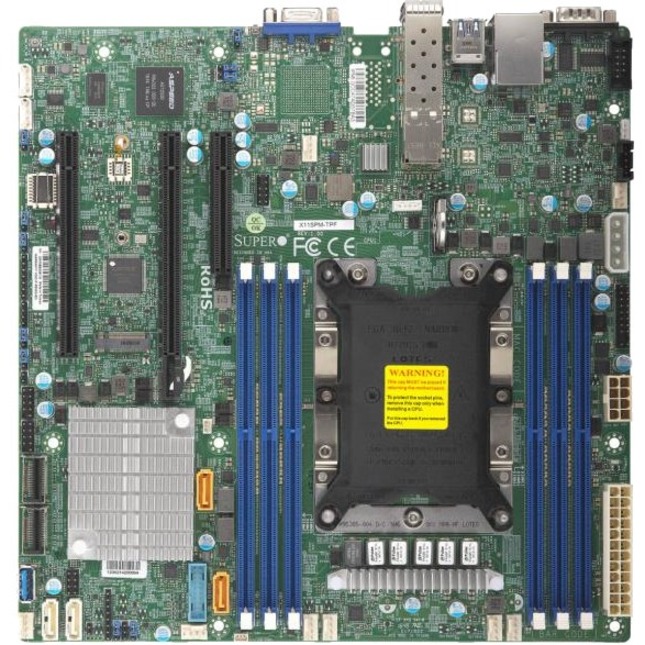
Supermicro X11SPH-NCTPF Server Motherboard
MBD-X11SPH-NCTPF-O
A Supermicro X11SPH-NCTPF server motherboard on Intel C622 — a Xeon Scalable board with dense onboard I/O and storage connectivity.
$780.96Back-orderedXeon Scalable micro
Supermicro
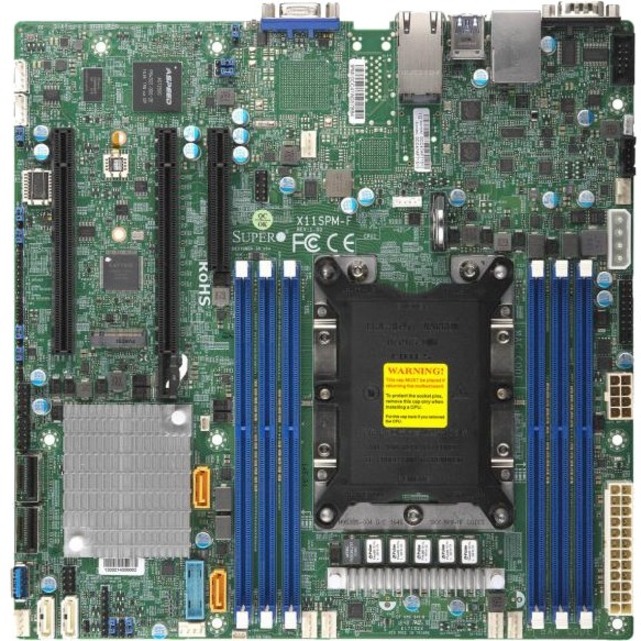
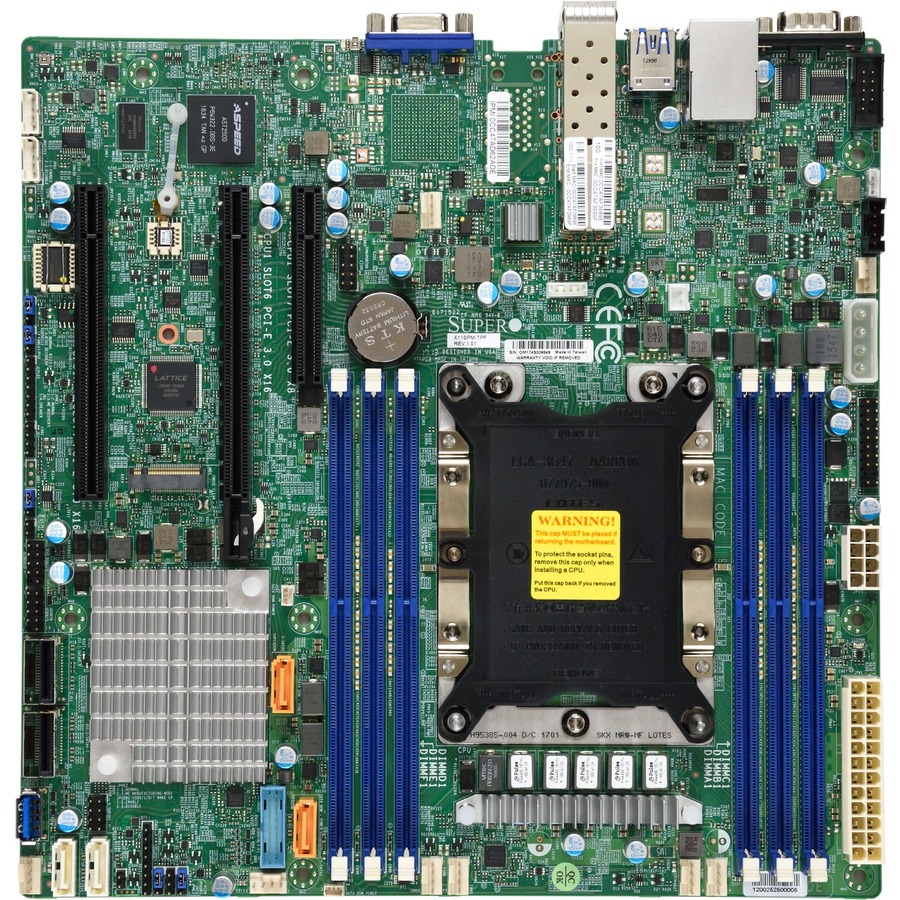
Supermicro X11SPM-F Server Motherboard
MBD-X11SPM-F-O
A Supermicro X11SPM-F server motherboard on Intel C621 — a micro-ATX Xeon Scalable board for a compact single-socket server.
$523.86Back-orderedXeon W workstation
Supermicro
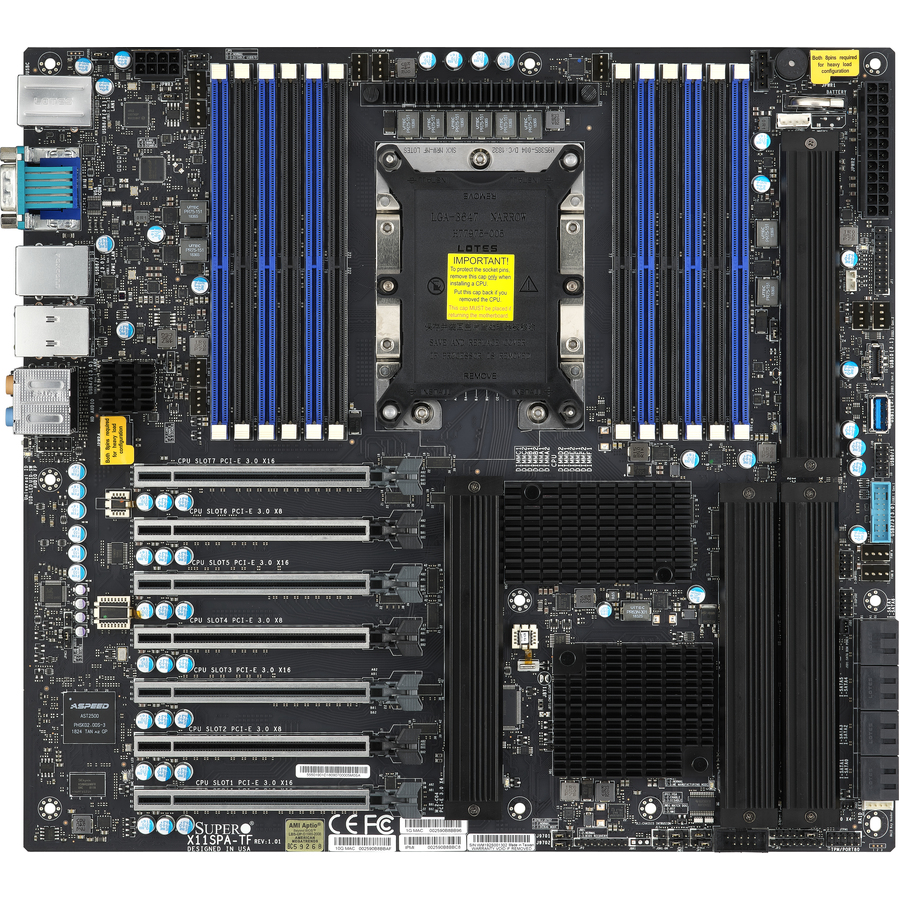
Supermicro X11SPA-TF Workstation Motherboard
MBD-X11SPA-TF-O
A Supermicro X11SPA-TF workstation motherboard on Intel C621 — a single-socket Xeon Scalable workstation board with onboard 10GbE and many PCIe lanes.
$779.89Back-orderedXeon W, C422
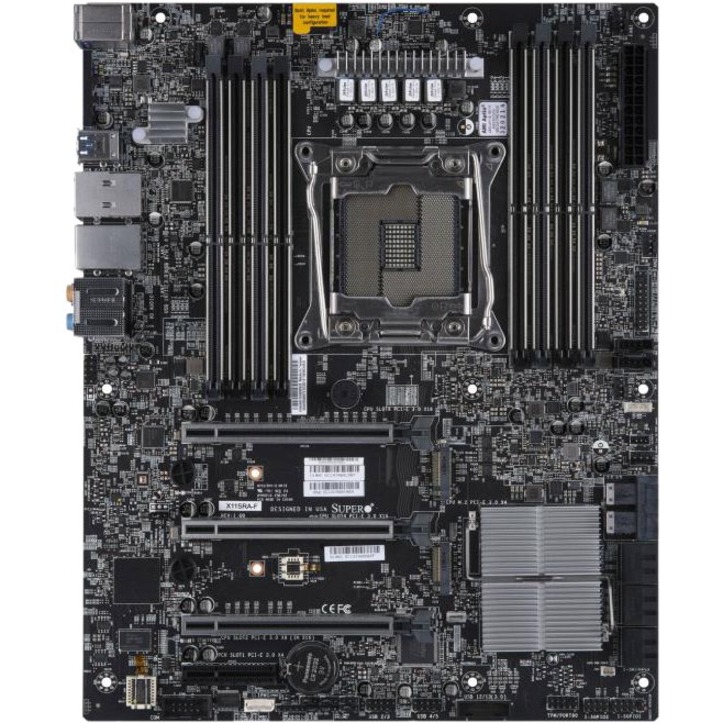
Supermicro
Supermicro X11SRA Workstation Motherboard
MBD-X11SRA-O
A Supermicro X11SRA workstation motherboard on Intel C422 — a Xeon W board with ECC support and full expansion for a single-socket workstation.
$455.00Back-orderedXeon W micro
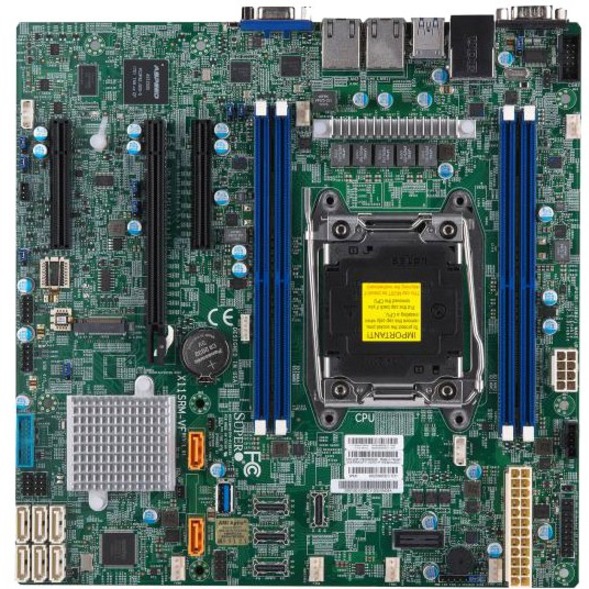
Supermicro
Supermicro X11SRM-VF Server Motherboard
MBD-X11SRM-VF-O
A Supermicro X11SRM-VF server motherboard on Intel C422 — a micro-ATX Xeon W board with ECC for a compact workstation or appliance.
$429.35Back-orderedMini-ITX Atom SoC
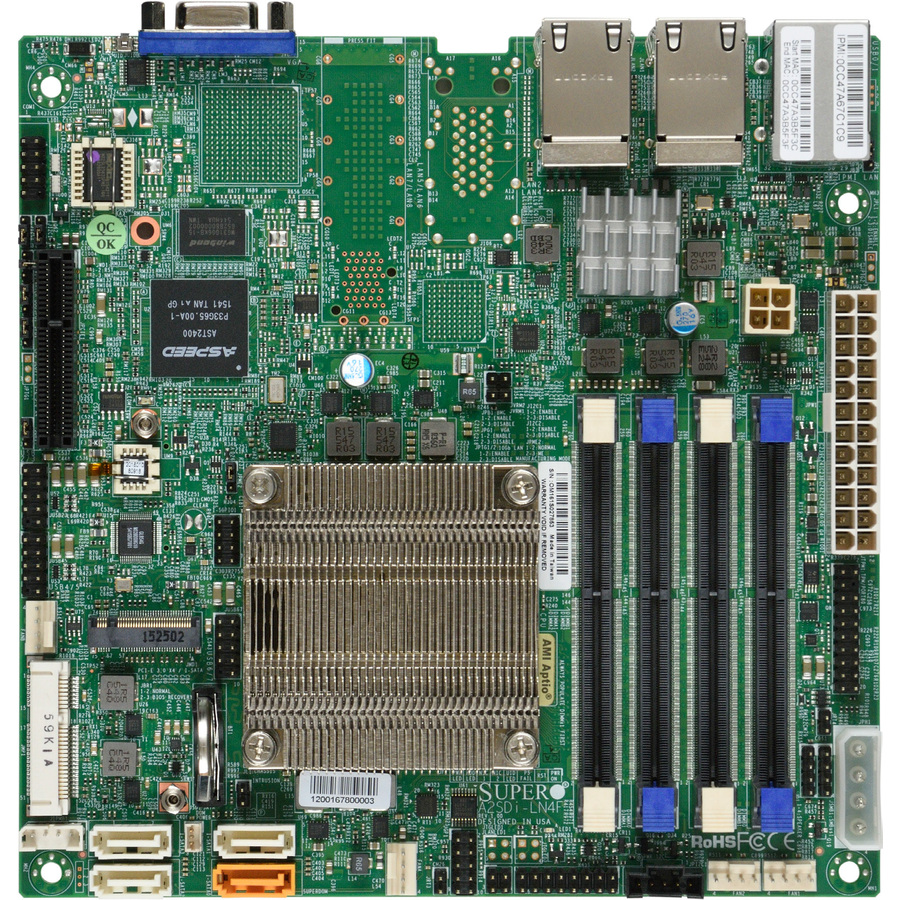
Supermicro
Supermicro A2SDi-LN4F Server Motherboard
MBD-A2SDI-LN4F-O
A Supermicro A2SDi-LN4F server motherboard on a soldered Atom SoC (BGA-1310) — a Mini-ITX embedded board for a low-power storage or network appliance.
$889.50Back-orderedXeon-D SoC, 4x GbE
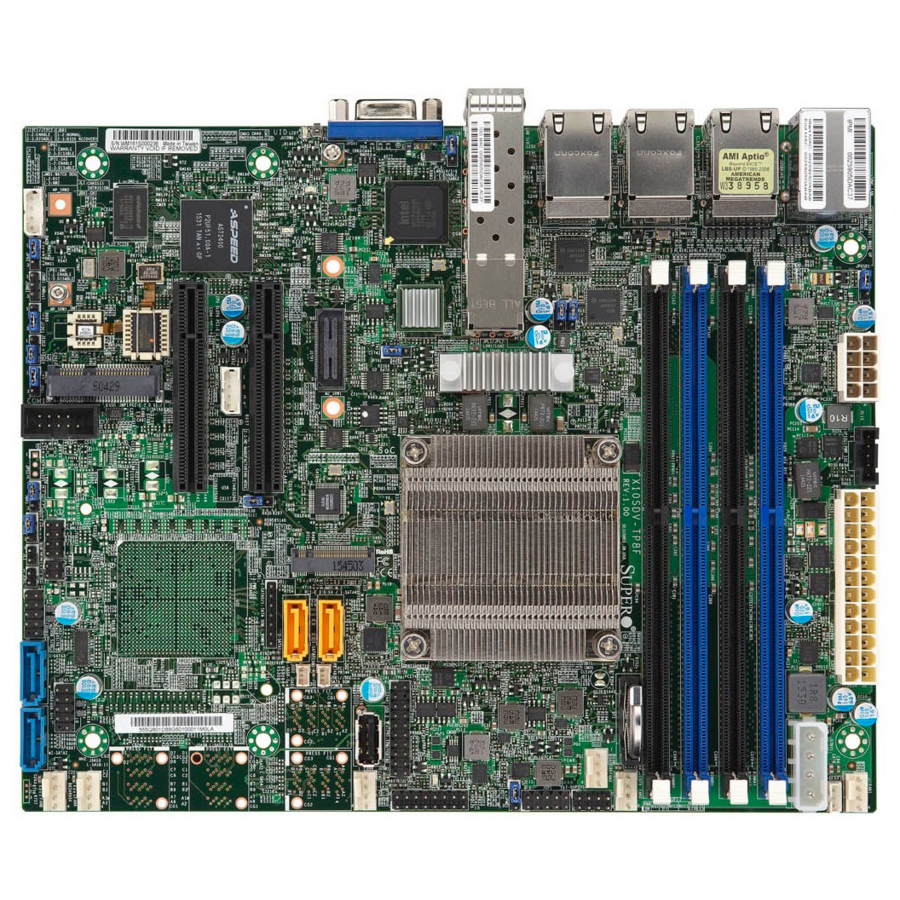
Supermicro
Supermicro X10SDV-2C-TP4F Server Motherboard
MBD-X10SDV-2C-TP4F-O
A Supermicro X10SDV-2C-TP4F server motherboard with a soldered Xeon-D SoC — an embedded board with quad networking for a compact appliance.
$483.35Back-orderedAtom embedded server
Supermicro
Supermicro X11SAN Server Motherboard
MBD-X11SAN-O
A Supermicro X11SAN server motherboard on a soldered Atom SoC (BGA-1296) — an embedded board for a low-power edge or storage node.
$311.05Back-orderedAtom board, entry
Supermicro
Supermicro A2SAP-L Server Motherboard
MBD-A2SAP-L-O
A Supermicro A2SAP-L server motherboard on a soldered Atom SoC (BGA-1296) — a compact embedded board for a fanless appliance build.
$224.50Back-orderedDesktop Q370
Supermicro
Supermicro X11SCQ Desktop Motherboard
MBD-X11SCQ-O
A Supermicro X11SCQ desktop motherboard on Intel Q370 — a socketed board (LGA1151) for a managed business desktop or small workstation.
$368.59Back-orderedDesktop C242
Supermicro
Supermicro C7C242-CB-MW Desktop Motherboard
MBD-C7C242-CB-MW-O
A Supermicro C7C242-CB-MW desktop motherboard on Intel C242 — a socketed board that takes a Xeon E or Core processor with ECC support.
$248.84Back-orderedMore motherboards in the Uniqcli catalog
See all 522 motherboardsMore Supermicro first — closest to what you were just looking at; “See all motherboards” above opens every other brand in the category. In-stock lines lead, and a back-ordered line carries the same estimated availability its product page does — with live pricing throughout, NDAA §889 screening before checkout and TAA verified on request.
- SupermicroSupermicro A2SDi-TP8F Server Motherboard - Intel Chipset - Socket BGA-1310 - Mini ITX - Atom C3858 - 64 GB DDR4 SDRAM Maximum RAM - DIMM, UDIMM - 4 x Memory Slots - Gigabit Ethernet - 4 x SATA InterfacesMBD-A2SDI-TP8F-O
$1,054.90
Back-orderedBack-ordered — estimated OEM lead time 3–8 weeks (Nov 10 – Dec 15 if ordered today).
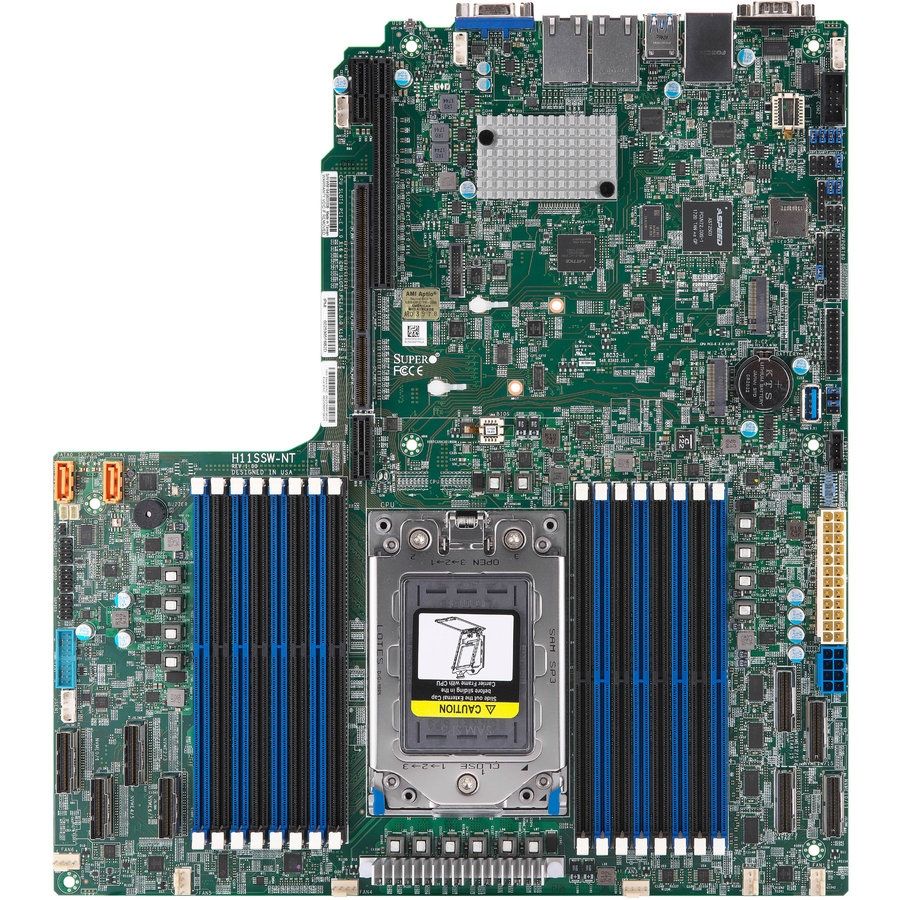
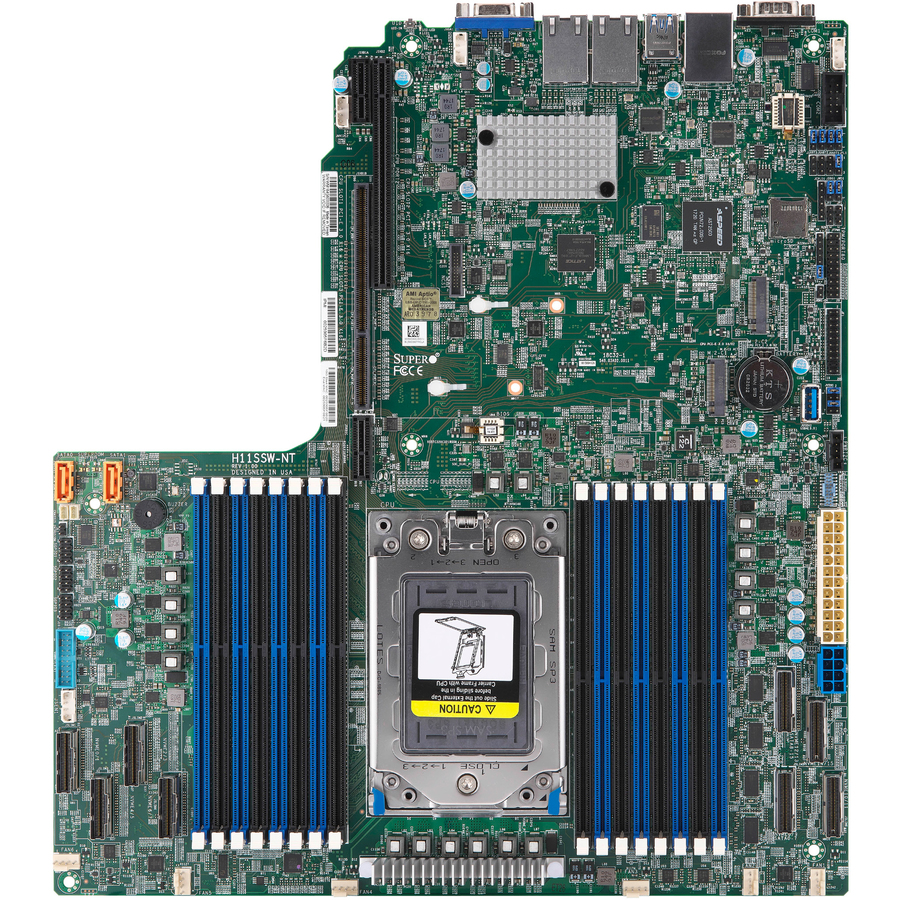
- SupermicroSupermicro H11SSW-NT Server Motherboard - AMD Chipset - Socket SP3 - Proprietary Form Factor - EPYC Processor Supported - 2 TB DDR4 SDRAM Maximum RAM - DIMM, RDIMM - 16 x Memory Slots - Gigabit Ethernet - 2 x SATA InterfacesMBD-H11SSW-NT-O
$897.58
Back-orderedBack-ordered — estimated OEM lead time 3–8 weeks (Nov 10 – Dec 15 if ordered today).
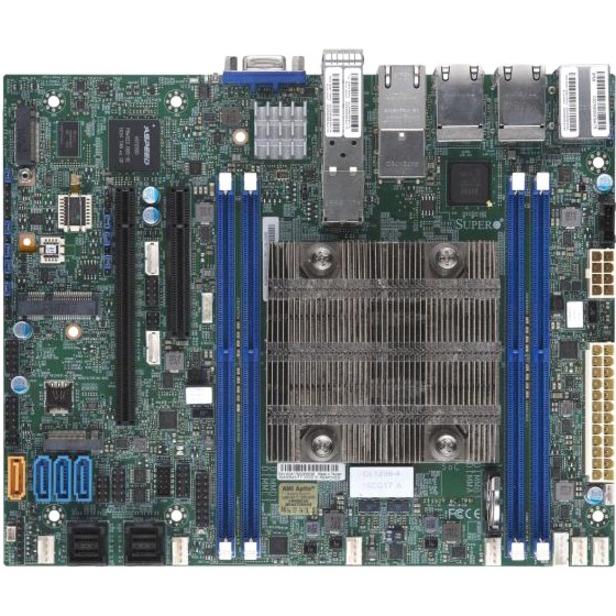
- SupermicroSupermicro A2SDi-LN4F Server Motherboard - Socket BGA-1310 - Mini ITX - Atom C3850 - 64 GB DDR4 SDRAM Maximum RAM - SODIMM - 4 x Memory Slots - Gigabit Ethernet - 4 x SATA InterfacesMBD-A2SDI-LN4F-O
$889.50
Back-orderedBack-ordered — estimated OEM lead time 3–8 weeks (Nov 10 – Dec 15 if ordered today).
- SupermicroSupermicro X11SDV-4C-TP8F Server Motherboard - Intel Chipset - Socket BGA-2518 - Flex ATX - Xeon D-2123IT - 512 GB DDR4 SDRAM Maximum RAM - RDIMM, LRDIMM, DIMM - 4 x Memory Slots - Gigabit Ethernet - 12 x SATA InterfacesMBD-X11SDV-4C-TP8F-O
$867.02
Back-orderedBack-ordered — estimated OEM lead time 3–8 weeks (Nov 10 – Dec 15 if ordered today).
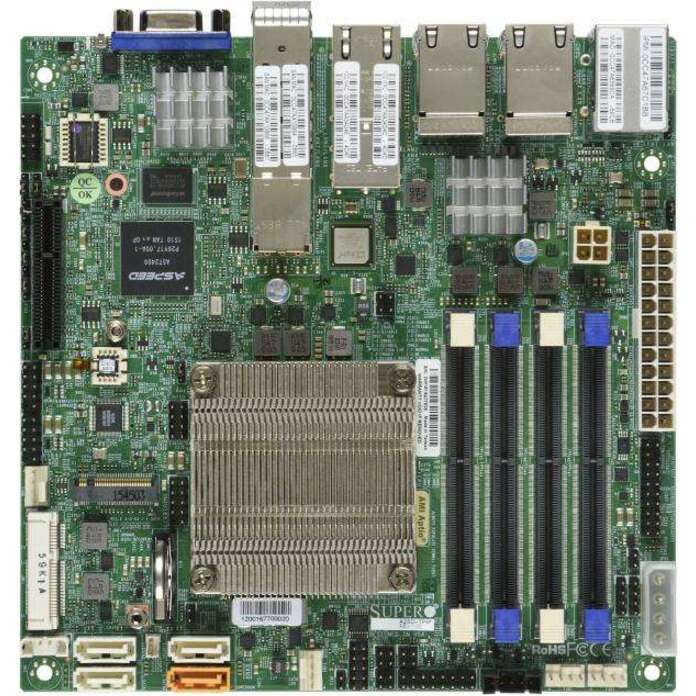
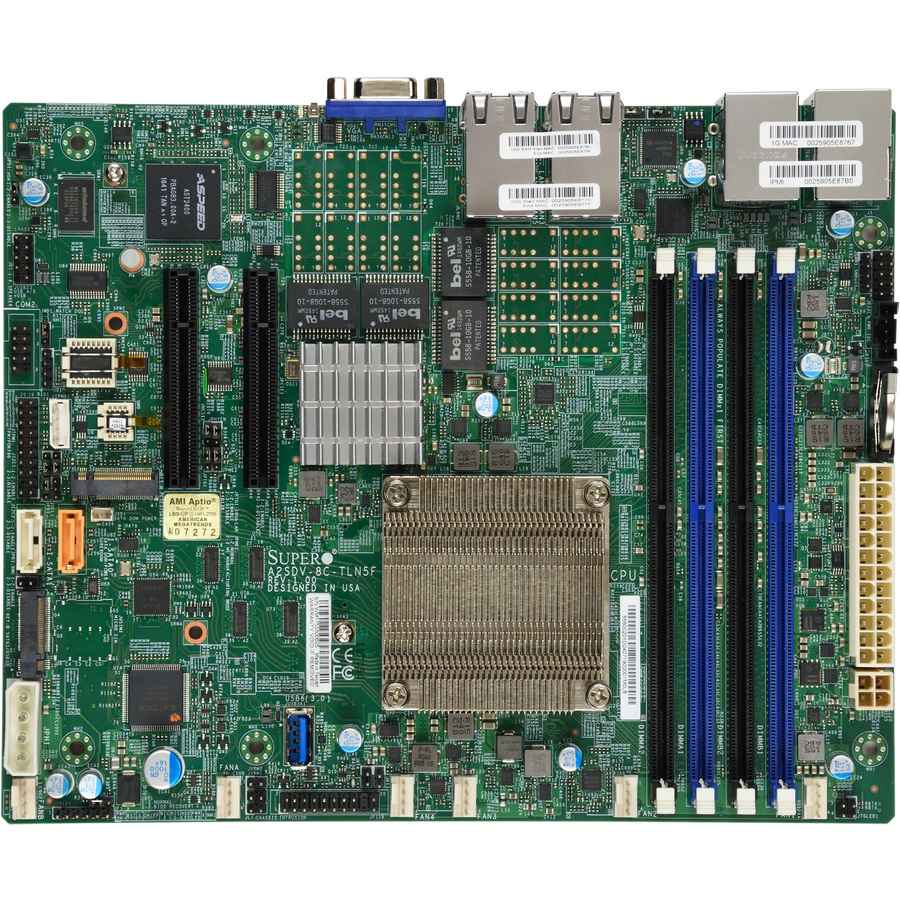
- SupermicroSupermicro A2SDV-8C-TLN5F Server Motherboard - Socket BGA-1310 - Flex ATX - Atom C3708 - 256 GB DDR4 SDRAM Maximum RAM - DIMM, UDIMM - 4 x Memory Slots - Gigabit Ethernet - 2 x SATA InterfacesMBD-A2SDV-8C-TLN5F-O
$861.23
Back-orderedBack-ordered — estimated OEM lead time 3–8 weeks (Nov 10 – Dec 15 if ordered today).
- SupermicroSupermicro H11SSW-iN Server Motherboard - AMD Chipset - Socket SP3 - Proprietary Form Factor - EPYC Processor Supported - 2 TB DDR4 SDRAM Maximum RAM - DIMM, RDIMM - 16 x Memory Slots - Gigabit Ethernet - 2 x SATA InterfacesMBD-H11SSW-IN-O
$788.57
Back-orderedBack-ordered — estimated OEM lead time 3–8 weeks (Nov 10 – Dec 15 if ordered today).
- SupermicroSupermicro X11SPH-NCTPF Server Motherboard - Intel C622 Chipset - Socket P LGA-3647 - ATX - Xeon Processor Supported - 1 TB DDR4 SDRAM Maximum RAM - RDIMM, DIMM, LRDIMM - 8 x Memory Slots - 10 x SATA InterfacesMBD-X11SPH-NCTPF-O
$780.96
Back-orderedBack-ordered — estimated OEM lead time 3–8 weeks (Nov 10 – Dec 15 if ordered today).
- SupermicroSupermicro X11SPA-T Workstation Motherboard - Intel C621 Chipset - Socket P LGA-3647 - Extended ATX - 3 TB DDR4 SDRAM Maximum RAM - RDIMM, LRDIMM, DIMM - 12 x Memory Slots - Gigabit Ethernet - 8 x SATA InterfacesMBD-X11SPA-T-O
$780.14
Back-orderedBack-ordered — estimated OEM lead time 3–8 weeks (Nov 10 – Dec 15 if ordered today).
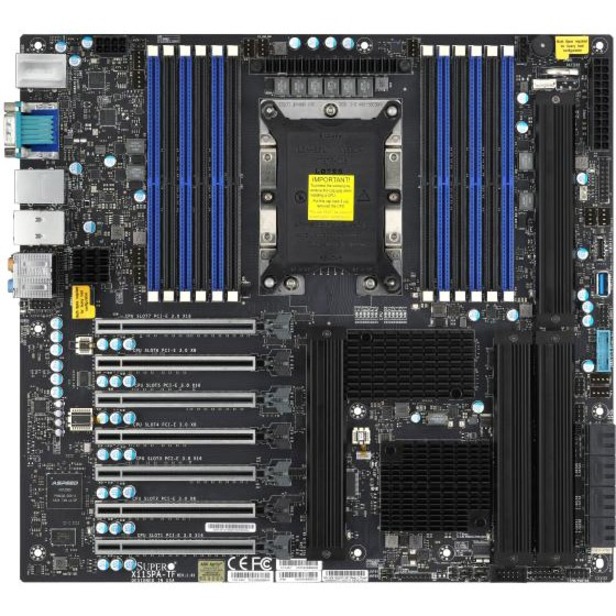
- SupermicroSupermicro X11SPA-TF Workstation Motherboard - Intel C621 Chipset - Socket P LGA-3647 - Extended ATX - 3 TB DDR4 SDRAM Maximum RAM - RDIMM, LRDIMM, DIMM - 12 x Memory Slots - Gigabit Ethernet - 8 x SATA InterfacesMBD-X11SPA-TF-O
$779.89
Back-orderedBack-ordered — estimated OEM lead time 3–8 weeks (Nov 10 – Dec 15 if ordered today).
- SupermicroSupermicro X11SSW-4TF Server Motherboard - Intel C236 Chipset - Socket H4 LGA-1151 - Proprietary Form Factor - Core i3 Processor Supported - 64 GB DDR4 SDRAM Maximum RAM - UDIMM, DIMM - 4 x Memory Slots - 6 x SATA InterfacesMBD-X11SSW-4TF-O
$734.75
Back-orderedBack-ordered — estimated OEM lead time 3–8 weeks (Nov 10 – Dec 15 if ordered today).
- SupermicroSupermicro X11SPG-TF Server Motherboard - Intel C621 Chipset - Socket P LGA-3647 - Proprietary Form Factor - Xeon Processor Supported - 768 GB DDR4 SDRAM Maximum RAM - RDIMM, DIMM, LRDIMM - 6 x Memory Slots - 6 x SATA InterfacesMBD-X11SPG-TF-O
$732.55
Back-orderedBack-ordered — estimated OEM lead time 3–8 weeks (Nov 10 – Dec 15 if ordered today).
- SupermicroSupermicro A2SDV-8C-LN8F Server Motherboard - Socket BGA-1310 - Flex ATX - Atom C3758 - 256 GB DDR4 SDRAM Maximum RAM - DIMM, UDIMM, RDIMM - 4 x Memory Slots - Gigabit Ethernet - 5 x SATA InterfacesMBD-A2SDV-8C-LN8F-O
$730.71
Back-orderedBack-ordered — estimated OEM lead time 3–8 weeks (Nov 10 – Dec 15 if ordered today).
- SupermicroSupermicro H11SSL-C Server Motherboard - AMD Chipset - Socket SP3 - ATX - EPYC Processor Supported - 1 TB DDR4 SDRAM Maximum RAM - DIMM, RDIMM - 8 x Memory Slots - Gigabit Ethernet - 8 x SATA InterfacesMBD-H11SSL-C-O
$711.87
Back-orderedBack-ordered — estimated OEM lead time 3–8 weeks (Nov 10 – Dec 15 if ordered today).
- SupermicroSupermicro H12SSW-NT Server Motherboard - AMD Chipset - Socket SP3 - Proprietary Form Factor - 2 TB DDR4 SDRAM Maximum RAM - DIMM, RDIMM - 8 x Memory Slots - 16 x SATA InterfacesMBD-H12SSW-NT-O
$694.38
Back-orderedBack-ordered — estimated OEM lead time 3–8 weeks (Nov 10 – Dec 15 if ordered today).
- SupermicroSupermicro X11SPW-TF Server Motherboard - Intel C622 Chipset - Socket P LGA-3647 - Proprietary Form Factor - Xeon Processor Supported - 768 GB DDR4 SDRAM Maximum RAM - RDIMM, DIMM, LRDIMM - 6 x Memory Slots - 10 x SATA InterfacesMBD-X11SPW-TF-O
$637.85
Back-orderedBack-ordered — estimated OEM lead time 3–8 weeks (Nov 10 – Dec 15 if ordered today).
- SupermicroSupermicro X11SPM-TPF Server Motherboard - Intel C622 Chipset - Socket P LGA-3647 - Micro ATX - Xeon Processor Supported - 768 GB DDR4 SDRAM Maximum RAM - RDIMM, DIMM, LRDIMM - 6 x Memory Slots - 12 x SATA InterfacesMBD-X11SPM-TPF-O
$598.82
Back-orderedBack-ordered — estimated OEM lead time 3–8 weeks (Nov 10 – Dec 15 if ordered today).
- SupermicroSupermicro H12SSW-iN Server Motherboard - AMD Chipset - Socket SP3 - Proprietary Form Factor - EPYC Processor Supported - 2 TB DDR4 SDRAM Maximum RAM - DIMM, RDIMM - 8 x Memory Slots - Gigabit Ethernet - 2 x SATA InterfacesMBD-H12SSW-IN-O
$585.37
Back-orderedBack-ordered — estimated OEM lead time 3–8 weeks (Nov 10 – Dec 15 if ordered today).
- SupermicroSupermicro X10SDV-2C-TP8F Server Motherboard - Intel Chipset - Socket BGA-1667 - Flex ATX - Pentium D1508 - 128 GB DDR4 SDRAM Maximum RAM - UDIMM, RDIMM, DIMM - 4 x Memory Slots - Gigabit Ethernet - 4 x SATA InterfacesMBD-X10SDV-2C-TP8F-O
$557.11
Back-orderedBack-ordered — estimated OEM lead time 3–8 weeks (Nov 10 – Dec 15 if ordered today).
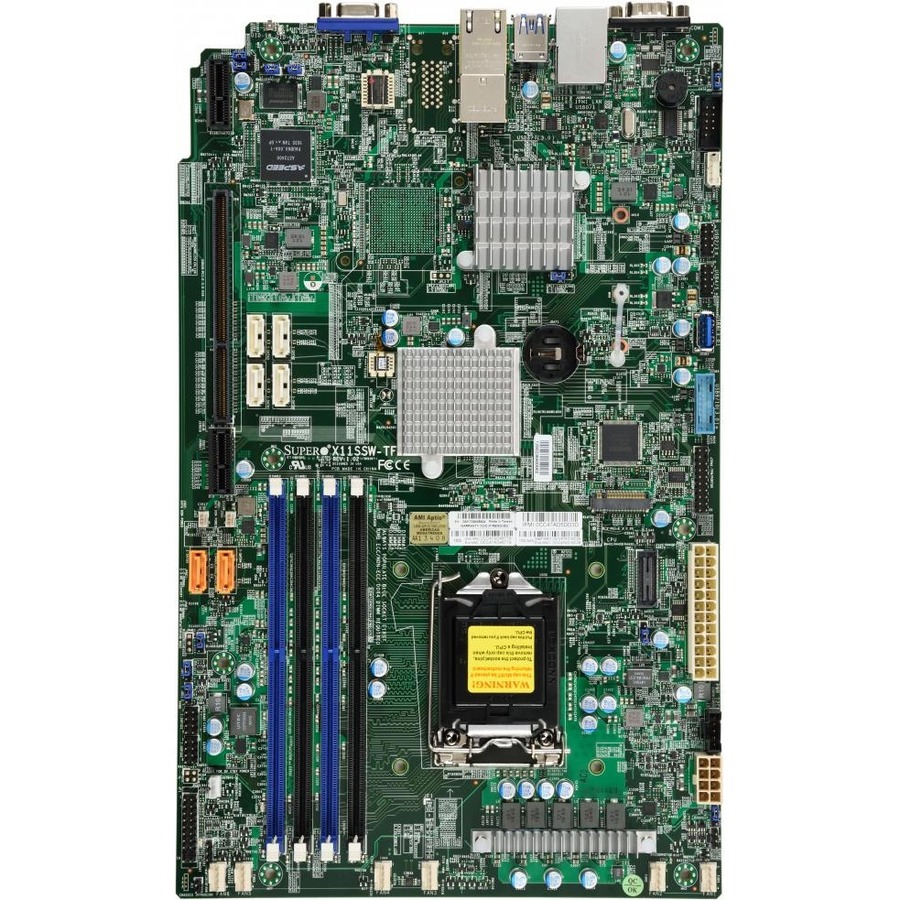
- SupermicroSupermicro X11SSW-TF Server Motherboard - Intel C236 Chipset - Socket H4 LGA-1151 - Proprietary Form Factor - Core i3 Processor Supported - 64 GB DDR4 SDRAM Maximum RAM - UDIMM, DIMM - 4 x Memory Slots - 6 x SATA InterfacesMBD-X11SSW-TF-O
$549.04
Back-orderedBack-ordered — estimated OEM lead time 3–8 weeks (Nov 10 – Dec 15 if ordered today).
- SupermicroSupermicro H11SSL-i Server Motherboard - AMD Chipset - Socket SP3 - ATX - EPYC Processor Supported - 1 TB DDR4 SDRAM Maximum RAM - DIMM, RDIMM - 8 x Memory Slots - Gigabit Ethernet - 16 x SATA InterfacesMBD-H11SSL-I-O
$546.91
Back-orderedBack-ordered — estimated OEM lead time 3–8 weeks (Nov 10 – Dec 15 if ordered today).
- SupermicroSupermicro A2SDV-4C-LN8F Server Motherboard - Socket BGA-1310 - Flex ATX - Atom C3558 - 256 GB DDR4 SDRAM Maximum RAM - DIMM, UDIMM, RDIMM - 4 x Memory Slots - Gigabit Ethernet - 3 x SATA InterfacesMBD-A2SDV-4C-LN8F-O
$527.91
Back-orderedBack-ordered — estimated OEM lead time 3–8 weeks (Nov 10 – Dec 15 if ordered today).
- SupermicroSupermicro X11SPM-F Server Motherboard - Intel C621 Chipset - Socket P LGA-3647 - Micro ATX - Xeon Processor Supported - 768 GB DDR4 SDRAM Maximum RAM - RDIMM, DIMM, LRDIMM - 6 x Memory Slots - Gigabit Ethernet - 12 x SATA InterfacesMBD-X11SPM-F-O
$523.86
Back-orderedBack-ordered — estimated OEM lead time 3–8 weeks (Nov 10 – Dec 15 if ordered today).
- SupermicroSupermicro A1SAM-2750F Desktop Motherboard - Intel Chipset - Socket BGA-1283 - Micro ATX - Atom C2750 - 64 GB DDR3 SDRAM Maximum RAM - 4 x Memory Slots - Gigabit Ethernet - 6 x SATA InterfacesMBD-A1SAM-2750F-O
$517.11
Back-orderedBack-ordered — estimated OEM lead time 3–8 weeks (Nov 10 – Dec 15 if ordered today).
- SupermicroSupermicro X10SDV-2C-TP4F Server Motherboard - Intel Chipset - Socket BGA-1667 - Flex ATX - Pentium D1508 - 128 GB DDR4 SDRAM Maximum RAM - UDIMM, RDIMM, DIMM - 4 x Memory Slots - Gigabit Ethernet - 4 x SATA InterfacesMBD-X10SDV-2C-TP4F-O
$483.35
Back-orderedBack-ordered — estimated OEM lead time 3–8 weeks (Nov 10 – Dec 15 if ordered today).
Need pricing on Supermicro motherboards?
Tell us where to reach you and a Uniqcli specialist will follow up by email with current pricing, availability and lead time for the quantities you need — including parts that aren’t shown on this page.
Buying for an organization or for yourself — both work. No payment up front.
Supermicro builds boards for the machine you are actually assembling, which is why the catalog runs from a single-socket Xeon server board to an embedded Atom SoC to an AMD EPYC platform, all under one brand. Choosing among them is a matter of matching four facts — socket, chipset, form factor and onboard networking — to the chassis and the workload, and every board on this page states those facts in its own title. This selection spans Supermicro's server, workstation, embedded and desktop lines so a builder can find the right foundation without leaving the brand.
The socket and chipset come first because they decide the processor and the memory. A Supermicro X11 board on an Intel C621 or C622 chipset takes a Xeon Scalable processor and registered server memory; a C422 board takes a Xeon W for a workstation; an H11 or H12 board on Socket SP3 takes an AMD EPYC; and an embedded X10SDV or A2SDV board carries a soldered Xeon-D or Atom SoC for a low-power appliance. Read the socket line against the CPU you intend to run, because the board is chosen for the processor, not the other way round.
Form factor and onboard I/O finish the decision. A board is bought to fit a specific chassis — ATX, micro-ATX, Mini-ITX, Flex-ATX or Supermicro's proprietary server footprints — and to carry the networking the role needs, from dual Gigabit to onboard 10GbE. This page reads all four across the range so the board matches the box and the network from the start. Nothing here is a test result; each card restates the board's own catalog title, including its socket, chipset and form factor.
Buyer's checklist
How to choose a Supermicro motherboard
- Start with the socket and the processor. A Supermicro board is chosen for the CPU it will run — Xeon Scalable on C621/C622, Xeon W on C422, AMD EPYC on Socket SP3, or a soldered Xeon-D/Atom SoC on an embedded board — so read the socket line against the processor before anything else.
- Match the chipset to the platform features. The chipset decides the memory type and speed, the PCIe lanes and the platform I/O; a server chipset supports registered ECC memory and more lanes, where a desktop chipset does not, so confirm it supports the memory and expansion the build needs.
- Confirm the form factor fits the chassis. ATX, micro-ATX, Mini-ITX, Flex-ATX and Supermicro's proprietary server footprints each fit specific cases and rack chassis — a board that does not physically fit the box is the most avoidable mistake, so match the form factor to the enclosure first.
- Read the onboard networking. Boards here range from dual Gigabit to onboard 10GbE (SFP+ or 10GBASE-T); a storage or virtualization host benefits from onboard 10GbE where a general appliance may not need it, and adding a NIC later costs a slot.
- Check the memory support against the workload. Server and workstation boards take registered ECC DIMMs and publish a maximum capacity and channel count; size the memory plan to the board's slots and supported capacity before buying the modules.
- Consider embedded versus socketed for an appliance. An embedded board with a soldered Xeon-D or Atom SoC runs cooler and denser for a firewall, storage node or edge appliance; a socketed board is the right choice where the CPU may be upgraded or varied.
Server, workstation, embedded and desktop: reading the Supermicro range
Supermicro's line splits by role, and the model prefix and chipset tell you which. The X11 server boards on Intel C621/C622 take Xeon Scalable processors and registered ECC memory for mainstream rack and tower servers. The C422-based boards take a Xeon W for a workstation that needs ECC and many PCIe lanes without a dual-socket platform. The H11 and H12 boards on Socket SP3 carry AMD EPYC, with the many-core density and memory channels that platform is known for. And the embedded X10SDV, A2SDV and A2SAP boards carry a soldered Xeon-D or Atom SoC — low power, dense I/O, and the foundation for a firewall, a storage node or an edge appliance.
That range is the reason to stay within one brand for a mixed fleet: the same vendor covers the server, the workstation, the appliance and the desktop, with consistent IPMI management and firmware. Pick the line by role first — server, workstation, embedded or desktop — and then narrow by socket, chipset and form factor within it, which is how the titles on this page are read.
Socket, chipset and networking decide the build
The three facts that decide a server board are the socket, the chipset and the onboard networking, and they interact. The socket fixes the processor family; the chipset fixes the memory type, the PCIe lane budget and the platform features; and the networking fixes how the machine connects without spending an expansion slot. A storage or virtualization host wants onboard 10GbE and a chipset with enough lanes for its HBAs and NICs, where a small appliance is well served by an embedded SoC with dual Gigabit and low power draw. Read all three together rather than fixing on one.
Form factor is the constraint that overrides preferences. A board must fit the chassis and its standoffs, and Supermicro ships proprietary server footprints alongside the standard ATX family, so confirm the form factor against the case before the order. Uniqcli can quote the Supermicro board with a matched processor, registered ECC memory, the chassis and the power supply on one document for business, government and education buyers, so a build goes in as a coordinated set rather than parts that may not fit together.
FAQ
Common questions
- Which Supermicro board do I need for a Xeon Scalable server?
- A board on an Intel C621 or C622 chipset with the matching LGA socket — those are the X11-generation server boards that take Xeon Scalable processors and registered ECC server memory. Read the socket and chipset line in the title against the specific Xeon you plan to run, and confirm the form factor fits your chassis. For a Xeon W workstation the board is a C422 instead, and for AMD EPYC it is an H11 or H12 board on Socket SP3 — the brand covers all three, so match the board to the processor family first.
- What is the difference between a server, workstation and embedded board?
- The role and the CPU. A server board (C621/C622 or EPYC SP3) is built for rack and tower servers with registered ECC memory and remote IPMI management. A workstation board (C422 Xeon W) offers ECC and many PCIe lanes for a single-socket workstation. An embedded board carries a soldered Xeon-D or Atom SoC — low power and dense I/O for a firewall, storage node or edge appliance where the CPU is not upgraded. Read the model prefix and chipset in the title to tell them apart.
- Do Supermicro boards support ECC memory?
- The server and workstation boards do — that is a core reason to choose them. A C621/C622 server board and a C422 workstation board take registered ECC DIMMs, and EPYC SP3 boards take registered ECC as well, each publishing a maximum capacity and channel count. Desktop-oriented Supermicro boards on consumer chipsets do not. The title states the memory type and support, so read it against the ECC modules you intend to use and size the memory plan to the board's slots and supported capacity.
- Which boards have onboard 10GbE?
- Several server boards carry onboard 10GbE — the model titles that name a -TF, -TPF or similar suffix typically include 10GBASE-T or SFP+ ports, while others provide dual Gigabit. A storage or virtualization host benefits from onboard 10GbE because adding a NIC later costs an expansion slot; a general appliance may not need it. Read the networking line in each title and pick the board whose onboard ports match the role, rather than planning to add the fast NIC afterward.
- Can business, government and education buyers order these?
- Every line Uniqcli quotes is sourced through US distribution and screened for TAA country-of-origin and NDAA §889 status before checkout — with documentation tied to the specific part number, not a product family.
Need Supermicro motherboards pricing?
Send a bill of materials or part numbers — we confirm stock and a below-market total, with TAA verified on request. No payment up front.