
Best Server Motherboards for Rackmount and Embedded Builds
Boards their makers list as server motherboards in the part's own title — read by socket and processor family, chipset, form factor, memory type and onboard management.
Server motherboards at Uniqcli
How to choose →A curated selection with live pricing and honest availability — everything below is currently back-ordered, and we quote a dated lead time on request. Every line is sourced through US distribution and screened for NDAA §889 status before checkout, with TAA verified on request.
- SupermicroSupermicro A2SAP-L Server Motherboard - Intel Chipset - Socket BGA-1296 - Pico ITX - Atom x5-E3930 - 8 GB DDR3L SDRAM Maximum RAM - SODIMM - 1 x Memory Slots - Gigabit Ethernet - HDMI - 1 x SATA InterfacesMBD-A2SAP-L-O
$224.50
Back-orderedBack-ordered — estimated OEM lead time 3–8 weeks (Nov 9 – Dec 14 if ordered today).
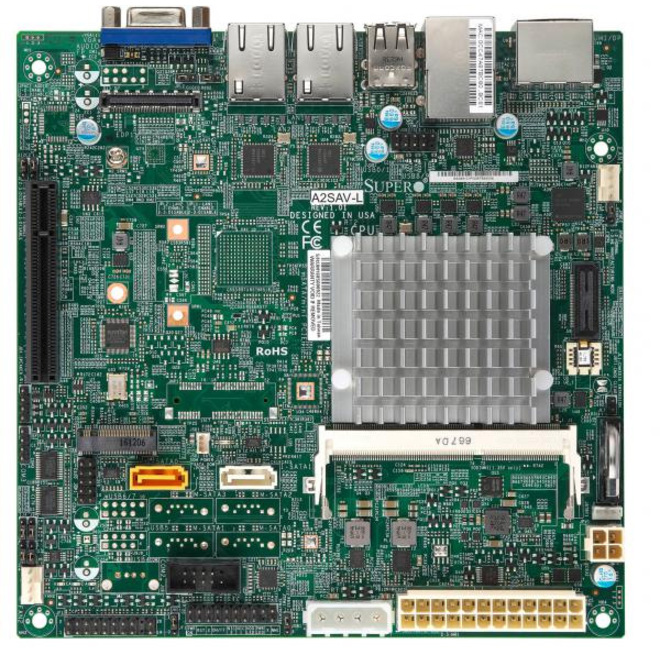
- SupermicroSupermicro A2SAV-2C-L Server Motherboard - Intel Chipset - Socket BGA-1296 - Mini ITX - Atom x5-E3930 - 8 GB DDR3L SDRAM Maximum RAM - DDR3-1866/PC3-15000 - SODIMM - 1 x Memory Slots - Gigabit Ethernet - HDMI - DisplayPort - 2 x SATA InterfacesMBD-A2SAV-2C-L-O
$228.55
Back-orderedBack-ordered — estimated OEM lead time 3–8 weeks (Nov 9 – Dec 14 if ordered today).
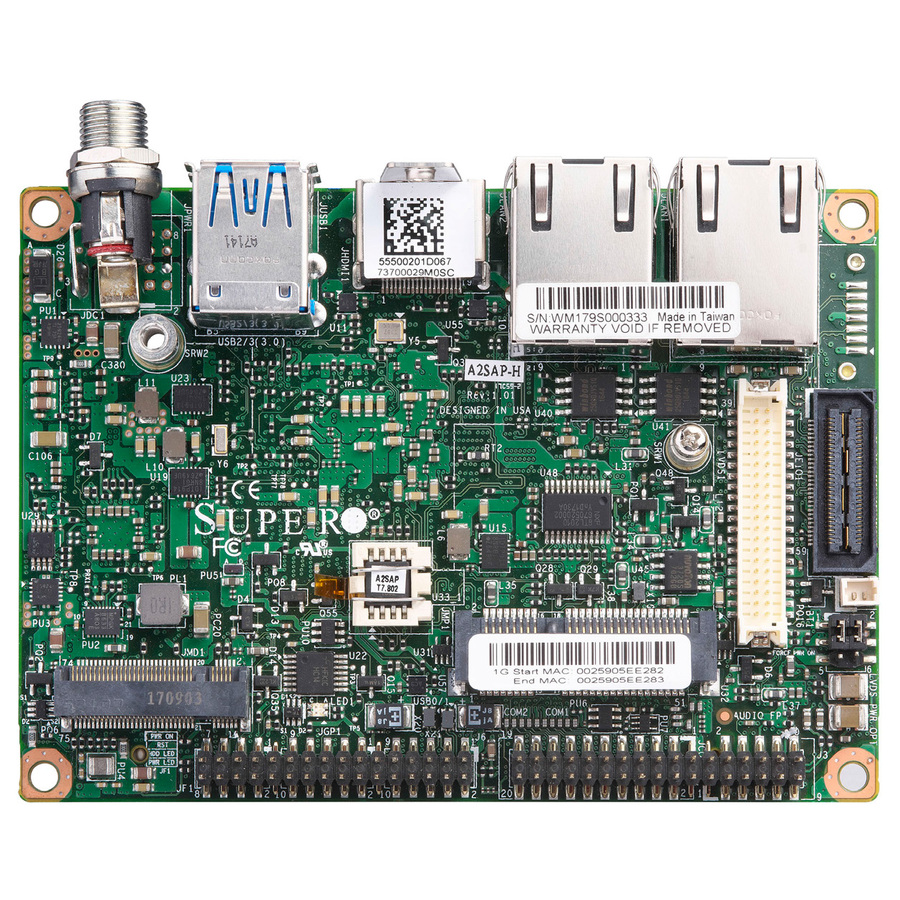
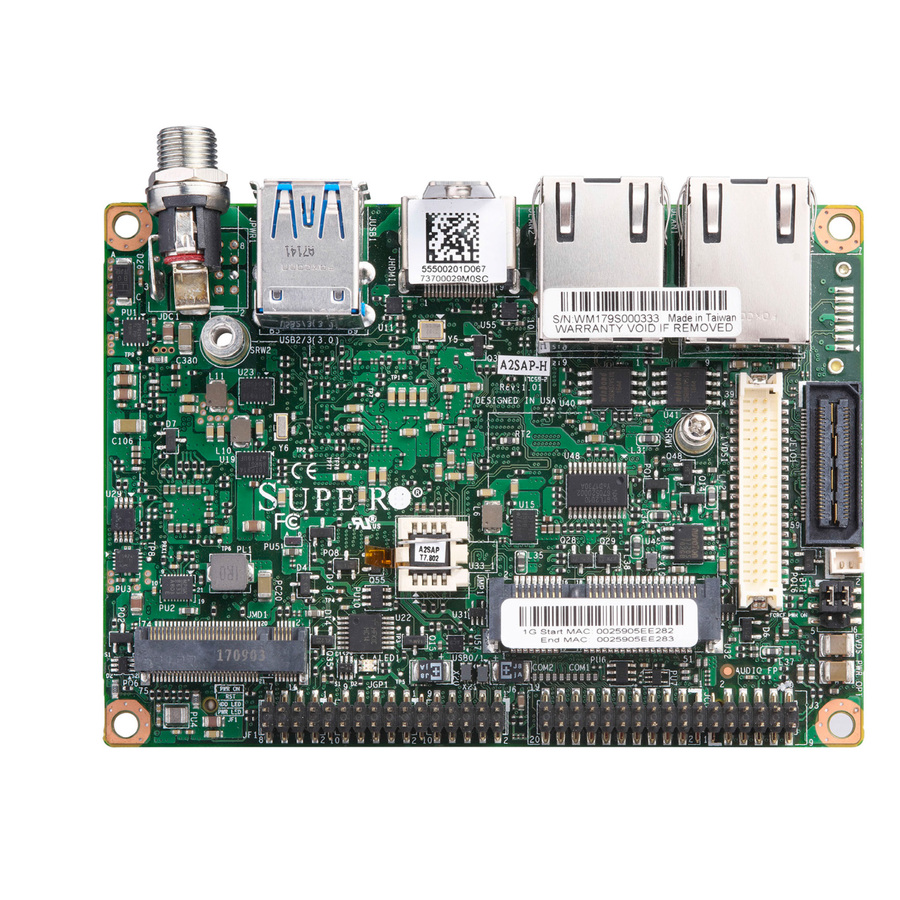
- SupermicroSupermicro A2SAP-H Server Motherboard - Intel Chipset - Socket BGA-1296 - Pico ITX - Atom x5-E3940 - 8 GB DDR3L SDRAM Maximum RAM - SODIMM - 1 x Memory Slots - Gigabit Ethernet - HDMIMBD-A2SAP-H-O
$239.38
Back-orderedBack-ordered — estimated OEM lead time 3–8 weeks (Nov 9 – Dec 14 if ordered today).
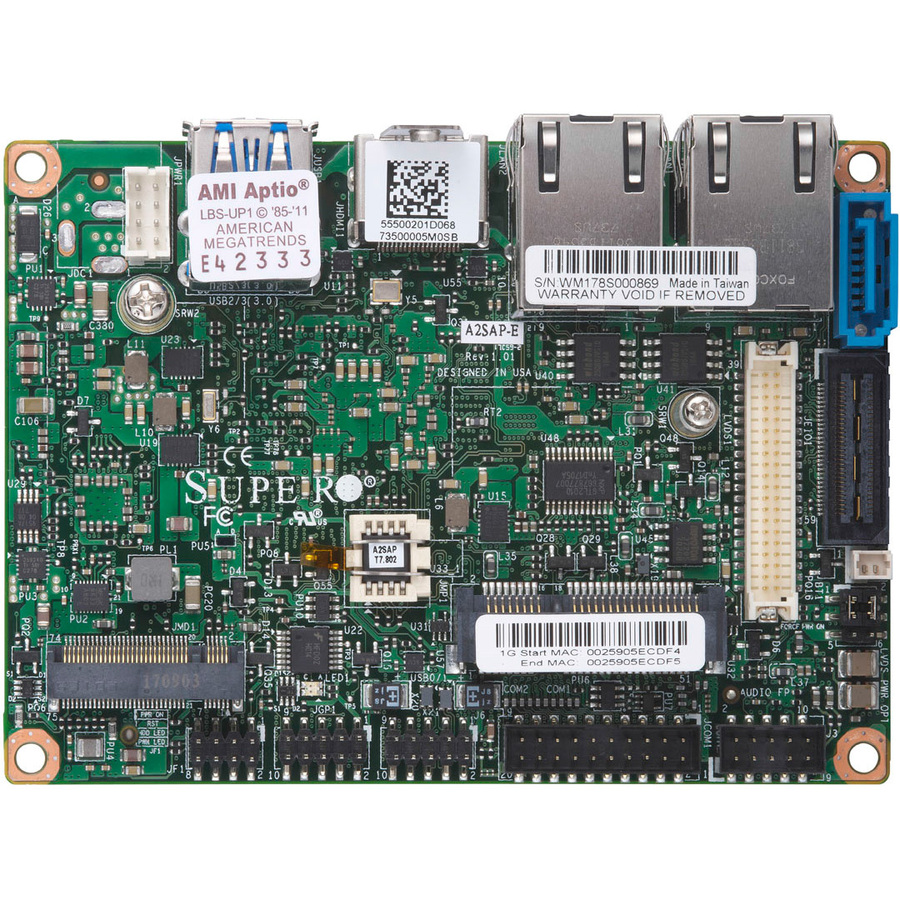
- SupermicroSupermicro A2SAP-E Server Motherboard - Intel Chipset - Socket BGA-1296 - Pico ITX - Atom x5-E3940 - 8 GB DDR3L SDRAM Maximum RAM - SODIMM - 1 x Memory Slots - Gigabit Ethernet - HDMIMBD-A2SAP-E-O
$242.08
Back-orderedBack-ordered — estimated OEM lead time 3–8 weeks (Nov 9 – Dec 14 if ordered today).
- SupermicroSupermicro A2SAN-L-WOHS Server Motherboard - Intel Chipset - Socket BGA-1296 - 3.5" SBC - Atom x5-E3930 - 8 GB DDR3L SDRAM Maximum RAM - SODIMM - 1 x Memory Slots - Gigabit Ethernet - HDMI - 1 x SATA InterfacesMBD-A2SAN-L-WOHS-O
$244.78
Back-orderedBack-ordered — estimated OEM lead time 3–8 weeks (Nov 9 – Dec 14 if ordered today).
- SupermicroSupermicro A2SAN-E-WOHS Server Motherboard - Intel Chipset - Socket BGA-1296 - 3.5" SBC - Atom x5-E3940 - 8 GB DDR3L SDRAM Maximum RAM - SODIMM - 1 x Memory Slots - Gigabit Ethernet - HDMI - 1 x SATA InterfacesMBD-A2SAN-E-WOHS-O
$266.42
Back-orderedBack-ordered — estimated OEM lead time 3–8 weeks (Nov 9 – Dec 14 if ordered today).
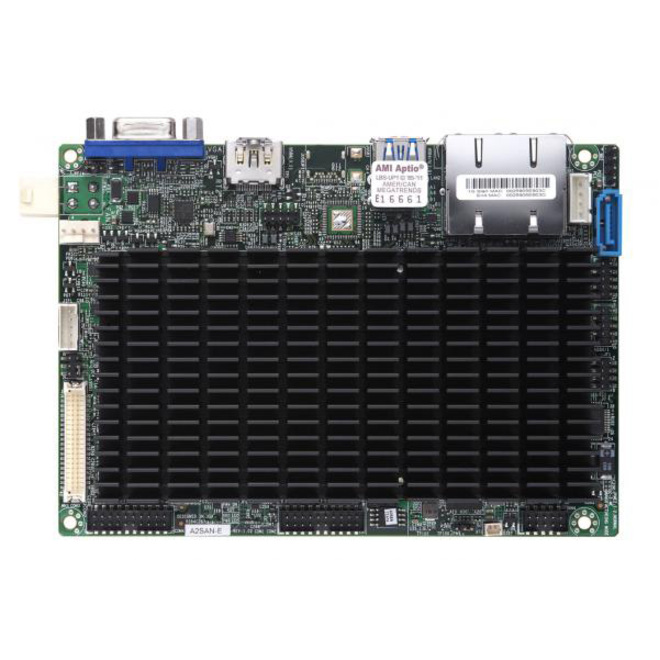
- SupermicroSupermicro A2SAN-E Server Motherboard - Intel Chipset - Socket BGA-1296 - 3.5" SBC - Atom x5-E3940 - 8 GB DDR3L SDRAM Maximum RAM - SODIMM - 1 x Memory Slots - Gigabit Ethernet - HDMI - 1 x SATA InterfacesMBD-A2SAN-E-O
$275.89
Back-orderedBack-ordered — estimated OEM lead time 3–8 weeks (Nov 9 – Dec 14 if ordered today).
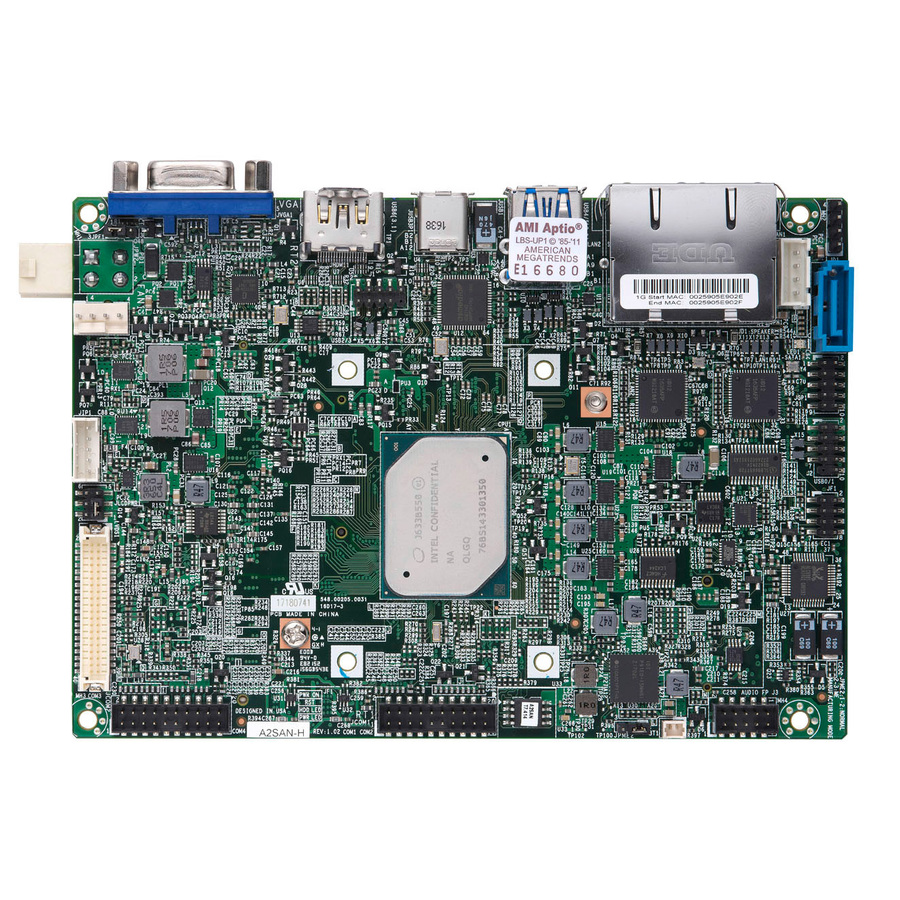
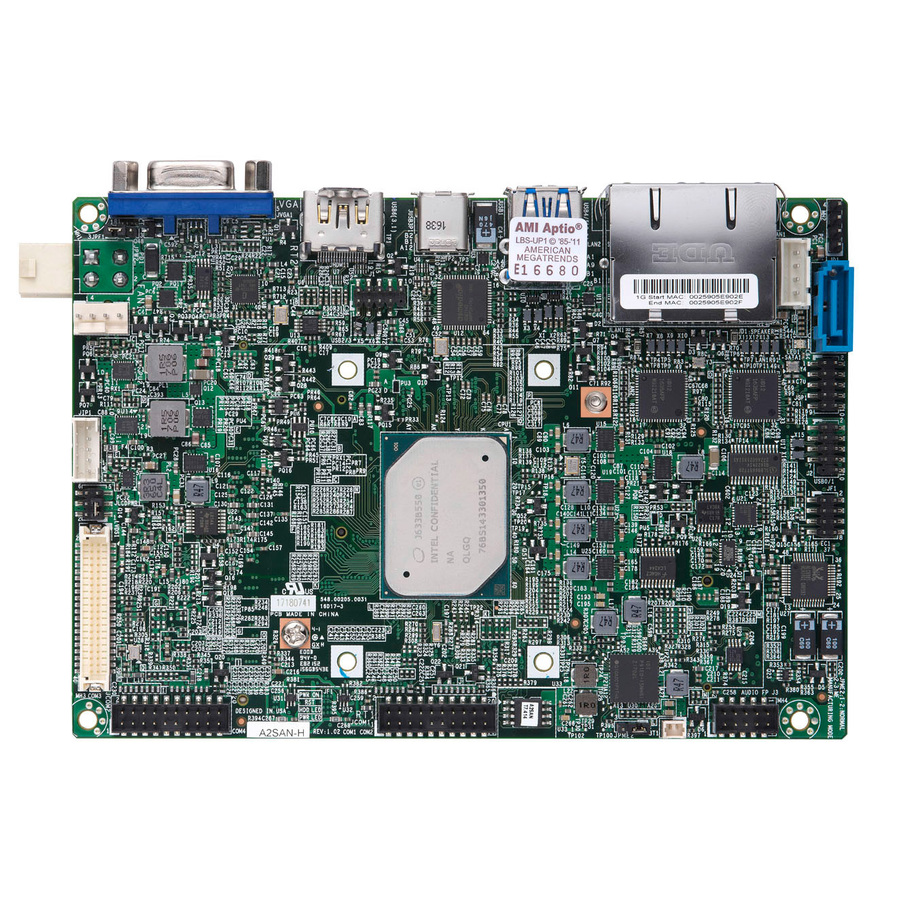
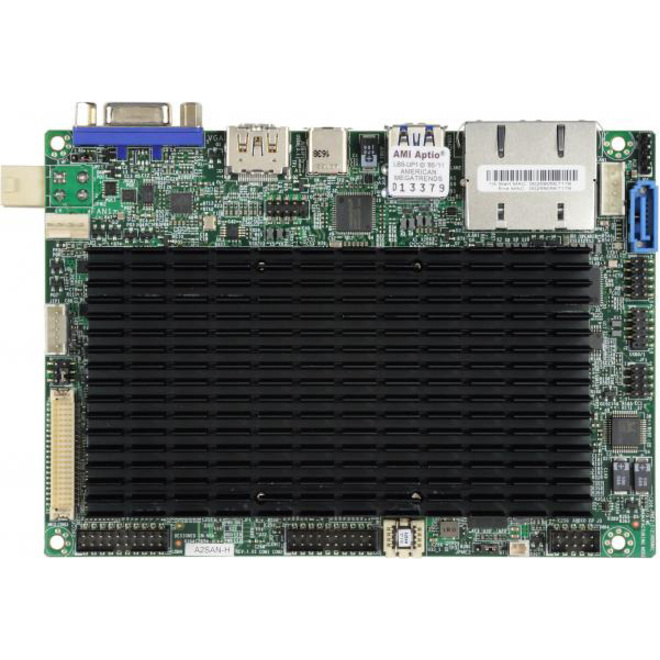
- SupermicroSupermicro A2SAN-H Server Motherboard - Intel Chipset - Socket BGA-1296 - 3.5" SBC - Atom x5-E3940 - 8 GB DDR3L SDRAM Maximum RAM - SODIMM - 1 x Memory Slots - Gigabit Ethernet - HDMI - 1 x SATA InterfacesMBD-A2SAN-H-O
$278.60
Back-orderedBack-ordered — estimated OEM lead time 3–8 weeks (Nov 9 – Dec 14 if ordered today).
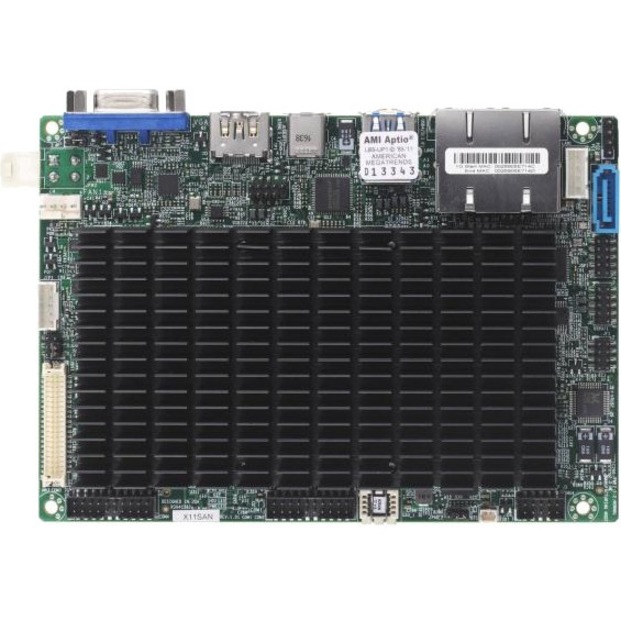
- SupermicroSupermicro X11SAN Server Motherboard - Intel Chipset - Socket BGA-1296 - Pentium N4200 - 8 GB DDR3 SDRAM, DDR3L SDRAM Maximum RAM - SODIMM - 1 x Memory Slots - Gigabit Ethernet - HDMI - 1 x SATA InterfacesMBD-X11SAN-O
$311.05
Back-orderedBack-ordered — estimated OEM lead time 3–8 weeks (Nov 9 – Dec 14 if ordered today).
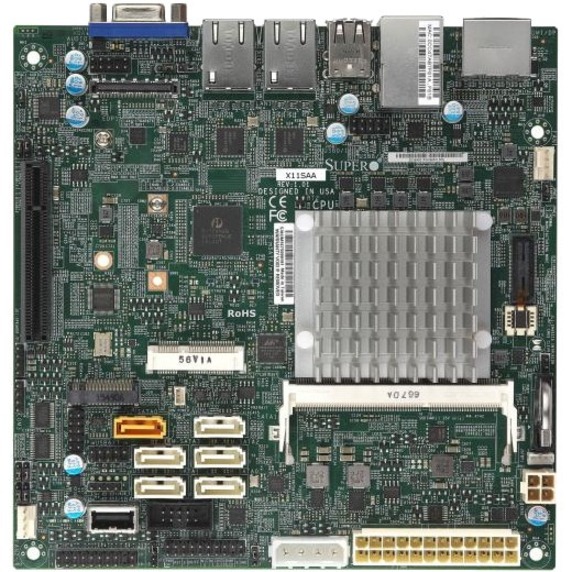
- SupermicroSupermicro X11SAA Server Motherboard - Intel Chipset - Socket BGA-1296 - Mini ITX - Pentium N4200 - 8 GB DDR3 SDRAM, DDR3L SDRAM Maximum RAM - SODIMM - 1 x Memory Slots - Gigabit Ethernet - HDMI - DisplayPort - 4 x SATA InterfacesMBD-X11SAA-O
$323.23
Back-orderedBack-ordered — estimated OEM lead time 3–8 weeks (Nov 9 – Dec 14 if ordered today).
- SupermicroSupermicro A1SRM-2558F Server Motherboard - Intel Chipset - Socket BGA-1283 - Micro ATX - Atom C2558 - 64 GB DDR3 SDRAM Maximum RAM - 4 x Memory Slots - Gigabit Ethernet - 6 x SATA InterfacesMBD-A1SRM-2558F-O
$344.28
Back-orderedBack-ordered — estimated OEM lead time 3–8 weeks (Nov 9 – Dec 14 if ordered today).
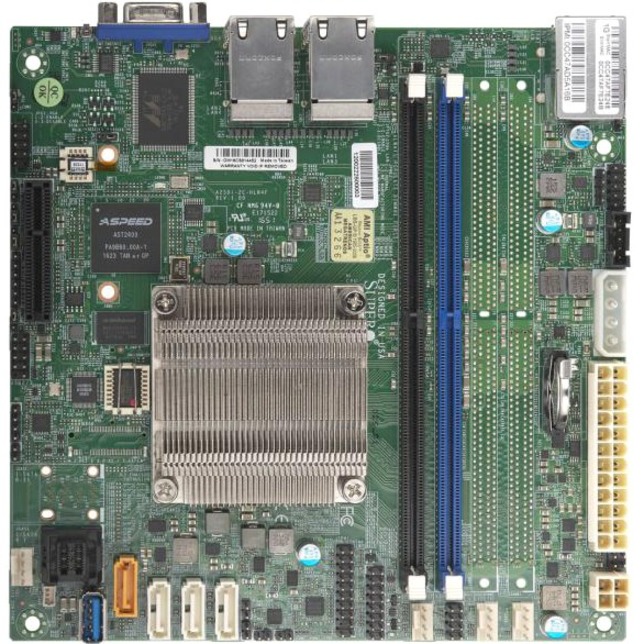
- SupermicroSupermicro A2SDI-2C-HLN4F Server Motherboard - Intel Chipset - Socket BGA-1310 - Mini ITX - Atom C3338 - 128 GB DDR4 SDRAM Maximum RAM - DIMM, UDIMM - 2 x Memory Slots - Gigabit Ethernet - 8 x SATA InterfacesMBD-A2SDI-2C-HLN4F-O
$344.28
Back-orderedBack-ordered — estimated OEM lead time 3–8 weeks (Nov 9 – Dec 14 if ordered today).
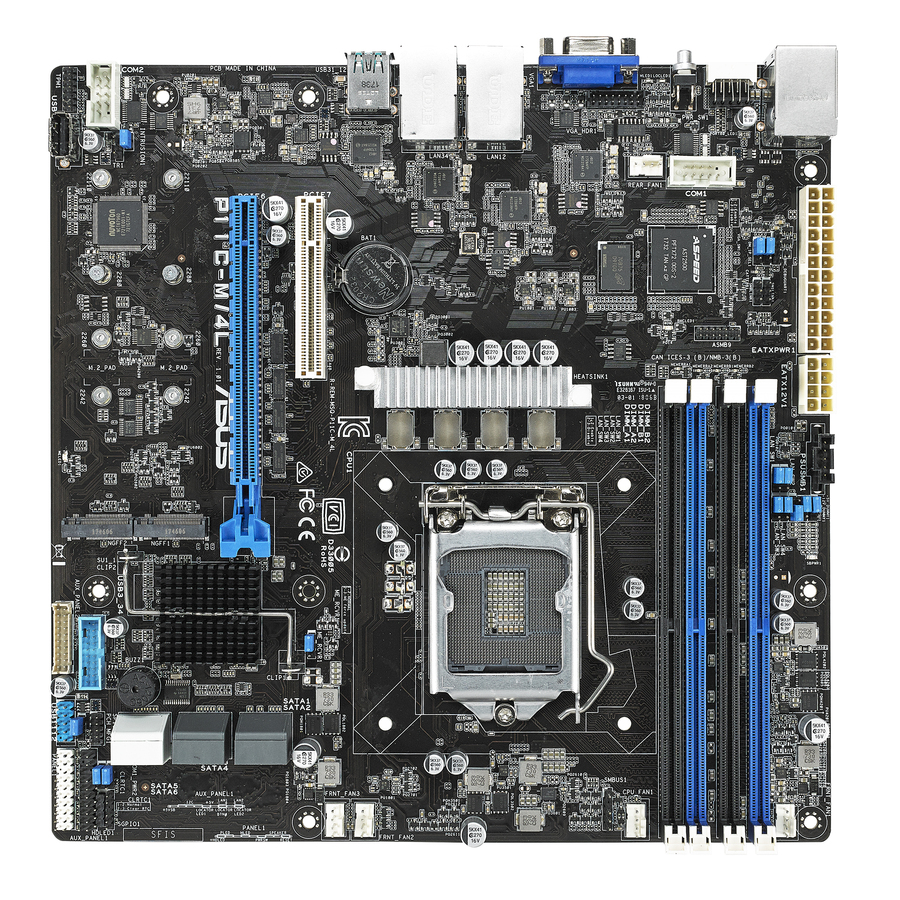
- ASUS Computer InternationalAsus P11C-M/4L Server Motherboard - Intel C242 Chipset - Socket H4 LGA-1151 - Micro ATX - 64 GB DDR4 SDRAM Maximum RAM - DIMM, UDIMM - 4 x Memory Slots - Gigabit Ethernet - 6 x SATA InterfacesP11C-M/4L
$355.78
Back-orderedBack-ordered — estimated OEM lead time 3–8 weeks (Nov 9 – Dec 14 if ordered today).
Back-ordered — estimated OEM lead time 3–8 weeks (Nov 9 – Dec 14 if ordered today).
Back-ordered — estimated OEM lead time 3–8 weeks (Nov 9 – Dec 14 if ordered today).
Back-ordered — estimated OEM lead time 3–8 weeks (Nov 9 – Dec 14 if ordered today).
- SupermicroSupermicro X11SRM-F Server Motherboard - Intel C422 Chipset - Socket R4 LGA-2066 - Micro ATX - Xeon Processor Supported - 256 GB DDR4 SDRAM Maximum RAM - RDIMM, LRDIMM, DIMM - 4 x Memory Slots - Gigabit Ethernet - 8 x SATA InterfacesMBD-X11SRM-F-O
$411.80
Back-orderedBack-ordered — estimated OEM lead time 3–8 weeks (Nov 9 – Dec 14 if ordered today).
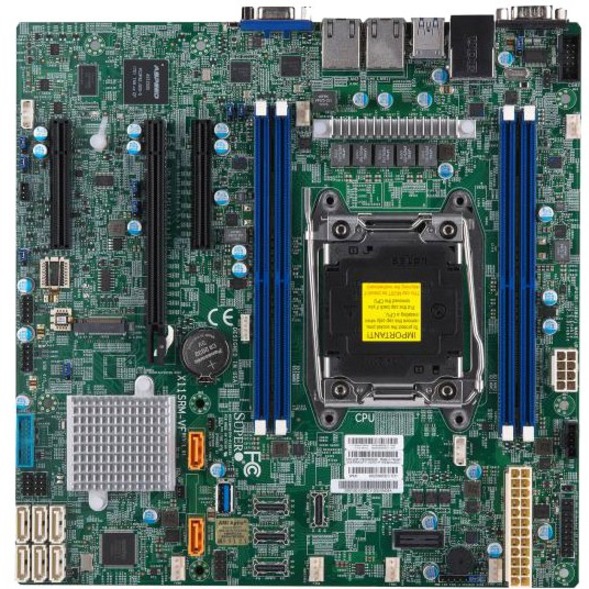
- SupermicroSupermicro X11SRM-VF Server Motherboard - Intel C422 Chipset - Socket R4 LGA-2066 - Micro ATX - Xeon Processor Supported - 256 GB DDR4 SDRAM Maximum RAM - RDIMM, LRDIMM, DIMM - 4 x Memory Slots - Gigabit Ethernet - 8 x SATA InterfacesMBD-X11SRM-VF-O
$429.35
Back-orderedBack-ordered — estimated OEM lead time 3–8 weeks (Nov 9 – Dec 14 if ordered today).
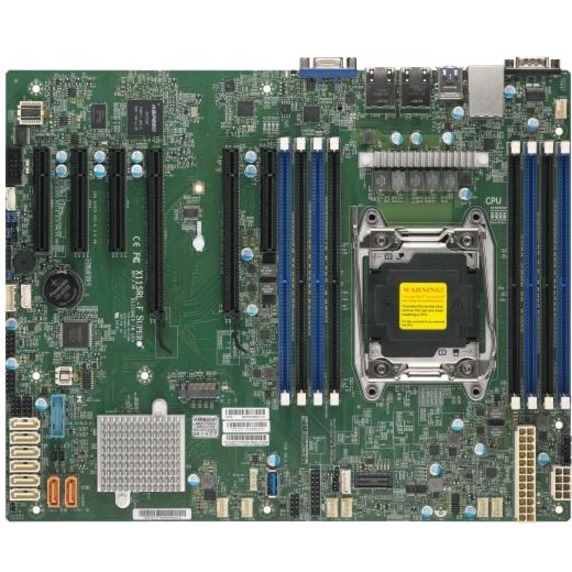
- SupermicroSupermicro X11SRL-F Server Motherboard - Intel C422 Chipset - Socket R4 LGA-2066 - ATX - 512 GB DDR4 SDRAM Maximum RAM - DIMM, RDIMM, LRDIMM - 8 x Memory Slots - Gigabit Ethernet - 8 x SATA InterfacesMBD-X11SRL-F-O
$463.53
Back-orderedBack-ordered — estimated OEM lead time 3–8 weeks (Nov 9 – Dec 14 if ordered today).
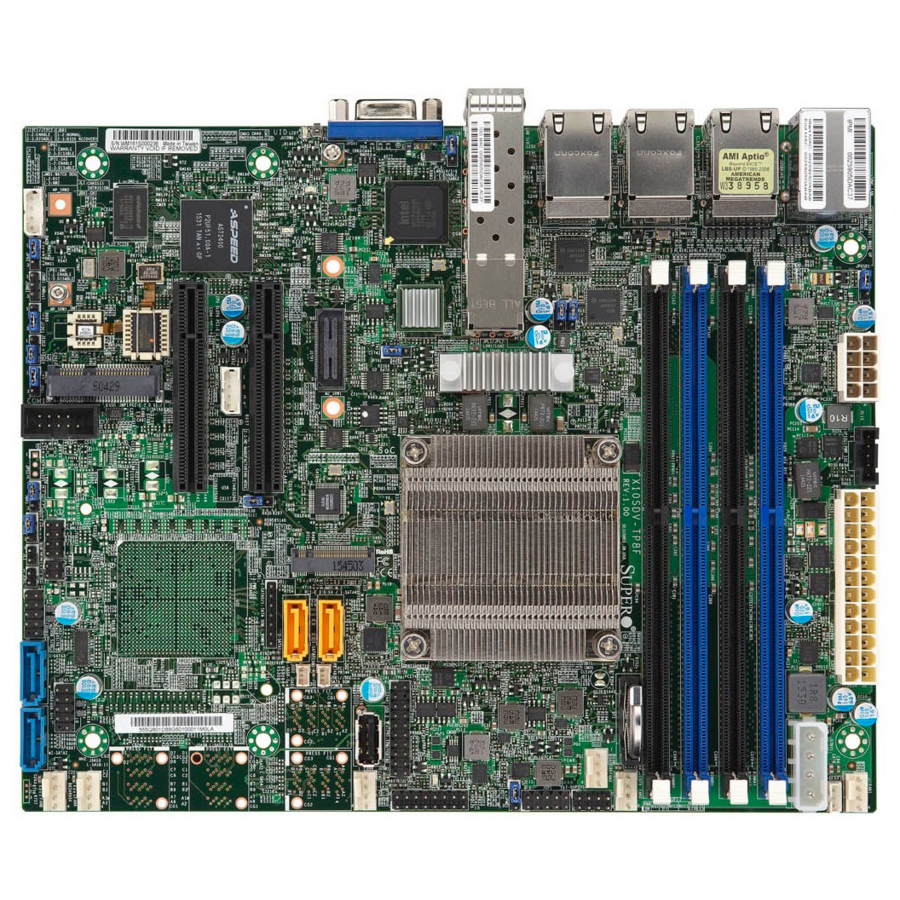
- SupermicroSupermicro X10SDV-2C-TP4F Server Motherboard - Intel Chipset - Socket BGA-1667 - Flex ATX - Pentium D1508 - 128 GB DDR4 SDRAM Maximum RAM - UDIMM, RDIMM, DIMM - 4 x Memory Slots - Gigabit Ethernet - 4 x SATA InterfacesMBD-X10SDV-2C-TP4F-O
$483.35
Back-orderedBack-ordered — estimated OEM lead time 3–8 weeks (Nov 9 – Dec 14 if ordered today).
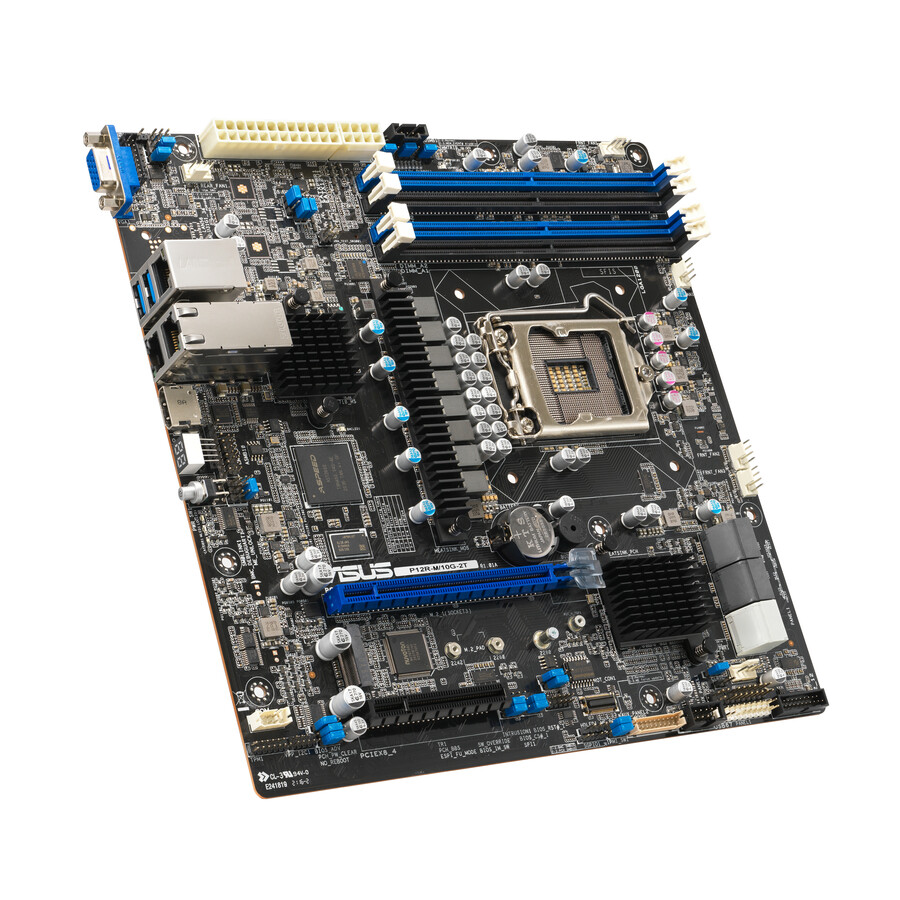
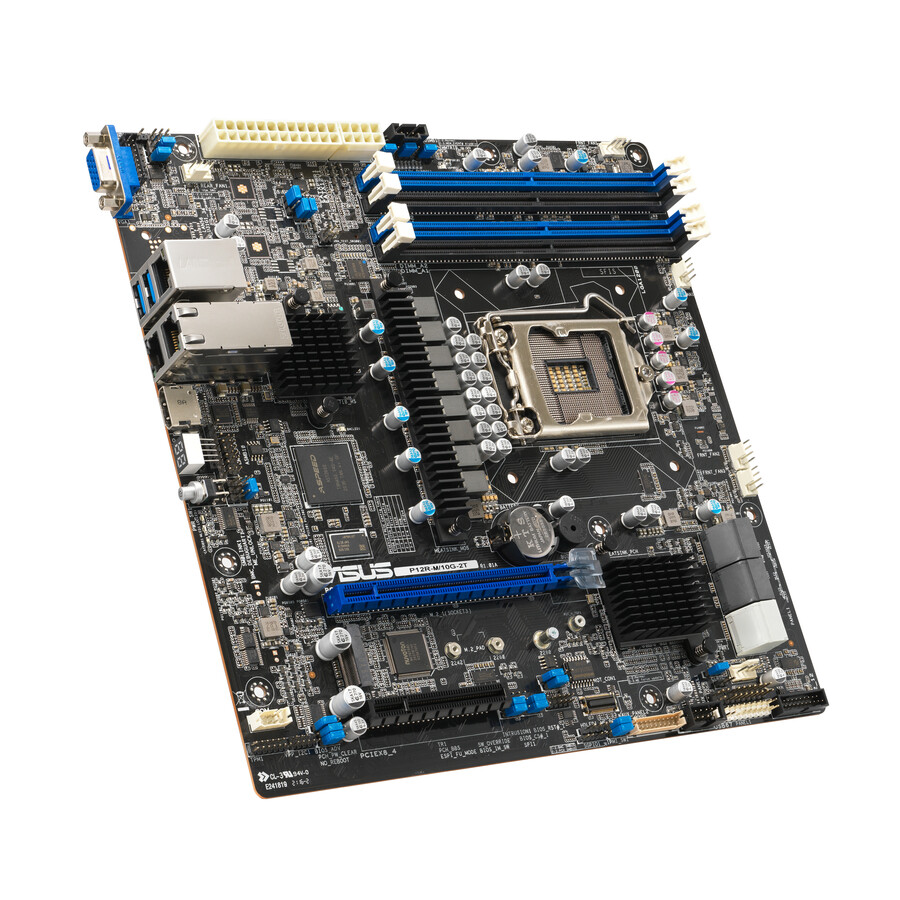
- ASUS Computer InternationalAsus P12R-M/10G-2T Server Motherboard - Intel C252 Chipset - Socket LGA-1200 - Micro ATX - Pentium, Xeon Processor Supported - 128 GB DDR4 SDRAM Maximum RAM - UDIMM, DIMM - 4 x Memory Slots - Gigabit Ethernet - HDMI - 6 x SATA InterfacesP12R-M/10G-2T
$484.81
Back-orderedBack-ordered — estimated OEM lead time 3–8 weeks (Nov 9 – Dec 14 if ordered today).
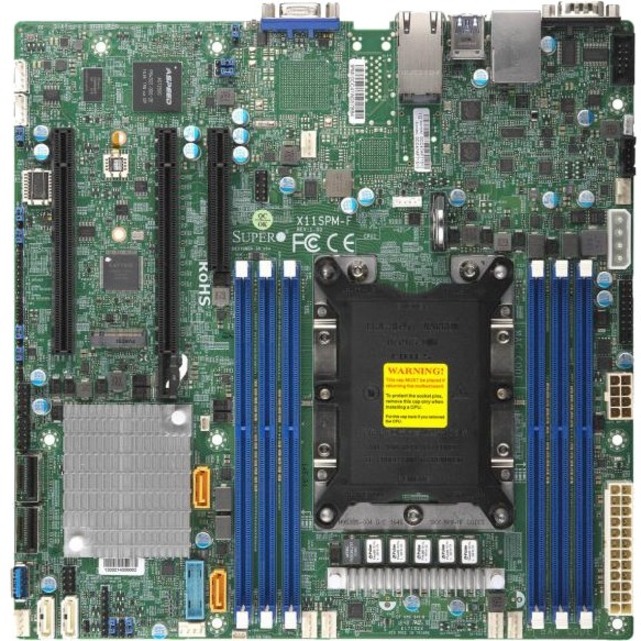
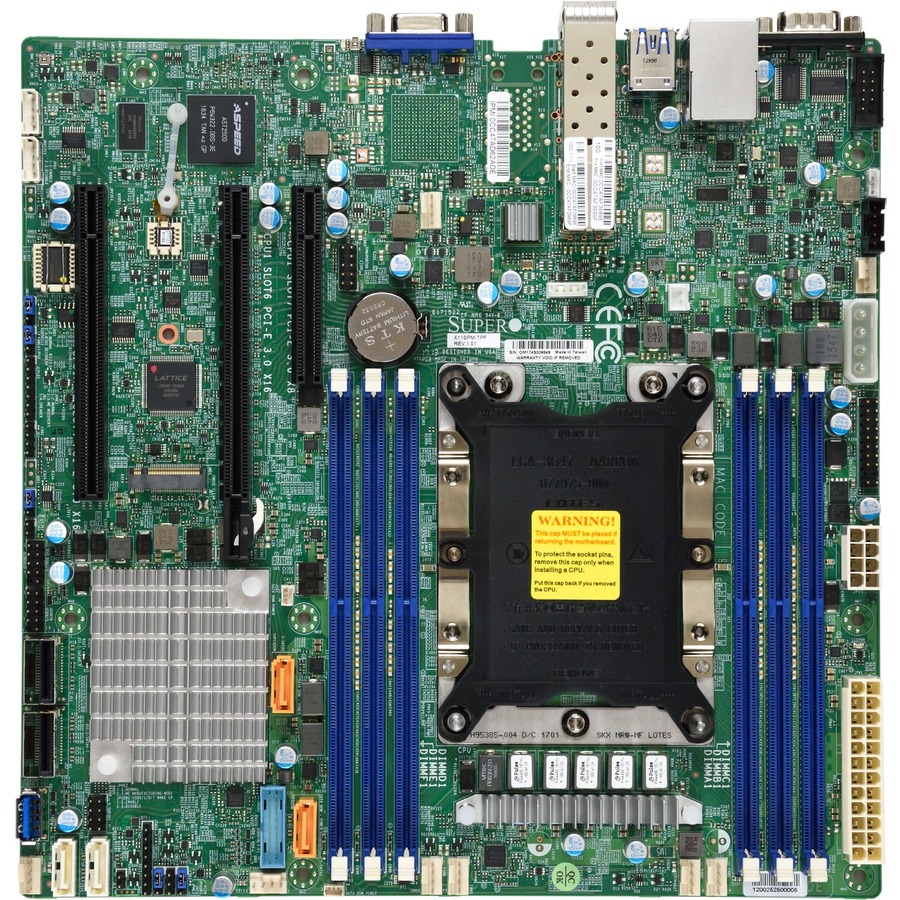
- SupermicroSupermicro X11SPM-F Server Motherboard - Intel C621 Chipset - Socket P LGA-3647 - Micro ATX - Xeon Processor Supported - 768 GB DDR4 SDRAM Maximum RAM - RDIMM, DIMM, LRDIMM - 6 x Memory Slots - Gigabit Ethernet - 12 x SATA InterfacesMBD-X11SPM-F-O
$523.86
Back-orderedBack-ordered — estimated OEM lead time 3–8 weeks (Nov 9 – Dec 14 if ordered today).
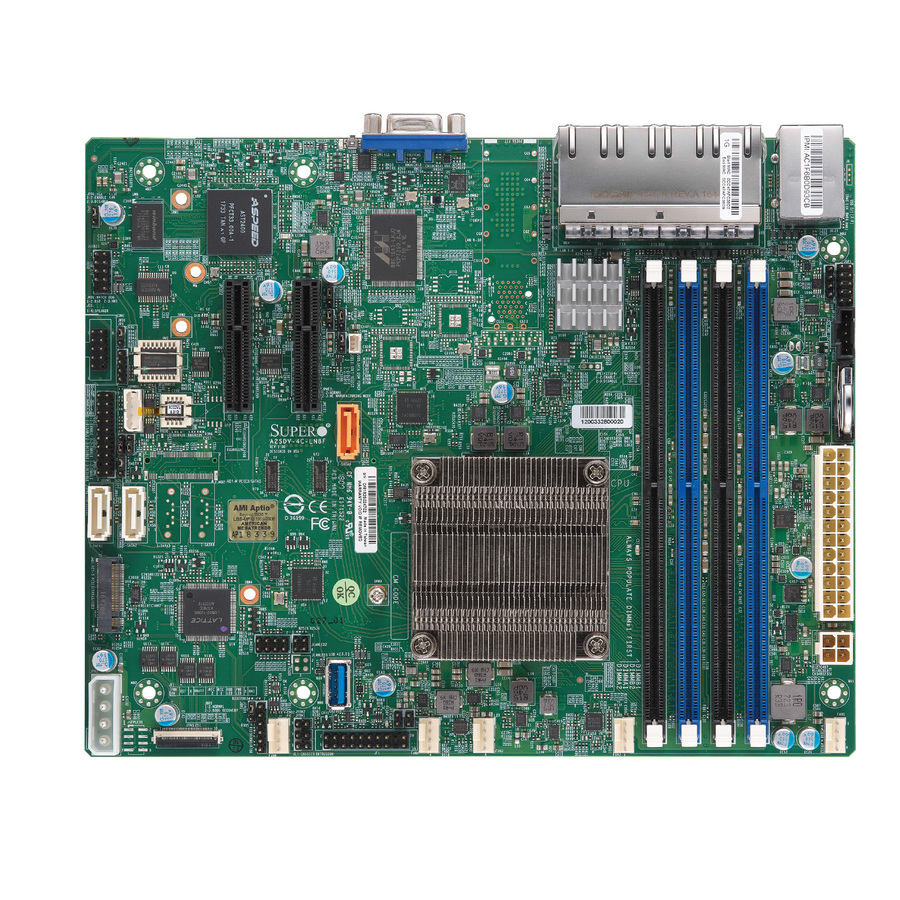
- SupermicroSupermicro A2SDV-4C-LN8F Server Motherboard - Socket BGA-1310 - Flex ATX - Atom C3558 - 256 GB DDR4 SDRAM Maximum RAM - DIMM, UDIMM, RDIMM - 4 x Memory Slots - Gigabit Ethernet - 3 x SATA InterfacesMBD-A2SDV-4C-LN8F-O
$527.91
Back-orderedBack-ordered — estimated OEM lead time 3–8 weeks (Nov 9 – Dec 14 if ordered today).
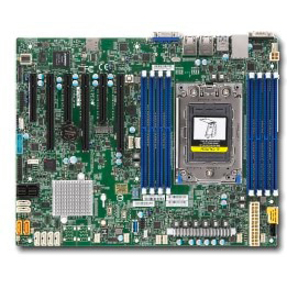
- SupermicroSupermicro H11SSL-i Server Motherboard - AMD Chipset - Socket SP3 - ATX - EPYC Processor Supported - 1 TB DDR4 SDRAM Maximum RAM - DIMM, RDIMM - 8 x Memory Slots - Gigabit Ethernet - 16 x SATA InterfacesMBD-H11SSL-I-O
$546.91
Back-orderedBack-ordered — estimated OEM lead time 3–8 weeks (Nov 9 – Dec 14 if ordered today).


Embedded Atom, Mini
Supermicro
Supermicro A2SAP-L Server Motherboard
MBD-A2SAP-L-O
A Supermicro server motherboard built on an embedded Intel platform in a compact form — the low-power board for an edge or appliance build that runs quietly and continuously.
$224.50Back-orderedXeon W, C422
Supermicro
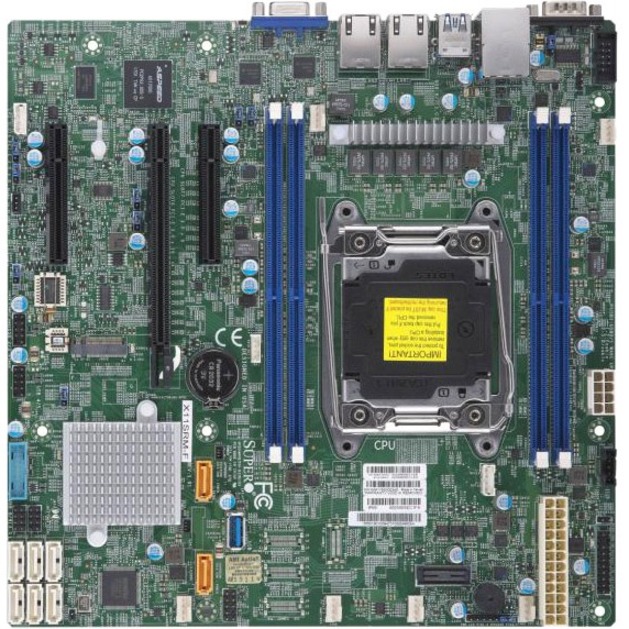
Supermicro X11SRM-F Server Motherboard
MBD-X11SRM-F-O
A Supermicro server motherboard on the Intel C422 chipset with a Socket R4 LGA-2066 for Xeon W, a Micro-ATX board for a workstation-class server.
$411.80Back-orderedXeon Scalable, C621
Supermicro
Supermicro X11SPM-F Server Motherboard
MBD-X11SPM-F-O
A Supermicro server motherboard on the Intel C621 chipset with a Socket P LGA-3647 for Xeon Scalable, for a rackmount compute node.
$523.86Back-orderedEPYC SP3, ATX
Supermicro
Supermicro H11SSL-i Server Motherboard
MBD-H11SSL-I-O
A Supermicro server motherboard on Socket SP3 for AMD EPYC in an ATX form — a single-socket EPYC board with the memory channels the platform is known for.
$546.91Back-orderedEPYC SP3, dual 10GbE
Supermicro
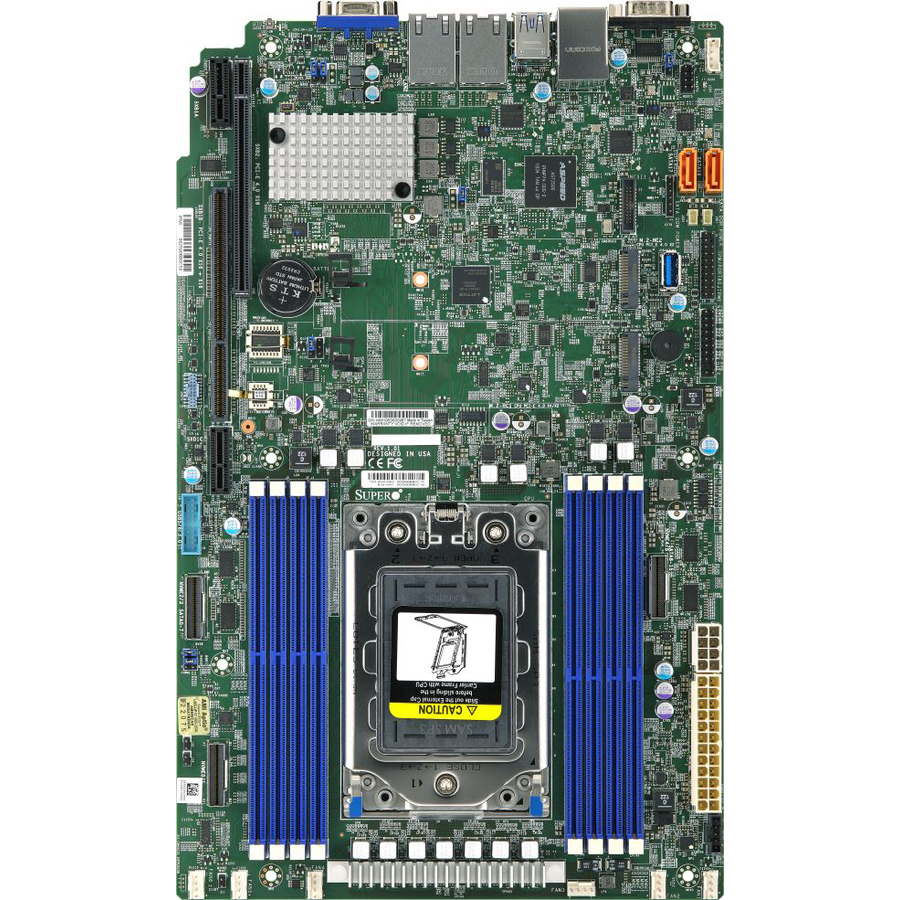
Supermicro H12SSW-iN Server Motherboard
MBD-H12SSW-IN-O
A Supermicro server motherboard on Socket SP3 for AMD EPYC in a proprietary rackmount form, a later-generation single-socket EPYC board.
$585.37Back-orderedXeon Scalable, C622
Supermicro
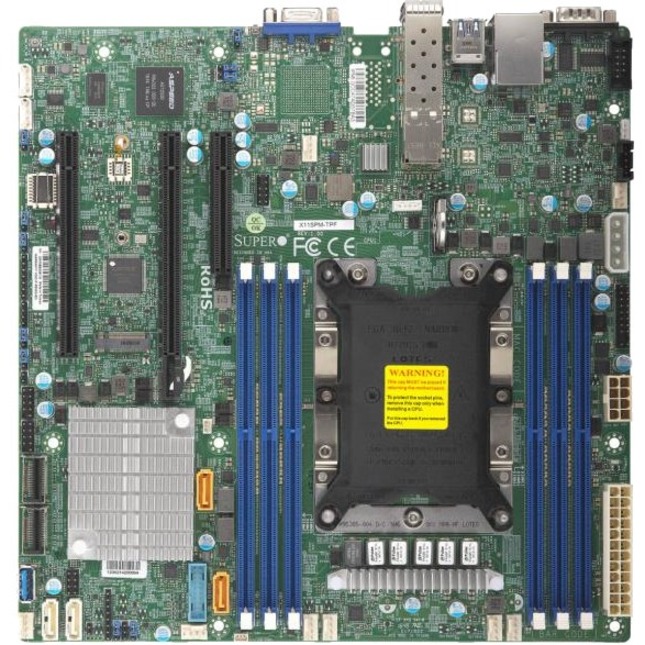
Supermicro X11SPH-NCTPF Server Motherboard
MBD-X11SPH-NCTPF-O
A Supermicro server motherboard on the Intel C622 chipset with a Socket P LGA-3647 for Xeon Scalable, carrying onboard networking and storage for a dense build.
$780.96Back-orderedXeon E, Mini-ITX
ASUS Computer International
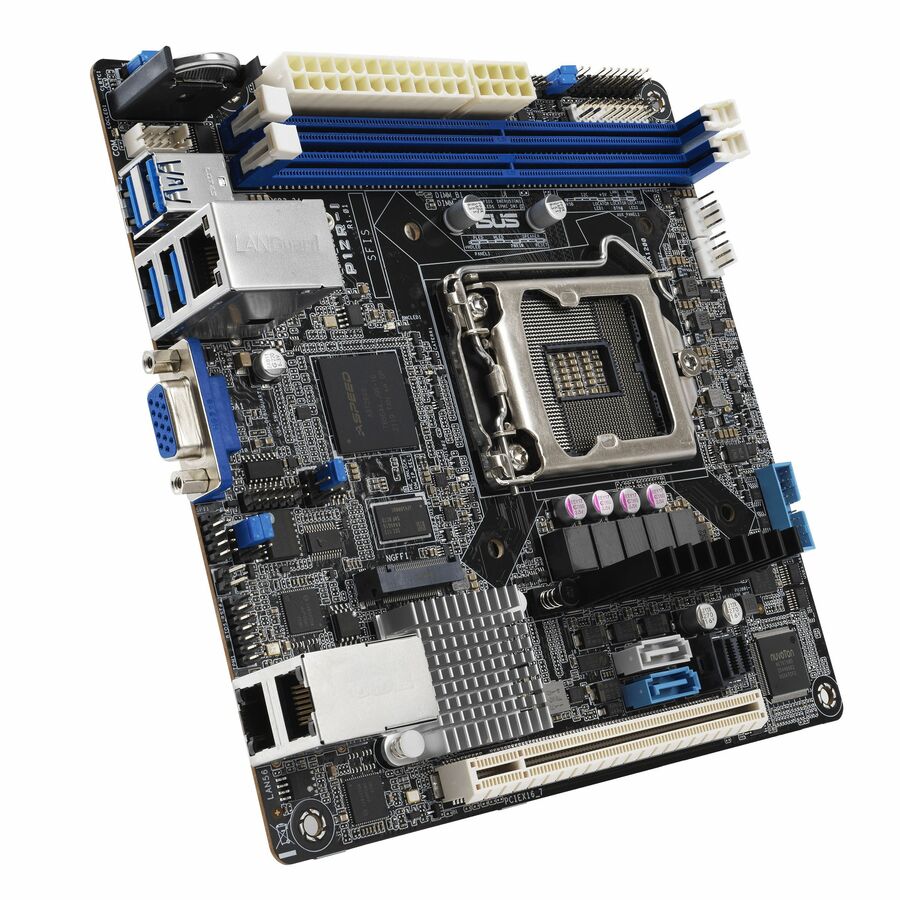
Asus P12R-I Server Motherboard
P12R-I
An ASUS server motherboard on the Intel C252 chipset with a Socket LGA-1200 in Mini-ITX — the small-footprint Xeon E board for an edge or 1U appliance.
$361.93Back-orderedXeon E, Micro-ATX
ASUS Computer International
Asus P11C-M/4L Server Motherboard
P11C-M/4L
An ASUS server motherboard on the Intel C242 chipset with a Socket H4 LGA-1151 in Micro-ATX, a quad-LAN single-socket board for a tower or short-depth server.
$355.78Back-orderedXeon, 10GbE onboard
ASUS Computer International
Asus P12R-M/10G-2T Server Motherboard
P12R-M/10G-2T
An ASUS server motherboard on the Intel C252 chipset with onboard dual 10-gigabit networking — the board that saves a NIC slot where the network is 10GbE.
$484.81Back-orderedEPYC SP3, EEB
ASUS Computer International
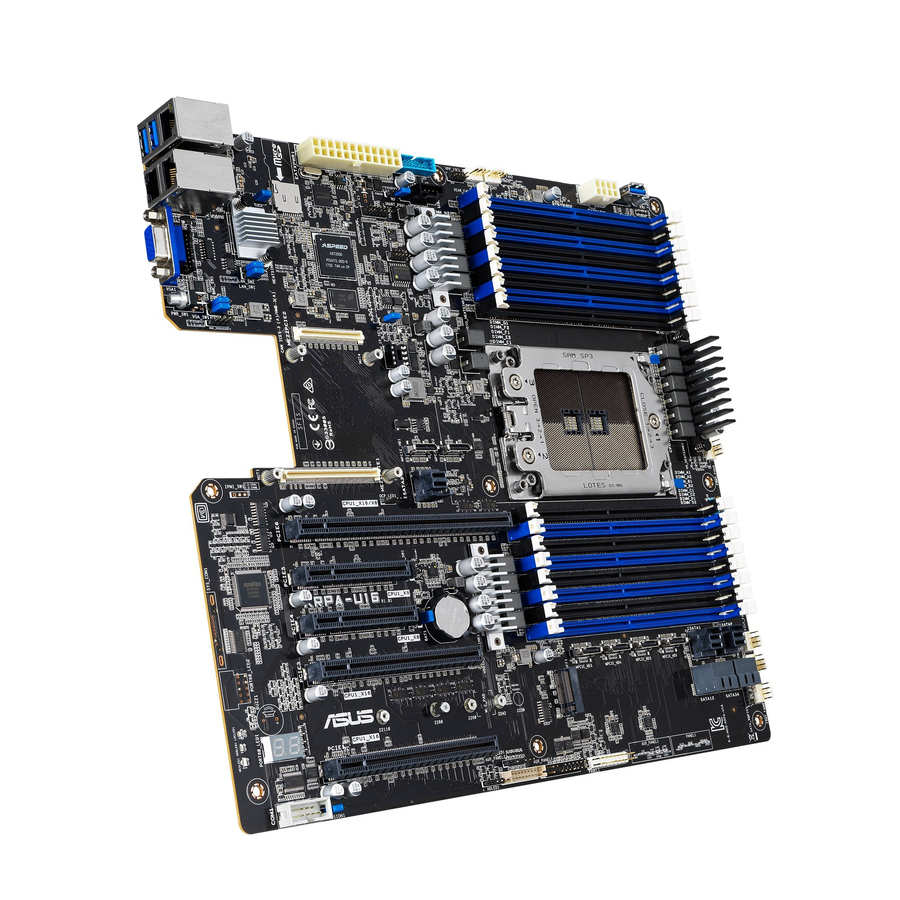
Asus KRPA-U16 Server Motherboard
KRPA-U16
An ASUS server motherboard on Socket SP3 for AMD EPYC in the SSI-EEB form with sixteen DIMM slots — a high-memory single-socket board for compute and storage.
$560.33Back-orderedEPYC SP5, CEB
ASUS Computer International
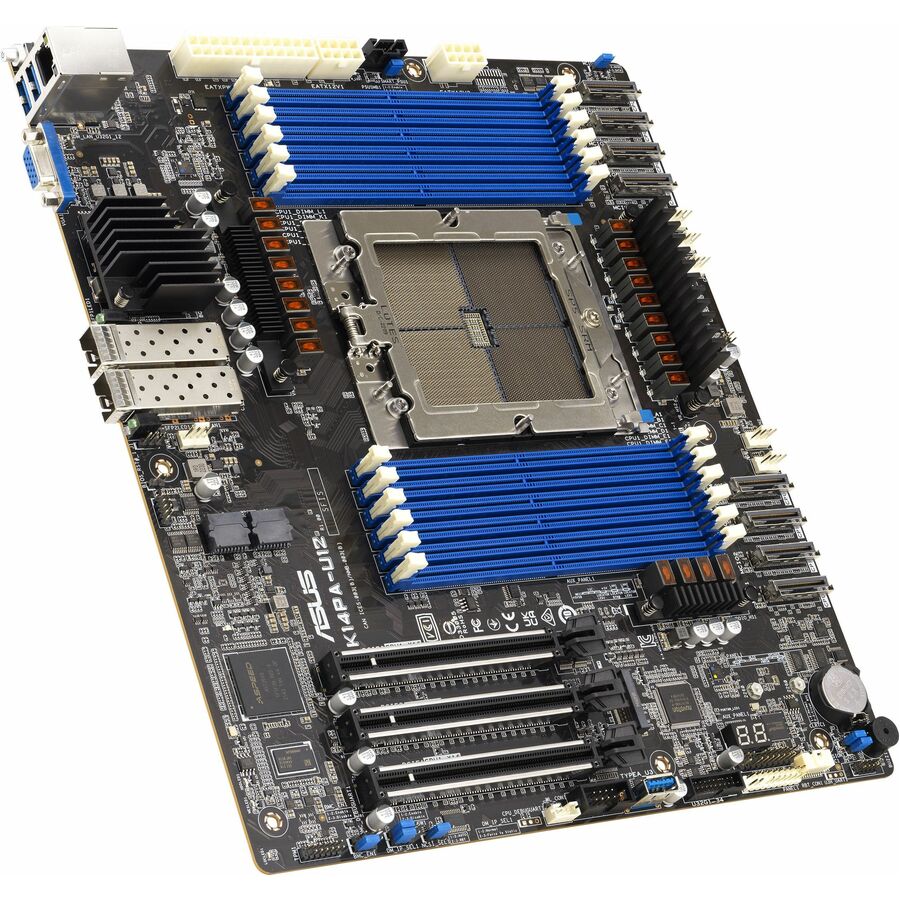
Asus K14PA-U12 Server Motherboard
K14PA-U12
An ASUS server motherboard on Socket SP5 LGA-6096 for the newer AMD EPYC generation in an SSI-CEB form, for a current single-socket compute node.
$1,028.30Back-orderedDual Xeon, EEB
ASUS Computer International
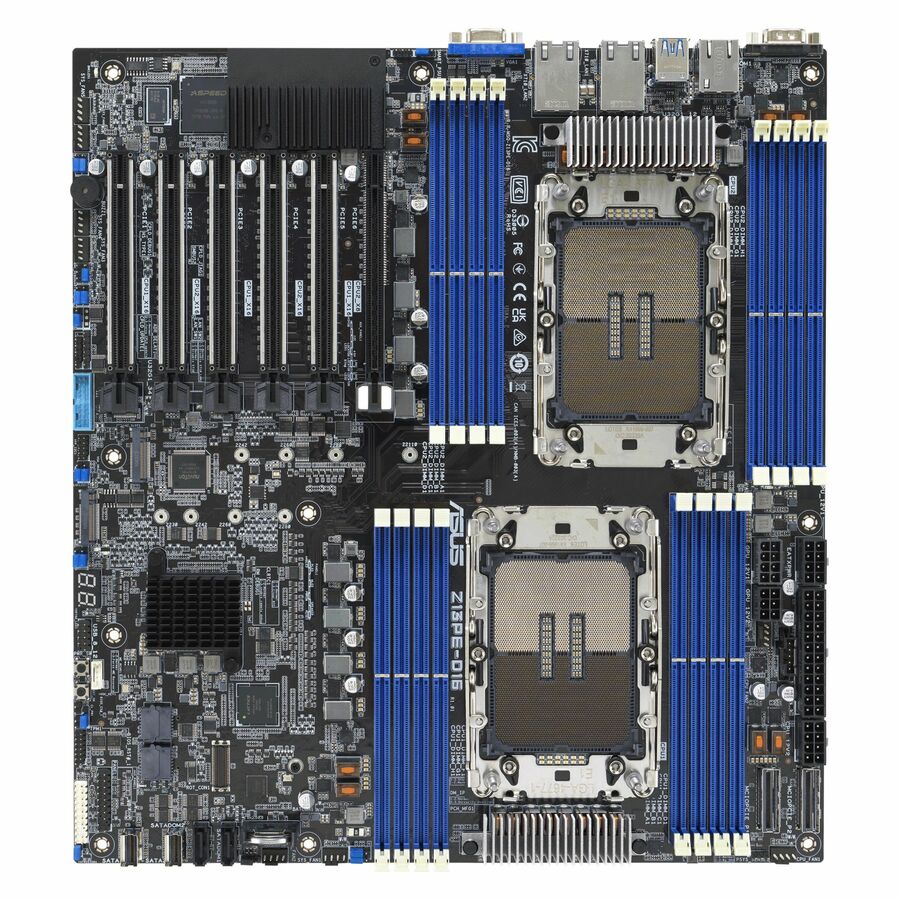
Asus Z13PE-D16 Server Motherboard
Z13PE-D16
An ASUS server motherboard on the Intel C741 chipset with a Socket LGA-4677 in an Extended-ATX form — a dual-socket Xeon Scalable board for heavy rackmount compute.
$1,678.59Back-orderedEmbedded, Q370
Advantech
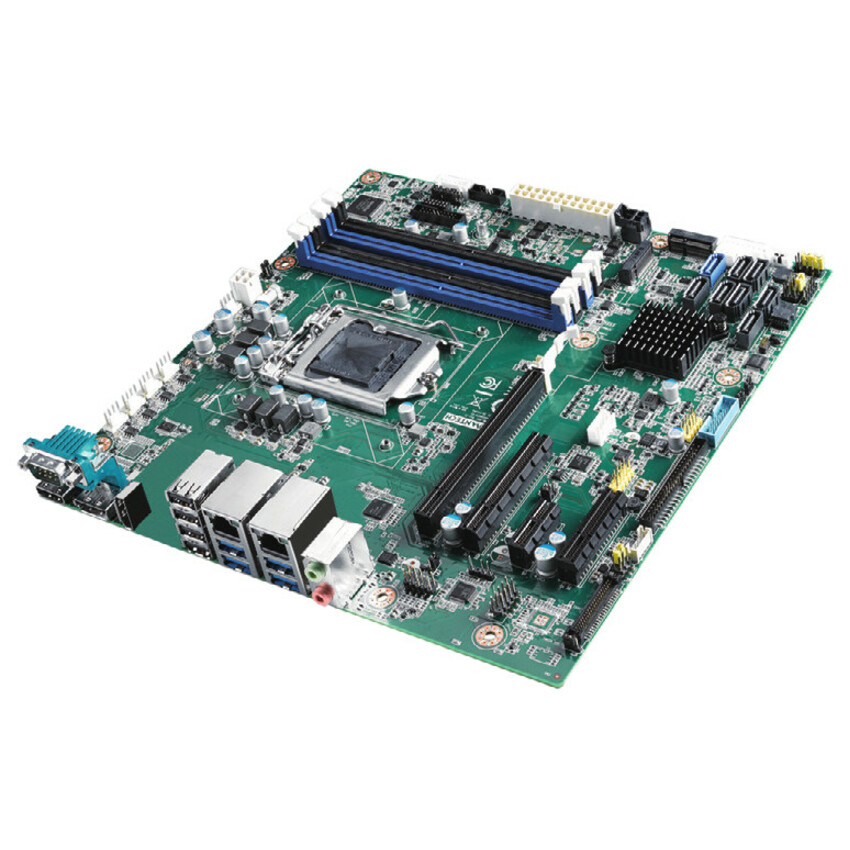
Advantech AIMB-586 Server Motherboard
AIMB-586QG2-00A1E
An Advantech server motherboard on the Intel Q370 chipset with a Socket H4 LGA-1151 — an industrial embedded board for a controlled, long-lifecycle deployment.
$616.58Back-orderedEmbedded, C246
Advantech
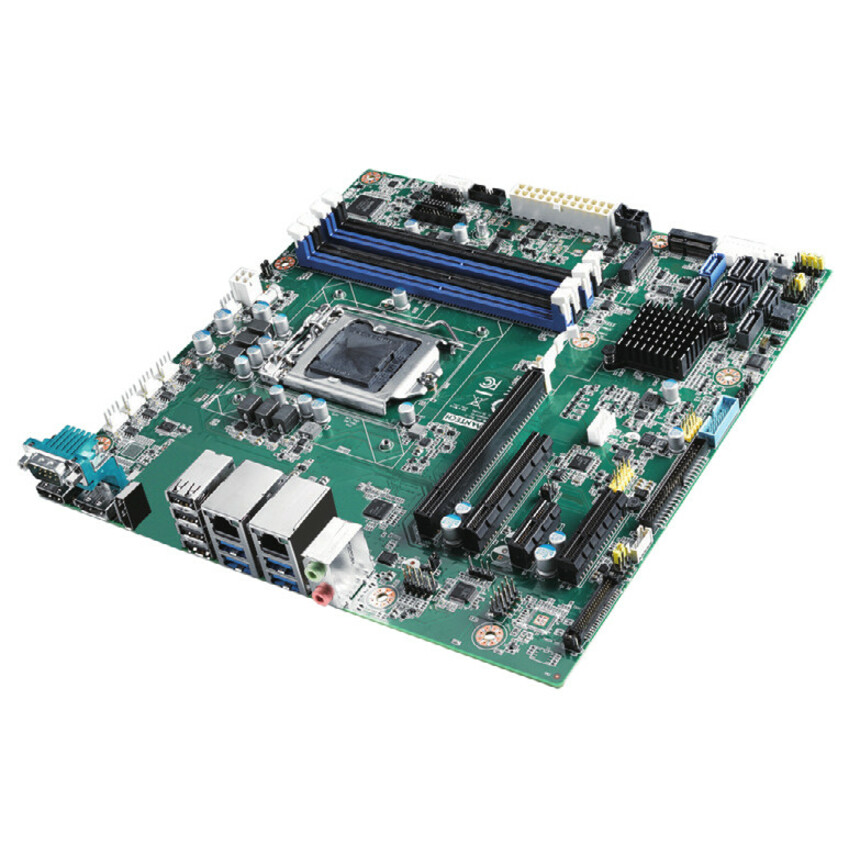
Advantech AIMB-586 Server Motherboard
AIMB-586WG2-00A1E
An Advantech server motherboard on the Intel C246 chipset with a Socket H4 LGA-1151 — the ECC-capable embedded variant for an industrial server appliance.
Every row this page renders states 'Server Motherboard' in the manufacturer's own title, as this one does.
$643.83Back-orderedMore motherboards in the Uniqcli catalog
See all 533 motherboardsMore from across this category. In-stock lines lead, and a back-ordered line carries the same estimated availability its product page does — with live pricing throughout, NDAA §889 screening before checkout and TAA verified on request.
- ASUS Computer InternationalAsus Z13PE-D16 Server Motherboard - Intel C741 Chipset - Socket LGA-4677 - Extended ATX - Xeon Processor Supported - 4 TB DDR5 SDRAM Maximum RAM - DIMM, RDIMM - 16 x Memory Slots - Gigabit Ethernet - 10 x SATA InterfacesZ13PE-D16
$1,678.59
Back-orderedBack-ordered — estimated OEM lead time 3–8 weeks (Nov 9 – Dec 14 if ordered today).
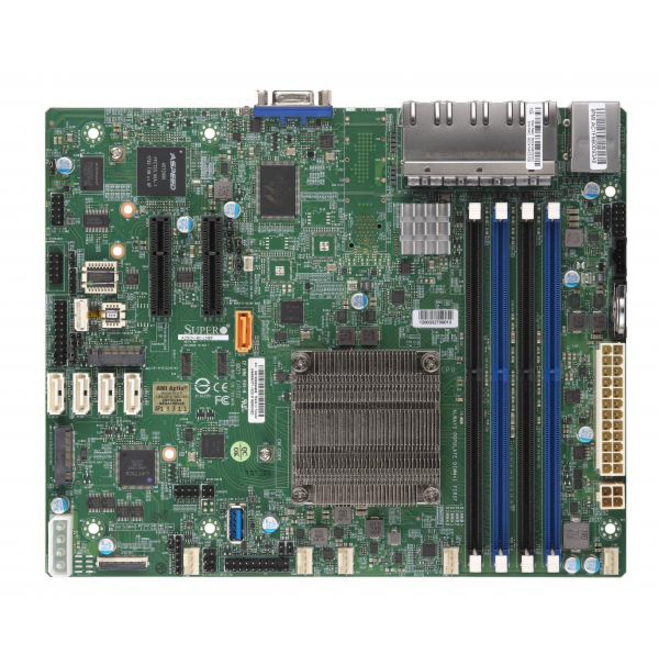
- SupermicroSupermicro A2SDi-TP8F Server Motherboard - Intel Chipset - Socket BGA-1310 - Mini ITX - Atom C3858 - 64 GB DDR4 SDRAM Maximum RAM - DIMM, UDIMM - 4 x Memory Slots - Gigabit Ethernet - 4 x SATA InterfacesMBD-A2SDI-TP8F-O
$1,054.90
Back-orderedBack-ordered — estimated OEM lead time 3–8 weeks (Nov 9 – Dec 14 if ordered today).
- ASUS Computer InternationalAsus K14PA-U12 Server Motherboard - AMD Chipset - Socket SP5 LGA-6096 - SSI CEB - EPYC Processor Supported - 3 TB DDR5 SDRAM Maximum RAM - DIMM, RDIMM - 12 x Memory Slots - Gigabit EthernetK14PA-U12
$1,028.30
Back-orderedBack-ordered — estimated OEM lead time 3–8 weeks (Nov 9 – Dec 14 if ordered today).
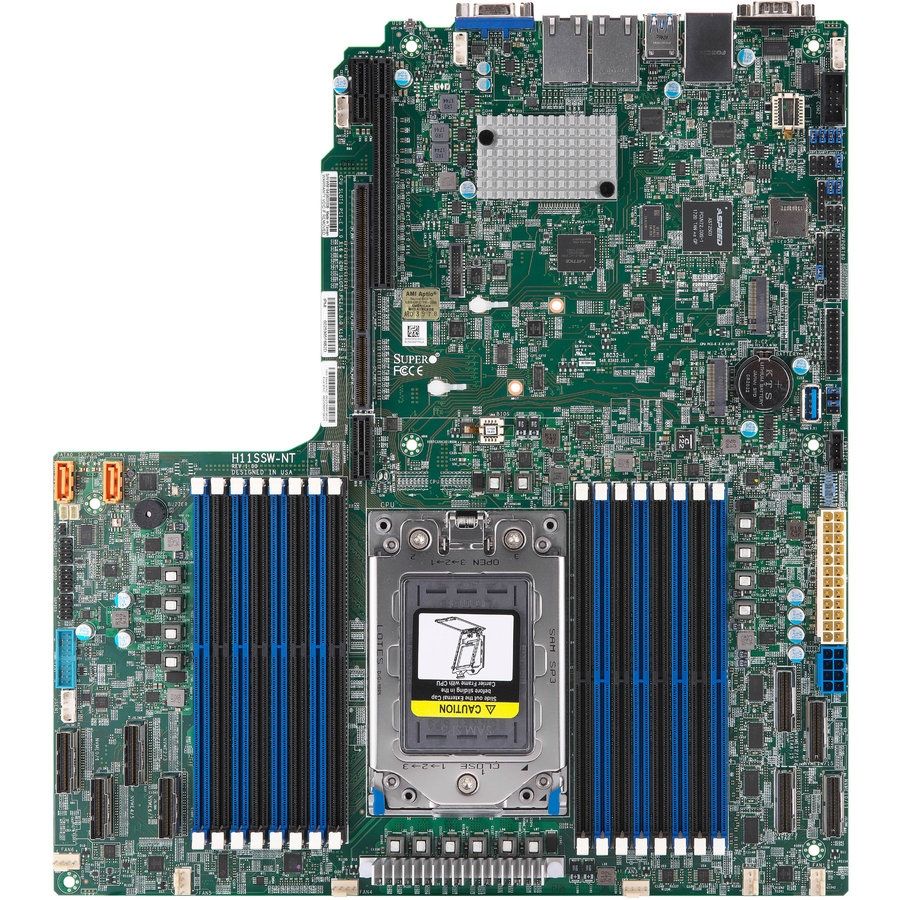
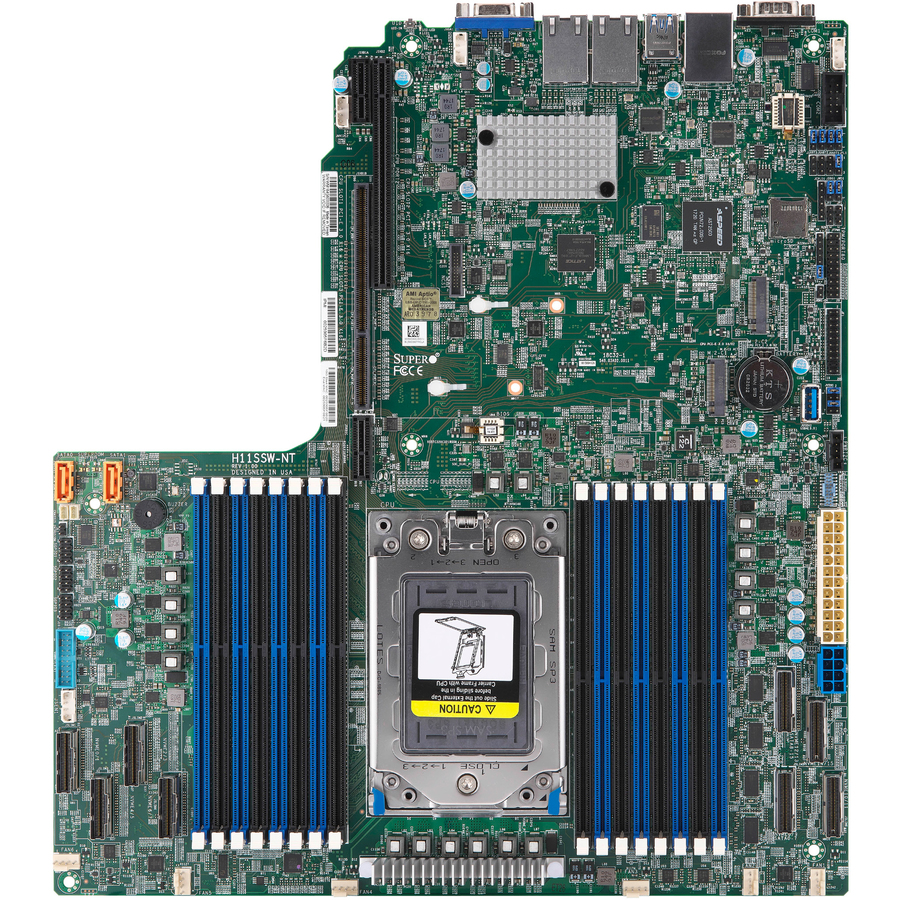
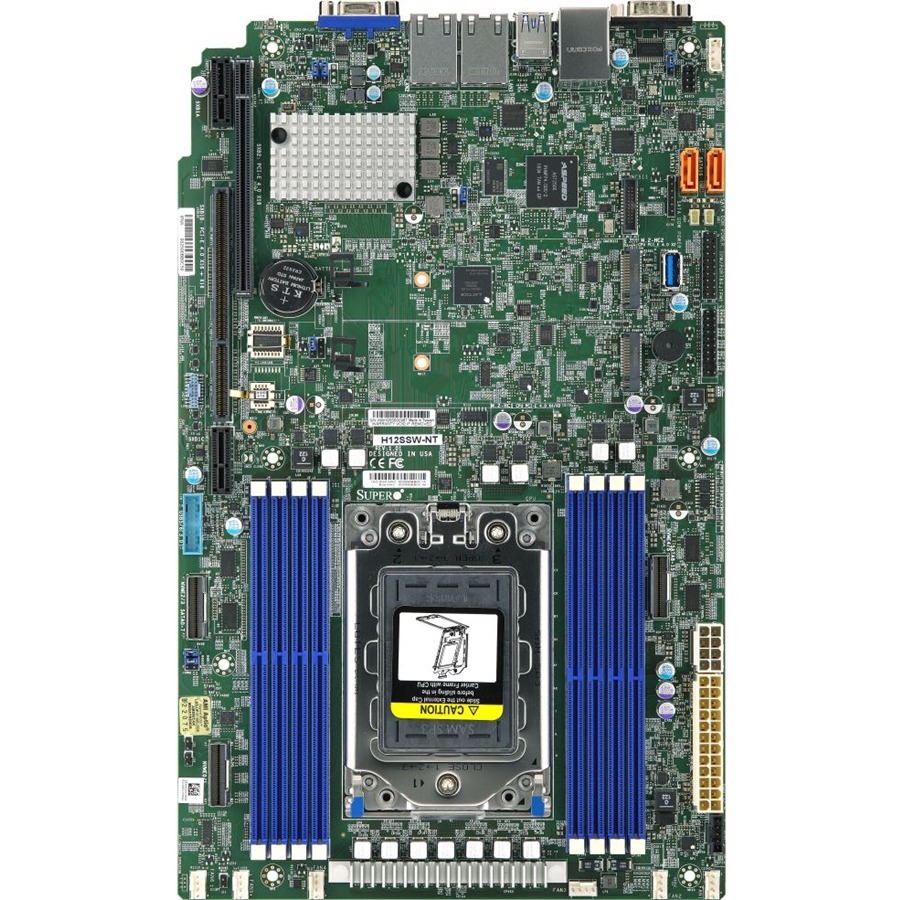
- SupermicroSupermicro H11SSW-NT Server Motherboard - AMD Chipset - Socket SP3 - Proprietary Form Factor - EPYC Processor Supported - 2 TB DDR4 SDRAM Maximum RAM - DIMM, RDIMM - 16 x Memory Slots - Gigabit Ethernet - 2 x SATA InterfacesMBD-H11SSW-NT-O
$897.58
Back-orderedBack-ordered — estimated OEM lead time 3–8 weeks (Nov 9 – Dec 14 if ordered today).
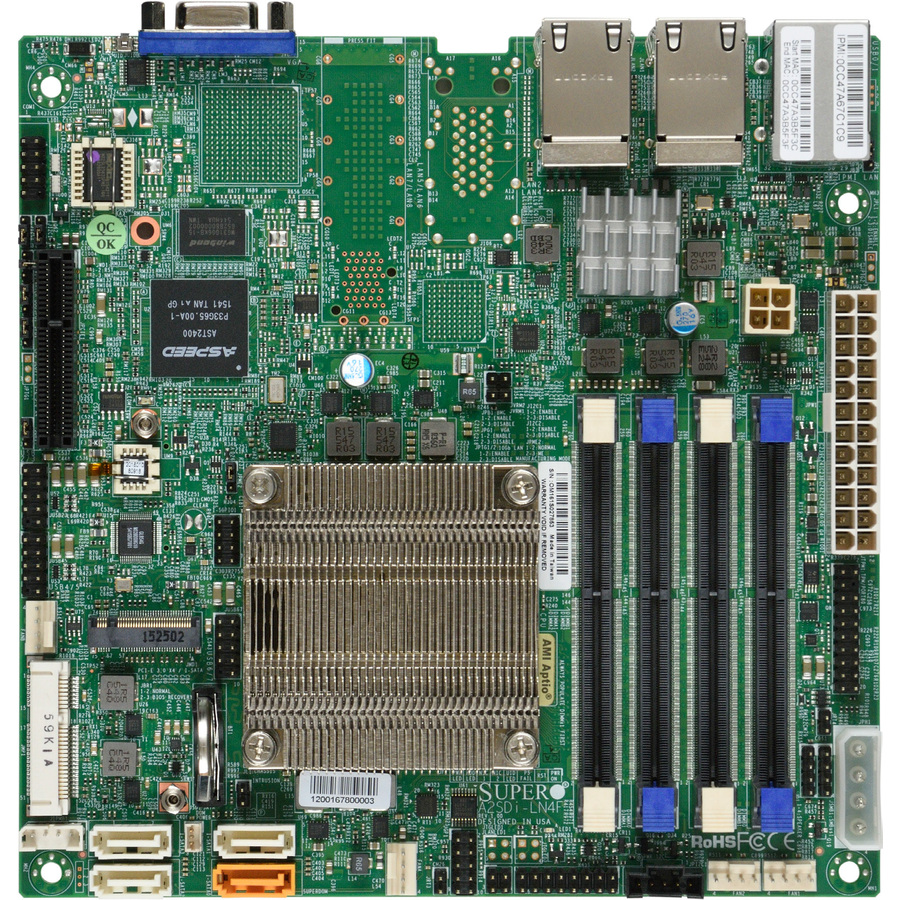
- SupermicroSupermicro A2SDi-LN4F Server Motherboard - Socket BGA-1310 - Mini ITX - Atom C3850 - 64 GB DDR4 SDRAM Maximum RAM - SODIMM - 4 x Memory Slots - Gigabit Ethernet - 4 x SATA InterfacesMBD-A2SDI-LN4F-O
$889.50
Back-orderedBack-ordered — estimated OEM lead time 3–8 weeks (Nov 9 – Dec 14 if ordered today).
- SupermicroSupermicro X11SDV-4C-TP8F Server Motherboard - Intel Chipset - Socket BGA-2518 - Flex ATX - Xeon D-2123IT - 512 GB DDR4 SDRAM Maximum RAM - RDIMM, LRDIMM, DIMM - 4 x Memory Slots - Gigabit Ethernet - 12 x SATA InterfacesMBD-X11SDV-4C-TP8F-O
$867.02
Back-orderedBack-ordered — estimated OEM lead time 3–8 weeks (Nov 9 – Dec 14 if ordered today).
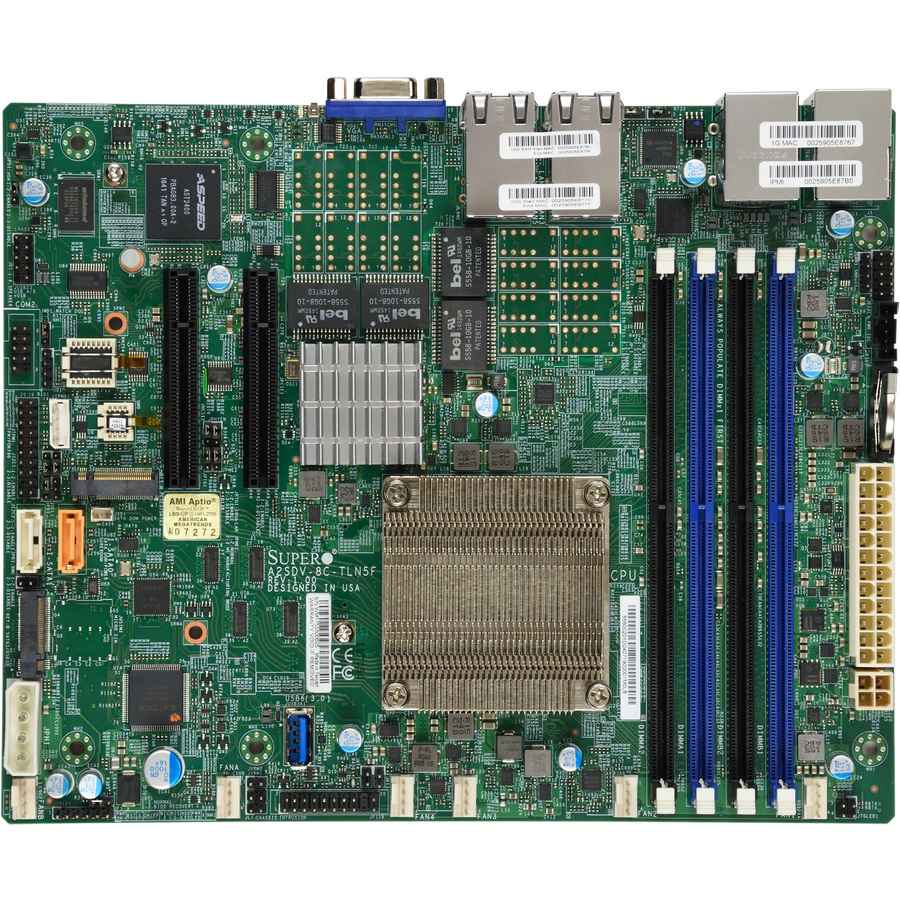
- SupermicroSupermicro A2SDV-8C-TLN5F Server Motherboard - Socket BGA-1310 - Flex ATX - Atom C3708 - 256 GB DDR4 SDRAM Maximum RAM - DIMM, UDIMM - 4 x Memory Slots - Gigabit Ethernet - 2 x SATA InterfacesMBD-A2SDV-8C-TLN5F-O
$861.23
Back-orderedBack-ordered — estimated OEM lead time 3–8 weeks (Nov 9 – Dec 14 if ordered today).
- SupermicroSupermicro H11SSW-iN Server Motherboard - AMD Chipset - Socket SP3 - Proprietary Form Factor - EPYC Processor Supported - 2 TB DDR4 SDRAM Maximum RAM - DIMM, RDIMM - 16 x Memory Slots - Gigabit Ethernet - 2 x SATA InterfacesMBD-H11SSW-IN-O
$788.57
Back-orderedBack-ordered — estimated OEM lead time 3–8 weeks (Nov 9 – Dec 14 if ordered today).
- SupermicroSupermicro X11SPH-NCTPF Server Motherboard - Intel C622 Chipset - Socket P LGA-3647 - ATX - Xeon Processor Supported - 1 TB DDR4 SDRAM Maximum RAM - RDIMM, DIMM, LRDIMM - 8 x Memory Slots - 10 x SATA InterfacesMBD-X11SPH-NCTPF-O
$780.96
Back-orderedBack-ordered — estimated OEM lead time 3–8 weeks (Nov 9 – Dec 14 if ordered today).
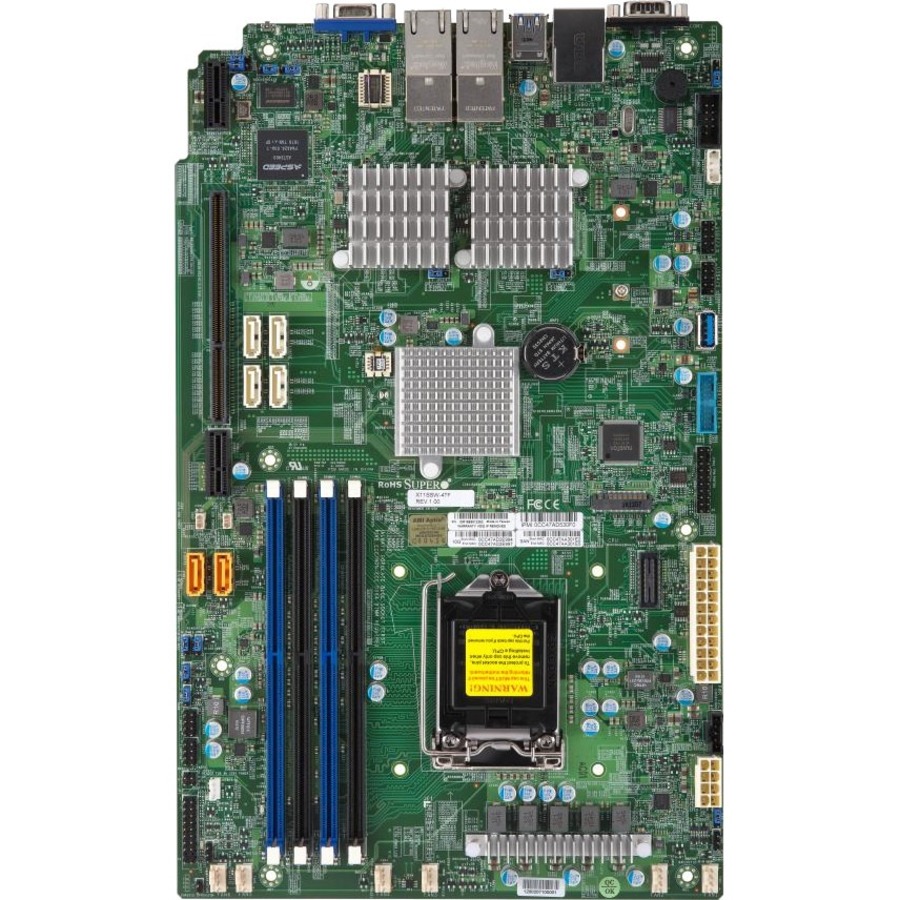
- SupermicroSupermicro X11SSW-4TF Server Motherboard - Intel C236 Chipset - Socket H4 LGA-1151 - Proprietary Form Factor - Core i3 Processor Supported - 64 GB DDR4 SDRAM Maximum RAM - UDIMM, DIMM - 4 x Memory Slots - 6 x SATA InterfacesMBD-X11SSW-4TF-O
$734.75
Back-orderedBack-ordered — estimated OEM lead time 3–8 weeks (Nov 9 – Dec 14 if ordered today).
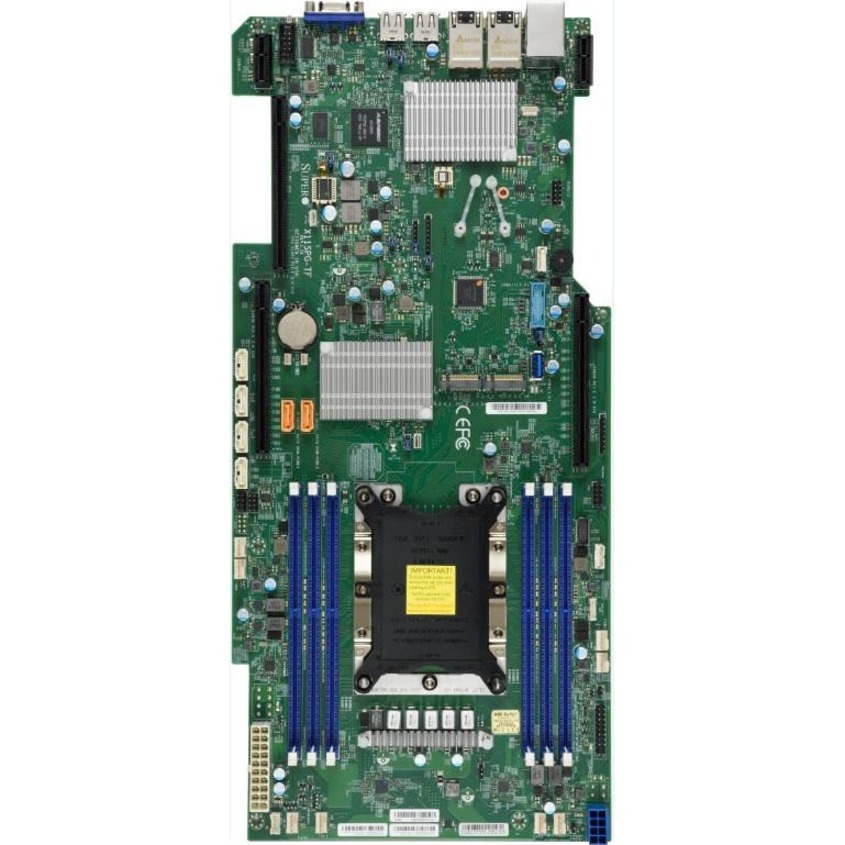
- SupermicroSupermicro X11SPG-TF Server Motherboard - Intel C621 Chipset - Socket P LGA-3647 - Proprietary Form Factor - Xeon Processor Supported - 768 GB DDR4 SDRAM Maximum RAM - RDIMM, DIMM, LRDIMM - 6 x Memory Slots - 6 x SATA InterfacesMBD-X11SPG-TF-O
$732.55
Back-orderedBack-ordered — estimated OEM lead time 3–8 weeks (Nov 9 – Dec 14 if ordered today).
- SupermicroSupermicro A2SDV-8C-LN8F Server Motherboard - Socket BGA-1310 - Flex ATX - Atom C3758 - 256 GB DDR4 SDRAM Maximum RAM - DIMM, UDIMM, RDIMM - 4 x Memory Slots - Gigabit Ethernet - 5 x SATA InterfacesMBD-A2SDV-8C-LN8F-O
$730.71
Back-orderedBack-ordered — estimated OEM lead time 3–8 weeks (Nov 9 – Dec 14 if ordered today).
- SupermicroSupermicro H11SSL-C Server Motherboard - AMD Chipset - Socket SP3 - ATX - EPYC Processor Supported - 1 TB DDR4 SDRAM Maximum RAM - DIMM, RDIMM - 8 x Memory Slots - Gigabit Ethernet - 8 x SATA InterfacesMBD-H11SSL-C-O
$711.87
Back-orderedBack-ordered — estimated OEM lead time 3–8 weeks (Nov 9 – Dec 14 if ordered today).
- SupermicroSupermicro H12SSW-NT Server Motherboard - AMD Chipset - Socket SP3 - Proprietary Form Factor - 2 TB DDR4 SDRAM Maximum RAM - DIMM, RDIMM - 8 x Memory Slots - 16 x SATA InterfacesMBD-H12SSW-NT-O
$694.38
Back-orderedBack-ordered — estimated OEM lead time 3–8 weeks (Nov 9 – Dec 14 if ordered today).
- AdvantechAdvantech AIMB-586 Server Motherboard - Intel C246 Chipset - Socket H4 LGA-1151 - Micro ATX - 128 GB DDR4 SDRAM Maximum RAM - DIMM - 4 x Memory Slots - Gigabit Ethernet - HDMI - DisplayPort - 8 x SATA InterfacesAIMB-586WG2-00A1E
$643.83
Back-orderedBack-ordered — estimated OEM lead time 3–8 weeks (Nov 9 – Dec 14 if ordered today).
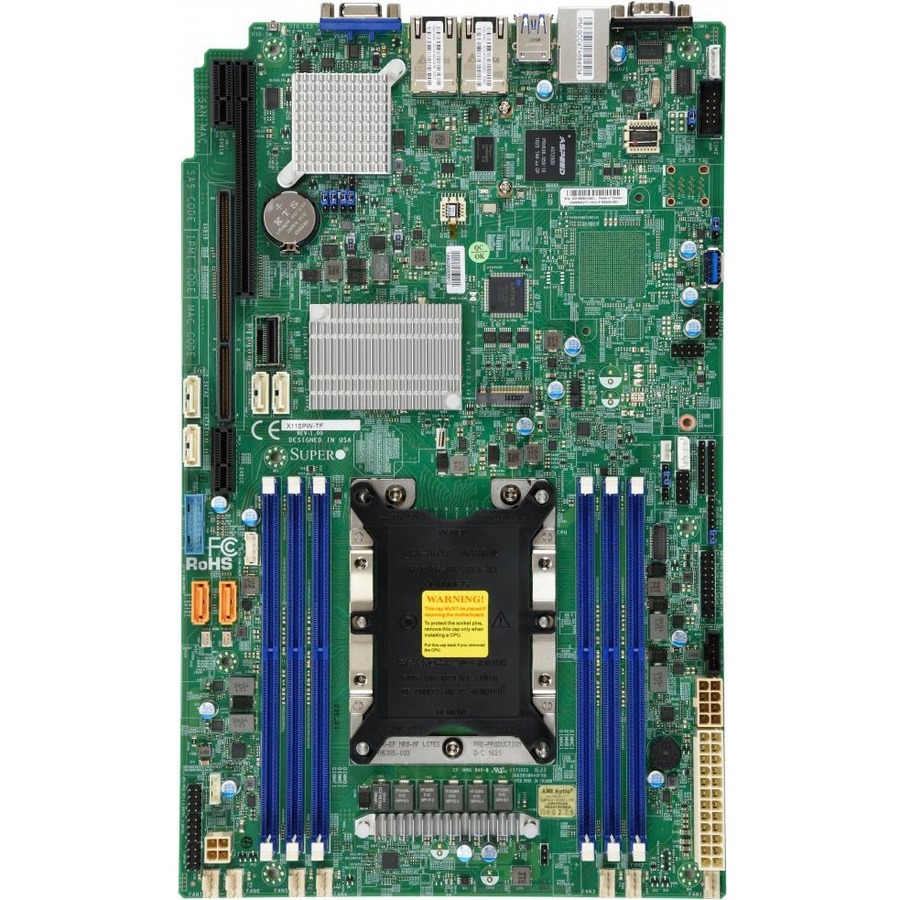
- SupermicroSupermicro X11SPW-TF Server Motherboard - Intel C622 Chipset - Socket P LGA-3647 - Proprietary Form Factor - Xeon Processor Supported - 768 GB DDR4 SDRAM Maximum RAM - RDIMM, DIMM, LRDIMM - 6 x Memory Slots - 10 x SATA InterfacesMBD-X11SPW-TF-O
$637.85
Back-orderedBack-ordered — estimated OEM lead time 3–8 weeks (Nov 9 – Dec 14 if ordered today).
- AdvantechAdvantech AIMB-586 Server Motherboard - Intel Q370 Chipset - Socket H4 LGA-1151 - Micro ATX - 128 GB DDR4 SDRAM Maximum RAM - DIMM - 4 x Memory Slots - Gigabit Ethernet - HDMI - DisplayPort - 6 x SATA InterfacesAIMB-586QG2-00A1E
$616.58
Back-orderedBack-ordered — estimated OEM lead time 3–8 weeks (Nov 9 – Dec 14 if ordered today).
- SupermicroSupermicro X11SPM-TPF Server Motherboard - Intel C622 Chipset - Socket P LGA-3647 - Micro ATX - Xeon Processor Supported - 768 GB DDR4 SDRAM Maximum RAM - RDIMM, DIMM, LRDIMM - 6 x Memory Slots - 12 x SATA InterfacesMBD-X11SPM-TPF-O
$598.82
Back-orderedBack-ordered — estimated OEM lead time 3–8 weeks (Nov 9 – Dec 14 if ordered today).
- SupermicroSupermicro H12SSW-iN Server Motherboard - AMD Chipset - Socket SP3 - Proprietary Form Factor - EPYC Processor Supported - 2 TB DDR4 SDRAM Maximum RAM - DIMM, RDIMM - 8 x Memory Slots - Gigabit Ethernet - 2 x SATA InterfacesMBD-H12SSW-IN-O
$585.37
Back-orderedBack-ordered — estimated OEM lead time 3–8 weeks (Nov 9 – Dec 14 if ordered today).
- ASUS Computer InternationalAsus KRPA-U16 Server Motherboard - AMD Chipset - Socket SP3 - SSI EEB - 2 TB DDR4 SDRAM Maximum RAM - RDIMM, LRDIMM, DIMM - 16 x Memory Slots - Gigabit EthernetKRPA-U16
$560.33
Back-orderedBack-ordered — estimated OEM lead time 3–8 weeks (Nov 9 – Dec 14 if ordered today).
- SupermicroSupermicro X10SDV-2C-TP8F Server Motherboard - Intel Chipset - Socket BGA-1667 - Flex ATX - Pentium D1508 - 128 GB DDR4 SDRAM Maximum RAM - UDIMM, RDIMM, DIMM - 4 x Memory Slots - Gigabit Ethernet - 4 x SATA InterfacesMBD-X10SDV-2C-TP8F-O
$557.11
Back-orderedBack-ordered — estimated OEM lead time 3–8 weeks (Nov 9 – Dec 14 if ordered today).
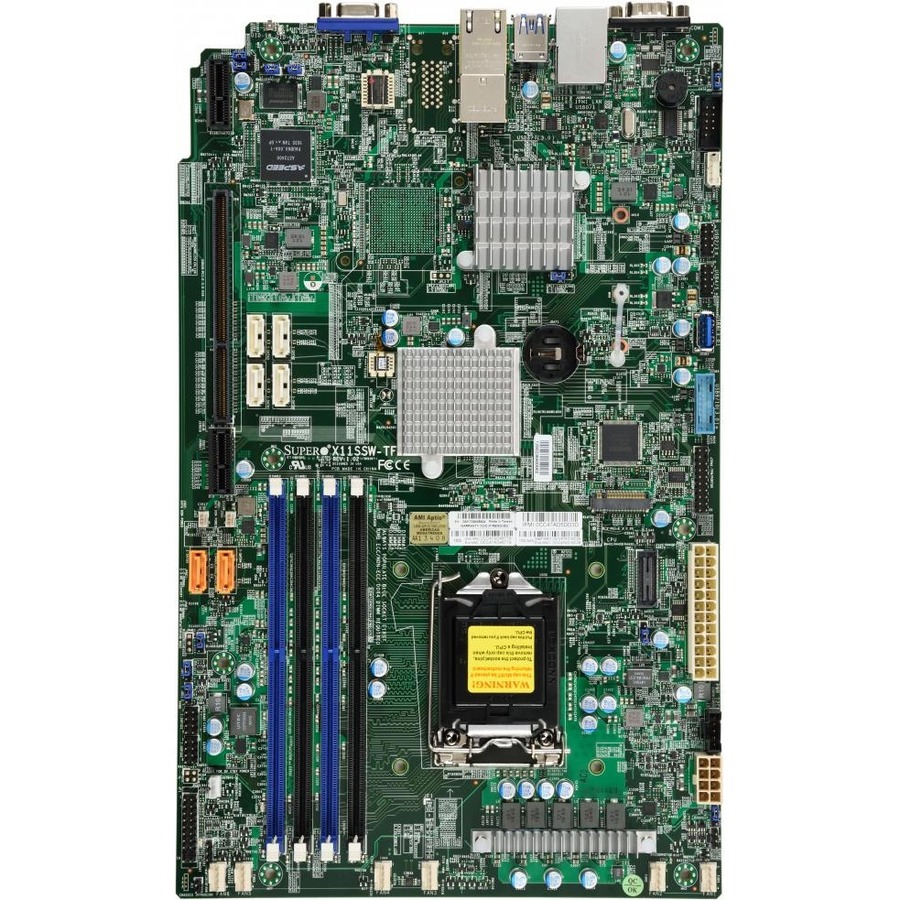
- SupermicroSupermicro X11SSW-TF Server Motherboard - Intel C236 Chipset - Socket H4 LGA-1151 - Proprietary Form Factor - Core i3 Processor Supported - 64 GB DDR4 SDRAM Maximum RAM - UDIMM, DIMM - 4 x Memory Slots - 6 x SATA InterfacesMBD-X11SSW-TF-O
$549.04
Back-orderedBack-ordered — estimated OEM lead time 3–8 weeks (Nov 9 – Dec 14 if ordered today).

Need pricing on server motherboards?
Tell us where to reach you and a Uniqcli specialist will follow up by email with current pricing, availability and lead time for the quantities you need — including parts that aren’t shown on this page.
Buying for an organization or for yourself — both work. No payment up front.
A server motherboard is read as socket plus chipset together: the socket names the processor family — Xeon E, Xeon W, Xeon Scalable, EPYC on SP3 or SP5 — and the chipset beside it sets memory channels, PCIe lanes and onboard devices. Form factor then decides the chassis, from Mini-ITX and Flex-ATX edge appliances to SSI-EEB dual-socket rackmount boards.
A server motherboard is a different board from a fast desktop one, and the difference is in what it is built to run and for how long. Every row on this page states 'server motherboard' in the manufacturer's own catalog title, which keeps the wider board shelf — dense with gaming and desktop boards that share a socket — out of a page about machines that run for years, take registered memory, and expect to be managed remotely without a monitor attached. The socket and the chipset are the first two facts to read, because they decide the processor family and the platform's own rules before anything else on the board matters.
The socket names the processor generation, and on a server board it is not the whole story — the chipset beside it decides how many memory channels, PCIe lanes and onboard devices the platform exposes. Intel server boards here run Xeon E, Xeon W and Xeon Scalable on their matching C-series chipsets, and AMD server boards run EPYC on SP3 and SP5 sockets; each pairing has its own memory rules, lane count and power envelope. Buying the socket without reading the chipset is how a board turns out to support fewer channels or lanes than the build needed.
After the socket, the form factor and the management decide where the board lives and how it is run. Mini-ITX and Flex-ATX server boards go into embedded and edge appliances; Micro-ATX and ATX suit tower and short-depth servers; SSI-EEB and Extended-ATX are the dual-socket, many-DIMM boards for rackmount compute. Almost every server board carries a baseboard management controller so it can be powered, watched and recovered over the network with no keyboard attached — the feature that separates a server board from a desktop one as much as the memory support does. Send the chassis, the processor generation and the memory and expansion the build needs, and the board can be matched to all three.
Buyer's checklist
How to choose a server motherboard
- Read the socket and the chipset together. The socket names the processor family — Xeon E, Xeon W, Xeon Scalable, EPYC on SP3 or SP5 — and the chipset beside it decides memory channels, PCIe lanes and onboard devices. The pairing, not the socket alone, is the platform.
- Match the form factor to the chassis. Mini-ITX and Flex-ATX are for embedded and edge appliances; Micro-ATX and ATX for towers and short-depth servers; SSI-EEB and Extended-ATX for dual-socket rackmount compute. A board that does not fit the case is not a board for that build.
- Confirm the memory type and channel count the board supports. Server boards expect registered or load-reduced ECC memory in a specific channel layout; the socket-and-chipset pairing sets how many channels and how much capacity the board will address.
- Count the PCIe lanes and slots against the cards the build actually needs. NICs, HBAs, GPUs and NVMe all draw lanes, and a board that is a slot or a lane group short forces a compromise late — plan the expansion before the board.
- Treat the baseboard management controller as a requirement, not a bonus. A BMC lets the machine be powered, monitored and recovered over the network with no display attached, which is how a server in a rack is actually run; the titles here name the management where the board carries it.
- Check onboard networking against the deployment. Boards here range from dual gigabit to onboard 10-gigabit; matching the onboard NIC to the network saves a slot and a card where the speed is enough.
- Decide single-socket versus dual-socket by the workload, not the headroom. A dual-socket EEB board doubles cores and memory channels for heavy compute; a single-socket board is simpler, cheaper and right for most edge, storage and general-purpose roles.
- Buy the board against the whole platform — processor, memory, cooling and chassis — rather than on its own. Server boards are particular about the parts around them, and matching the board to the build is the difference between a clean bring-up and a machine that will not train its memory.
Socket, chipset and the shape of the platform
On a server board the socket and chipset together define the platform, and reading only the socket is the most common way a build ends up short. The socket sets the processor family — an Intel Xeon E or Xeon W board, a Xeon Scalable board on a C621 or C622 chipset, an AMD EPYC board on SP3 or SP5 — and the chipset beside it sets how many memory channels the board exposes, how many PCIe lanes reach the slots, and which onboard devices come for free. Two boards can share a socket and differ sharply in channels and lanes, and that difference is exactly what decides whether the memory and expansion plan fits.
This is why the honest way to choose is to start from the build and work back to the board. A storage server that wants many drives and an HBA needs lanes; a compute node that wants two processors and a full complement of DIMMs needs a dual-socket EEB board and the channel count that comes with it; an edge appliance that wants a small footprint and low power is a Mini-ITX or Flex-ATX board with an embedded processor. The boards on this page span all of those — embedded Atom and Xeon-D parts, single-socket Xeon and EPYC, and dual-socket Extended-ATX — and the socket-and-chipset line on each is where the match is made or missed.
Management, memory and why a server board is not a desktop board
The feature that most defines a server board, beyond the socket, is that it expects to be run without anyone standing in front of it. Almost every board here carries a baseboard management controller — a small always-on subsystem that lets the machine be powered on, monitored, updated and recovered entirely over the network, with no keyboard or display attached. In a rack that is not a convenience, it is how the machine is operated at all, and it is a large part of what separates a server board from a desktop one that happens to share a socket. The titles name the management where the board carries it, and it is worth confirming before the board goes into a chassis that will live in a closet or a data center.
Memory is the other dividing line. Server boards are built for registered or load-reduced ECC memory in a defined channel layout, because a machine that runs for months needs error correction and the capacity that buffered memory allows — a desktop board with the same socket will not take the same modules. The board's chipset sets the channel count and the maximum capacity, and populating it correctly, in the right rank and channel order, is part of the build rather than an afterthought. Supermicro leads this shelf by a wide margin, with ASUS and Advantech covering the Intel embedded and workstation-adjacent server ranges; send the processor generation, the memory and expansion the build needs, and the chassis it lives in, and the board can be matched to all three rather than chosen on its socket alone.
FAQ
Common questions
- What makes a motherboard a server motherboard rather than a desktop one?
- Three things, mostly. A server board is built for registered or load-reduced ECC memory in a defined channel layout, where a desktop board with the same socket takes unbuffered memory. It carries a baseboard management controller so the machine can be powered, monitored and recovered over the network with no display attached — the way a racked server is actually operated. And it exposes the PCIe lanes, memory channels and onboard networking a server workload needs. Every row on this page states 'server motherboard' in the maker's own title for exactly those reasons.
- How do I match a server board to the right processor?
- Read the socket and the chipset together. The socket names the processor family — Xeon E, Xeon W, Xeon Scalable, or AMD EPYC on SP3 or SP5 — and the chipset beside it decides how many memory channels and PCIe lanes the platform exposes. Two boards can share a socket and differ in channels and lanes, so the pairing, not the socket alone, is what determines whether your memory and expansion plan fits. The titles here name both per board.
- What form factor should a server motherboard be?
- It depends on the chassis and the role. Mini-ITX and Flex-ATX boards go into compact embedded and edge appliances; Micro-ATX and ATX suit towers and short-depth servers; SSI-EEB and Extended-ATX are the dual-socket, many-DIMM boards for rackmount compute. The form factor has to match the case's standoffs and I/O cutout, so choose the chassis and the form factor together — a board that does not fit the case is not an option for that build.
- Do I need a board with a baseboard management controller?
- For anything that lives in a rack, effectively yes. A BMC lets the server be powered on, watched, updated and recovered over the network with no keyboard or monitor attached, which is how a machine in a closet or a data center is run at all. Almost every board on this page carries one, and it is one of the features that separates a server board from a desktop board sharing the same socket. The titles name the management where the board carries it.
- Can business, government and education buyers order these?
- Every line Uniqcli quotes is sourced through US distribution and screened for TAA country-of-origin and NDAA §889 status before checkout — with documentation tied to the specific part number, not a product family.
Need server motherboards pricing?
Send a bill of materials or part numbers — we confirm stock and a below-market total, with TAA verified on request. No payment up front.