
Short answer
The main difference between TLC and QLC is bits per cell: TLC stores three and QLC stores four, so QLC is denser and cheaper per terabyte while TLC holds write speed longer and carries a higher endurance rating. Both use an SLC cache, and QLC slows sharply once that cache fills on a long transfer. Choose TLC for mixed or write-heavy work, QLC for read-heavy bulk capacity.
Key facts
- The names count bits per cell: SLC stores 1, MLC 2, TLC 3 and QLC 4.
- TLC needs eight threshold-voltage states to represent three bits; QLC needs 16 to represent four, which is why its margins are tighter.
- QLC packs 33% more bits into a cell than TLC at the same die area — that density is where the lower cost per terabyte comes from.
- Fewer bits per cell generally means higher endurance and a higher cost per terabyte; more bits means cheaper capacity and lower write endurance.
- Endurance is capacity-dependent: an 8 TB drive at 1 DWPD and a 32 TB drive at 0.25 DWPD reach roughly the same total written over the same term.
- 3D NAND stacks cells in vertical layers instead of shrinking them on one plane; layer count and bits per cell are separate specs, so read both.
TLC stores three bits in each NAND cell; QLC stores four. QLC increases density and can lower cost per terabyte, while TLC generally provides greater write endurance and steadier write performance. Neither label decides the purchase. Compare the exact SSD’s DWPD, TBW, sustained behavior, latency, cache, power-loss protection, warranty, and platform qualification against measured workload.
At a glance
Side by side
| Question | TLC SSD | QLC SSD | What to verify |
|---|---|---|---|
| Bits per NAND cell | 3 | 4 | Manufacturer NAND and product documentation |
| Density | High | Higher | Capacity per drive and rack |
| Raw media endurance tendency | Higher | Lower | Published DWPD/TBW for exact capacity |
| Native sustained write tendency | Faster and steadier | More sensitive to cache exhaustion and write pattern | Post-cache throughput and tail latency |
| Read performance | Strong | Can be comparable for read-heavy workloads | Exact drive, block size, queue depth, fill |
| Cost per TB | Usually higher | Often lower | Current qualified quote, not category assumption |
| Best common fit | Mixed and write-intensive roles | Read-intensive and high-capacity roles | Measured writes and service levels |
TLC and QLC comparison
The comparison is directional. Product data sheets and platform testing override a generic row.
Key takeaways
- TLC uses eight voltage states to represent three bits per cell; QLC uses 16 states to represent four bits. The narrower margins generally make QLC slower to program and less write-enduring at the raw-media level.
- Controller, firmware, ECC, overprovisioning, NAND generation, capacity, and SLC caching can make one QLC drive outperform another TLC drive in selected tests. Compare products, not acronyms.
- Endurance is capacity-dependent. A large QLC drive with a lower DWPD can have as much or more total TBW than a smaller TLC drive.
- Short benchmarks often remain inside a fast SLC cache. Test after conditioning, at realistic fill, with sustained writes and percentile latency.
- Enterprise buying still requires interface, form factor, PLP, sector format, firmware, telemetry, warranty, and system compatibility checks.
The physical difference
NAND flash stores charge in cells. The controller reads a cell by distinguishing threshold-voltage ranges. SLC stores one bit and needs two states. MLC stores two bits and needs four. TLC stores three bits and needs eight. QLC stores four bits and needs 16.
Kioxia’s technical explanation lays out that progression. Packing more bits into each cell increases capacity from the same silicon area, which can improve density and cost. It also reduces the margin between states. Programming and reading become more complex, and the media typically tolerates fewer program/erase cycles.
Those raw tendencies do not describe the finished SSD by themselves. Modern drives use stronger error correction, wear leveling, bad-block management, overprovisioning, caching, and sophisticated firmware. A new QLC product can beat an old or value TLC product in capacity and some performance measures. The buyer needs the drive specification and workload result.
Endurance: compare total writes, not reputation
SSD endurance is usually expressed as TBW or DWPD over a warranty term. TBW is the cumulative host data that can be written under the rating. DWPD is the number of full drive-capacity writes per day.
Use:
- Approximate TBW = drive capacity in TB × DWPD × 365 × warranty years
This reveals why capacity matters. Solidigm gives a useful illustration: an 8 TB drive rated at 1 DWPD for five years and a 32 TB drive rated at 0.25 DWPD for five years reach the same approximate total written amount. The larger QLC drive’s lower DWPD does not automatically mean lower total write endurance.
Compare the manufacturer’s actual TBW, not only the calculation. Ratings can use a defined JEDEC workload, sector format, temperature, and overprovisioning. The warranty may expire by time or endurance, whichever arrives first.
Measure daily host writes at normal and peak operation. Include rebuilds, compaction, snapshots, replication, maintenance, imports, and growth. Apply headroom. If projected writes consume only a small portion of a QLC drive’s rating during the server lifecycle, paying for more endurance may not create value.
Write amplification changes the result
NAND cannot overwrite data in place like a magnetic disk. The SSD maps logical addresses to flash pages and erases larger blocks. Garbage collection, wear leveling, metadata, and small random updates can cause the media to write more data than the host requested.
Write amplification factor is internal NAND writes divided by host writes. Lower is generally better for endurance and performance. Random small-block writes to a nearly full drive can increase amplification. Sequential writes, host deallocate/TRIM, free space, aligned I/O, controller design, and overprovisioning can reduce it.
QLC can be more sensitive because native program behavior and endurance margins are tighter. Storage software can reshape writes through caching, log structuring, or sequential placement. Solidigm’s QLC material describes host-side approaches that turn small random writes into more sequential activity, illustrating that system design and media choice interact.
Do not assume an optimization applies to every application. Measure the production stack.
SLC cache can hide the native drive
Many TLC and QLC SSDs reserve part of their NAND to operate as a one-bit-per-cell SLC cache. Incoming writes land there quickly and are later folded into TLC or QLC representation. Some caches are fixed; others grow and shrink with free capacity.
This makes burst performance excellent. It also makes a short, empty-drive benchmark misleading. Once the cache fills, sustained write speed can fall sharply, especially on client QLC drives. A fuller drive can have less dynamic cache and show the drop sooner.
Ask:
- Fixed or dynamic cache size at each capacity
- Sequential and random write rate after cache exhaustion
- Time required to fold data and recover cache
- Behavior at 50, 80, and 90 percent fill
- Latency during cache cleanup
- Effect of temperature and background work
For office endpoints, burst behavior may match the real workload. For ingestion, backup landing, media creation, or database maintenance, post-cache behavior can decide the purchase.
Read performance
QLC’s endurance tradeoff does not imply weak reads. Enterprise QLC SSDs are built for large read-dominant datasets and can deliver high sequential and random read performance. Solidigm positions its QLC data-center drives for content delivery, data lakes, decision support, analytics, AI datasets, and other read-heavy roles.
Compare exact specifications and tests. Read latency can still differ by controller, NAND, firmware, capacity, queue depth, temperature, and background operations. A drive optimized for very large transfers may not be ideal for small random access even if peak throughput is high.
The application’s cache hierarchy matters. If most reads come from system memory, the SSD can be capacity-oriented. If the working set lives on flash and response time is strict, percentile latency deserves more weight.
Sustained write behavior and tail latency
TLC generally maintains higher native write throughput and lower write latency under sustained mixed or random load. That makes it a strong fit for transactional databases, logs, write caches, virtual desktop write bursts, build systems, metadata, and high-change virtualization.
Do not rely on average latency. Inspect 95th, 99th, and higher percentiles at the target queue depth and read/write mix. A drive can show a good average while periodic garbage collection creates long outliers that stall a shared application.
Condition the drive to steady state using a defensible method. Test at realistic fill. Run long enough to cross the cache and background-management cycle. Monitor temperature and throttling. Report block size, queue depth, threads, data pattern, capacity, firmware, and filesystem or array settings.
Vendor comparisons are useful evidence about the tested products, not universal proof about all TLC or QLC. Micron and Solidigm publish results that emphasize different product strengths. Read their methods and test your own configuration.
Capacity can change total economics
QLC’s density can reduce the number of drives required for a target capacity. Fewer drives can reduce bays, servers, controllers, network ports, software licenses, power, and operational touch points. A high-capacity QLC tier can replace hard drives where read latency or footprint matters.
The tradeoff is failure domain and rebuild. Losing one very large drive means more data must be reconstructed. Rebuild time, network traffic, controller work, and exposure to another failure can increase. Confirm erasure coding, spare capacity, fault domains, recovery bandwidth, and service objectives.
Calculate usable cost, not raw cost per drive:
- Capacity after RAID or erasure coding
- Spare and overprovisioned capacity
- Chassis and slot count
- Controllers, network, and licenses
- Power and cooling
- Endurance headroom
- Replacement and support
- Migration and rebuild behavior
A lower $/TB drive can raise system cost if it requires a write cache, more overprovisioning, or a redesigned recovery plan. It can also lower system cost dramatically when density removes entire nodes.
Client PCs and workstations
For typical office laptops, either a well-designed TLC or QLC client SSD can provide a responsive experience and enough rated endurance. Capacity, controller, cache, power, thermal behavior, warranty, firmware, and device support matter more than cell type alone.
Content creation, local virtual machines, software builds, scientific scratch, and large project ingest can expose post-cache write behavior. A user who regularly copies hundreds of gigabytes should review sustained performance and TBW.
Do not replace an OEM-qualified SSD solely to get TLC. Verify warranty, encryption, form factor, single- or double-sided fit, power states, thermal pad, firmware, and recovery image. A third-party upgrade can change sleep behavior or management support.
Servers and storage arrays
Enterprise use adds PLP, hot-swap, telemetry, sector format, dual-port needs, firmware qualification, and predictable service. Compare QLC and TLC within enterprise product lines that satisfy those baseline requirements.
An array vendor can qualify only selected drives and firmware because failure recovery and health management depend on exact behavior. Do not substitute a retail drive with the same interface. The controller may not recognize its health data or handle error timing correctly.
For a broader product definition, see What is an enterprise SSD?.
Interface and form factor stay separate
TLC and QLC describe NAND density, not interface. Either can appear in SATA or NVMe products, and enterprise portfolios can use SAS. Interface determines host communication, throughput ceiling, queue model, cabling, and platform support. NAND type influences the media tradeoff inside the product.
Likewise, M.2, U.2, U.3, EDSFF, and add-in card describe form factor and connection. Verify lanes, connector, hot-swap, power, cooling, carrier, and firmware. Use SATA vs NVMe SSD before comparing NAND types across incompatible interfaces.
Power-loss protection and data integrity
QLC versus TLC does not decide whether the drive has enterprise PLP. Verify that the exact product protects acknowledged data and critical mapping metadata during unexpected loss according to its documentation. Review volatile write-cache behavior.
Check error-correction, end-to-end data protection, sector formats, firmware signing, sanitize, encryption, and health reporting. A high-endurance TLC client drive can still lack the data-center behavior an array requires. A QLC enterprise drive can provide a more appropriate managed product.
The category hierarchy should be: platform and duty requirements first, then workload and NAND tradeoff.
Overprovisioning and namespace sizing
Additional spare area gives the controller room for garbage collection and wear leveling, often improving endurance, write consistency, and tail latency. Enterprise products include factory overprovisioning; some NVMe environments can create a smaller namespace to add effective spare capacity.
Changing namespace size can destroy data and affect support. Use vendor and platform guidance. Record usable capacity, protection layout, and endurance result. Do not use aggressive overprovisioning to force an unsuitable QLC drive into a write-heavy role without testing economics.
Leaving filesystem free space can help some workloads but is not identical to guaranteed controller overprovisioning unless deallocate behavior and drive implementation make the blocks available.
Warranty and support
Compare years, TBW or DWPD, temperature and workload conditions, firmware access, advance replacement, data-bearing media terms, and product availability. Endurance ratings can vary by capacity inside one family, so copy the exact part row.
Ask whether the supplier can replace with the same NAND type, capacity, form factor, firmware family, and platform-qualified part. A warranty substitute that changes performance or sector format can create an array problem.
Keep-your-drive or secure-destruction terms may be necessary when failed media contains sensitive data. Decide before the failure, not during return authorization.
Use telemetry to validate the choice
Track data written, percentage used, available spare, media errors, unsafe shutdowns, temperature, thermal throttling, and latency. Compare actual write consumption with the procurement model each quarter.
If QLC endurance is being consumed faster than planned, identify the writer. It may be a logging change, failed cache policy, backup behavior, compaction, snapshot churn, or application defect. Moving the workload to TLC is one option; fixing avoidable writes can be better.
If TLC drives retire with nearly all endurance unused in a read-heavy tier, consider whether the next refresh can use a higher-density, lower-DWPD product. Fleet evidence should improve the next buy.
Procurement decision method
- Measure capacity, daily writes, peaks, read/write ratio, block sizes, queue depth, fill, and latency objectives.
- Decide enterprise or client duty requirements: PLP, firmware qualification, sector format, hot-swap, telemetry, warranty, and support.
- Shortlist exact TLC and QLC parts compatible with the platform.
- Compare TBW/DWPD over the intended life with growth and maintenance headroom.
- Test sustained post-cache writes, steady-state latency, reads, temperature, and power.
- Model usable $/TB, node and bay reduction, rebuild, cache, licenses, power, and support.
- Validate failure, replacement, and data-sanitization procedures.
- Control substitutions and record the final firmware and part number.
For shared environments, compare the resulting designs within storage arrays, not as isolated drive prices.
Document the selection as an operating assumption
Record the telemetry period, daily and peak writes, capacity, growth rate, endurance calculation, benchmark method, firmware, fill level, post-cache result, latency objective, and chosen spare policy. State which workload changes would invalidate the choice.
This matters because storage roles drift. A read-mostly repository can acquire indexing, analytics, snapshot, or log functions that multiply writes. A TLC tier can inherit an unexpectedly quiet workload and become needlessly expensive at refresh. Review the assumption after major application releases and at least annually.
Give application owners a simple trigger: notify storage operations before enabling a feature that changes retention, replication, compaction, logging, or data-ingest volume. Connect that change to drive telemetry. The goal is not to protect a TLC or QLC decision forever; it is to keep the media aligned with the work throughout its service life.
Workloads that commonly favor TLC
- TLC is usually the lower-risk choice for sustained random writes, write-ahead logs, high-change databases, write caches, metadata tiers, journaling, build farms, scratch space, and mixed workloads with tight tail-latency objectives.
- It also fits unknown or fast-growing workloads where write telemetry is poor. The extra endurance and steadier writes buy planning margin. That does not mean buying the highest-endurance TLC class automatically; many read-intensive TLC enterprise drives carry lower DWPD than mixed-use or write-intensive versions.
- Measure and right-size within TLC. A 1 DWPD drive may be unnecessary where 0.3 DWPD provides ample lifecycle headroom.
Workloads that commonly fit QLC
- QLC is a candidate when the data is read far more often than written, capacity is large, and measured writes fit the rating. Examples include content libraries, media streaming, data lakes, analytics source data, imaging repositories, model or feature stores, reference datasets, backup read or restore tiers, and object storage.
- General virtualization can fit when the aggregate read/write pattern and endurance support it. Do not assume every VM estate is read intensive. Patch storms, log-heavy applications, snapshots, paging, and database guests can create substantial writes.
- QLC can also work behind a write-optimized cache or in a tiered design. That adds complexity and creates a dependency on cache sizing, failure handling, and software behavior. Test cache loss and bypass modes.
Bottom line
QLC is strongest in high-capacity, read-intensive roles. TLC is the safer default for sustained random writes, logs, caches, write-heavy databases, and latency-sensitive mixed use.
Products for this decision
Higher endurance rating
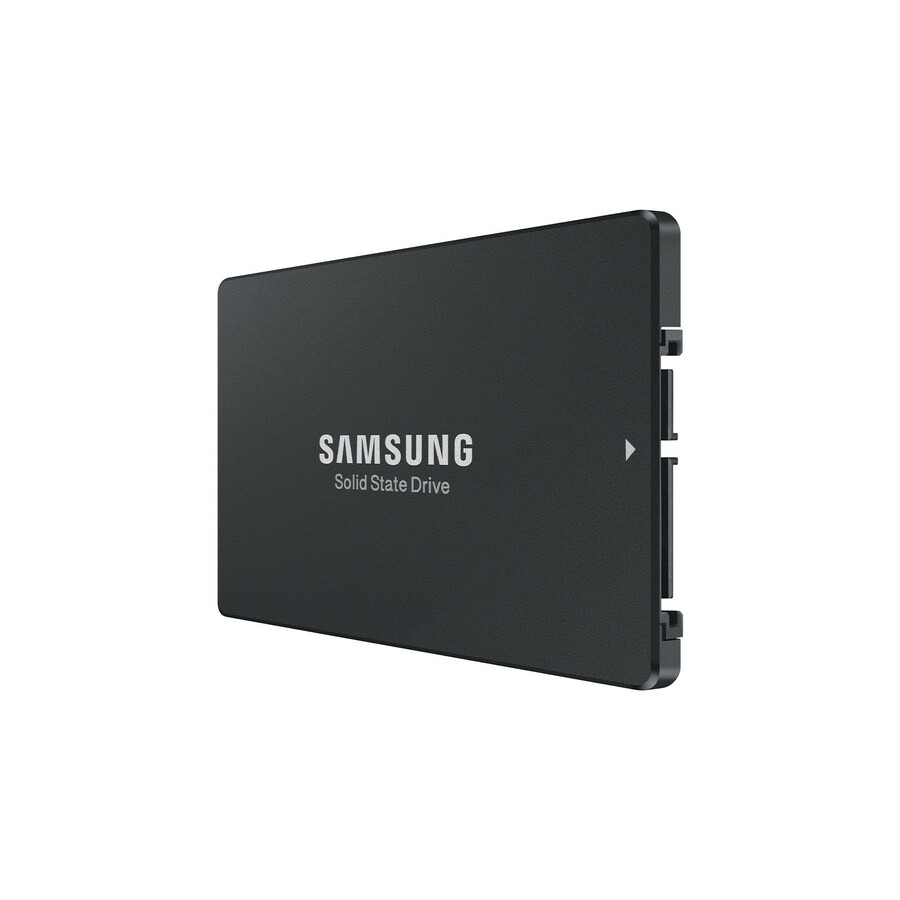
Samsung
Samsung PM893 1.92 TB Solid State Drive
MZ-7L31T900
A 1.92 TB data-center SATA SSD rated 1 DWPD over a five-year term — the endurance class to use for mixed and write-heavy volumes.
$4,169.84In stockTLC, stated on the part
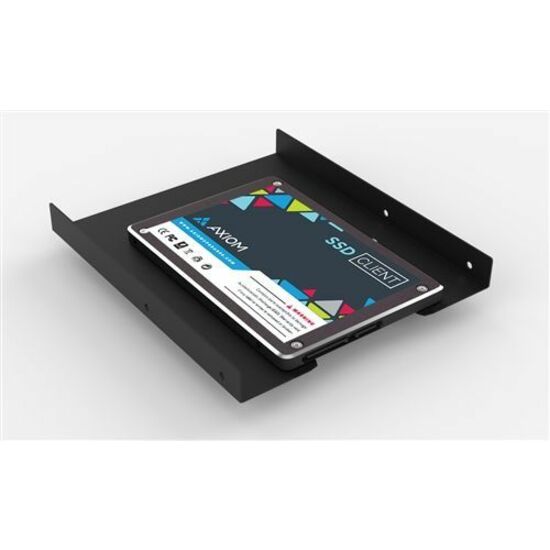
Axiom Memory Solutions
Axiom 480GB C565e Desktop SSD 3D TLC 6Gb/s SATA-III
SSD3558HX480-AX
A 480 GB SATA SSD whose manufacturer lists 3D TLC on the part itself, for a desktop or workstation refresh where the media type must be known.
Where the NAND type is not printed on the listing, ask for the data sheet — the acronym is not always on the box.
$370.13*In stockCapacity per drive
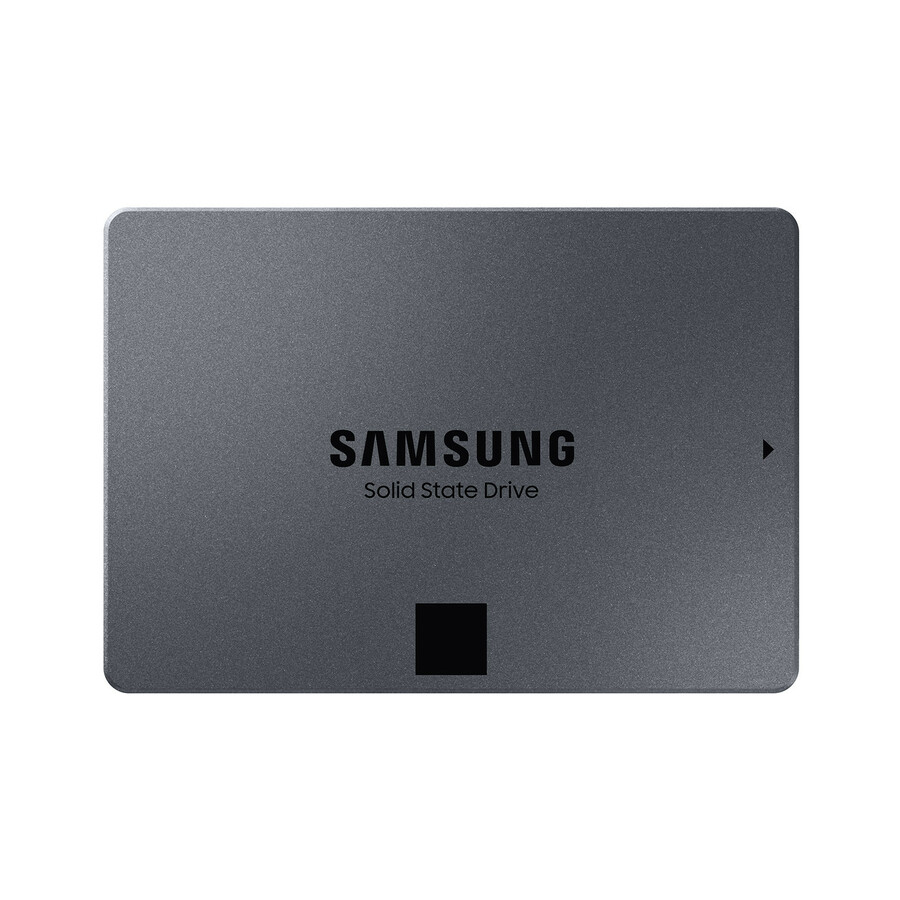
Samsung
Samsung 870 QVO 2 TB Solid State Drive
MZ-77Q2T0B/AM
A 2 TB SATA drive from Samsung's high-capacity consumer line, rated 720 TBW. Compare that figure against your measured writes before choosing it.
$1,453.03In stockFAQ
Common questions
- Is TLC better than QLC?
- TLC generally offers more write endurance and steadier sustained writes. QLC generally offers greater density and lower cost per terabyte. The better choice is the exact drive that meets the measured workload and platform requirements.
- Does QLC wear out quickly?
- It has lower raw program/erase endurance than comparable TLC, but finished-drive ratings can still exceed many read-heavy workloads. Compare TBW/DWPD with measured writes and expected service life.
- Why does a QLC SSD benchmark fast?
- Reads can be very fast, and writes may land in an SLC cache. Test long enough to exhaust the cache and reach steady state at realistic fill before concluding that sustained performance matches the burst.
- Can QLC be used in an enterprise array?
- Yes, when the array qualifies the exact enterprise QLC drive and the workload fits its endurance, latency, PLP, format, and support. Do not install an unqualified client QLC drive because it is inexpensive.
- Is NAND type more important than NVMe versus SATA?
- They answer different questions. NAND type affects density and media behavior; NVMe and SATA define the host interface. First confirm platform compatibility and duty requirements, then compare TLC and QLC within viable products.
- How do I tell if my SSD is QLC or TLC?
- Read the manufacturer's data sheet for the exact model and capacity — that is the only reliable source. The product page or the drive's own listing sometimes prints the NAND type, and endurance is a strong hint (a low DWPD or a TBW figure well under a comparable drive's usually indicates QLC), but neither is proof. SMART data does not report cell levels, and a model name can cover more than one NAND generation across its life, so check the capacity-specific sheet.
- Which type of SSD is better for gaming, QLC or TLC?
- For load times either is fine, because games read far more than they write and both types read quickly. TLC is the safer choice if the same drive also takes large installs, patch downloads and video capture, since those are the sustained writes that exhaust an SLC cache and drop a QLC drive's write rate sharply. If the drive is a bulk library that a faster drive boots from, QLC's capacity per pound is the point of it.
- How long will a QLC SSD last?
- As long as its rated TBW allows at your write rate — the model's own figure is the answer, not the acronym. Divide the drive's TBW by the terabytes you actually write per day to get the days of endurance, then compare that against the service life you need and the warranty term, whichever ends first. Large QLC drives often carry a bigger absolute TBW than smaller TLC drives despite a lower DWPD, which is why the arithmetic beats the reputation.
- Which type of SSD is better, SLC or TLC?
- SLC endures far more writes and costs far more per terabyte, so it survives only in small industrial and caching roles; TLC is what mainstream and enterprise drives are built from. Storing one bit per cell means two voltage states and wide margins, which is why SLC lasts — and why it is uneconomic at capacity. Most TLC and QLC drives already use part of their NAND as an SLC cache, which is where that behaviour shows up in an ordinary drive.
Sources